Babel Was Built With Bricks That Cost More Than People
A man fell from the tower and the work did not stop. A brick fell and they sat down and wept. Replacing it would take a year.
Table of Contents
 Click for full size
They Fired Clay Into Brick
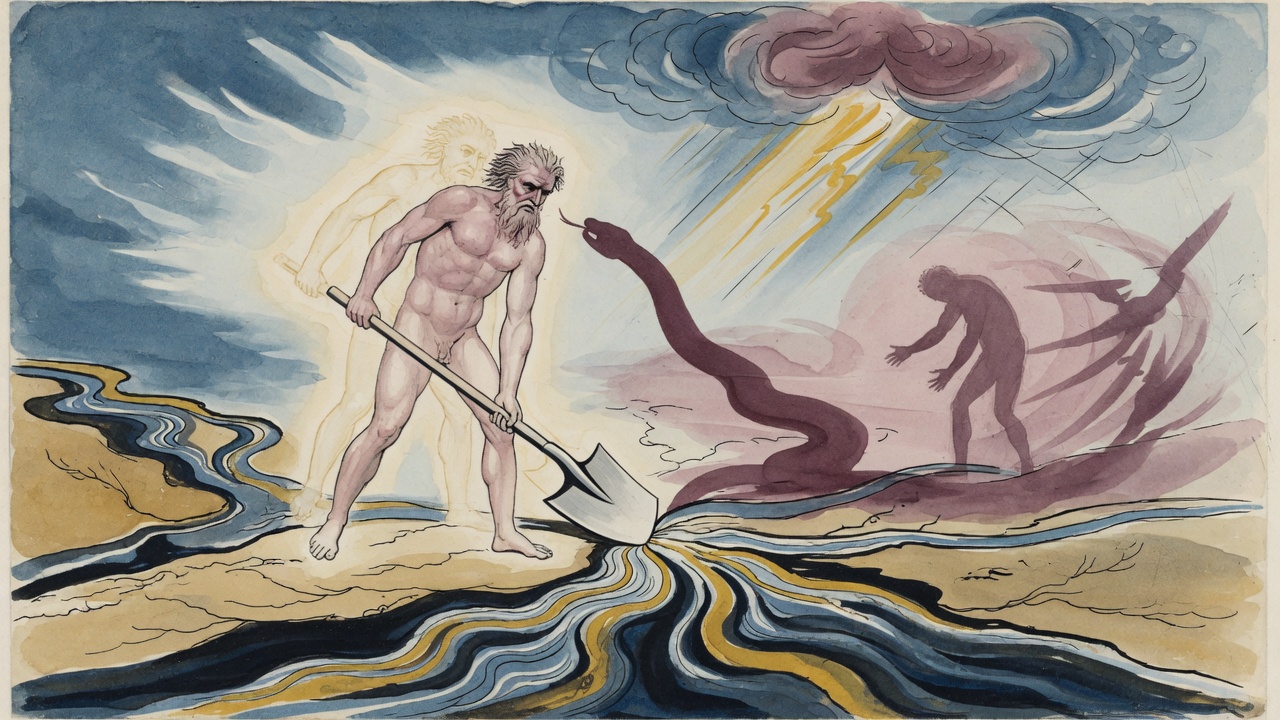
In the land of Shinar there was no quarry. The sons of Noah had clay, and they had fire, and they had the black tar that came up from the sea and from the fountains in the ground.
In the fourth week of a jubilee they shaped the clay, shoved it into flame, and pulled it out hard as stone. The bricks served them for rock. The asphalt served them for mortar. They had made a building stone out of dirt.
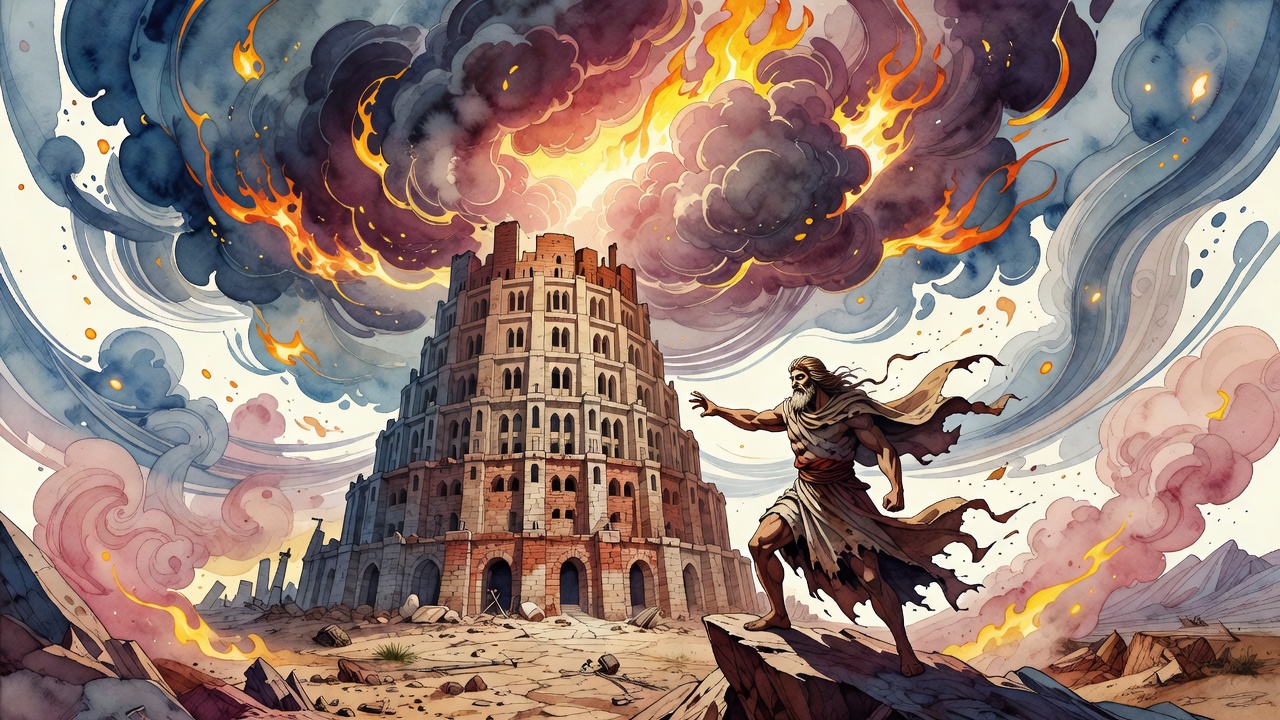
They began to stack. The city rose. The tower rose with it. They called the work Babel, and they meant to put the top of it in the heavens.
Mastema Asked to Keep His Spirits
Before the first course of bricks was laid, another work was already running. In the third week of that same jubilee, unclean demons began to lead the children of Noah's sons astray.
Mastema, chief of the spirits, had stood before God and asked to keep a workforce. "Let some of them remain before me," he said. "If none are left to me, I cannot execute my will on the sons of men. They are for corruption and leading astray. Great is the wickedness of the sons of men."
God did not give him all of them. Nine parts went down to the place of condemnation. A tenth stayed. A tenth was enough. The thought of the tower was already in the builders' mouths before the clay had cooled.
The Climb Took a Year
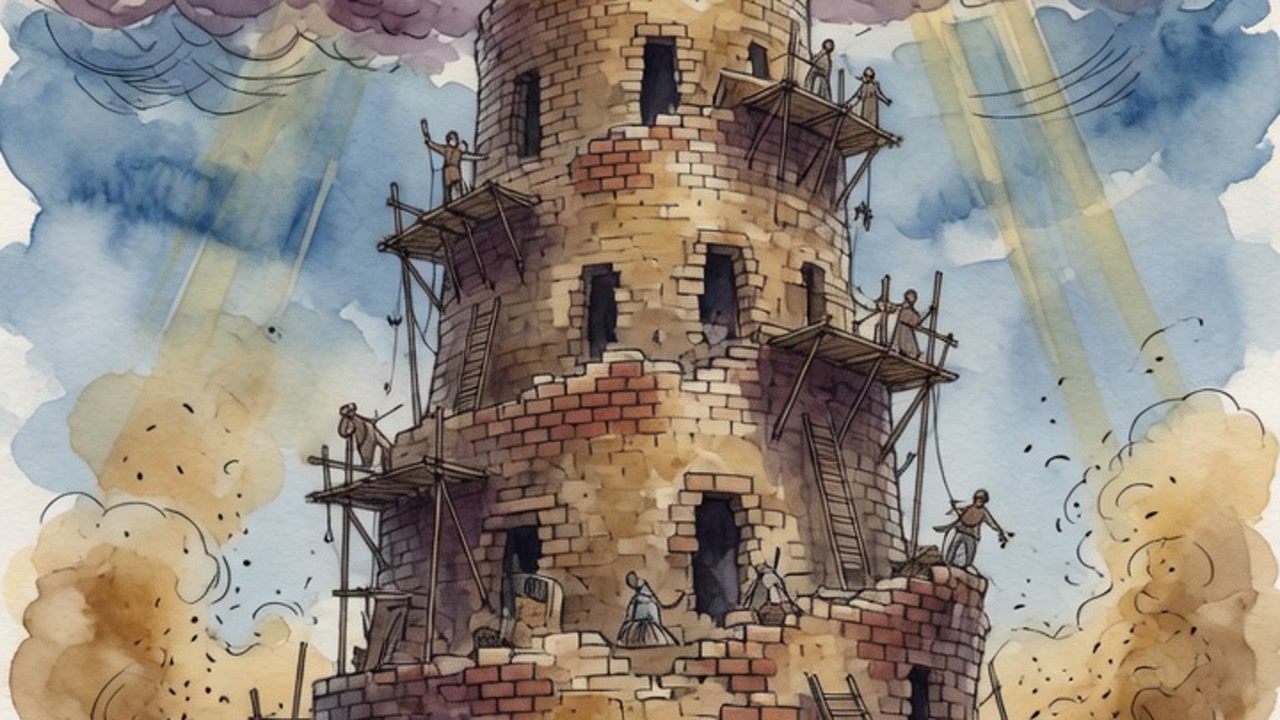
The tower went up for years. Then for more years. It reached a height that took a full year to climb. A man who started at the base in one season arrived at the top in the next. A brick dropped from the summit took a full year to hit the ground.
Six hundred thousand worked in Shinar under Nimrod. His counselors had put the plan in his ear. He had agreed. The hunter who had gathered power after the flood now gathered a mob and pointed it at the sky.
They argued, up there, about what the height was for. One party said, let us go up and wage war with Him. One party said, let us go up, set our idols there, and worship them. One party said, let us go up and ruin the heavens with bows and spears. Nimrod let all three keep working. The bricks did not care which speech they served.
A Brick Mattered More Than a Man
A man fell. He had been carrying. His foot missed. He went off the wall and the year-long drop took him. Nobody stopped. Nobody named him. The line closed and the next brick went into the gap.
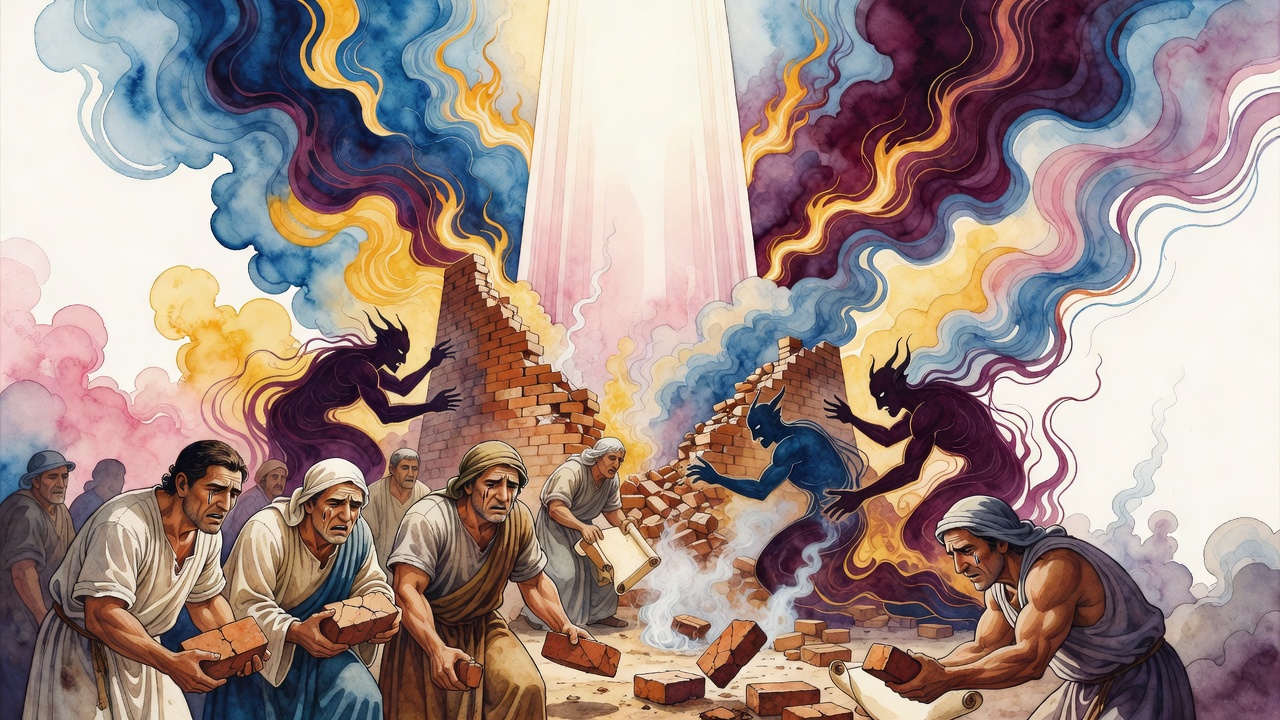
A brick fell. The same drop. The same year. When it smashed, the builders sat down and wept. Replacing it would take another year of fire and tar and climbing. They counted that year as a wound.
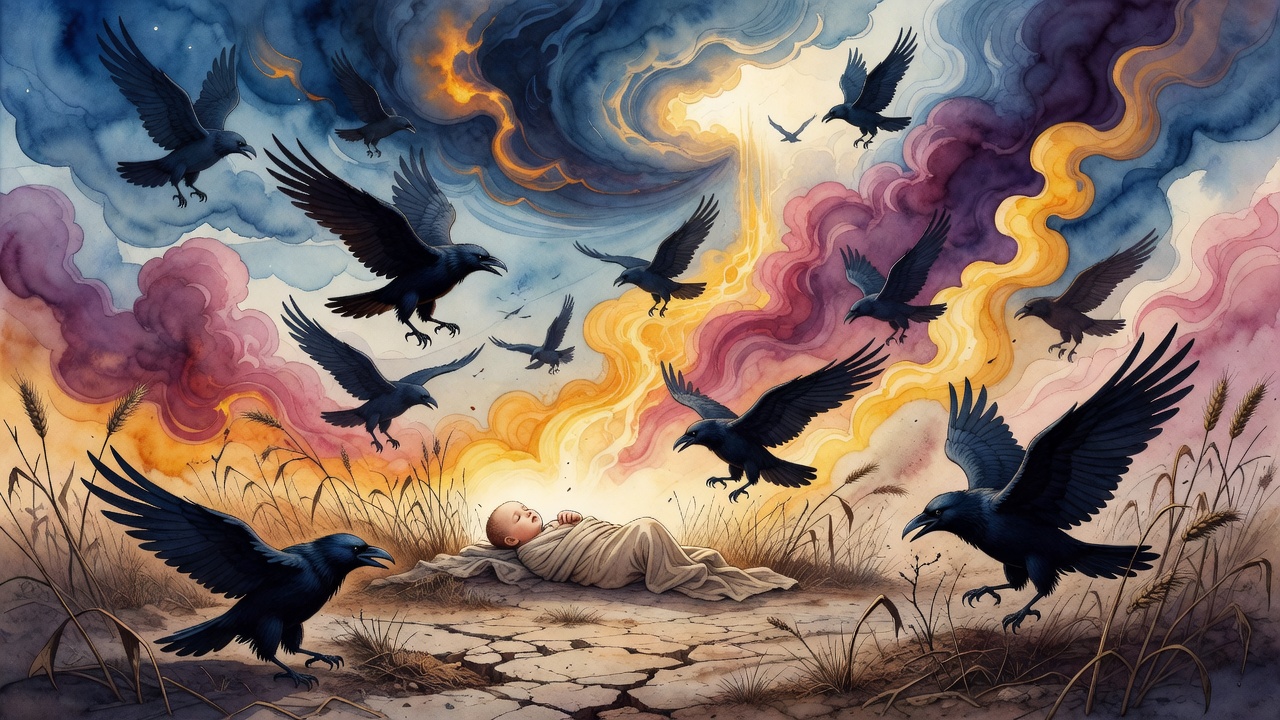
They would not let a woman leave the brickyard when her labor started. She molded clay while the child came. She tied the newborn to her body with a sheet and put her hands back in the mud. The tower wanted brick. It did not want a pause.
Nimrod Raised the Tower Anyway
Nimrod stood on the plain and kept the work moving. He had been the first to make other men afraid after the flood. The people had one language. They had one plan.
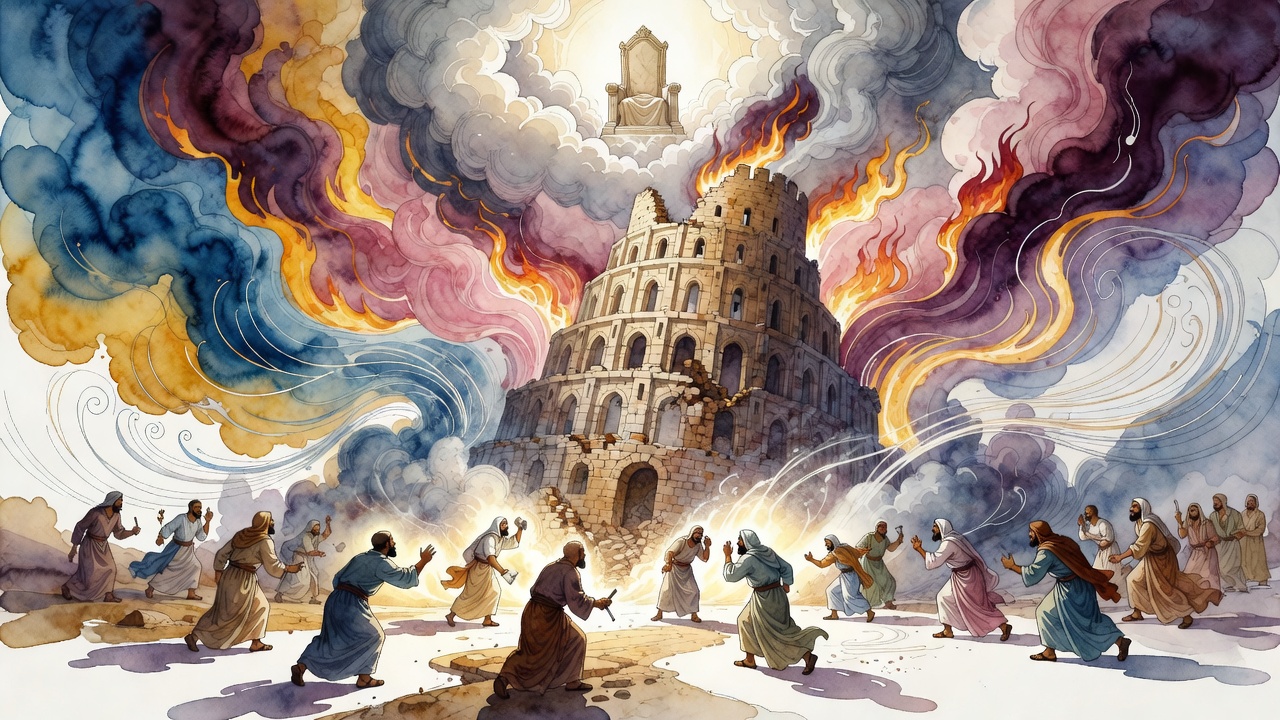
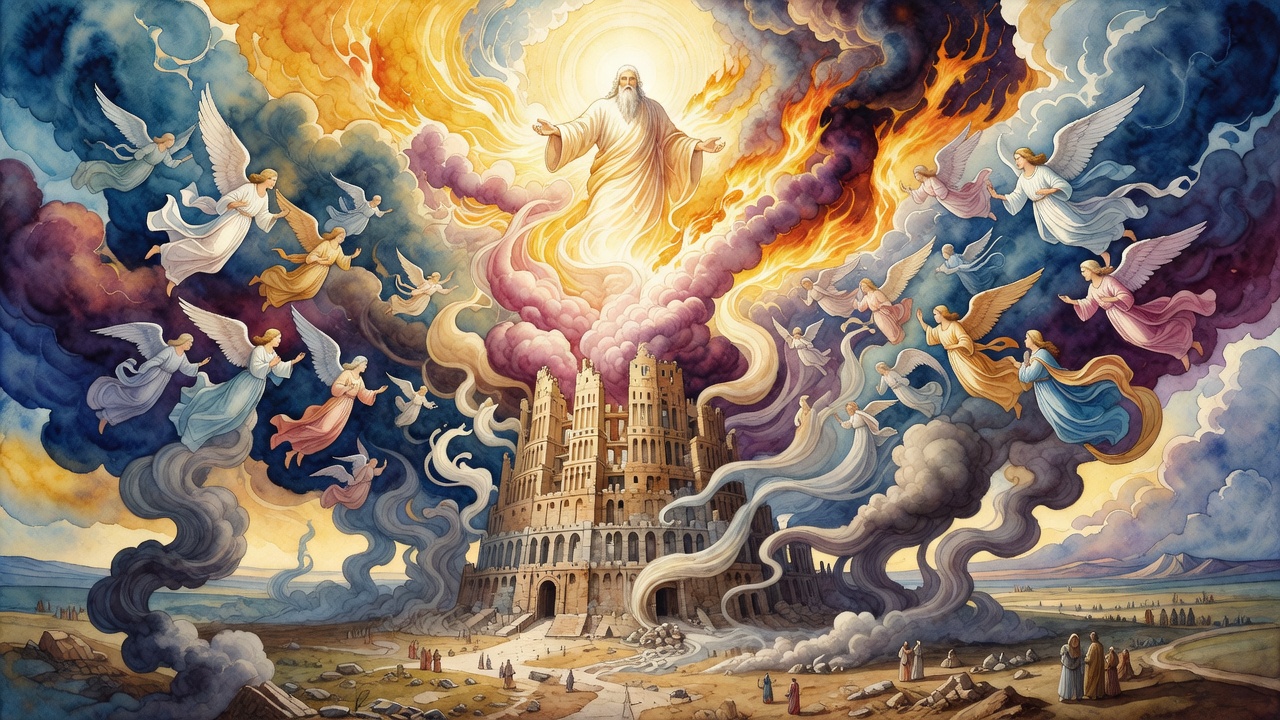
God looked at the one people and the one work and the tenth of the spirits still walking in their thoughts. "Behold, they are one people, and this they begin to do, and now nothing will be withheld from them." He came down. He mixed their speech. The man who asked for a brick got a stare. The man who asked for tar got a laugh in a mouth that no longer matched his.
They left off building the city. The tower stood unfinished, a year high, with the places on it where men had fallen and not been missed. In the brickyards the sheets still held the shape of infants who had been tied on so the clay would not stop moving.
The bricks they had wept for stayed in the wall. The people they had not wept for did not.
← All myths