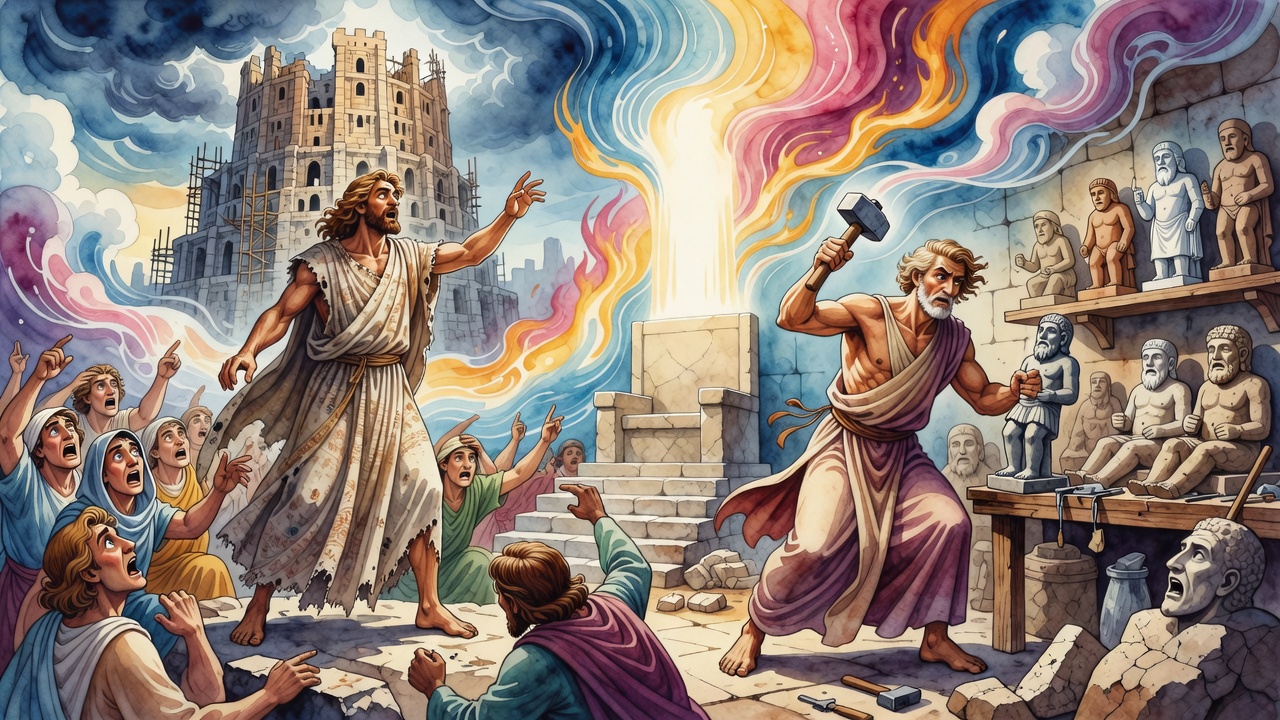
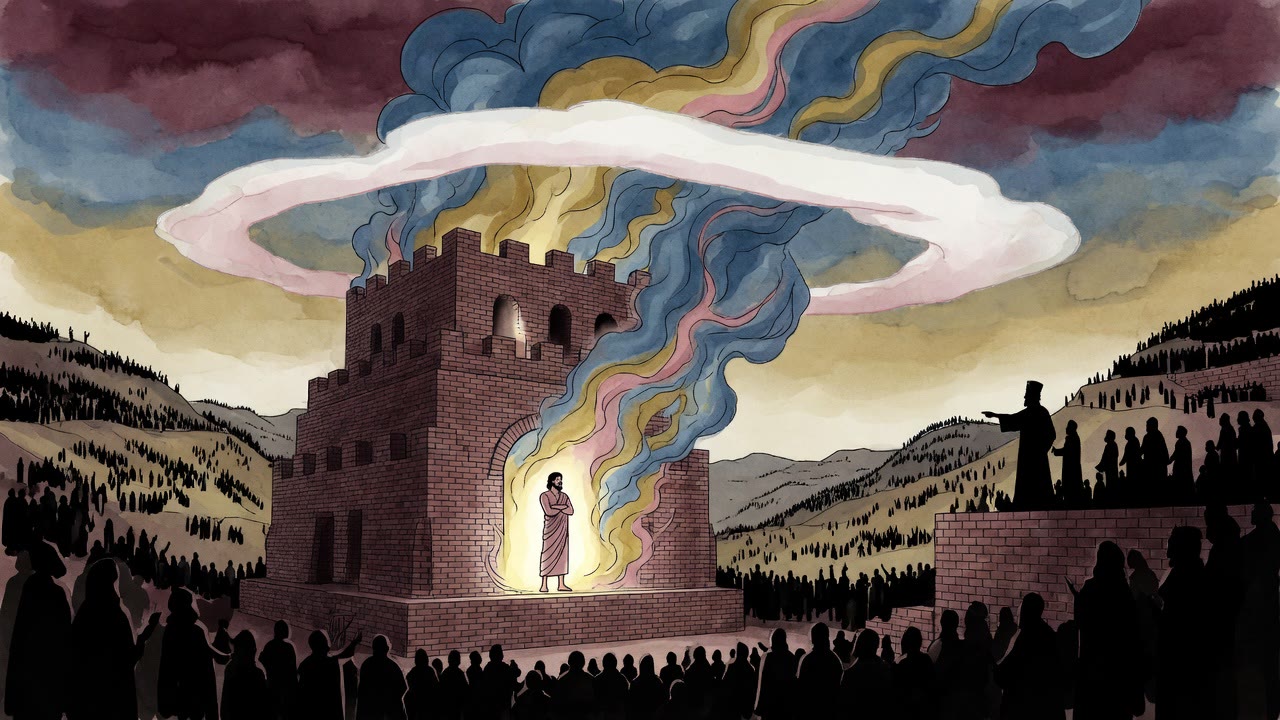
Nimrod Built the Tower of Babel to Get Even With God for the Flood
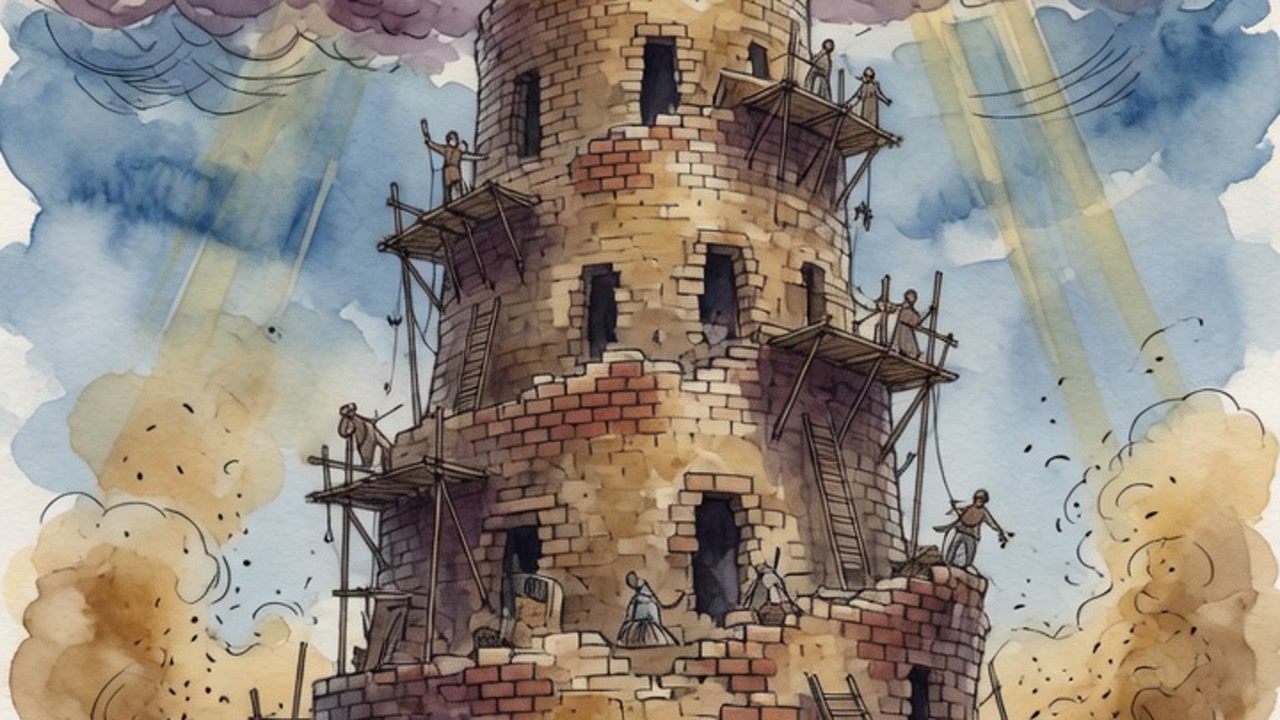
The bricks were fired hard and sealed with bitumen so no water could get in. Nimrod was not reaching for heaven. He was building above the flood line.
Table of Contents
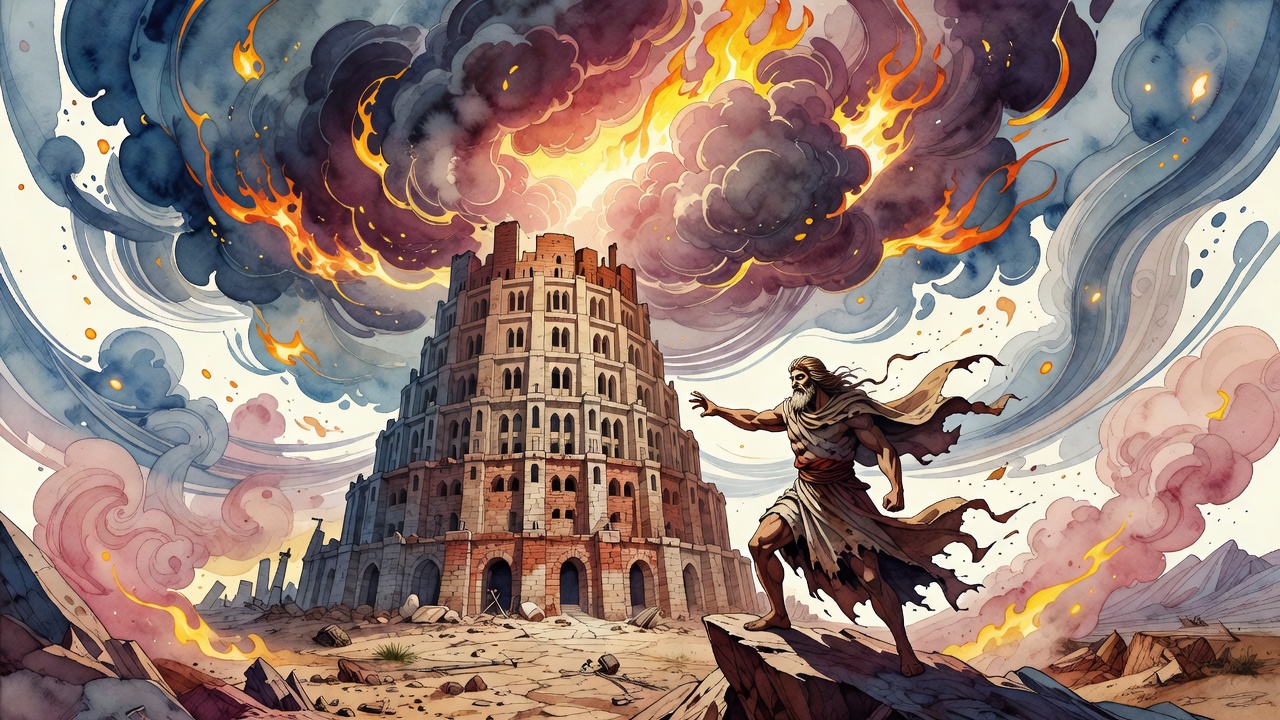 Click for full size
They Would Not Come Down From the High Ground
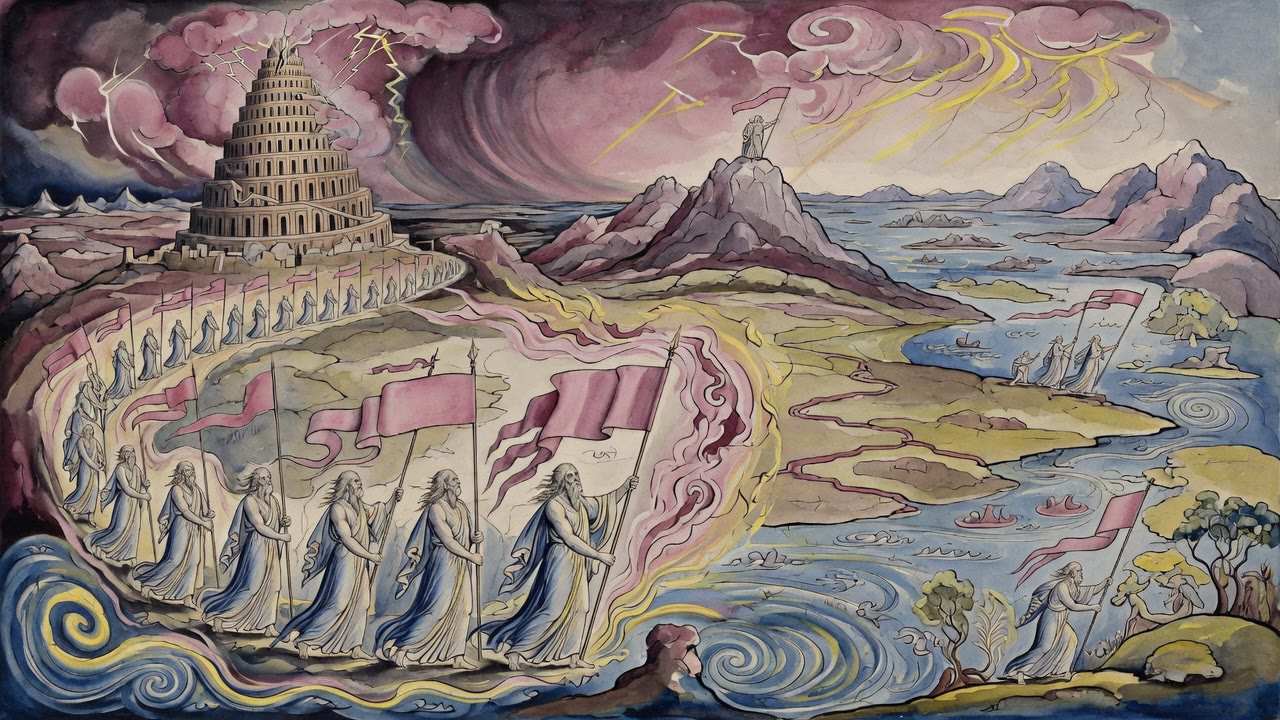
The three sons of Noah came down off the mountains first and settled in the flat country, and then they had to go back up and talk everybody else down.
Nobody wanted to leave the heights. They had watched the water take everything below a certain line and they had spent a year on top of it, and the low ground still looked to them like the bottom of a lake that happened to be dry at the moment. It took persuading. In the end they came, and the plain they came down into was called Shinar.
God Said Spread Out and They Heard a Trap
God told them to send colonies out and populate the whole earth. Take the land in every direction, work it, eat from it, and stop crowding each other, because men packed close together start fighting over the same field.
They did not go. Nothing happened to them immediately, so they took the crops and the growing families as proof that they were doing well by their own strength, and when the order came a second time they read it backward. A people spread thin across the world, they said, is a people that can be picked off one district at a time. "He wants us separated so He can finish us."
That was the mood Nimrod walked into.
Nimrod Said He Would Get Even
He was the grandson of Ham, bold, and famously strong in the hands. He told them the harvest was theirs and the courage was theirs and heaven had nothing to do with either. Then he took the government apart and rebuilt it around himself, because a man who is afraid of God is difficult to own, and a man who depends on Nimrod is not.
And he said what he intended to do about the Flood.
He would be revenged on God. If God had a mind to drown the world a second time, there would be a tower standing higher than the water could climb, and the people inside it would watch the second flood the way God had watched the first. He was not going to argue about the deaths of their forefathers. He was going to build a structure that made the argument unnecessary.
They thought submitting to heaven was cowardice, and they went to work.
A Brick Was Worth More Than a Man
The bricks were fired hard and laid in mortar made from bitumen, so that the walls would not take in water anywhere along their height. The thing went up faster than anyone expected because of the number of hands on it. It was so thick through that a man standing at the base and looking up guessed it lower than it was.
It reached a height that took a year to climb.
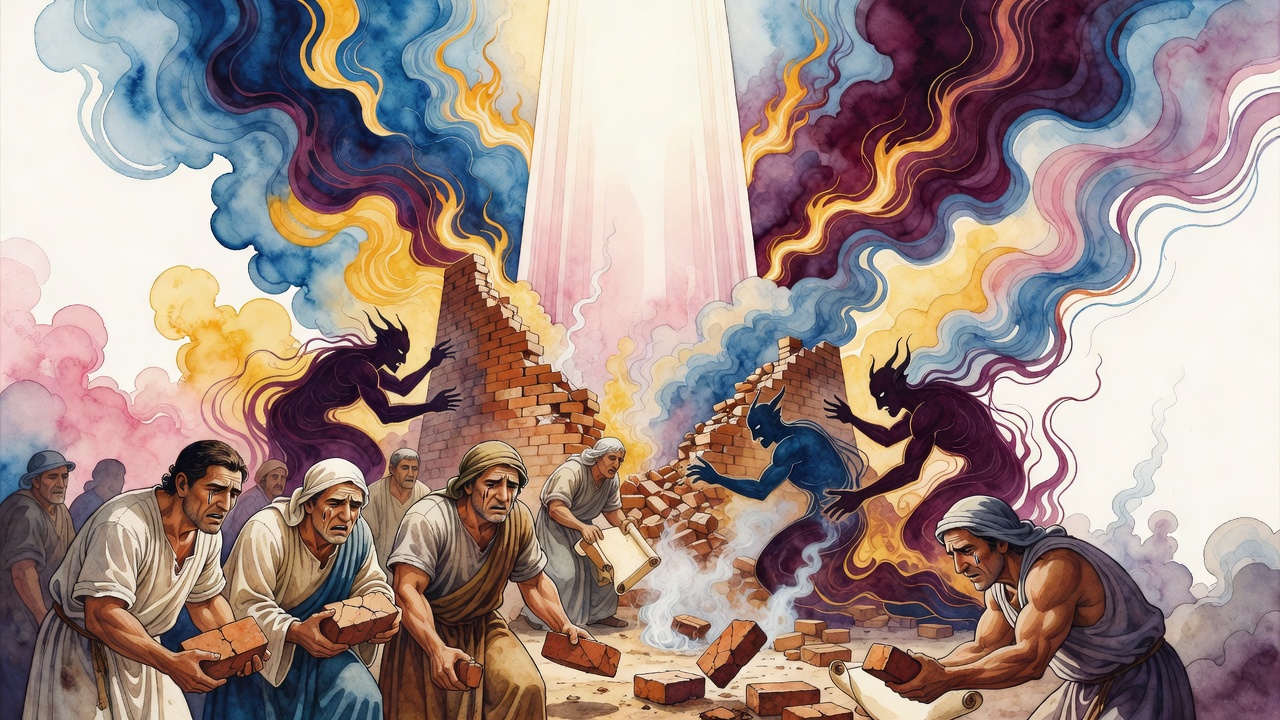
A year up, and a year back down for anything dropped. That arithmetic settled what a life was worth on that site. A man lost his footing on the scaffolding and went down and nobody stopped work and nobody buried him. A brick slipped out of a course and fell, and the builders stood there and wept, because that was a year gone.
They would not let a woman come off the line when her labor started. So she stood in the row moulding bricks and gave birth there, and she tied the child against her body in a sheet, and she went on moulding bricks.
The Tongues Came Apart
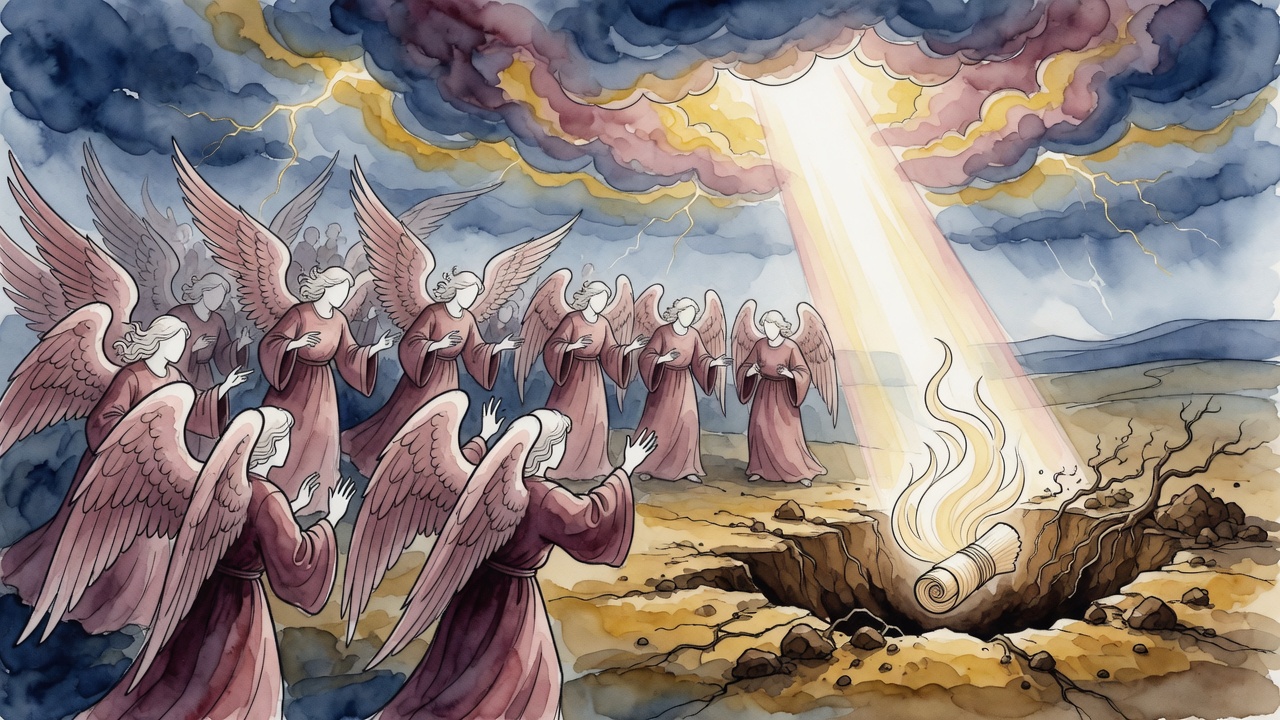
God looked at how they were behaving and did not drown them. The last drowning had taught them nothing, so a second one would teach them nothing either.
He put different languages in their mouths instead.
The site did not collapse. It stopped. A foreman shouted up the scaffold and the words that came out of him meant nothing to the man forty feet above him, and the man above shouted back and it went the same way, and the whole enormous apparatus of ropes and courses and relays that had been carrying bricks up for a year came to a halt in an afternoon of noise. They left it standing and scattered, which is what they had refused to do when they could still understand the order. The place kept the name of the confusion.
The Sword That Broke on a Jailer's Throat
Nimrod was still king when a man named Abraham started saying things about the stars.
Abraham had been watching the sun and the moon and the wandering lights, and what he noticed was that they do not keep their own order. "If these bodies had power of their own," he said, "they would keep their own courses properly. They do not. Whatever good they bring, they bring under orders from the One who commands them, and the honor belongs to Him."
Nimrod put him in prison and left him there without food or water to die of it.
He did not die. The prison-keeper watched a man go weeks without food and come out of it alive, and the keeper stood up and said publicly that Abraham's God was God. Nimrod told him to take it back or be executed. He would not take it back. They brought him out and the hangman set the sword against his throat, and he called out that the Eternal is God, the God of the whole world and of the blasphemer Nimrod along with it.
The blade would not go in. The harder they pressed it into his neck the more of it came away in pieces, until there was nothing in the hangman's hand worth swinging.
← All myths