God Descended to Babel and the Angels Came With Him
On the scaffold they wept for a fallen brick and stepped over a fallen man. Then their speech turned, and some of them went on all fours.
Table of Contents
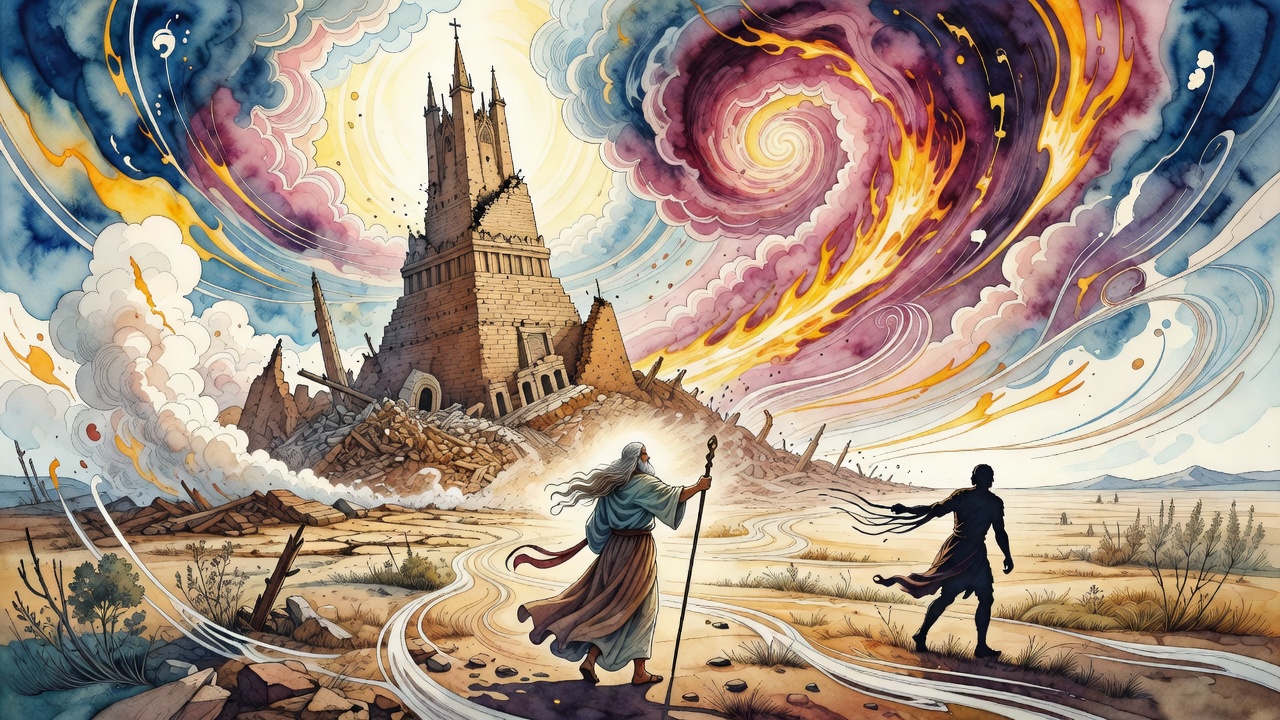
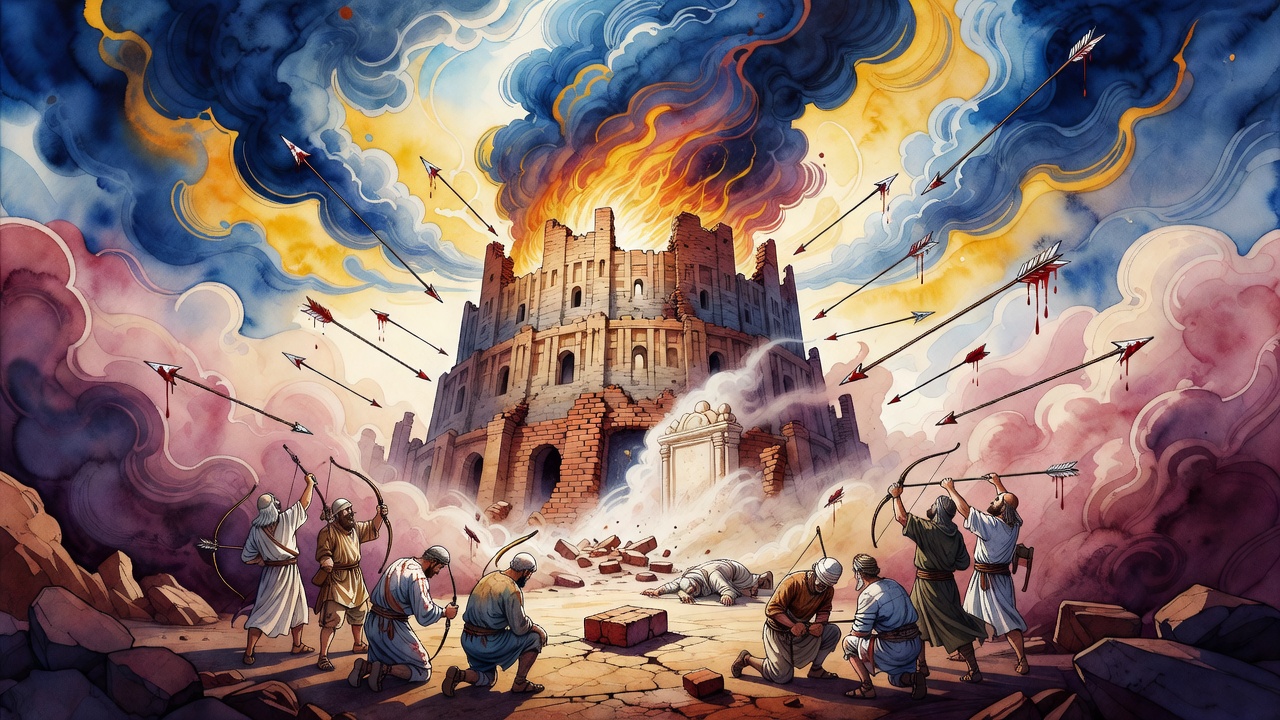
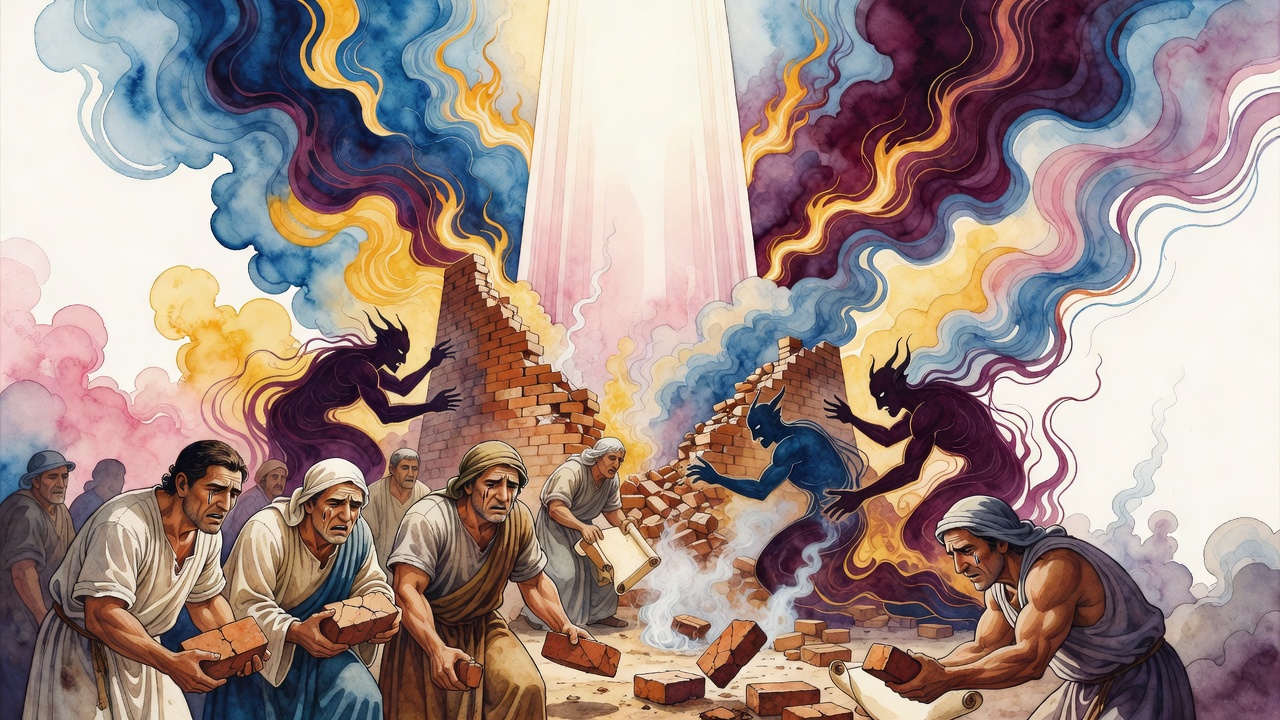
The brick hit the ground first. The men on the tower of Shinar covered their faces and wept as if a child had gone over the edge.
 Click for full size
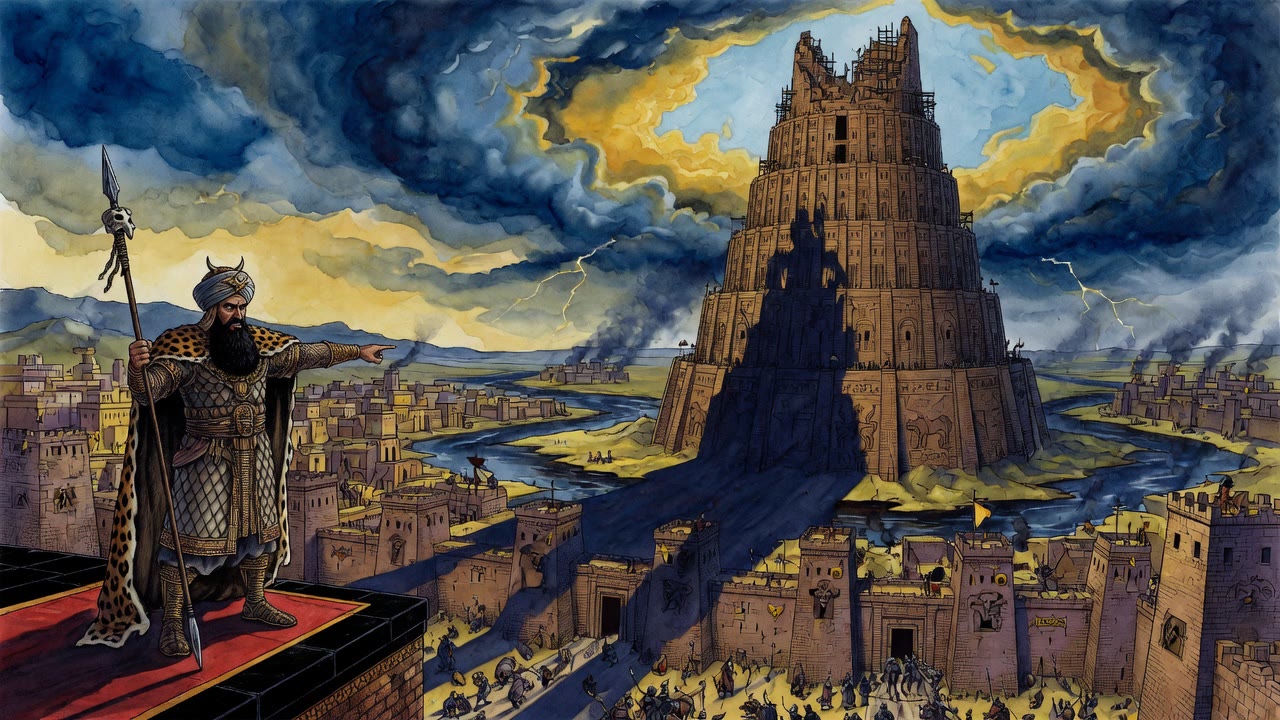
A man went over after it. They did not cover their faces for him. They shouted for more clay, more pitch, more fire in the ovens. The tower had seventy steps. The climb ran east. The way down ran west. They meant to take axes to the firmament and let the upper waters out, so no flood could ever again be poured on them from above. They meant to sit in heaven as gods.
Young Abram saw the work and cursed them in the name of the Lord. Nobody on the scaffold turned his head.
Then the air over the plain changed.
The Lord Came Down With His Council
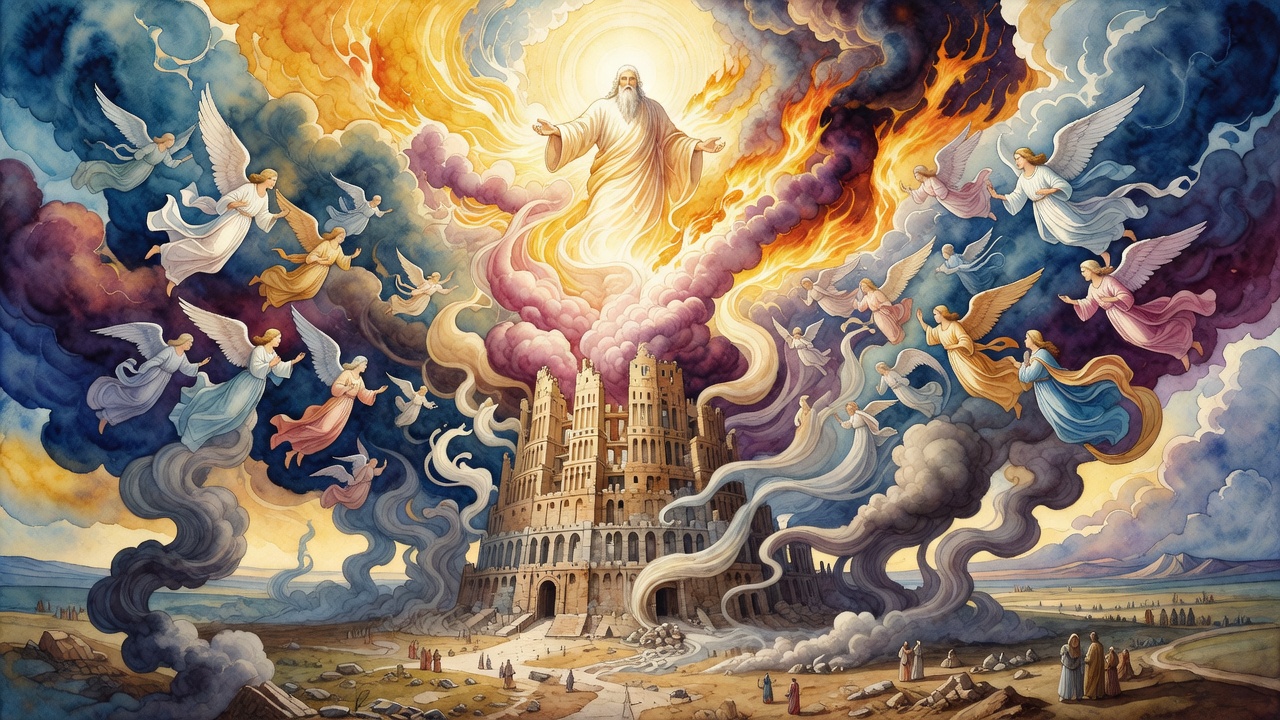
God came down to see the city and the tower. The angels who stand around His throne came down with Him. They moved through the air over Shinar together and looked at the baked clay stacked toward heaven.
God spoke the commission in the hearing of that council. "Go to, let us go down and confound their language, that they may not understand one another's speech, and they may be dispersed into cities and nations, and one purpose will no longer abide with them till the day of judgment."
The last words hung over the brickwork. Till the day of judgment. Not forever. Long enough to break the one purpose that had made a tower more precious than a man.
They Asked for Bricks and Got Water
A foreman called for stones. The man below him brought water. Another called for water and received stubble. Mouths that had shared one speech since the flood opened and produced sounds no neighbor could follow. Brothers stood face to face and did not know each other.
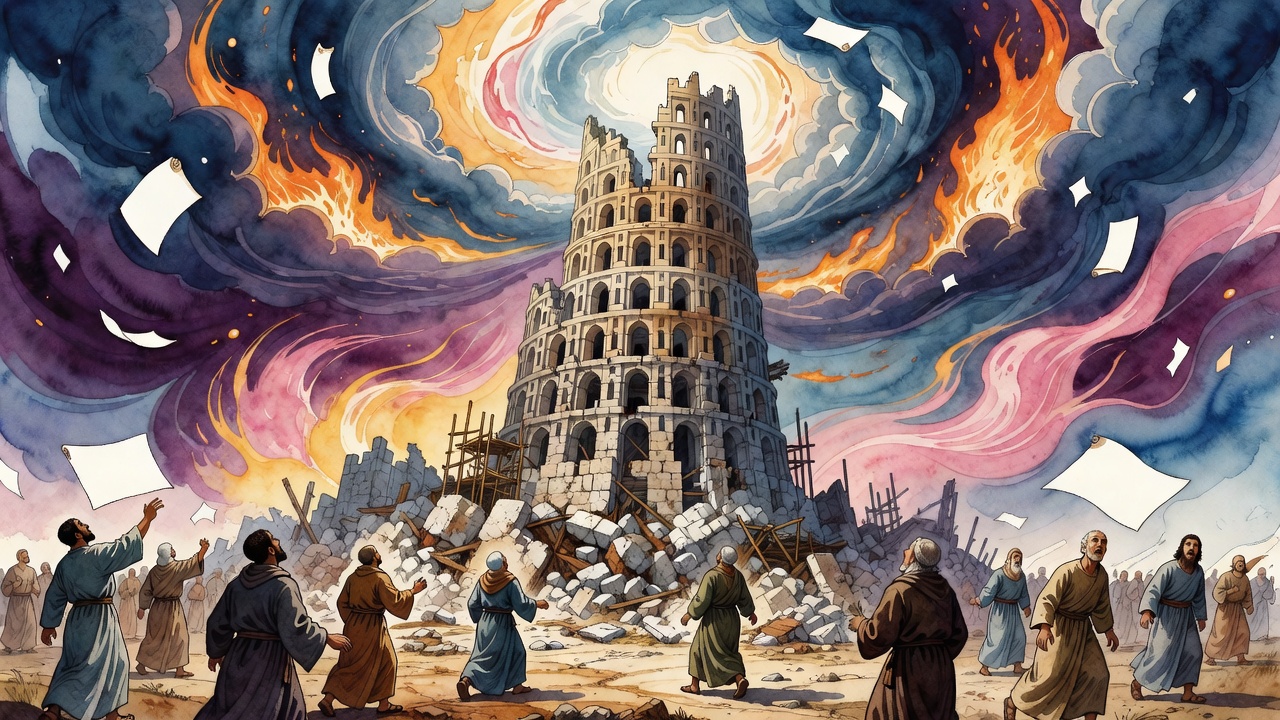
The work did not fall because a wind knocked it. It fell because a tower is a conversation, and the conversation stopped. Men who had passed bricks in a single rhythm now passed the wrong thing, cursed the wrong thing, and could not finish a sentence that would hold a wall.
They ceased to build the city and the tower. The wind would come later and throw what was left of it down upon the earth. First the speech went. Then the stone.
Some Builders Left on Their Knuckles
The punishment did not stop at the tongue. God changed the form of some of the builders into the form of monkeys. Hands that had stacked fire-baked clay toward heaven went to the ground. Faces that had argued for war with those in heaven could no longer argue. The men who had wept for bricks and stepped over bodies lost the bodies they had refused to value.
The rest were driven to clefts and caves. They dug holes in the dust. Beasts of the field moved in among them. One portion of the judgment came by water, another by fire, another by thirst. From the plain they were scattered into cities and nations, each according to the new speech in his mouth.
Seventy Angels Drew the Nations
This was one of ten descents God would make between the making of the world and the day of judgment. On the plain He did more than break a building. He and the seventy angels that surround His throne cast lots for the nations that were about to be born from the scattering.
Each angel received a people. Israel fell to the lot of God. To every nation a language. Hebrew, the speech God had used at the creation of the world, He kept for Israel. Seventy tongues rose off the brickwork. Seventy peoples walked away from one another. The single purpose that had built the tower would not return until the day named in the commission.
Nimrod Named What Was Left
Nimrod son of Cush did not leave Shinar. When the scattering was done he built four cities on the ruin and named them for what had happened there. The first he called Babel, because the Lord had confounded the language of the whole earth. The second he called Erech, because from there God had dispersed them. The third he called Eched, for the battle that had been fought in that place. The fourth he called Calnah, because his princes and mighty men were consumed there.
He sat down in Babel and took up his reign again over whoever was left. His subjects called him Amraphel, saying that at the tower his princes had fallen through his means. He did not turn back. He taught the sons of men the same wickedness he had taught them before the bricks went up.
The angels were gone. The plain spoke seventy ways at once. Some of the builders were already in the fields, using their hands as animals use them, and the name of the first city told anyone who came after what God had done to a single tongue that tried to climb into His house.
← All myths