Half the World Fell by the Sword at Babel
A builder asked for a brick. His fellow heard only noise and drew a sword. Half the workforce died before anyone left the plain.
Table of Contents
 Click for full size
Nimrod Put On the Old Garments
Nimrod was twenty when he pulled the garments over his shoulders. They were the skins God had made for Adam and Eve when they left the garden. Ham had stolen them from Noah after the ark. Cush had hidden them. Cush loved this late-born son enough to give them away in secret.
The garments made Nimrod strong. He hunted. He built altars. He fought his brothers' wars and won them. At forty he gathered about five hundred men, four hundred and sixty from Cush and eighty hired, and he crushed the children of Japheth who had been winning. When he came home they set a crown on his head.
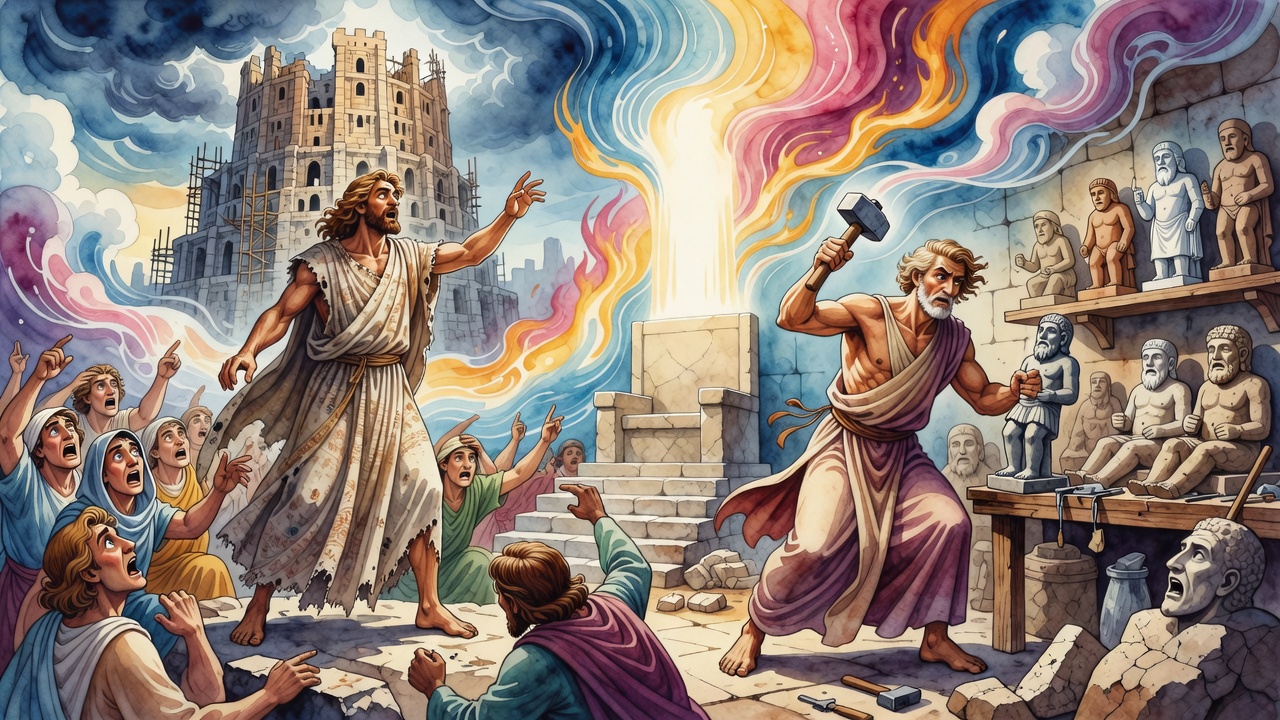
He named a city Shinar. Nations heard of him and bowed. The whole earth was of one language and of one speech (Genesis 11:1). Nimrod did not walk in the ways of the Lord. He made gods of wood and stone, and he taught the earth his rebellion.
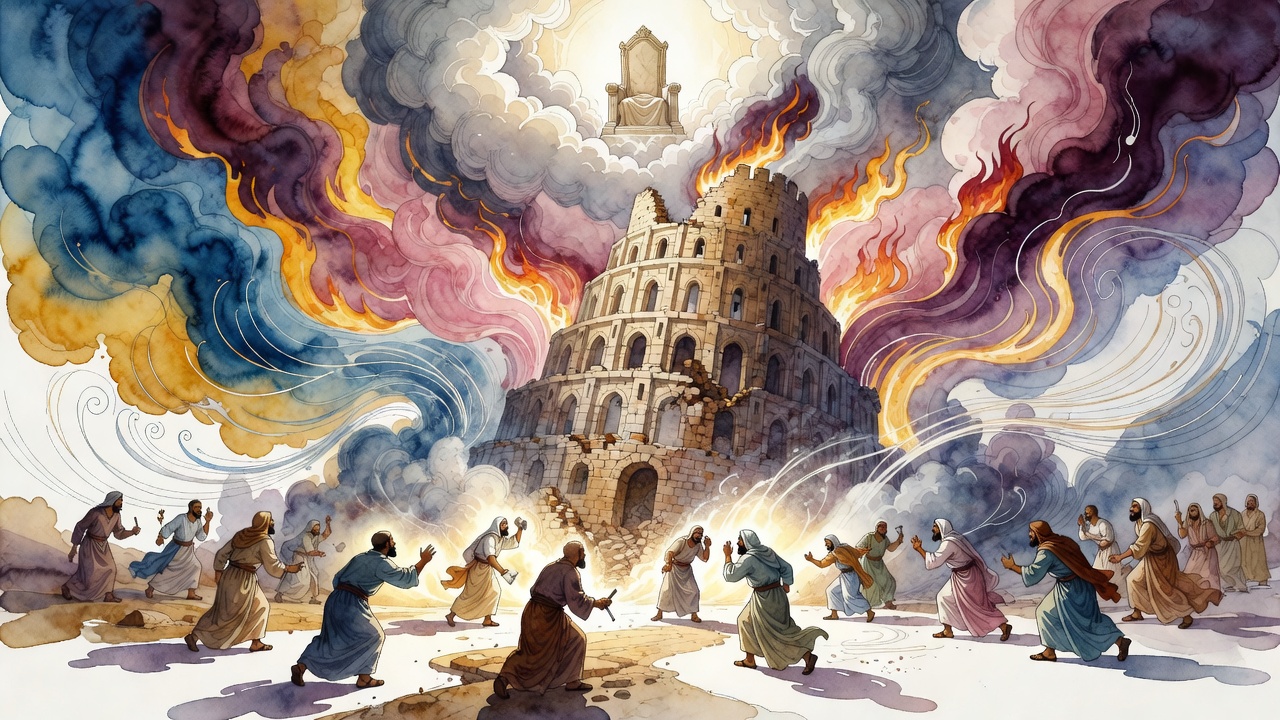
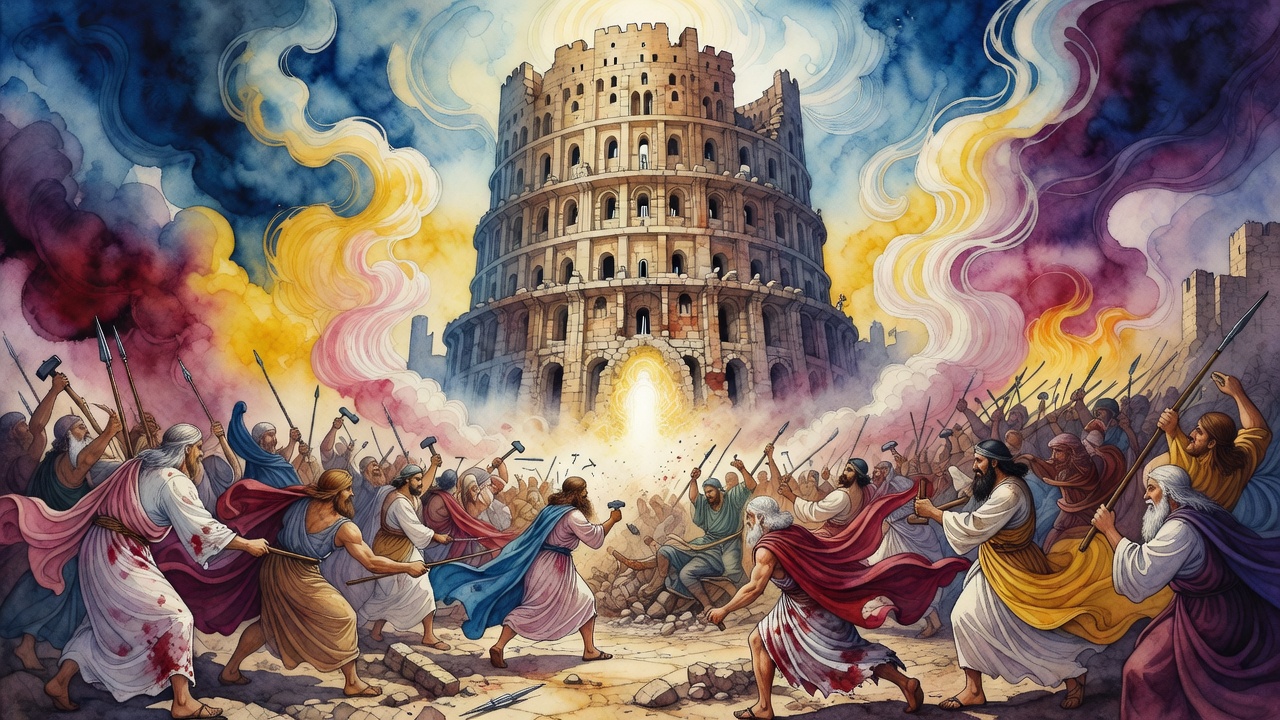
On the plain they fired bricks. They mixed mortar. They raised a tower meant to reach heaven. Signals, schedules, supply lines. Thousands of hands that understood one another without a pause.
A Man Asked for a Brick
A builder on the scaffold turned to his fellow and asked for a brick. The words left his mouth as noise. The fellow stared. He asked again, louder. Still noise.
Around them the same failure ran along the platforms. A man called for mortar and got a blank face. A man shouted a warning and no one moved. Hands that had passed bricks in a rhythm for months now hung in the air, waiting for a sentence that would not land.
They wished to speak, each in the language of his fellow. No one understood. Every man took his sword.
Half the World Fell There
The coordination that had lifted fired clay toward heaven turned on itself. A misunderstood gesture looked like a threat. A delayed brick looked like an insult. Rage found the only tool left when speech was gone.
They fought to destroy one another. The scaffolds ran with blood. Bodies fell from the height they had been so proud of. Half the world fell there by the sword.
The other half still breathed, still could not understand, still stood among the dead with weapons in their hands and no shared word to stop the killing.
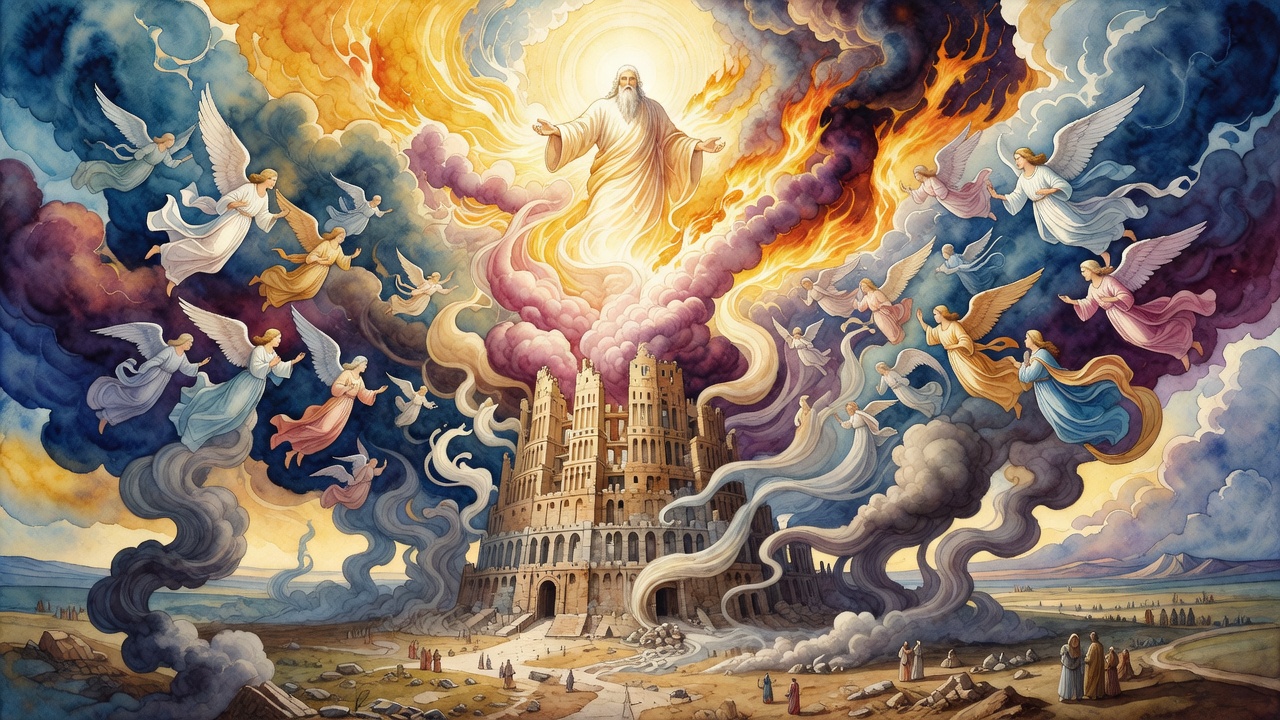
Then God scattered them over the face of all the earth (Genesis 11:8). The scattering was not of an intact people. It was of survivors. The place was called Babel, because there the Lord mixed the speech of all the earth.
The Survivors Walked Into New Names
Japheth's line went out, Gomer and Magog and Javan and the rest, about four hundred and sixty men in those days. Ham's line, Cush and Mitzraim and Canaan, about seven hundred and thirty. Shem's line, Elam and Ashur and Arpachshad, about three hundred. The numbers were small enough to count. The earth was large enough to lose them in.
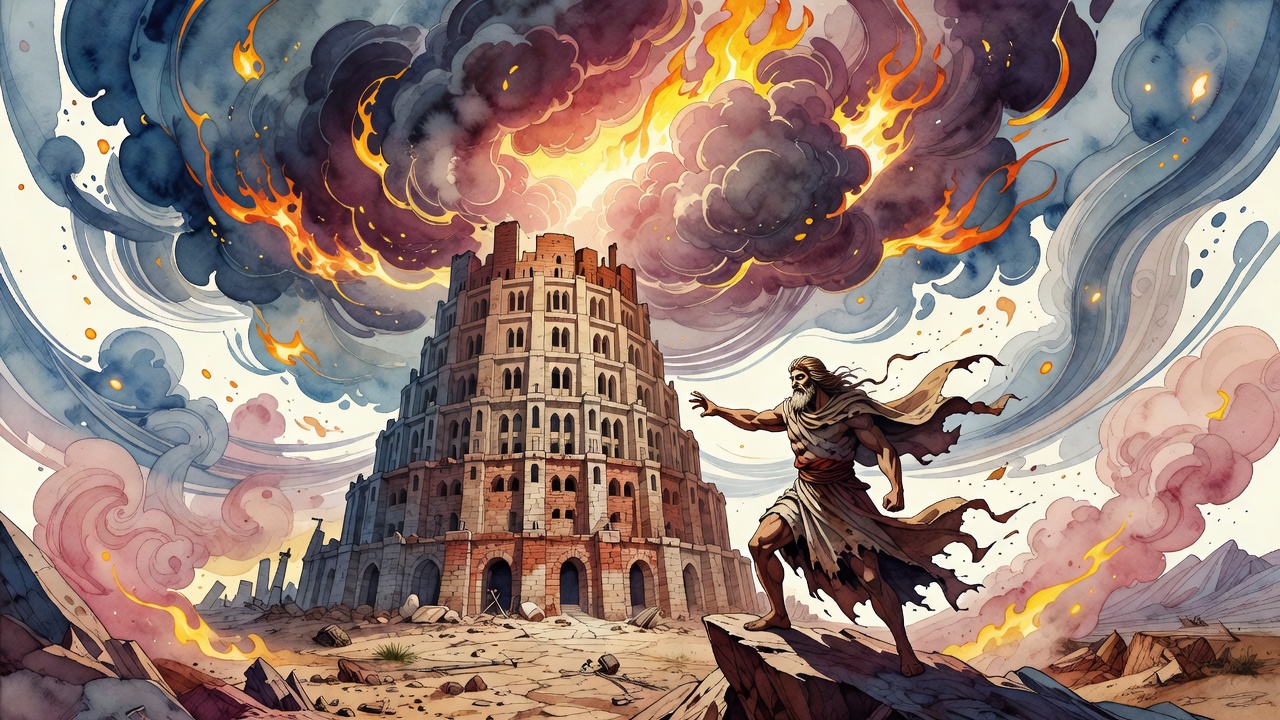
Peleg was named because in his days the sons of men were divided. Yoktan was named because lives grew shorter. Languages hardened. Territories hardened. The unfinished tower stood behind them like a mouth that had forgotten how to speak.
They carried confused tongues into every valley they settled, and the tongues became peoples, and the peoples stopped being able to ask one another for a brick.
The Coats Outlived the Scaffold
The garments did not fall with the dead. They stayed desirable. Later, Esau saw the coats of Nimrod and coveted them in his heart. He slew Nimrod and took them. When he put them on he became a mighty hunter, the way Nimrod had been.
Rebecca later took "the precious raiment of Esau, her elder son" (Genesis 27:15). Jacob, leaving Isaac, decided Esau was not worthy to wear those coats. He dug in the earth and hid them, a noose buried in the ground (Job 18:10).
Half the world had already died for a tower and a lost sentence. The coats of power kept moving from thief to hunter to brother, waiting in the dirt for the next hand that wanted them.
← All myths