Adam's Language Was Still Alive When Babel Fell
The builders of Babel spoke the tongue Adam used to name creation. When God scattered them, the world lost more than a common language.
Table of Contents
 Click for full size
The Tongue That Named Everything
When Adam stood in the garden and named the animals, he did not guess. He did not choose sounds that seemed appropriate or pleasant. He perceived the inner nature of each creature and spoke a name that matched it exactly, the way a key matches its lock. The lion carried in its body the same force carried in the syllables Adam uttered. The eagle's name held the eagle's essence. The word was not a label. The word was the thing.
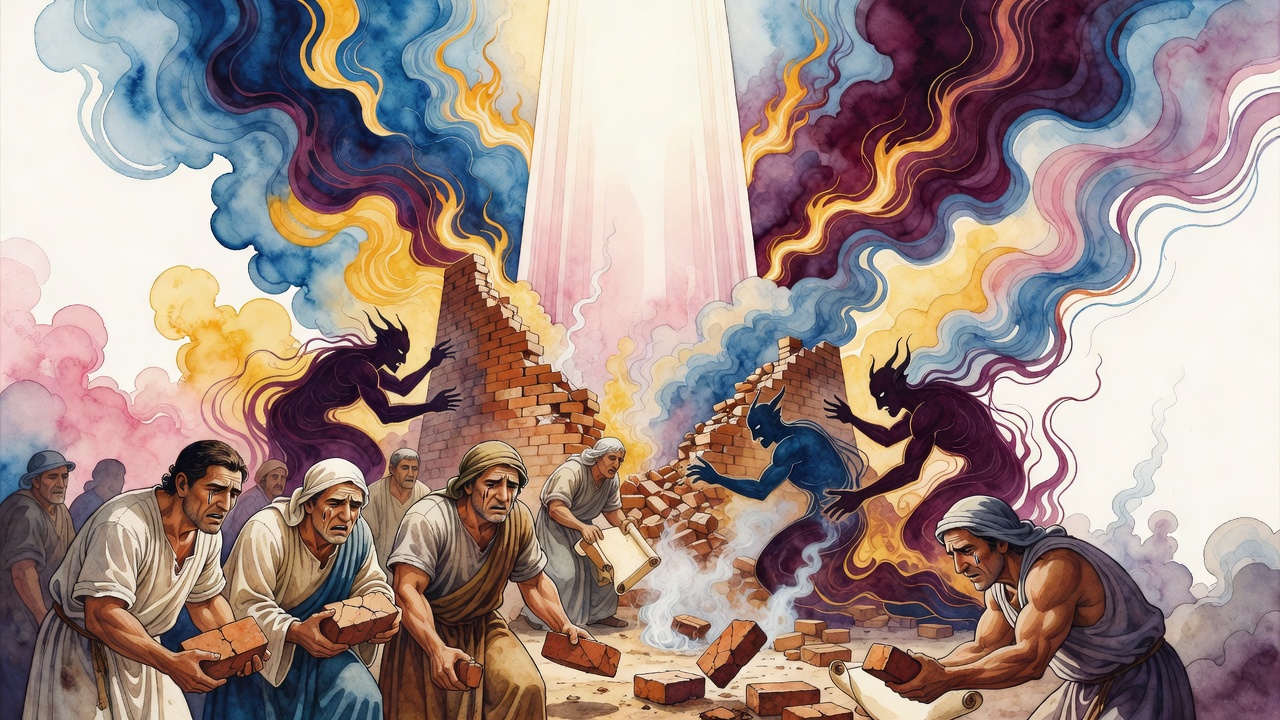
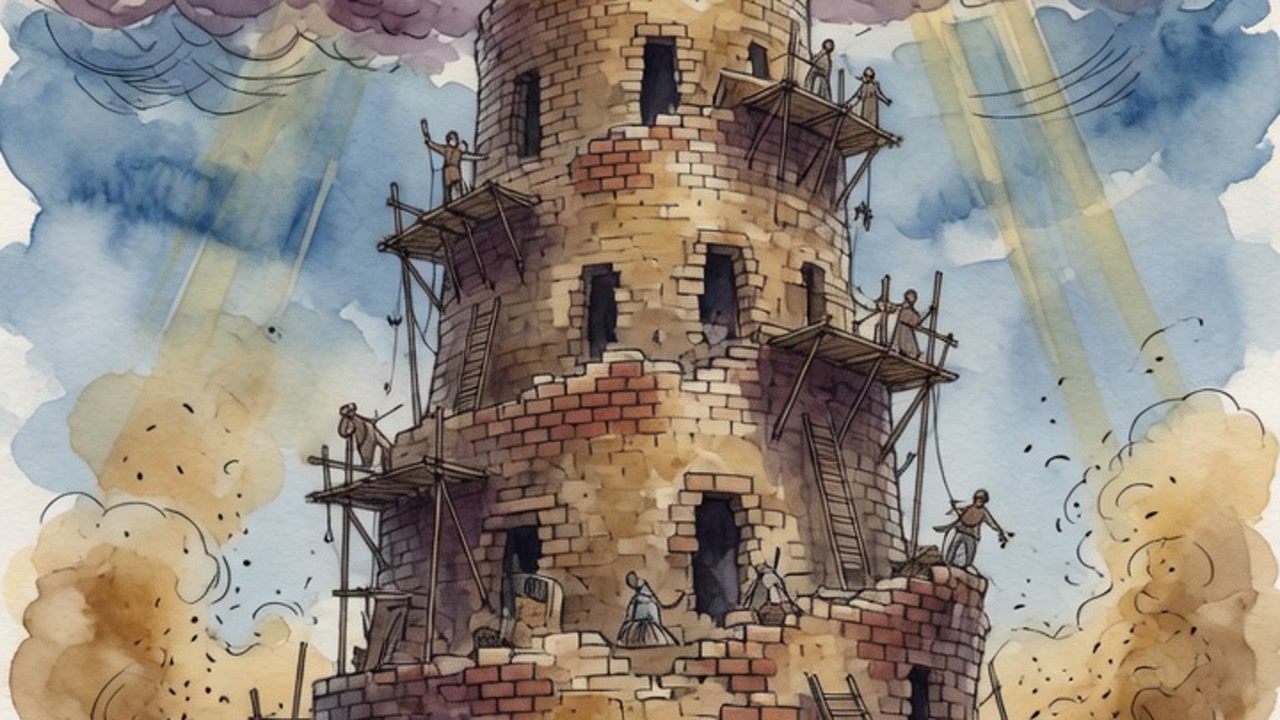
That language did not die with the garden. It survived the expulsion, the murder of Abel, the corruption that led to the Flood, and the catastrophe of the generation that was washed away. Noah carried it. His sons carried it. And when the survivors gathered in the valley of Shinar and began to make bricks and mix bitumen and plan something that would reach the sky, they spoke to one another in the language Adam had spoken. Every command was precise. Every instruction accomplished what it described. Some traditions say the work happened faster than any ordinary building: you spoke a stone into place and it went.
Nimrod and the Tower
Nimrod was the architect of the project in more than one sense. The midrash traces his power back to the garments of Adam, the skins God made for the first man after the expulsion from Eden. Nimrod acquired those garments. When he wore them, animals submitted to him and kings fell at his feet. He was the first of the post-Flood monarchs to consolidate power by force rather than by lineage, and he understood that a people who can speak in the language of creation can do things that should not be done.
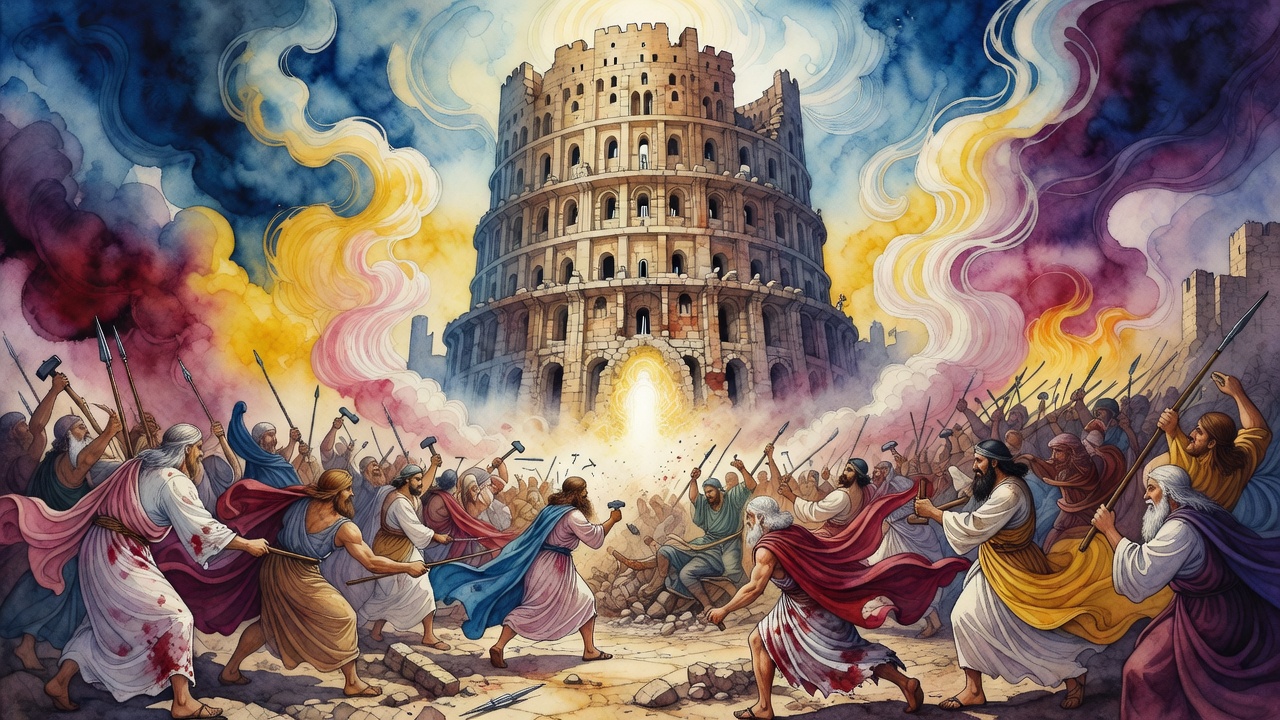
The real motive behind the Tower was not, in the rabbinic reading, merely to reach heaven. It was to anchor the unified humanity to a single place so it could never be scattered. The Flood had dispersed nothing that could not be gathered again. The builders wanted permanence. And they had a tool powerful enough to build it: the language that had originally built the world.
God Descends to See
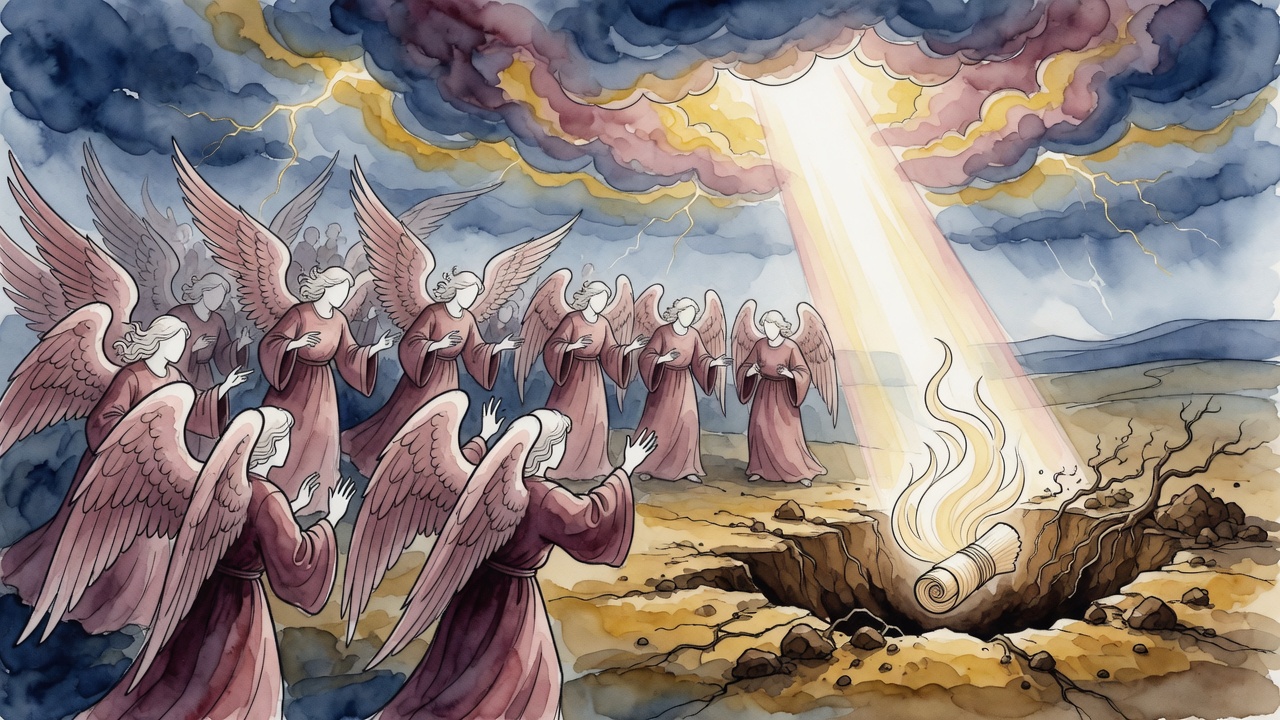
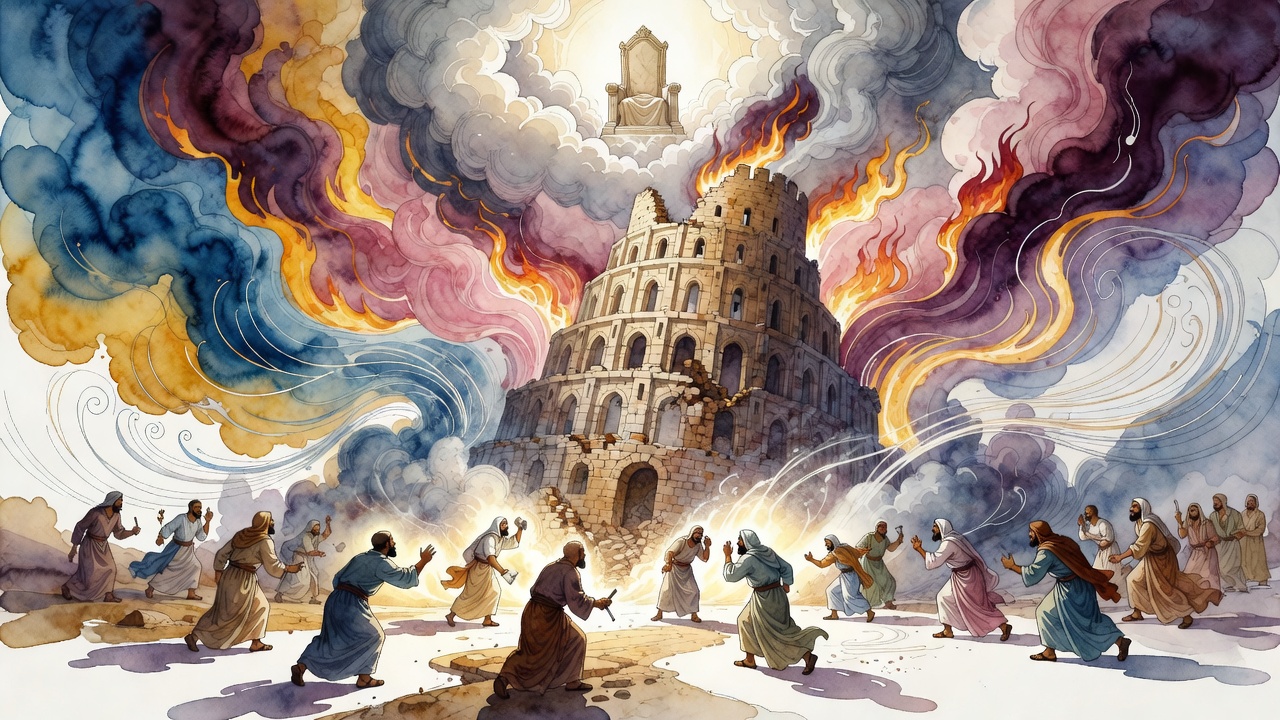
God descended. The Torah says so directly, and the midrash notices the irony: the Tower was supposed to be tall enough to reach heaven, and God had to come down to see it. The builders had miscalculated the distance between human ambition and the divine address.
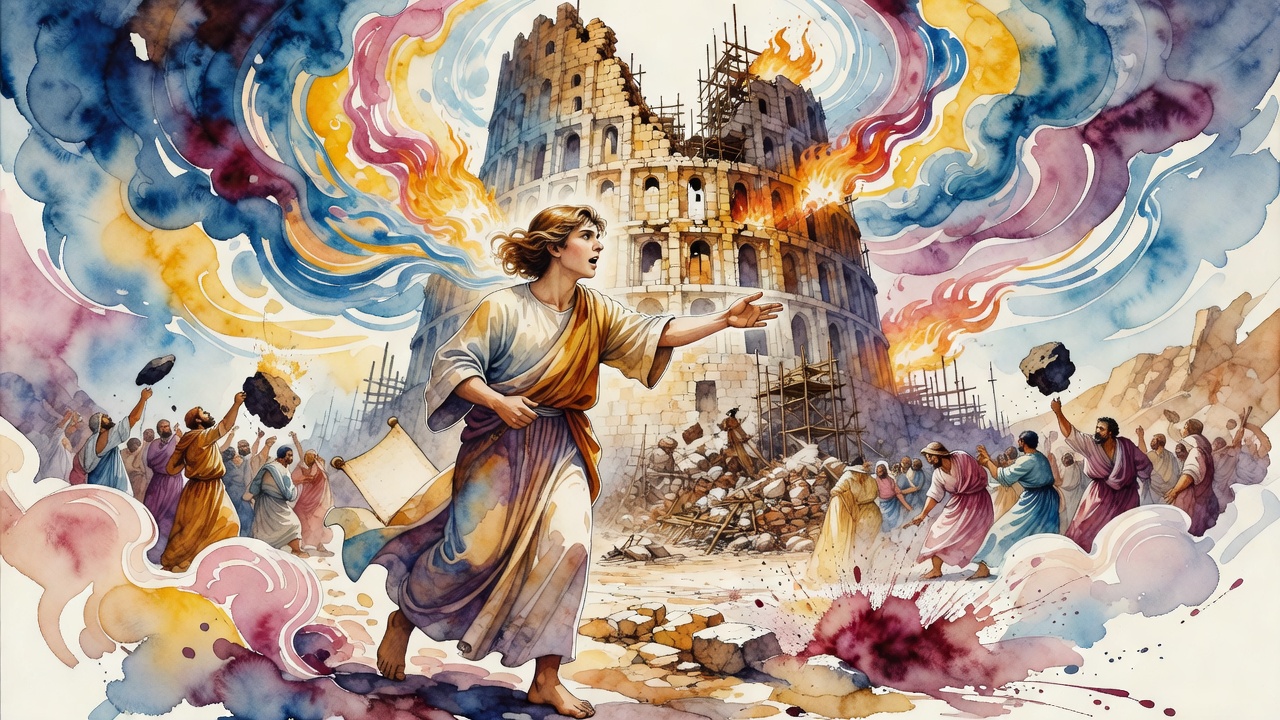
The confounding of languages was not a simple punishment. It was a surgical strike at the one instrument that made the Tower possible. When the builders could no longer speak Adam's tongue, they could no longer issue the precise commands that moved materials into place. They began to ask for a brick and receive a bucket of mortar. They began to strike one another in frustration. The work stopped because the language that powered it was gone.
What replaced it was the seventy languages of the nations, the splintered dialects that fill the world now. Every language humans speak today is a fragment of the one that was taken. Every word is a translation of a word in a language that named the thing correctly, and the name for which has been lost.
What Was Lost When the Tower Fell
The generation of the Flood sinned against one another in violence. They were destroyed. The generation of the Tower sinned against God in collective arrogance. Their punishment was comparatively mild: they were not destroyed but scattered. The contrast cut sharply. Discord between humans costs more than discord between humans and heaven. God preferred the Tower builders to the Flood generation because they maintained peace among themselves, even in their rebellion.
But the dispersion cost something that no later generation ever recovered. The seventy nations received seventy languages and seventy angels assigned to guide them. The single original tongue, the one in which God and Adam had spoken face to face, was preserved in the holy language, the language of Torah, the one in which the world had first been called into being. But it was now available only through study, not through inheritance. You had to learn it. It no longer came naturally to any child born in the valley of Shinar or anywhere else on earth.
← All myths