Isaiah Volunteered for the Prophet's Job Without Asking the Terms
Micah came home with a rod mark across his cheek. They turned Amos into a joke. The call went out again, and Isaiah stood up anyway.
Table of Contents
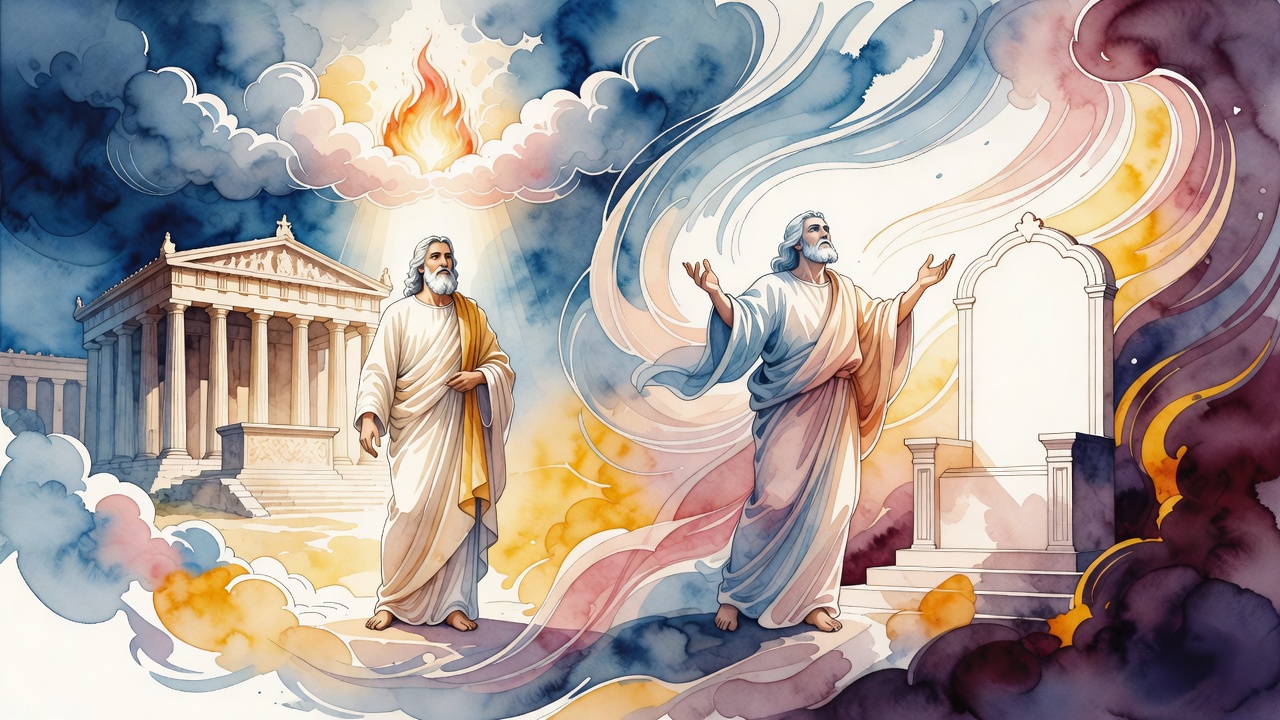
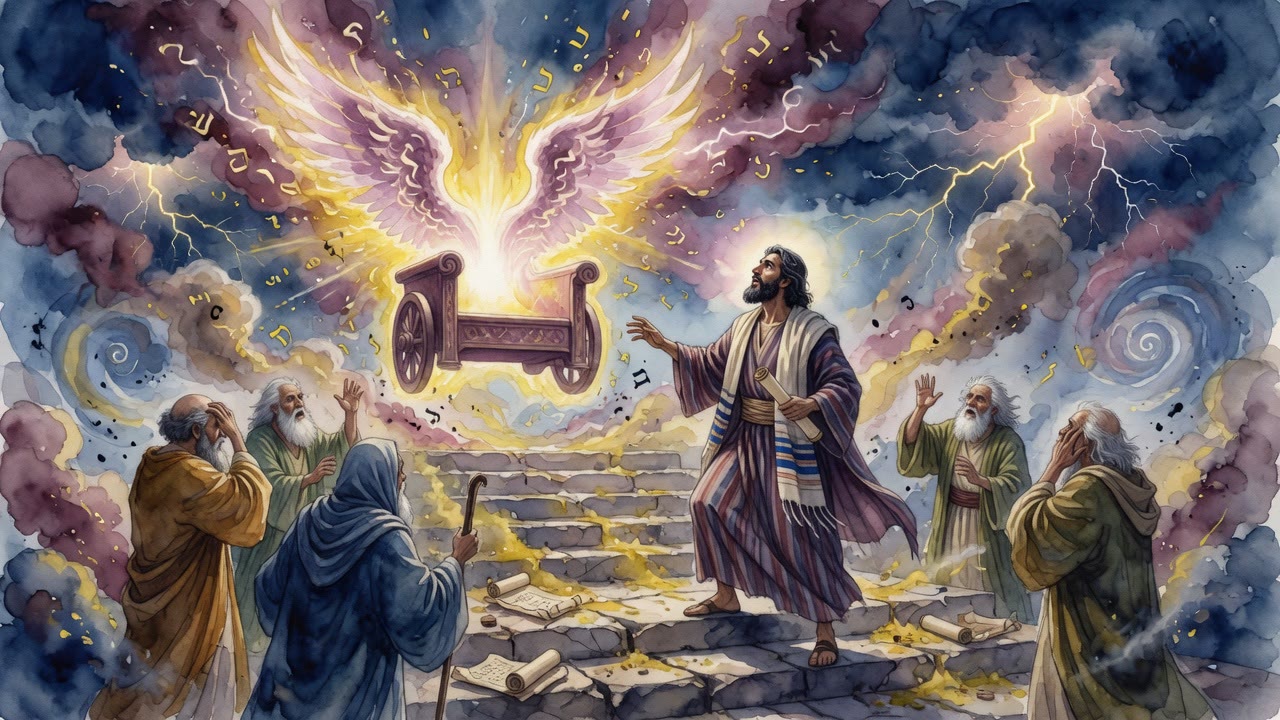
Isaiah sat in the study hall on an idle afternoon. A voice came down through the roof. It was not addressed to him. It went out over the empty benches the way a notice is read in a market at closing time.
 Click for full size
"Whom shall I send, and who will go for us?"
He was on his feet before the echo died.
"Here I am. Send me."
He had not asked what the errand was, or where it went, or how long it would take.
The Last Two Men Came Back Marked
God did not take him up on it. God began talking about the others instead.
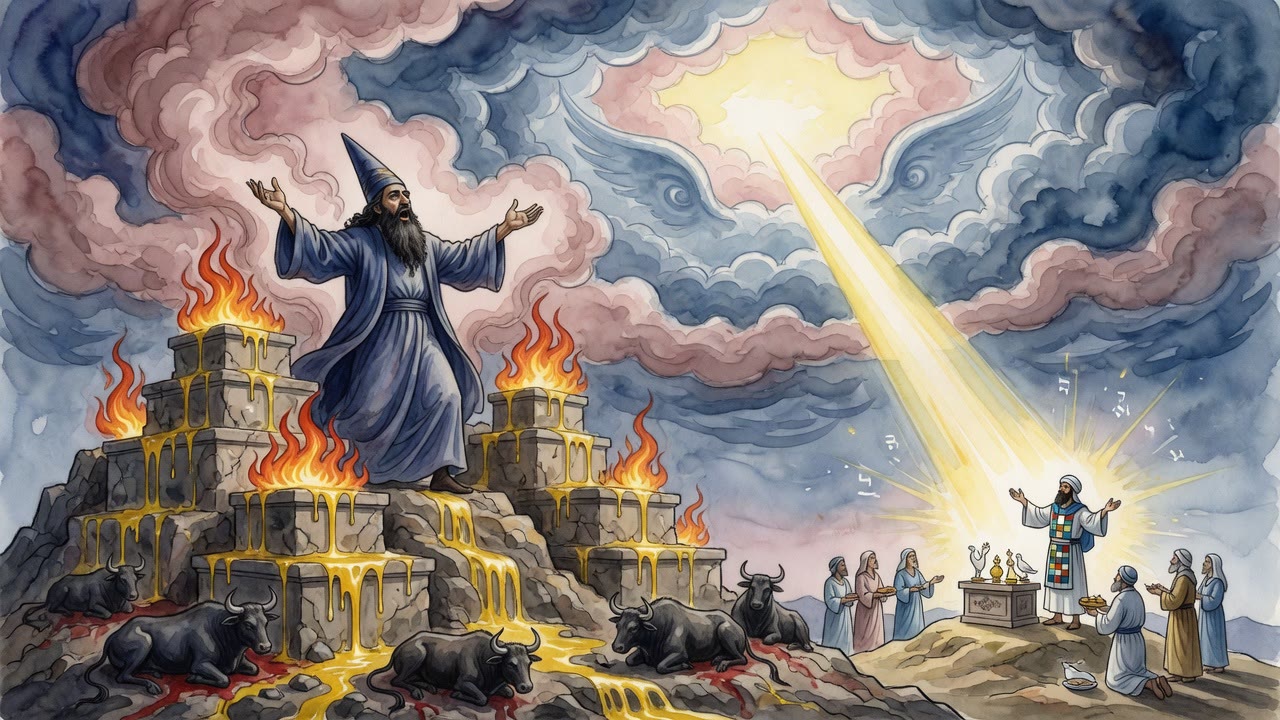
"I sent Micah." The people he was sent to picked up a rod and hit him across the cheek while the town watched. A judge of Israel, struck in the face in public. The mark stayed. The town went home.
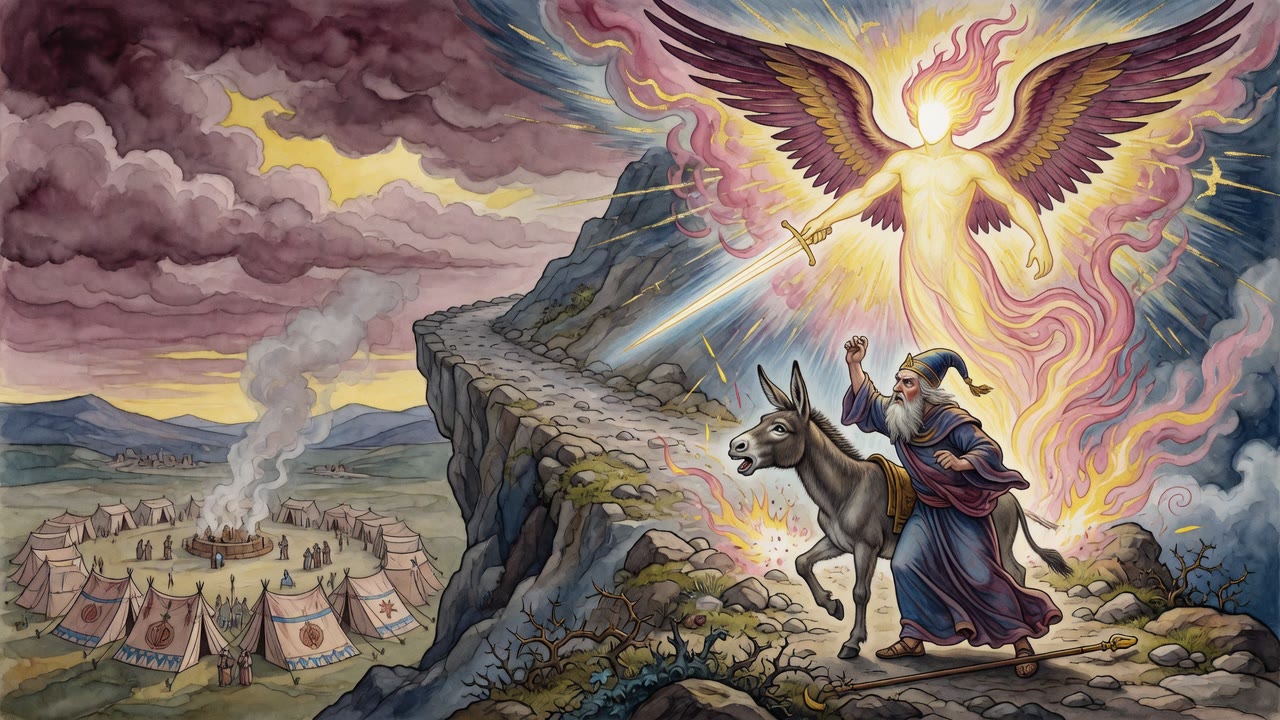
"I sent Amos." Nobody hit Amos. They gave him a name. His own name sat close enough to a word for a man thick and slow of speech that the crowd only had to say it slowly to turn him into a joke. Stutterer. They called him that until it stuck, and after that nothing he said arrived.
That was the record. One bruised. One laughed out of the square. Between them, not a single person turned around.
The question went out over the benches a second time. Isaiah's feet were already under him. He did not sit back down.
"Here I am. Send me."
The Cost Read Out First
So God gave him the terms, with the door still open behind him.
"My children are troublesome and insubordinate. If you accept upon yourself to be demeaned by them and to be struck by them, you will go on My mission. If not, you will not go."
Not the errand first and the cost found later on a road with a rod already swinging. The cost first, in the room. He could still walk out. The benches would not stop him.
Isaiah answered with a line that would end up in his own book. "I gave my body to those who smite, and my cheeks to those who pluck." He put the beating in the past tense before it happened, as if he had already taken it and already walked away.
Then he said the thing no volunteer says.
"But I am not worthy to go on a mission to Your children."
A Prosecutor Who Hated the Work
He had accepted the rod and refused the honor in the same breath. He would take the blows. He did not believe he had the standing to face them and speak.
God told him why he had been picked, and it had nothing to do with nerve.
"You love righteousness. You love to vindicate My children. You detest wickedness. You detest condemning them."
Carrying a hard message would hurt him to carry. God wanted a mouth that would bleed for the people it rebuked. "Therefore God, your God, has anointed you above your counterparts."
Isaiah stood in the empty hall with that sentence on him. Above his counterparts was not a prize. It was a description of how the words would reach him, and of what they would cost when they left his mouth.
Every Word Arrived Twice
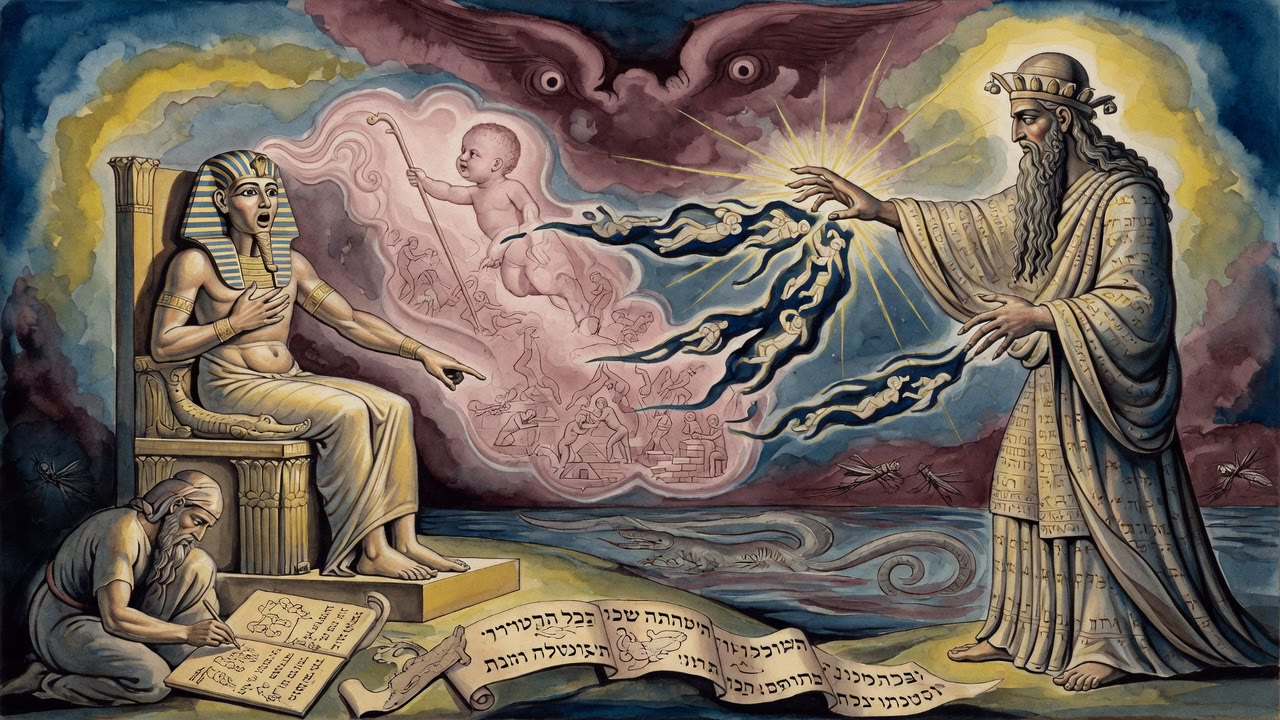
Every other prophet in Israel had taken delivery secondhand. Moses carried the spirit, and God drew some of it off him and laid it on seventy elders in the wilderness, and the elders prophesied with what had been drawn off. Elijah went up in the whirlwind, and the prophets on the far bank watched Elisha come down and said to each other, the spirit of Elijah has rested on Elisha. It moved along a chain, mouth to mouth, thinning as it traveled.
Isaiah would take his straight from the mouth of God, with nobody standing in between.
And there was one more clause. The others prophesied single. Isaiah would prophesy double.
Awaken, awaken. Rouse yourself, rouse yourself. I, I am the one who comforts you. Comfort, comfort My people (Isaiah 40:1).
Every word arrived twice, the way a name is called twice to someone who has stopped believing anyone is still looking. Hard words first, then the doubled comfort, the same pattern Moses had used, the same pattern Hosea and Joel and Amos and Micah and Jeremiah would use, wreckage first and a vineyard after.
That was the wage set in front of a man who had just agreed to be struck in the face by the people he would be saying it to. He left the hall with the terms in his pocket. The rod had not landed yet. He had already given it his cheek.
← All myths