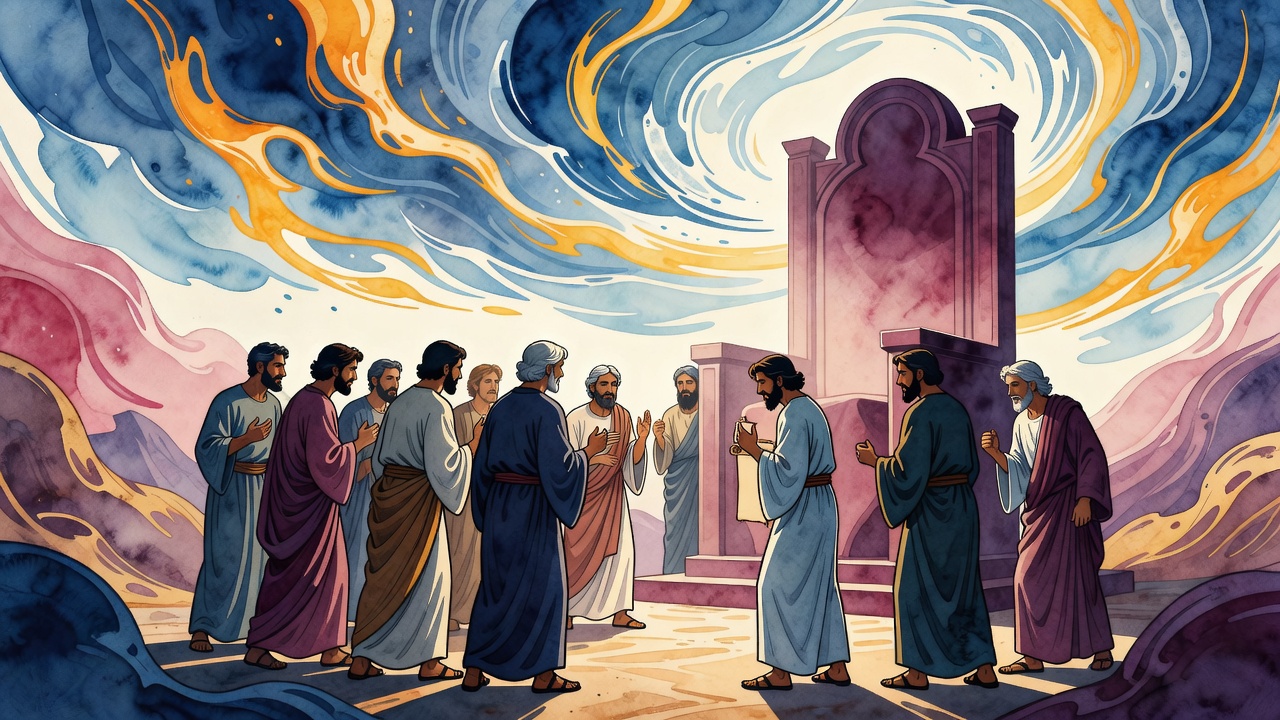
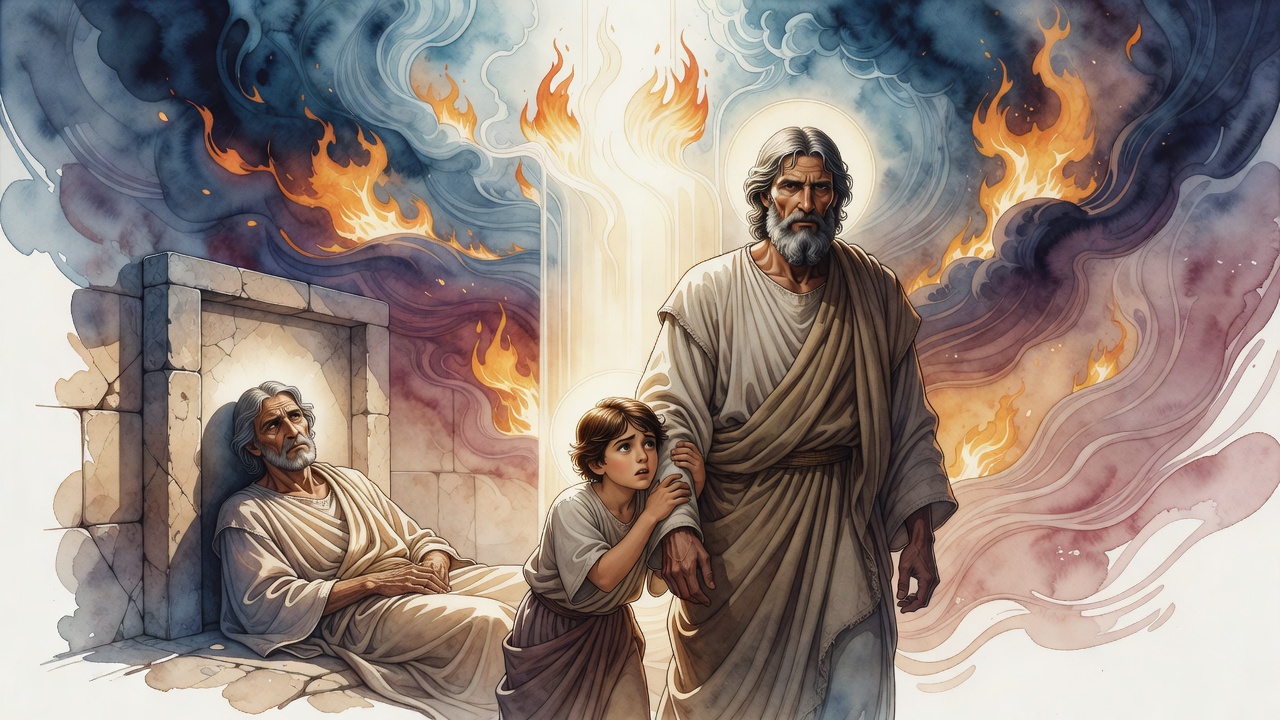
Joseph Was Sold and His Brothers Could Not Eat
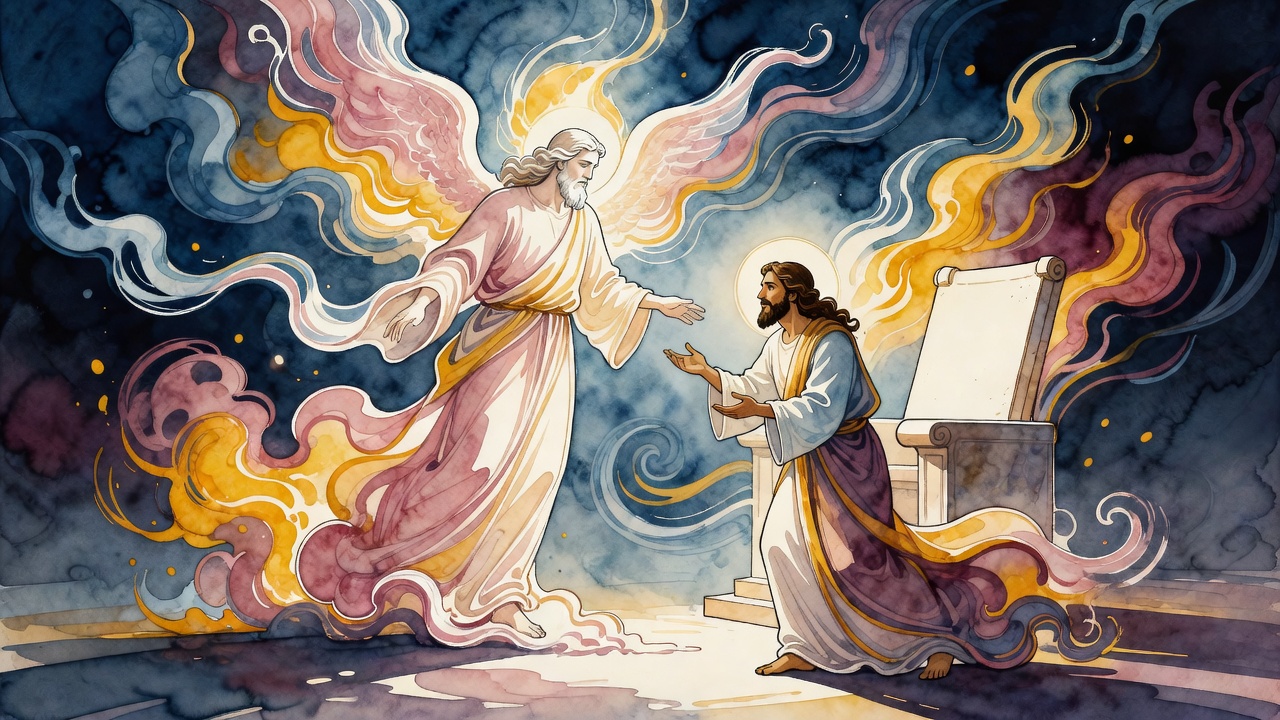
Reuben called Joseph's name into the pit. Nothing answered. He climbed down, searched the dark, and tore his clothes at the rim.
Table of Contents
 Click for full size
The Pit Reuben Found Empty
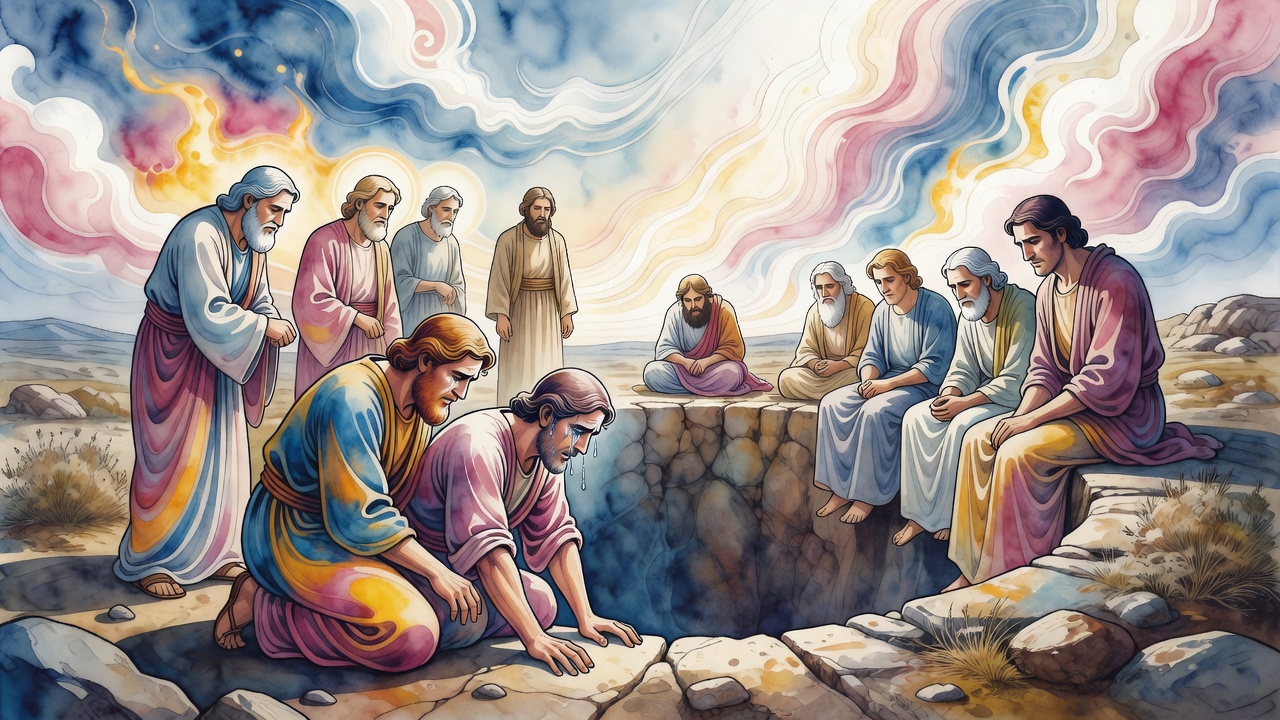
Reuben had been absent when the caravan appeared. He had not suggested the sale. He had not taken any silver. He returned later, alone, and called Joseph's name down into the dark.
"Joseph! Joseph!"
Nothing answered. He assumed the worst: that Joseph had died of fright in there, or that a snake had found him. He climbed down. He searched the pit with his hands. No boy. He came up and tore his clothing at the rim, in a place where no one could see him do it.
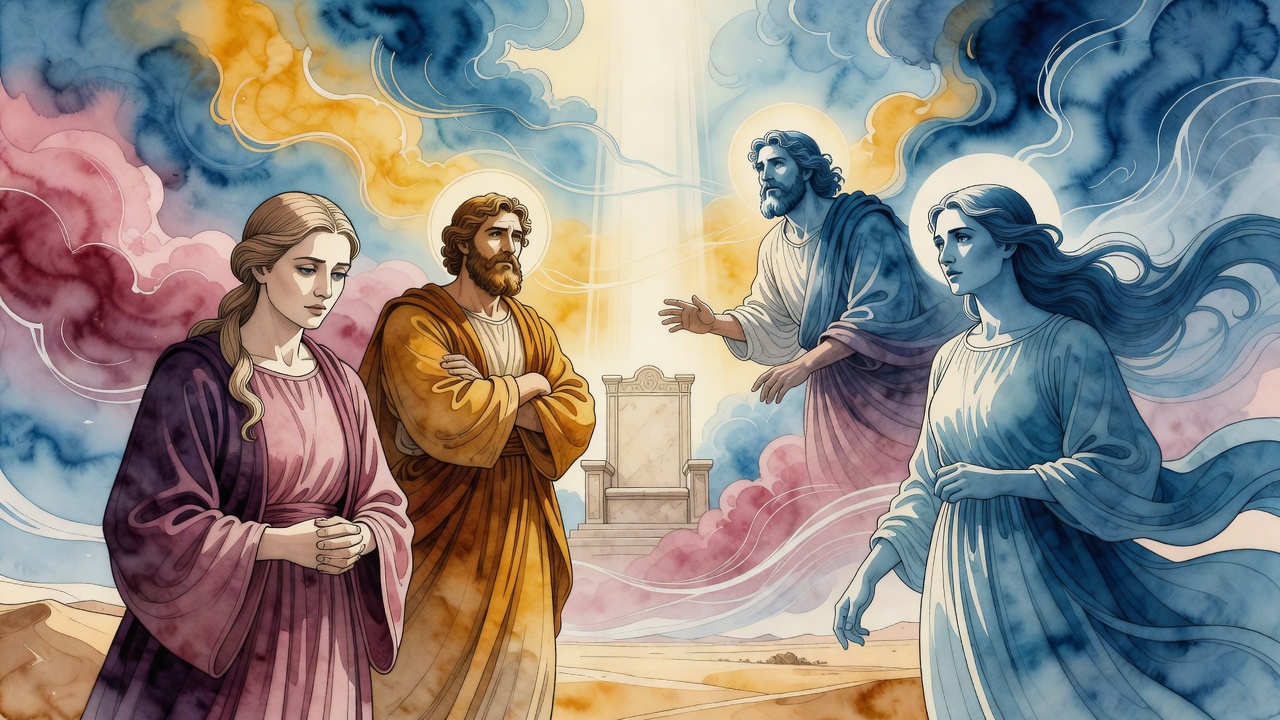
He went to his brothers and found them already grieving, already counseling how to face Jacob. "I came to the pit and behold Joseph was not there," he said. "What then shall we say unto our father, for my father will only seek the lad from me." They had sold him, and then their hearts smote them. They had even gone looking, hoping to buy him back. The sale had happened. Nothing in the next hour gave them Joseph back. They sat. Bread was there. They could not eat.
The Coat They Sent Home
They had stripped Joseph before they threw him in. The cloak. The shirt. The fine tunic. The garment against the skin. Simeon had taken him. The pit they chose had no water in it. Serpents and scorpions had water enough of their own.
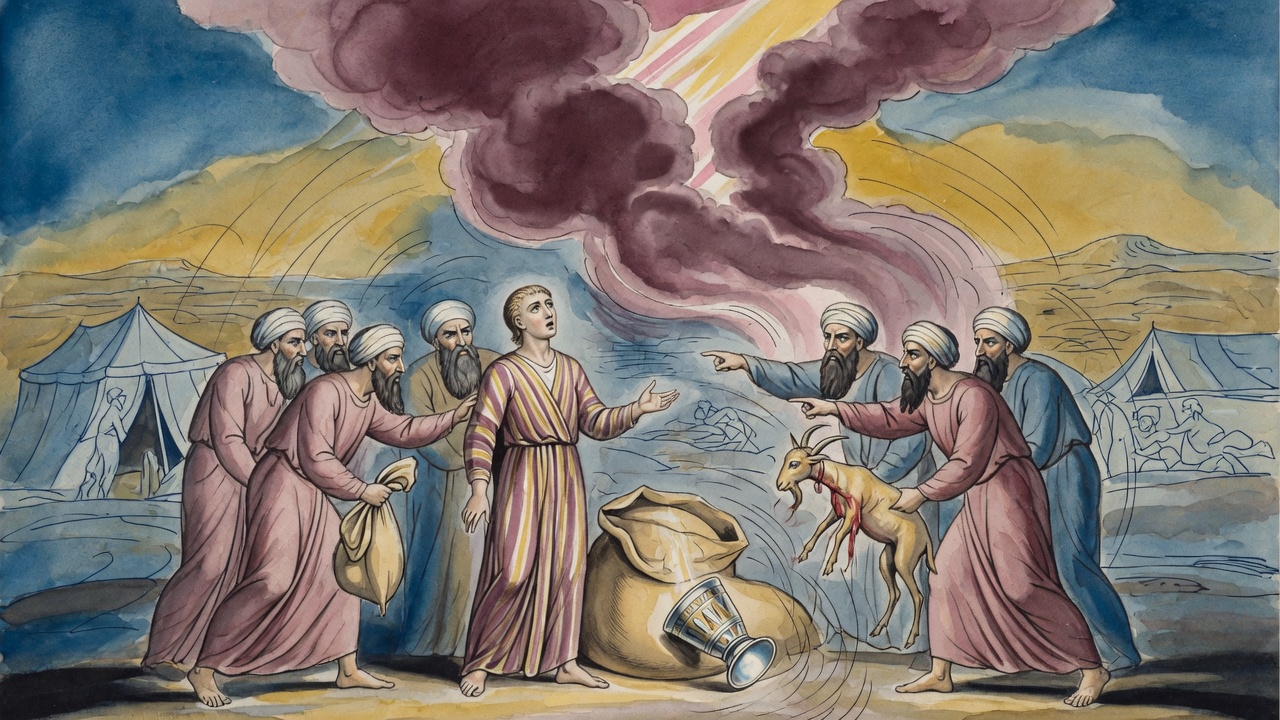
Now they needed a story for Jacob. They swore, from the youngest to the oldest, that the man who told their father the truth would be slain with the sword. Then Issachar spoke. Take the coat. Tear it. Kill a kid of the goats. Dip the coat in the blood. Trample it in the dust. Send it by Naphtali. Let Jacob say an evil beast has devoured him.
They did it. Naphtali carried the coat. Jacob saw it and knew it and fell on his face as still as a stone. Then he rose and cried that it was the coat of his son Joseph. By evening the sons came in with torn garments and dust on their heads, and found their father already weeping the lie they had built for him.
Jacob Still as a Stone
Jacob tore his clothes. He put sackcloth on his loins. He called Joseph's name the way Reuben had called it into the pit, and nothing answered him either. He said he would go down to Sheol (שאול), the shadowy world of the dead, mourning his son. The brothers watched this and kept the oath.
Judah lifted his father's head from the ground and set it on his lap and wiped the tears. Jacob would not be comforted. The whole household mourned. Word reached Isaac in Hebron, and he came, and Jacob still refused. The sons stood around a grief they had manufactured and could not stop.
Meanwhile the Ishmaelites who had bought Joseph sold him onward to Potiphar, captain of Pharaoh's guard. Joseph arrived in Egypt as a slave. Potiphar put him to work, then believed a wife's accusation, then threw him in prison. The boy from the pit went into another pit, this one with a door.
Bread for a Country That Dropped Its Gods
Joseph languished there for years. Ten years, one for each brother he had traduced to their father. Potiphar's wife still came to the cell and promised release if he would do her will. "Better it is to remain here," he told her, "than be with thee and commit a trespass against God." She left him alone only when she saw the refusals would not end.
The butler forgot him for two full years after the dreams. Then Pharaoh lifted him. Then the famine came. Nations needed grain. Joseph would not sell bread to a household that still kept its idols. "Give up your allegiance to your deceitful idols," he said, "and say, Blessed is He who giveth bread unto all flesh." They ran to Pharaoh. Pharaoh said, "Go unto Joseph; what he saith to you, do." He would not feed the uncircumcised. They complained. Pharaoh called them fools for ignoring a warning of seven years of plenty.
The man they had purchased for silver was now the instrument through which Egypt gave up its gods, one household at a time, in exchange for bread.
Twenty Years and Still in the Pit
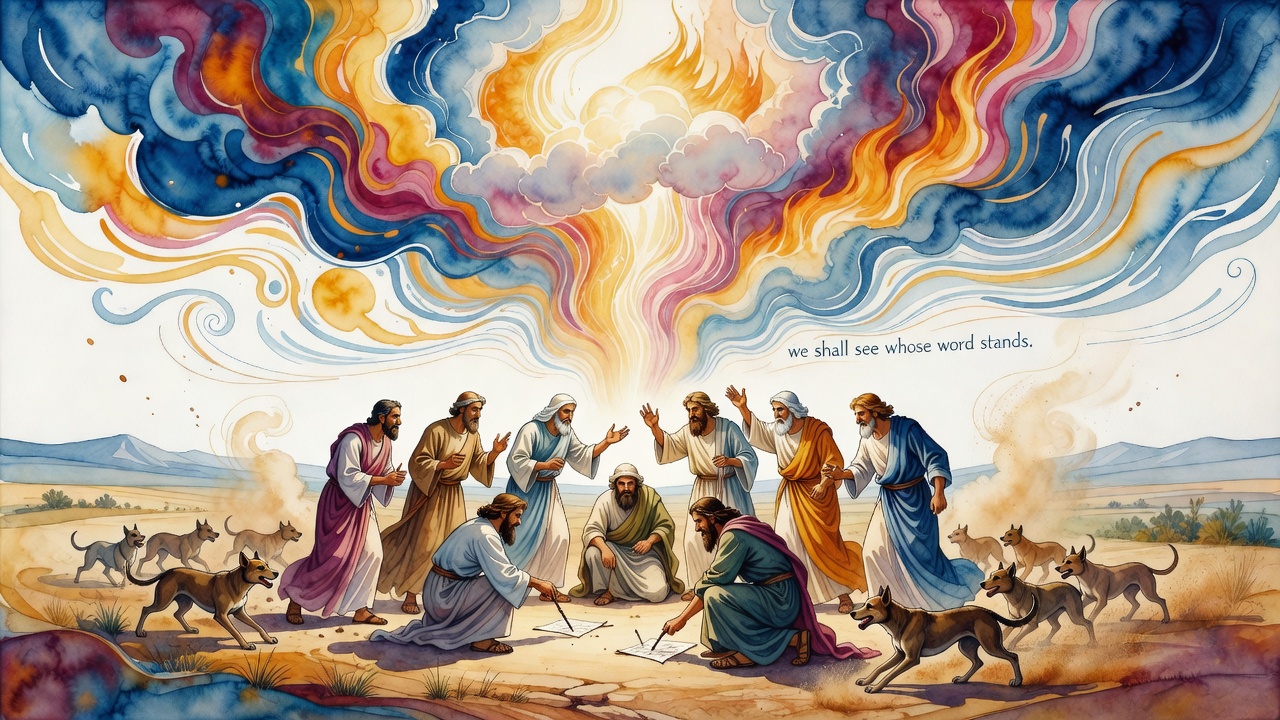
When the brothers stood before Joseph in Egypt and he accused them of being spies, they said to one another, in Hebrew, without knowing he understood: we are guilty on account of our brother, whose distress we saw and did not listen. Twenty years after the pit, they were still there in their minds, still sitting by the empty cistern, still unable to find the hour where stopping would have been possible.
Joseph heard them say it. He turned away from them and wept.
Reuben had called into the dark and gotten silence. Jacob had called into the same silence with a bloody coat in his hands. The brothers had sworn one another to that silence with a sword. In Egypt the silence broke from the inside, in the language of home, in front of the brother they had sold. He was alive. They still could not eat the old meal in peace.
← All myths