Three Riddles the Queen of Sheba Brought to Jerusalem
She set a wooden well with iron buckets on the king's table. Solomon named the rouge tube before her hand had left the wood.
Table of Contents
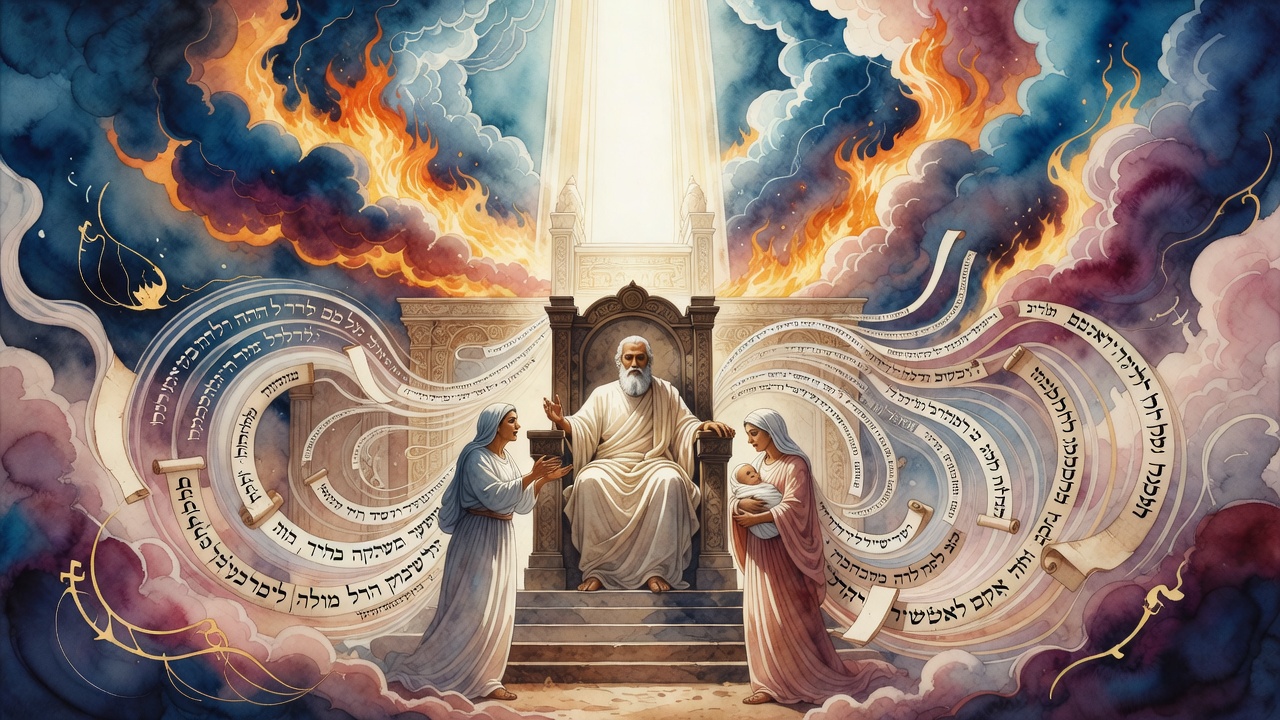
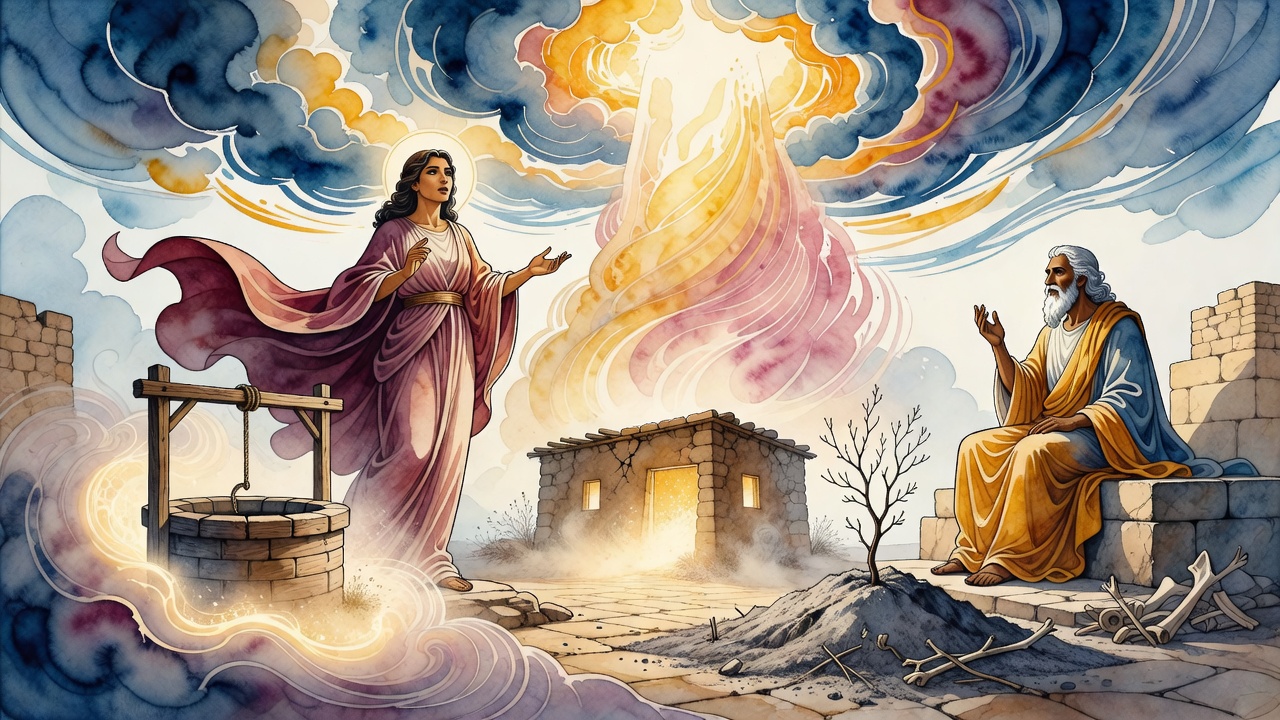
The Queen of Sheba set an object no larger than a palm on Solomon's table and described a well.
 Click for full size
"A wooden well with iron buckets," she said. "They draw up stones and pour out water."
Solomon did not touch it. He named it.
"A rouge-tube."
She Called Rouge a Well
The wooden tube was the well. The iron stick inside it was the bucket. The pressed color was the stones. The water was the stain that left the tube and sat on a woman's mouth.
She had taken a thing from any dressing table in Sheba and dressed it in the language of labor: wells, iron, stone, extraction. Solomon had to hear a work site and find paint. He did it before her hand left the table.
The hall did not help him. Her servants stood still. Jerusalem's scribes kept their mouths shut. A king who could not recognize a rouge-tube had no claim on the rest of what exists.
She watched his face for a guess. There was none. He had seen through the disguise as if the object had never worn one.
Dust That Lit a House
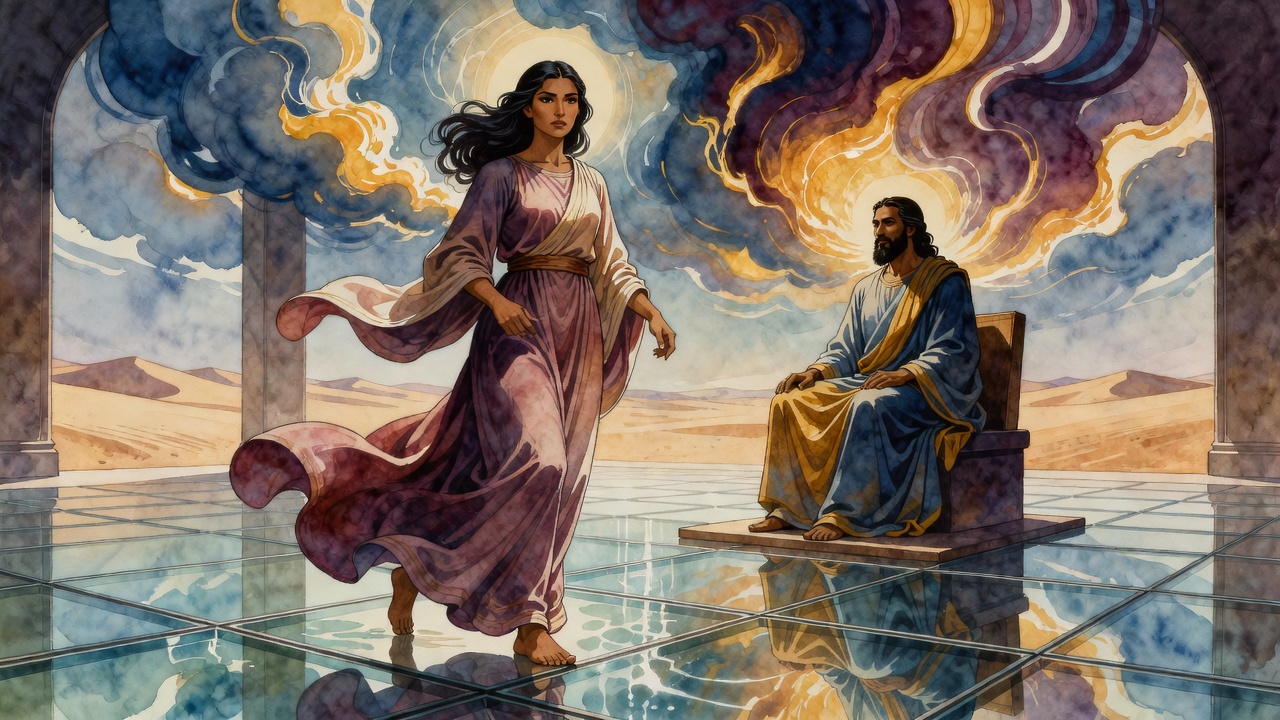
She did not sit. The second riddle came while the first answer was still in the air.
"It comes as dust from the earth," she said. "Its food is dust. It is poured out like water, and it lights the house."
"Naphtha," Solomon said.
Petroleum. Dust that burns. Men gather it from the ground, feed it more ground to keep the flame, and it stays silent as dirt until a hand puts it to use. Then a dark room becomes a house.
She had come a long way to hear him fail. He named the dust the way a man names a tool he has already held. Outside, Jerusalem went on with its markets. Inside, a foreign queen kept measuring the king she had not believed.
Flax Walked Ahead of All
The third riddle came as a procession, not a single image.
"It walks ahead of all. It cries out loud and bitterly. Its head is like the reed. It is the glory of the noble, the disgrace of the poor. The glory of the dead, the disgrace of the living. The delight of birds, the distress of fishes."
"Flax," Solomon said.
Linen on a prince. Rags on a beggar. Shrouds on the dead. Nets that hold the living and the fish. Birds taking seed from the field. The same plant, the same earth, serving honor, burial, and capture. He held all of it at once and did not split the meanings into separate answers.
She had brought three tests. See through a disguise. Name a quiet fire. Hold one thing's many uses without dropping any of them. He had not hesitated.
She Threw a Cedar Into the Water
She was not finished. She ordered a sawn cedar trunk carried in, a length of wood with no leaves left to tell which end had drunk from the ground.
"Point to the root," she said. "Point to the branches."
Solomon did not walk the grain with his fingers and guess. He told her to cast the trunk into water.
Servants hauled it to a basin. One end sank. One end floated. The sinking end had been the root. The floating end had been the crown of the tree.
The Queen looked at the water a long time. The wood told the truth once it was asked in the right element. She had wanted a king who could be fooled by a dead tree. She had found a king who made the tree confess.
Blessed Be Your God
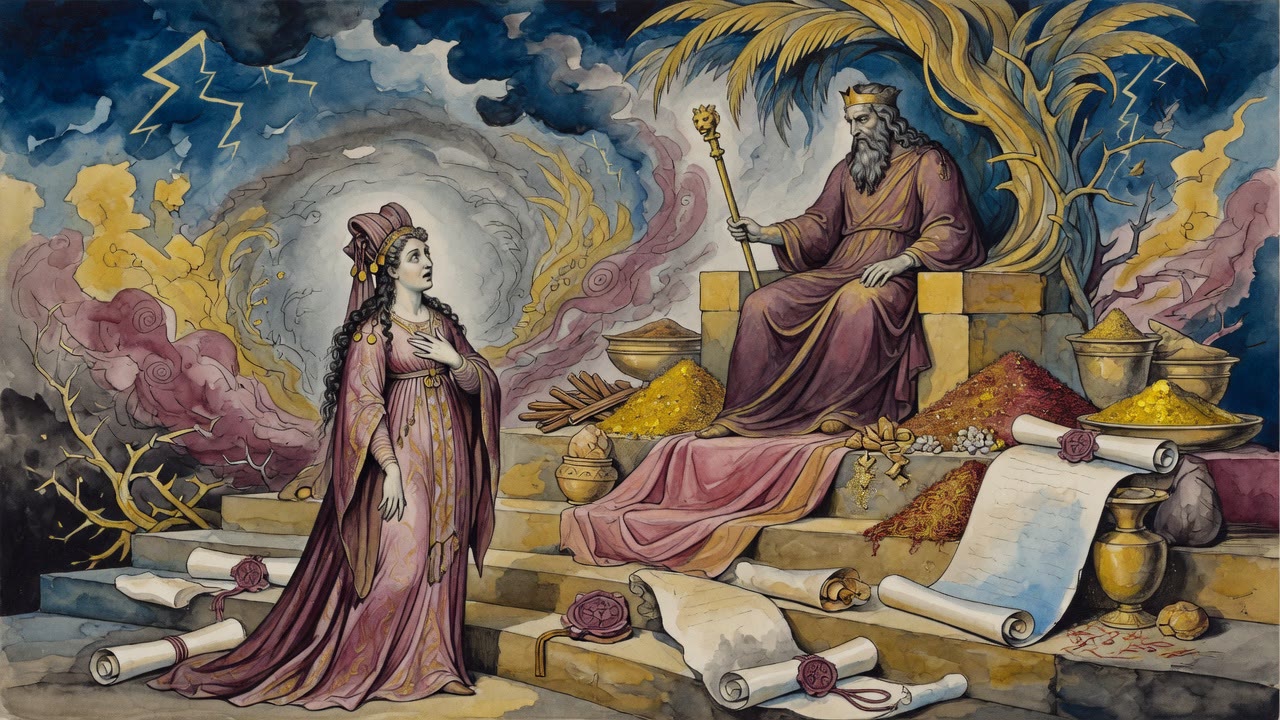
She spoke the sentence she had not packed for the journey.
"You exceed in wisdom and goodness the fame I heard. Blessed be your God."
She had left Sheba because the reports of Solomon sounded like palace talk, the kind a court repeats until it believes itself. She had brought riddles the way other kings bring gold: to measure. Rouge, naphtha, flax, cedar. He had named the hidden thing in each.
She was not of Israel. She had nothing to gain by blessing the God of Jerusalem. She said it anyway. The half had not been told to her.
Solomon ruled more than men. Beasts, birds, spirits of the night. She had heard that too, and had not believed it either. After the cedar sank, she stopped arguing with the reports.
← All myths