Solomon Made a Serpent Yield Its Weapon in Open Court
The serpent still had the man's neck when it quoted scripture. Solomon told it to get down. Then he told the man to finish the verse.
Table of Contents
The jug was still wet in his hand when the crying started. A serpent lay in the dust beside the road, small, its mouth open for air.
 Click for full size
"What are you carrying?" it asked.
"Milk," the man said.
"Give me the milk," the serpent said, "and I will show you treasure under a rock."
He poured. The serpent drank until the jug lightened. Then it slid ahead of him through the field to a great rock. He put his shoulder to the stone and rolled it aside. Gold lay in the hole, old and heavy, exactly as promised.
He bent to take it.
The serpent lunged and wrapped his neck.
"What is this?" he choked.
"I am going to kill you," the serpent said. "You are stealing what is mine."
"Let King Solomon hear us," the man said.
The serpent agreed. A court was a kind of chance. They walked the road together, a man and a serpent, the coils tight enough that the man had to match his steps to the animal's rhythm or choke. People stood aside. No one tried to knock the serpent off. The king's name was already in the air, and interfering with a case bound for Solomon was its own kind of crime. The coils stayed on until the court doors.
The Serpent Quoted a Verse
Solomon sat. The serpent spoke first, still riding the man's throat like a living collar.
"I want to kill him," it said. "Scripture commands it. Thou shalt bruise the heel of man." (Genesis 3:15)
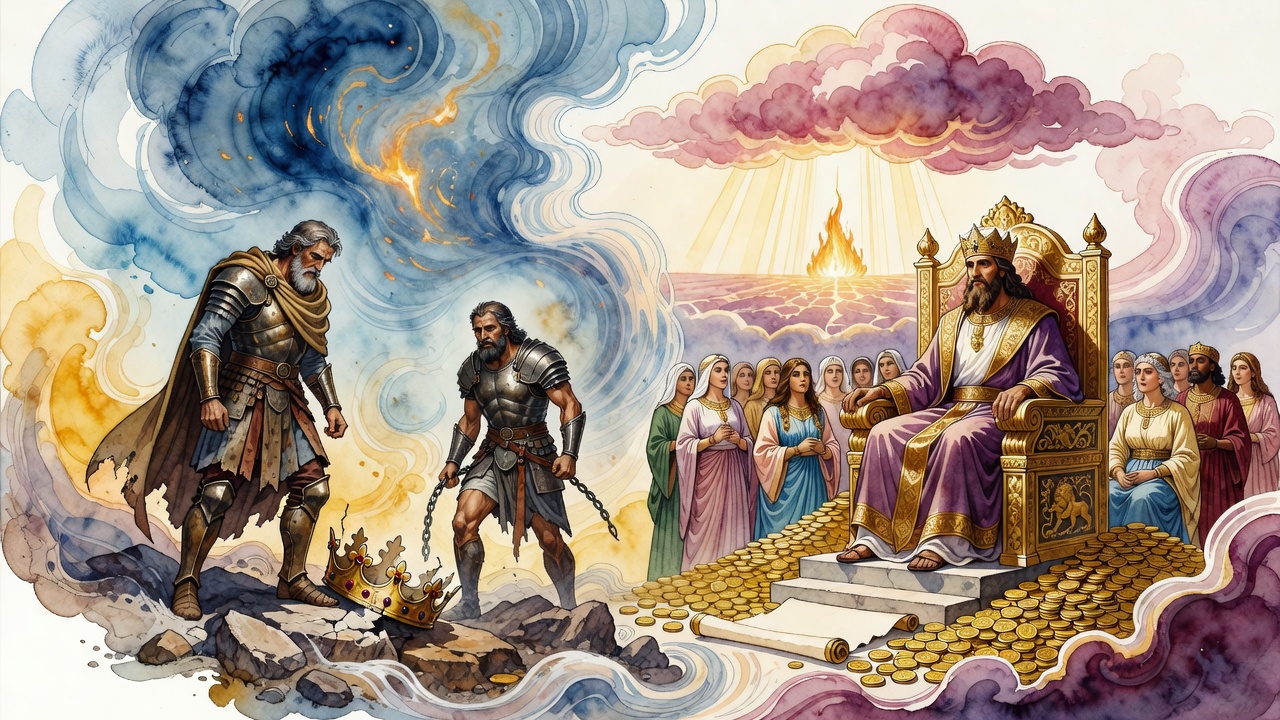
Solomon had judged a king who tried to be kinder than a command. Saul had stood in the valley of Amalek and argued with Heaven over women, children, and cattle. A voice had answered him: do not be more righteous than your Creator. This serpent was running the same error the other way. It wanted to be more deadly than the verse it held.
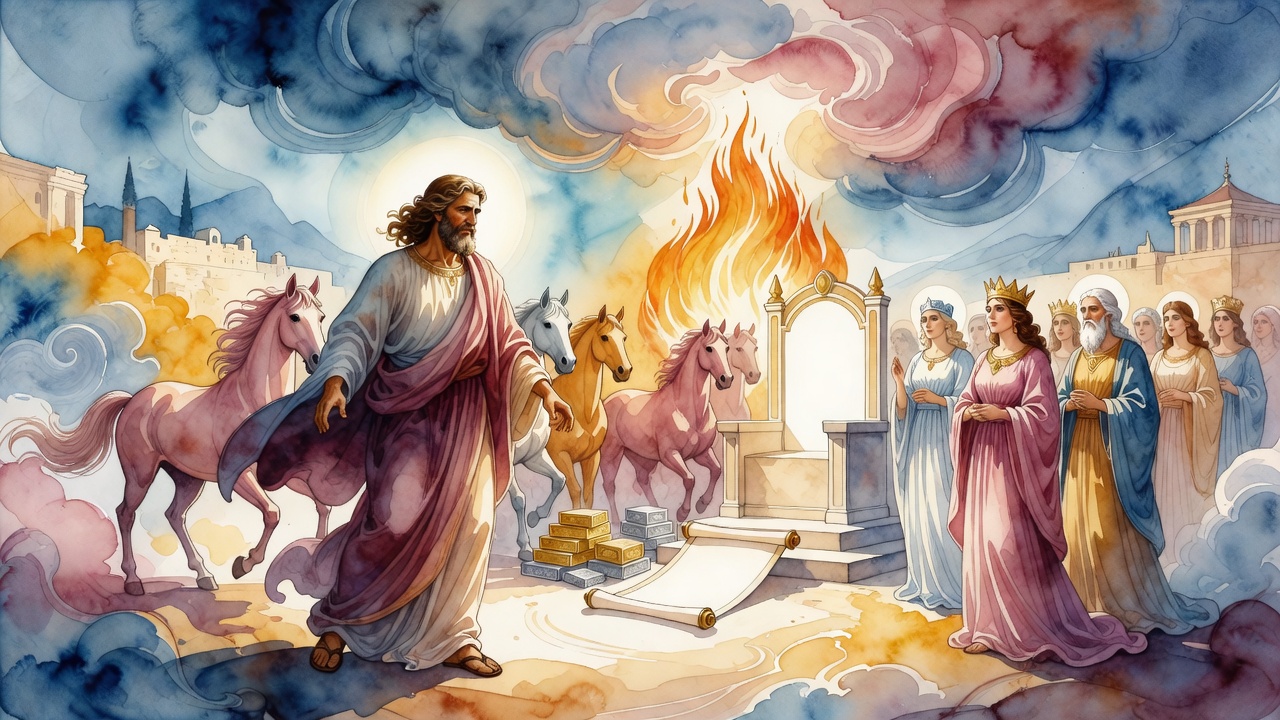
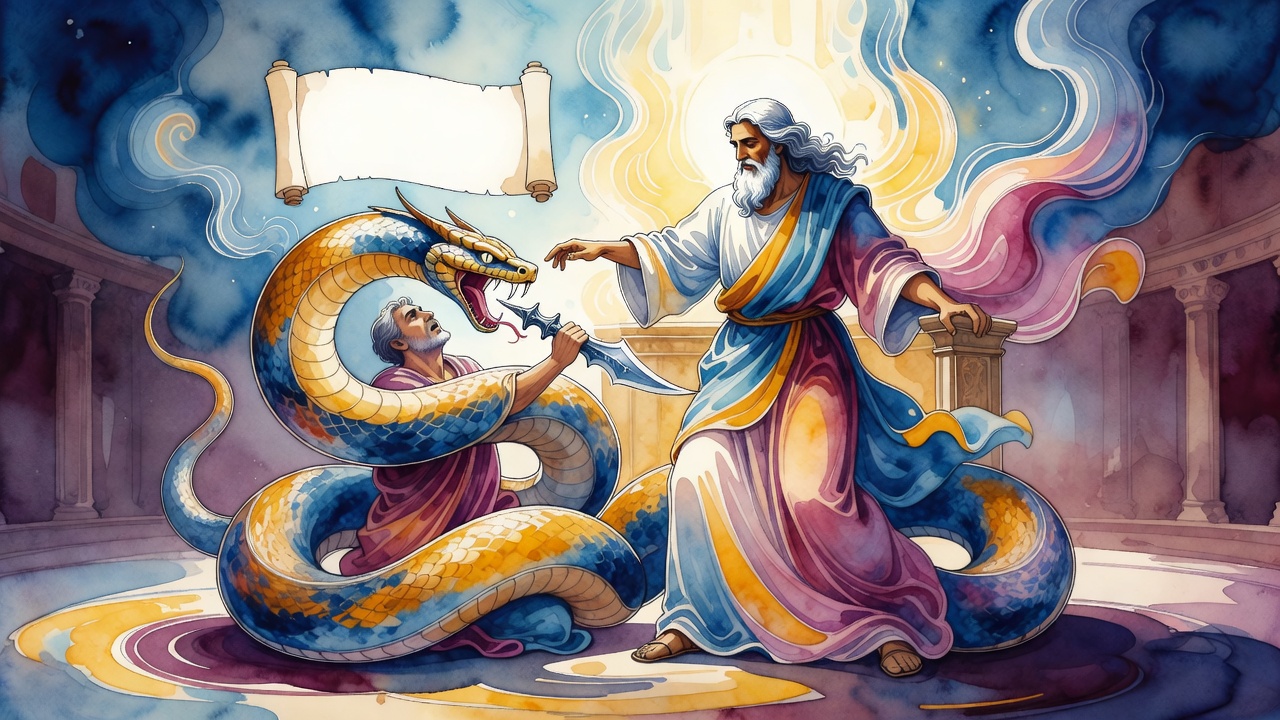
"First release his neck and come down," Solomon said. "Yield the weapon. In this court neither party may enjoy an advantage over the other."
The Coils Left His Throat
The serpent hesitated. Its coils were the only weapon it had brought into the room. It had come asking for law. Law required a floor, two parties, and no grip.
One loop loosened. Then another. The man felt blood return to his face in a rush that made the hall tilt. The last coil slid over his collarbone and hit the floor with a dry sound. The serpent dropped to the stones. The man dragged air into his chest and stepped back, rubbing the marks the scales had left. He did not run. Running would have looked like guilt, and he had already put his life in this court's mouth.
Solomon asked again what the serpent demanded.
"I want to kill him," it said. "The verse stands."
The gold still sat under the rock in the field. The milk was already gone. None of that was the case anymore. The case was a neck and a verse.
Bruise Its Head
Solomon turned to the man.
"To you God's command was to bruise the head of the serpent. Do it."
The man lifted his heel. He brought it down. The head cracked on the court stones. The body twitched once and then did not.
No one returned the coils to the serpent. Equal standing had been the price of being heard, and the rest of the verse had been waiting on the other side of that price.
The man left with his neck free. A dead litigant keeps no claim on gold.
The Court Kept the Order of the Verse
Later they told it as a joke. A man and a serpent walk into court. It was not a joke in the room. The floor still had blood on it. Solomon had not invented a new law. He had forced the speaker of a verse to stand under the whole verse, not the half that fit a killing.
Saul had lost a throne for adding mercy the command did not ask. The serpent lost its head for adding murder the command did not finish. In both cases the extra was the crime.
The servants washed the stones. Water ran pink toward the drain. A clerk wrote the ruling in a hand too calm for what the floor had just held: the serpent yielded its weapon, the man finished the verse, the case closed. Solomon did not look at the gold. Gold had started the walk. The verse had ended it. The next petitioner was already waiting in the yard, a farmer with a boundary dispute and no idea what blood he was about to walk across. Solomon called him in before the wet floor had dried.
← All myths