The Sapphire Book Noah Carried Through the Flood
Adam held the sapphire to his eyes and a flame inside it became letters. Noah later sealed that same book in gold and carried it through the rain.
Table of Contents
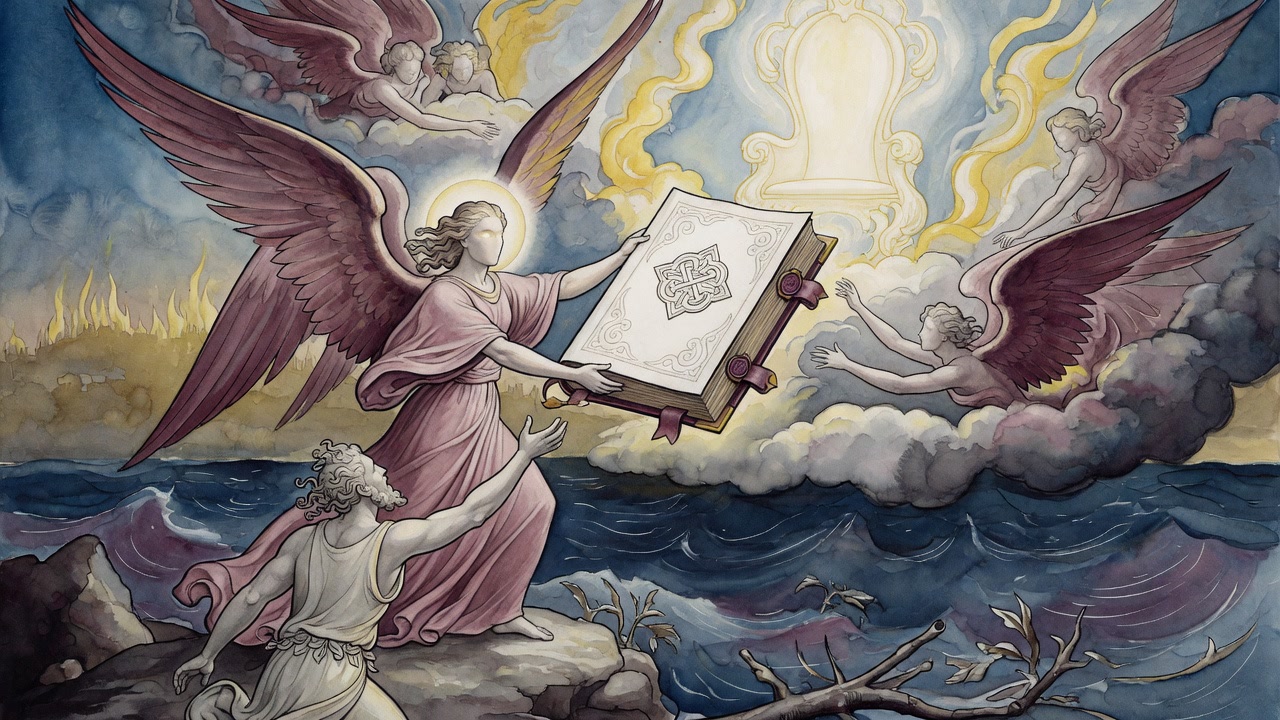
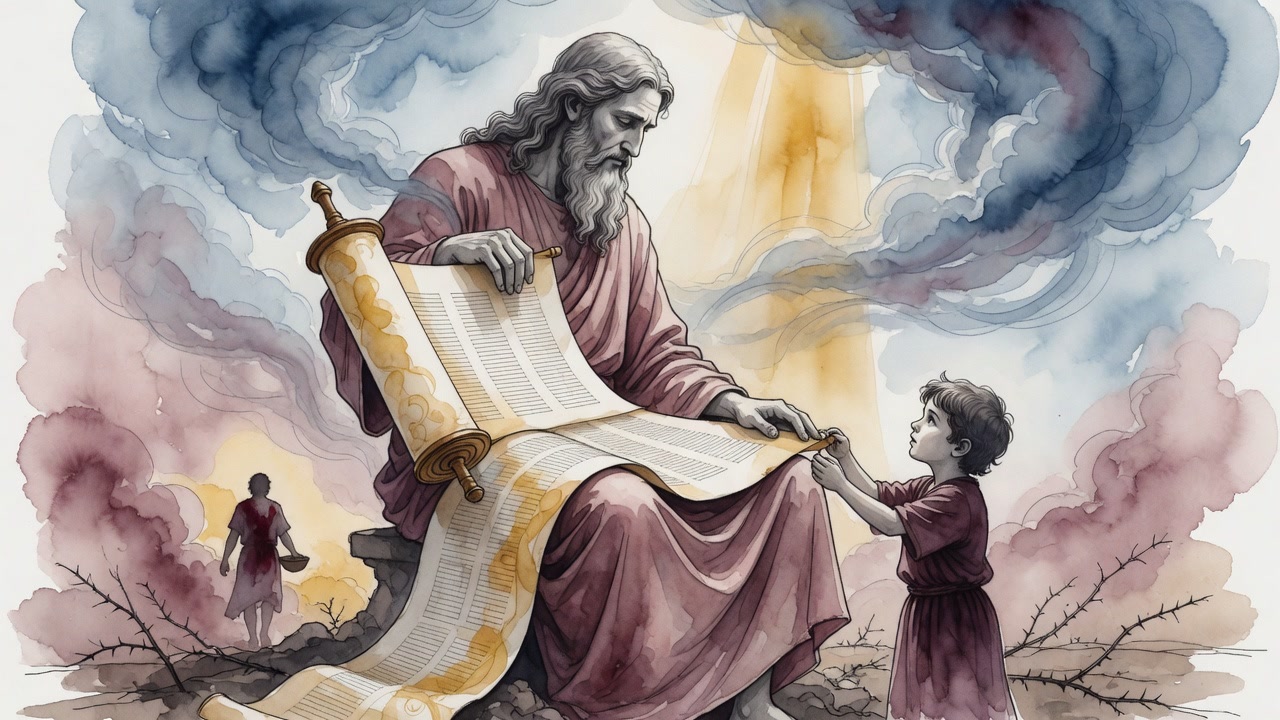
Adam held a stone up to his eyes. A flame was burning inside the sapphire, and the flame became letters. He was already east of the Garden, on a riverbank that still carried the ache of the gate. God had not sent fruit back, and had not sent a road through the cherubim. He had sent a book.
 Click for full size
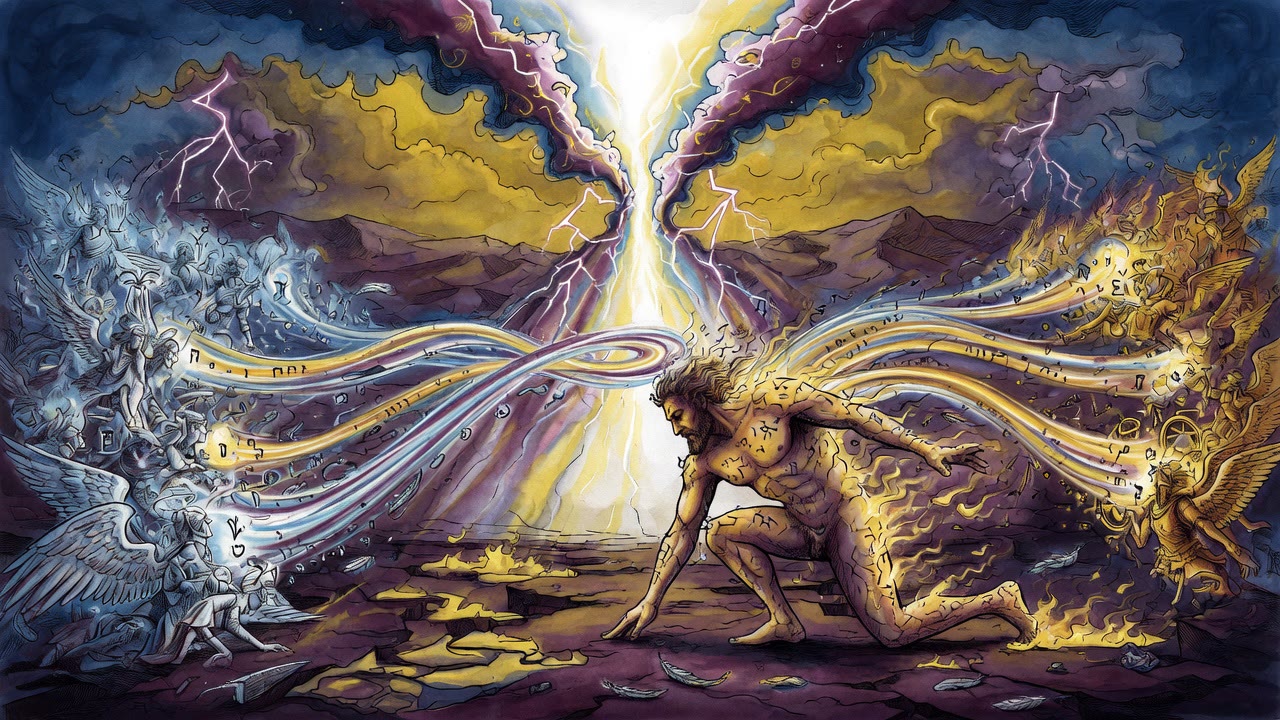
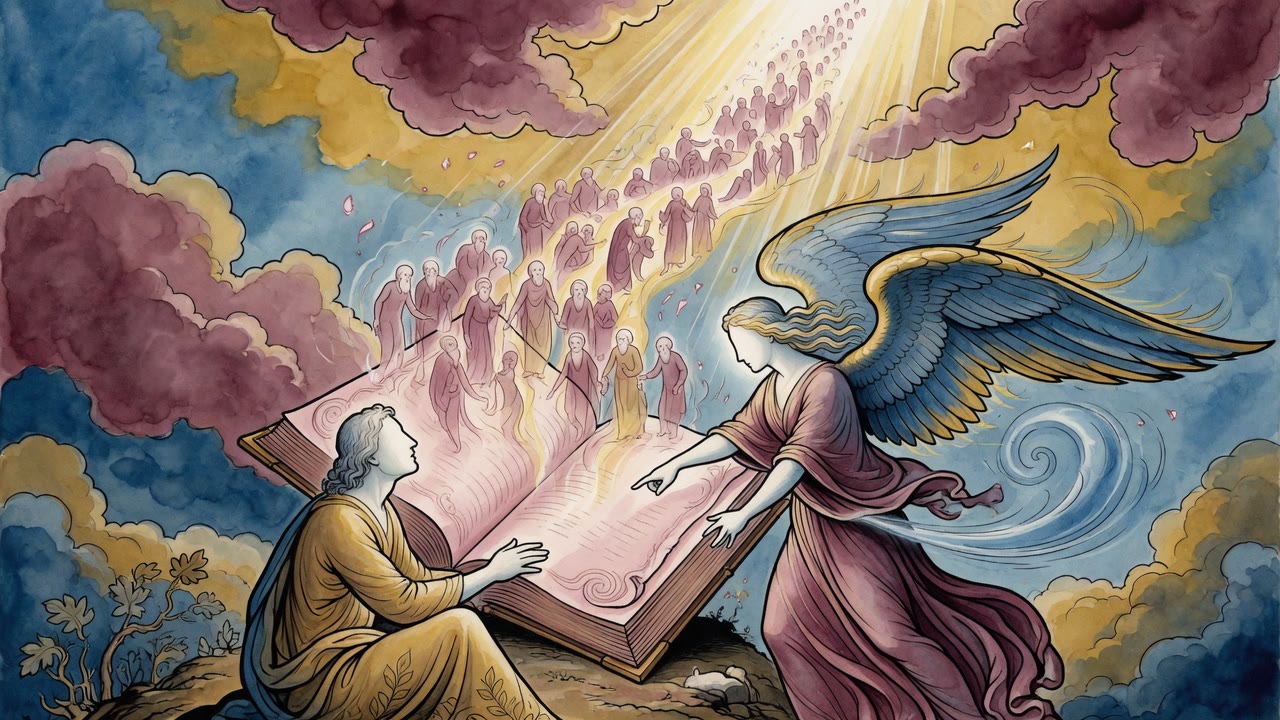
Raziel (רזיאל), the Angel of Secrets, had come to read it aloud. Adam heard the generations that had not yet drawn breath, wise ones and rulers and children still hidden in the decree of heaven, and he shook. God let Raziel leave the book so Adam could take it at his own pace. Fear was not refusal. It was the price of opening a door that did not lead back, only forward.
Raziel Left the Book Because Adam Shook
The pages were sapphire, not soft. Some futures came like abundance piled high. Others came like famine, disease, war, and calamity. The book did not flatter the first man. It showed him the world his children would inherit outside the gate, and it required a clean heart. A proud hand could touch sapphire and learn nothing but its own reflection.
Whenever Adam opened it, angels gathered, hoping to take what had been given to a man. They pleaded with God to impart the mystery of His glory to them, not to flesh. The angel Hadamiel was sent in secret to warn Adam. Do not reveal the glory of your Master. To you alone, and not to the angels, is the privilege given to know these mysteries. Adam hid the book and read it in private.
The angels' envy grew until they stole it and threw it into the sea. Adam searched. He fasted. A heavenly voice told him not to fear, the book would come back. God commanded Rahab, the angel of the sea, to retrieve it and put it in Adam's hands again. After Adam sinned, the book flew from him a second time. He beat his chest and waded into the river Gihon until he was worn down. God sent Raphael to heal him and bring the book back. Adam studied it then as a man who had already lost it twice, and he passed it to Seth.
The Golden Box Enters the Ark
The book moved down the line. Enosh. Kenan. Jared. Enoch, who learned the mysteries of creation from it and, before he was taken up, entrusted it to Methuselah. Methuselah gave it to Lamech. Lamech gave it to Noah.
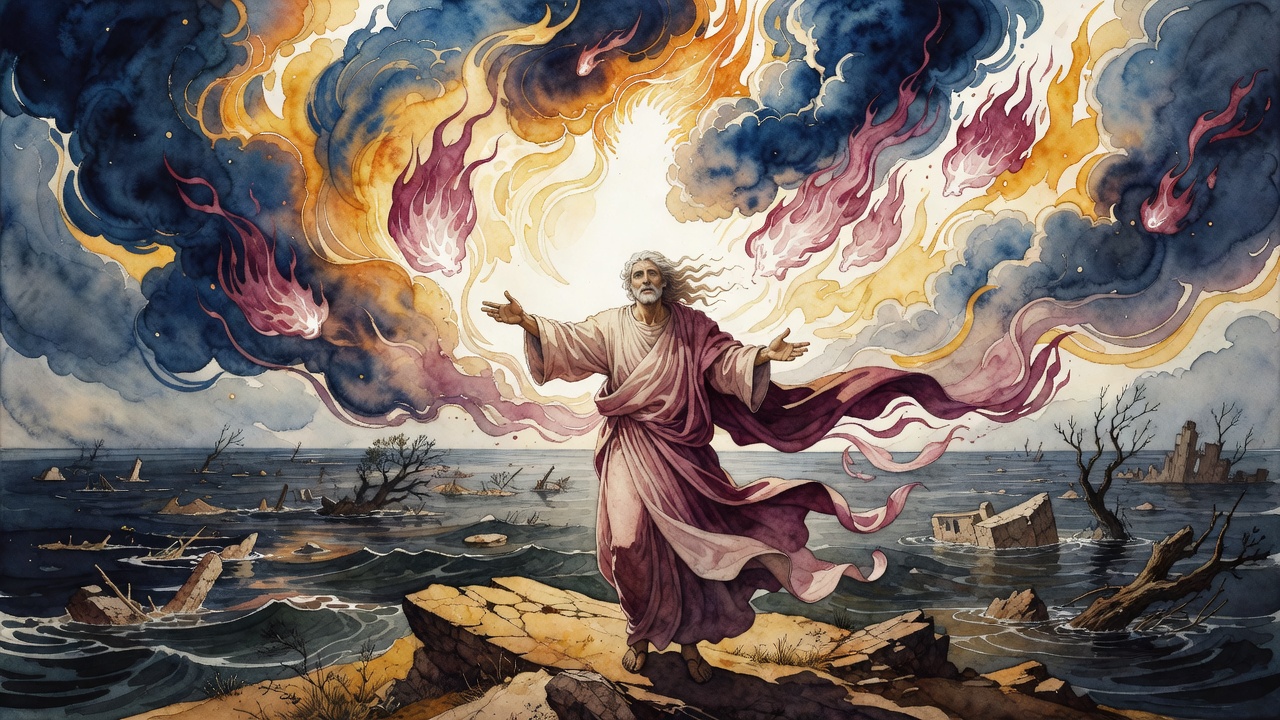
The earth had filled with violence, and the old patience of heaven had reached its limit. Wood had to be cut. Rooms had to be measured. Beasts had to be gathered without tearing each other apart before the first rain fell. Noah opened the sapphire and found instruction, not thunder. How high. How wide. Which creature belonged where. How to build a floating world while the old one refused to believe water could climb that high. Some say Raziel wrote the same book down for Noah again on a stone, so the measures would be in front of him while he worked.
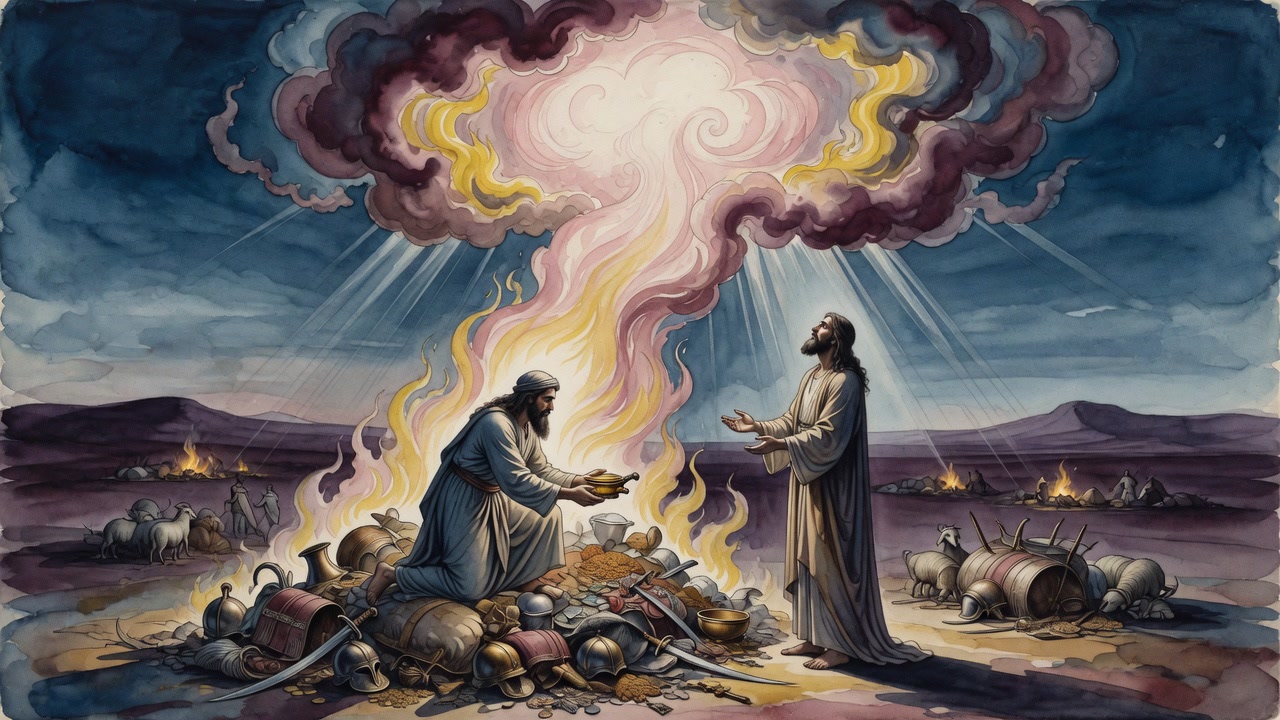
Noah did not leave the sapphire loose among his tools. He sealed it in a golden box and carried it into the ark as carefully as a coal from an altar. Outside, the waters rose. Inside, the box waited.
Night and Day Under the Flood
The year in the ark had no ordinary morning. Rain erased the horizon. The roof took the blows. The walls sweated. Hooves struck planks in their sleep. Wings beat against cages. Human breath mixed with animal heat until every hour smelled alive and trapped. The family could feed the mouths, shovel the refuse, quiet the panicked cries, and still lose the one thing a servant of God needs in a sealed vessel. The difference between now and later.
Noah opened the golden box. Sapphire answered. No ordinary lamp could have done that work. A flame needs air, oil, hands, and rest. This light arrived as knowledge, exact enough to divide one buried hour from another. The book told him when night had fallen over a world he could not see. It told him when day had come to an earth buried under water. The sun was useless to him. The moon had vanished behind judgment. In that sealed hull, knowledge was not power over others. It was the thin line that kept obedience from becoming madness.
He gazed at destinies of stars he could not see, at the course of a sun that was not there, at dreams and at the difference between life and death. Happy the eye that beheld that book, the old line says, and happy the ear that listened. Noah's eye had nowhere else to look.
Ten Generations Until Abraham
When the ark settled and the ground returned, Noah did not treat the book as a trophy from catastrophe. He had carried too much death to mistake survival for ownership. The sapphire went on. It reached Abraham, who gazed on the glory of God by it, then Isaac, Jacob, and Joseph, who read dreams with it. Joseph took it into the ground with him. Moses raised that coffin from the Nile and carried the book beside the Tabernacle. Solomon used it to build the Temple. Letters that had once been a flame in Adam's stone became, for a while, a house of stone in Jerusalem.
Between Noah and Abraham ten generations provoked wrath, and God waited. The world itself, the old count says, had been created for Abraham's merits, and heaven spent those ten lives showing how long clemency can last before a man arrives who can hold the secret without turning cruel. Reu, at the birth of Serug, had already spoken of a child four generations on who would be called perfect, father of nations, his covenant not dissolved. The book Adam shook to receive had already held that face. Noah had kept the face dry through a year of water. Abraham was the first after the flood who could open the box and not drop it.
Sapphire had survived what flesh could not. The light that had divided night from day inside the ark was the same light Adam had been too afraid to hear all at once. It did not make the drowned world less drowned. It kept one family able to tell the hours until the ground took feet again, and then it waited ten more generations for a hand that could bear it in the open.
← All myths