Solomon Asked for One Thing and God Gave Him Everything
A voice at Gibeon said ask. Solomon named a listening heart. Two women came at dawn with one living child and no witness.
Table of Contents
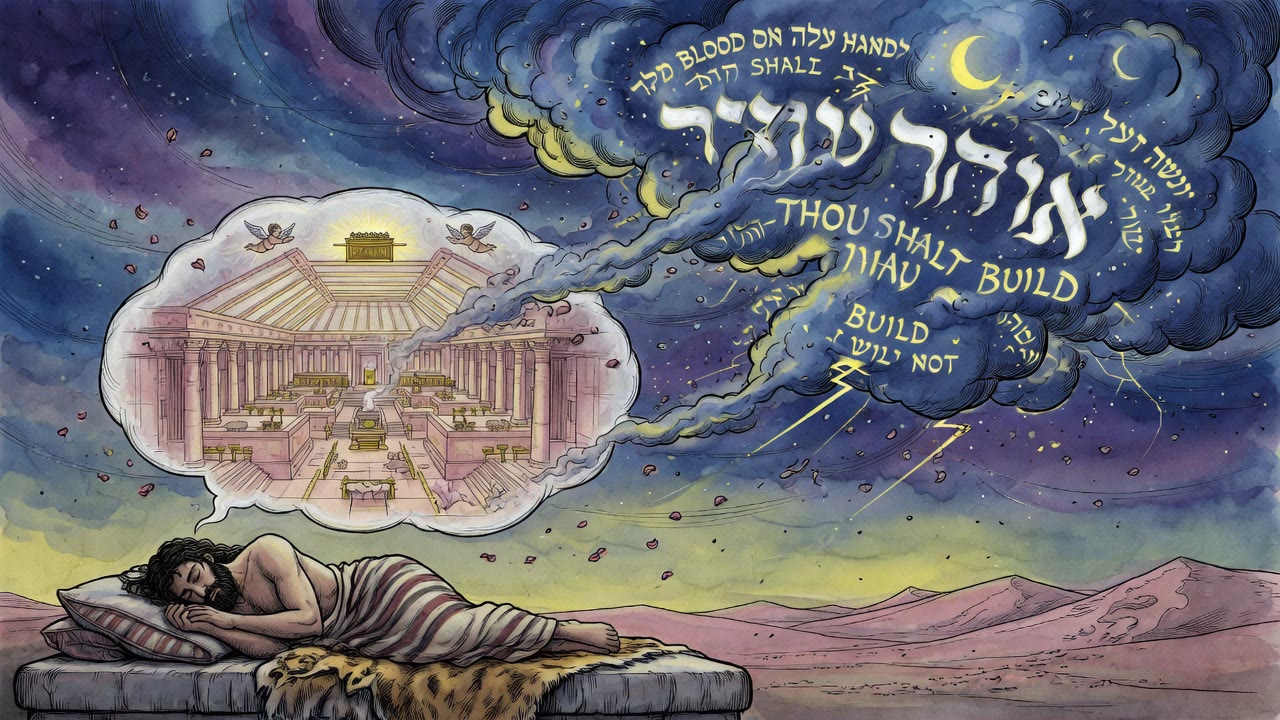
The voice found Solomon asleep at Gibeon. His father's enemies were still breathing. The borders were unfinished. A king in a dream is usually ready with a list.
 Click for full size
"Ask what I shall give you," the voice said (1 Kings 3:5).
Solomon did not name the deaths. He did not name gold. He asked for a listening heart, so he could judge a people he called heavy.
He Named the People Heavy
"Who can judge this heavy people of Yours?" he said (1 Kings 3:9). He used the words am kaved (עם כבד), a heavy people.
He was already famous. His wisdom outran the east and Egypt. Fame does not name which of two grieving women is the mother. Fame does not catch the thing a man swallows when a question lands.
"I am not like the other judges," he told God in the dark. A Canaanite judge sits on a platform and spends lives as if nothing had happened. If he takes a fine of one sela, he pockets two. If Solomon fined a poor man wrongly, God would claim his own life for it. "Rob not the poor because he is poor" (Proverbs 22:22). The robbery comes back as a soul.
That was the heaviness. Israel brought its inner life into court. Two people stood in front of a throne with histories they could barely admit. Solomon wanted to hear the weight that never made it into the testimony.
God gave him that. Then God gave him the rest: riches, the fall of his enemies, long life, honor among nations. None of it had been on his tongue in the night.
The Sword and the Living Child
The test arrived before the fame had time to settle. Two women. One living child. Both had given birth the same night. One infant had died. Each claimed the boy who still breathed. No witness. No mark on him that named his mother.
Solomon called for a sword (1 Kings 3:25).
He did not look at their faces first. He looked at the child, then at the blade, then at the two mouths.
"Cut him in two," he said. "Give half to each."
The hall went quiet enough to hear the infant breathe.
One woman said yes. Divide him. Her voice was even.
The other broke. "Give him to her. Only let him live."
Three seconds. That was the whole trial. He had heard the thing that had not been spoken: one would rather win a corpse, and one would rather lose a son than watch him opened. He gave the child to the woman who had refused the blade.
The court learned what he had asked for in the night. He had asked to hear what a person was not saying.
Two Brothers in a Dark Field
He still did not know where to set the Temple. A voice sent him at night to Mount Zion, to a field two brothers owned together.
One brother was poor, unmarried, with no household behind him. The other was rich, with many children. It was harvest. The grain lay in two piles in the dark.
The poor brother rose, gathered from his own heap, and carried it across the stubble. A large family needed more than he did.
The rich brother rose at the same hour and carried grain the other way. A man with no sons needed a reserve when the year turned against him.
They met in the middle, both of them already giving away what the other had come to give. They stood with grain in their arms in a field that had not yet been named holy.
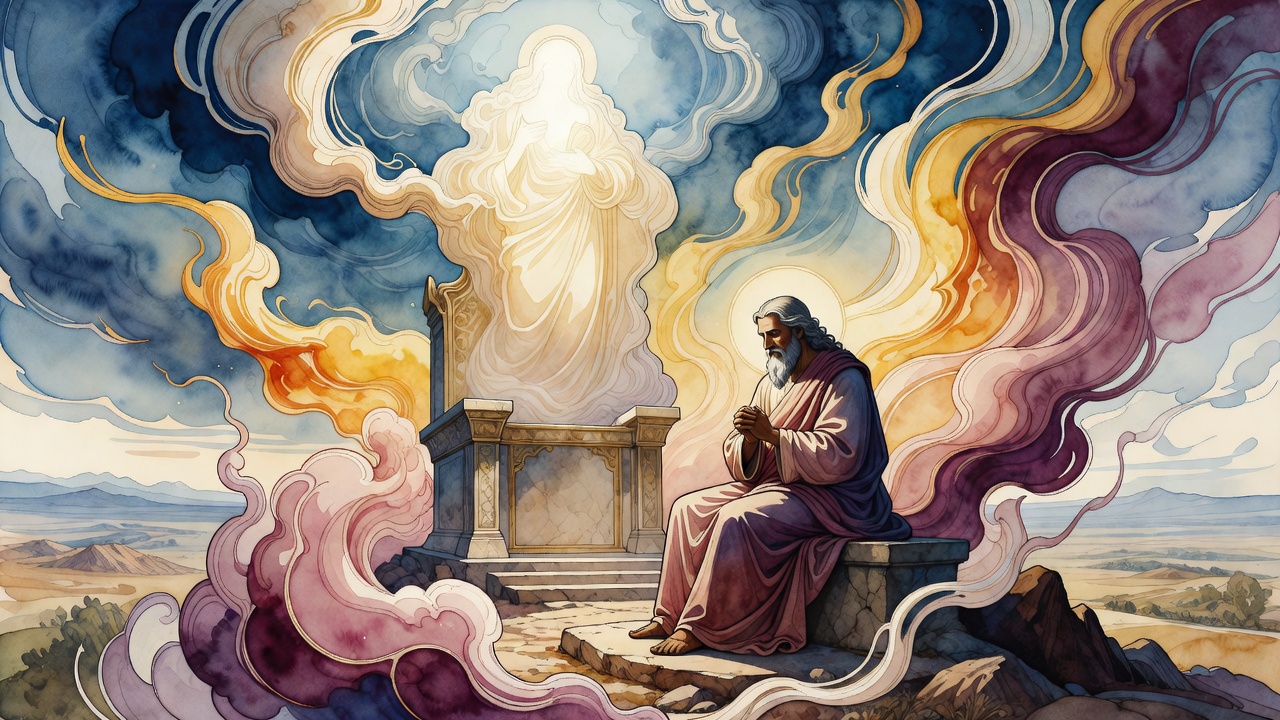
The voice said: build here. Not for height. Not for nearness to the city. For what had already happened without a witness and without credit.
Solomon bought the field. He could recognize it because he had asked, first, to hear the thing that does not announce itself.
The Vineyard He Did Not Keep
Late in the reign he walked a slope at Baal Hamon and spoke of a vineyard he had handed to keepers. Each was to bring a thousand silver pieces for its fruit (Song of Songs 8:11).
He did not mean a plot of vines. He meant Israel. The keepers were the scholars of each generation, the ones who take the Torah and hand it on. The thousand pieces come back as proof the fruit is still on the branch.
His name was Shlomo, built on shalom (שלום), peace. A king named peace, watching the vineyard from a distance, counting what the keepers brought in. He had asked to judge. He had not asked to own every grape.
He Woke and Offered Sacrifices
In the morning at Gibeon he went back to Jerusalem, stood before the ark, offered sacrifices, and made a feast for his servants (1 Kings 3:15). No speech about the dream. No display of the gift.
The wealth came anyway. The long life came. The peace with his enemies came. Everything a king usually packs into a prayer arrived at the door after he had asked only to hear.
The field was waiting. The sword had already done its work. The child was alive in the arms of the woman who had said no.
← All myths