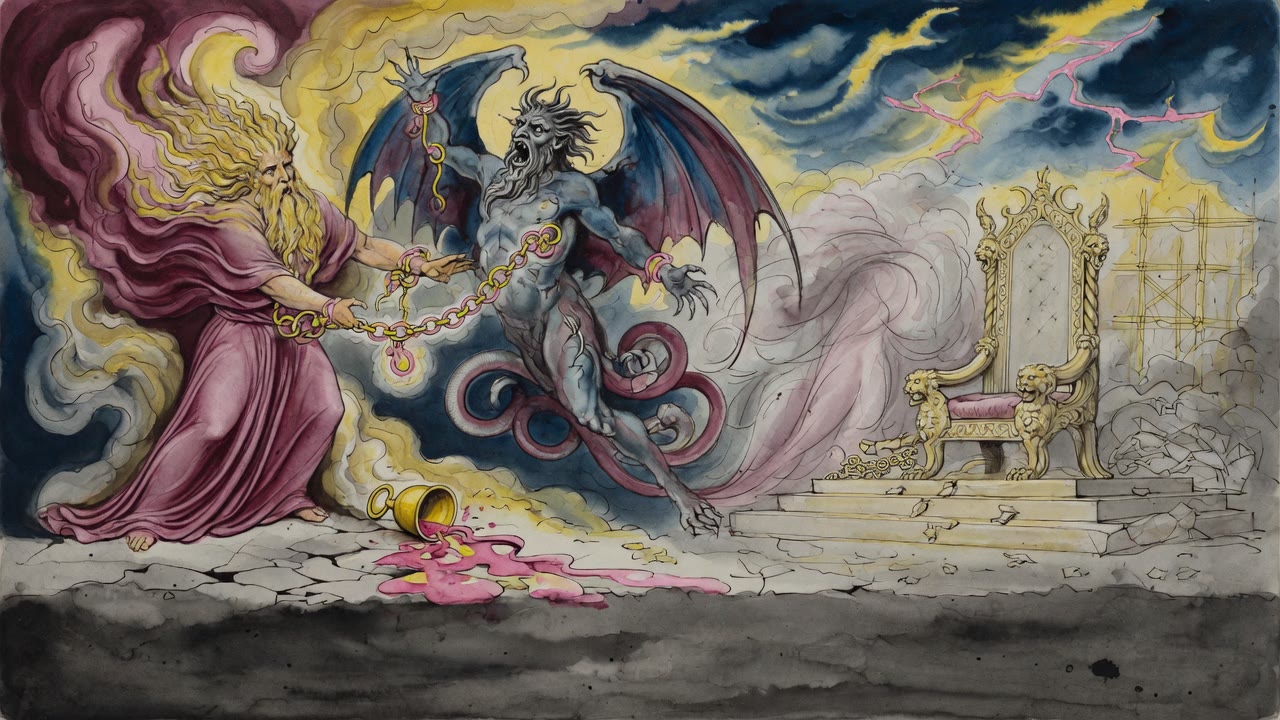
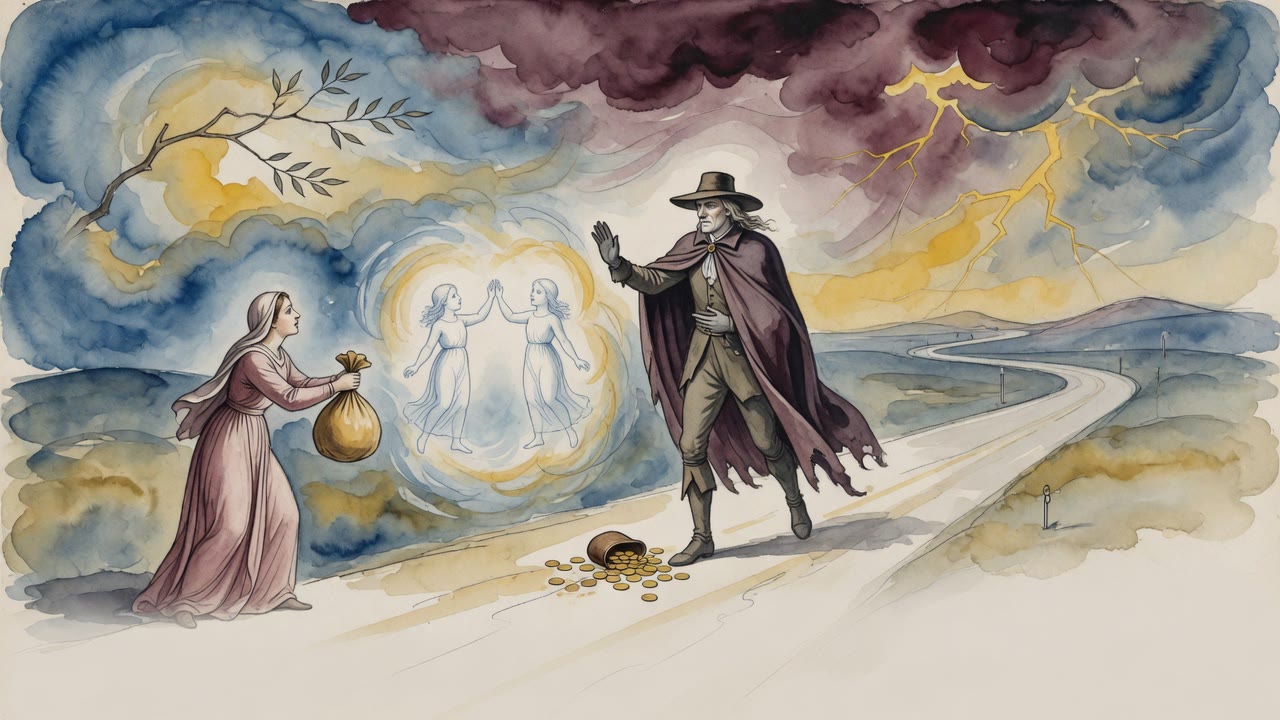
Solomon Dressed as a Servant and Helped Rob His Own Palace
Two men were lurking near the palace walls. Solomon put on servant's clothes, introduced himself, said he had a key, and proposed a robbery.
Table of Contents
 Click for full size
The King Who Went Outside in Disguise
Two men were watching the palace guards. They had no reason to be in the courtyard at that hour, and the quality of their attention, the way they tracked the patrol patterns, studied the gates, measured the gaps in coverage, was the particular attention of people building a plan. Solomon saw them.
He went back inside, changed into a servant's clothes, and came back out.
He introduced himself as a member of the household staff. He said he knew a way in that the guards did not watch. He said he had a key. He proposed that they work together. The men, who had been planning a robbery of the king's own palace, found themselves with an unexpected collaborator who seemed to be doing all the most dangerous work for them, providing the access they had been trying to figure out how to create on their own. They agreed.
The Evidence Solomon Needed
The Sanhedrin, the great court of Jewish law, required a high standard of evidence before it could convict anyone of a serious crime. Witnesses had to have seen the transgression directly. Circumstantial evidence was not sufficient for the gravest sentences. A man lurking near a palace wall, watching the guards, could not be convicted on the basis of what he appeared to be planning.
Solomon understood the law's requirements, because he had helped design how those requirements functioned in practice. He also understood that two men with the posture and attention of people planning a robbery were almost certainly planning a robbery, and that the right way to make the legal standard achievable was not to relax the standard but to create conditions where the transgression could actually be witnessed. He was going to witness it himself, from the inside.
The Trap That Closed Around a Key
He walked them to the entrance. He produced the key. He opened the door. They went in together, and whatever they reached for or took inside the royal precincts, they took in the presence of the disguised king himself, who was now both a witness and a participant in the manner that the tradition sometimes called a provocateur. The question of whether an induced transgression meets the standard for legal guilt was a live debate in the rabbinic courts. Solomon's method was not without its tensions.
What the tradition emphasizes is not the legal technicality but the principle behind the method. Solomon wanted to judge with complete knowledge of what had actually happened, not with the partial knowledge that a court assembles from testimony after the fact. He wanted to be inside the crime before the verdict, so that the judgment he eventually rendered was based on what he had seen with his own eyes rather than reconstructed from fragments.
What the King Saw in the Servant's Clothes
The disguise does something more than enable surveillance. It places the wisest king alive in a position of complete informational equality with the men he is investigating. They do not know who he is. He knows everything about them. The asymmetry is total, and it is entirely hidden inside the servant's clothes and the helpful manner. The most powerful person in the room is the one who appears to be helping.
This is the method that Solomon used in the most famous judgment of his reign too, the two women and the disputed infant. He proposed something that sounded extreme, a solution so terrible that it would force the truth out. Here he proposes a crime that sounds practical, a solution so convenient that it draws participation out. In both cases, the king's strategy is to create a situation where people reveal themselves under pressure, and then to judge what they revealed.
← All myths