Solomon and the Women Who Unmade the Wisest King
One of his wives asked him to bow to her father's idols. He had already ruled that women do not count, she said, so what harm was it? He bowed.
Table of Contents
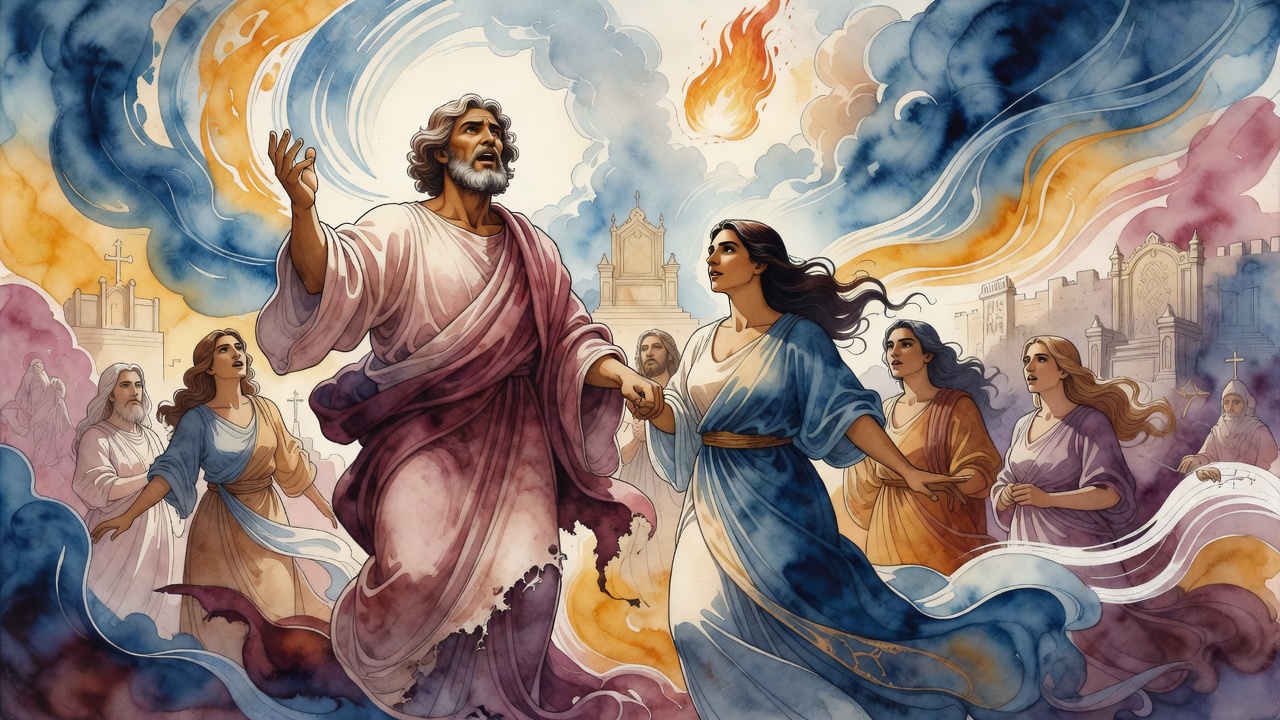 Click for full size
The Claim That Started Everything
Solomon wrote it down. One man among a thousand have I found, but a virtuous woman among all those have I not found. The verse is in Ecclesiastes and the tradition did not let him live it down.
He did not back down when he was challenged. He decided to prove it. He called men to his court and set temptations before them, testing how far wisdom held against desire. He found, repeatedly, that men compromised. He took this as confirmation. The wisest observer in the world had looked at the evidence before him and reached what he believed was a logical result.
He was wrong, and the tradition records exactly how wrong.
The Queen Who Reversed the Dynamic
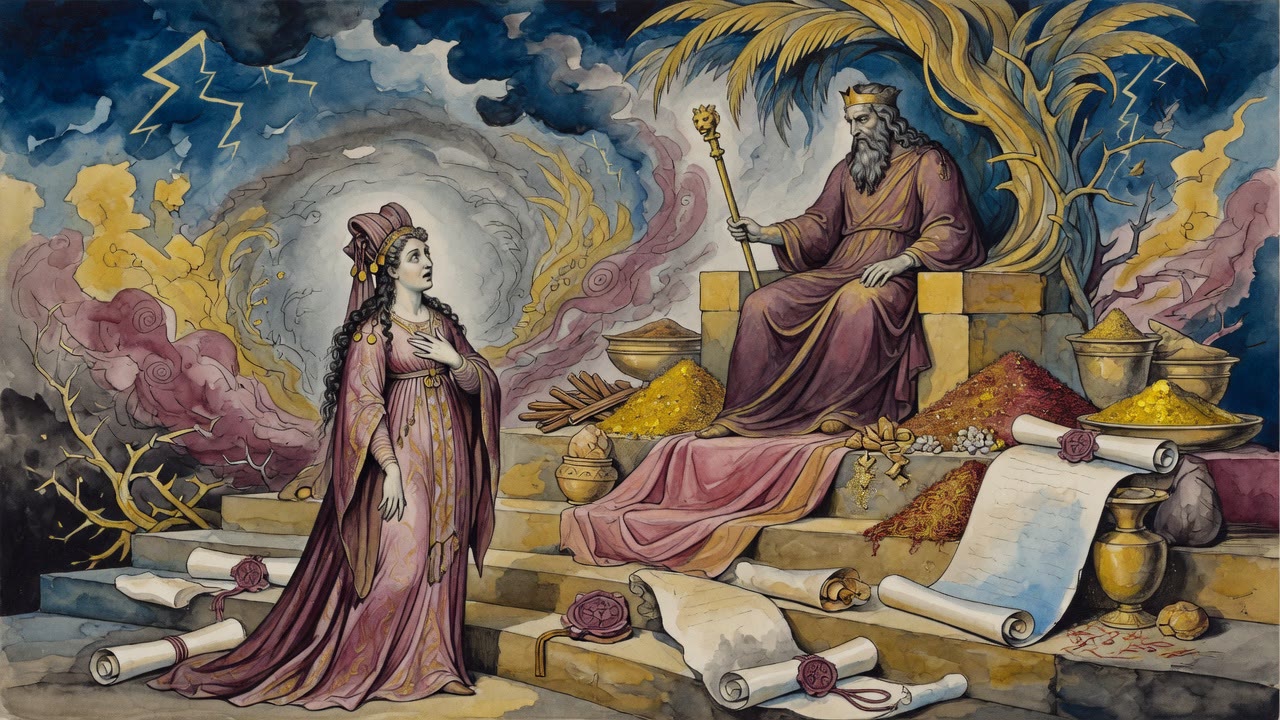
The Queen of Sheba arrived not to pay tribute but to test. She had heard reports of Solomon's wisdom and had composed riddles designed to distinguish genuine wisdom from its performance. She asked riddles that made Solomon's court go quiet. She examined his household, his servants, his judgments. She assessed him the way a sovereign assesses a peer she is not yet certain deserves the title.
When she walked toward his throne across what she believed was a tiled floor and raised her skirt to keep it dry, she had mistaken the reflection of the sky in the polished glass for standing water. When she understood what she had done, she stood corrected before the man she had come to examine. Solomon's first real answer to her was architectural rather than verbal: what you see is not always what you think you see, and the surest proof of wisdom is knowing the difference.
She left praising him, but her praise was the assessment of a peer who had found the peer genuine. She had come to test. She confirmed. The dynamic had been reversed: the queen who arrived as the examiner left as the one who had been examined.
The Jebusite Woman
The tradition in Ginzberg's Legends, drawing on midrashic sources from the Talmudic period, preserves the story of the Jebusite woman who completed Solomon's undoing. She was one of the foreign women he had married, and unlike the others, she brought her father's idols with her as part of her household goods. Solomon knew. The Jebusite woman asked him to bow before them just once, just as a gesture of respect for her customs, just to demonstrate his regard for her.
He refused at first. She pressed. She did not use her beauty. She used his declared principle: you said no virtuous woman exists. You have already concluded that women are not to be taken seriously as moral actors. If that is true, then what I am asking cannot matter very much. Your own logic implies that my request is trivial.
He bowed. He did not bow as a worshipper. He did not bow from belief. But the tradition does not distinguish between the form and the content when it comes to idolatry. The act was the act. The wisest king in the world had been turned against himself by his own published contempt for women's virtue, which his own wives and concubines, seven hundred and three hundred in number, used as the lever to move him.
What the Thousand Women Found
The tradition records that Solomon tested not women but men, and found men wanting, and drew the wrong conclusion from the right data. What he missed is the distinction the tradition kept trying to make: his experimental method could only find what the method was designed to find. He tested for faithfulness under temptation in a court context, where the temptation was designed by him and the subjects were brought to him and the power differential was total. He found that men compromised under these conditions. He did not test whether women under the same conditions would behave differently, because he had already decided they would not.
Tamar, who the tradition elsewhere praises as an example of extraordinary moral courage, was not in Solomon's laboratory. Ruth was not. Deborah was not. The women who would later receive entire rabbinic traditions celebrating their virtue had not been summoned to the king's court to be tested on his terms.
← All myths