Esther Was Seventy-Five When the King's Men Took Her
Her skin was the color of myrtle. She ate vegetables in the palace and told her heart to seek God's face. A second body went in at night.
Table of Contents
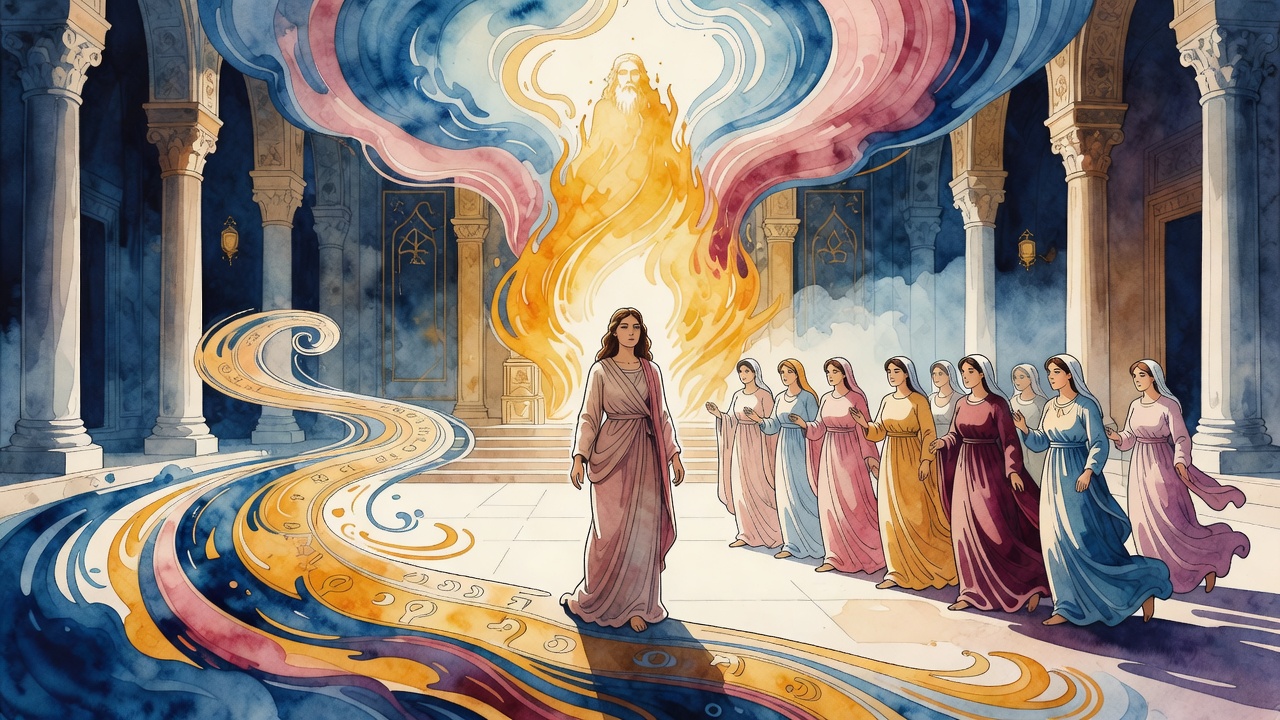
The collectors went street by street through Shushan, taking the young women. They took her too.
 Click for full size
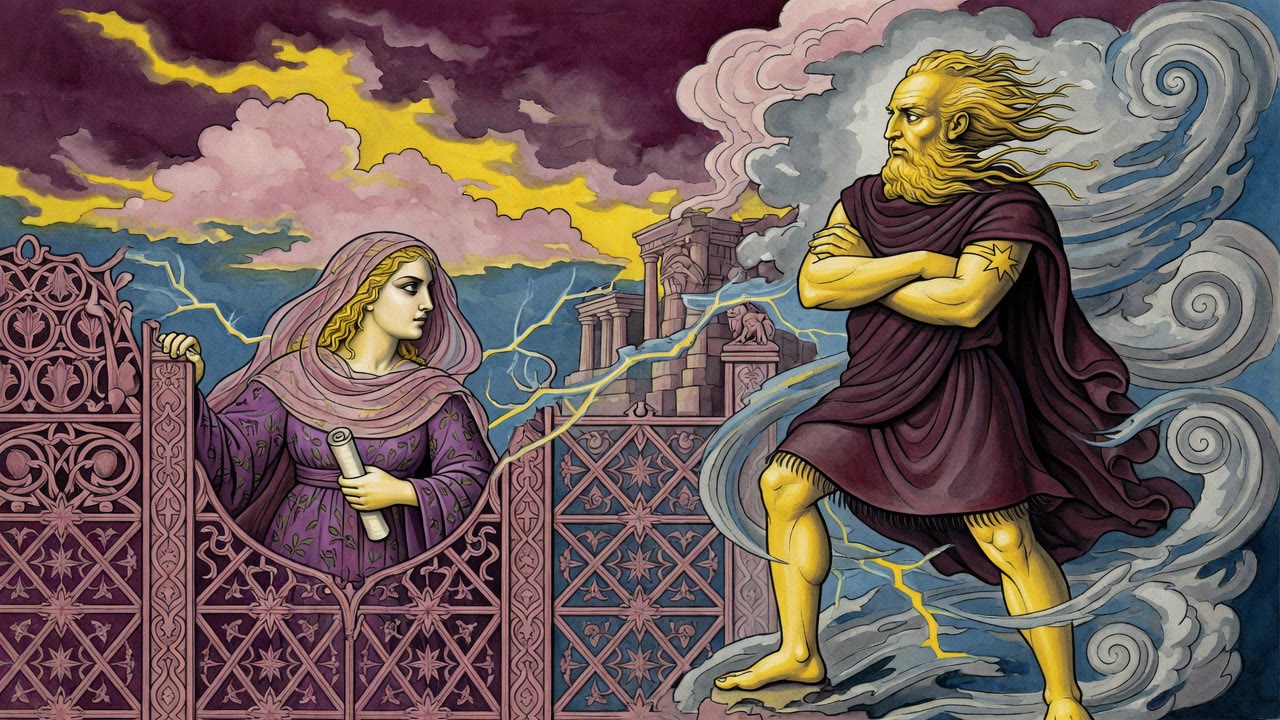
She was not a beauty. People used the word grace when the face itself did not do the work. Her skin had a yellow-green cast, the color of a myrtle leaf. She was neither tall nor short, and a myrtle is neither large nor small, and that is why they also called her Hadassah. She was seventy-five years old.
Mordecai had kept her out of sight in his house for years, out of reach of the king's lists. The name he had raised her under meant the one who conceals. She had been concealed by an uncle. Now she walked into a palace where every question was built to open her, and she stopped answering them.
Where are you from. Who are your people. She would not say. She went on not saying it for years.
Hegai Brought the King's Dishes
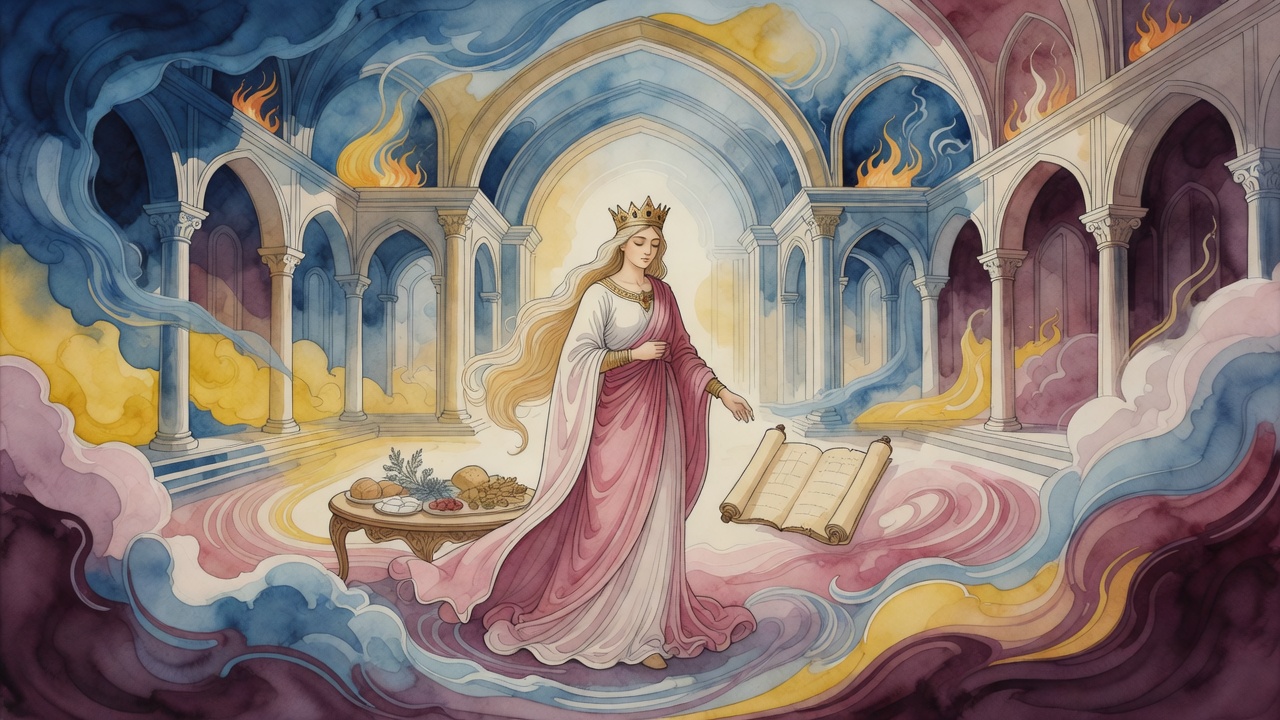
The chamberlain in charge of the women took an interest at once, and the interest arrived as food. Hegai sent her the good things off the royal table, the meat, the delicacies, the dishes a girl from a poor house would never have seen.
She would not touch them.
She ate vegetables. She kept eating vegetables in a palace that measured favor by what came to your room, the way three young men had done at another king's table in Babylon a lifetime earlier. Hegai set the royal dishes down anyway, waiting to see if hunger would do what commands had not. She let them cool. The forbidden dishes she passed to the servants who were not Jews, so that nothing was wasted and nobody had to be told why. A girl who would not eat could still be useful. A girl who explained herself could be ruined.
They gave her seven attendants. All seven were Jewish girls, and every one of them kept the law as strictly as she did. For the rest of her life the only people who could have reported her would have had to report themselves.
Who Went In to the King at Night
In the evening she would go in to Ahasuerus, and in the morning she would come back to the house of the women. The scroll says it that way and does not explain.
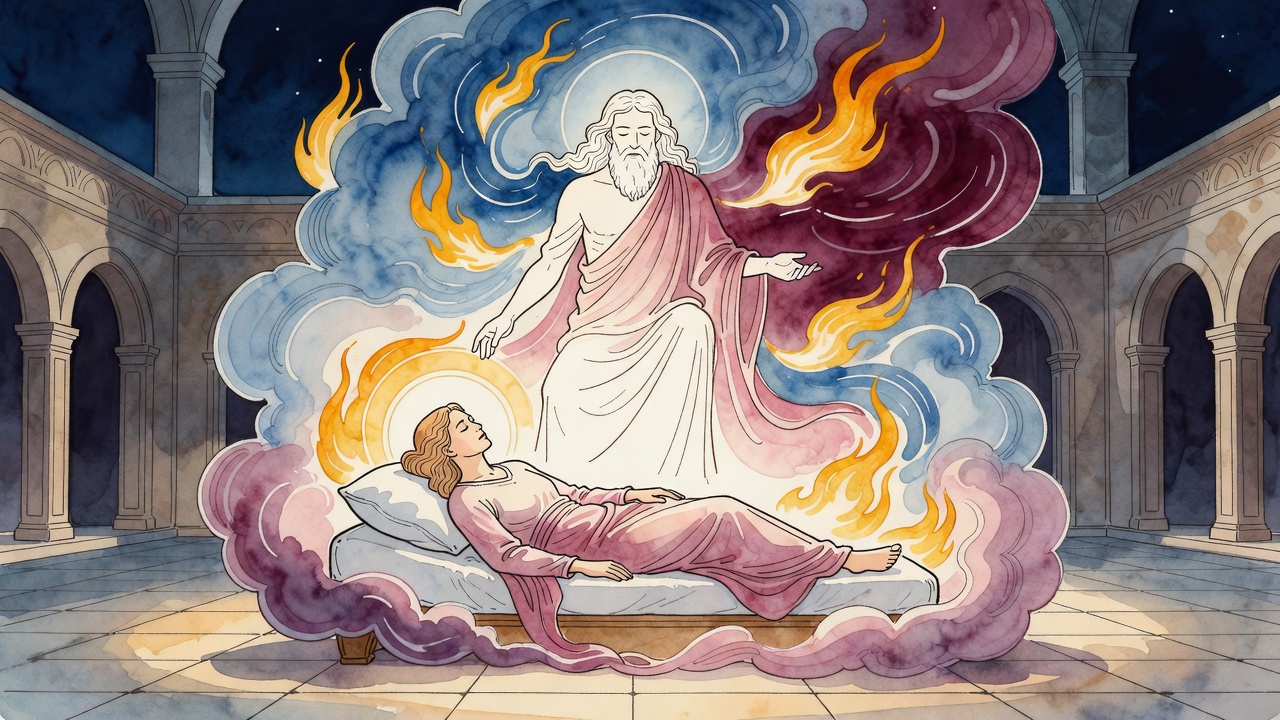
The one who crossed the threshold was not Esther.
God kept her out of that room. A second was put there in her place, a double built in her likeness. The double went in at evening and came back at morning, and the king took his queen and never once had her. The verse says "the second," and that is the seam where the substitution shows: the other one, the shape that went instead.
So she lived four ways at once. Her name was not her name. Her food was not the palace food. Her attendants were her own people. Her body was not in the bed the empire thought it was in.
Ten Thousand Talents of Silver
Then Haman weighed out ten thousand talents of silver on the counting table and bought a nation. He had ten sons. Every one of them was coming for the woman in the palace and the people she would not name.
She had no army. She had a hidden name, a vegetable diet, seven girls, and a double.
Abraham had walked out of his father's house at seventy-five, and God had told him then that the one who would deliver his children in Media would be seventy-five as well. The arithmetic had been sitting there for a thousand years, waiting for the collectors to come down her street.
Not Thirsty for Food or Drink
The psalm that sings about a deer at the water is not sung about a strong animal. The deer is a devout creature. When the herds are dry and standing about and suffering, the deer is the one that turns and calls out to the Lord, and the psalm's whole claim is that it is answered.
Esther heard herself in that verse. The palace fed her, dressed her, guarded her, and got her wrong. She said what she wanted anyway.
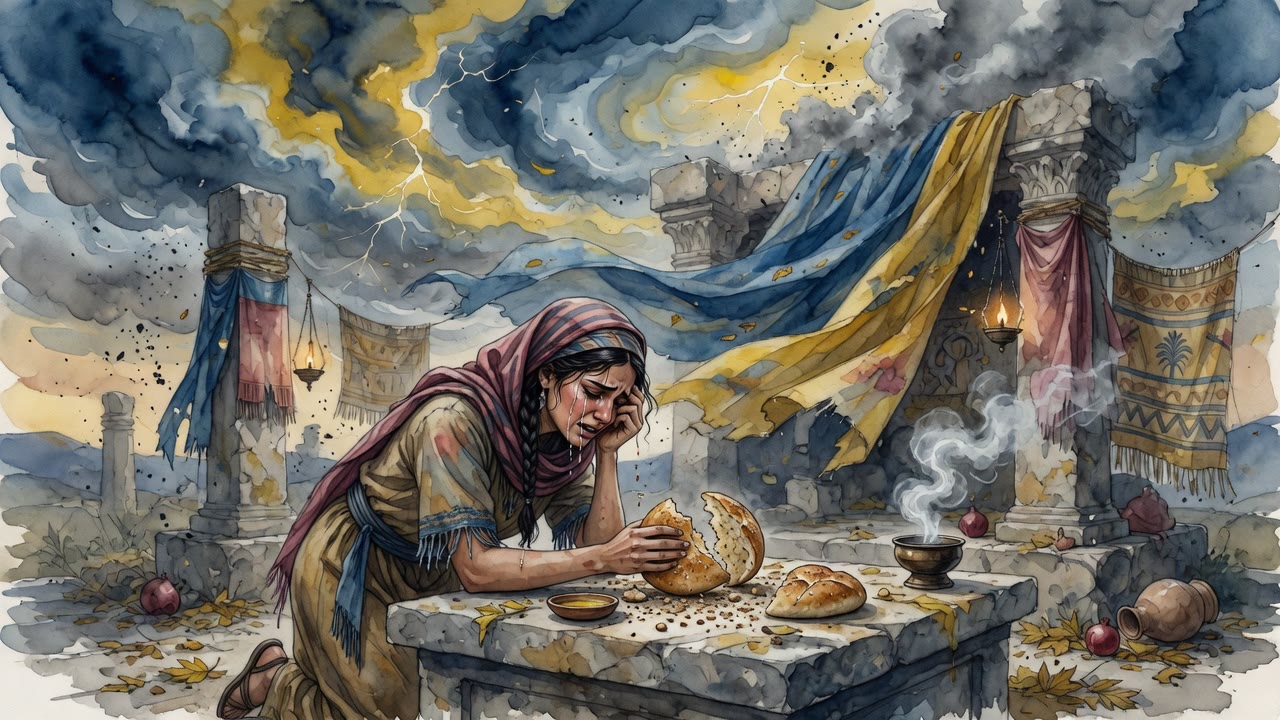
"I am not thirsty for food. I am not thirsty for drink. My soul is thirsty for You. To see Your face, I say to my heart: seek His face."
She said it in a room with servants outside the door, in a house where the whole point of her was her appearance, at seventy-five, under an assumed name, with someone else's body doing her marriage for her. The deer of the psalm sits by water and still longs. Esther sat by a king's table and still longed. The palace had tables. Solomons wisdom would have been a thirst, not a dish, and she would not drink what the palace poured.
← All myths