Solomon Trapped a Wind Demon to Build the Temple
A spirit tore through Arabia and no army could stop it. Solomon sent a servant with a leather bottle and a ring engraved with the divine name.
Table of Contents
 Click for full size
The King Who Could Not Stop the Wind
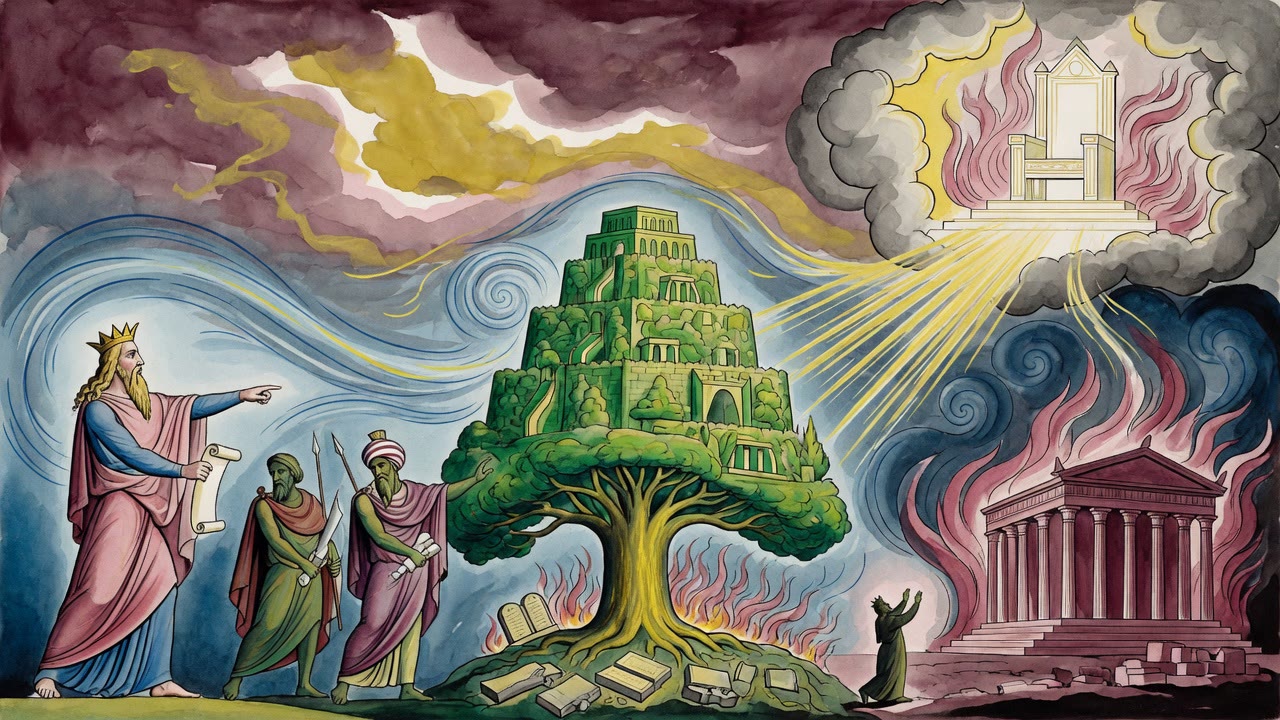
King Adares of Arabia had an enemy he could not fight. Something moved through his kingdom like a storm that chose its targets, scattering livestock, ruining harvests, driving people from their homes. It had no body to wound, no voice to negotiate with, no position to outflank. His armies stood ready and useless. So he sent word to Jerusalem, to the one king in the world who held authority over things that could not be seen.
Solomon read the appeal and reached for his ring. The ring had been given to him from above, engraved with the divine name that compelled obedience from every spirit in creation. He also reached for a leather bottle. He gave both to a servant, explained what had to be done, and sent him to Arabia.
The instruction was simple in its statement and impossible in its execution: find the wind-demon, use the ring's name to bind it, and seal it inside the bottle. Capture what no net can hold.
How You Seal Air Inside Leather
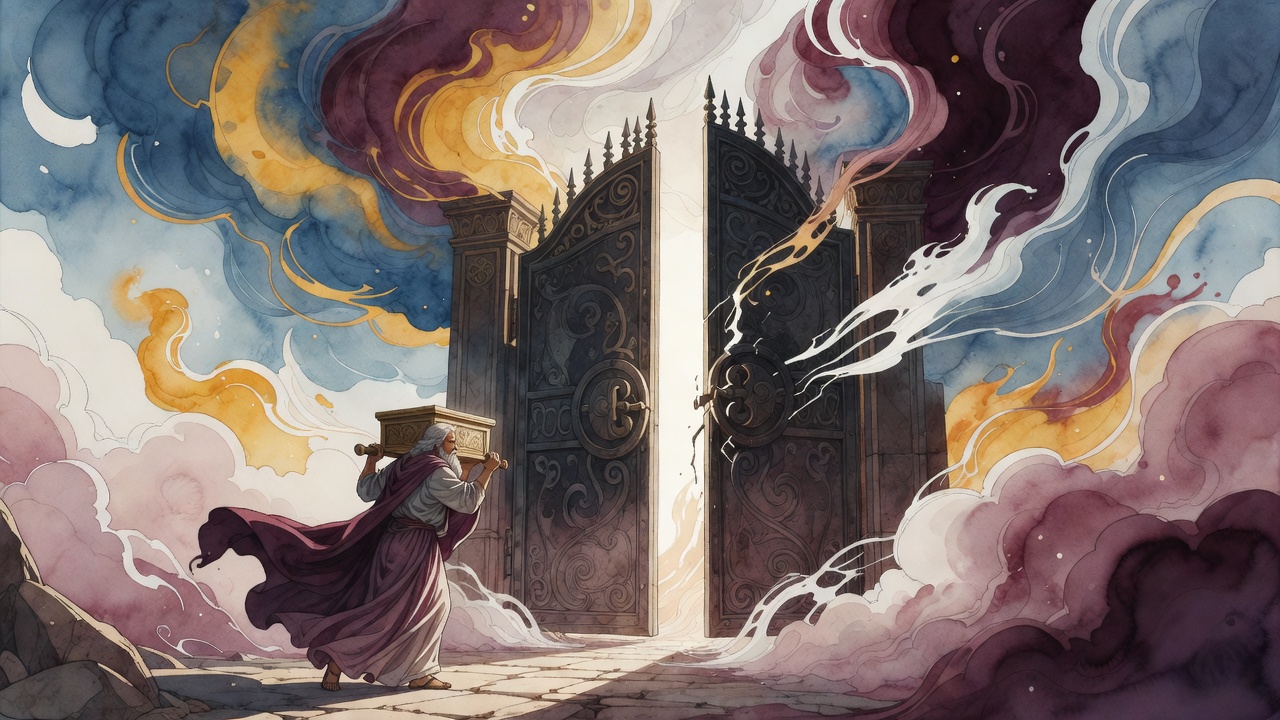
The tradition preserves the mechanics. The servant traveled to Arabia. He found the spot where the spirit moved, which was identifiable by the disturbance it caused, the unnatural whirling in a contained area. He held out the ring. The spirit recognized the name on it and fell toward the bottle. The servant sealed it. The bottle went back to Jerusalem.
When Solomon opened it, he had a prisoner unlike any human prisoner. The demon he released was wind made temporarily captive, a spirit being forced into temporary compliance by a name it could not resist. He put it to work immediately. The Temple was under construction, and one specific problem had stopped the work.
The Cornerstone That Would Not Move
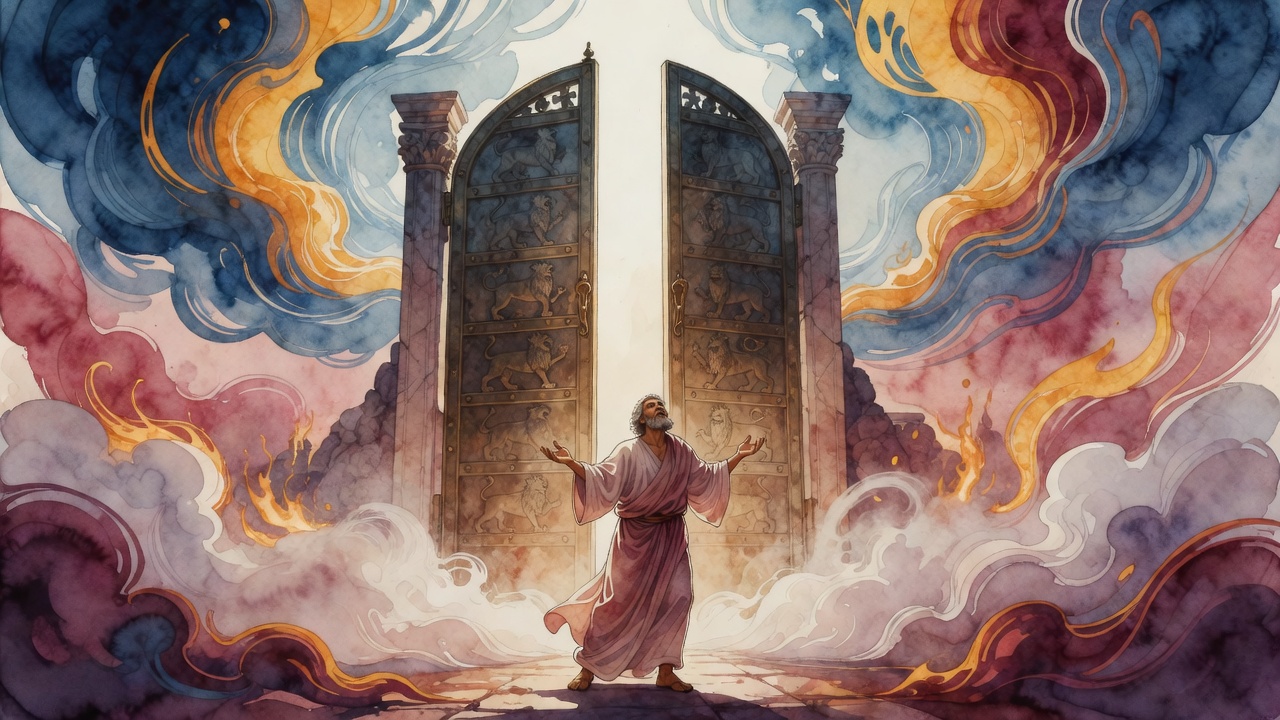
There was a stone that needed to be set at the corner of the Temple, and it would not move. Not because it was too heavy for men, but because something about the position required a force that human labor alone could not provide. The wind-demon, directed by Solomon's authority, accomplished what the work crews could not. The stone was set. The demon had earned its release and was dismissed.
The cornerstone shows what Solomon was building and how. The Temple was not a building assembled by ordinary means. Iron tools could not touch the stones, because iron was associated with weapons and warfare, and a place meant to receive the divine presence could not be shaped by instruments of death. The shamir worm cut stone. A captive wind moved the cornerstone. Every element of the construction had to be accomplished through means that preserved the building's character as a house of peace.
What a Captured Demon Teaches About the Temple
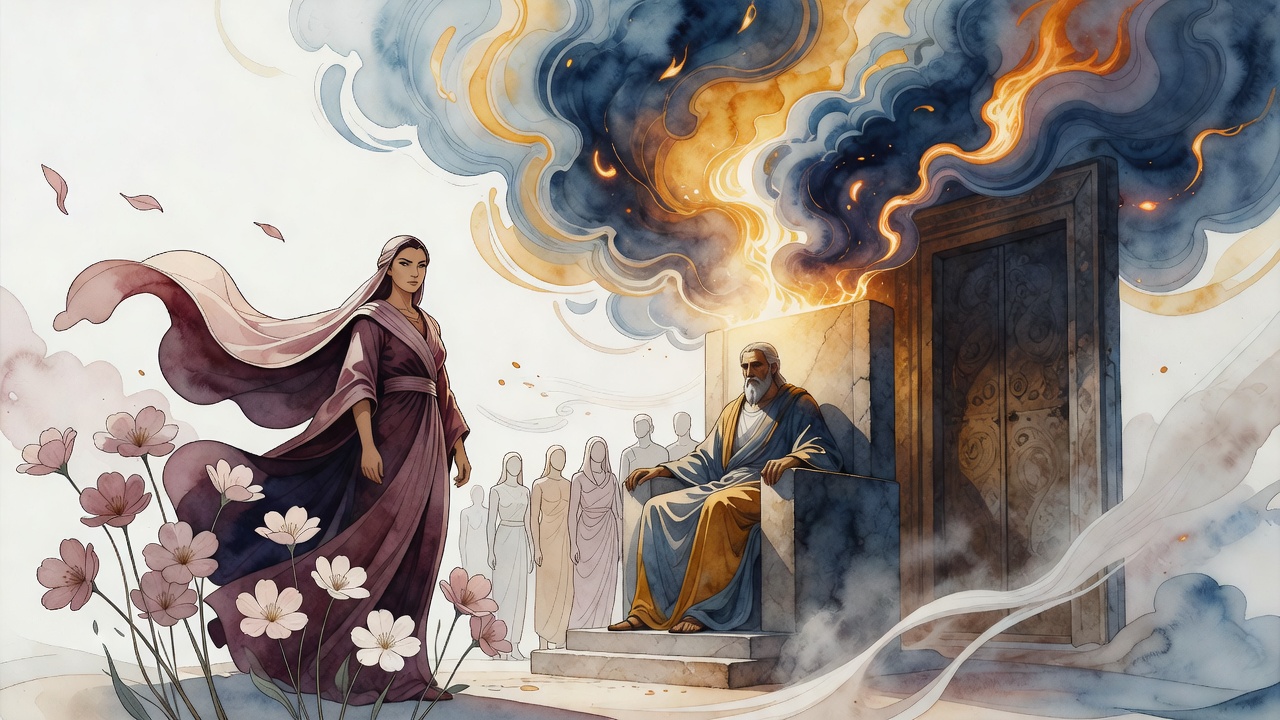
The rabbinic imagination built Solomon's Temple as a place where the invisible world cooperated with the visible one under the direction of a king whose authority extended over both. The wind-demon is not just a labor resource. It is proof that Solomon's kingship reached to the edges of creation. When the king of Arabia's problem was a spirit, the right person to call was the king who held the name that spirits obeyed.
The bottle itself carries something worth holding. What contained the demon was not iron or stone or an elaborate cage. It was animal skin, soft and ordinary, sealed around breath. The authority was entirely in the name on the ring, not in the strength of the container. A leather bottle becomes the prison of a force that can tear a kingdom apart, because the name it is sealed with is greater than anything it contains.
← All myths