The Temple Gates That Would Not Open for Solomon
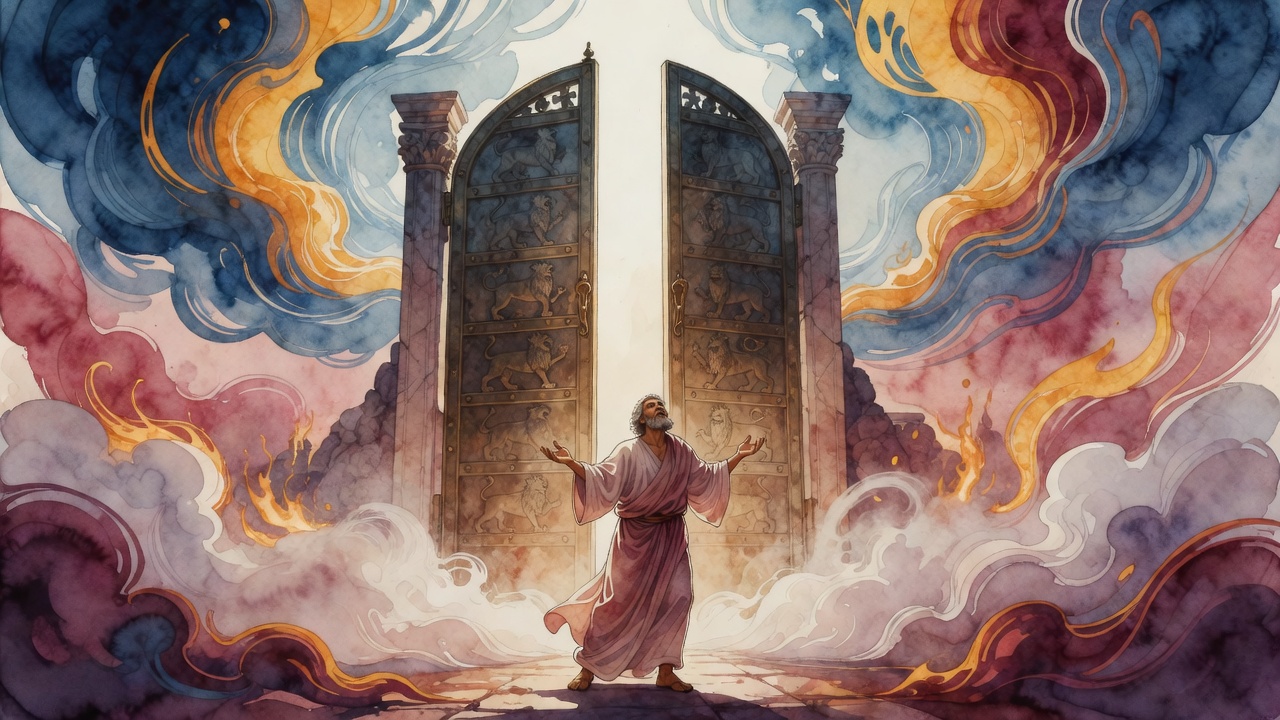
Twenty-four psalms left the gates shut. Solomon brought his father's coffin to the door, named David, and fire filled the House.
Table of Contents
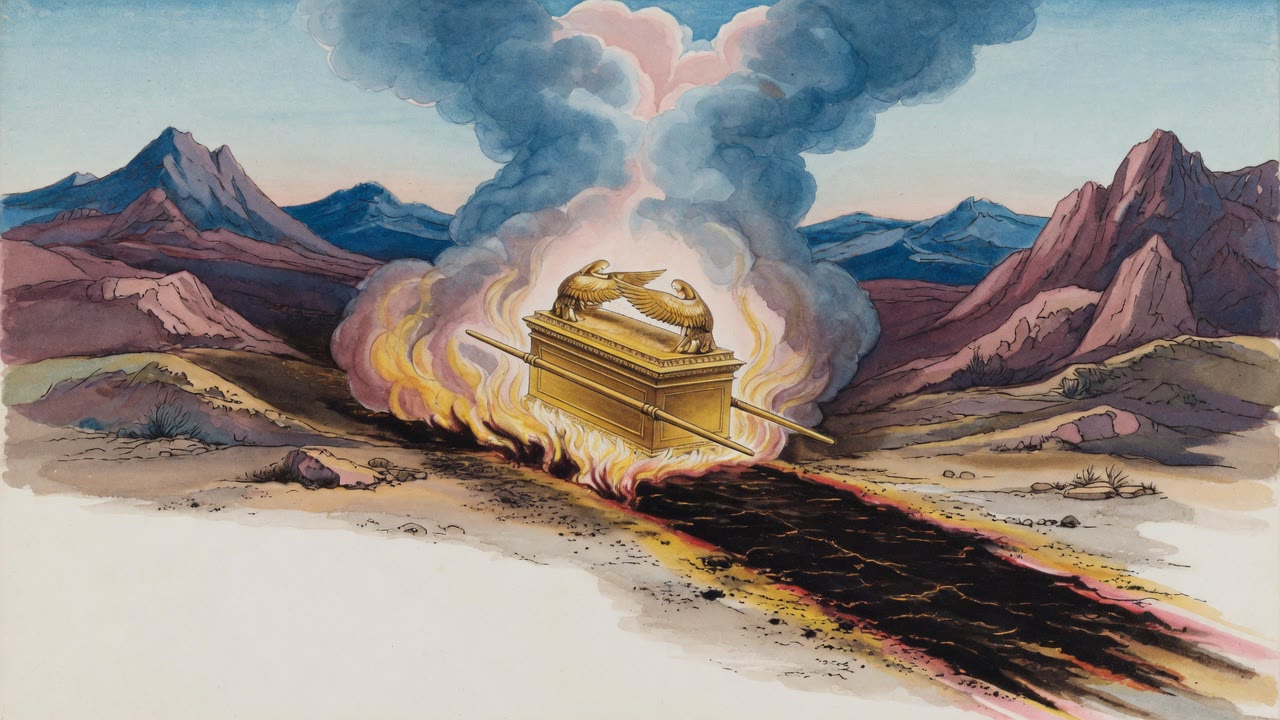
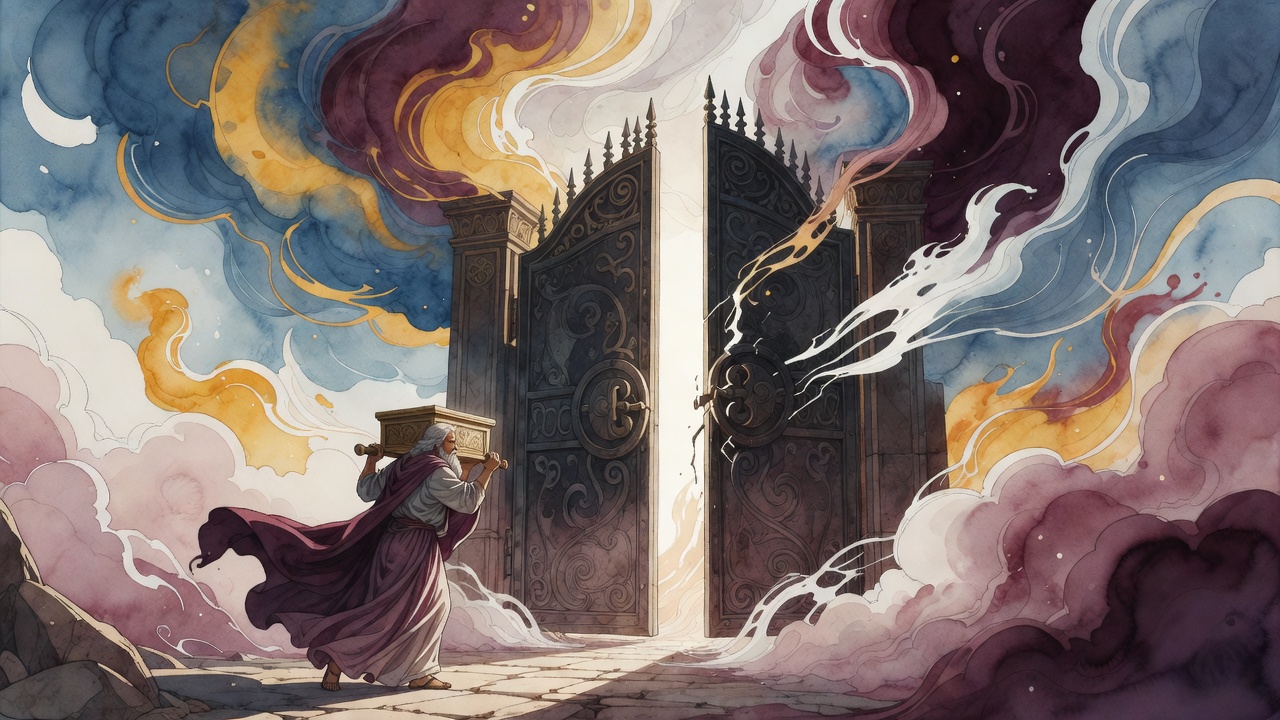
The Ark stopped at the doors, and the doors did not move.
 Click for full size
Solomon had spent seven years on the House, with cedar from Lebanon, bronze pillars eighteen cubits high, and tens of thousands of hands. The day came to bring the chest of acacia and gold into the dark of the Holy of Holies, the seat Israel had carried through the wilderness for forty years.
The gates held anyway. Some who stood there said the doors pressed downward, ready to crack a king's skull, but all of them agreed on the fact: the wisest man in Israel could not get into his own building.
Twenty-Four Psalms
Solomon prayed, because he chose the psalms, the old processional words, the language the people already knew how to sing. He recited one, but the gates stayed shut. He recited another, and still nothing moved. He recited twenty-four in a row, until his voice was thin, building toward the cry, "Lift up your heads, O ye gates, and be ye lifted up, ye everlasting doors, and the King of Glory shall come in" (Psalms 24:9).
The gates did not lift, though he had the merit of his office, and wisdom, and the house that stood sealed in front of him. He had even written some of the words he was throwing at the wood, but none of it was enough, because the doors were waiting for a name his own excellence could not supply.
The Coffin at the Threshold
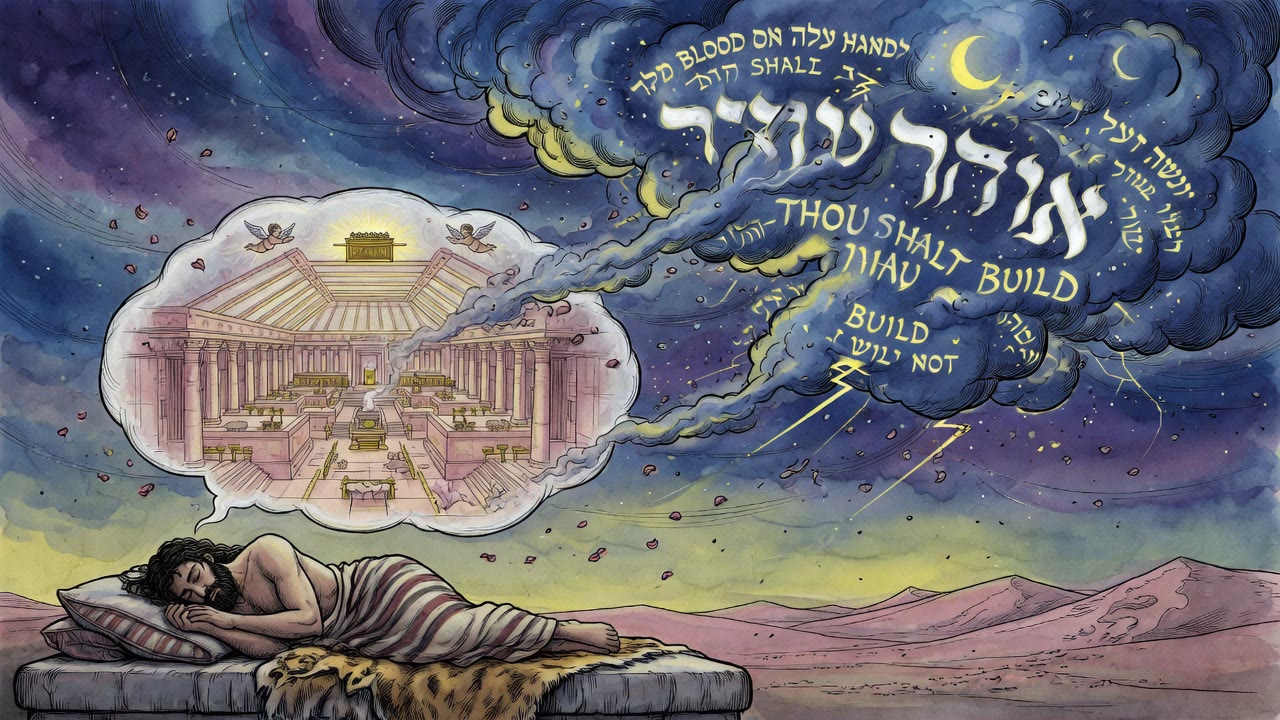
The problem was not only pride, because it was also size. Solomon had made the Ark ten cubits wide, and the entrance to the Holy of Holies was ten cubits wide, so ten cannot pass inside ten, and the bearers crowded the sides. The chest would not go in even if the doors had been willing.
Solomon stood ashamed, because he did not know what to do. Then he changed the prayer and stopped asking in his own name.
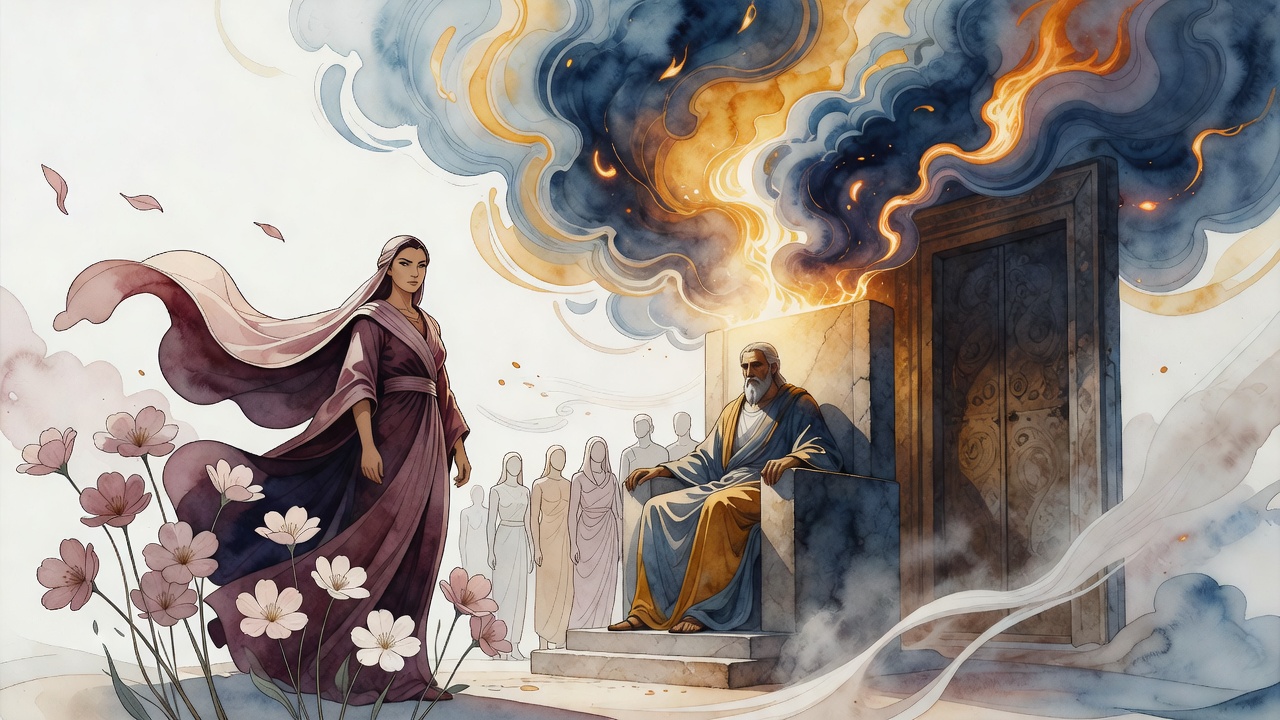
He went and brought the coffin of his father David to the Temple gates and stood it there. "O Lord God," he said, "turn not away the face of Your anointed. Remember the good deeds of David Your servant."
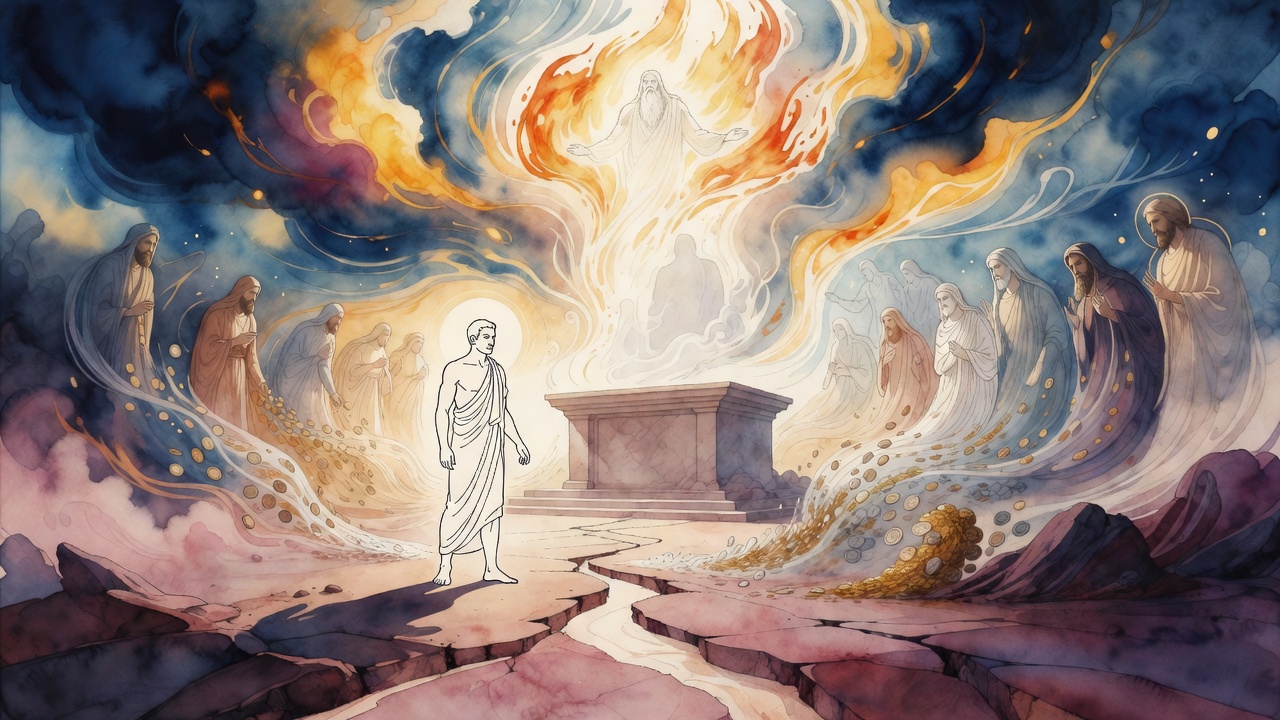
The moment David's name was in the air, fire came down from heaven and the glory of the Lord filled the House. The Holy Spirit cried out, "And I praised the dead." The gates that had refused Solomon's twenty-four psalms answered a dead man's merit.
Who Is This King of Glory
Solomon lifted his voice again. "Lift up your heads, O gates!"
At that hour the gates rose against him. They took him for the King of Glory named in his own mouth. They moved to swallow him, to crush his skull, because a man had spoken as if the glory were his.
He had five seconds under that wood, with the doors coming down, the Ark stuck behind him, ten cubits in a ten-cubit hole, and David's coffin at his heel. He heard the gates answer him, "Who is this King of glory?"
He did not claim it. "The Lord of Hosts," he said, "He is the King of glory, the Lord, strong and mighty. Make yourselves great, for the King of glory comes upon you."
Their fury eased, so they raised their heads and raised honor. The Ark passed through, because Solomon had named the right king, and because he had named the right father.
The House Opened for Another Name
David had wanted this House his whole life, but God had told him no, because David was a man of war, and the house required a man of peace. David accepted the verdict and spent his remaining years gathering silver and gold, the plans, the weights, so that a son could build what he had not been allowed to finish.
Every cubit was Solomon's work, but the merit at the door was David's. The gates that would not open for twenty-four psalms opened when the coffin stood there, because the House was a gift held in trust by a son who could complete it but not own it.
Moses had known a version of the same limit. He said the Torah was commanded for the people standing on the ground, not for heaven, which does not need a book. Solomon echoed that downward building when he said he had made a place for the Ark, not a house God required, but a place Israel could bring what it had broken.
The gates kept the honor they had given. Years later, when the House went down, no enemy hand ruled those doors. They had asked who the King of glory was, and they had gotten an answer, and they had bowed to the Ark instead of to the king who built them.
Solomon stood in the filled House with his father's coffin still at the threshold and the fire still in the air. The wisest mouth in Israel had not been enough, but a dead man's name had been.
← All myths