Solomon's Throne Roared at Liars and Daniel Faced Real Lions
A golden lion put out its paw with a law cut into it, and Solomon could not reach the second step until he read it. In Babylon the lions were alive.
Table of Contents
 Click for full size
The Lion That Would Not Let Him Climb
Six flights of steps ran up to the seat, and on every step stood two lions of gold, one at the right hand and one at the left, and they did not hold still.
When Solomon put his foot on the first step the lion on the right stretched out its paw, and there was writing cut into it, and he could not put his foot on the second step until he had read the writing. It said: you shall not respect persons in judgment. He turned to the left and the other lion had its paw out too. It said: you shall not accept any bribe.
That was the arrangement all the way up. Another paw, another clause of the law of judgment, and no way past it.
The Machine He Sat In
The steps were set with stones and pearls, red and white and green. Trees and palms were fixed along both sides, and in their branches nested eagles and peacocks and birds of every kind. On the top step two great pillars of ivory rose off the heads of the lions, and beside them stood two hollow vines of gold that breathed out perfume whenever the king came up.
The seat itself was ivory laid over with the gold of Ophir. To one side stood a golden chair for Gad the seer, to the other a golden chair for Nathan the prophet, and around the whole thing seventy more golden seats stood in a ring for the seventy of the Sanhedrin. In front of it a golden lamp burned, carved down one side with the seven fathers of the world, Adam and Noah and Shem and Abraham and Isaac and Jacob and Job, and down the other with seven pious men, Kehath and Amram and Moses and Aaron and Eldad and Medad and Hur, and topped with the figure of a priest kindling the light.
On the steps the animals stood in pairs, each facing its opposite. The ox faced the lion. The goat faced the wolf. The bear faced the hart. The eagle faced the dove. The hawk faced the turtledove. Solomon walked up between them, and he never climbed a single step himself. The lion put out its paw on his right and the eagle put out its talon on his left, he leaned on the two of them, and the pair on each step handed him to the pair above.
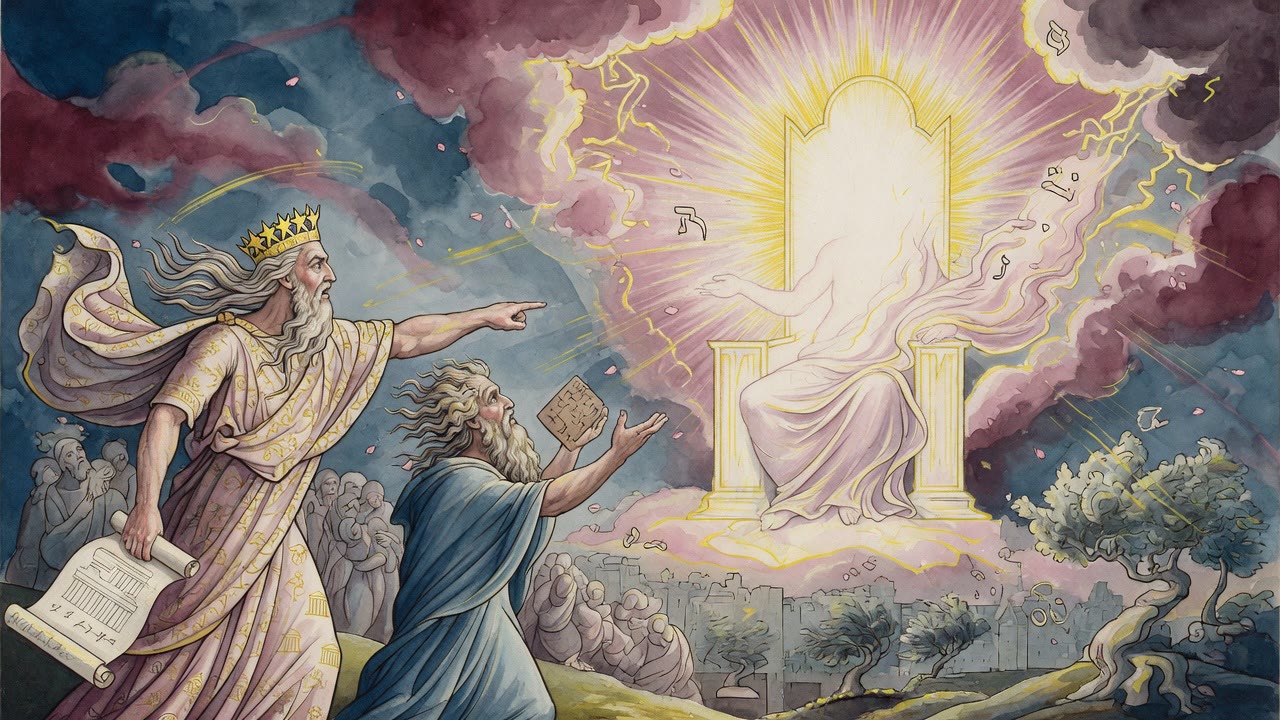
At the top the whole thing came alive. Birds started up together, peacocks shrieking over them, and the trees let go their scent. A serpent of gold came around him, set him down on the seat, and crawled away under his feet. The eagles came off the vines, fanned perfume at him with their wings, and lowered the crown onto his head. Then every beast and every bird said the same words at once. Long may the kingdom of the house of David be established.
Last of all a golden dove brought a scroll of the law and laid it across his knees.
The Noise It Made in Court
When people came to him for judgment the wheels of the throne turned under him. The oxen lowed. The lions roared. The bears howled and the lambs bleated and the eagles cried and the peacocks shrieked and the cocks crowed and the hawks screamed and every bird in the branches started up at once.
It was built to terrify. A plaintiff standing in that racket did not plead a case he knew was rotten, and a witness did not open his mouth to lie in it. The like of it was never made in any kingdom. Ahasuerus sat down in Solomon's place generations later, spent three years and every craftsman he could hire trying to have one built, and could not do it.
Israel had already complained to God about him. This wicked man is sitting where Solomon sat. Do not let your throne of glory be made abominable.
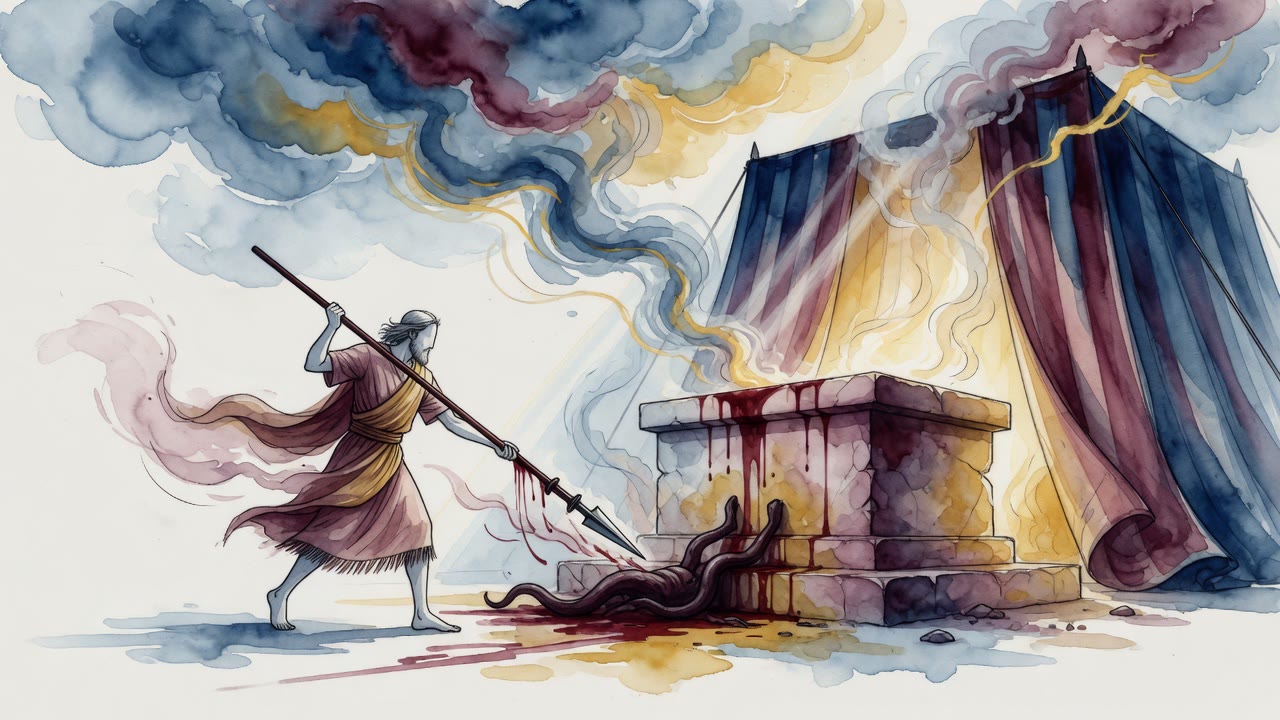
Fire had come down on Solomon's house at its dedication. Twelve times fire fell out of heaven onto the earth, six as an honor, at the Tabernacle and over the offerings of Gideon and Manoah and David and Solomon and Elijah, and six to kill, on Nadab and Abihu, on the complainers in the camp, on the company of Korah, on Job's flocks, and on the men Ahaziah sent after Elijah.
The Court in Babylon Had No Lions in It
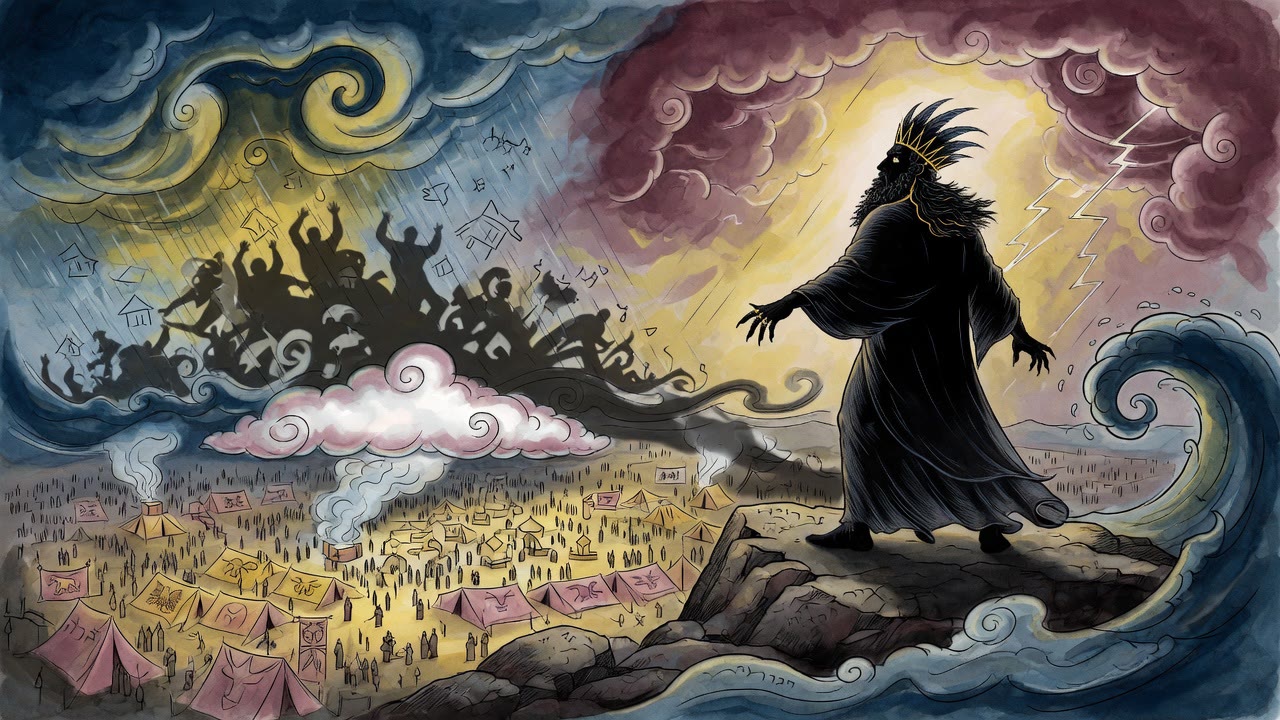
The men who wanted Daniel dead would have drilled up through the sky to reach the throne if they could. They could not go up, so they worked below.
The presidents of the kingdom and the governors and the princes and the counselors and the captains consulted together and had the king sign a statute, and they signed it under the law of the Medes and Persians, which cannot be revoked. That was the whole craft of it. Not a charge. A law that could not be taken back.
Daniel knew the writing was signed. He went into his house, opened the windows of his upper room toward Jerusalem, knelt down three times that day and prayed and gave thanks in front of his God exactly as he had before. The men assembled at his house and found him on his knees.
They took it to the king. He was sick about it and worked until sundown looking for a way out for Daniel, and there was none. His throne was a chair. It did not roar when a false case came into the room.
So they put Daniel in the pit. Let a lion come, God said, and rescue a lion from the mouth of a lion.
The lions down there talked to him. They told him the only reason he was still whole was that there were only seventy of them, and that if their number were increased they would be able to take him. Daniel told them to stay the night with him, and if they could overpower him in the morning they were welcome to eat him. In the morning the ones with broken bones at the bottom of that pit were the men who had drawn up the statute.
Thrones Were Set and the Books Were Opened
What Daniel saw at night he saw while the empire that convicted him was still standing.
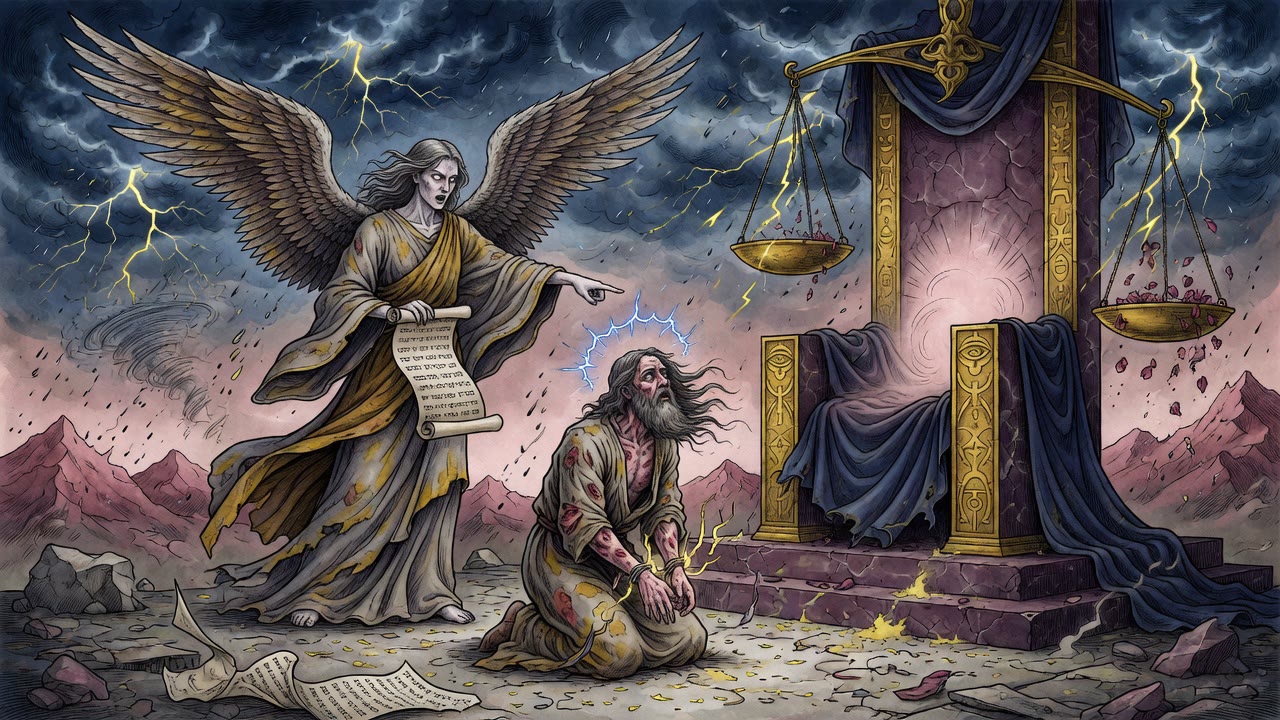
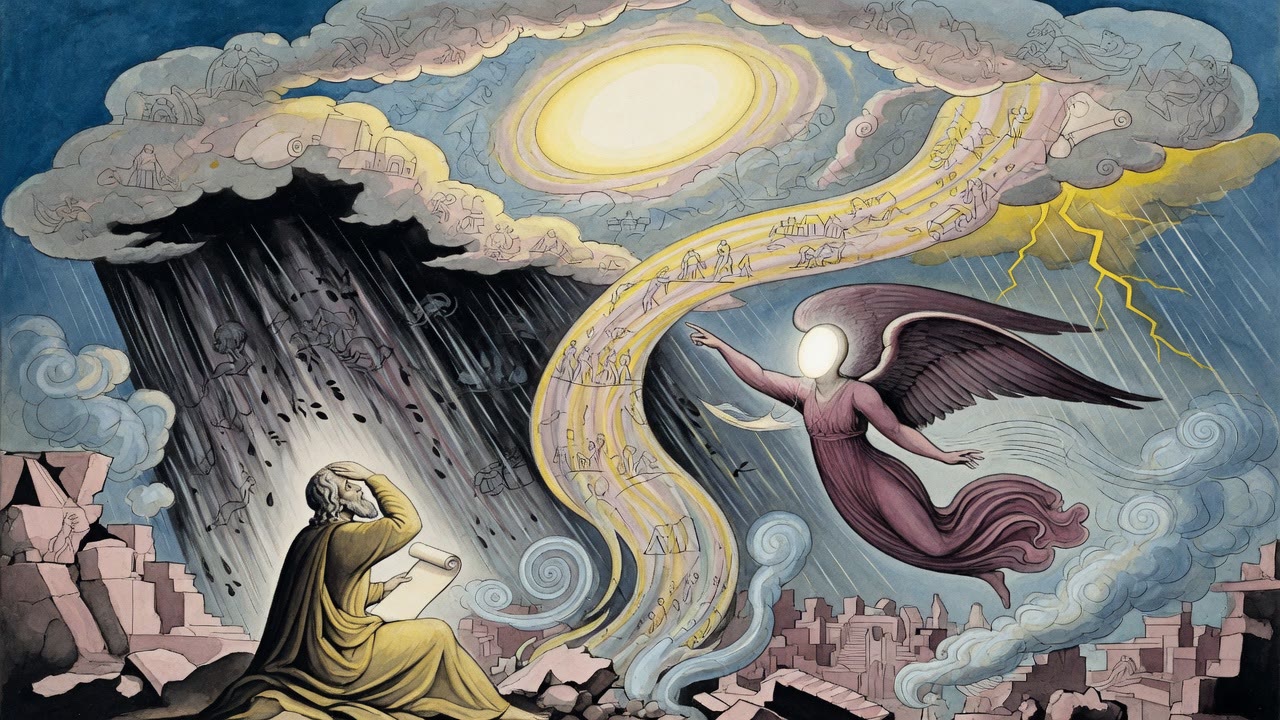
Thrones were set in place, and the Ancient of Days took his seat. His clothing was white as snow and the hair of his head was like clean wool. His throne was tongues of flame and its wheels were burning fire. A river of fire ran out from in front of him. A thousand thousands served him and ten thousand times ten thousand stood before him. The court sat in judgment, and the books were opened.
Then one like a son of man came with the clouds of heaven, and they brought him near, and he was given dominion and glory and a kingdom, so that all peoples and nations and languages should serve him, a dominion that does not pass away and a kingdom that is not destroyed.
God had told David about it in advance, long before Daniel was born, because nothing is done up there without the secret going first to the prophets.
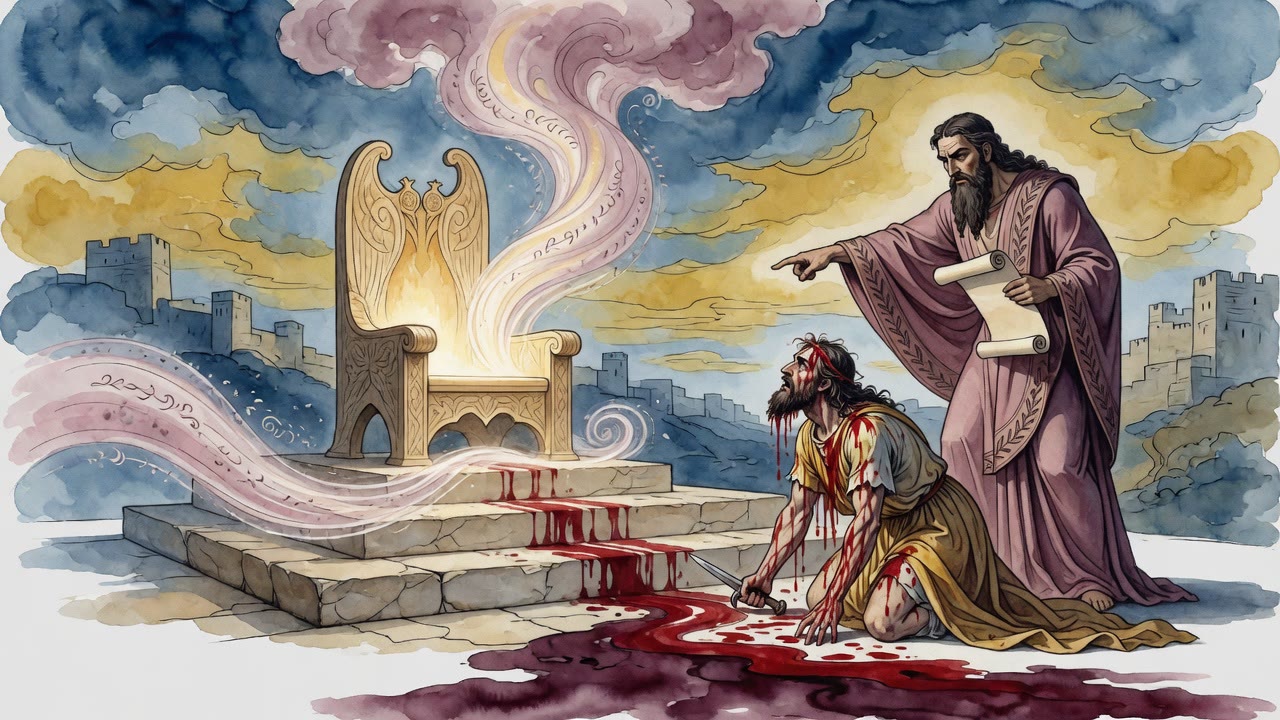
What comes out of an opened book is sentence, and the sentence had already been softened. A king swore to kill his son for angering him, and then stood there with the sword drawn, working out that a dead son leaves no heir and a sworn oath cannot be taken back. He put the sword in its sheath and passed it over his own head. He swore to throw the great stone at the boy, so he broke the stone into small pieces and threw them one at a time. He swore a hundred lashes, so he put the rope around his own neck.
Solomon needed a hundred gold animals shrieking on the stairs to keep men honest in front of him. In the court Daniel saw, nobody shouted at anyone. They just opened the books.
← All myths