David Died With Unfinished Business and Left It to Solomon
They piled clothes on the old king and he stayed cold. He sent for Solomon and named the men his own sword had never reached.
Table of Contents
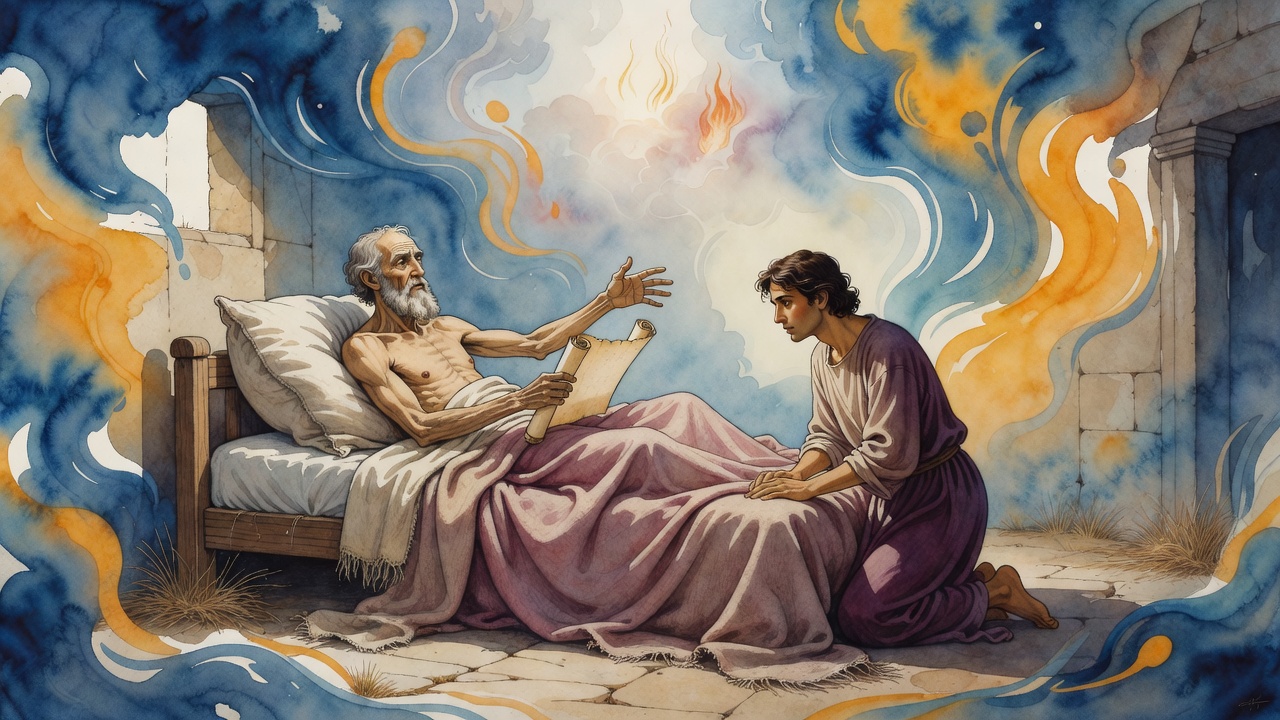
They piled clothes on him and he stayed cold. They found Abishag of Shunem to lie against him and he stayed cold. David was seventy and going. He sent for Solomon.
 Click for full size
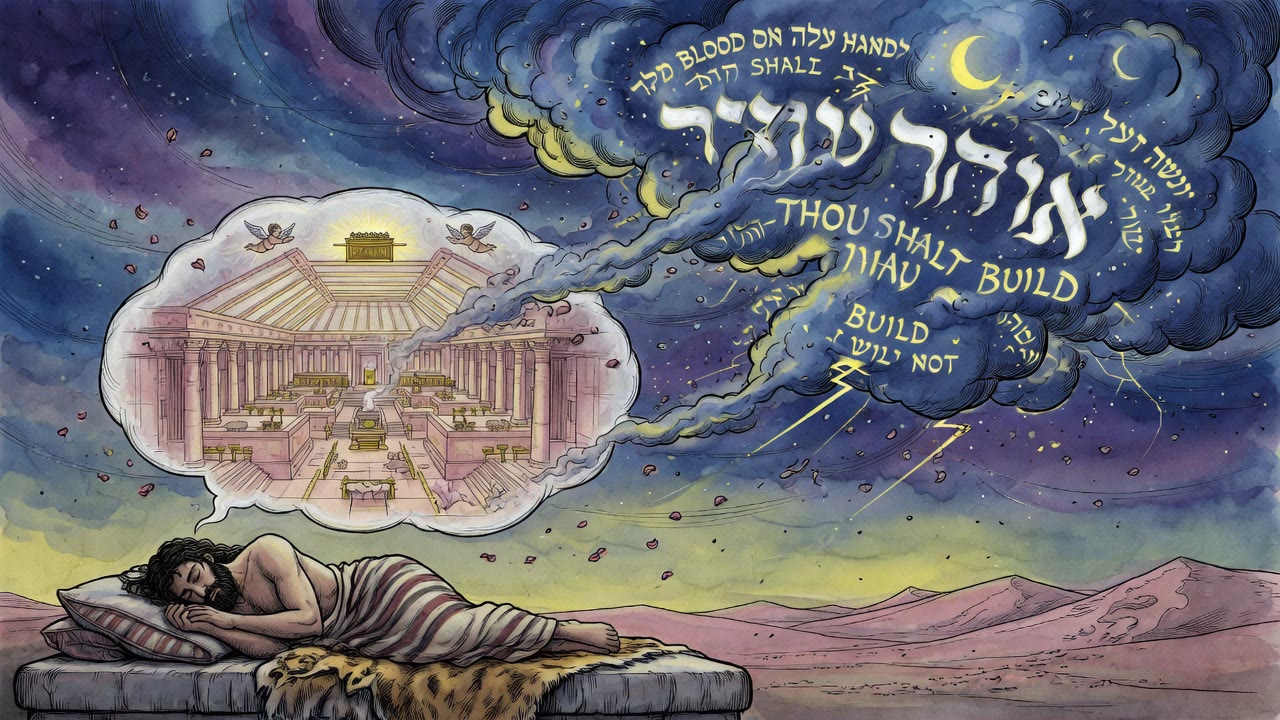
What he had to say came in two halves. The first half was the covenant. Be strong. Be a man. Keep what God gave you, walk in his ways, hold to the commandments written in the Torah of Moses, and the throne stays in this family for as long as there is a family. The second half was unfinished business. It came as a list of names.
The Letter Joab Showed the Officers
The first name was Joab, who had run David's wars for thirty years and killed the people David could not be seen killing.
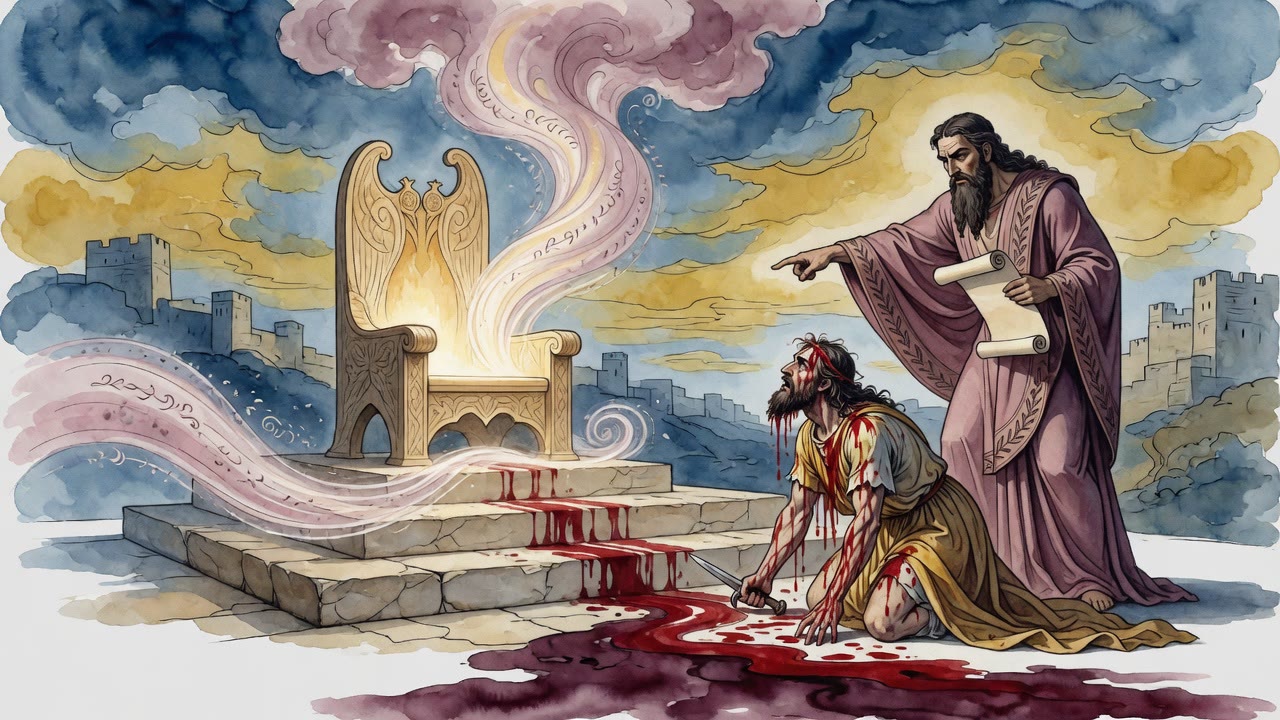
He had killed two men in peacetime. Abner came in under terms, and Joab took him aside in the gateway and put a knife in his belly. Amasa came out to meet the army, and Joab took his beard in his right hand as if to kiss him and opened him with the sword in his left. Both of them died on David's own peace. The blood went onto David's belt and into his sandals, and no one arrested anybody.
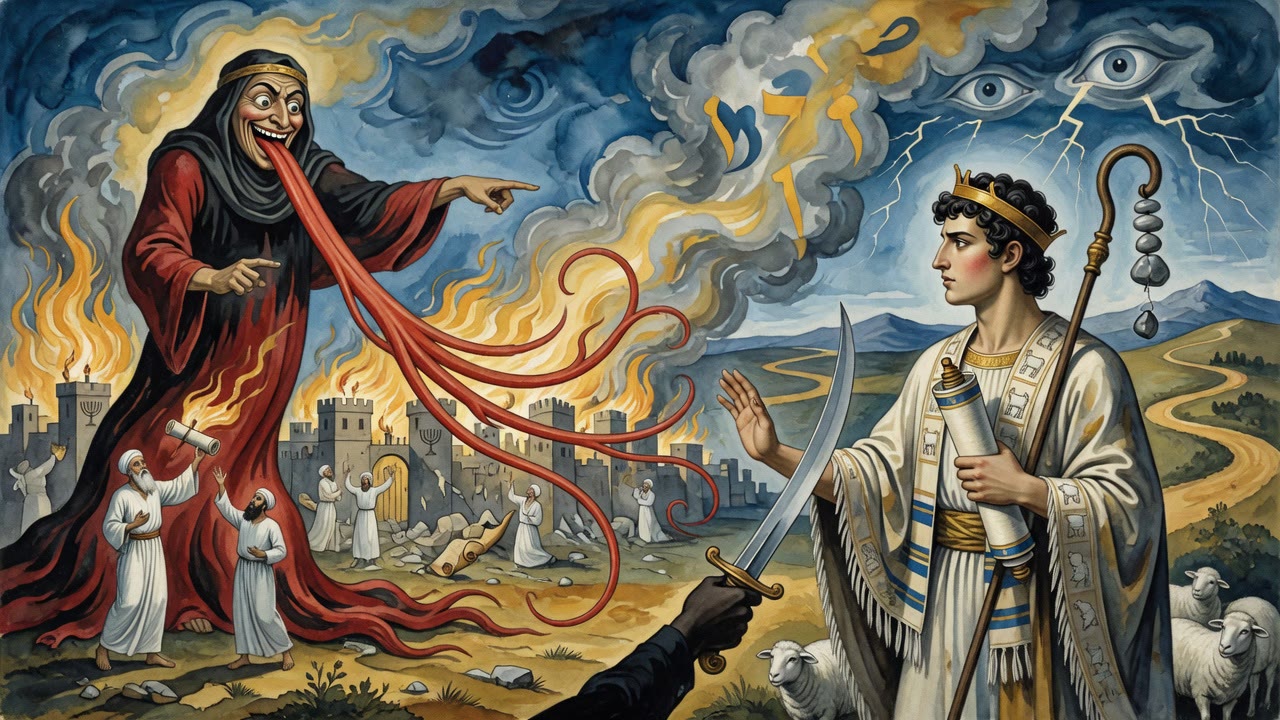
Then Uriah the Hittite died at the wall of Rabbah, and the generals came to Joab in a body, because they had counted the dead and the numbers pointed at their commander. They wanted to know why he had put a man that far forward and then pulled the line back. Joab did not argue. He produced a letter and let them read it. It was the king's order, in the king's hand, carried to the front by Uriah himself.
David's word for all of it, at the end, was that Joab had been too strong for him. He had never been able to reach him. He was not going to reach him now.
Do Not Let His Gray Head Go Down in Peace
"You are a wise man," David told his son. "You know what to do. Do not let his gray head go down to the grave in peace."
He had chosen every word. He did not say kill him. He said do not let him die easy, and he said it to a man who would understand the difference. He could have forgiven Joab and let the account stand open into the next world. He preferred that Joab pay here, where the payment ends.
Then he moved to the next name.
Shimei son of Gera, a Benjaminite out of the house of Saul, had come down the ridge above the road to Mahanaim while David was running from his own son. He walked along above the column throwing stones and kicking dust, shouting that David was a man of blood and God was collecting. Abishai asked permission to go up and take his head off. David said leave him.
When the rebellion broke and David came back over the Jordan, Shimei was waiting at the ford. He threw himself flat and begged. Abishai asked again. David swore to him by God that he would not die by the sword. He never touched him. He kept that oath for the rest of his life.
"You know what he did to me," he told Solomon. "He cursed me with a grievous curse. Do not hold him innocent. Bring his gray head down to the grave with blood."
The oath had been sworn by David. Solomon had sworn nothing.
Benaiah Found Him on the Horns
Not every name was a debt. Barzillai the Gileadite had come to Mahanaim while David was in the field with no supplies and no certainty of a throne to go back to, and had brought him beds and wheat and honey and cheese and fed the whole company at his own cost. "Show kindness to his sons. Let them eat at your table. We did not do him a favor first. We are paying back what we owe his father."
Then he stopped talking, and died, having reigned seven years and six months in Hebron and thirty-three years in Jerusalem.
Joab heard what was coming and ran for the Tabernacle. He got both hands on the horns of the altar and refused to let go. Solomon sent Benaiah, who stood over him and told him to come out. Joab said he would die where he was. Benaiah went back for instructions, came back with them, and killed him holding the altar.
The Tomb That Hid the King
Shimei was given a house in Jerusalem and one rule: cross the Kidron Valley and you die that day. He agreed. He lived quietly for three years. Then two of his slaves ran off to Gath. He saddled a donkey and went to fetch them, and came home with his property, and Solomon called him in and had him killed that afternoon.
David went into the ground under Jerusalem with more wealth than any king of that country had ever buried. A thousand and three hundred years later the high priest Hyrcanus, besieged by Antiochus and needing to buy an army off his walls, opened one room of the tomb and carried out three thousand talents, and the siege lifted. Herod opened a different room later and took what was in it. Neither of them found the kings. The bodies had been laid under the floor so carefully that a man could stand inside the sepulchre with a lamp, with his hands full of David's silver, and never know where David was.
← All myths