God Drew a Plan for the World and It Would Not Stand
The drawing kept collapsing. Nothing held until God made repentance and set it down beside the Throne, before there was any light to see it by.
Table of Contents
 Click for full size
The Plan That Would Not Stand
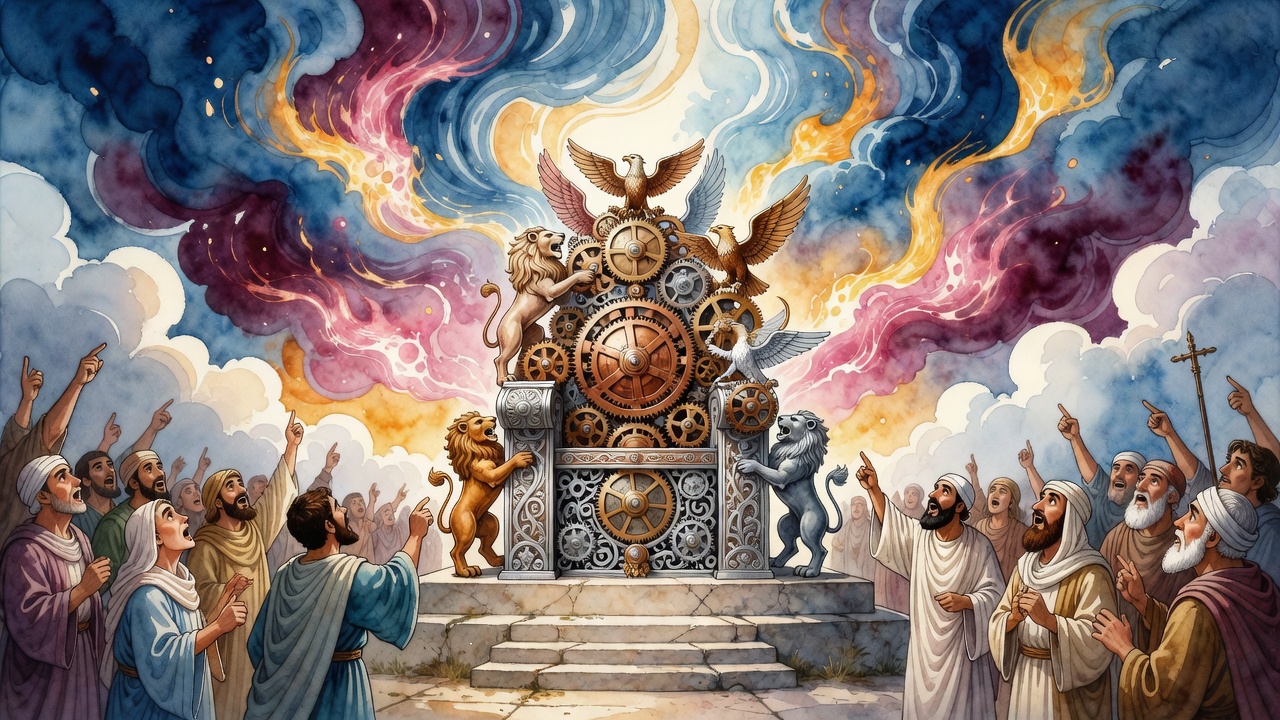
God drew the plan of a world, and the plan would not stand.
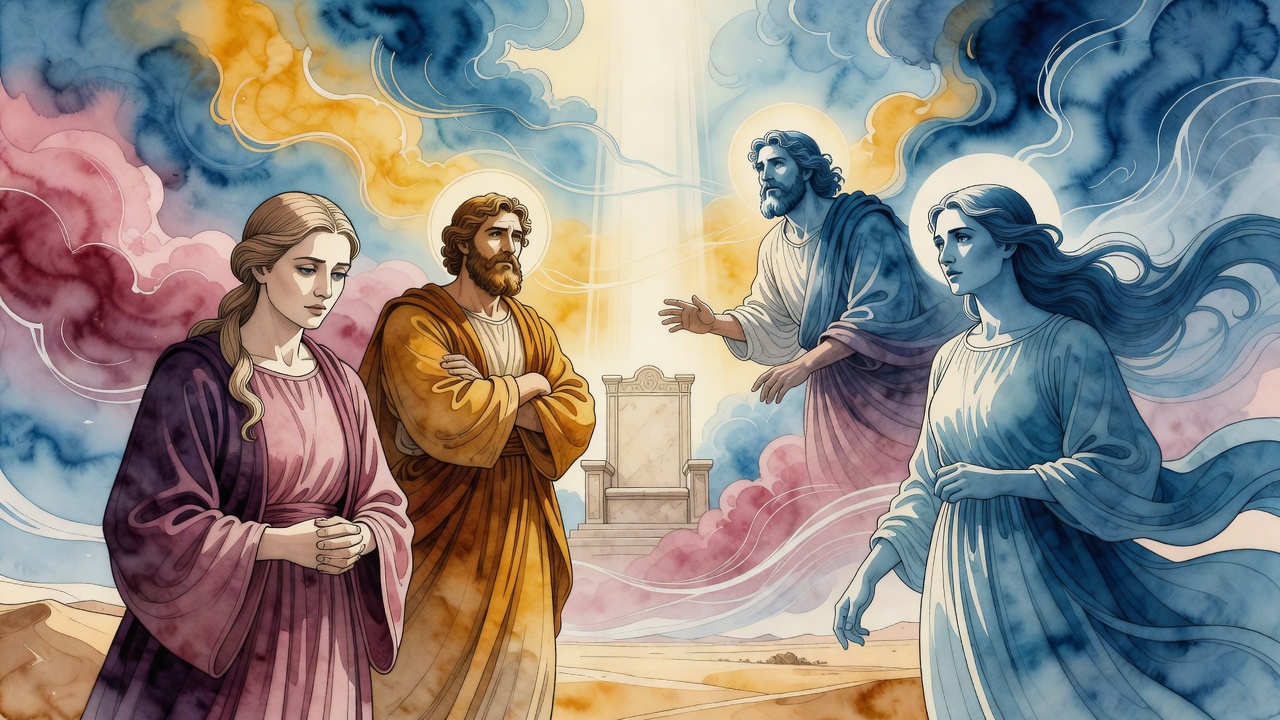
A man who wants to put up a palace has to settle the foundations first, and the doors, and where people will come in and go out. Otherwise he cannot lay a single stone. So God set the world out in front of Him the same way, and it kept coming apart in the drawing. There was nobody yet to blame for this. There was no light, no water, no ground, no first day. There was God, and His name, and a design that collapsed every time He looked at it.
He made repentance. Then it stood.
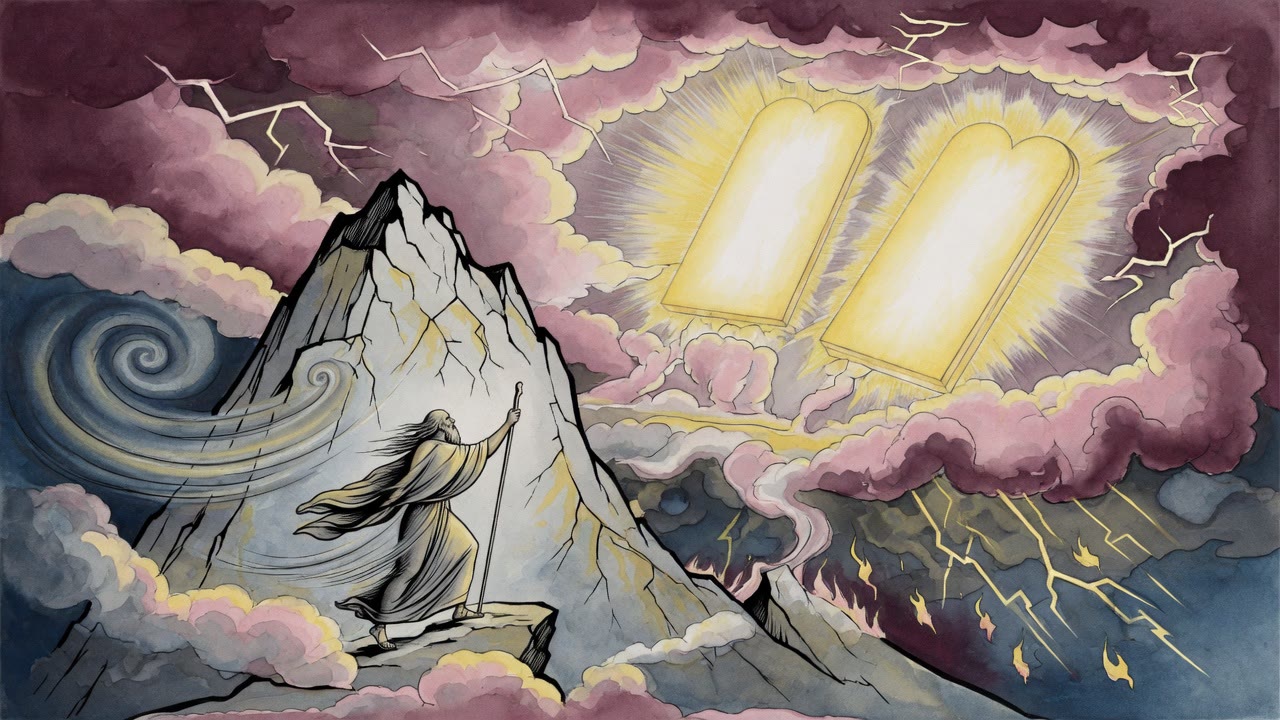
Seven things were finished before anything else was started: the Torah, repentance, the Throne of Glory, the Garden of Eden, Gehinnom, the ground the Temple would be built on, and the name of the Messiah. The way back was in place two thousand years before there was anywhere to come back from.
The Torah Told Him to Make Someone to Watch
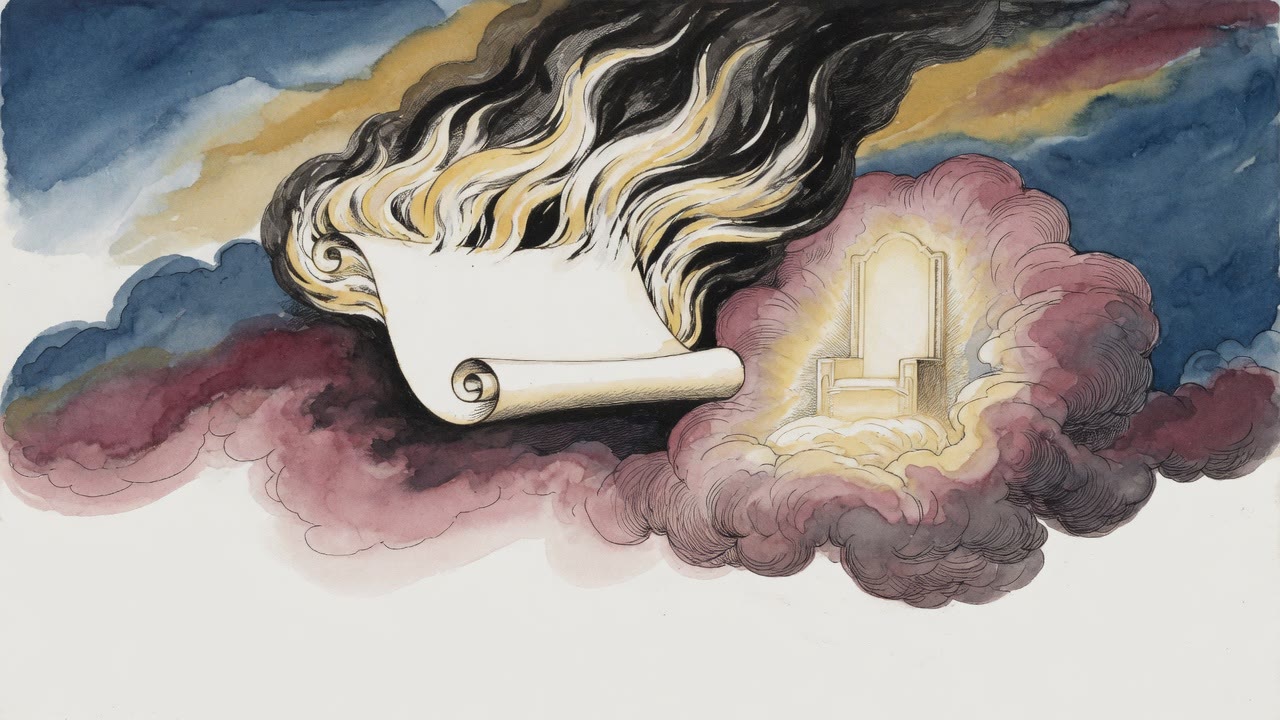
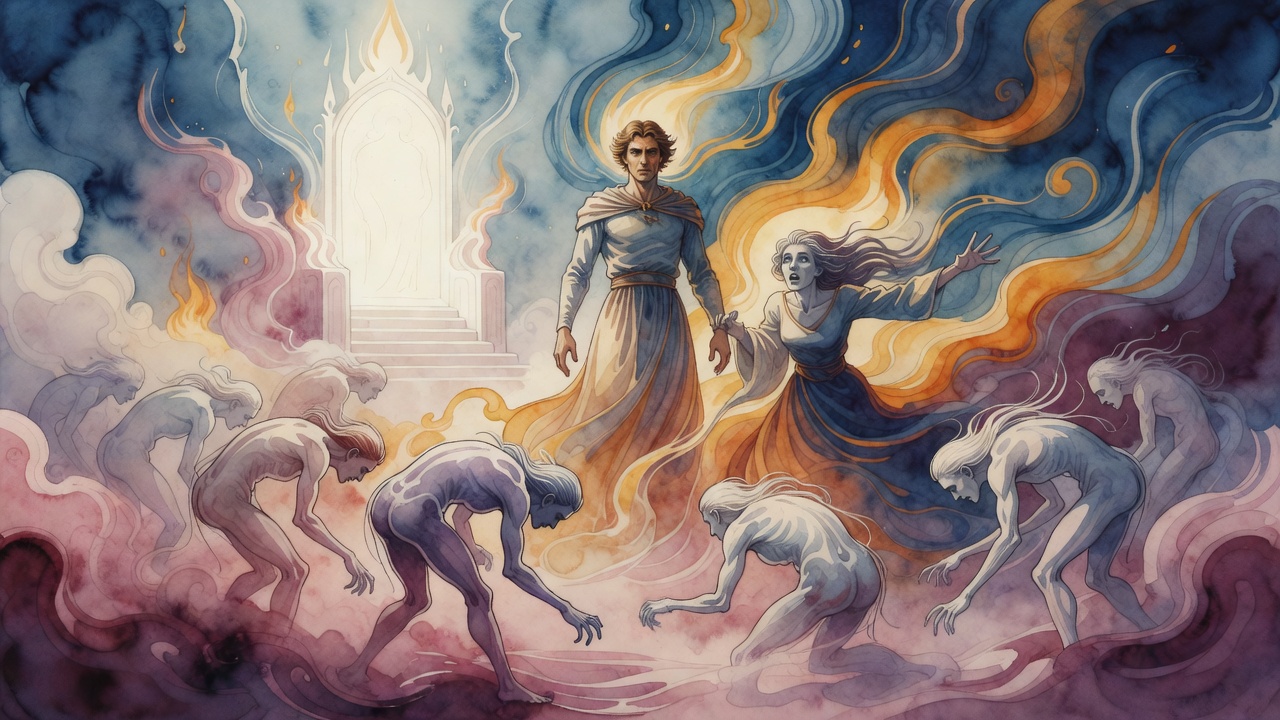
The Torah in those years lay in the lap of God, written in black fire on white fire. Paradise was already open on His right and Gehinnom (the realm of judgment after death) on His left. In front of Him stood a sanctuary with a jewel set into its altar, and cut into the jewel was the name of the Messiah, and out of that sanctuary a voice was already calling, "Return, children of men." It called to nobody. There were no men.
When God decided to build, He asked the Torah what she thought.
"A king with no army and no courtiers and nobody in attendance hardly deserves to be called a king," she said. "There is nobody near him to give him the honor that is due."
The answer pleased Him a great deal. Every earthly king who has ever taken advice before acting learned it from that conversation.
Snow, a Garment, and a Corner Left Open
He took the brightness off His own covering and spread it out, and the heavens went on stretching until He said, "Stop," and they stopped. For the earth He reached under the Throne of Glory, took up the snow that lies there, and scattered it across the water. The water froze and became dust.
Then He made four winds. Light comes into the world out of the eastern corner. The dews of blessing come down from the south. Snow and hail and cold and heat and the rains all come out of the storehouses in the west.
The northern corner He started and did not finish. "Whoever calls himself a god," He said, "let him come and finish this corner that I have left, and then everyone will know he is a god." Nobody has. The gap is still open, and what lives in it are the demons, the earthquakes, the evil spirits and the shedim, and they come out of it into the world through the unfinished edge.
Two seraphim took up their places beside Him, six wings each. Two wings over the face, so as not to look at the Shechinah (the Divine Presence). Two over the legs. The reason given for the legs is that they are not to be reminded of the calf, which had not happened yet. A river of fire runs down from the faces of the holy creatures, and the creatures themselves do not know where His glory is. They call out from wherever they are standing, "Blessed is the glory of the Lord in His place."
Five Rods Laid Out Before the Man
"Before I made the man," God said, "I got five rods ready for him." He named them: spot, scab, bright spot, rash, burn.
A man once went to buy a slave, and he already knew the slave was bad. He brought chains and rods along with him to the sale. When the slave misbehaved, he chained him and beat him with the rods, and the slave said, "You knew from the start what I was. Why did you buy me?"
"Because I knew," the buyer said. "That is why I brought these."
Woe to the dough whose own baker testifies that it is bad. God said it plainly enough: the inclination of a man's heart is evil from his youth, and He made him anyway, with the rods already cut.
Rabbi Avin told it from the other side. A noblewoman came into the palace and saw the whips and the rods hanging on the wall and went pale. The household said to her, "Do not be frightened. Those are for the slaves and the maidservants. You are here to eat and drink and be honored." When Israel heard the curses and the leprosies read out and started shaking, Moses said the same thing to them.
What It Cost the Man Who Used It
Judah called his sons around him when he was dying and gave them his inventory first. He had outrun a hind and caught it. He had taken a bear by the paw and thrown it off a cliff and heard it break. He had caught a leopard by the tail in Hebron and smashed it on the rocks. He had seized a wild ox by the horns, spun it until it staggered, and killed it. He had lifted a stone of sixty pounds and killed a giant's horse under him. His father had seen in a vision that an angel of strength walked behind him everywhere so that he would not be beaten.
Then he told them the rest. A king who goes after a woman is stripped of his kingship, he said, and he knew it because of what he had handed over one night at a gate. "I gave my staff, which is the support of my tribe. I gave my girdle, which is my power. I gave my crown, which is the glory of my kingdom." He got them back. Getting them back was not the end of it.
"And I repented of these things," the old man said. "Wine and meat I have not eaten until my old age, and I have seen no joy."
Repentance was made before light was made. That is what it looks like in a body: an old man on a mat, refusing his supper, seventy years after the night.
← All myths