5 min read

Jethro Heard the Sea and Walked Toward Sinai

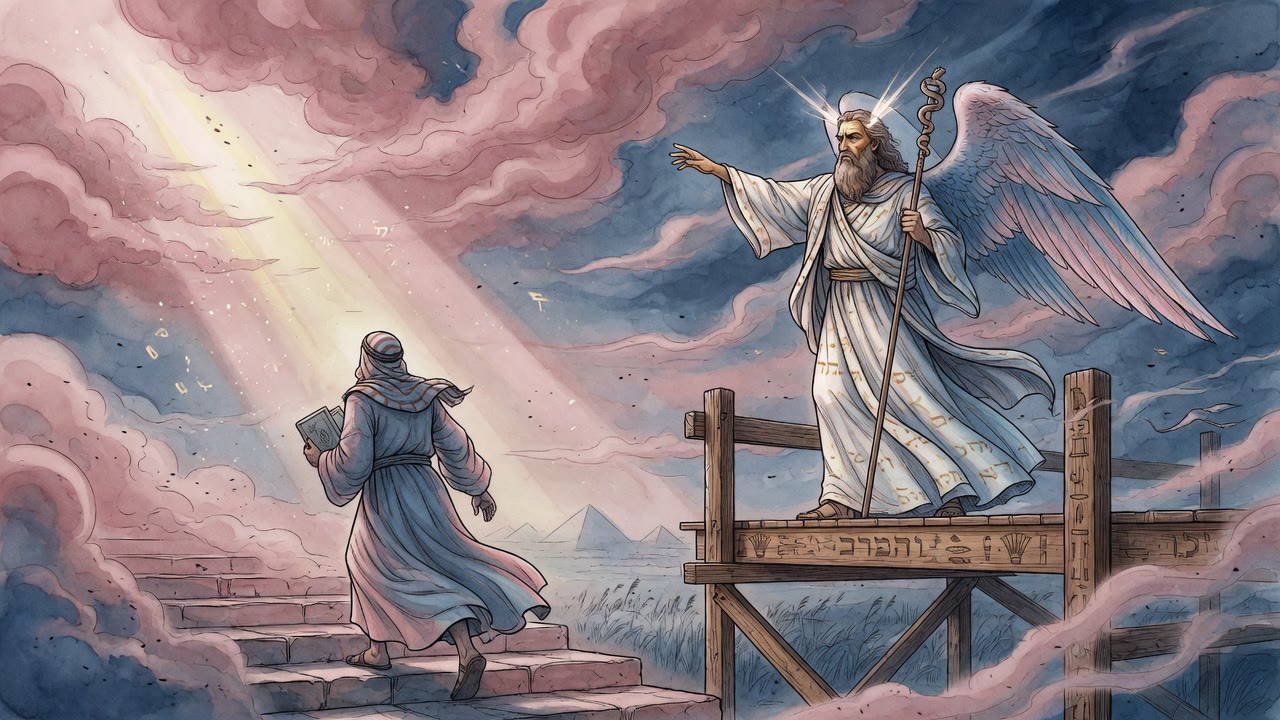
Jethro heard the sea split, Amalek fall, and Torah descend, then left Midian because hearing only mattered if his feet answered.

Curated by Arthur · Told by Maggid ·
Table of Contents
  1. The Sea Was Heard at the Ends of the Earth
  2. The Kings Ran to Balaam
  3. The Priest of Midian Had Tried Enough Altars
  4. Moses Still Needed Jethro's Release
  5. The Convert's Children Held Jericho

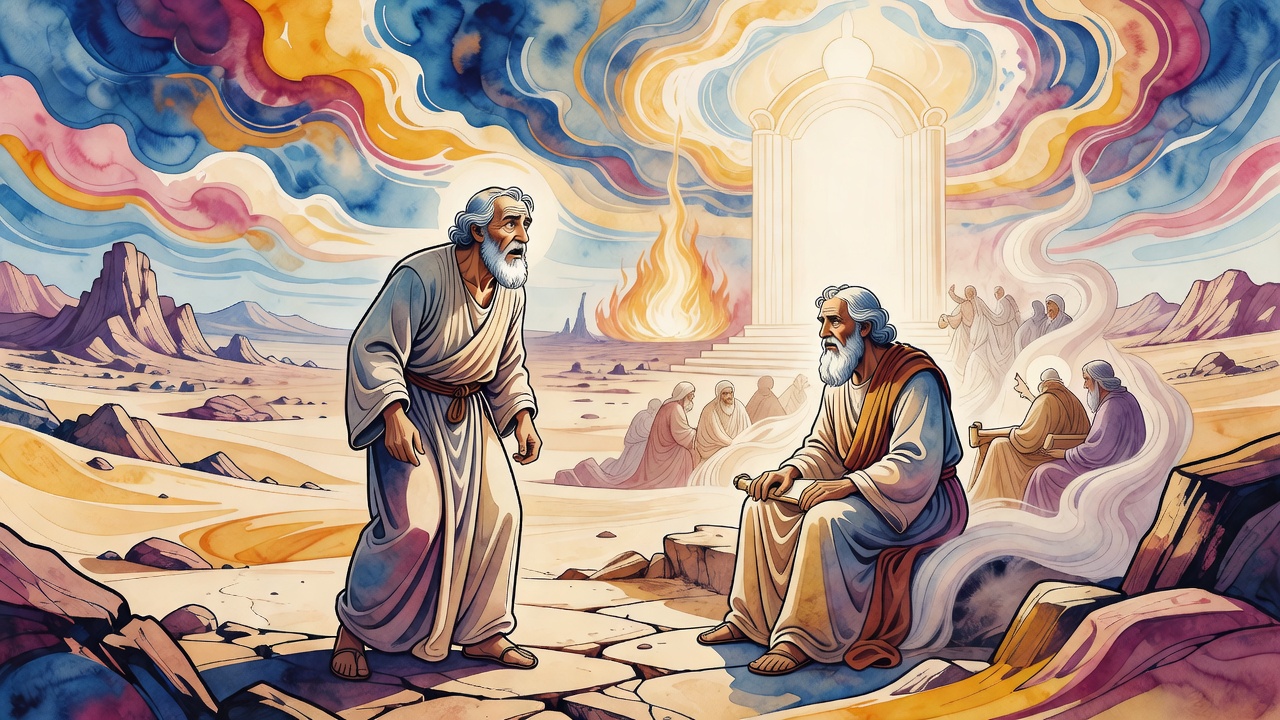
Jethro heard.

The Torah gives him one verb, and the rabbis make the whole desert turn on it. News had crossed borders before. Kings heard rumors. Merchants heard road reports. Nations heard enough to tremble and then went back to their houses.

Jethro heard and moved.

The Sea Was Heard at the Ends of the Earth

Shemot Rabbah sets Jethro beside other outsiders who listened when Israel was saved.

Rahab heard that the sea had dried before Israel. The Queen of Sheba heard of Solomon's wisdom and came to test what kind of God stood behind it. Jethro heard of the Exodus, the sea, Amalek, and the strength called Torah.

The sound was not private property. The sea split for Israel, but its echo ran outward. Egypt drowned in the water it had chosen for Hebrew children. Amalek struck and was answered. A slave people stood under signs no empire could explain.

Jethro did not treat the report as spectacle. He let it judge the gods he had served.

The Kings Ran to Balaam

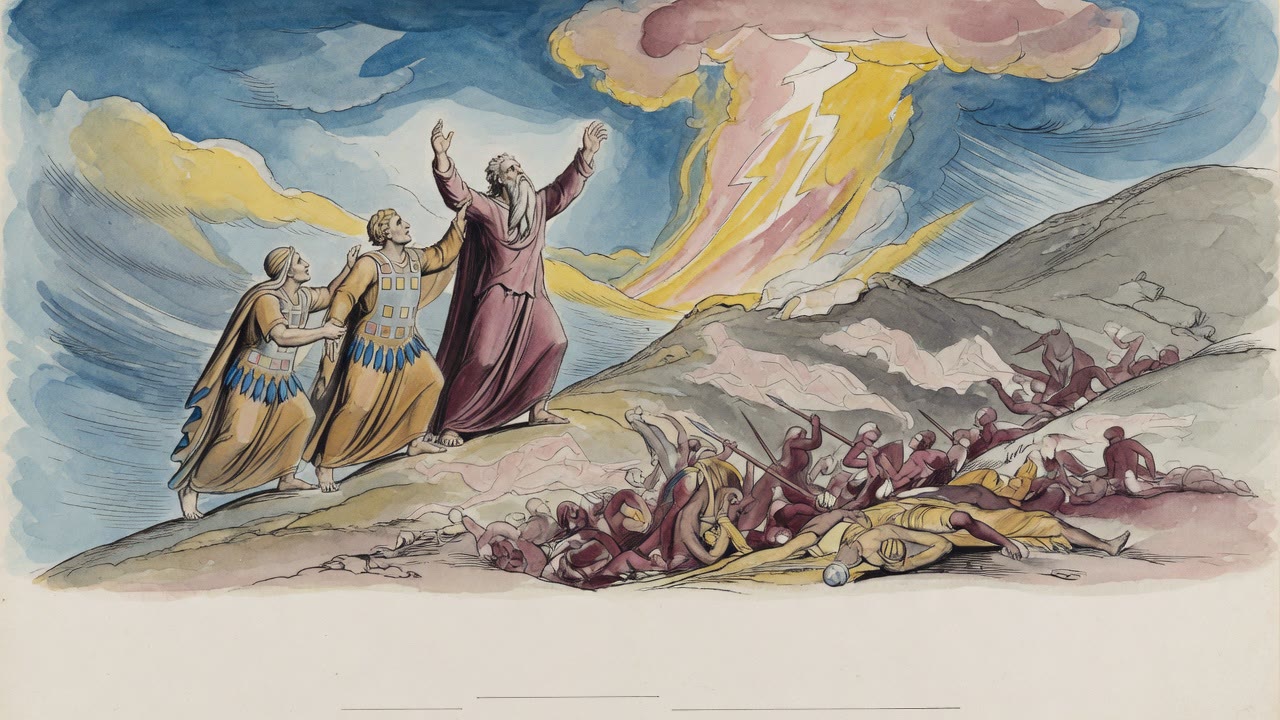
The Mekhilta imagines the giving of Torah shaking the world.

Kings trembled and ran to Balaam, fearing that God was about to flood creation again. Was water coming? Fire? Had the old destruction returned? Balaam answered that no flood was coming. God was giving Torah to His people and rewarding those who fear Him.

The nations went home relieved.

Jethro did not.

He understood that relief is not the same as truth. A frightened king wants only to know that no flood is coming for his palace. Jethro wanted to know who had shaken the palace walls in the first place.

That is the whole difference. Fear can stop a person for a moment and still leave him unchanged. Jethro heard the same world-shaking news and took it as a summons. The gate was open. He would not stand outside praising it from a distance.

The Priest of Midian Had Tried Enough Altars

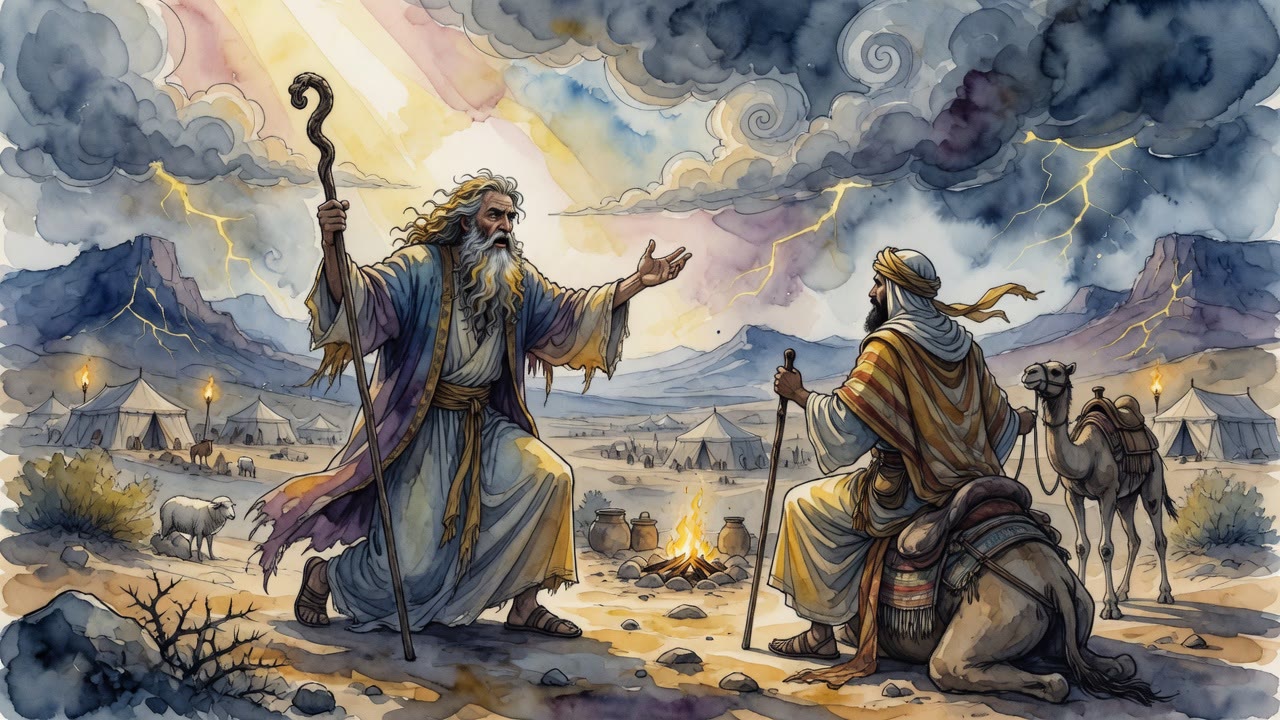
Targum Pseudo-Jonathan remembers Jethro as a prince of Midian, a man with rank to lose.

He had served at many altars. Later tradition says he had tested every available form of worship and found each one hollow. He was not a man easily impressed by religious noise. Priests hear claims all day. Jethro had heard enough claims to know the difference between thunder and truth.

When the sea split and Amalek fell, the pattern became too clear to ignore. The God who brought slaves out of Egypt was not a local power trapped inside tribal borders. The God of Israel could be heard in Midian.

Jethro's greatness is that he did not confuse hearing with arrival. He rose from his place and came.

The road from Midian to Moses was therefore an argument made with feet. Every mile said that the old altars had failed him and the God who split the sea had not.

Moses Still Needed Jethro's Release

Before Moses faced Pharaoh, he had to return to the man who had sheltered him.

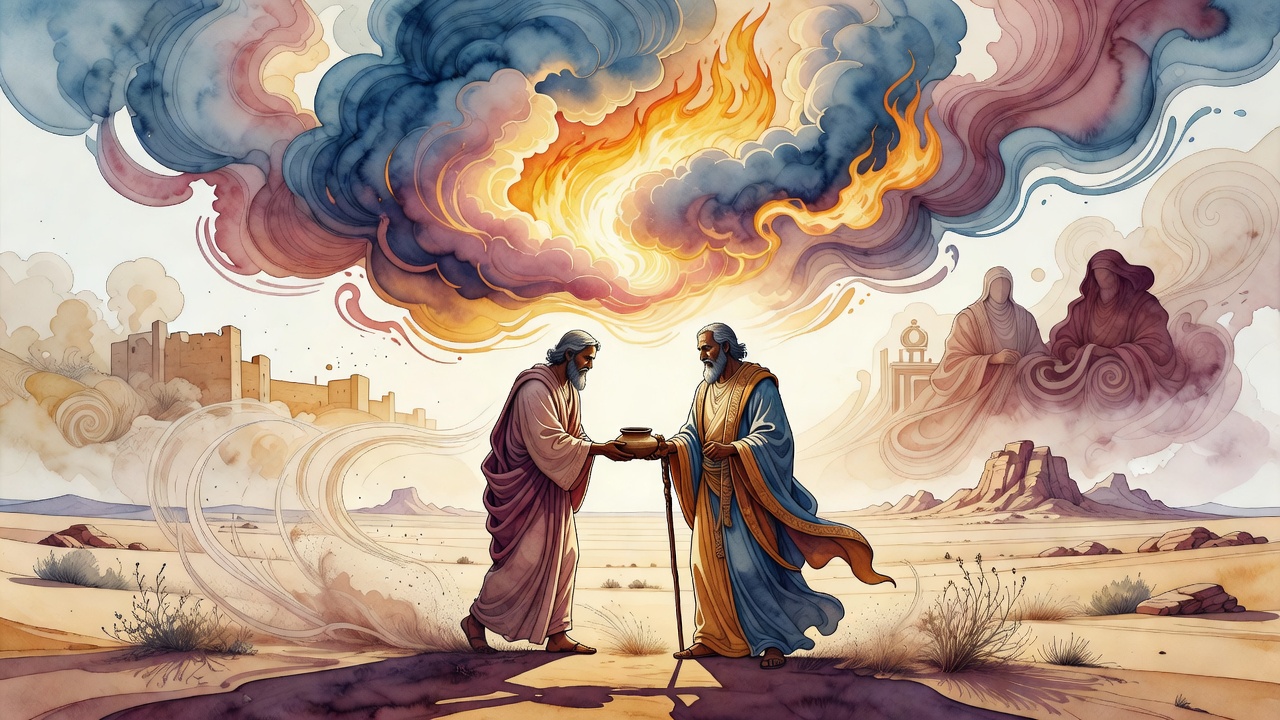
Shemot Rabbah preserves the tension of an oath. Moses had lived in Midian, married Tzipporah, and bound himself to Jethro's household. When God sent him back to Egypt, the mission did not erase the obligation. The Master of the Oath could release Moses, but the human relationship still had to be honored.

Jethro challenged him. "People in Egypt were trying to get out. Moses was taking his wife and children in."

Moses answered with Sinai. His sons should hear God say, "I am the Lord your God," with everyone else. Jethro understood the weight of that future and released him with peace.

The Convert's Children Held Jericho

Jethro's hearing did not end with his own body.

Sifrei Bamidbar remembers Moses promising good to Jethro and his descendants. When Israel entered the land, Jethro's children received a choice piece of Jericho, five hundred by five hundred cubits, held until the Temple would be built and the portion of Benjamin would receive its due.

For four hundred and forty years, according to that count, the descendants of the convert lived from the promise. Then, when the Shekhinah came to rest in Benjamin's portion, they yielded the land.

Jethro had heard and walked toward Israel. His children inherited both reward and restraint. They knew how to receive a gift, and they knew how to step aside when holiness required it.


← All myths

From the tradition

Sources

6 sources

The texts this telling draws on, in full. Open a card to read inline, or expand it for a wider, quieter read.

Shemot Rabbah 27:4Shemot Rabbah

A single event, a powerful moment, that resonates far beyond its origin.

The Book of Exodus, or Shemot in Hebrew, tells us that "Yitro heard.." (Exodus 18:1). But what exactly did he hear? Shemot Rabbah, a classical collection of Rabbinic interpretations on Exodus, explores this very question, connecting it to the prophetic words of Jeremiah: "Lord, my strength and my stronghold and my refuge on the day of trouble, to You nations will come from the ends of the earth" (Jeremiah 16:19).

It’s a beautiful idea: that Israel's relationship with God, those moments of miraculous salvation, become a beacon for all nations. When God performed miracles at the Red Sea, the Israelites sang, "The Lord is my strength [uzi] and song" (Exodus 15:2). But they weren't the only ones listening. Rahab, the woman of Jericho, says to the Israelite spies, "I know that the Lord has given you the land…as we heard that the Lord dried the waters of the Red Sea" (Joshua 2:9–10). She heard, and it changed everything. The word of God's saving acts had traveled far.

The Midrash (rabbinic commentary) continues, drawing parallels across time. When God gave strength [oz] to King Solomon, did the Queen of Sheba not hear of his wisdom and God's favor? "The Queen of Sheba heard Solomon’s reputation" (I Kings 10:1), and what was her response? "May the Lord your God be blessed, Who has chosen you" (I Kings 10:9). Again, the echo of God's presence, spreading outward.

And finally, the Midrash circles back to the giving of the Torah. When God took the Israelites out of Egypt and gave them the Torah, which itself is called oz (strength), as it is stated: "He will give strength [oz] to His people" (Psalms 29:11), did Yitro not hear, come, and adhere to God?

It all ties together, doesn't it? The miracles, the wisdom, the Torah – they're not just for Israel. They are a evidence of God’s power and presence in the world, drawing people from "the ends of the earth." Shemot Rabbah suggests that Yitro, Rahab, and the Queen of Sheba are all examples of this. They heard the stories, witnessed the impact, and were drawn closer to the divine.

So, what does it mean for us? Perhaps it’s a reminder that our actions, our stories, our faith, have the power to resonate far beyond our immediate circles. We never know who is listening, who might be inspired, who might find their own path to the divine through the echoes of our lives. What stories are we telling? What ripples are we creating?

Full source
Mekhilta DeRabbi Shimon Ben Yochai 18:1Mekhilta DeRabbi Shimon Ben Yochai

"And Jethro heard" (Exodus 18:1). What report did he hear that he came? Rabbi Yehoshua says: He heard of the war with Amalek and came, for it is written right beside it (Exodus 17:13): "And Joshua weakened Amalek." Rabbi Elazar of Modi'in says: He heard of the giving of the Torah and came. For we find that on the day the Torah was given to Israel, all the kings of the earth trembled in their palaces, as it is said (Psalms 29:9): "And in His palace all say, 'Glory.'" All the nations of the world gathered before Balaam and said to him: It seems that the Holy One is destroying His world with water, as He destroyed the generation of the Flood, as it is said (Psalms 29:10): "The LORD sat enthroned at the Flood." He said to them: Fools, He has already sworn that He will not bring a flood upon the world, as it is said (Isaiah 54:9): "For this is to Me like the waters of Noah, when I swore that the waters of Noah should no more pass over the earth." They said to him: Surely a flood of water He will not bring, but a flood of fire He will bring. He said to them: He will bring neither a flood of water nor of fire; He is giving Torah to His people and bestowing reward upon those who fear Him. When they heard this from him, they all turned, each one to his place.

Rabbi Eliezer says: He heard of the splitting of the Sea of Reeds and came, for we find that on the day the sea was split for Israel, they heard it from one end of the world to the other, as it is said (Joshua 5:1): "And it came to pass, when all the kings of the Amorites who were beyond the Jordan westward, and all the kings of the Canaanites who were by the sea, heard that the LORD had dried up the waters of the Jordan before the children of Israel until they had crossed over." And so Rahab says to Joshua's messengers (Joshua 2:10): "For we have heard how the LORD dried up the waters of the Sea of Reeds before you." They said: She was ten years old when Israel left Egypt. All forty years that Israel was in the wilderness she was a harlot. At fifty years she converted. She said: With three things I sinned; with three things may He forgive me - with the rope, with the window, and with the booth, as it is said: "And she let them down by a rope through the window" (Joshua 2:15), and "she hid them with the stalks of flax" (Joshua 2:6).

"Jethro" (Exodus 18:1). At first they called him Jether, as it is said (Exodus 4:18): "And Moses went and returned to Jether his father-in-law." Once he performed worthy deeds they added one letter to him and he was called Jethro. So too you find with Abraham: at first they called him Abram; once he performed worthy deeds they added one letter to him and he was called Abraham. So too you find with Sarah: at first they called her Sarai; once she performed worthy deeds they added one letter to her and she was called Sarah for all the world. So too you find with Joshua: at first they called him Hoshea, and once he performed worthy deeds they added one letter to him and he was called Joshua.

Another interpretation: that a letter is withheld from them. You may learn from Ephron: at first they called him Ephron; once he set a price with our father Abraham and said to him, "a land worth four hundred shekels of silver, what is that between me and you?" (Genesis 23:15), they withheld one letter from him and he was called Ephran. So too you find with Jehonadab: at first they called him Jehonadab (2 Kings 10:15), and once he joined himself to the wicked one, who is Jehu, they withheld one letter from him and he was called Jonadab (Jeremiah 35:6). From here they said: Do not join yourself to a wicked man, even to bring him near to the Torah. So too you find with Ahab son of Kolaiah: at first they called him Ahab (Jeremiah 29:21); once he performed wicked deeds they withheld one letter from him and he was called Achav.

Seven names were given to Jethro: Jether, Jethro, Hobab, son of Reuel, Putiel, Keni. Jether, because he caused one extra section to be added to the Torah; the Holy One, blessed be He, gave him a section to take pride in. And which is it? The appointing of elders, as it is said (Exodus 18:21): "And you shall provide out of all the people." Jethro, because he performed worthy deeds. Hobab, because he was beloved to the Omnipresent. "Son," because he was like a son to the Omnipresent. Reuel, because he was a friend to the Omnipresent. And so it says (Exodus 18:12): "And Aaron came, and all the elders of Israel, to eat bread with Moses' father-in-law before God." Putiel, because he renounced every form of idolatry in the world. Keni, because he acquired the world to come.

"Priest of Midian" (Exodus 18:1). Rabbi Yehoshua says: He was a pagan priest, as in the matter that is said (Judges 18:30): "And Jonathan son of Gershom son of Manasseh, he and his sons, were priests to the tribe of the Danites." Rabbi Elazar of Modi'in says: He was a prince, as in the matter that is said (2 Samuel 8:18): "And the sons of David were priests." "Father-in-law of Moses." At first Moses honored him, as it is said (Exodus 4:18): "And he returned to Jether his father-in-law." Now his father-in-law began to honor him; they said to him: What is your distinction? He said to them: I am the father-in-law of Moses.

"All that God had done for Moses and for Israel" (Exodus 18:1) - Moses is weighed as equal to Israel, and Israel as equal to Moses; the teacher is weighed against the disciple, and the disciple against the leader. "For the LORD had brought Israel out of Egypt" - from here you learn that the exodus from Egypt is weighed before the Omnipresent against all the miracles and mighty acts that the Omnipresent performed for Israel.

Full source
Targum Pseudo-Jonathan on Exodus 18:1Targum Pseudo-Jonathan on Exodus

News travels, but rarely does it move a prince of Midian to action. The Targum Pseudo-Jonathan records the turning point: "And Jethro, prince of Midian, the father-in-law of Moses, heard all that the Lord had done for Moses and for Israel His people, and that the Lord had brought forth Israel from Mizraim" (Exodus 18:1).

The Aramaic specifies that Jethro was not a peasant but a prince, a man with standing in Midian who had nothing politically to gain by associating with a fleeing slave nation. He had tried seven faiths, according to the midrashic tradition preserved alongside the Targum. He had priested at the altars of every god available to him. And when he heard what had happened at the Sea of Suph, he decided the search was over.

What exactly did he hear? The Talmud in Zevachim 116a asks the same question. The Targum's answer leans toward two events, the splitting of the sea and the battle with Amalek. Between the two, a pattern emerged that idolatry could not explain.

Jethro is the Torah's first convert from the nations, and his arrival is the first sign that the God of Israel was never meant to remain a private inheritance. Hearing, it turns out, is only the beginning. What matters is what you do next.

Full source
Midrash Tanchuma Buber, Yitro 1:4Midrash Tanchuma Buber, Yitro

Another interpretation of "and they shall be praised" (Ecclesiastes 8:10): that they take pride in their good deeds. "This also is vanity" (ibid.), for is this not vanity, that the nations of the world see them, how they come and convert and enter beneath the wings of the Shekhinah, while they themselves do not convert? "This also is vanity." Who was it that came and converted, a proselyte of truth? This was Yitro, as it is said, "And Yitro heard" (Exodus 18:1), and so forth.

Full source
Shemot Rabbah 4:4Shemot Rabbah

Shemot Rabbah turns to Covenant of Yitro.

The Rabbis offer a compelling explanation: Moses first went on a mission for God, and then "returned" to Yitro. But that raises another question: what about the oath Moses made to Yitro when he left Midian?

In this interpretation, God anticipated this dilemma. God tells Moses, "If Yitro brings up the oath, tell him that the 'Master of the Oath' released you from your vow." Etz Yosef clarifies that the “Master of the Oath” refers to God, in whose name the oath was taken. So, "Moses went," fulfilling God's command, and then, he "returned" to Yitro.

The story doesn’t end there! The son of Rabbi Ḥiyya the Great adds another layer. He suggests that Moses didn’t go to Pharaoh until Yitro explicitly annulled his vow. If that's the case, the text asks, then what does "Moses went" even mean here? Where was he going?

The answer: to retrieve his wife, Tzipporah, and his sons.

Imagine the scene. Moses tells Yitro he's taking them to Egypt. Yitro, wise and insightful, questions his decision. “Those in Egypt are trying to escape,” he says, “and you’re taking your family there?”

Moses responds with a powerful vision of the future. He explains that one day, his sons will stand at Mount Sinai and hear God proclaim, "Anochi Adonai Elohecha" – “I am the Lord, your God” (Exodus 20:2). He asks Yitro, "Shouldn't my sons hear this directly, just like everyone else?"

Yitro, understanding the immense significance of this moment, relents. He says to Moses, "Lech le-shalom” – “Go in peace.” But the Rabbis in Shemot Rabbah emphasize that it wasn’t just a simple farewell. It was a blessing: "Go in peace, enter in peace, and come in peace."

What can we take away from this fascinating little story? It reminds us that even seemingly small actions – a journey to retrieve one's family – can be imbued with profound meaning. It highlights the importance of seeking counsel from wise mentors, like Yitro, and the power of envisioning a future where our children can participate in moments of divine revelation. It also shows us how rabbinic tradition loves to zoom in on details, find the questions within the questions, and reveal deeper truths hidden in plain sight.

Full source
Sifrei Bamidbar 81:1Sifrei Bamidbar

Take Yitro, Moses' father-in-law. He gave Moses invaluable advice on leadership, and his descendants, well, their story is In the Book of Numbers, Bamidbar, chapter 10, verse 32, Moses says to Yitro, "And it shall be, if you go with us, that good which the L-rd will accord to us, we shall accord to you." Sounds like a pretty standard promise. "Stick with us, and you'll get the good stuff too!" But what exactly was this "good stuff"?

Sifrei Bamidbar, a collection of ancient legal interpretations on the Book of Numbers, sheds some light on this. It suggests that when the Israelites finally divided the land of Canaan, they gave Yitro's descendants a prime piece of real estate: the choicest land of Jericho, a square of 500 by 500 cubits.

The idea was that whoever built the Temple in Jerusalem would ultimately take that land. But until then, it was held by the sons of Yitro. Think of it like a long-term investment, held in trust.

Let’s do a little math (1 Kings 6:1) tells us the Temple was built 480 years after the Exodus. If we subtract the 40 years the Israelites spent wandering in the desert, that leaves 440 years. According to Sifrei Bamidbar, that's how long Yitro's descendants enjoyed the fruits (literally!) of that land. Imagine the stories they must have told around their tables for generations!

So, what happened to this prime real estate after all those years? Well, the Shechinah – the divine presence – ultimately came to rest in the portion of the tribe of Benjamin. When the sons of Benjamin came to claim their territory, Yitro's descendants, without a fuss, peacefully vacated the land for them.

Think about the implications for a moment. These were not Israelites by birth. They were welcomed in, treated with respect, and given a valuable stake in the community. And when the time came, they relinquished their claim for the greater good, showing incredible grace and understanding.

Isn't that a powerful lesson? Sometimes, the greatest acts of kindness and generosity are the quiet ones, the ones that don't make headlines, but ripple through generations. The story of Yitro's descendants reminds us that true reward lies not just in what we receive, but in what we are willing to give up for the sake of community and the divine plan.

Full source