Jethro Sent a Letter Ahead and Three Sages Debated What It Said
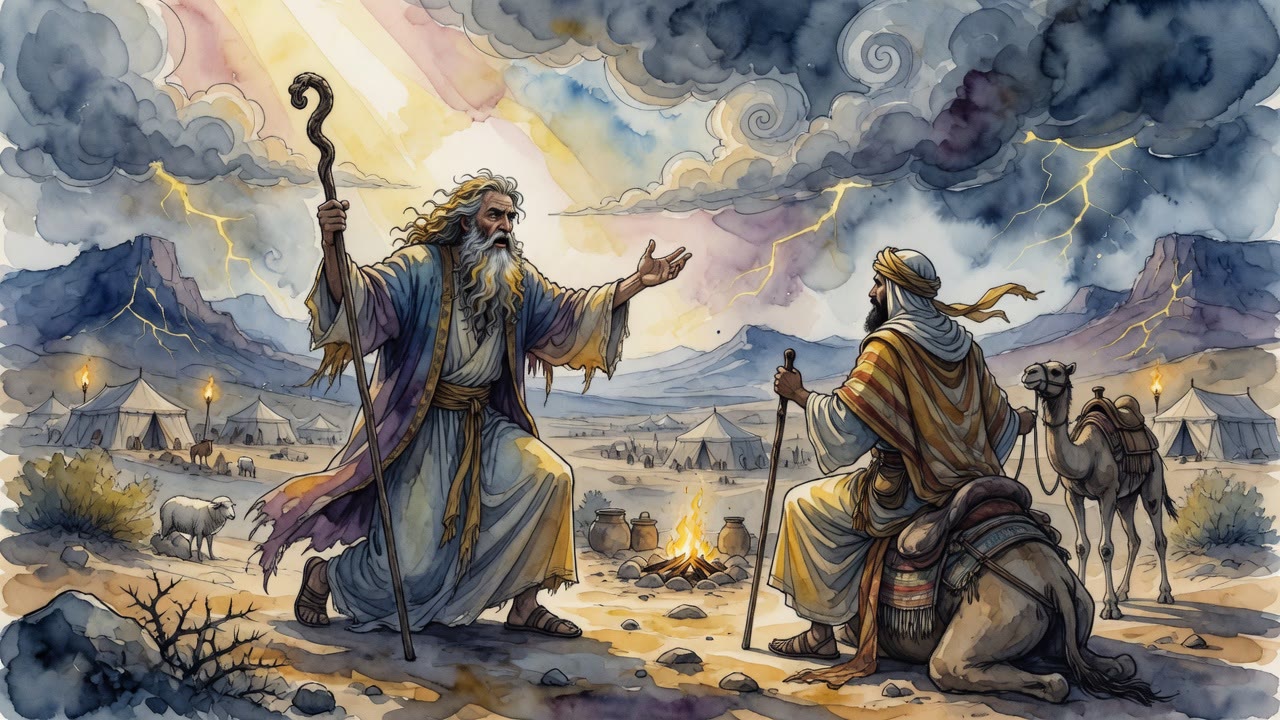
Jethro sent word ahead before he arrived. God told Moses to go out and meet him. Three sages disagreed about what Jethro's message actually said.
Table of Contents
 Click for full size
The Letter That Arrived Before the Man
Before Jethro arrived in the wilderness camp of Israel, he sent a message ahead. A letter, or a messenger, or both, depending on which account you follow. He did not simply appear. He announced himself first.
That small detail generated a three-way argument among the sages of the Tanchuma tradition, compiled in the fifth or sixth century CE, because the sages understood that what Jethro wrote in the message mattered enormously. The content of the letter determined what kind of welcome he was asking for, what kind of arrival he was preparing Moses to receive, and therefore what Moses's response would reveal about how converts and fathers-in-law and the newly devoted were to be treated by the people of Israel.
Three Rabbis and Three Letters
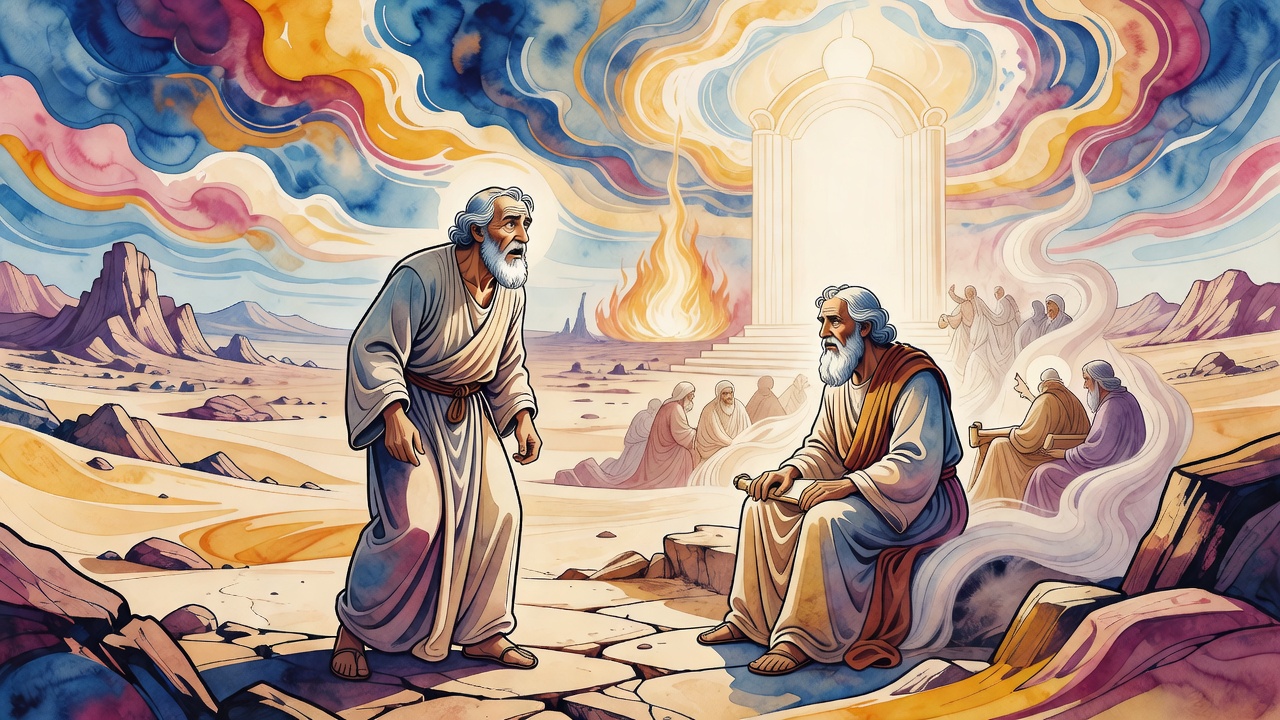
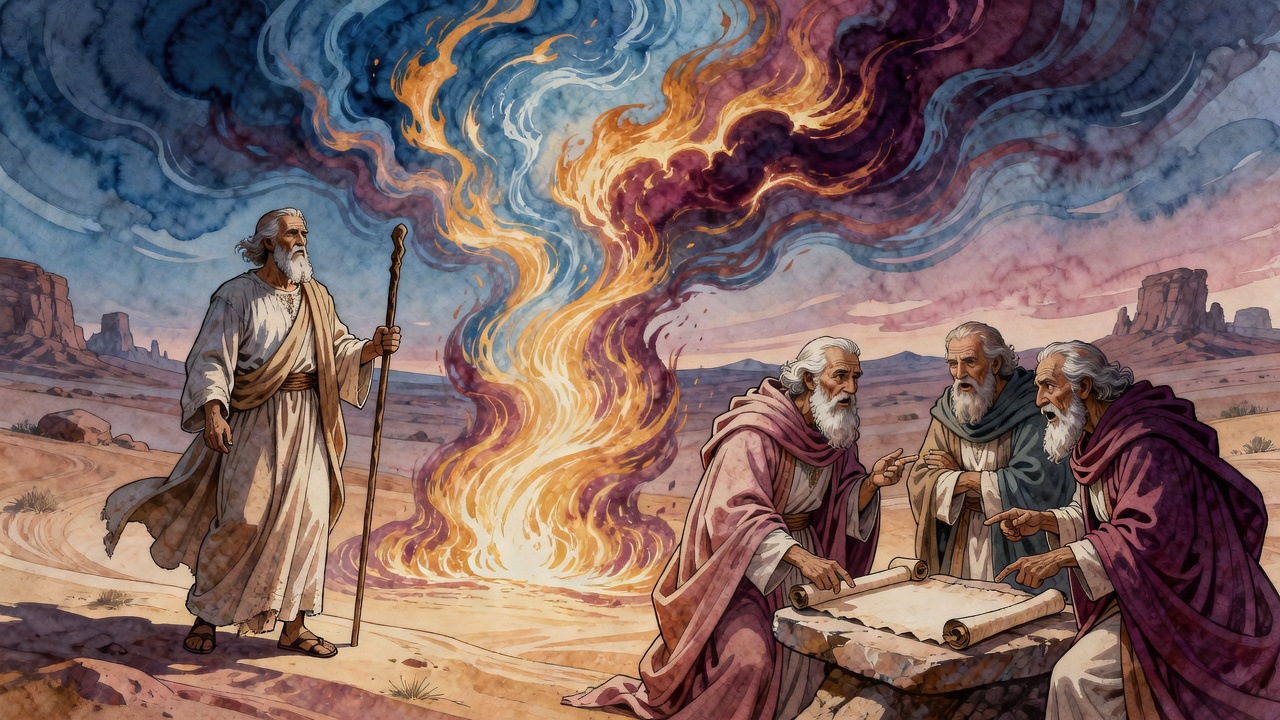
Rabbi Joshua held that Jethro sent a neutral announcement, simply word that he was coming and that his daughter Zipporah and the children were with him. A man informing his son-in-law of a family visit. Direct, specific, unburdened by strategy.
Rabbi Eleazar of Modi'im thought the message was more layered and more human. He heard Jethro invoking his claims in sequence: do it for my sake. If not for my sake, do it for the sake of your wife. If not for her, then for the sake of your children. A man building his case in descending order of directness, invoking family obligations in stages because he is not entirely sure what kind of reception awaits him. There is something touching in this version, a man who has done a remarkable thing and does not quite trust that it will be recognized as remarkable, who lists his family as his credentials because his own conversion might not be enough.
Rabbi Eliezer offered a third reading entirely. In his version, the preparation of Moses's heart was not accomplished by any human letter at all. It was God who spoke: I am He who draws near and does not keep away. I am He who brought Jethro near. So when someone comes to convert, draw him near, do not push him away. The entire principle of how Israel was to treat those who turned toward them was stated by God directly, using Jethro as the occasion for the teaching.
Who Came Out to Meet Him
The verse in Exodus records what happened when Moses received the message. He went out to meet his father-in-law. The plain text says Moses. But the sages looked at the magnitude of the welcome and felt that the plain text was insufficient. Moses alone could not account for the honor accorded to Jethro. Who else came?
Aaron came. Nadab and Abihu came. All the elders of Israel came. A procession of leadership walked out into the wilderness to meet the priest of Midian who had heard the news of the Exodus and come. Some interpretations go further still: wherever Moses went, the divine presence accompanied him, and so when Moses went out to meet Jethro, it was not only the political and spiritual leadership of Israel walking toward him. It was the presence of the God who had sent the news that Jethro had heard and followed.
The honor accorded to Jethro was therefore not merely a courtesy extended to a father-in-law. The whole camp moved toward a man who had heard something true and turned toward it. The entire camp came out to meet a man whose qualification for the welcome was that he had heard something true and moved toward it without reservation.
Why the Welcome Mattered
Jethro's arrival was not politically neutral. He was the former chief priest of Midian. He had served every idol in the ancient world. He was an outsider by birth, by history, and by the full catalog of his religious past. And he was arriving at a camp where the people had just witnessed the greatest demonstration of divine power in recorded history. The balance of prestige ran entirely in Israel's direction.
That is precisely why the welcome mattered so much. The people who had been slaves two months earlier, who had walked through a divided sea, who were eating manna from heaven and waiting for the revelation at Sinai, those people came out of their camp to honor a man who was coming toward them. The welcome declared that the movement toward God was itself dignified, that the person in the act of turning deserved to be met on the way rather than made to arrive and prove themselves before being acknowledged.
This became a principle. It was built into the tradition by the three rabbis arguing about the letter and the one verse about who came out to meet Jethro. The way Israel received the person who was turning toward something better was not a courtesy. It was a theological act. It declared what they believed the turning was worth.
← All myths