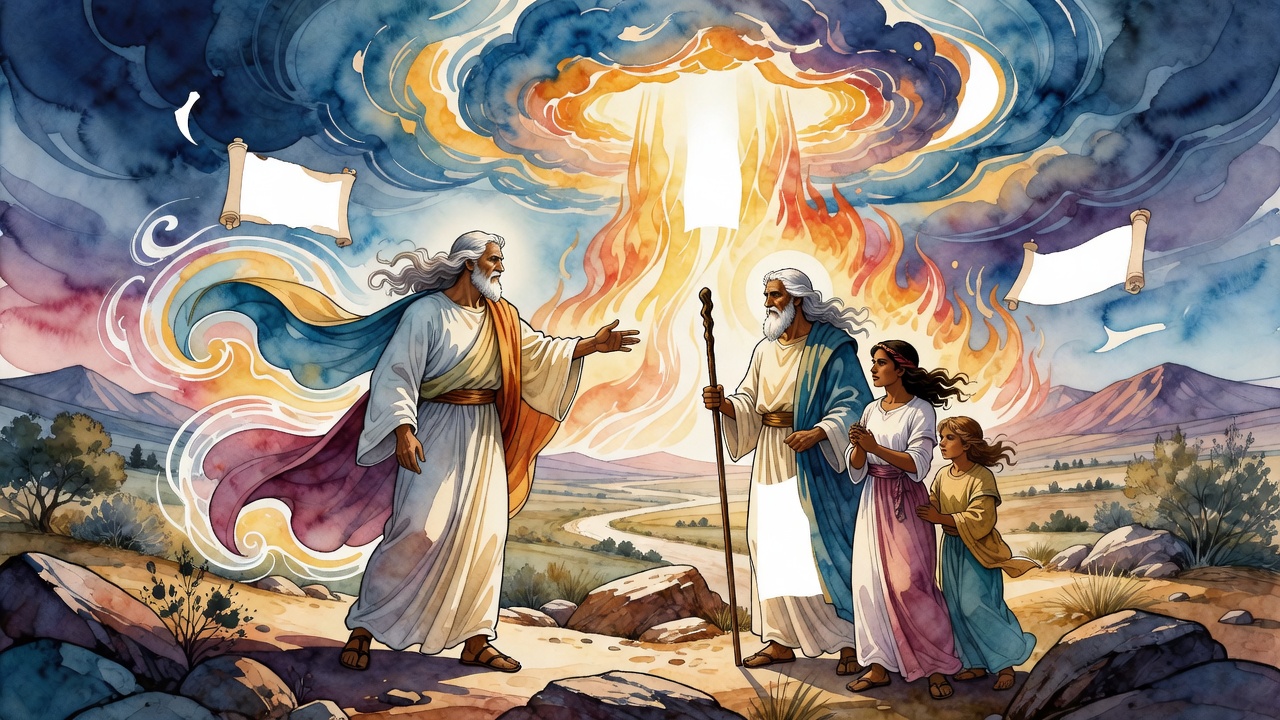
The Rod in Jethro's Garden Had Waited Since Eden
Zipporah warned him. Every man who had tried to take her had died on a planted rod. Moses drew it out, and her father threw him in a pit.
Table of Contents
The shepherds threw Jethro's daughters into the water the same afternoon Moses sat down by the well in Midian.
 Click for full size
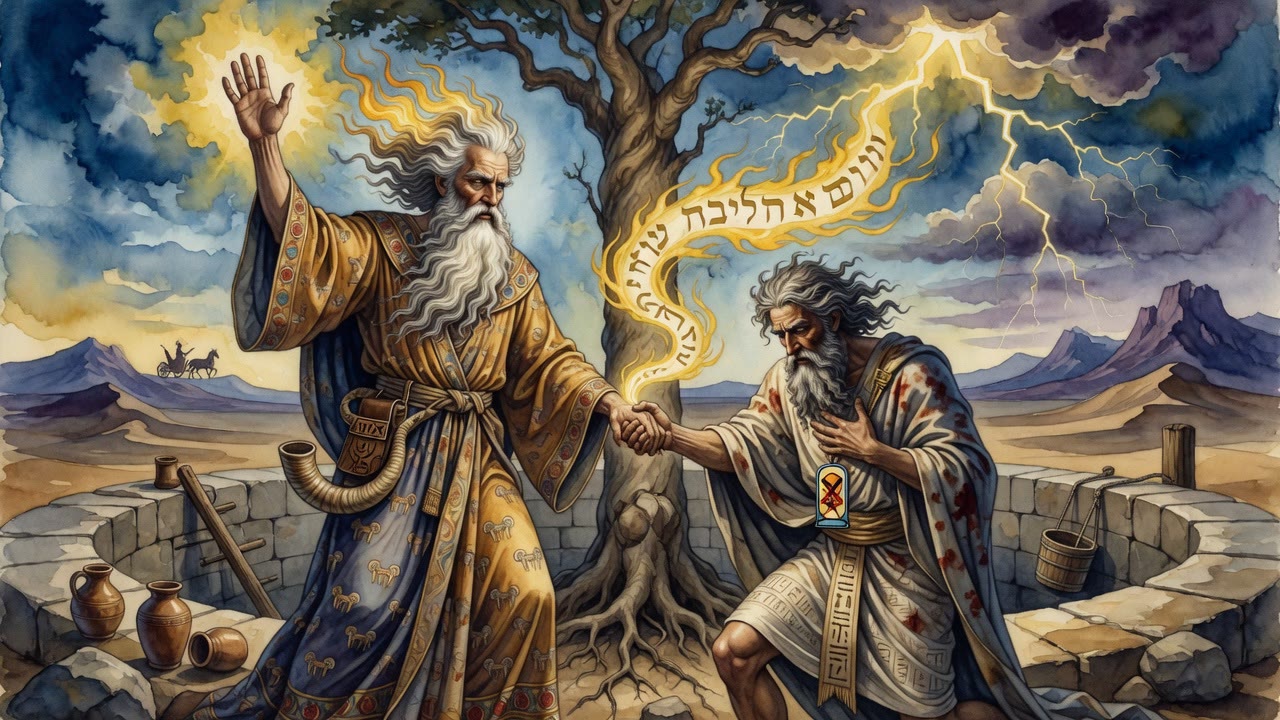
He was sixty-seven. He had left Ethiopia with honor and no future, and he would not go back to Egypt while Pharaoh still wanted him for a dead taskmaster. He dragged the seven women out of the well. He watered their flocks first, then the shepherds' flocks, from a mouth of water that gave more than one bucket should give.
The daughters went home early. Their father asked why. They told him an Egyptian had saved them. Moses stood outside and let the word stand.
The Ban on the Priest's House
Jethro had already quit the idols. He had stood before his townsmen, named himself too old for the work, and handed over the tools of the priesthood. They heard the lie under the courtesy. They put him under a ban. No shepherd would pasture his flocks. The seven daughters did the work themselves, and the shepherds of Midian used that weakness the way men do.
He rebuked the girls for leaving the stranger at the well. He ordered them to fetch him. He hoped the man was from Abraham's line, the line from which blessing issues for the world. Zipporah went out and brought Moses in, and Moses asked for her hand before the meal was old.
Jethro said, "If you can bring me the rod in my garden, I will give her to you."
The Rod That Ate Suitors
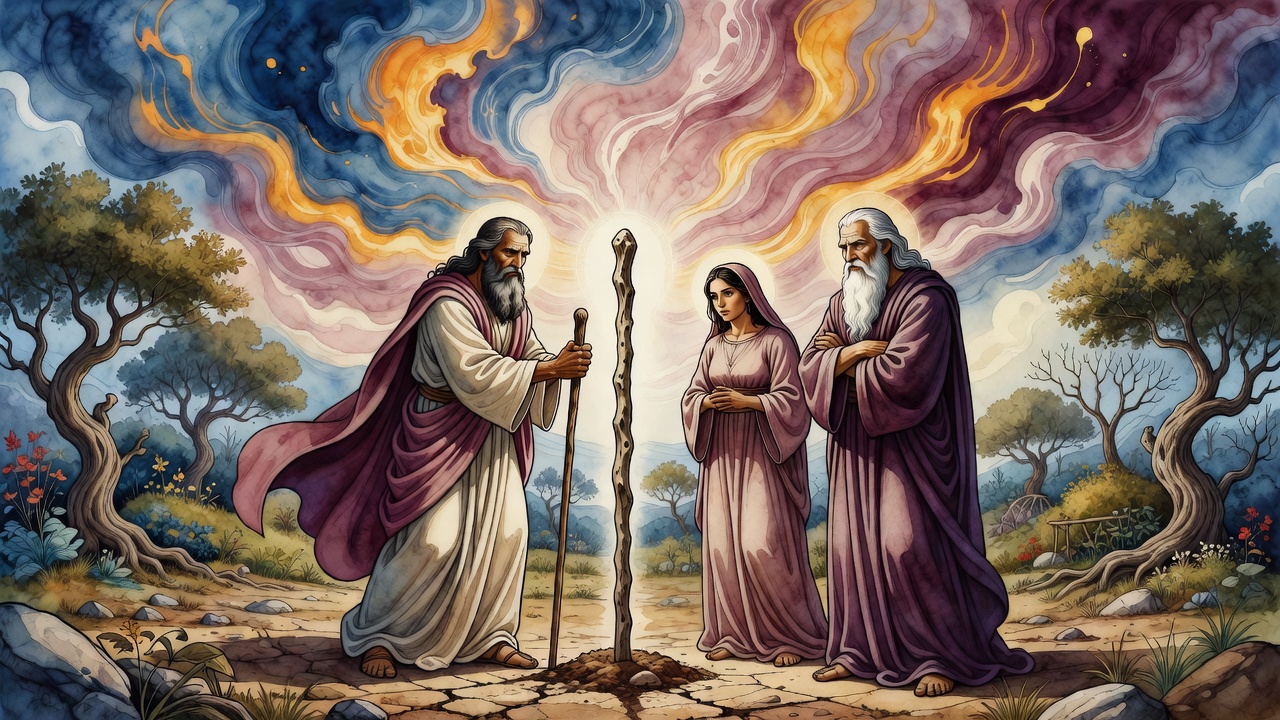
Zipporah had already warned him. Her father tested every man who asked for a daughter against a tree in the garden. The suitor touched it and the tree ate him.
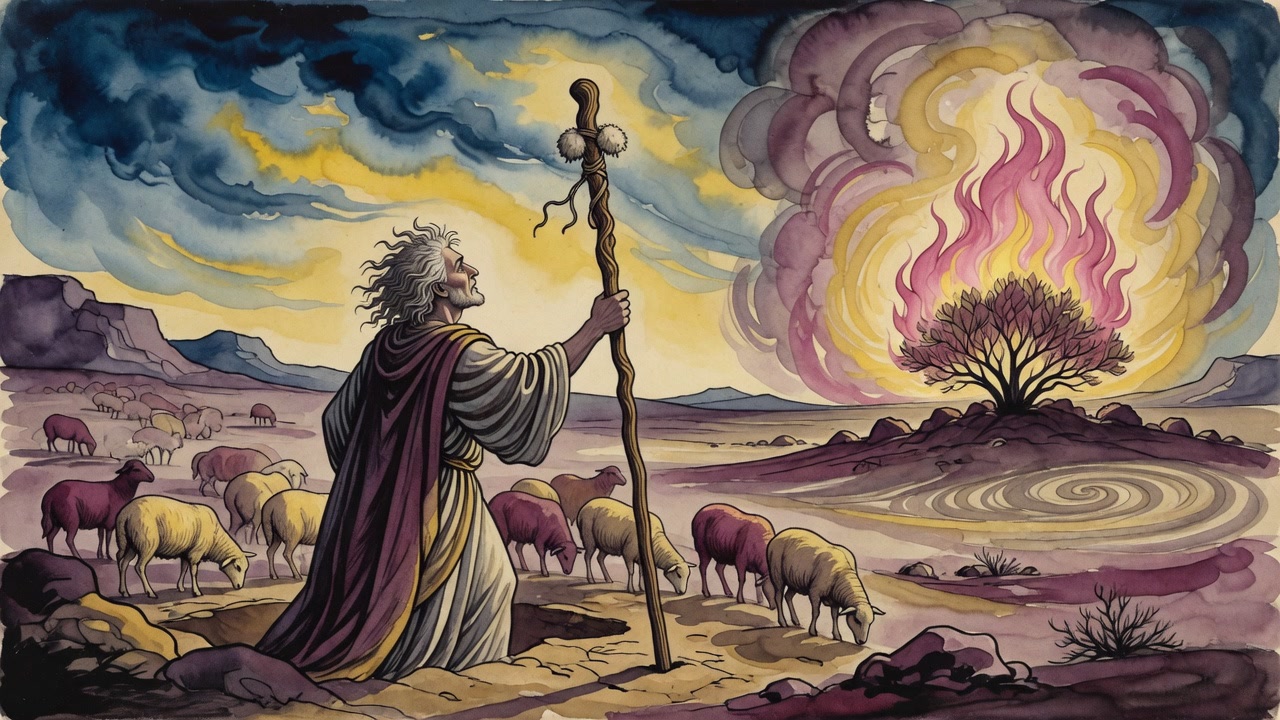
She told him whose rod it was. God had made it at twilight on the first Sabbath eve and given it to Adam when Eden closed behind him. It had passed to Enoch, to Noah, to Shem, to Abraham, to Isaac, to Jacob, who carried it down to Egypt and left it with Joseph. When Joseph died, Egyptians looted the house and the rod went to Pharaoh's palace. Jethro, then a scribe among the king's sacred writers, stole it and took it home. The Ineffable Name was cut into it, and the ten plagues that would one day fall on Egypt.
One day Jethro stuck it in the garden soil. When he tried to draw it out, it had sprouted. It blossomed. It stayed. Men who came for his daughters died on it.
Moses walked into the garden, took hold of the sapphire rod, and pulled. It came up in his hand as if the earth had been waiting to give it back. He carried it to the house.
Jethro looked at the man who had done in a breath what the garden had refused for years, and he understood. This was the one the wise men of Egypt had foretold, the prophet who would wreck their land. He seized Moses and threw him into a pit to die.
Seven Years of Bread in the Dark
Zipporah did not argue with the pit. She argued with the household.
"You have no wife, only seven daughters," she said to her father. "Do you want my six sisters to run the house? Then I will go out with the sheep. If not, let them tend the flocks, and I will take care of what is yours inside."
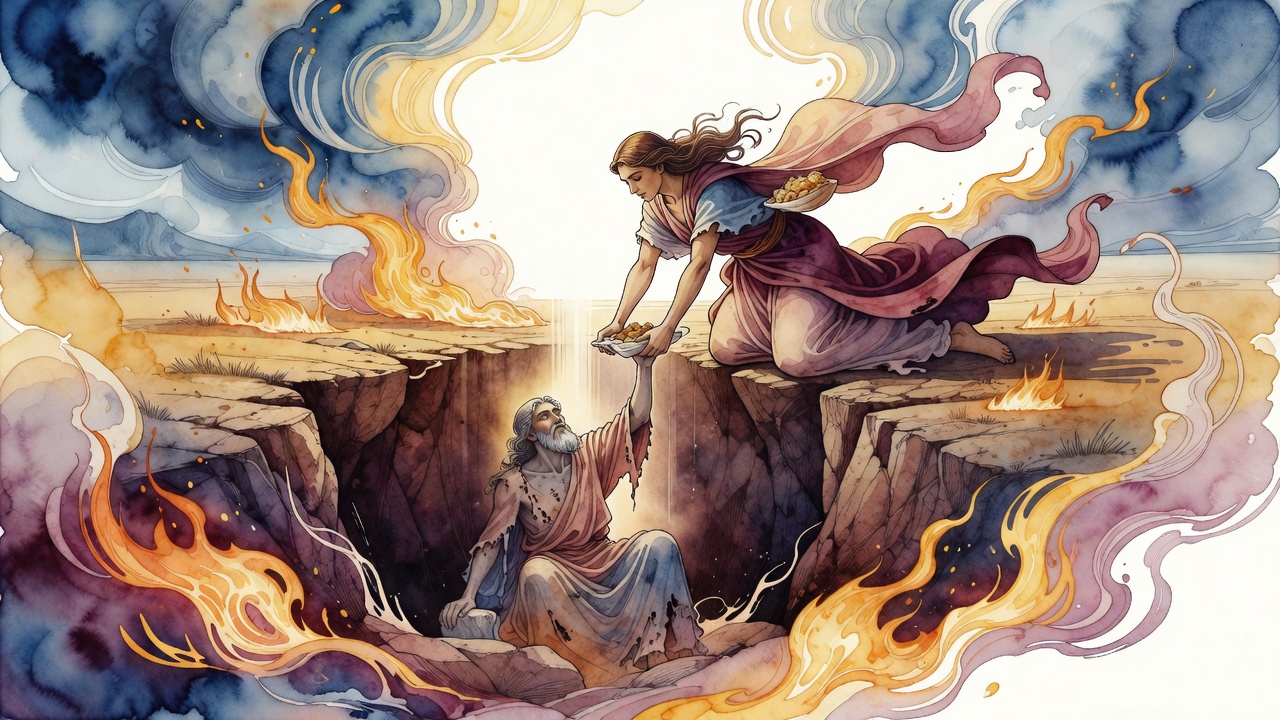
Jethro said she had spoken well. The sisters went out with the sheep. Zipporah stayed. From the house she could reach the pit. She lowered food to Moses for seven years. Dainties, the old tellings call them, as if a man in a hole should still be fed like a guest.
He ate in the dark with the rod's future sitting somewhere above him in the house, and the Name he had already held in his palm not yet a mission, only a memory of how easily the earth had opened.
Moses, Moses
At the end of the seven years Zipporah spoke again.
"I remember you cast a man into yonder pit, the man who fetched your rod from the garden. That was a trespass. Uncover the pit. If he is dead, throw the corpse away before it fills the house with stench. If he is alive, then you should know he is one of the wholly pious. Hunger would have killed anyone else."
Jethro asked if she remembered the name. "He called himself Moses the son of Amram."
Jethro opened the pit and called, "Moses! Moses!"
The answer came up out of the hole the way a voice comes in a night sanctuary. "Here am I."
Jethro drew him up, kissed him, and blessed the God who slays and revives. He gave him Zipporah. He gave him the rod. Moses walked out of Midian with a wife who had kept him alive against her father's fear, and with the staff that already named the plagues. Years later, when God sent him back to Egypt, he would still object, still count himself unfit, still ask to be excused. God would overturn every objection. The rod in his hand had been ready since the first Sabbath eve. The mouth that had answered from the pit would still need to be argued into going.
← All myths