Joshua Circled Jericho Seven Times and the Walls Fell
Seven nations shut themselves inside Jericho because whoever held it held the country. Israel walked around it for six days and said nothing.
Table of Contents
 Click for full size
Seven Nations Behind One Gate
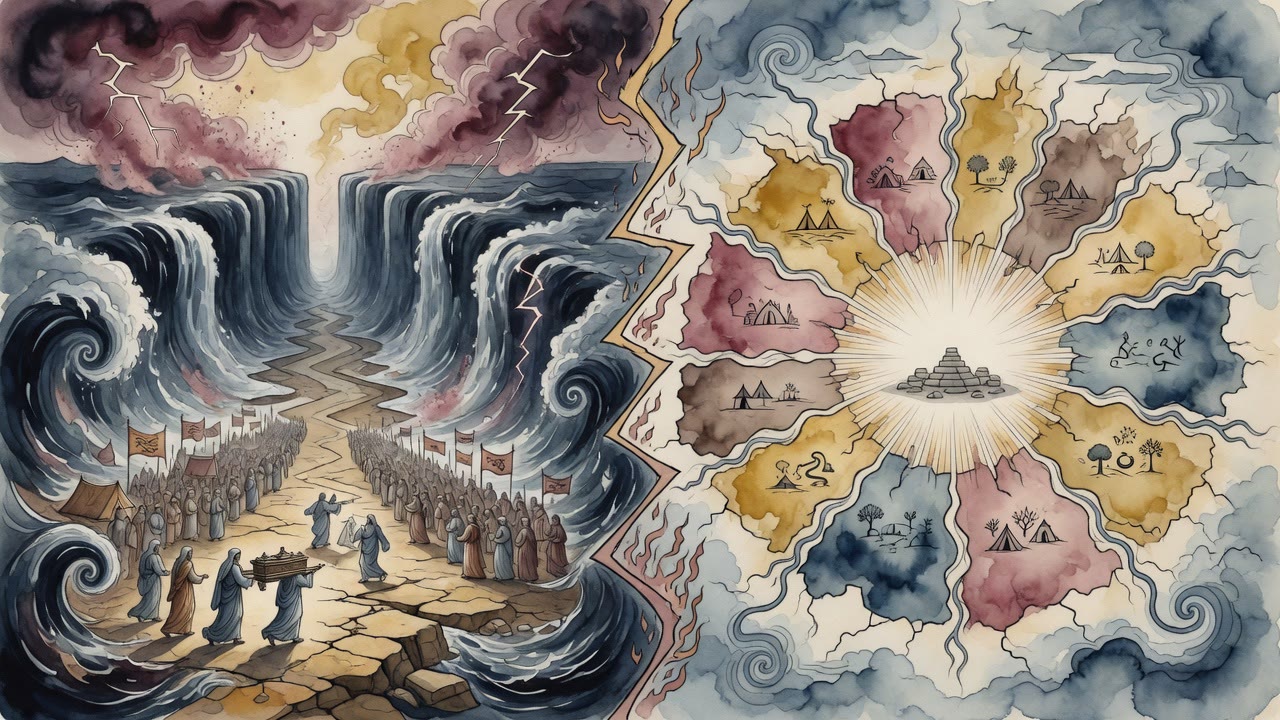
Jericho barred its gate and nobody went in or out. That was not the panic of a single town. Seven nations had crowded inside those walls on purpose, because Jericho was the bolt on the door of the whole country, and the reasoning on both sides of the wall was identical. Hold Jericho and the land holds. Lose Jericho and the land is gone.
So the Amorite and the Perizzite and the Canaanite and the Hittite and the Girgashite and the Hivite and the Jebusite stood together on one set of ramparts and looked down at a nation that had walked across a river days earlier without getting its feet wet. Israel pitched camp ten furlongs out, a bit over a mile, kept the Passover on the plain, and cut the ripe Canaanite grain for food. The manna had stopped that week. Forty years of it, and then nothing, and the first meal in the promised land was taken off the enemy's own field.
The Trumpets That Were Buried While Moses Still Breathed
God had told Moses to hammer out two trumpets of silver, and the wording was make them for yourself. For yourself. You will sound them and no other hand will.
At the end of Moses' life those trumpets are nowhere. When he was dying and wanted the whole nation in front of him, he did not blow a single blast. He sent runners with a message: assemble to me all the elders of your tribes and your officers. A man with silver trumpets in his tent does not send runners. They had already been taken away and hidden while he was still alive and still speaking, because there is no authority on the day of death.
So Joshua came to the bolt of the country carrying ram's horns. Seven of them, in the hands of seven priests, rough and unornamented, cut off an animal that had to be killed first.
Six Days of Walking and Nothing Else
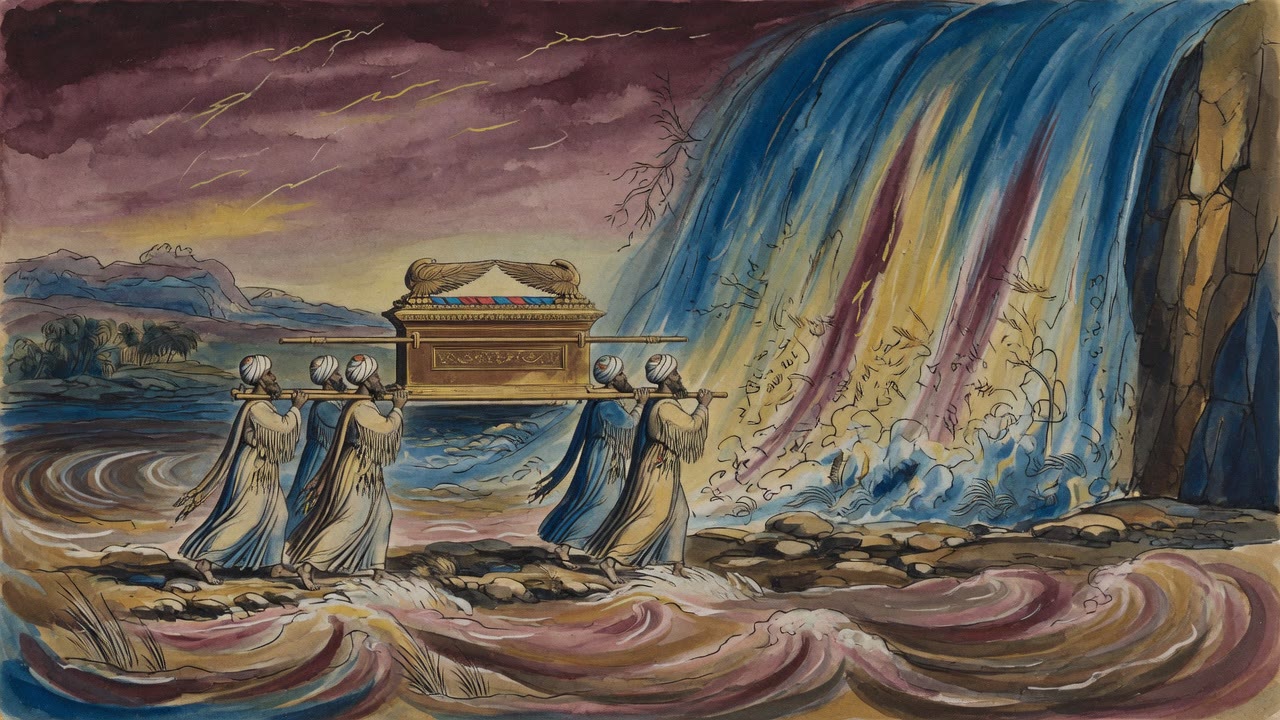
On the first morning the priests picked up the ark and started around the city with an armed guard beside them and the elders behind. They blew the horns. They did not attack, they did not shout, they did not set a ladder against anything. They went the whole way around and walked back to camp.
They did it again the next day. And the next.
Up on the wall the seven nations watched an army do nothing at all, in silence, once a day, for six days. They had heard what had happened to Egypt at the sea. Rahab had already told the two spies she hid under the flax on her roof that the hearts of everyone in the city had melted when that news came. Now the same people were circling under her window every morning with the ark up on their shoulders and no siege engines anywhere, and the only thing anyone could hear was horns and feet.
The Order Joshua Gave on the Seventh Morning
On the seventh day Joshua called the fighting men together and told them the wall was coming down on its own, and then he gave the terms.
Kill everyone you take. Do not stop for tiredness and do not stop for pity. Do not turn aside for plunder and let the ones running get away. Slaughter the animals. Every scrap of silver and gold is first fruits and goes to God, because this is the first city, and nobody takes anything for himself. And leave the woman with the scarlet threads in her window alive, and her family with her, because two men swore to her.
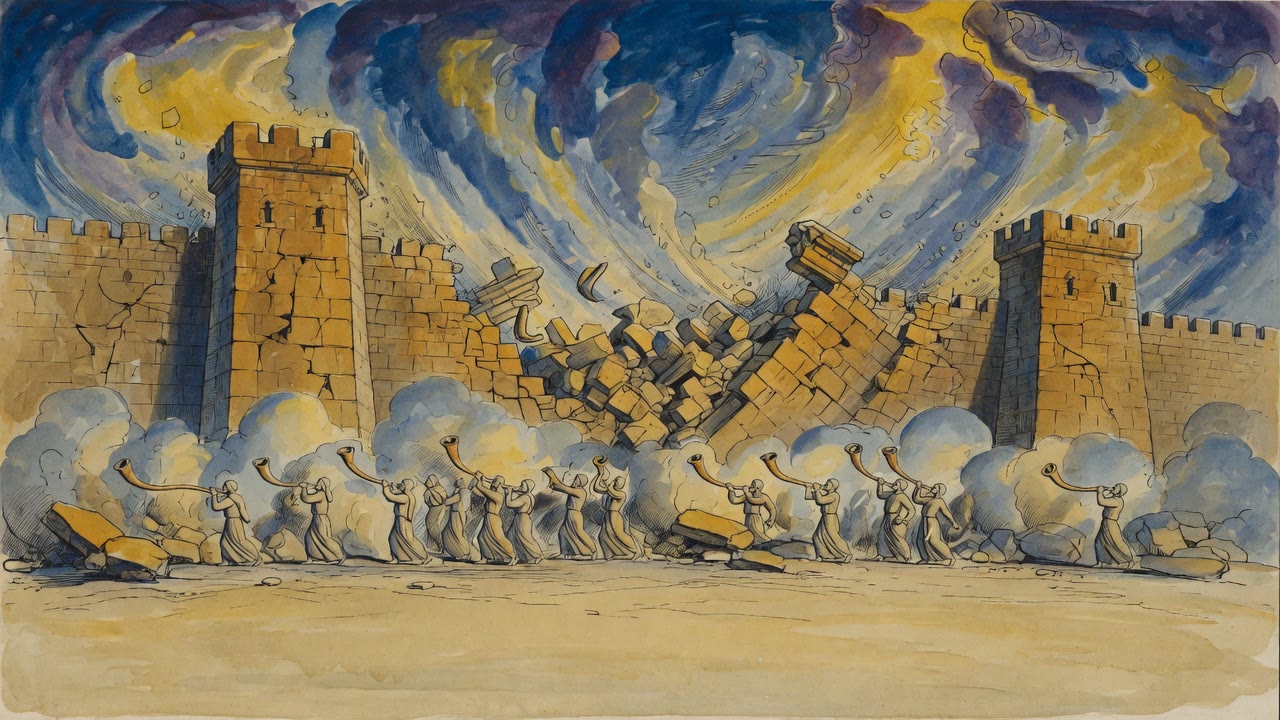
Then they walked. They circled the city seven times, the horns going the whole way, and at the end of the seventh circuit the column stood still for a moment. The wall fell flat. No ram had touched it, no ladder, no arm. They went straight in over the rubble and killed the people in the streets and the people hiding in their houses, and burned the city and the fields around it, and pulled down whatever the fire left. Rahab and her household were brought out of the one building still standing. Joshua thanked her in front of everyone and gave her land, and the silver and the gold went to the priests, untouched.
The Man Who Dug a Hole in His Own Tent
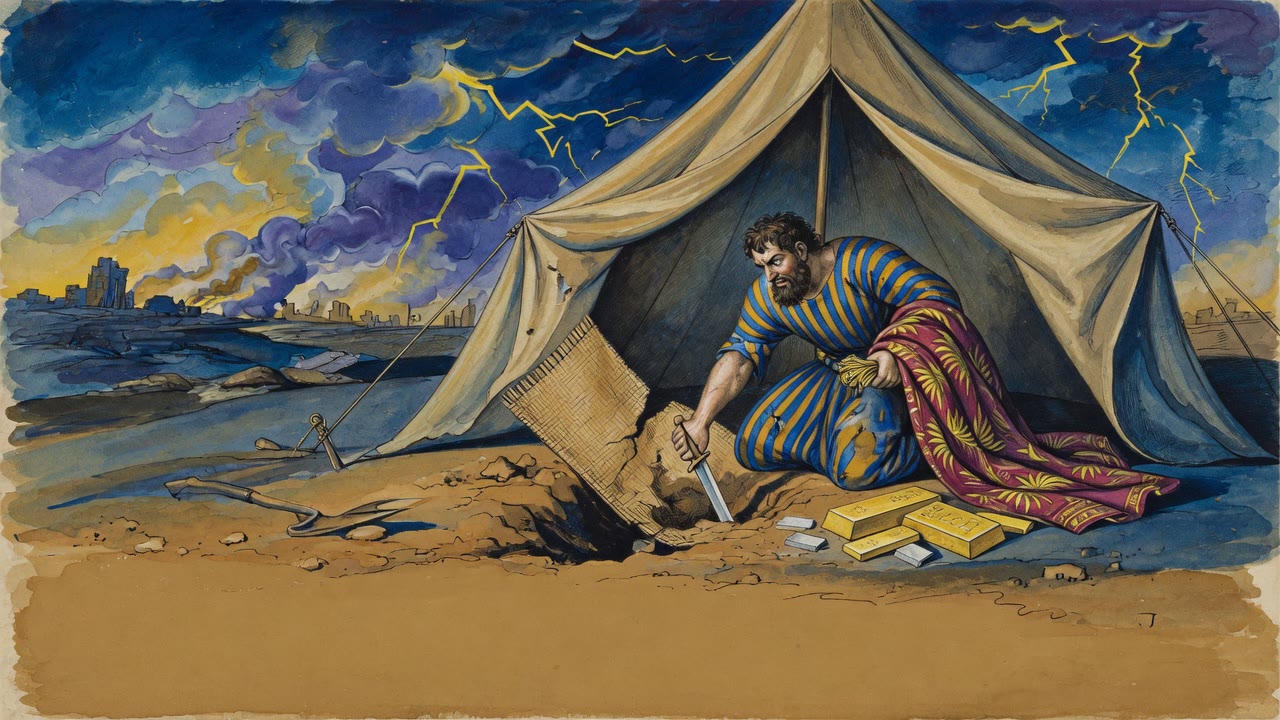
One man had taken something anyway. Achan had found a robe woven through with gold and a bar of gold weighing two hundred shekels, and he could not stand handing it to a God who had no use for it while he himself had none. So he dug a pit in the floor of his tent and buried it, and he thought that hid it from the other soldiers, and he thought it hid it from God too.
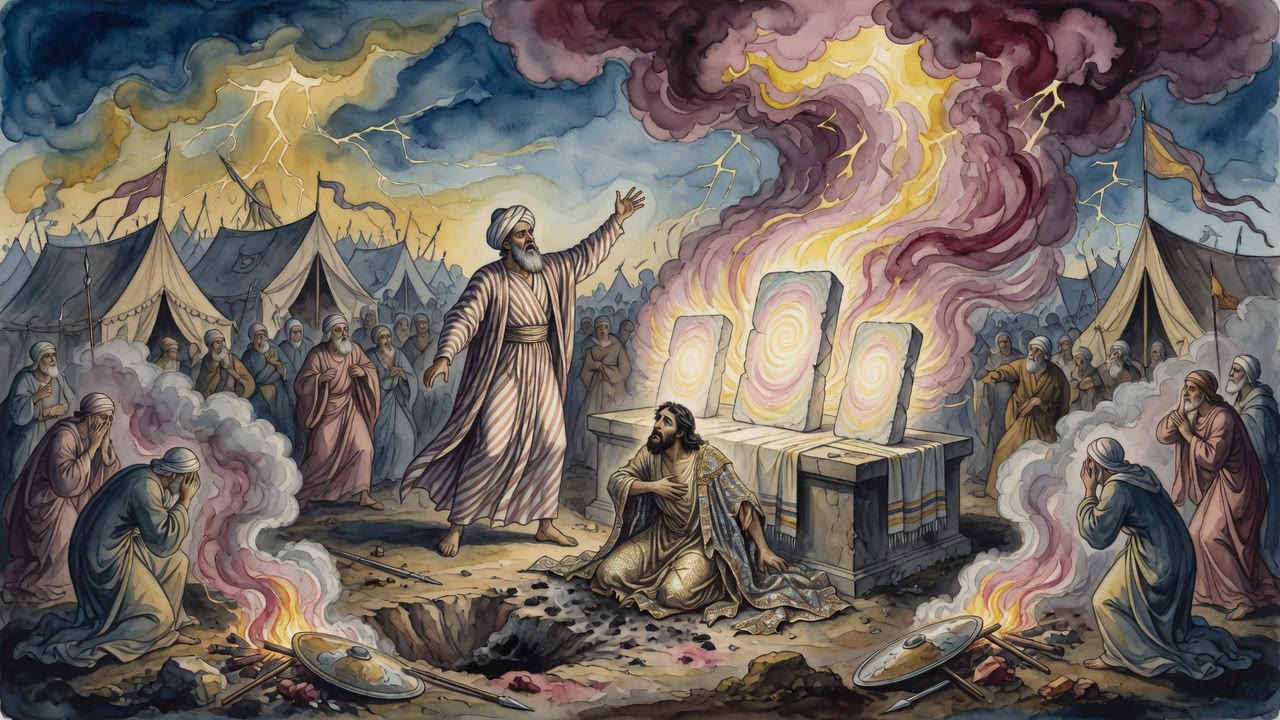
Three thousand men went up to Ai a few days later and came running back with thirty-six dead. Not a large number. It was enough. The whole camp sat down in sackcloth and would not eat, because they had understood themselves to be already home, and now their enemies were laughing. Joshua went face down on the ground and told God he had not come this far out of his own recklessness.
The answer was that something consecrated had been stolen. They cast lots tribe by tribe, and it came out Judah. Then family by family. Then man by man, until one man was left standing with nothing to say. He confessed, produced the robe and the gold in front of everybody, and was put to death and buried at night the way a condemned criminal is buried.
Over the ruins of Jericho Joshua had laid a curse: whoever rebuilds this city lays the foundation at the cost of his eldest son and hangs the gates at the cost of his youngest. Four hundred years went by. In the reign of Ahab a man named Chiel of Beth-el decided the ground was wasted and started building. He laid the foundation and his eldest died. He hung the gates and his youngest died. Long afterward two rabbis were still arguing about how dead that ground was supposed to stay. Rabbi Yose the Galilean said nothing at all could stand there, not an orchard, not a garden, not so much as a coop for homing pigeons. Rabbi Akiva said the city could not rise again, but a man could plant.
← All myths