Gabriel Walks Moses Through Pharaoh's Four Hundred Gates
The elders slipped away one by one until only two brothers faced a fortress of four hundred gates and lions, and an angel walked them in.
Table of Contents
They had believed. That was the part that made the road so quiet now.
 Click for full size
Moses and Aaron had gone through Goshen gathering the old men, the heads of households, the gray beards who remembered Joseph's coffin and the promise sealed inside it. The two brothers had spoken four words that the people had been waiting four hundred years to hear. I have surely remembered you. It was a password older than the slavery itself. Joseph had left it behind like a key under a stone, telling them that the true redeemer would arrive carrying exactly that phrase, doubled, the verb folded over on itself. When the elders heard it they did not argue. The people believed. The old men accepted it upon themselves and rose.
"Come with us," Moses said to them. "Let us go to Pharaoh."
So they went, a procession of the elders of Israel walking up out of the brickfields toward the seat of the most powerful man on earth.
The Procession Thins on the Road
The first one to go did it carefully. He fell a half step behind, then a full step, then he was speaking to no one near a doorway, and then he was simply not there. No one called after him. The road from Goshen to the capital was long and crowded, full of carts and water sellers and Egyptian soldiers, and a man who wanted to disappear into that traffic could do it without a sound.
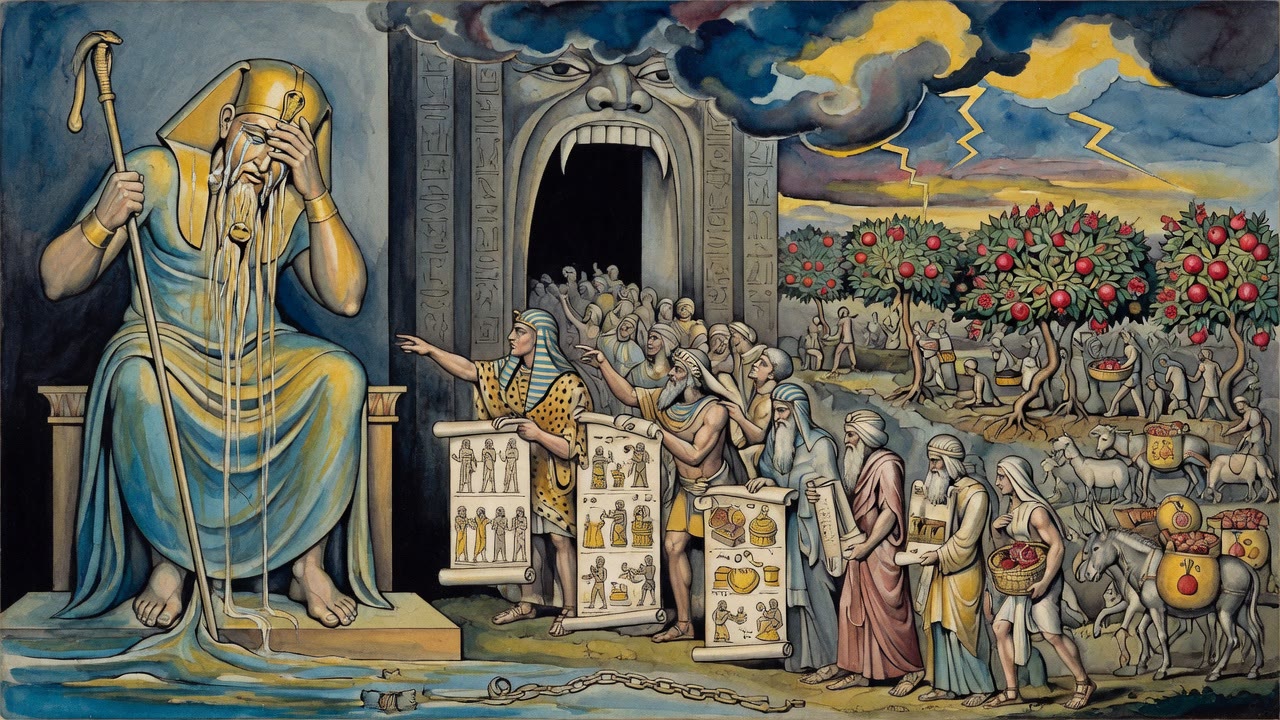
Then it was two of them. Then two more. By stealth, one by one and two by two, the elders peeled off into the noise. Each had said the same thing to himself as the towers of the palace grew larger on the horizon. He had heard the stories of that house. He knew what waited at its gates. And he weighed the promise he had accepted that morning against the lions he could already imagine, and he chose the crowd.
Moses did not turn around to count them. Aaron walked at his side. When the brothers finally stood in the shadow of Pharaoh's fortress and the moment came to enter, not one elder was left. Where there had been a procession there were now two men. The text would record it without comment, almost cruelly. And afterward Moses and Aaron came. Afterward. After everyone else was gone.
Four Hundred Gates and the Lions at Each One
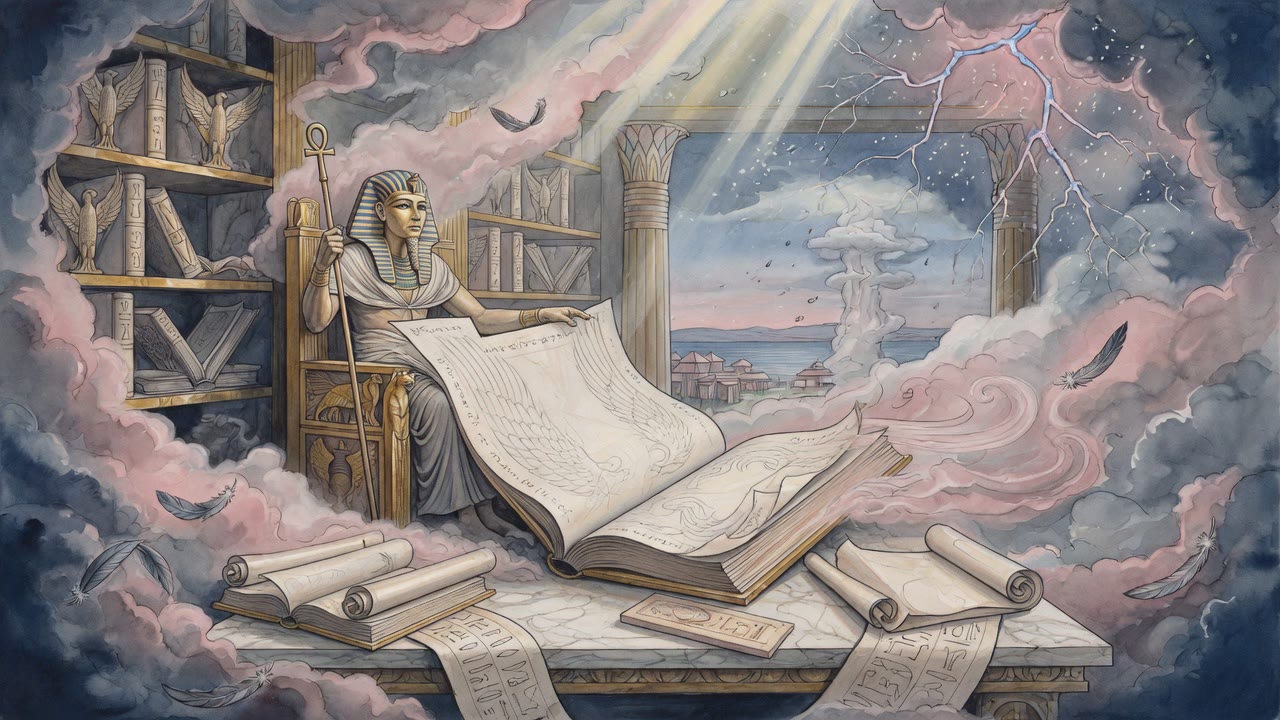
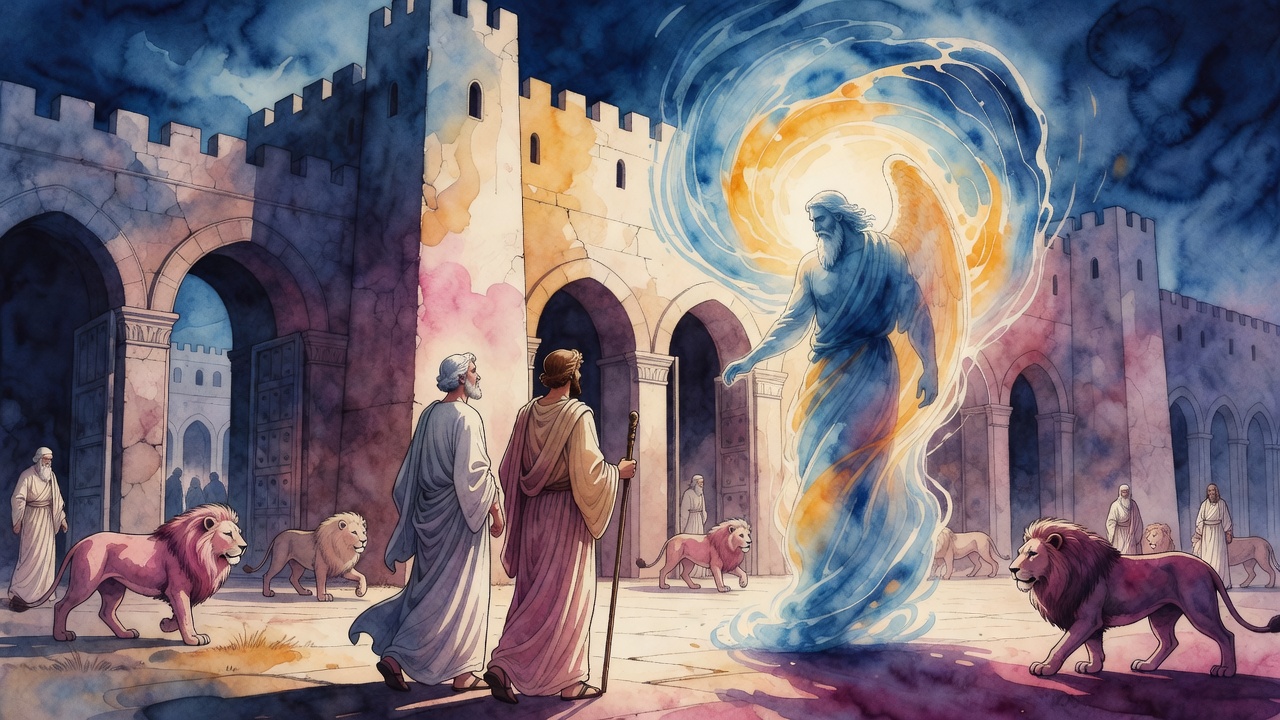
The palace was not a building so much as a fortified theory of power. Four hundred gates pierced its walls, one hundred to each of the four sides, and at every single gate sat sixty thousand mighty men, armed, waiting, paid to let no stranger pass. Between the gateposts crouched lions, kept hungry on purpose, chained close enough to the threshold that a man would have to walk within reach of their jaws to step inside.
This was why the elders had slipped away. Anyone could see it at a glance. You did not get past sixty thousand swords and a row of starving lions because you carried a doubled verb in your mouth. The multitudes around the palace were so dense that the two brothers themselves trembled when they saw it. There was no human way through that wall. The arithmetic of it was final.
So heaven sent something that did not bother with arithmetic.
Gabriel Walks Them Through
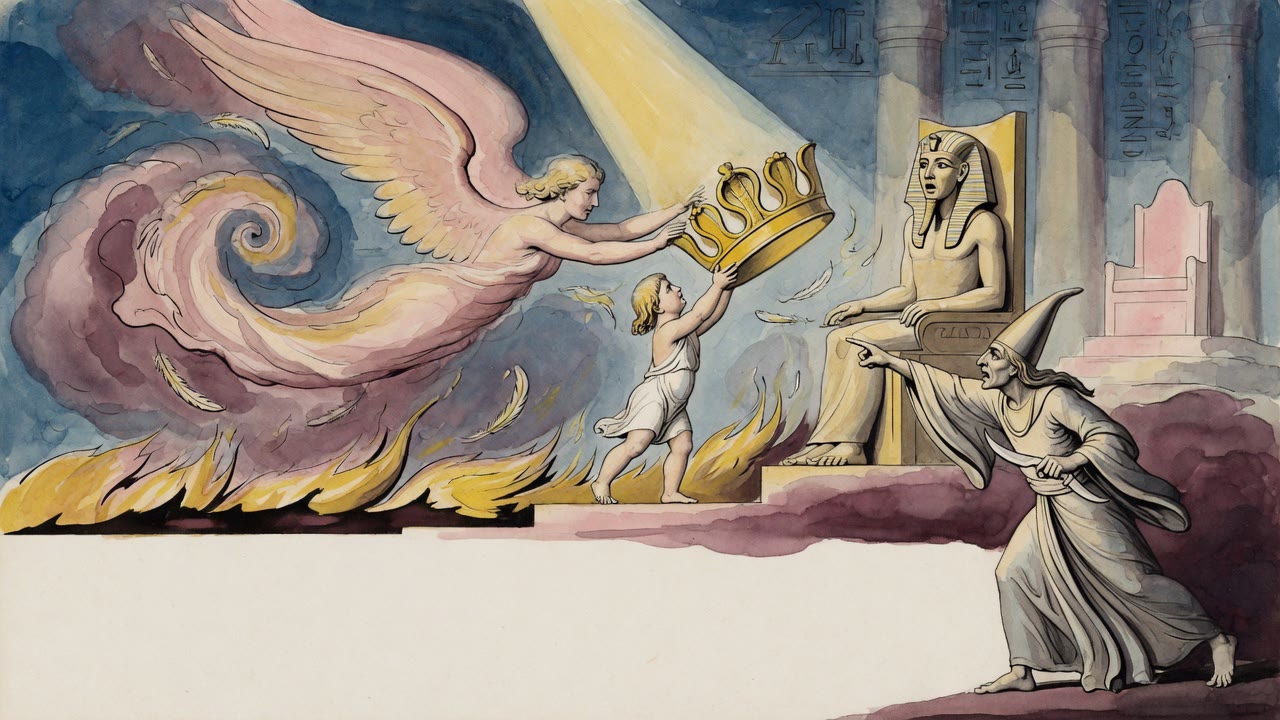
Gabriel came down. He did not negotiate with the gatekeepers and he did not frighten the lions into submission for the crowd to watch. He simply took Moses and Aaron and brought them in, past the sixty thousand, past the lions, through gates that the mightiest army on earth had been stationed to hold, as though the walls had been painted on cloth. One moment the brothers stood outside in the trembling crowd. The next they stood on the polished floor of the throne room, in front of the king.
Pharaoh looked up and could not place them. "What is the nature of these?" he said. They had not been announced. They had not been searched. They had simply appeared inside a fortress built so that appearing inside it was impossible.
He summoned the gatekeepers in a fury. Some he killed on the spot. Some he had flogged. Some he stripped of their posts and replaced with new men, and the new men he warned with the bodies of the old ones still on the floor.
The next day Moses and Aaron stood before him again.
Now the king was frightened in a way he could not say aloud. He called the fresh guards. "How do these men get in?" The guards had watched all night. They had counted every face that passed. They answered with the only thing that made sense to them. "We do not know. They are sorcerers. They do not enter by way of the gates."
The Word He Could Not Take Back
Pharaoh did not want a god in his throne room. He wanted a trick he could expose. So he told Aaron to throw down his staff, and the staff hit the marble and became a serpent, and that did not help him at all.
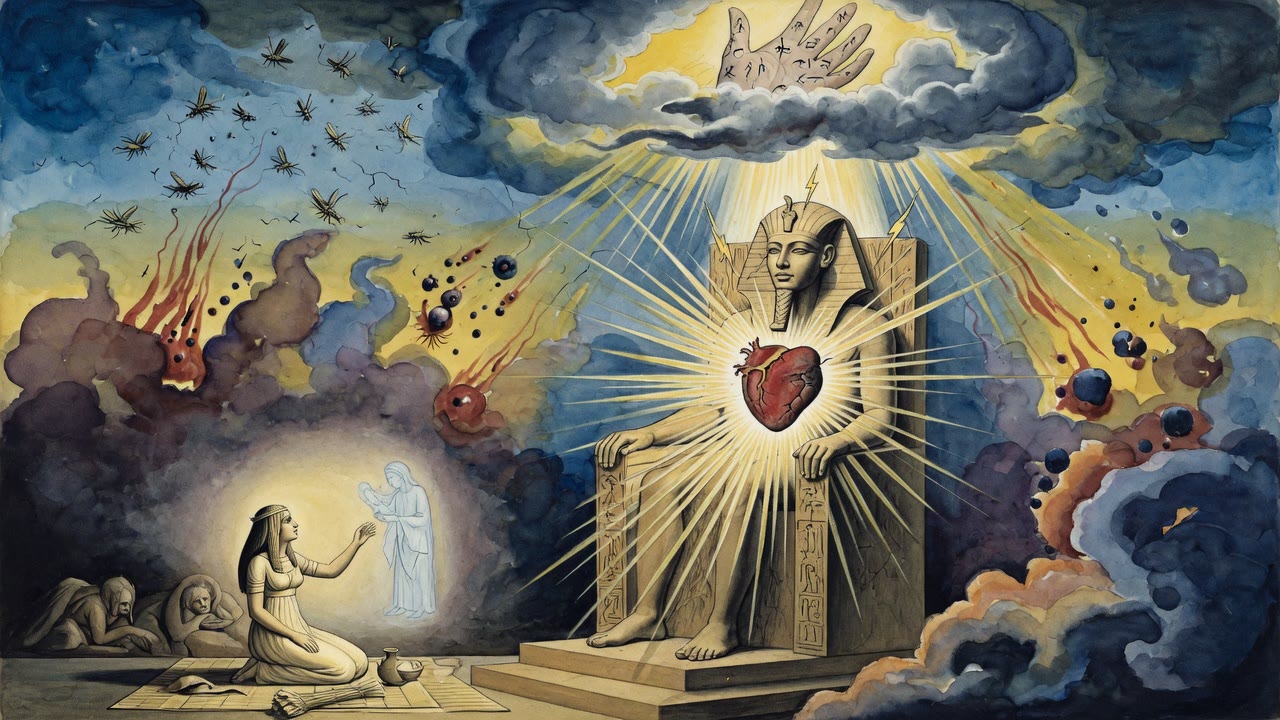
Then he reached for the sentence that would follow him to the bottom of the sea. "Who is the LORD that I should heed His voice? I do not know the LORD, and I will also not let Israel go."
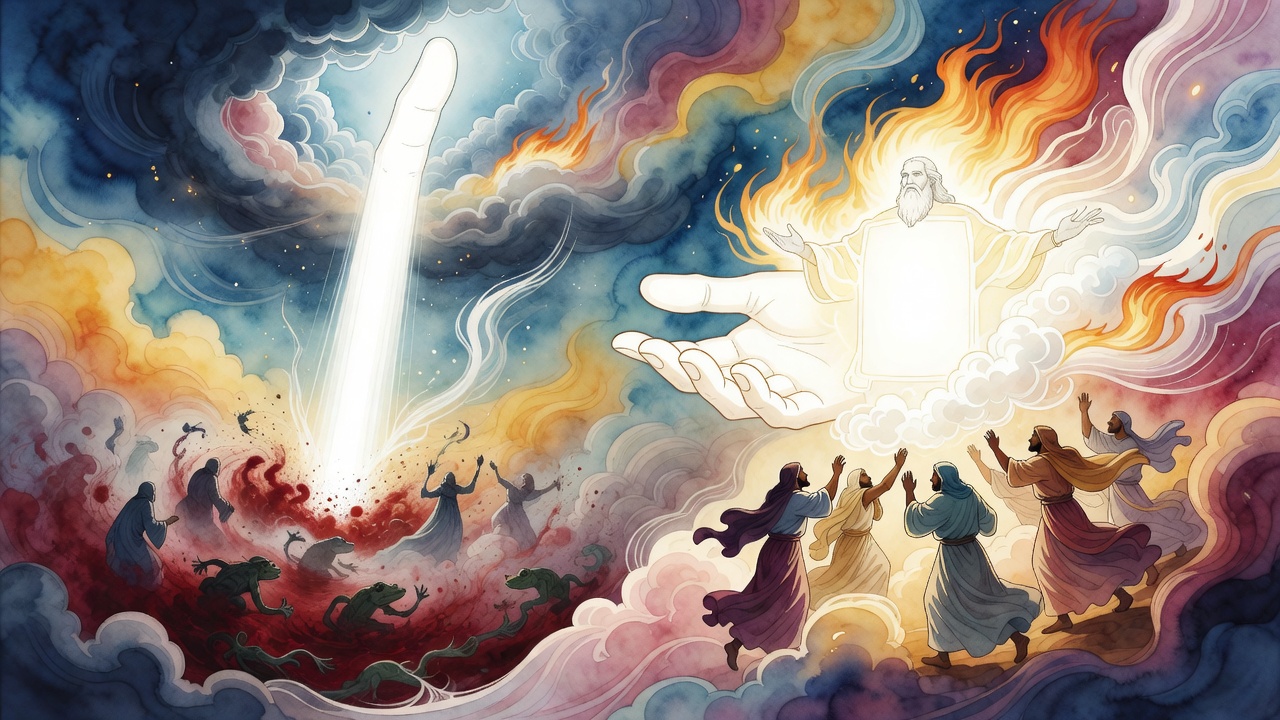
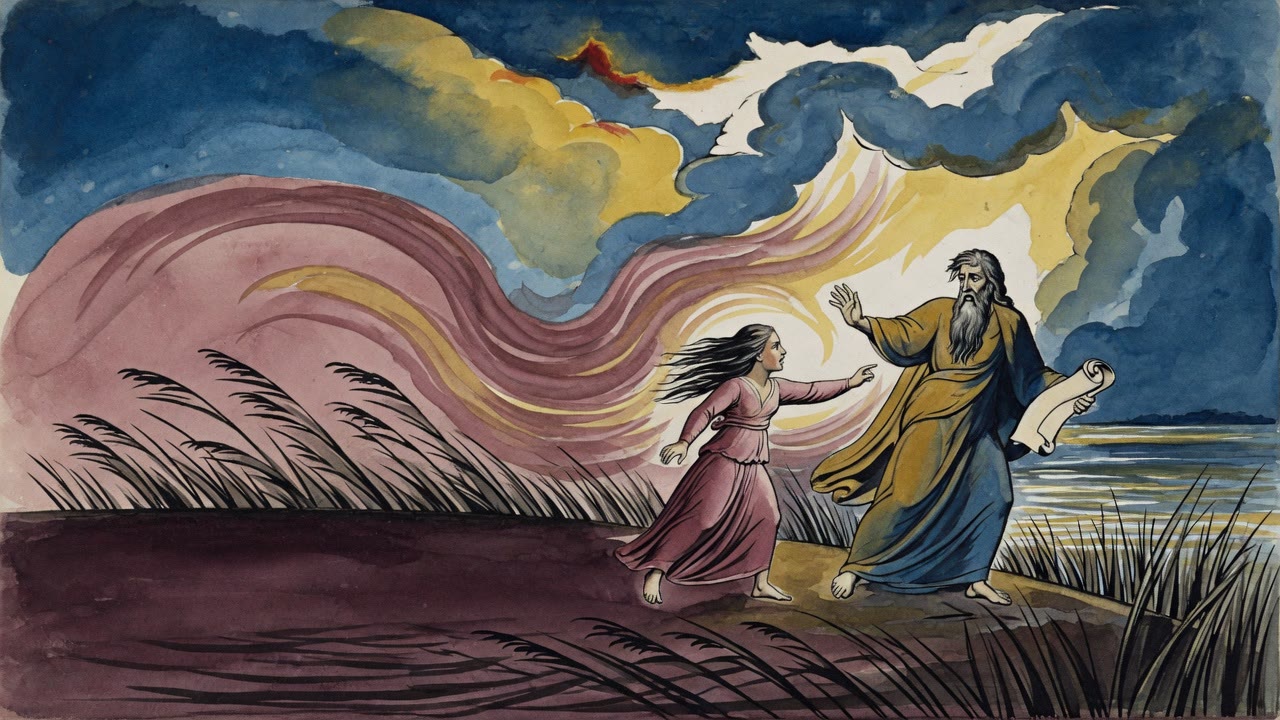
The answer came from heaven and it came folded, the way the redeemer's password had been folded. You said who, the Holy One told him. The little word for who, mi, turned backward is yam, the sea. By your life, you will be struck at the sea, and there you will learn who I am. You said you do not know the LORD. By your life, tomorrow your own mouth will say, "The LORD is the righteous one." You said you will not let Israel go. By your life, tomorrow you will take each of them by the hand and push them out your gates yourself.
And the elders who had melted into the crowd were not forgotten either. Do you think I will not repay you, the Holy One said to them across the years. When Moses goes up the mountain to receive the Torah, you will climb with him, and I will turn you back at the line. Wait for us here, Moses would tell them on the slope of Sinai. The same men who had waited in the road, hanging back, would be told once more to wait. This time it would not be cowardice. This time it would be the closest a man could stand to the fire and live.
← All myths