Moses Grabbed Pharaoh's Crown and Burned His Tongue
The child was three. He took the crown off Pharaoh's head and set it on his own. A sorcerer in the room called for his death.
Table of Contents
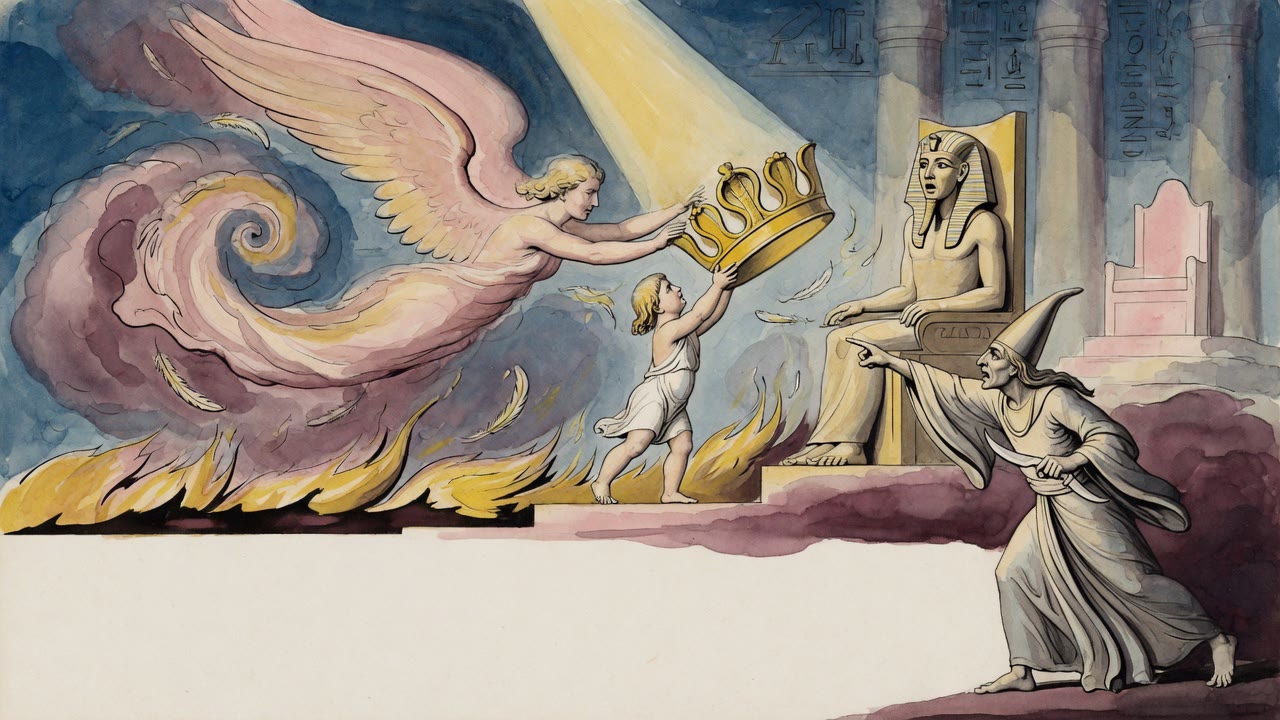
The princess set the Hebrew child on her lap at her father's table. Pharaoh sat next to her with the crown on his head, eating. The child was three. Children that age reach for glittering things.
 Click for full size
He reached. He got the crown. He put it on his own head.
The Crown on a Child's Head
A sorcerer in the room saw it and did not laugh. He read the gesture as prophecy, not play. What the child had done was not a childish accident. It was a prefigurement. He demanded that the child be executed on the spot.
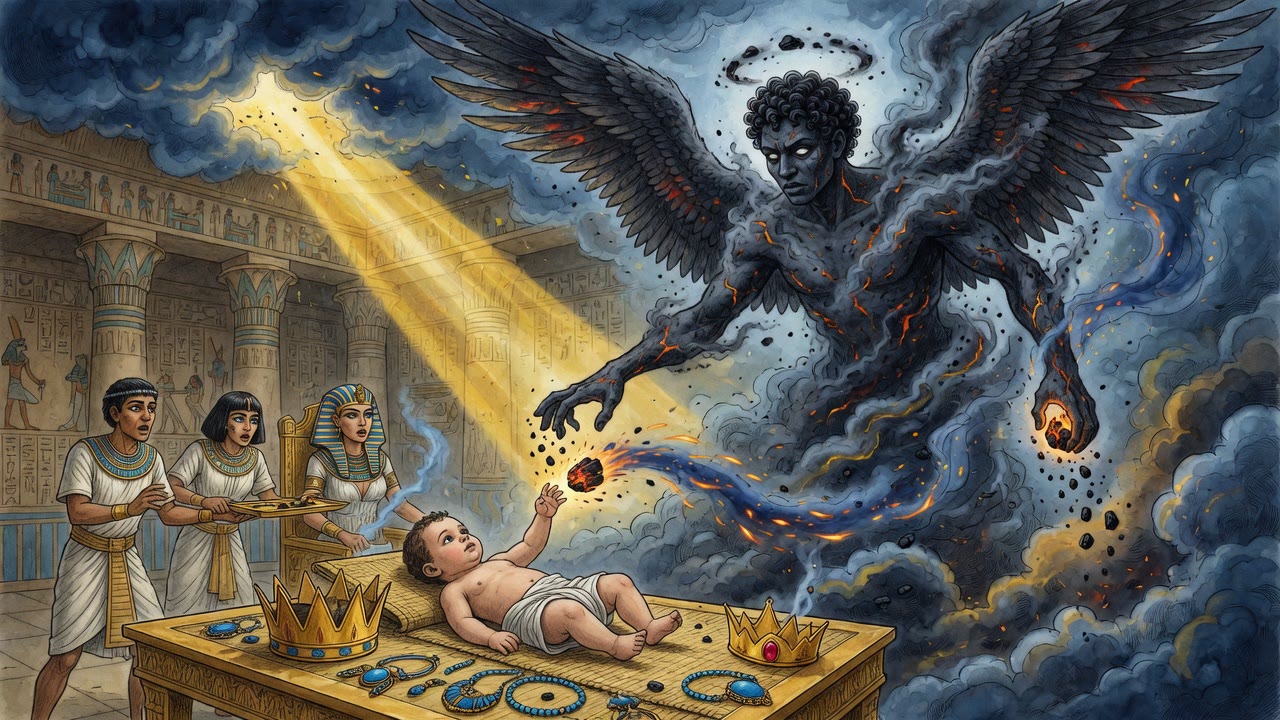
Pharaoh did not immediately agree. He asked his advisors. The counsel he received was a test. Two bowls were placed before the child. One filled with gold and jewels. One filled with burning coals.
If the child reached for the gold, it would prove he understood what he was doing, that the crown-grabbing had been intentional, and he would be killed. If he reached for the coals, it would prove he was simply a child following his hands, and he would be spared.
Gold in One Bowl, Coals in the Other
The bowls sat on the floor at a three-year-old's height. Heat shimmered off one. Light caught in the other. The child looked from gold to fire and back. His hand moved toward the jewels.
The angel Gabriel was already in the room. As the small fingers opened for wealth and power, Gabriel redirected them. The hand that had been reaching for gold was moved to the coals.
The child grabbed a coal. He put it to his lips. His tongue burned. He dropped the coal. He cried. Pharaoh's court took the cry as proof of accident, and the execution was cancelled.
The princess gathered him. The crown went back on the king's head. The gold stayed in its bowl. The burned mouth would not go back to what it had been.
The Burn on His Tongue
Moses grew up with the speech that came from that coal. Years later he would say to God, I am not a man of words, for I am heavy of mouth and heavy of tongue (Exodus 4:10). The heaviness sat where the coal had sat. The test that saved his life at three left a mark on the man who would stand before Pharaoh and demand the release of a people.
He had reason to distrust his own tongue. He had reason to depend on something other than eloquence. The angel had saved him by spoiling the one tool a court usually trusts. A prophet with a burned mouth would have to carry words that were not his own.
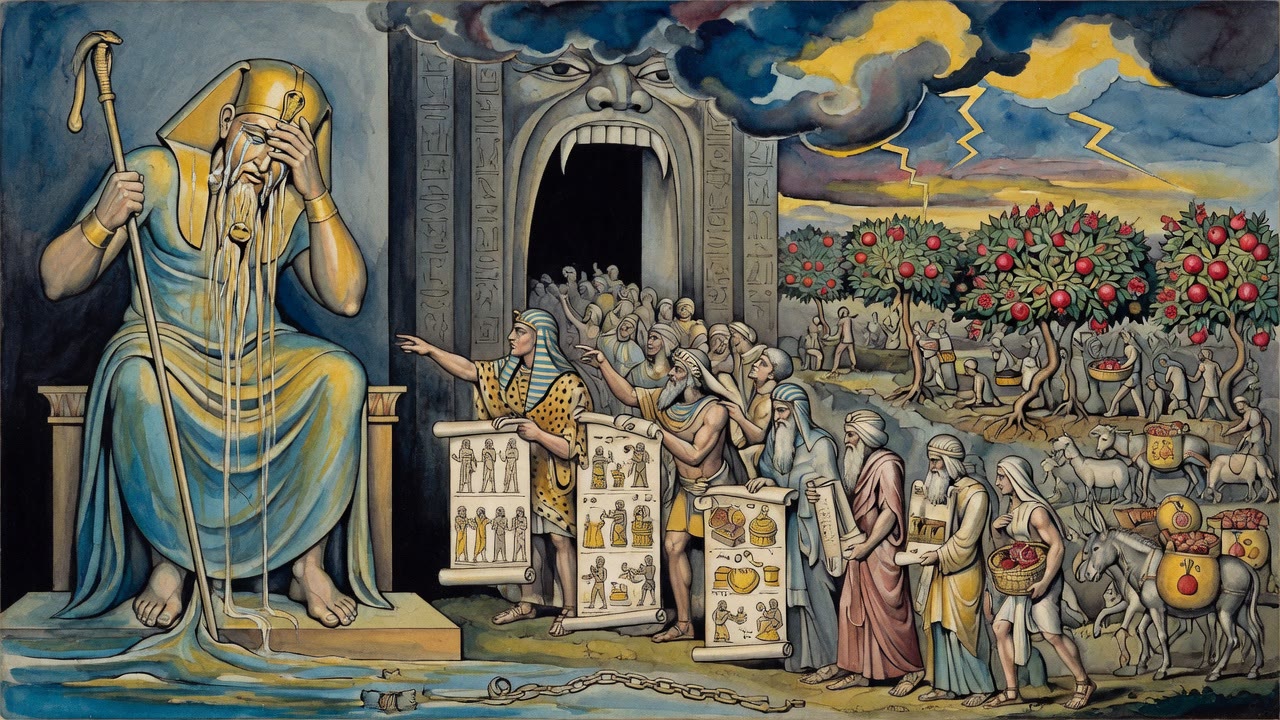
In the palace years he still used that mouth. He talked Pharaoh into giving the Israelite slaves a day of rest. The king who had once tested a toddler with coals now heard a grown Hebrew argue for Sabbath, and he granted it. Work stopped one day in seven, and the stop was Moses' doing.
Two Brothers at the Palace
Jealous brothers went to Pharaoh with a report. Moses, they said, was disrespecting the royal dignity. He was undermining what Pharaoh represented. The rest day looked, in their mouths, like rebellion dressed as mercy.
When the call to return to Egypt came, Moses argued against himself to God. I, a prophet and the son of a prophet, obeyed Your words only after much hesitation, and I cannot expect Pharaoh, a wicked man and the son of a wicked man, to give ear to my words. He knew from the coal forward that he was not a man whose mouth would carry him through.
He had been saved as a child by an angel redirecting his hand. He had been marked by the coal. He went back to Egypt carrying both of those facts about himself. The same court. A heavier tongue. A people waiting on a man who still tasted ash when he spoke.
Pharaoh would hear him anyway, because the words were not required to be pretty. They were required to be sent. The boy who had worn a stolen crown for a few breaths now stood in front of the same kind of gold and did not reach. He opened the burned mouth and asked for a whole people, not a jewel.
← All myths