Pharaoh's Advisors Told Him What He Had Released and He Wept
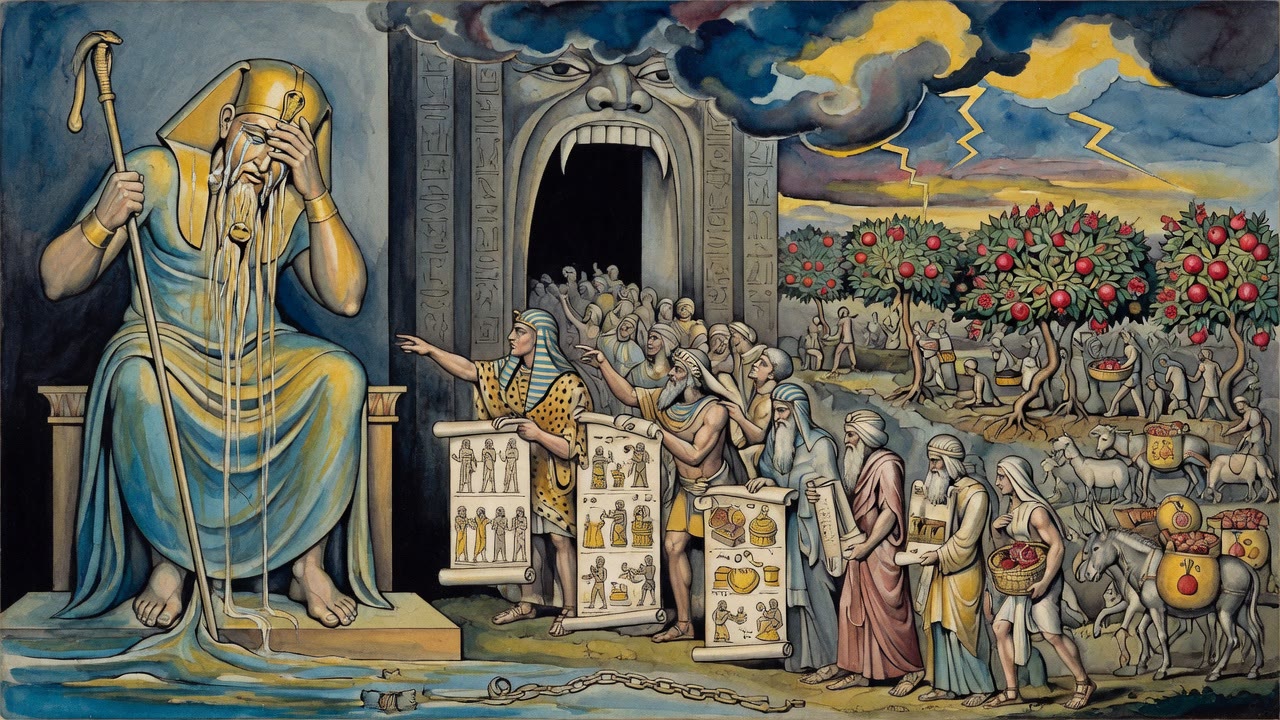
Pharaoh thought he was releasing slaves. His advisors catalogued what walked out, wise men, artisans, wealth, an orchard of pomegranates.
Table of Contents
 Click for full size
The Morning After the Gates Opened
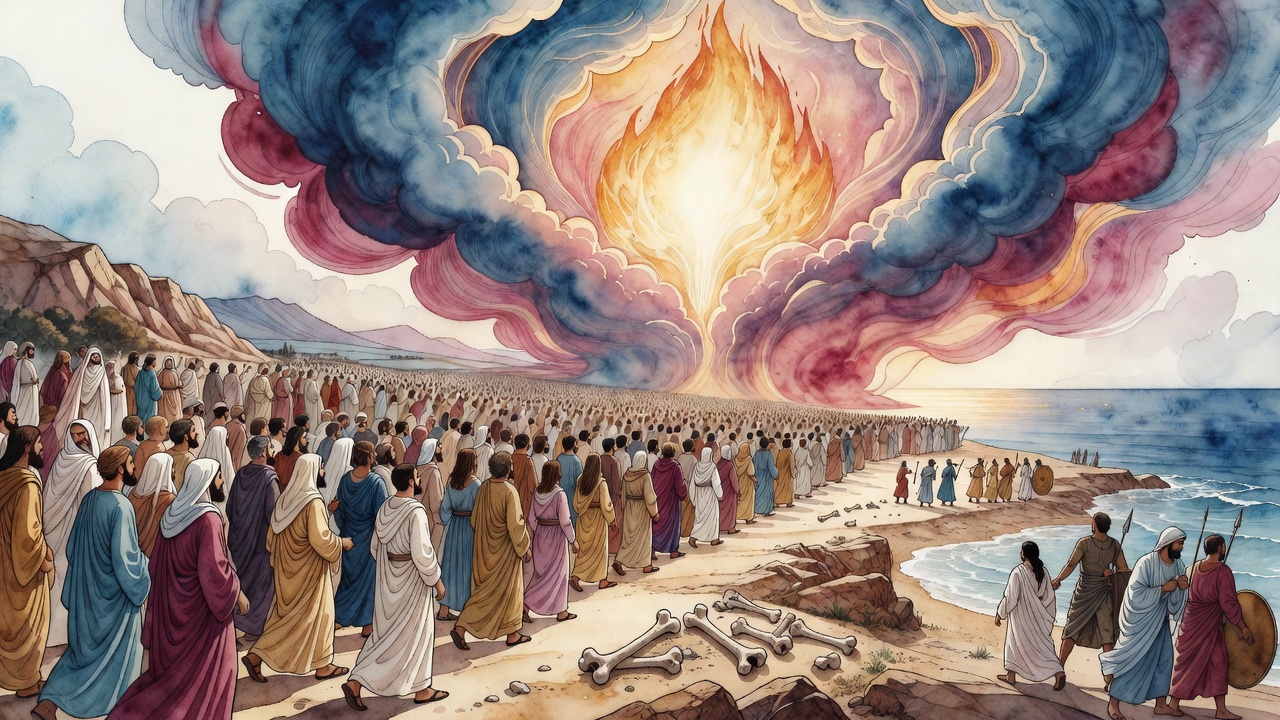
Pharaoh had spent the night watching his firstborn son die along with the firstborn sons of every Egyptian household. The wailing had risen from house after house until there was no home in Egypt without a corpse in it. By morning he had called for Moses and Aaron and said: rise up, go out from among my people. Take your flocks and your cattle. Go. He blessed them as they left, eager only to have them gone before the sun had fully cleared the horizon.
Then his advisors came to him.
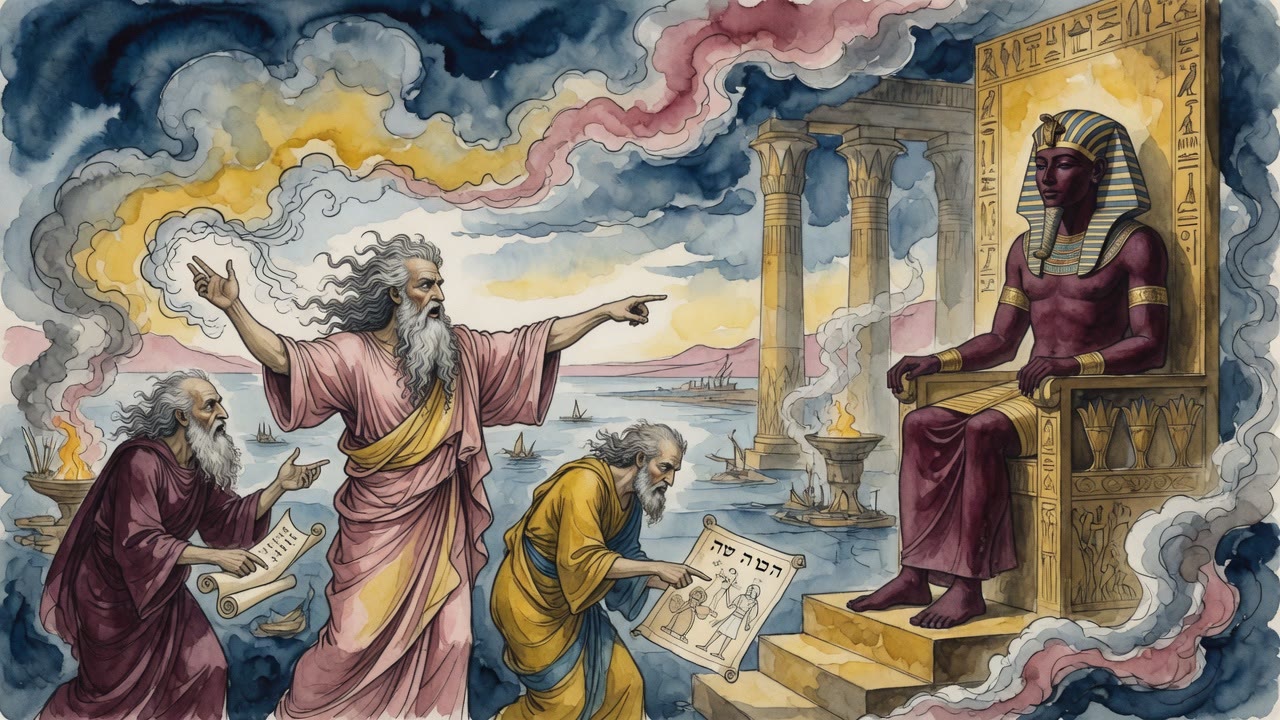
Shemot Rabbah reads the verse "it was when Pharaoh let the people go" as the opening of a grief story. Pharaoh's senior advisors gathered around him after the departure and began to enumerate what had walked out the gates. They were not there to comfort him. They were there to explain the scale of what had just happened, item by item, until the king understood it.
The Orchard of Pomegranates
Even if you counted only the borrowed objects, the silver, the gold, the garments that the Israelites had asked from their Egyptian neighbors before leaving, the loss would have been staggering. The Torah describes this borrowing in Exodus 12:35 through 36, and the tradition understood it as the despoiling of Egypt that had been promised to Abraham: your descendants will go out with great wealth. The treasure houses had been emptied into the hands of the departing. Egypt had been stripped down like a fish, scale by scale.
But the advisors went further. Among the people who had left were wealthy individuals. Wise men. Artisans and craftspeople who had built Egypt's cities and temples and storehouses with their own hands. Women with skills. Children who would grow up to be something. A mixed multitude, Exodus says, had also gone up with them. The advisors were looking at the demographic reality of what Egypt had just lost, the whole productive body of a nation walking away across the sand.
Then they quoted Song of Songs: your branches are an orchard of pomegranates. Just as a pomegranate is packed with seeds beneath its skin, Israel was packed with value that Pharaoh had never bothered to count. He had owned an orchard and treated it as a quarry. He had taken the labor and destroyed the laborers and never assessed what he actually held in his hand.
What He Had Sold for Nothing
He had not sold the orchard. He had been given the orchard and had never understood what it was. He had been handed the most productive, densely populated, knowledge-rich community in the ancient Near East and had turned it into a brick factory. He had set taskmasters over them and measured them only by the count of bricks they could shape in a day. He had thrown generations of infants into the Nile. He had tried to crush out everything that was not immediately extractable as labor.
What Walked Out the Gates
And when the plagues finally made it impossible to hold them, he released them, and they walked out of Egypt carrying springs and wells and Lebanon cedar and artisanal knowledge and spiritual wealth that had been accumulating in them for four hundred years of oppression. Every skill, every memory, every craft that Egypt had pressed into mortar walked out under its own feet and did not look back.
The advisors finished speaking. They had laid the whole inventory before him, and there was nothing left to add. What does Shemot Rabbah say Pharaoh did at that moment? He began crying. Woe, woe.
← All myths