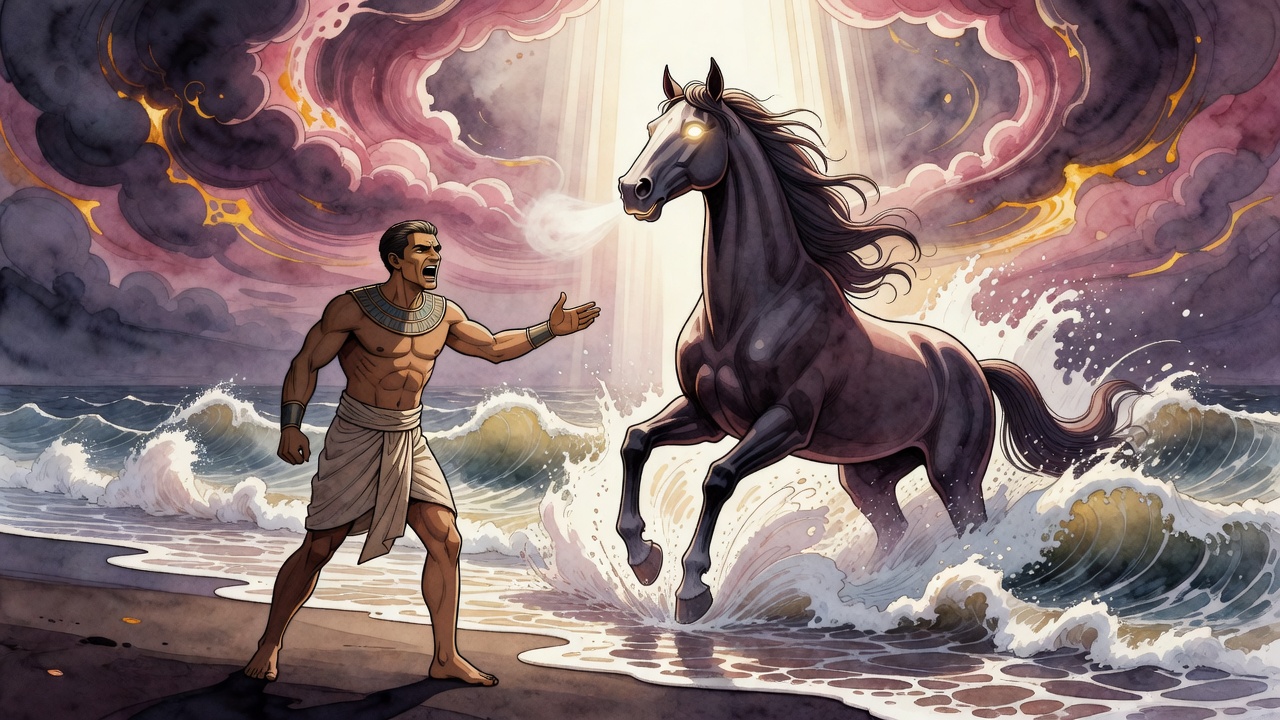
The Sword, Moses's Ivory Neck, and the Angel on the Scaffold
A sword sharp beyond compare came down on Moses's neck ten times and could not cut it. Then an angel climbed the scaffold dressed as the executioner.
Table of Contents
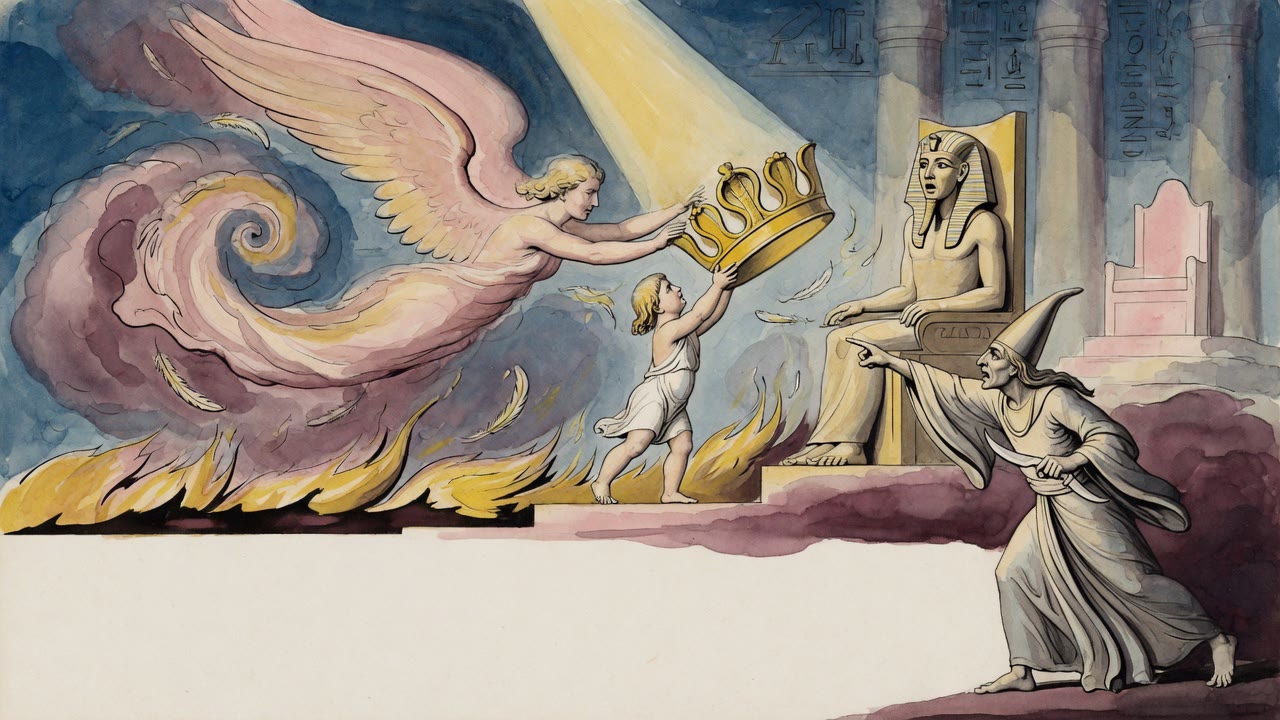
The two brothers waited until the corridor was empty, then went straight to the throne. They had practiced the false concern in their faces, the small bow, the lowered voice of men who only wish to protect what they love. They hated Moses for the simplest reason men hate: everyone else admired him, and they could not stand it.
 Click for full size
"He disrespects your crown," one said. "Your royal mantle, everything you stand for."
Pharaoh did not even lift his head. "Much good may it do him," he said, and waved a hand as if brushing off a fly.
The Brothers Who Would Not Stop
That should have been the end of it. Therefore the brothers leaned closer, lowered their voices further, and changed the charge. A grumbling prince was nothing. A traitor was something else.
"He helps your enemies," the first one said. "He plots against your house. The whole court can see it, and you alone choose not to."
They said it twice, three times, on three different days, until the words wore a groove. Pharaoh, who had shrugged once, stopped shrugging. A king who is told often enough that he is being mocked begins to believe that he is, and a frightened king reaches for the simplest tool he owns. He gave the order. The machinery of Egypt, which moved slowly and then all at once, closed around the man who had grown up in his own palace.
Moses on the Scaffold
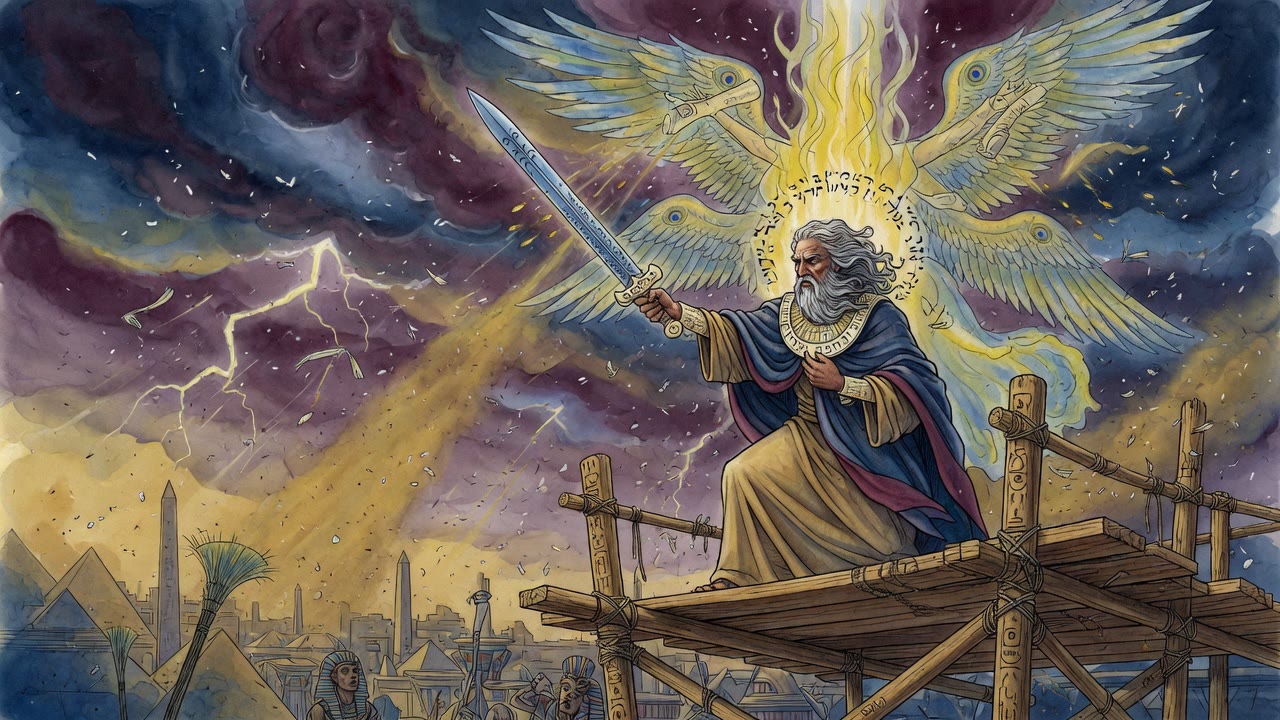
They led Moses out under restraint, hands bound, into the hard white morning. The scaffold had been raised in the open so the city could watch, and the city had come. He stood on the boards and felt them flex under his weight. He did not plead. He looked out over the heads of the crowd and waited.
The executioner took his place behind him. The sword he carried was no common blade. It was a sword sharp beyond compare, ground to an edge that could split a falling hair, and the man knew his work. He set Moses's chin with two fingers, judged the angle of the neck, and raised the sword high enough to catch the sun.
The blade came down. The crowd flinched at the whistle of it. And the edge slid off the neck as if it had struck the side of a polished tusk, turning away without leaving a mark.
Ten Strokes Against Ivory
The executioner stared at the sword. He turned it, checked the edge against his thumb, drew blood from his own skin to prove the steel was true. It was true. He set Moses's head again and struck. The blade skated off a second time.
He struck a third time, a fourth, harder now, the sweat running into his eyes. The neck had become like ivory. There was no purchase in it, no soft place for the edge to bite. Ten times the great sword came down, and ten times it slipped away harmless, ringing in the man's hands like a bell struck against stone. The crowd had gone silent. The executioner stood with his chest heaving, looking at a thing he could not explain and could not stop.
The Angels in an Uproar
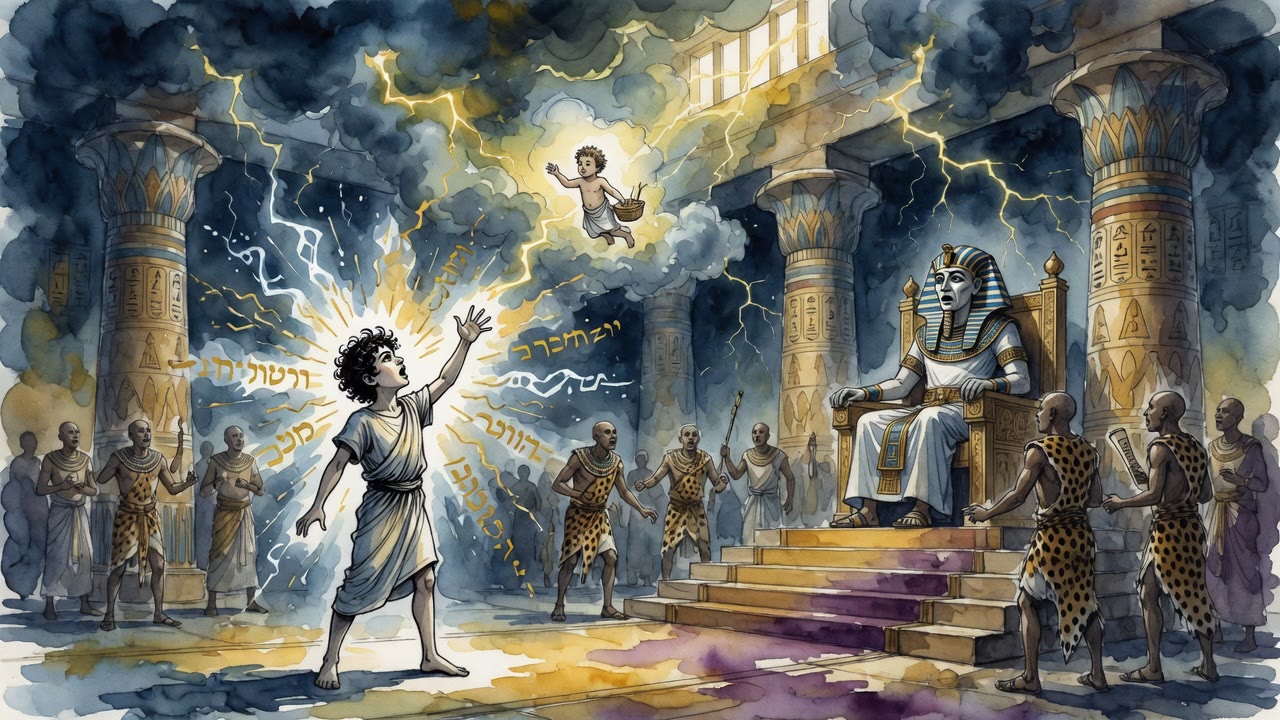
Far above the white scaffold and the staring city, in the place where the watching never ends, the angels broke into an uproar. They had seen the bound hands and the raised sword, and they came crowding to the throne the way frightened servants crowd a doorway, all speaking at once.
"Moses," they cried, "the familiar of Thine house, is held under restraint."
The answer came back level and short, three words with no plan inside them and no explanation. "I will espouse his cause."
It was not enough for them. They could still see the scaffold. They pressed forward again, closer, louder. "His verdict of death has been pronounced. They are leading him to execution, even now."
The same voice, the same three words, unmoved as bedrock. "I will espouse his cause." Not how. Not when. Only that it was already decided, and that the deciding did not require their counsel.
The Executioner Who Came From Heaven
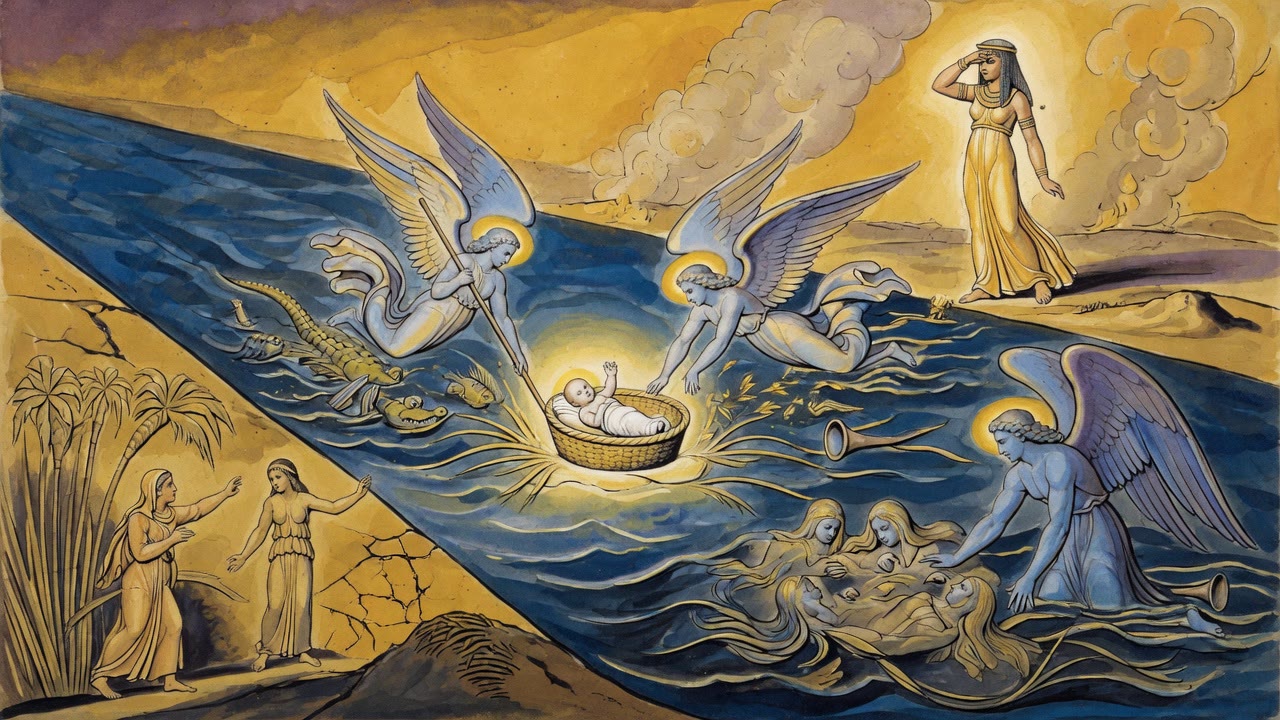
While the sword still rang uselessly against the ivory neck, the One who had spoken sent down the angel Michael. He did not come in fire or in a column of cloud that would have scattered the crowd. He came quietly, in the only shape that could stand on that scaffold without question, the shape of the executioner.
And in that shape he took the place of the man who could not cut. The crowd saw nothing change. They saw the headsman steady himself, lift Moses by the arm, and lead him down from the boards as though the sentence had been carried out, as though there were nothing left to watch. The order had been given, the king had been satisfied, the city dispersed. Moses walked out of Egypt's grip alive, his neck unmarked, led to freedom by the very figure sent to kill him (Exodus 2:15).
He would cross the desert after that. He would meet the bush that burned and was not consumed. He would stand before this same Pharaoh again, no longer a bound prisoner but a man with a staff and a message. All of it waited on the far side of a scaffold where a sword could not find his throat, and a death meant to end him became the door he walked through.
← All myths