Aaron Carried the Staff Moses Could Not Use
The Nile had carried him in a basket when Egypt was killing Hebrew boys. When blood was due, Moses would not raise his hand against that water.
Table of Contents
Moses and Aaron arrived on Pharaoh's birthday with no gift. Kings had come from every direction with tribute, because the palace expected gold, but two shepherds were announced instead, and Pharaoh made them wait until the last foreign king had bowed.
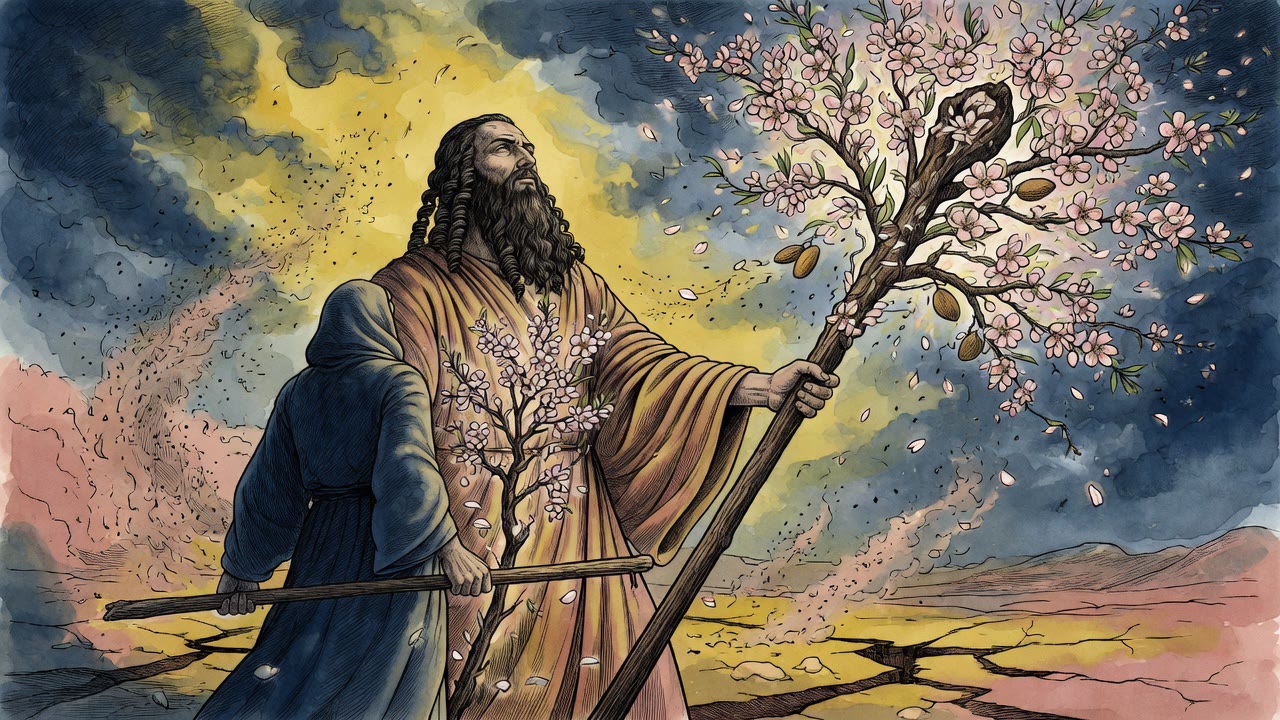 Click for full size
Then they were inside anyway, and the guards could not say how.
The Angel Walked Them Past the Lions
The palace was not built for men like these. An army stood around it, and at each door two lions waited, so no one came near until a tamer led the beasts aside. Balaam and the scribes of Egypt told Pharaoh to let the lions loose on the shepherds.
The angel Gabriel had already taken Moses and Aaron through the gates unseen. Pharaoh punished the first watch for failing. The next day the same two men stood in the court again, and the new watch had no better answer.
Balaam got his lions, but Moses raised the rod, and the lions did not spring. They bounded toward him like puppies and fawned at his feet, so the court learned that the staff had arrived before the speech did.
Seventy secretaries sat inside with seventy languages, handling the king's letters. They looked up and dropped their pens. Moses and Aaron stood as tall as cedars, faces lit, beards like palm branches, voices like flame. The scribes went down on the floor.
"The God of the Hebrews hath met with us," Moses said. "Let us go three days into the wilderness and sacrifice to the Lord our God, lest He fall upon us with pestilence or with the sword."
Pharaoh wanted a sign. Egypt weighed power by display: beasts, magicians, birthday tribute, foreign crowns. A demand without gold was not a demand he knew how to hear, so he asked to see something.
The Staff Entered the Argument
God did not send Aaron to flatter the court into mercy. He sent him to strike the order Pharaoh had built. If the king asked for a wonder, the answer was not another speech. The answer was a staff raised in judgment.
Pharaoh had made Israel's life bitter, quota on quota, infant after infant thrown toward death. He had mistaken patience for weakness. He heard Moses speak and treated the warning as a court performance, something to test against magicians and pride.
The staff broke that arrangement and made the conversation physical. But the first blows involved water, and water remembered Moses differently than Pharaoh did.
The River That Had Been a Cradle
The Nile had received him in a basket when death hunted Hebrew boys, and it had carried him long enough for Pharaoh's daughter to see him. A crying child on a current of reeds and pitch that could have drowned him, and did not.
That water had been a cradle before it became a battlefield. Moses could confront Pharaoh and speak the demand, but when the plague was to touch the Nile, his hand would not rise, because gratitude held it down. The same river Egypt had used as a grave had sheltered one infant. Divine judgment does not erase a debt like that. Moses would not strike the thing that had saved him, even if that thing now ran through enemy land, even if Pharaoh was watching.
So the staff passed to Aaron, because Moses would not strike the river that had kept him alive.
Aaron Raised What Moses Could Not
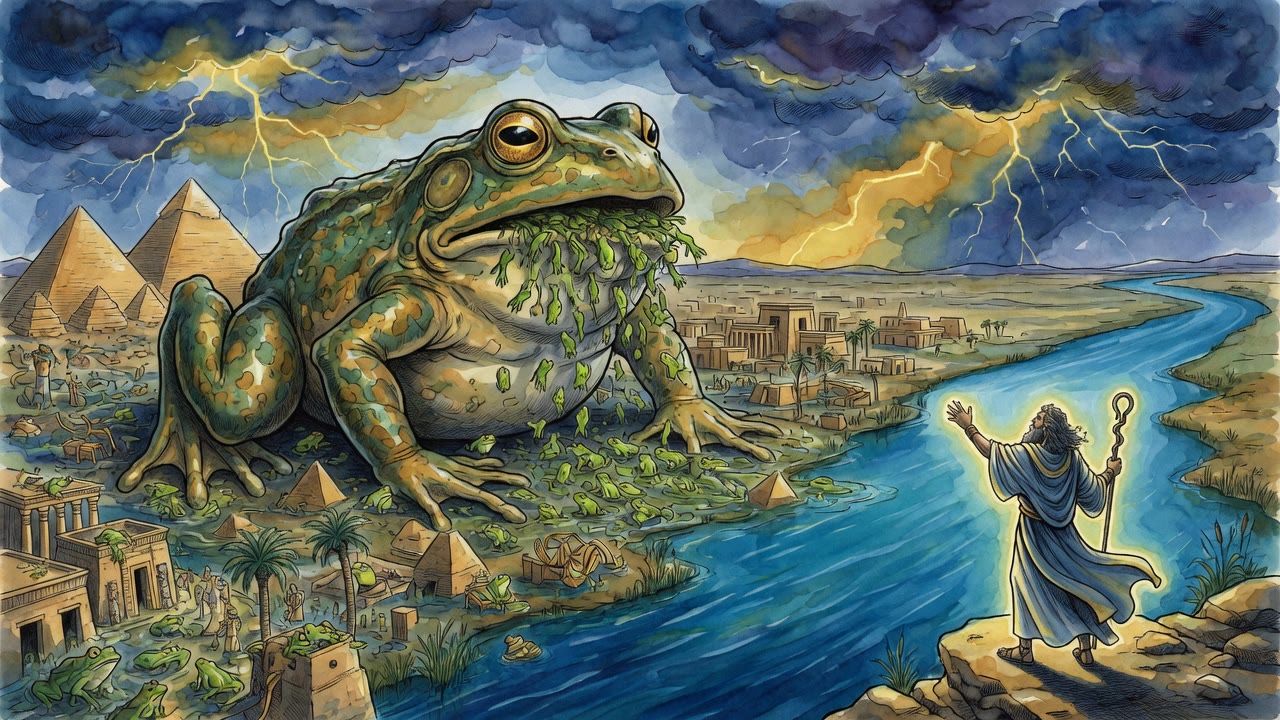
"Take your staff," God said, and the command was for Aaron. He walked to the river Pharaoh called a god and struck it, so the water thickened into blood and the fish died. The Egyptians dug along the banks for a mouthful they could drink, and found none.
Moses stood there and did not pretend the plague was gentle. He also did not pretend he was free to deal the first blow. Aaron's hand carried both judgment and his brother's memory. The staff fell where it had to fall, but it fell from the brother who did not owe the river his life.
Frogs would follow from that same water. Dust would turn later, and that blow Moses could take, because dust had never held a basket. The first motion already held the shape of the rest, because the tyrant would be struck, the rescued child would remember the channel of rescue, and the brother would act where the prophet could not.
Pharaoh learned that power could enter his court without permission. Moses learned that power could be limited by thanks. Aaron stood between those lessons with the staff in his hand, and the Nile, which had once kept a boy alive, ran red because a different hand had been willing to hit it.
← All myths