5 min read

One Frog Filled Egypt While Moses Spared the Nile

Rabbi Akiva imagined one frog multiplying through Egypt, while Moses stood back because the Nile had once saved his life.

Curated by Arthur · Told by Maggid ·
Table of Contents
  1. Akiva Let One Frog Become Many
  2. The Frog Called Its Army
  3. Moses Did Not Strike the Water
  4. The Small Thing Took the Palace

The frog arrived in the singular.

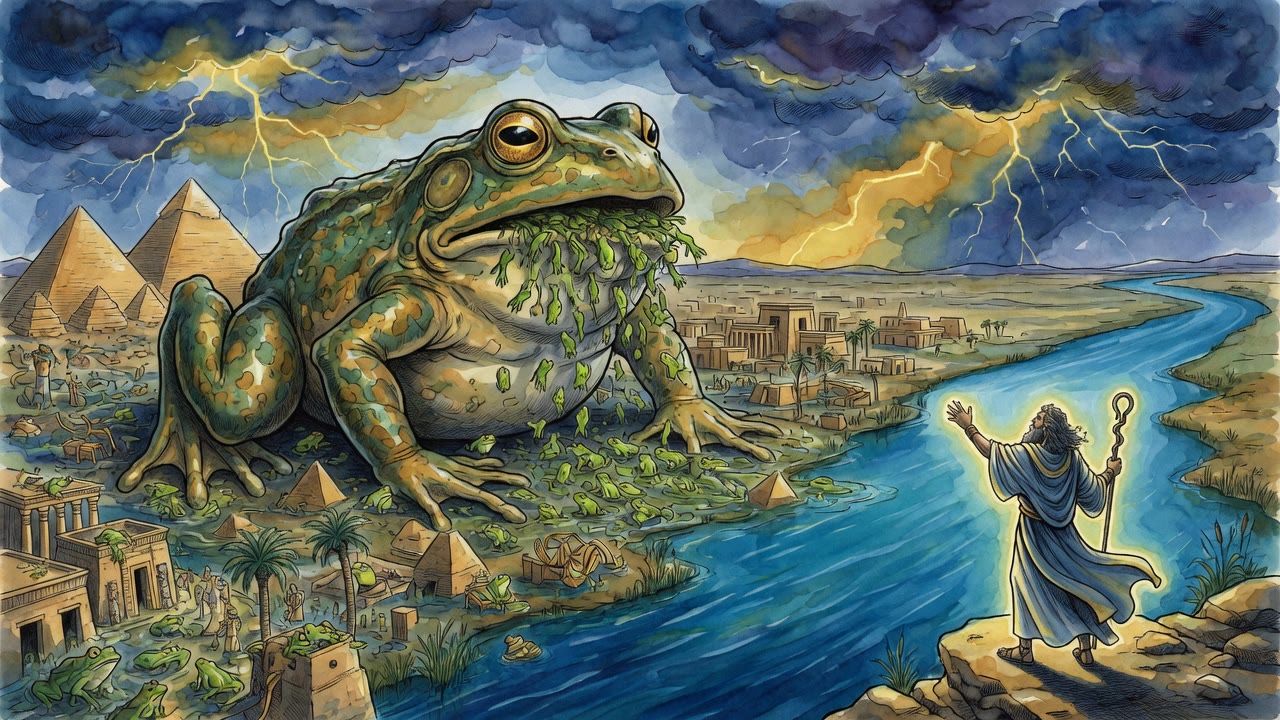
Not frogs, at first. The verse could be heard as one frog rising from the water, one wet body breaking the surface of the Nile before Egypt filled with croaking, leaping, crawling judgment. Rabbi Akiva heard the singular and let it become enormous.

Akiva Let One Frog Become Many

One frog came up, he said, and then multiplied until the land could not contain it. Houses filled. Beds filled. Ovens filled. Kneading bowls filled. Pharaoh's ordered world became a slick, living disorder, and all of it began from a single creature too small to respect.

That reading has force because Egypt had become expert at making small things disposable. A Hebrew infant could be thrown into the river. A slave body could be spent on bricks. A cry could be ignored if it came from the right neighborhood. So God answered with a creature that began small and became unignorable.

Rabbi Elazar ben Azarya was not impressed.

Akiva, he said, what are you doing in aggadah? Go back to the laws of skin affliction and tent impurity. He did not deny the plague. He objected to the mechanism. In his reading, one frog rose and whistled, and the others came.

The rebuke has affection inside its sting. Rabbi Akiva was a master of law, a man who could build worlds from small legal distinctions. Here he let a grammatical opening become a plague machine, and Rabbi Elazar pulled him back by the sleeve. Even sages could disagree about how much wonder a singular noun should carry.

The Frog Called Its Army

That second image is no less strange. A frog as herald. A wet summons. One creature standing at the edge of the river and calling the hidden multitudes into Pharaoh's bedrooms and kitchens.

The argument between the sages is almost comic on the surface, but the plague itself is not comic to Egypt. Whether one frog multiplied or one frog summoned, the message was the same: the lowly thing Pharaoh would never count can become the voice of judgment.

The frogs also answered humiliation with humiliation. Egypt had forced Israel into repugnant labor, into the handling of creatures and clay and filth. Now repugnant creatures entered Egyptian comfort. What had been imposed on slaves crossed into the master's house.

They went where hierarchy said they should not go. A slave could be kept from Pharaoh's bedchamber. A frog could not. Doors, curtains, status, and disgust all failed at once. The plague made Egypt share the world it had forced Israel to inhabit.

Pharaoh could command humans. He could not command the frogs.

The ruler who drowned children now heard the river answer in a language no court interpreter could soften or command.

Moses Did Not Strike the Water

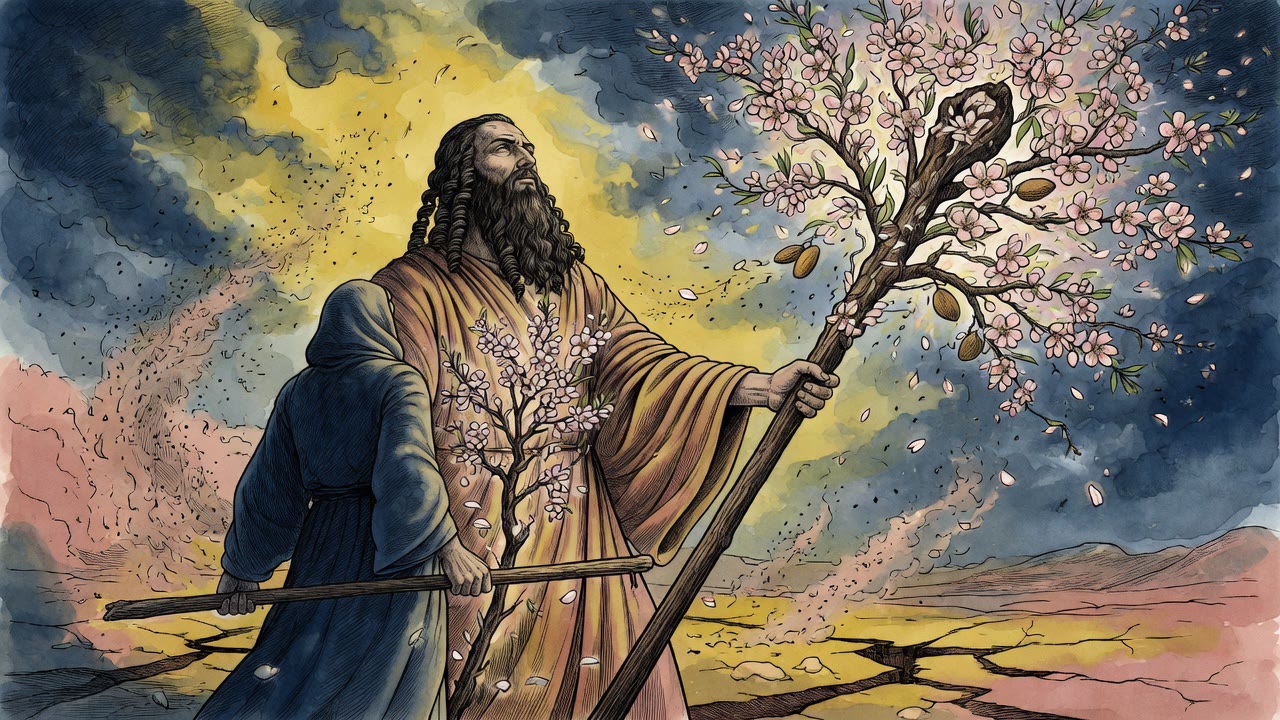
But before the frogs rose, another restraint shaped the plague. God told Moses to say to Aaron: stretch out your hand with your staff over the rivers, canals, and pools.

Aaron did it, not Moses.

The reason reached back to the basket in the reeds. The Nile had held Moses when Pharaoh's decree hunted Hebrew boys. It had carried him, sheltered him, delivered him into the arms of Pharaoh's daughter. That water was part of Egypt's world, but for Moses it was also the first road of rescue.

So he could not strike it. Gratitude stood between his hand and the river. Aaron raised the staff instead, and the water gave up the plague.

The Small Thing Took the Palace

Pharaoh's court understood staffs, soldiers, snakes, magicians, decrees, and death. It did not understand a frog that could become a nation or call a nation.

That is why the plague lands with such odd power. It refuses grandeur. God does not need a warhorse to invade Egypt. A frog is enough. One creature, one whistle, one multiplying body from the river Pharaoh thought he owned.

Moses stands back because salvation has memory. Aaron stretches out the staff because judgment has timing. The frog rises because creation itself can be summoned against the empire that corrupted it.

By the time the plague ends, Egypt has learned that what comes from the water can be both rescue and ruin. The Nile once saved Moses from Pharaoh. Now, through Aaron's hand, it sends a small, ridiculous army into Pharaoh's house.


← All myths
From the tradition

Sources

2 sources

The texts this telling draws on, in full. Open a card to read inline, or expand it for a wider, quieter read.

Shemot Rabbah 10:4Shemot Rabbah

In the Book of Exodus, we read, "The Lord said to Moses: Say to Aaron: Extend your hand with your staff over the rivers, over the canals, and over the pools, and cause frogs to ascend upon the land of Egypt" (Exodus 8:1). But why Aaron? Why not Moses directly?

Rabbi Tanchum, as quoted in Shemot Rabbah, offers a beautiful reason. The Holy One, blessed be He, says to Moses: "The water that protected you when you were cast into the Nile will not be stricken by you." The very river that cradled Moses as a baby, saving him from certain death, would be spared his direct involvement in bringing the plague of blood. It's a powerful image of gratitude and respect.

So, Aaron extends his hand, and "the frogs ascended and covered the land of Egypt" (Exodus 8:2). But why frogs in the first place? Shemot Rabbah gives us another insight: because the Egyptians were enslaving the Israelites and forcing them to deal with "repugnant creatures and creeping animals." It was a way to humiliate them. So, in a sense, the plague of frogs becomes a divine act of middah k’neged middah, measure for measure. The Egyptians subjected the Israelites to disgusting tasks, and now they are inundated with disgust themselves.

The scene: you pour yourself a cup of water, and it's filled with frogs!

Now, here's where the story gets even more interesting. The Torah tells us, "And the frogs [hatzfarde’a] ascended and covered…" Notice anything peculiar? The Hebrew word for frogs, hatzfarde’a, is in the singular.

This little detail sparks a debate in the Midrash (rabbinic interpretive commentary). Rabbi Akiva says it was just one frog! A single, super-frog that then spawned and multiplied until it covered the entire land of Egypt. Quite a visual, isn't it?

But Rabbi Elazar ben Azarya isn't buying it. He playfully chides Rabbi Akiva, saying, "Akiva, what are you doing engaged in aggada?" Aggada refers to the storytelling, the non-legal parts of the Talmud. Rabbi Elazar suggests Akiva stick to what he knows best – halakha, the Jewish legal code, especially complex areas like "the laws of leprosy and impurity of tents." In other words: your expertise is in matters of Jewish law, not fanciful tales!

Rabbi Elazar offers a different explanation: "There was one frog that whistled to [the others], and they came." A single frog acted as a sort of signal, summoning the rest of the amphibious army.

Finally, "The magicians did so with their spells, and caused the frogs to ascend upon the land of Egypt" (Exodus 8:3). The Shemot Rabbah explains that the Egyptian magicians believed these actions were the work of demons. They thought they could replicate the miracle through dark magic.

So, what do we take away from this story of frogs? It's more than just a tale of a slimy plague. It's about divine respect, poetic justice, and the power of storytelling itself. It's about the reminder that even in the midst of hardship and suffering, there can be meaning, and even a bit of humor, if we look closely enough. And it begs the question: what kind of frog story do you believe?

Full source
Shemot Rabbah 9:2Shemot Rabbah

In the story of the Exodus, a staff becomes a symbol of divine power, a tool for liberation, and, surprisingly, a way to deal with really stubborn people.

The book of Shemot Rabbah, a collection of rabbinic interpretations on the Book of Exodus, sheds some light on this. It begins with the verse, “Then you shall say to Aaron: Take your staff” (Exodus 7:19). The rabbis connect this to another verse, "The staff of Your strength the Lord will send from Zion" (Psalms 110:2). But what does it mean?

The Midrash (rabbinic commentary) suggests that God uses the staff to subdue the wicked. But why a staff?

The Midrash draws a rather unflattering comparison. It says the wicked are likened to dogs, quoting, “They return in the evening, they howl like a dog” (Psalms 59:15). And how do you deal with a pesky dog? Well, back then, apparently, the answer was with a stick. Just as a dog might be corrected with a staff, so too, the wicked are "beaten" – metaphorically, of course – into submission.

Now, before we get too caught up in the imagery, let’s remember what's at stake. This isn't about literal violence, but about the struggle between good and evil, between freedom and oppression. Pharaoh, in this context, represents the ultimate oppressor. He’s stubborn, resistant to reason, and deaf to the cries of the Israelites.

So, God tells Moses, through the Midrash, that if Pharaoh demands a sign, a wonder to prove God's power, the response should be to strike with the staff. “Say to Aaron: Take your staff” (Exodus 7:19). It's a direct, assertive act. It's saying, "Enough is enough. I will show you my power". The staff becomes a symbol of divine authority, of God’s unwavering commitment to justice.

Is it a bit harsh? Maybe. But consider the context. The Israelites had suffered generations of slavery. Pharaoh had repeatedly refused to let them go. Sometimes, the Midrash suggests, you need a clear, decisive action to break through the stubbornness of injustice. The staff, in this case, isn't just a tool; it’s a statement.

What does this all mean for us today? Perhaps it’s a reminder that sometimes, confronting injustice requires more than just polite conversation. It requires a firm stance, a clear voice, and a willingness to challenge the status quo, even when it's uncomfortable. Maybe our "staff" isn't a literal object, but our conviction, our voice, our commitment to doing what's right, even when it's difficult.

Full source