God Spoke From Thorns Because Israel Was Burning
Moses sees fire in a thornbush that does not consume the branches. Shemot Rabbah hears God choosing to stand inside Israel's suffering before speaking.
Table of Contents
 Click for full size
The Bush Burned and the Branches Did Not Fall
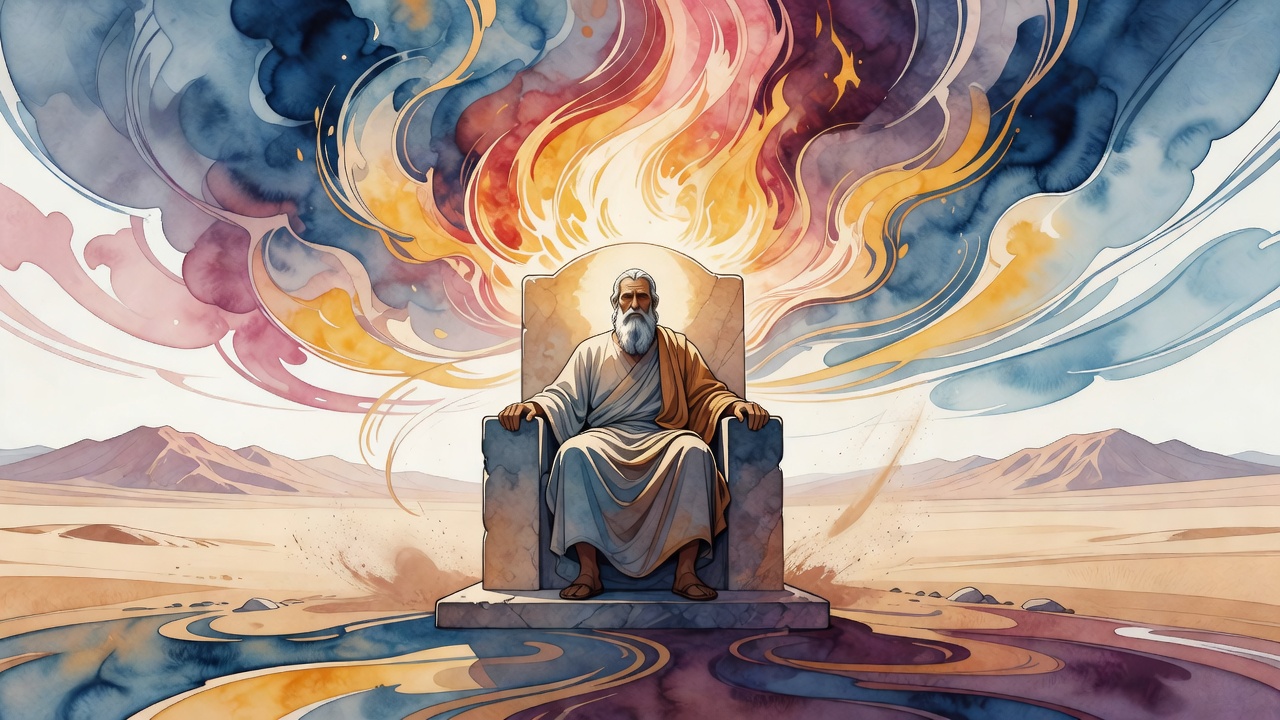
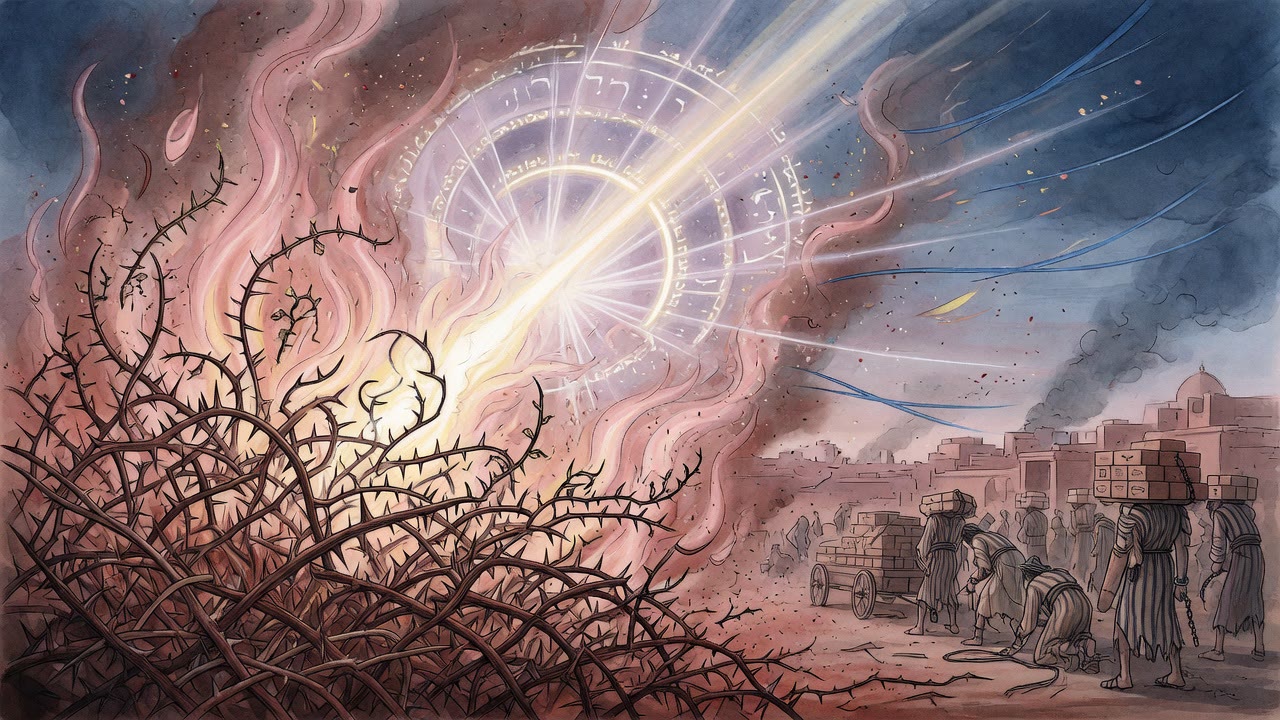
Moses was behind the wilderness, pasturing Jethro's sheep on the far side of the desert, when the mountain appeared at the edge of the ordinary. He turned aside to see why the bush was burning without being consumed. The flame held steady inside the thornbush and the thornbush held steady inside the flame, and neither canceled the other. He turned to look, and the voice came. Shemot Rabbah hears the choice of thornbush as theologically deliberate. God did not call from a cedar. He did not call from a tower or an open sky or a mountaintop unencumbered by thorns. He called from something that catches and holds and sometimes draws blood. Israel was in Egypt. Israel was burning. God spoke from a place that shares Israel's condition. The bush was not consumed because Israel would not be consumed. The fire was not distant because God was not distant. Before any instruction, any mission, any confrontation with Pharaoh, there was this: God standing in the thorns.
Heaven Felt the Affliction Before Moses Arrived
The Midrash digs into Psalm 91:15: I am with him in trouble. God had heard the cries from Egypt and from the crossing of the sea. The sages went further: in all their trouble, He was troubled. This is not legal language or administrative language. It is the language of shared suffering, where the one who governs is not insulated from what the governed endure. The bush burning without consuming is the image of that shared condition. Israel burns in Egypt and does not dissolve, and God is in the burning rather than watching it from outside. When Moses removes his sandals on the holy ground, he is standing in a place where divine grief has been present longer than he has. The holiness of the ground is partly the holiness of sustained mourning, the kind that does not convert itself into distance.
Job's Suffering Prepared a Place for God's Answer
The tradition associated with the view of Rabbi Ishmael, that Job lived in the time of Moses, places Job's suffering alongside the Egyptian bondage in the same generation of divine reckoning. Job asked the hardest questions from inside the whirlwind. Why does the innocent suffer? Where is justice found when the wicked prosper? God answered Job not with an explanation but with a counter-question: where were you when I laid the foundations of the earth? The vastness of the answer did not resolve Job's pain. It located his pain inside a creation whose scope he could not fully measure. The burning bush makes the same move. Moses cannot understand why Israel suffers in Egypt. God does not explain the mechanism. God shows him a fire in a thornbush and says: this is where I am while it is happening. The answer to suffering is not always a reason. Sometimes it is a location.
Three Things Cannot Be Used for Healing
Among the traditions preserved in Shemot Rabbah is a ruling about what may not be used as medicine. Three things cannot heal. The Midrash names them in the context of creation's early days, when certain objects or substances were set aside from ordinary use and made into categories that no amount of pain or necessity could make available for remedy. This is a strange boundary to find inside the story of the burning bush, but Shemot Rabbah makes the connection visible: some things exist at a level where human need cannot override what they represent. Fire that does not consume. Ground that is holy. Objects that may not be used for healing regardless of suffering. The wilderness is full of this kind of boundary, where what is forbidden is not forbidden because it is worthless but because it is too charged with another meaning to be reduced to utility.
The Tablets Were Written on Both Sides With Miraculous Letters
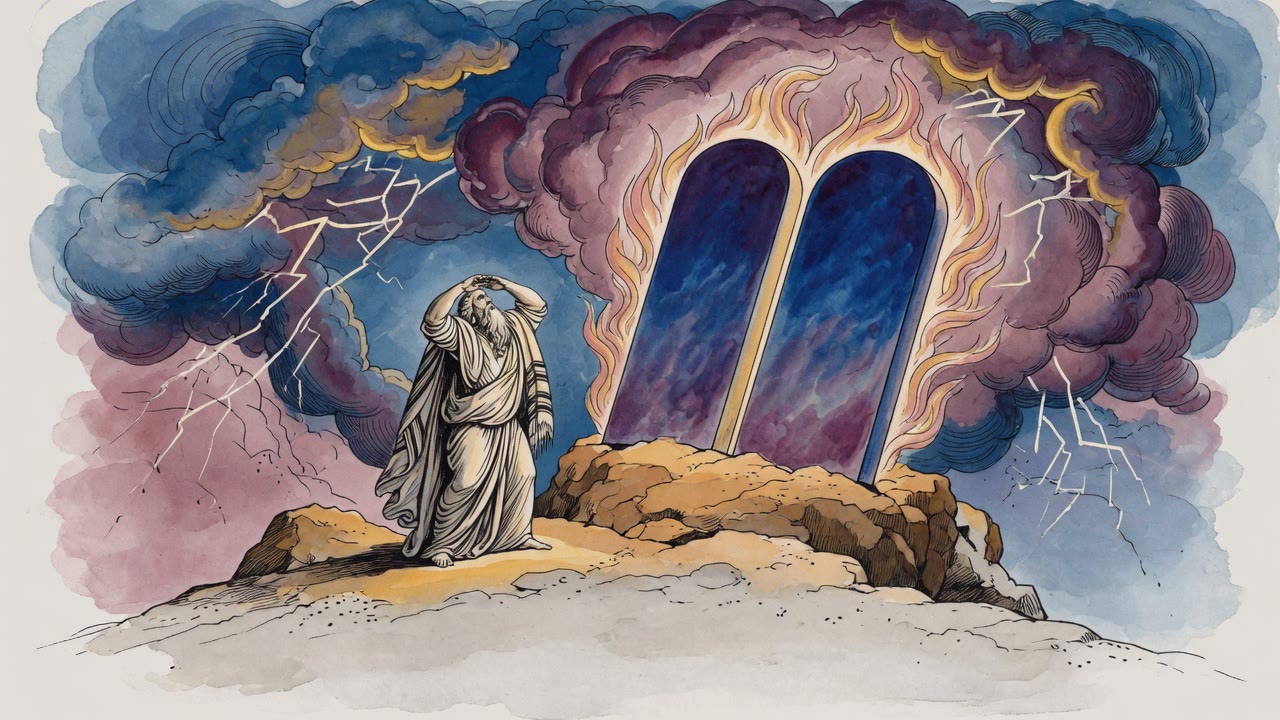
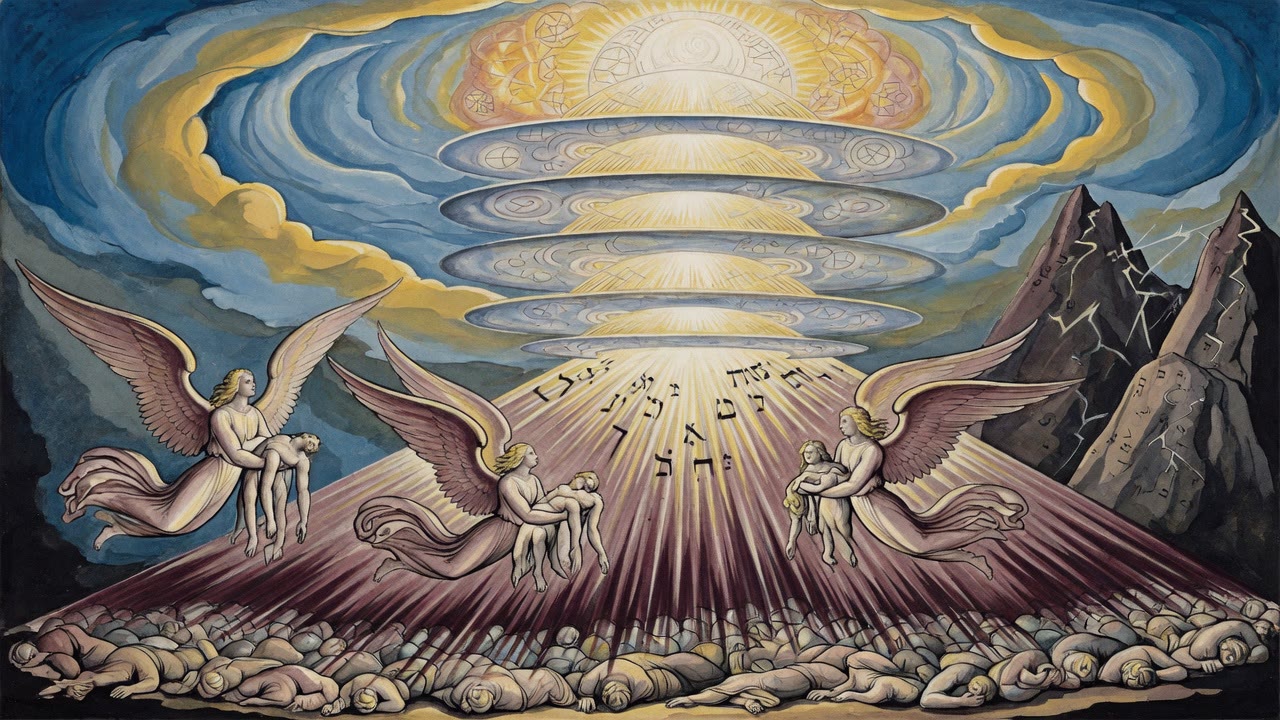
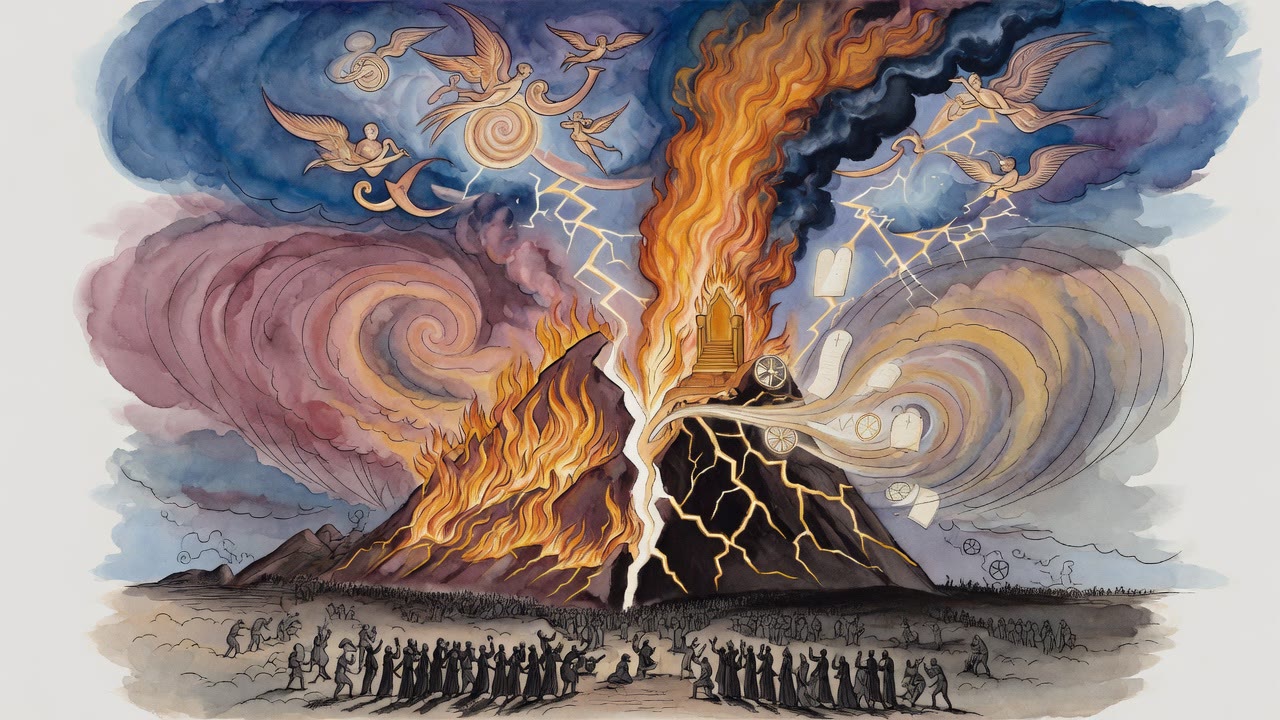
When Moses received the two tablets of stone at Sinai, they were written on both sides. The writing was the writing of God, engraved in stone. The Midrash adds the detail that made the letters miraculous: the letters were cut through from one side to the other, and yet the letters that had hollow centers, the samech and the final mem, held their middles in place without any support. In an ordinary stone, cutting a circle out of the center causes it to fall. These letters held. The writing was legible on both sides simultaneously. Some sages read the Hebrew word for engraved, charut, as also meaning freedom, cheyrut. The letters that stood in stone without falling were themselves an image of liberty, the kind that does not depend on external support to remain upright. God had spoken from thorns. God had written in stone. In both cases, the material was common and the result was impossible.
← All myths