Moses Stood Between Heaven and a People That Kept Falling
The tablets were still warm in his hands when he saw the calf. He broke them. Below the mountain, Israel was already dancing.
Table of Contents
 Click for full size
Love and Truth Voted Before There Was a People
Before a human being had breath, God asked the angels. Love said, Make them, they will show love. Truth said, Do not make them, they are full of lies. Righteousness said, Make them, they will chase justice. Peace said, Do not make them, they are full of conflict.
God took Truth and threw it to the earth, then went on with the making. The vote that should have stopped the world did not stop it. It only moved inside it.
That quarrel never ended. It waited in the wilderness for a man who would have to live between the angels' verdict and the camp that proved them right, again and again, and still be told to lead.
Moses Climbed Into a Court That Did Not Want Him
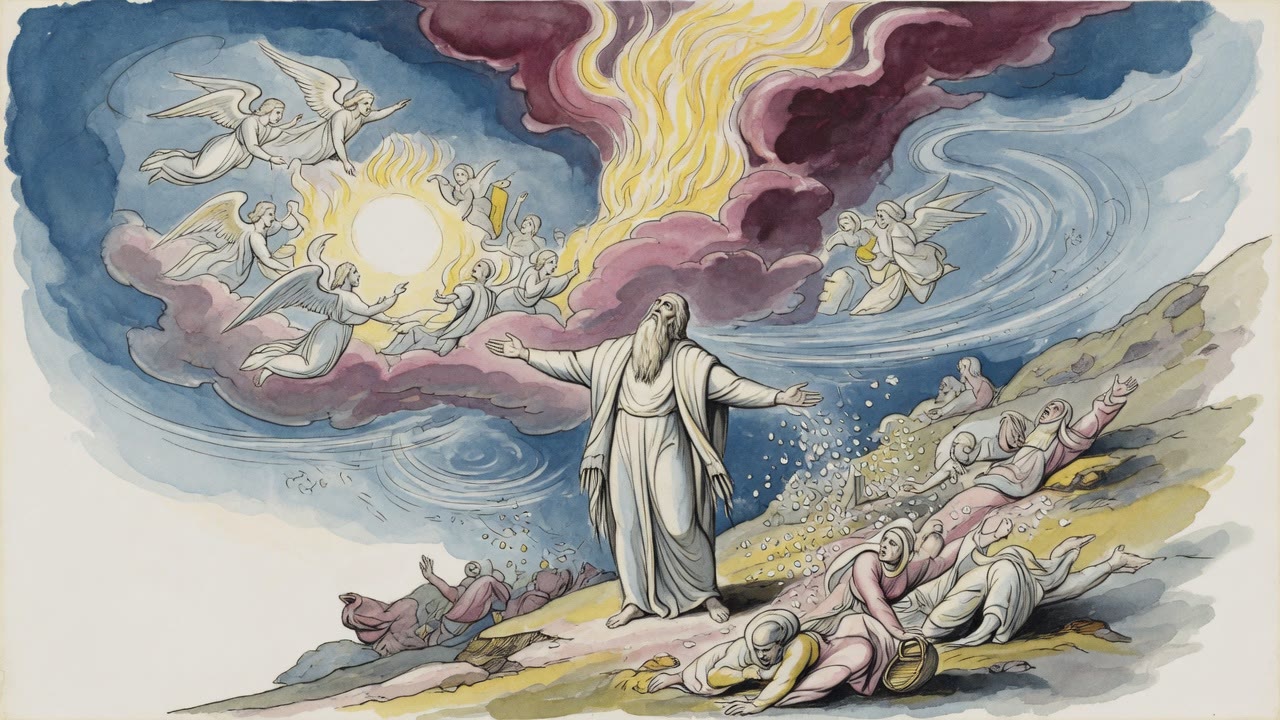
When Moses went up to take the Torah, the angels closed around him. A human being had no right here, they said. The Torah belonged in heaven. Moses gripped the Throne and spoke.
What is written in it? Honor your father and your mother. Do you have fathers and mothers? Do not murder. Do not steal. Do not covet. Are you surrounded by enemies? Do you have property to want?
The angels fell silent. What he needed to carry down was exactly what they did not need. Torah was made for people who live with hunger and loss and a neighbor's house in sight.
On that same height he was shown rooms already built: seven divisions of Gan Eden (גן עדן), the Garden, each twelve myriads of miles, silver and gold and glass, a third division where Moses and Aaron would one day preside over the generation that came out of Egypt. The destination was finished. The people who were supposed to walk toward it were still at the foot of the mountain, counting the days he had been gone.
He Broke What They Had Already Broken
Forty days. They made a calf. They declared the gold their god who had brought them out of Egypt. God spoke harshly to Moses. Go down. The honor of being here was for Israel's sake, and Israel has become disloyal. I will consume them and make of you a great nation.
Moses would not take the offer. Whether pious or sinful, they are still Yours, he said. If a three-legged bench cannot stand, how will a one-legged one stand? Do not fulfill the Egyptian magicians who said a star of blood would walk before this people.
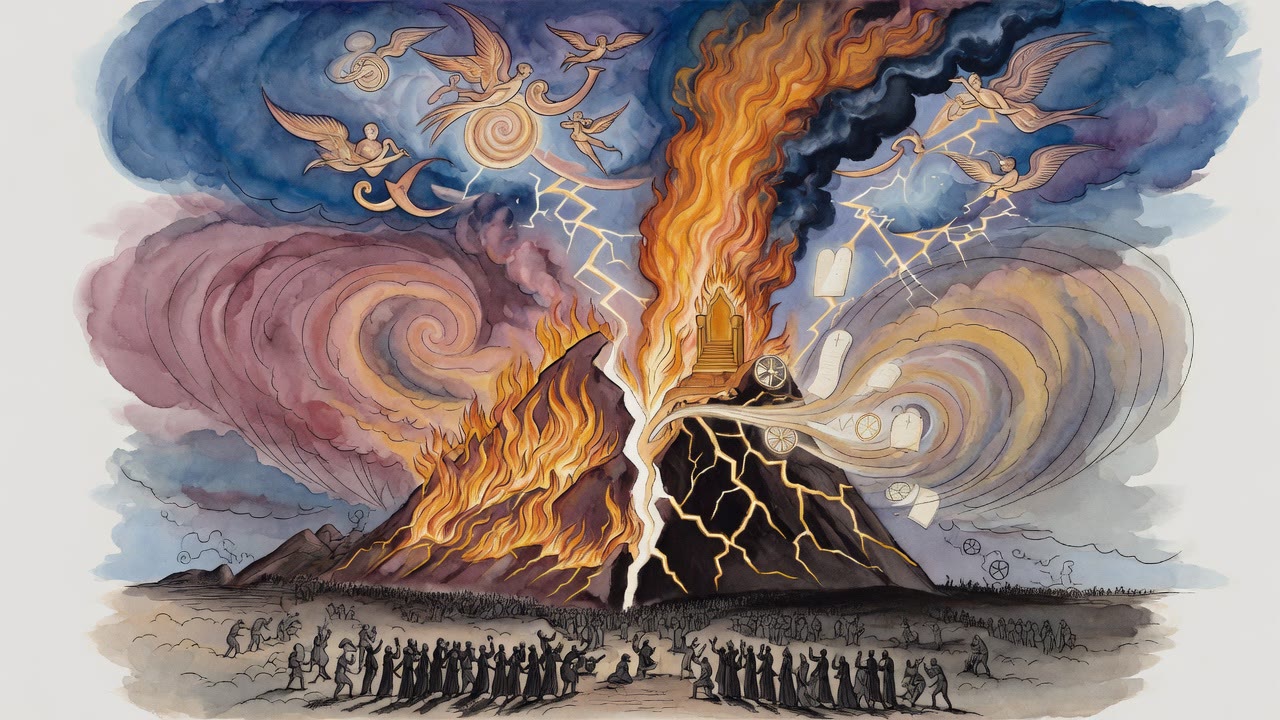
He came down with the two tablets still in his hands. He saw the calf. He saw the dancing. He broke the tablets. It was not a loss of control. If Israel had already broken the covenant before receiving it, the stones were not yet binding on them. The break was mercy wearing the face of wreckage.
God answered him point for point. They believed in Egypt; they now bow to an idol. They sent young men with burnt offerings; they now offer to gold. They said at Sinai, You are our God; they now say the calf is. Moses kept arguing anyway. He had seen the rooms of Paradise. He would not let the camp be erased on the way there.
Fire in the Camp and Bread They Loathed
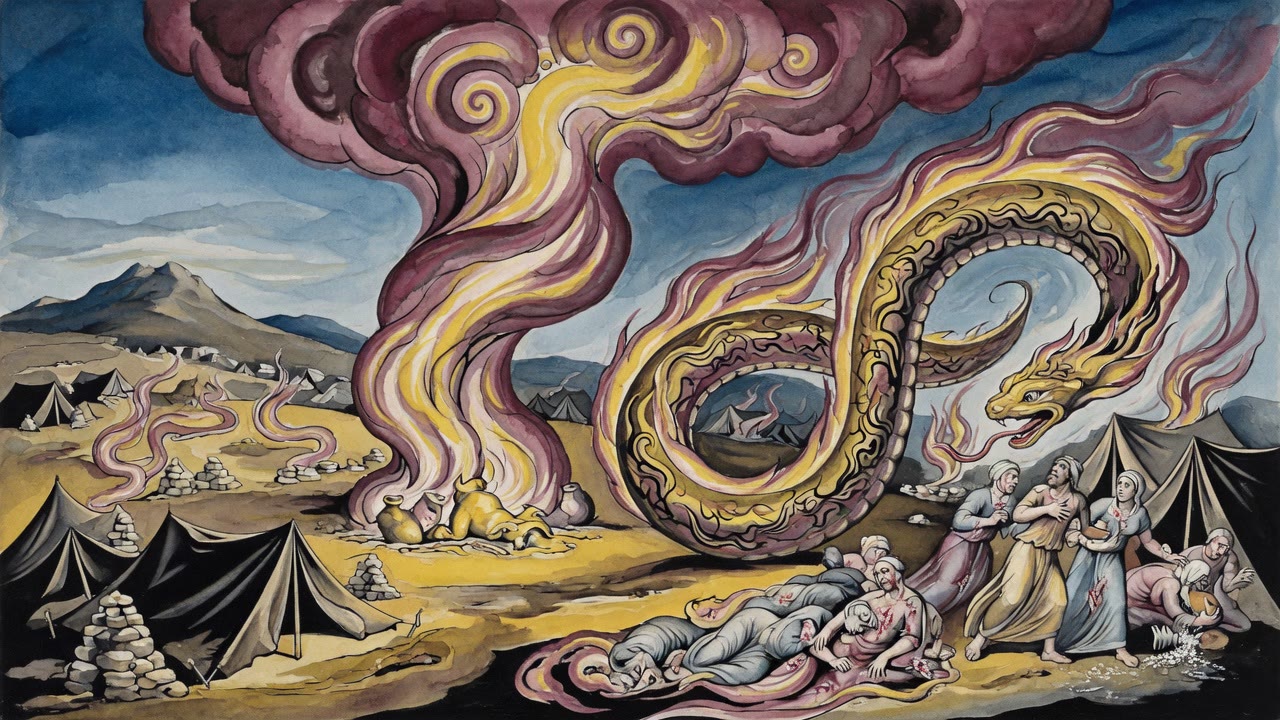
Celestial fire fell among the tribe of Dan and among the mixed multitude that had come out of Egypt with them. It consumed earthly fire. It spread so fast no one could say how far it had gone. The elders came to Moses like a king's son who has angered his father and runs to the father's friend. Deliver us as sheep to slaughter, they said, but not to this.
They should have prayed themselves. They sent him instead. Moses prayed at once. God halted the fire, then did not take it back to heaven. Fire like that, moved, would have eaten everything it touched. It found a home on the altar of the Tabernacle and stayed, the same fire that would later take Aaron's sons and Korah's company, the fire every mortal sees at the hour of death.
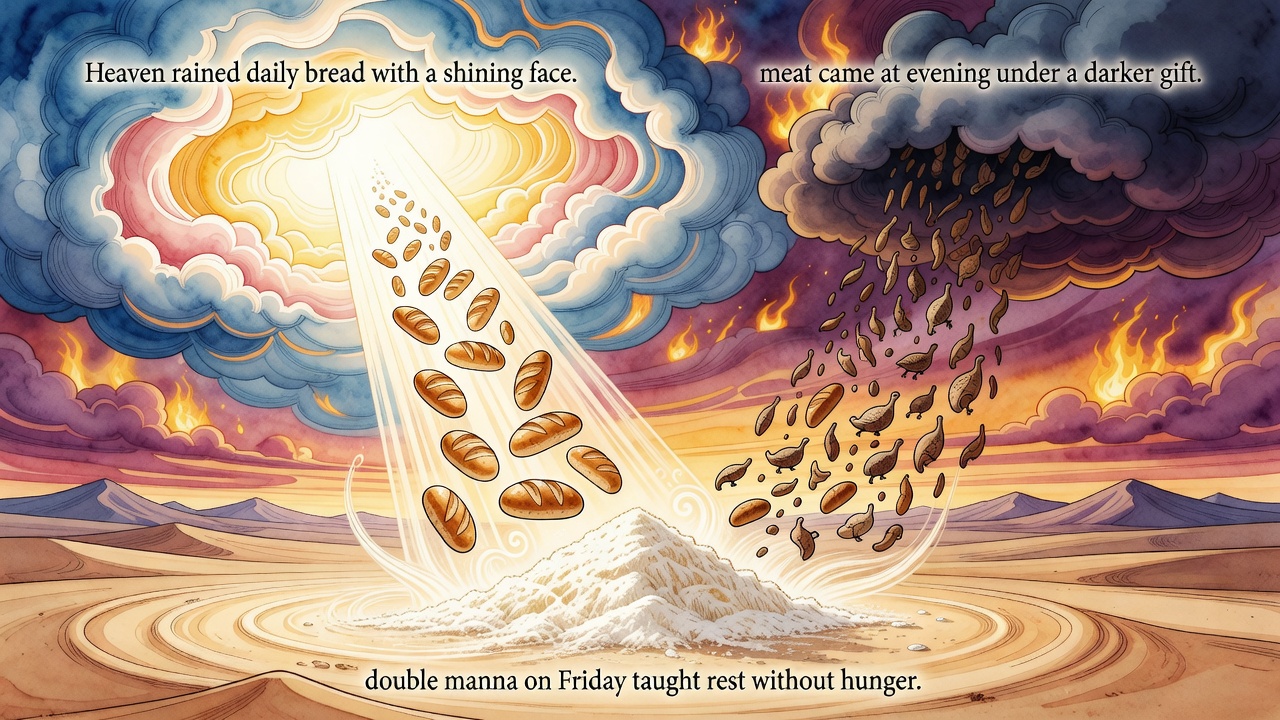
Manna fell every morning and tasted of whatever the eater wanted. For forty years it said they were not in Egypt. Then they called it contemptible. "Our soul loatheth this light bread" (Numbers 21:5). They wanted meat. They wanted cucumbers and garlic. A voice from heaven pointed at the serpent, still eating dust, and told the camp to look. Even the cursed creature did not despise its food. They did.
Moses tried to talk them out of the craving. God told him beforehand it would fail. Quails came down as thick as snow, filling the air until they covered the sun, settling two cubits off the ground so no one had to stoop. Many died under the falling birds before they ever tasted them. The rest loathed the flesh more than they had lusted for it.
Three Times He Thought They Could Not Pay
Fear took Moses three times, the same fear, a human frame staring at a demand that looked larger than a people.
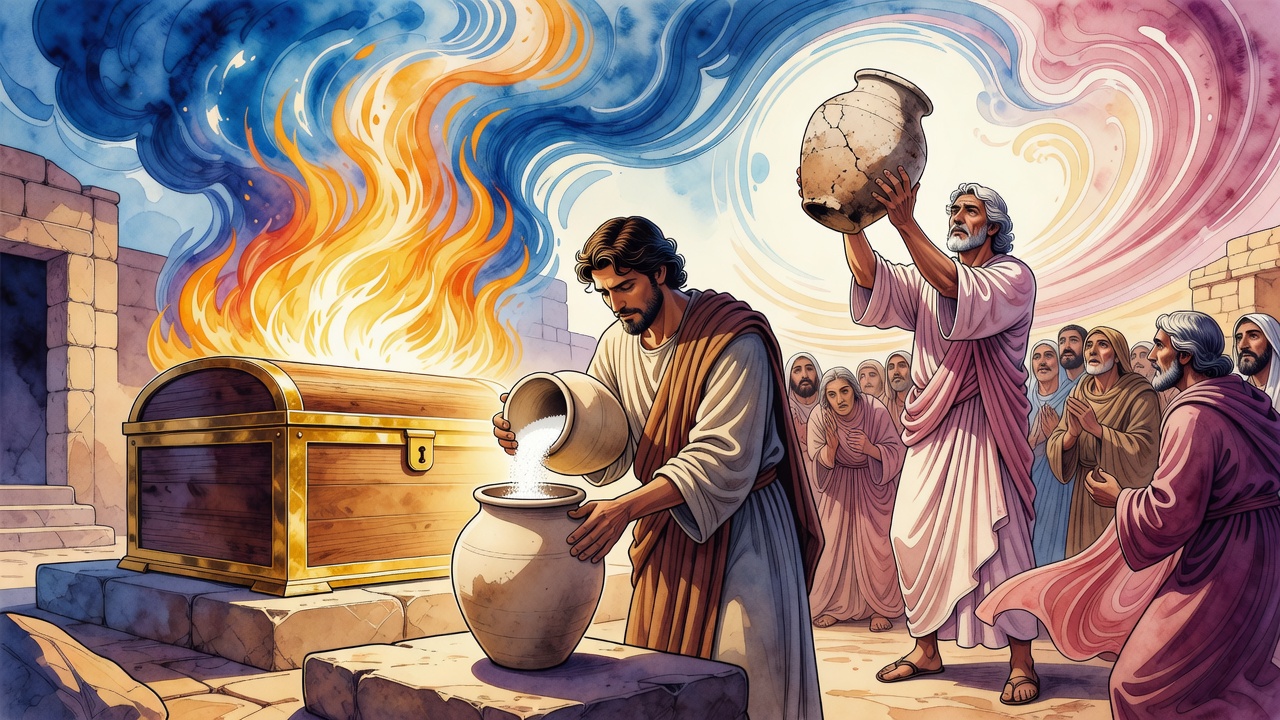
Once, when God said each must give a ransom for his soul. Moses said, If a man gave all he had, it would not suffice. God said, I do not ask what is due Me. Half a shekel will suffice.
Again, when God spoke of offerings, bread for the fire. Moses trembled. Lebanon is not enough to burn, nor its beasts enough for a burnt offering. God said, One sheep in the morning, one in the evening.
The third time, God was giving instructions for the sanctuary. Moses cried, Heaven and the heaven of heavens cannot contain You. How will this house? God said, Twenty boards to the north, as many to the south, eight in the west, and I will draw My Shechinah (שכינה), the Presence, together until it finds room under them.
Moses stood in the gap with broken tablets behind him, fire on the altar, manna despised in the pots, and a people who kept falling. Heaven asked less than it was owed. He kept standing there anyway, between a court that had voted no and a camp that would not stop proving the vote right.
← All myths