Israel Was Counted, Wounded, and Sent Forward
The nations watching in the wilderness said these children had Egyptian fathers. God told Moses to count them house by house and settle the question.
Table of Contents
 Click for full size
The Question the Nations Asked
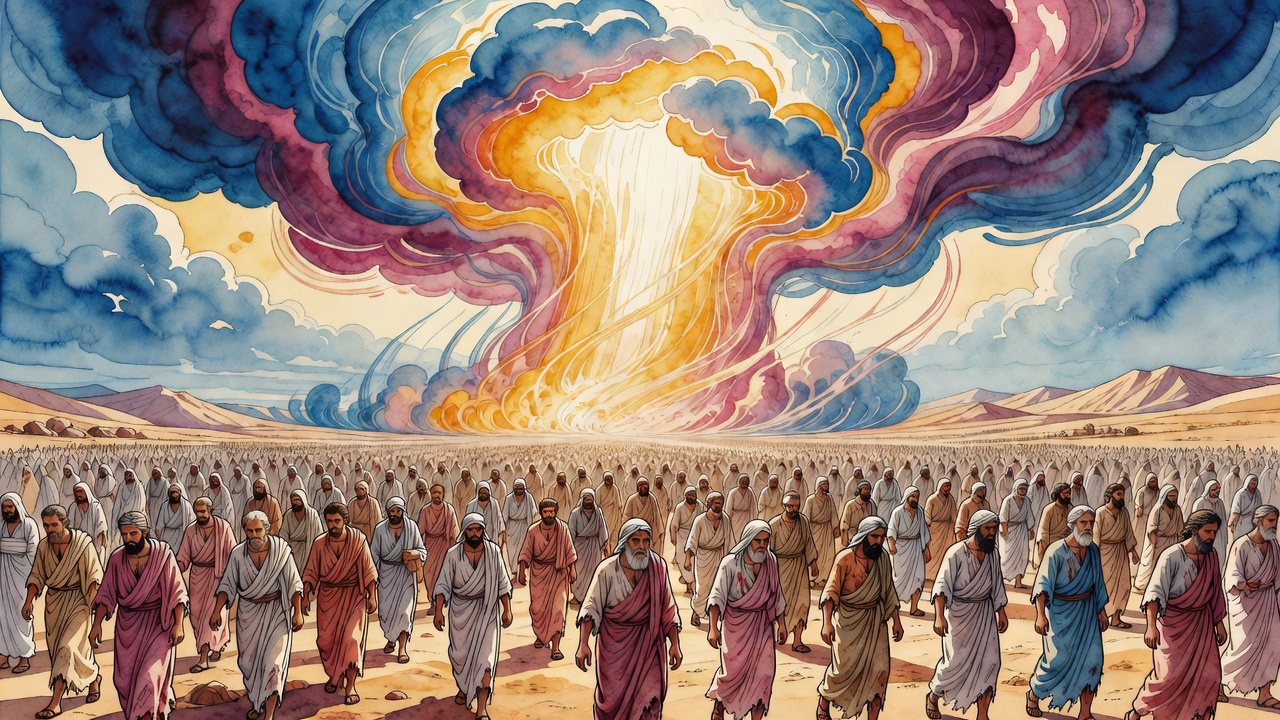
The pillar of cloud went in front of them by day and the pillar of fire at night, and neither one ever moved out of position. Bread came down out of the sky. Water came up out of the ground and climbed the hills after them. Quail blew in off the sea, and the nations watching the column cross the desert said to one another, these are the children of God.
Other voices in the same crowd said something else. Children of Egyptians, more likely. The Egyptians had those women in their hands as long as they had the men.
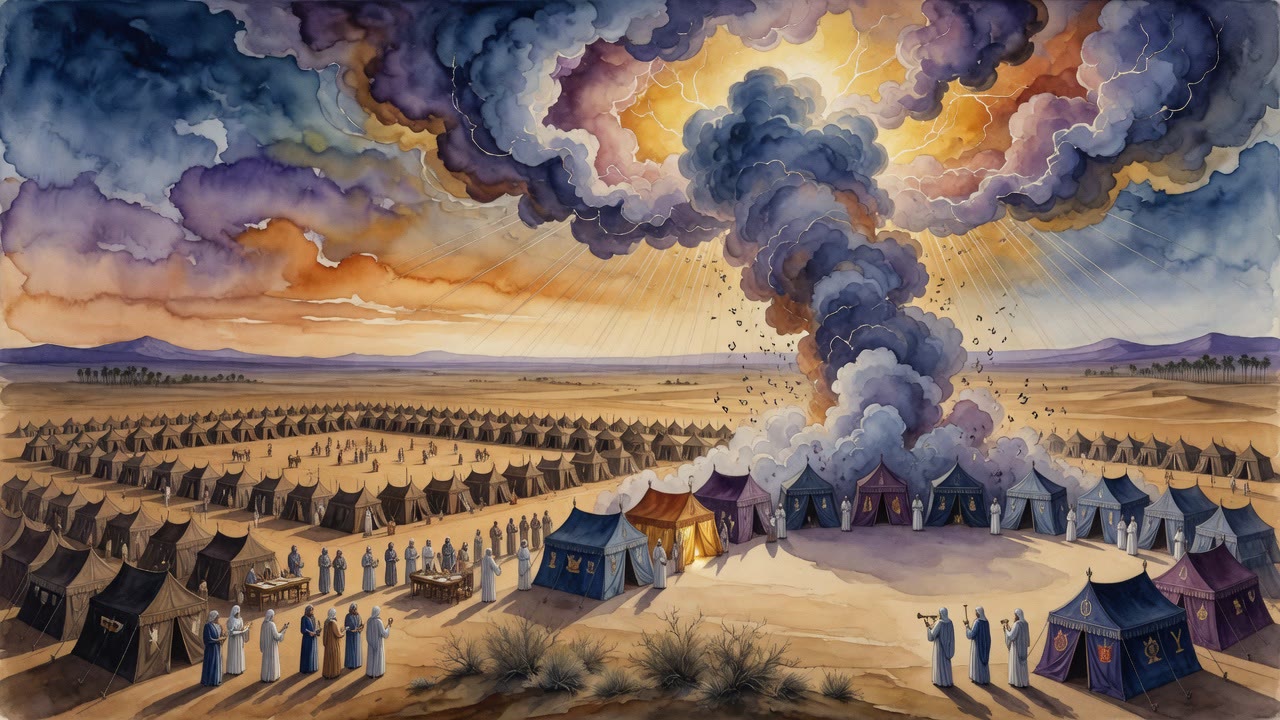
The word came down on Moses the moment it was said. Count my children. Take the sum of them by their fathers' houses, so that everyone will know whose children they are. The sons of Reuben. The sons of Simeon. One house at a time, out loud.
The water for testing a suspected wife was drawn into the bronze basin in the courtyard, and that basin had been beaten out of the mirrors the women carried out of Egypt. God had told Moses to take those mirrors and no others, because in all those years in that country they had never once been used for harlotry. The mothers who came out clean would examine the daughters.
Seventy Went Up the Mountain and Seventy Were Killed
Israel gets counted ten times. Seventy souls went down into Egypt. Six hundred thousand men on foot came out of Rameses. Saul numbered them twice, once with lambs and once with pebbles, because the first time every man could hand in a lamb and the second time they were too poor for it.
Joab counted them for David and wrote out two figures, a large one and a small one. He carried the small one in to the king and kept the large one folded in his hand, hoping the lie would hold the death down.
The worst count was never written anywhere. Moses had told the people he would come back down the mountain at the end of forty days, and six hours after they made the deadline out to be up, they went to the seventy elders who had climbed partway with him and been told to wait, and demanded a god to walk in front of them. The elders asked why they wanted to provoke the One who had done every bit of it for them.
The people killed them. All seventy.
Hur stood up and spoke to the crowd harshly, and they killed him too. Then they came into Aaron's tent in a mass and told him to get up and make them a god, and said that if he would not, he would go the way of the man lying on the ground behind them. Aaron looked at the body and built an altar.
Long afterward, when the calf had been forgiven, God told Moses to gather seventy men to stand with him at the Tent. Seventy, to sit where seventy had sat.
Reuben Was Nearly Left Out of the Tally
One man in the count had almost not made it in.
Reuben had gone in to his father's concubine, and for that he was struck out of the number of his brothers. Two things put him back. At the pit he was the one who said do not strike him dead, and do not lay a hand on him, throw him into this pit instead, and he said it meaning to come back at dusk and lift Joseph out. Afterward he put on sackcloth, and fasted, and asked to be forgiven for Bilhah.
When the princes brought their offerings for the altar, one tribe a day, the prince of Reuben came forward on the fourth day with a silver dish, a silver basin, and a gold ladle full of incense. The dish weighed a hundred and thirty shekels, one for each letter that opens the three words he said at the pit. The basin stood for the pit itself, and its seventy shekels for the secret he was holding while he named it. A ladle is a palm, for do not lay a hand on him. The incense was the fasting.
Moses prayed for him by name at the end. Let Reuben live and not die, and let his men be counted.
Stars, Dust, or Sand
Everything else that exists can be measured. Somebody weighed the water in the hollow of a hand, marked out the sky with a span, put the dust of the earth into a measure, set the mountains on a scale and the hills in a balance. One thing came back unweighable. Israel was promised to Abraham as the sand of the sea, which cannot be measured and cannot be counted.
So every man who ever named them named them out of his own feeling. Moses loved them and called them stars. Balaam hated them and called them dust. Hosea neither loved them nor hated them, and called them sand.
Leave sand out of lime and the lime will not hold. Take Joseph out of Egypt and the famine finishes the country. Take Daniel out of Babylon and the wise men of Babylon are lost.
Sand fills itself back in, too. Dig a hole in it in the evening and by morning the hole is level. Every thousand lost in the days of David was standing in the field again in the days of Solomon.
Counting was safe when it was for something. With the banners, and again for dividing the land, nobody was lost to it. In the days of David it was for nothing, and they were.
The Road Edom Would Not Open
Moses sent messengers to the king of Edom, and the message went out as family business. Your brother Israel says: you know everything that has happened to us. Our fathers went down into Egypt and stayed a long time and were badly used there, and the debt was written against our grandfather and both of us owed it, and we are the ones who paid it.
Let us pass through your land. We will not cross a field or a vineyard. We will not drink from a well.
Moses had already told his own people to open their purses on the way through and buy food and water they did not need, so that nobody in Edom could say Israel came through poor and living off the country. The well travels with us and the manna falls, he said. Buy anyway. Let them see what you carried out.
We will keep to the king's road, the message went on, and we will muzzle our animals, and we will not turn to the right or to the left. That last line was the hardest thing in it. On every other border around them they had leave to kill and to take. Inside this one they would not step off the road.
Edom sent back a single sentence. You will not pass through me, or I will come out against you with the sword. Then Edom came out anyway, with a heavy hand and a great army, to say it on the ground where it could be seen. Moab was asked next and would not either.
The refusal had come from further up the road than Edom. Do not provoke them, God had already told Moses, because I am not giving you any of their land.
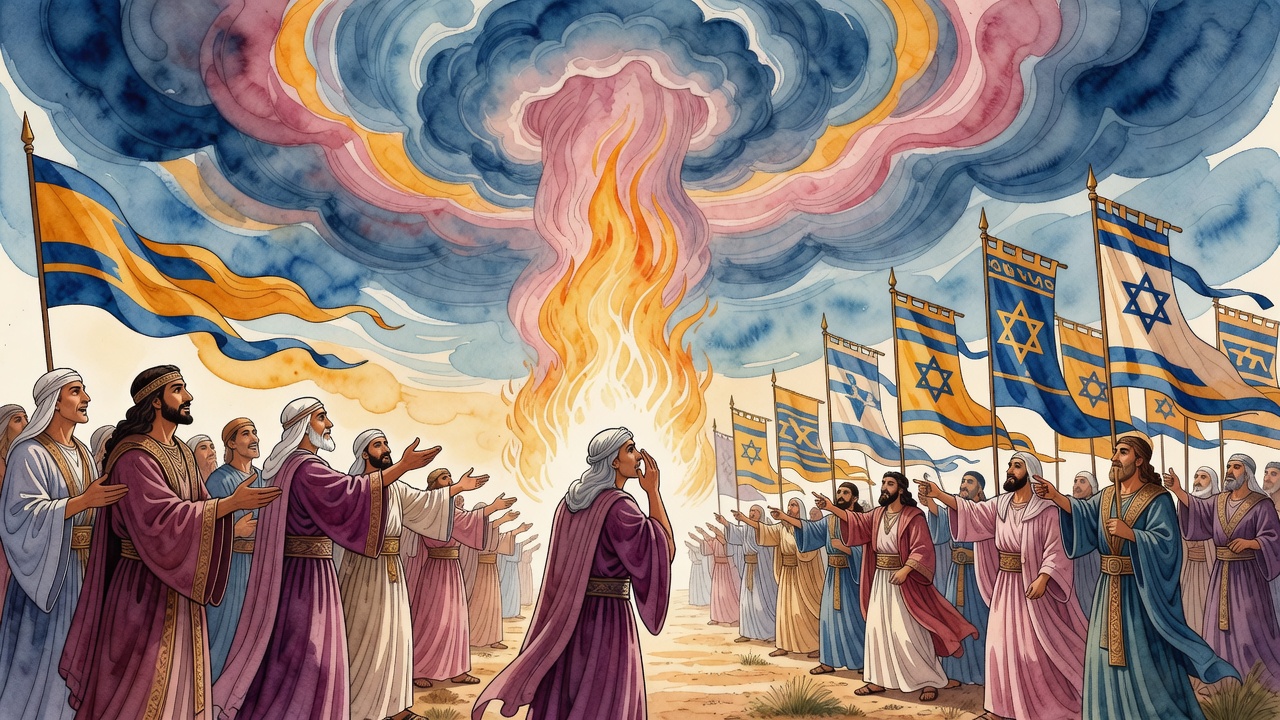
So the column turned, counted and arranged by house and by banner, and walked the long way around.
← All myths