5 min read

Israel Wept One Night and Inherited Tisha B'Av

The spies dressed their homes in grief, made Israel cry through the night, and turned a false funeral into a real date of mourning.

Curated by Arthur · Told by Maggid ·
Table of Contents
  1. Caleb Went to the Graves
  2. The Fruit Was Too Heavy to Hide
  3. Caleb Stole the Silence
  4. The Night Chose a Date
  5. The Land Waited for Different Eyes

The spies did not begin with giants.

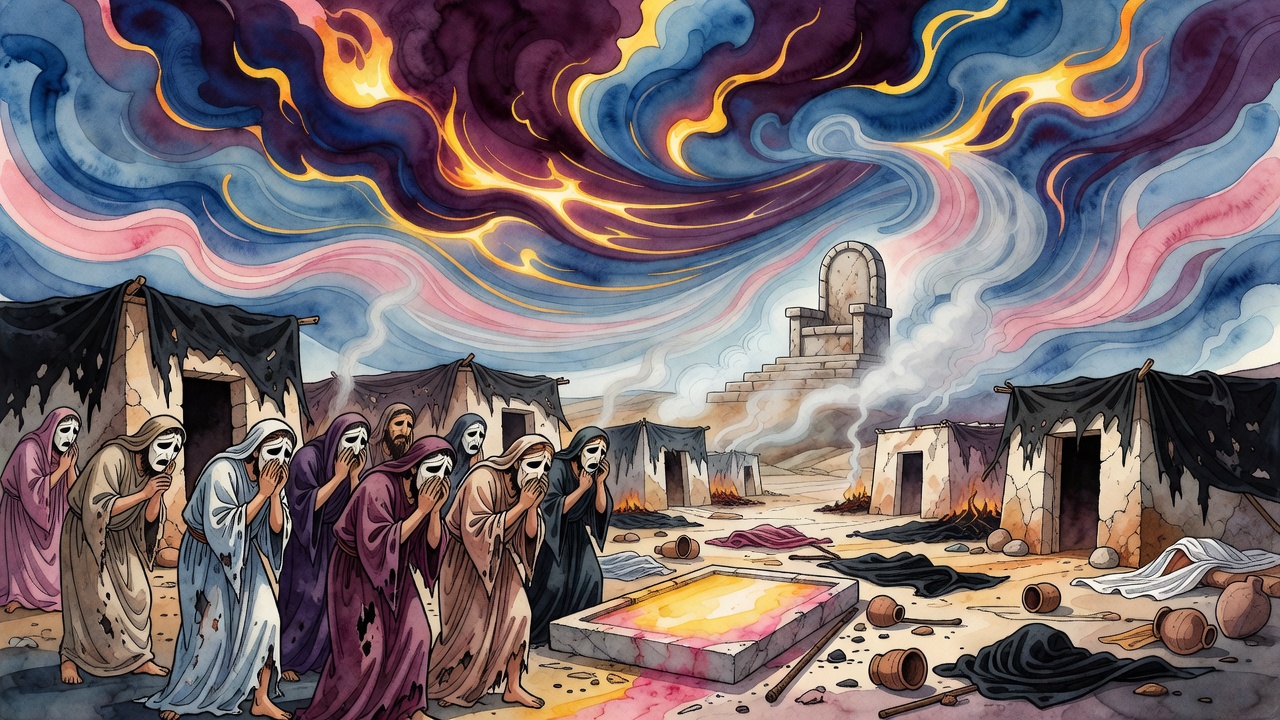
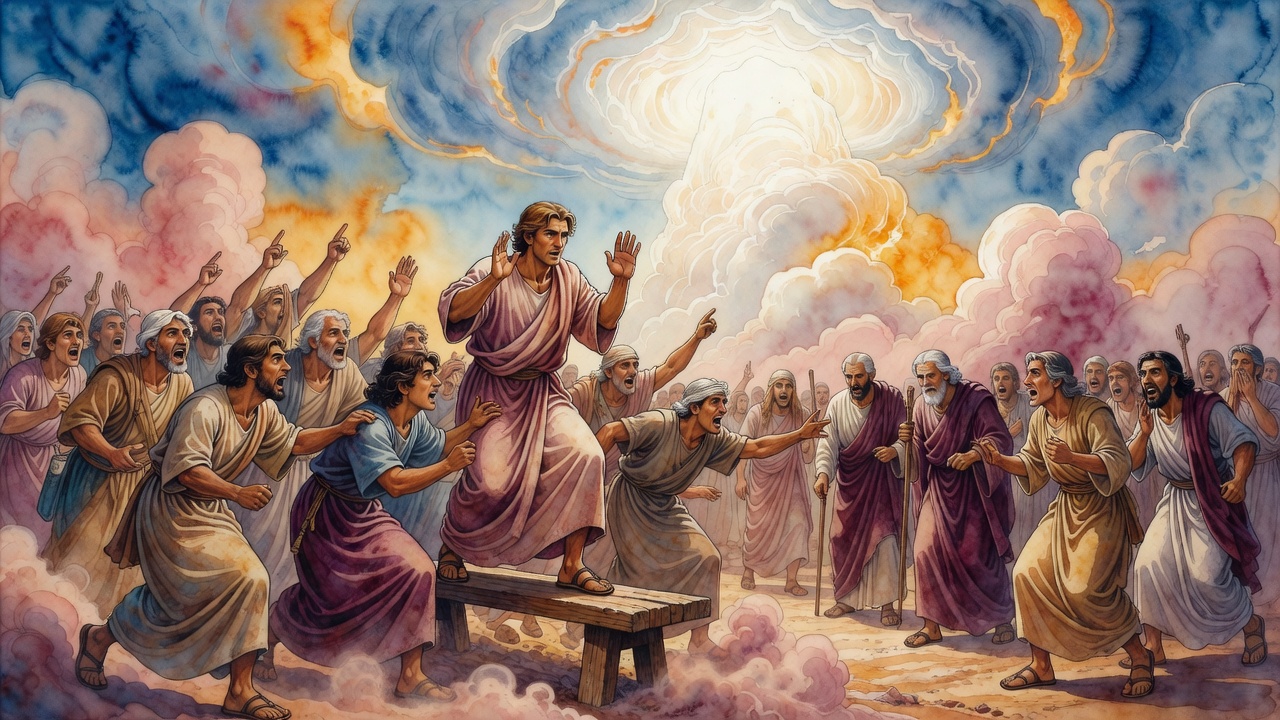
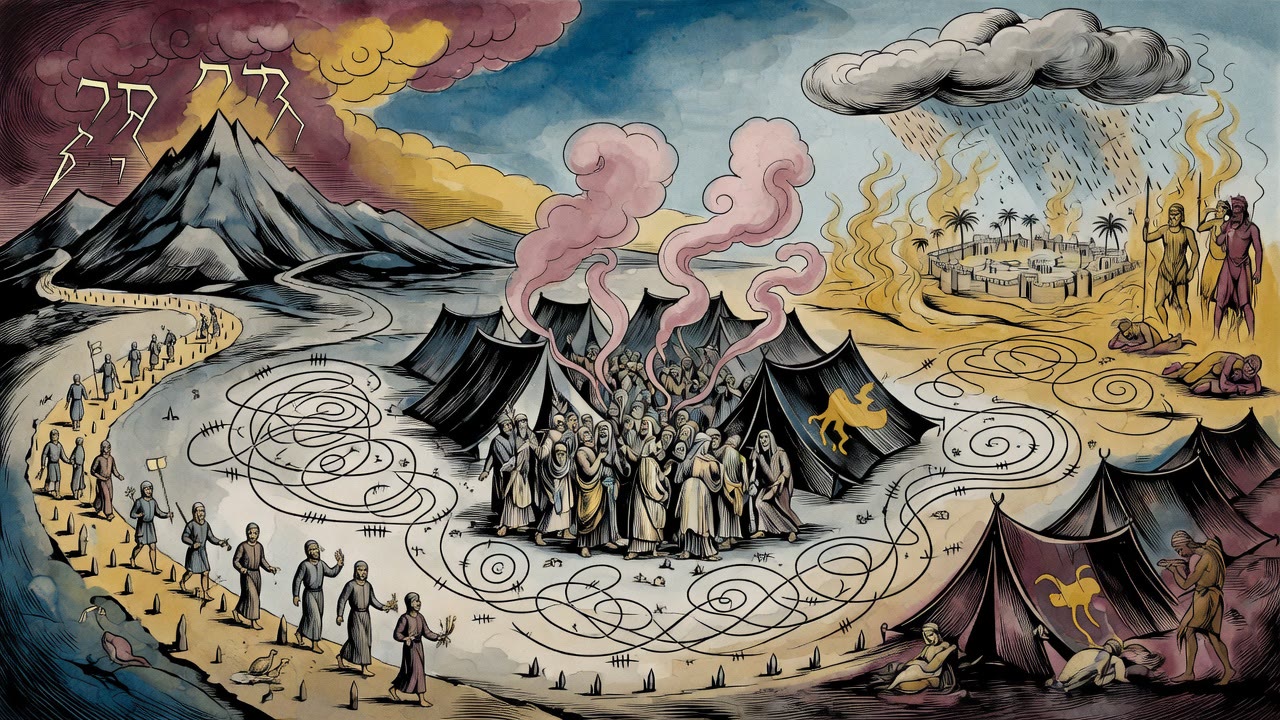
They began with theater. Each man went home, put on the clothing of a mourner, and filled his house with weeping. Children saw their fathers cry. Wives heard names spoken as if the dead had already been counted. Neighbors ran from tent to tent asking what had happened, and the answer spread faster than a trumpet blast.

"Canaan had swallowed the spies alive," they said. "Israel would be next."

Caleb Went to the Graves

Before the report ever reached the camp, Caleb felt the pressure tightening around him.

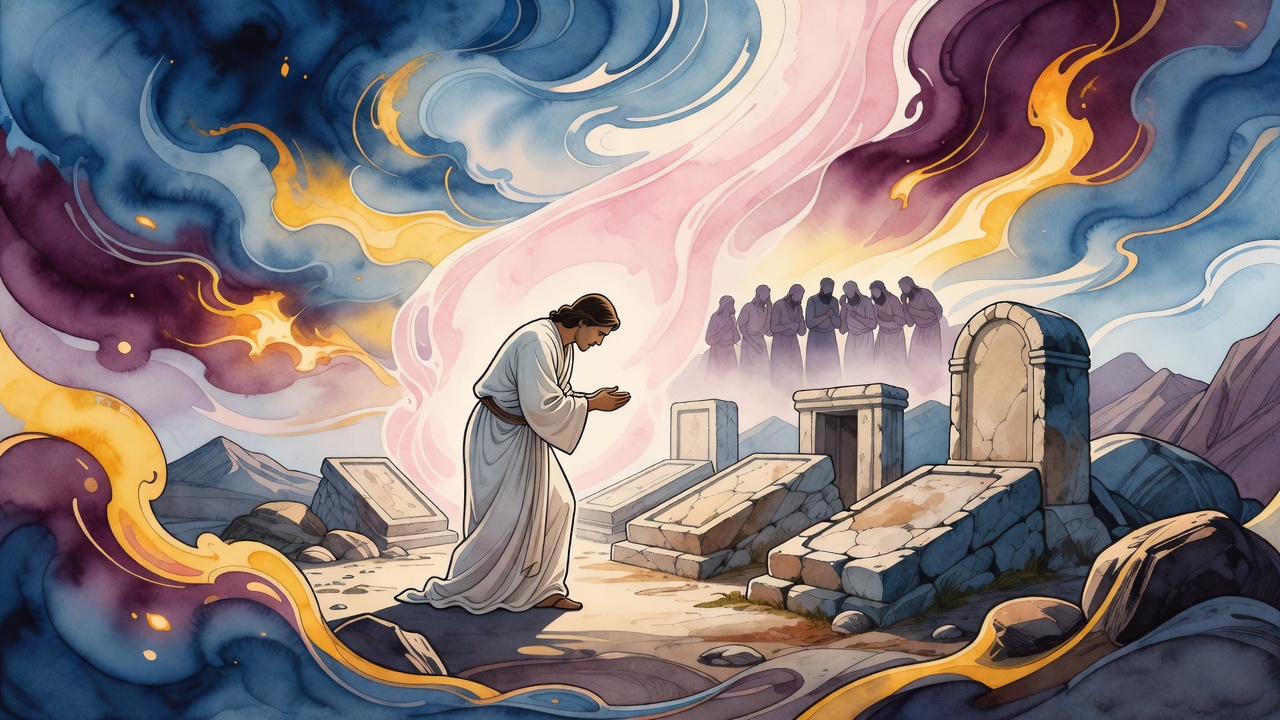
The other spies were princes, men of standing, men whose words could bend a tribe. Caleb knew influence can be contagious. He broke away and hurried to Hebron, to the graves of Abraham, Isaac, and Jacob. There, among the fathers who had received the promise before any of their descendants saw the land, Caleb begged not to be swept into the plot.

He returned carrying no army and no new proof, only a stubborn soul.

Joshua stood with him. The two of them had seen the same land as the others: fortified cities, enormous fruit, people who made ordinary men feel like insects. They did not deny the size of the danger. They refused to let danger become lord.

The Fruit Was Too Heavy to Hide

The land itself testified against the slander.

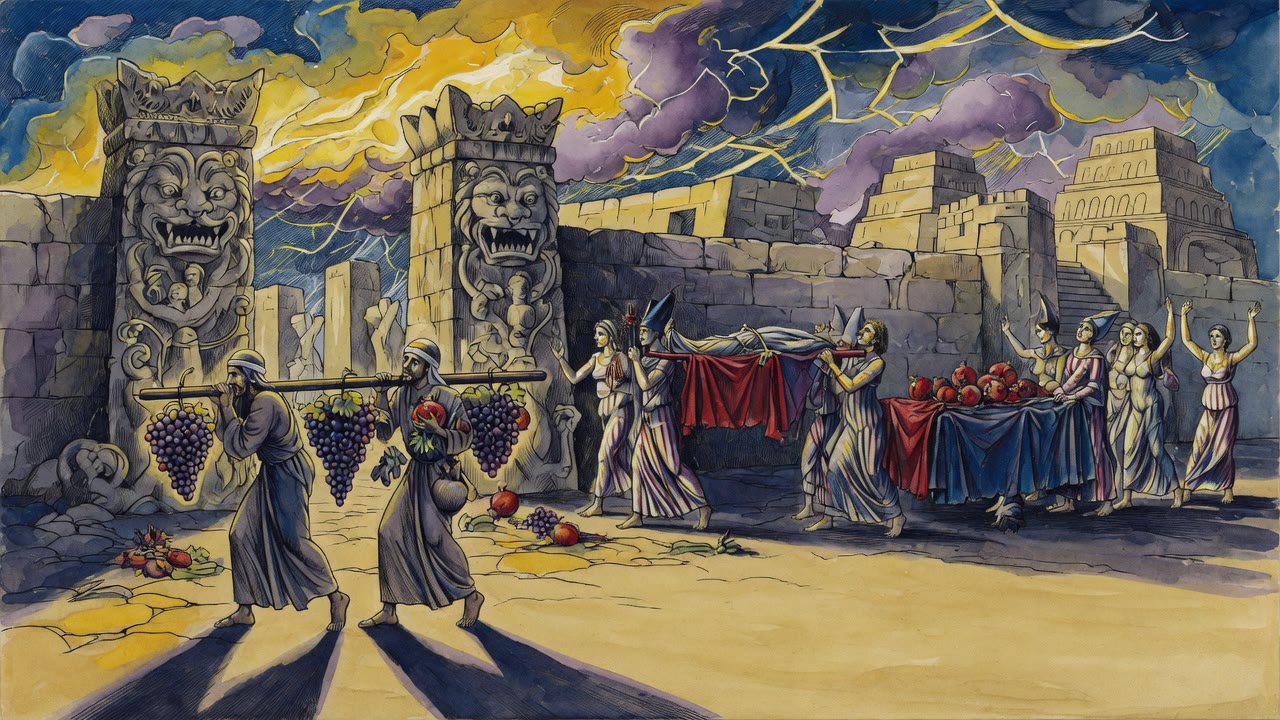
The spies carried fruit so heavy that it turned the march home into a procession. Grapes, figs, pomegranates, the bounty of a land that did not whisper abundance but shouted it. Caleb wanted the people to see. The others wanted the fruit to become evidence of terror. If the produce was enormous, then the inhabitants must be impossible. If milk and honey flowed, then death must be flowing behind them.

Fear can twist even blessing into a weapon.

When the spies entered the great study house, vast enough in legend to hold all Israel, they began wisely. They praised the land first. Honey dripped from trees. Milk ran from goats. No one could call them liars yet. Then they turned the sweetness bitter. The cities were fortified. The inhabitants were huge. The land ate its dwellers.

Caleb Stole the Silence

Caleb understood the room.

If he argued at once, the crowd would shout him down as Joshua had been shouted down. So he made the spies think he belonged to them. He let the people believe he would add another wound to the report. Then he cried for silence and took it.

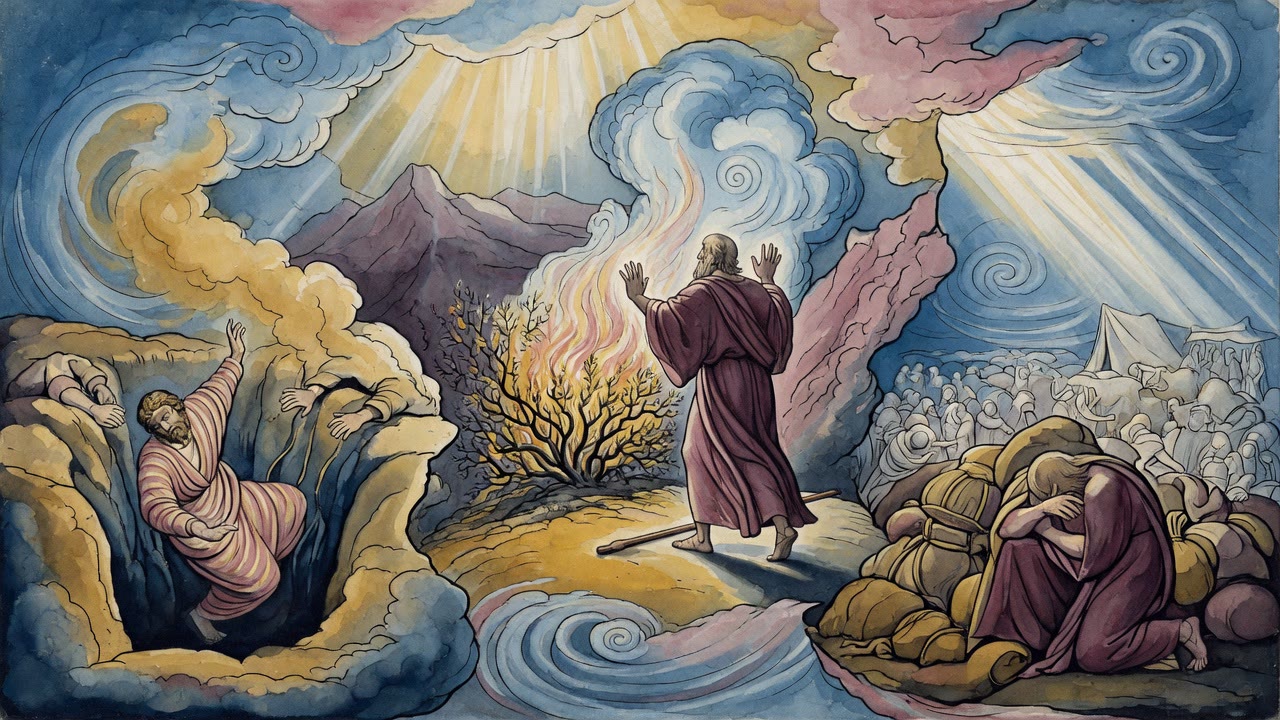
He began not with Canaan but with Moses. Had the son of Amram only brought trouble? Had he not split the sea, brought manna, called down quail, and drawn water from stone? The people listened because they expected betrayal. Instead, Caleb turned their memory against their panic.

For one brief moment, truth stood upright in the house.

But panic had already found too many mouths. The ten spies had entered every home before Caleb could enter every heart.

The Night Chose a Date

That night, the camp gave itself to grief.

Men wept for wives they imagined widowed. Mothers wept for children they imagined slaughtered. The tents of Israel became a nation-sized funeral for a death that had not happened. The sound rose from the wilderness as if Egypt had won after all.

Then heaven answered the false mourning with a terrible measure. Israel had cried without cause. A night of real causes for crying would be fixed into their calendar.

The date became Tisha B'Av.

The punishment did not fall only as memory. The generation that left Egypt would not enter the land. The wilderness would hold them until the men of war were consumed. Midrash Aggadah counts the decree with cold precision: those who had left Egypt at twenty and above would die by sixty, none earlier and none later, until the fortieth year opened the road for their children.

The Land Waited for Different Eyes

The spies who lied died by gruesome deaths, their tongues and bodies answering the evil their tongues had spread. Caleb and Joshua lived.

That survival was not luck. It was a verdict on sight. Ten men looked at giants and saw the end of Israel. Two men looked at giants and saw the size of the promise. Ten men made fruit into evidence against God. Two men let fruit remain fruit, heavy, sweet, and waiting.

The land did not change that night. The people did. They crossed from fear into refusal, and refusal became delay. Their children would have to learn courage in the shadow of graves.

Tisha B'Av begins there in the midrashic imagination: not with stone walls burning, but with a camp choosing to mourn salvation as if it were death. The first fire was not in Jerusalem. It was in the mouths of men who could not carry blessing without turning it into dread.


← All myths
From the tradition

Sources

9 sources

The texts this telling draws on, in full. Open a card to read inline, or expand it for a wider, quieter read.

Legends of the Jews 4:99Legends of the Jews

The story goes that, except for Joshua and Caleb, the spies sent to scout out the land of Canaan – the land we now know as Israel – were determined to dissuade the Israelites from entering. These weren’t just casual doubts,. These spies were influential figures, and their negativity threatened to sway the entire nation.

The weight on Caleb's shoulders.

The Legends of the Jews, a beautiful compilation of rabbinic lore by Louis Ginzberg, tells us that Caleb feared he might succumb to their influence. He knew the power of collective opinion, especially when fueled by fear. So, what did he do? He took a drastic, deeply moving step.

He hastened to Hebron.

Why Hebron? Because that’s where the graves of the three Patriarchs – Abraham, Isaac, and Jacob – are located. He felt a profound connection to these founding figures of the Jewish people, these men who had faced incredible challenges and remained steadfast in their faith.

Standing at their graves, Caleb didn't just offer a prayer; he made a plea. "Joshua," he said, "is protected from the spies’ poisonous influence, because Moses prayed to God for him." Moses, had specifically interceded on Joshua’s behalf.

But what about Caleb himself? He knew he needed help, a different kind of intervention.

So he implored the Patriarchs: "Send up prayers now, my fathers, for me, that God in His mercy may keep me far from the counsel of the spies." He turned to the ancestors, asking for their spiritual support, their ancestral strength to bolster his resolve. He understood that sometimes, we need to draw on the power of those who came before us to stay true to our path. In times of doubt, do we remember the values and principles of those who shaped us? Do we seek inspiration from the stories of resilience and faith passed down through generations? Caleb did. He sought the wisdom and strength of his ancestors to resist the tide of negativity and fear. It is a story of courage, faith, and the enduring power of ancestral connection.

Perhaps, the next time you face a difficult choice, you too can find strength in the stories of those who came before you. Perhaps you, too, can connect with the echoes of the past to illuminate your path forward.

Full source
Legends of the Jews 4:100Legends of the Jews

The familiar story centers on the twelve spies sent by Moses to scout out the promised land. But did you know there was a real battle of wills between them, a clash that went beyond just reporting back on the land's bounty and its inhabitants?

In classic compilation of Jewish folklore, Legends of the Jews by Rabbi Louis Ginzberg, there was a deep division, specifically between Caleb and the other spies. See, Caleb was all about displaying the land's incredible potential. He wanted to bring back tangible proof – fruits, produce, the actual stuff of the land – to inspire the people.

The others? They weren't so keen.

Their motivations, according to the legend, were… complicated. They feared that if the people saw how amazing the land was, they might actually want to stay there, losing their drive to conquer and possess it fully. Can you imagine that? Trying to hide the good stuff?

So, how did Caleb get his way? Well, the story goes that he literally drew his sword! He declared, "If you will not take of the fruits, either I shall slay you, or you will slay me." Talk about commitment!

And what fruit did they bring back? It wasn't just a handful of grapes. The spies cut down a vine, a single vine, so massive that it took eight men to carry it! Each man bore a burden of one hundred and twenty seah (a unit of dry measure). That's a lot of grapes.

The ninth spy carried a pomegranate, and the tenth, a fig. And these weren't just any fruits. They came from a place that had once belonged to Eshcol, a friend of Abraham himself. Talk about a pedigree!

Now, you might be wondering, what about Joshua and Caleb? Why didn't they carry anything? Well, the legend explains that it was "not consistent with their dignity to carry a burden." Apparently, leadership had its perks, even then.

And here's the most part: the wine pressed from the grapes of that one vine, the one they struggled to carry, was said to have sufficed for all the sacrificial libations of Israel during their entire forty-year journey through the wilderness.

Forty years! From one vine.

It makes you wonder, doesn't it? What else are we missing from the familiar stories? What other hidden details, power struggles, and even miraculous events are tucked away in the vast pattern of Jewish legend? It's a reminder that even the most well-known tales have layers upon layers of meaning, waiting to be uncovered.

Full source
Legends of the Jews 4:103Legends of the Jews

The kind that whispers, "Are you sure you're ready for this?" It's a feeling that's haunted humanity for millennia, and it even gripped the Israelites on the cusp of entering the Promised Land.

The scene. Moses, our leader, gathers everyone in the great house of study – a space so vast it could hold all of Israel. According to Legends of the Jews, the spies have returned from their mission, the mission to scout out the land of Canaan. They’re about to deliver their report, and everyone is on edge.

These spies, they're clever. Slanderers, even. They know they can't just come out and say, "This is a disaster!" No, they have to be subtle. They begin by praising the land, buttering everyone up. "We came unto the land whither thou sentest us, and surely it floweth with milk and honey." It’s almost comical – Ginzberg tells us it wasn't even an exaggeration! Honey dripped from trees where goats grazed, and milk flowed so abundantly it moistened the ground. A veritable paradise!

It's a trap. "Nevertheless," they continue, and you can almost hear the ominous tone in their voices, "the people be strong that dwell in the land, and the cities are walled, and very great: and moreover we saw children of Anak there." The Anakim, giants according to some traditions, were meant to strike fear into the hearts of the Israelites. And here's where the spies really start to twist the truth. They claim the Anakim lived everywhere, when in reality, they only saw them in Hebron.

Why Hebron? Because Caleb, one of the faithful spies, had gone there specifically to pray at the graves of the Patriarchs, as Ginzberg explains. At the same time, the Shekhinah, the divine presence, went there to announce to the Patriarchs that their children were on their way to claim the promised land! – a moment of divine reassurance deliberately undermined by fear-mongering.

And they weren't done yet. "The Amalekites dwell in the land of the South," they declared. According to Legends of the Jews, the spies threatened Israel with Amalek the way you'd threaten a child with a disciplinary tool – a constant reminder of past defeats, of past vulnerabilities. The Amalekites, a nomadic people, had indeed settled in the south, fulfilling the last wish of their ancestor Esau to cut Israel off from the Promised Land. It's like a constant, gnawing anxiety made manifest.

"But wait," the spies seem to say, their voices dripping with false concern, "if you're thinking of avoiding Amalek by going through the mountains, let us inform you that the Hittites, the Jebussites, and the Amorites dwell there! And if you try to go by sea? The Canaanites are waiting along the coast and the Jordan River!" Every path, every option, is blocked by a terrifying obstacle.

What a moment. What a test of faith. What do you do when the very people you trust, the ones sent to scout the path forward, return with a message of fear and impossibility? Do you succumb to the doubt? Do you let the whispers of anxiety drown out the promise? Or do you remember the journey so far, the miracles witnessed, the covenant made, and step forward anyway? It's a question we all face, in our own ways, on our own journeys.

Full source
Legends of the Jews 4:104Legends of the Jews

You remember the story. Moses sends twelve spies, one from each tribe, to check out the land God promised them. When they return, ten of them are terrified. Giants! Fortified cities! We can’t possibly take it!

Only Joshua and Caleb, heroes in their own right, saw things differently. They believed God would deliver them.

The scene. Panic. Fear. A whole nation on edge.

As soon as the spies finished their doom-and-gloom report, the biblical text tells us Joshua stood up to speak. He knew the truth! He knew they could trust in God! But, according to Legends of the Jews, as retold by Rabbi Louis Ginzberg, they wouldn't even let him get a word in edgewise.

“By what right dost thou, foolish man, presume to speak?" they shouted. Can you hear the scorn in their voices? "Thou hast neither sons nor daughters, so what dost thou care if we perish in our attempt to conquer the land? We, on the other hand, have to look out for our children and wives."

Ouch. Talk about a low blow. They were questioning his motivations, his very right to speak! The implication? He had nothing to lose, so of course he’d be reckless. They, with families to protect, were just being responsible.

So, Joshua, very much against his will, had to be silent. Silenced. Imagine the frustration, the burning desire to speak the truth, stifled by fear and prejudice.

Now, Caleb, he was smart. He saw what happened to Joshua. He knew he had to find another way to get a hearing. He had to be strategic. He had to figure out how to be heard above the din of fear.

And that, my friends, is where our story takes an interesting turn. How did Caleb manage to get through to them? How did he overcome the fear and negativity that had gripped the Israelites? That’s a story for another time. But it leaves us with a question: how do we ensure that truth, even when unpopular, gets a chance to be heard? How do we create space for those who see things differently, especially when fear is running rampant? Food for thought, isn't it?

Full source
Legends of the Jews 4:109Legends of the Jews

It all starts with a story, a tale of spies, tears, and a day destined for sorrow.

Moses and Aaron, leaders of the Israelites, send spies to scout out the land of Canaan, the promised land. But when the spies return, they don't bring back tales of milk and honey, but whispers of giants and insurmountable obstacles. Fear, not faith, fills their hearts. And that fear? It spreads like wildfire.

These spies, instead of keeping their misgivings to themselves, went into overdrive. According to Ginzberg's retelling in Legends of the Jews, they "employed every means of inciting the people into rebellion against Moses and God." It wasn’t enough for them to simply voice their doubts; they had to actively sow seeds of discontent.

What did that look like? Picture this: each spy returns home, puts on mourning clothes, and begins to weep, loudly, dramatically. "Woe is me!" they cry, as Ginzberg recounts. Their families, naturally, are alarmed. What could possibly cause such grief?

And here's where the manipulation really takes hold. The spies, through their sobs, paint a terrifying picture: "Woe is me for ye, my sons, and woe is me for ye, my daughters and daughters-in-law, that are doomed to be dishonored by the uncircumcised and to be given as a prey to their lusts." They describe the inhabitants of Canaan as superhuman, powerful beyond measure. "These men that we have beheld are not like unto mortals," they claim. "Strong and mighty as angels are they; one of them might well slay a thousand of us!"

Can you feel the despair rippling outwards? The families, overcome by fear, join in the weeping. Neighbors rush in to see what's happening, and soon the entire Israelite camp, sixty myriads of people, we're told, is consumed by wails and lamentations. A collective sob echoing through the desert.

And that sound, that chorus of despair, reaches heaven. God hears their weeping, but is it a weeping of repentance? No. It's a weeping of baseless fear, of a lack of faith. And God responds with a profound and heartbreaking prophecy: "Ye weep to-day without a cause, I shall see to it that in the future ye shall have a cause to weep on this day."

As we find in Midrash Rabbah, it was then that God decreed the destruction of the Temple would occur on Tisha B'Av, the ninth day of the Hebrew month of Av. This day, which began with the Israelites' unwarranted tears in the wilderness, became, and remains, a day of mourning for generations to come. A day to commemorate the destruction of both the First and Second Temples in Jerusalem, and numerous other tragedies that have befallen the Jewish people throughout history.

So, what's the takeaway? Perhaps it's a reminder of the power of words, the contagious nature of fear, and the enduring consequences of a lack of faith. Tisha B'Av isn't just a historical marker; it's a call to examine our own fears, to question the narratives we accept, and to choose faith over despair, even when the giants seem insurmountable.

Full source
Legends of the Jews 4:117Legends of the Jews

The story of the spies sent to scout the Promised Land offers a chilling answer.

Being chosen for a vital mission. To be among the select few to preview a land flowing with milk and honey. That was the opportunity given to the twelve spies sent by Moses to explore Eretz Yisrael, the Land of Israel. But what they brought back. well, that's where the tragedy begins.

Ten of the spies returned with terrifying reports, sowing seeds of doubt and fear among the Israelites. They spoke of giants and insurmountable obstacles, painting a picture of a land impossible to conquer. Their lack of faith, their lashon hara (evil tongue), had devastating consequences, delaying the entry into the Promised Land for an entire generation.

What became of these faithless messengers? As we read in Legends of the Jews by Louis Ginzberg, drawing from various Midrashic (rabbinic interpretive commentary) sources, their punishment was as gruesome as their sin was grave. God, it says, repaid them measure for measure.

Their tongues, the very instruments of their deceit, stretched to an unnatural length, reaching all the way to their navels. And from those same tongues, worms emerged, piercing their navels. It was a horrifying and fitting end for those who had spoken so wickedly.

But there is always light amidst darkness. Joshua and Caleb, the two spies who remained steadfast in their belief in God's promise, were spared this terrible fate. They stood firm, urging the people to trust in God's power to deliver them to the Promised Land. Their faith was rewarded.

Not only were they exempt from the punishment that befell the other spies, but they were also blessed with a portion of the very land they had so bravely championed. According to Legends of the Jews, they received the property that had been originally allotted to the faithless spies.

The text highlights Caleb's vigor and longevity. He was forty years old when he embarked on this pivotal mission. He had already become a father at the young age of ten. And even at the age of eighty-five, Caleb remained strong enough to enjoy his inheritance in the Holy Land.

What does this all mean? This isn't just a story about spies and punishment. It's a story about the power of faith, the dangers of negativity, and the importance of speaking truth, even when it's difficult. It’s a reminder that our words have power, and that we are accountable for the impact they have on the world around us. It makes you think, doesn't it? What kind of messenger do we choose to be?

Full source
Midrash Aggadah, Numbers 13:30Midrash Aggadah

"And Caleb hushed [the people]" (Numbers 13:30). And what was the power of Caleb, that he was able to silence the people concerning Moses? Rather, at that hour, when they were in the land, [the spies] devised that evil counsel, to speak the disgrace of the land, its survey, and the strength of the cities, and the fortification of the towns. And they brought Caleb in with them into the counsel, and he said to them that he too would speak like them. Thus he was saying to them, but in his heart he was thinking that he would tell the praise of the Land of Israel, that all good was in it, for who could tell the praise of the Land of Israel? Therefore, when he came to speak, he said to them: "Be silent, for I am speaking the truth." And because they thought that he too would speak like them, they fell silent. He began to say: "And is this the only thing that the son of Amram did? How many other things did he do! Did he not bring us out of Egypt, and split the sea for us, and bring the quail flying to us, and bring down the manna for us, and give us the Torah?" And he kept praising on and on. And when the people saw this thing that Caleb did, they began to contradict his words, as it is said: "We are not able to go up, for he is stronger than us" (Numbers 13:31), this teaches that they said this about the Holy One, blessed be He, that He is not able to bring His vessels out from there.

Full source
Midrash Aggadah, Numbers 14:34Midrash Aggadah

"According to the number of the days, etc." Since the decree applied only to those who came out of Egypt from twenty years old and upward, etc. (Numbers 32:11), and the decree was for forty years, therefore they were completed in death by the end of forty years, for not one of them died younger than sixty years, and not one of them was older than sixty; for as soon as each and every one reached sixty years he would die. And from where do we learn that they were completed in death by forty years? As it is said, "And it came to pass, when all the men of war were consumed in dying" (Deuteronomy 2:14), and immediately, "the LORD spoke unto me, saying: Thou art to pass over" (Deuteronomy 2:17-18). From here our Sages, of blessed memory, said: One who is sixty, behold he is liable to karet (excision), since all those six hundred thousand foot-soldiers who came out of Egypt all died by karet, and not one of them lived more than sixty years.

"According to the number of the days that ye spied out." But behold, in the second year Moses sent the spies, and they should have stood in the wilderness from the sending onward forty years; yet they stood there only forty years from the going-out of Egypt onward, as it is said, "and the days which we walked from Kadesh-barnea until all the generation was consumed" (Deuteronomy 2:14). Why? Because they had already walked two years. And why is it thus reduced? This teaches that the Holy One, blessed be He, made the reckoning with the sons and brought into the reckoning the first years, for there was wrath against the fathers, because they made the calf in the first year; and He reduced from the years of their lives one year, for He reckoned for them that year in the count of the forty years, as it is said, "and in the day when I visit, I will visit their sin upon them" (Exodus 32:34).

Full source
Sota 38Talmud Bavli, Sota

In Jewish tradition, Tisha B'Av, the Ninth of Av, is one of those days. It's a day of fasting and mourning, remembering immense loss and tragedy throughout our history. But where does this day of sorrow originate?

The story takes us back to the time of the spies, after the Exodus from Egypt. Remember? Moses sends twelve scouts into the Land of Canaan to assess what awaits them. But when they return, ten of them are terrified. They speak of giants, of insurmountable obstacles. The people, overwhelmed by fear, begin to weep.

This wasn’t just a quiet cry. The Talmud, specifically B. Sota 38a, paints a picture of widespread, inconsolable weeping echoing throughout the entire Israelite camp. They were convinced they were all going to die.

Think about this from God’s perspective. He had just delivered them from slavery! He had promised them a land flowing with milk and honey. And here they were, doubting His word, succumbing to despair.

So, what was God’s response? It’s According to tradition, as recounted in Tree of Souls by Howard Schwartz, God says, "Because the people weep without cause and do not trust My word to bring them into a land flowing with milk and honey, this night and the following day, the Ninth of Av, shall be a day of fasting and mourning, a day of trouble and tribulation for many years."

Wow.

It's a striking moment, isn't it? It establishes the Ninth of Av as a day destined for sorrow.

What’s fascinating, and perhaps a little unsettling, is that this myth directly links the origin of the tragedies associated with Tisha B'Av to this very event. The destruction of both Temples, the expulsion from Spain, and numerous other catastrophes are all, in a way, traced back to this initial act of distrust and despair. It suggests that our actions, our collective emotional state, can have profound and lasting consequences.

The idea of God directly issuing a curse is somewhat unusual in Jewish lore. We often see God's "negative" actions carried out by intermediaries. There’s even a myth about an angel named Gallizur, whose sole purpose, according to Schwartz, is to utter God's harsher decrees.

But in this case, the tradition attributes the pronouncement directly to God. This emphasizes the severity of the people's lack of faith and the profound impact it would have on generations to come.

So, the next time you hear about Tisha B'Av, remember the story of the spies. Remember the weeping in the camp. Remember the weight of that moment, and the long shadow it cast across Jewish history. It's a reminder of the importance of faith, the power of hope, and the enduring consequences of our choices.

Full source