The Spies Walked Through Canaan's Funerals and Called the Land a Devourer
Twelve spies slipped through Canaan's open gates while the cities buried their dead, then came home swearing the land devoured its own people.
Table of Contents
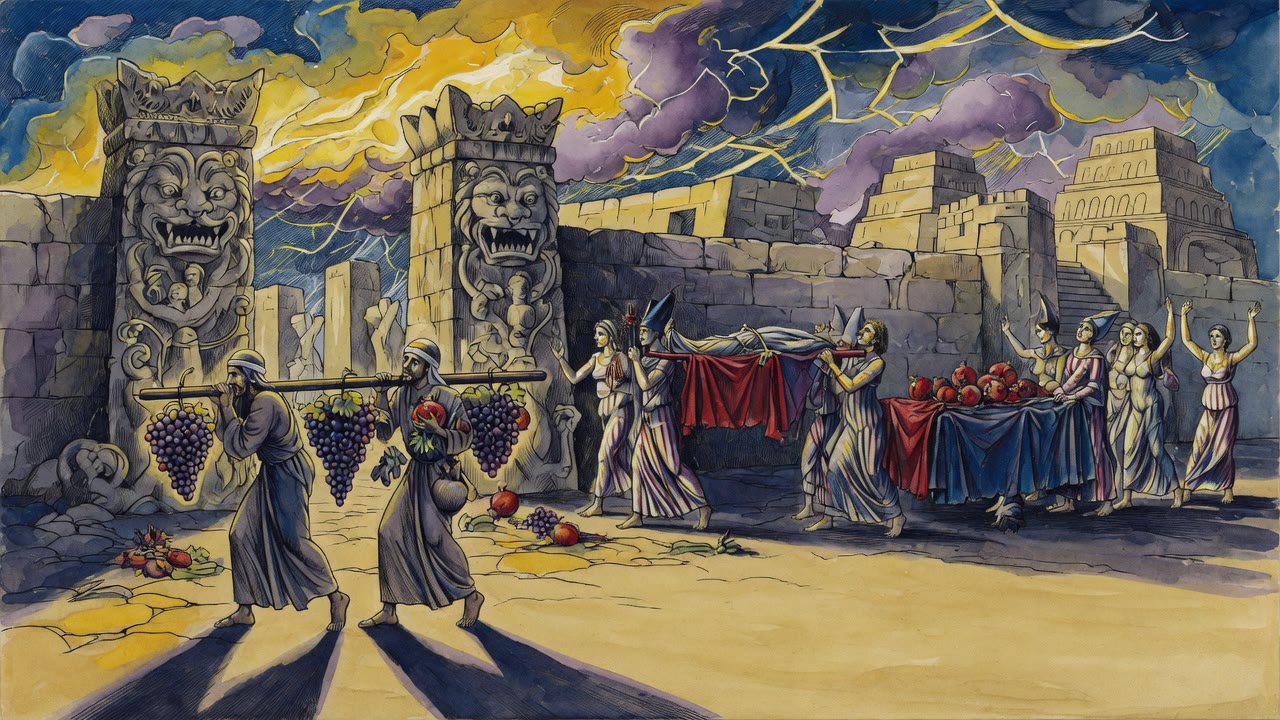
The gate stood open and nobody watched it. Twelve men walked through, dust on their sandals, fruit not yet cut, and not one Canaanite turned a head. Inside the walls a wail went up from a house, then another house, then a whole street keening at once. Shammua pressed his back to a cool stone wall and listened to the city weep, and what he heard was not safety. He heard a place that buried somebody new every hour.
 Click for full size
The Gates No One Guarded
They had come up out of the wilderness of Tzin, all twelve of them, sent to walk the land from end to end (Numbers 13:21). Forty days. They expected watchmen on the towers, dogs at the gates, hard questions from strangers about strangers. They got none of it. In the first city the men of consequence lay dead by morning, the leaders, the strong ones, the ones who would have noticed twelve unfamiliar faces moving through the market. The town had no eyes to spare. Every eye was red and turned toward the ground where the digging happened.
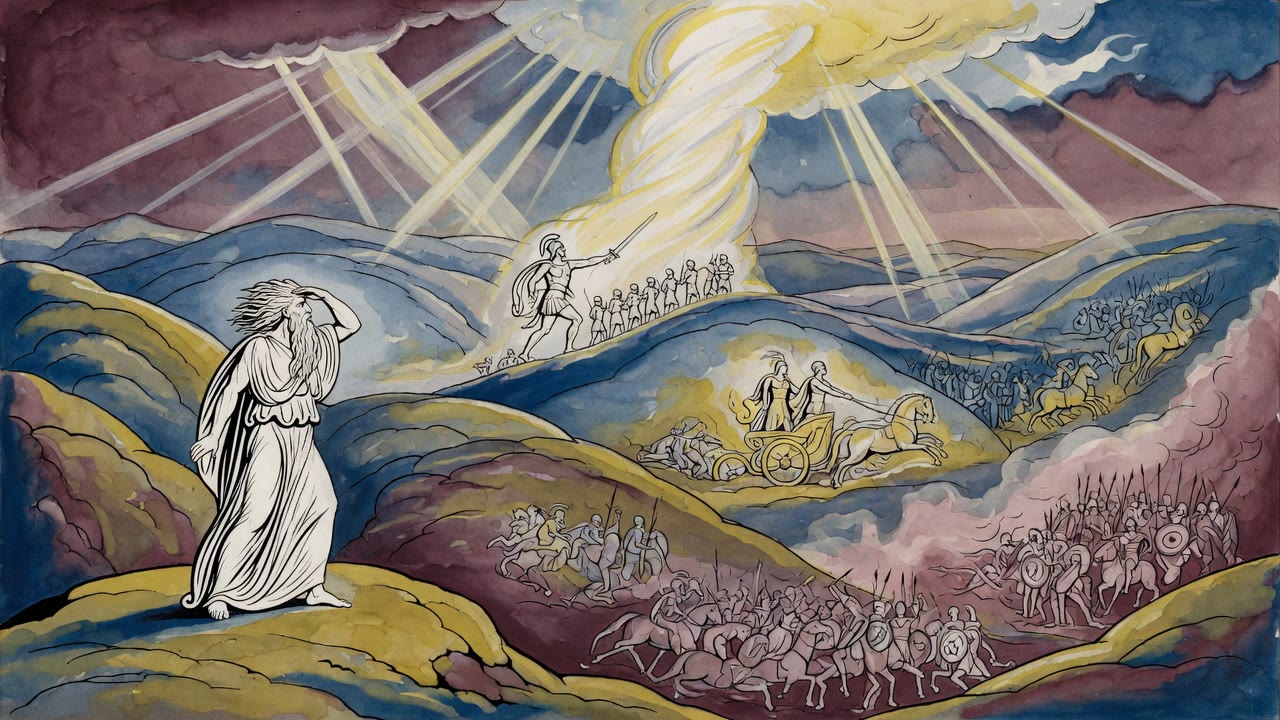
So the twelve walked where they pleased. They counted the height of the walls. They measured the doors. They saw clusters of grapes so heavy two men slung them on a pole between their shoulders and still staggered under the weight. No one challenged them. No one asked their names. A hand had been laid over the cities, striking the mighty down so the messengers could pass and gather and go home untouched, and the messengers felt the hand, but they did not understand whose it was.
What Shammua Saw In Every Province
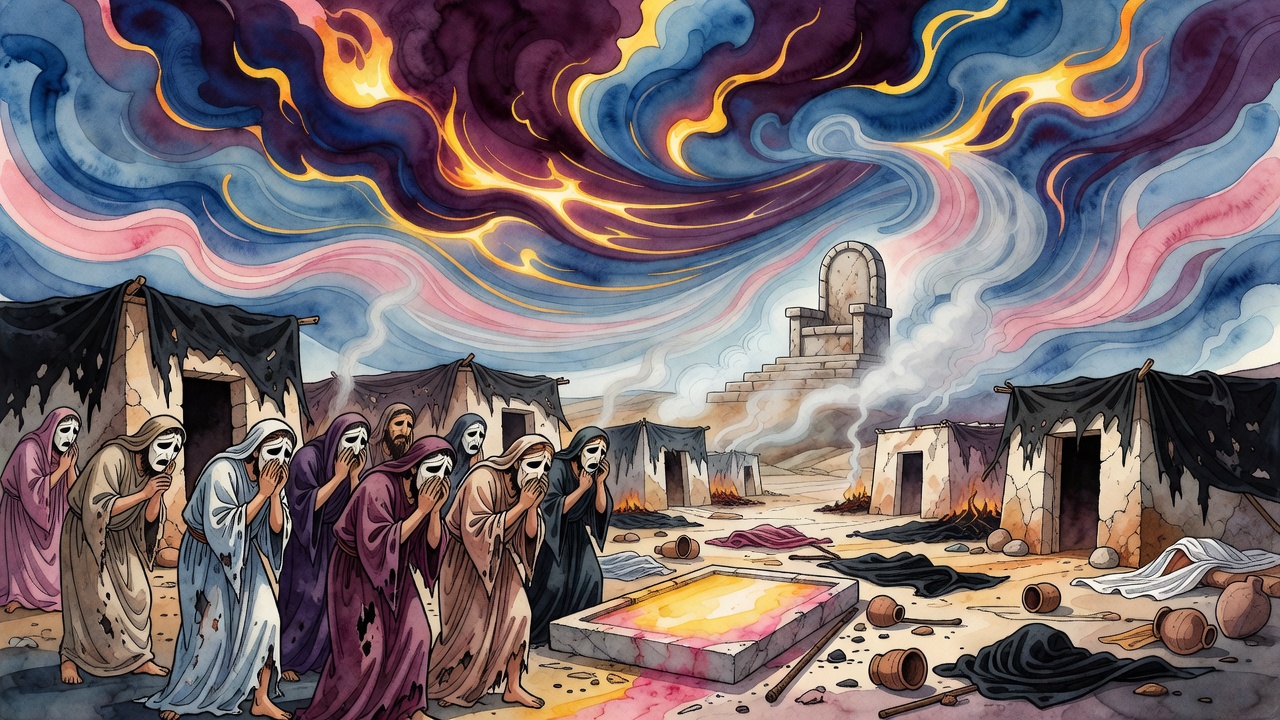
It repeated. The next city, the next. They would arrive and within a day the funerals would start, the great men of the place carried out on biers while the living tore their clothes. In every province it was the same picture. Powerful men dropping. The earth opened again and again to take them. The spies moved freely through the grief because grief is blind to strangers, and they watched a country that seemed to be eating its own from the inside.
That was the protection. A funeral can mean a city is too busy with its dead to notice you slip through its gate. The same funeral can look like a curse breathing up from the soil. Shammua and the nine with him saw the corpses and chose the second reading. They did not lie about the bodies. The bodies were real. They lied about what the bodies meant.
The Word That Broke the Camp
They came down out of the hills with the grapes still on the pole, and the whole congregation gathered to hear. Ten of the twelve opened their mouths and the same sentence came out, polished smooth on the road home. "The land through which we passed is a land that devours its inhabitants" (Numbers 13:32). They had walked through it under cover of a mercy that cleared their path with its own hand, and they took that mercy and turned it into the proof against itself. The clearing became the crime. The shield became the slander.
The camp heard it and the camp came apart. There were giants in the report too, and walls to the sky, and men who felt like grasshoppers under them. But the line that did the killing was the one about the devouring land, because it dressed the people's fear in the clothing of fact. The congregation lifted up their voices and wept all that night, and a whole generation lost the ground before a single foot of it was theirs.
Yehoshua Could Not Get a Word In
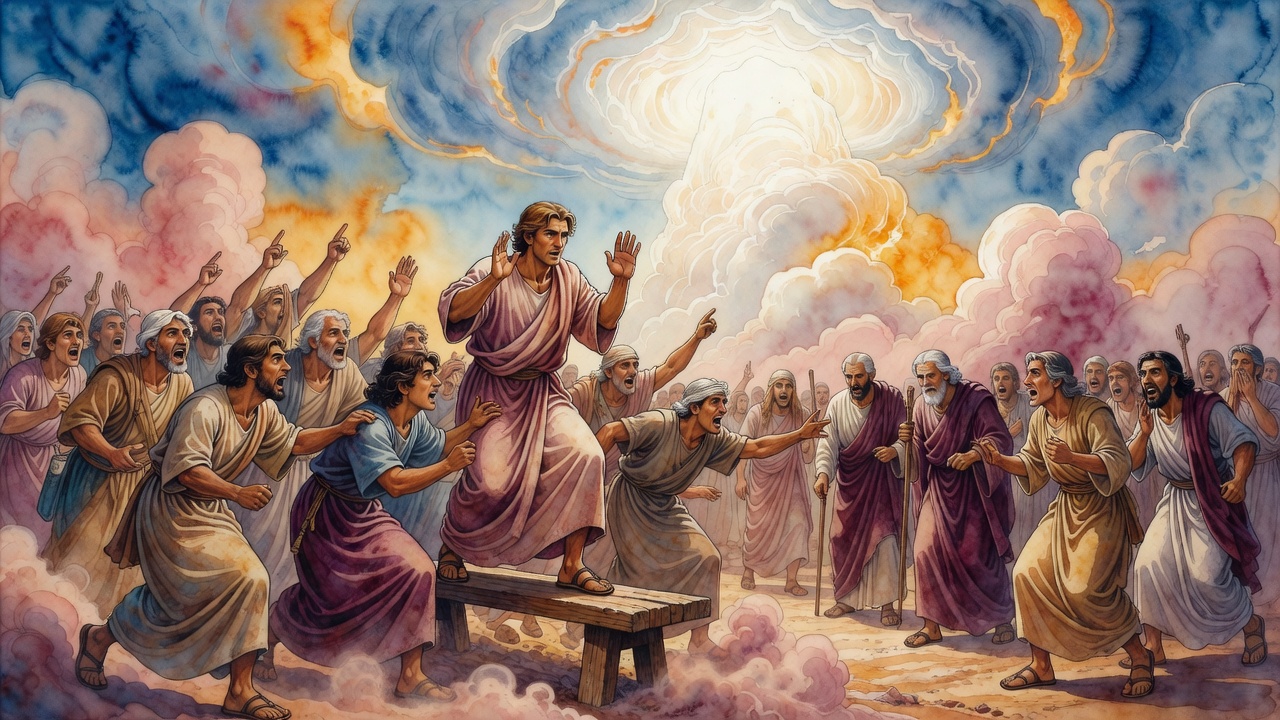
Two men had walked the same forty days and read it differently. Yehoshua rose to speak the truth he carried, that the same hand which emptied the gates would deliver the rest. The ten would not let him finish a sentence. They shouted him down where he stood. "By what right do you, foolish man, presume to speak. You have neither sons nor daughters, so what do you care if we perish trying to take the land. We have wives and children to think of." They buried his voice the way the cities had buried their dead, fast and loud, before anyone could hear it clearly.
How Kalev Turned the Room
Then Kalev stood, and he was cleverer than the ten. They had pulled him into their plan, and he had let them think he was theirs. "Be silent," he began, and the ten leaned back, smug, certain the last holdout had come over to their side. "I will reveal the truth," he said. "This is not all for which we have to thank the son of Amram." Aha, they thought. He means to mock Moshe.
He did the opposite. He swung the whole room around in a breath. "Moshe," he said, "it is he who drew us up out of Egypt, who split the sea for us, who fed us manna in the wilderness." The eulogy poured out where the insult was supposed to be. He had used their own confidence to get the floor, the same trick the cities' grief had played on the spies, and he spent it telling the people what their fear had made them forget. The ten had walked through a miracle and called it a curse. Kalev named the miracles out loud, one after another, and dared the camp to keep pretending it had seen a devouring land.
← All myths