Caleb and Joshua Stood Against Six Hundred Thousand Men
Ten spies saw the same Canaan and came back broken. Two saw the same land and held. Ben Sira says it was the greatest act of faithfulness in Israel's history.
Table of Contents
 Click for full size
The Math Before the Report Was Given
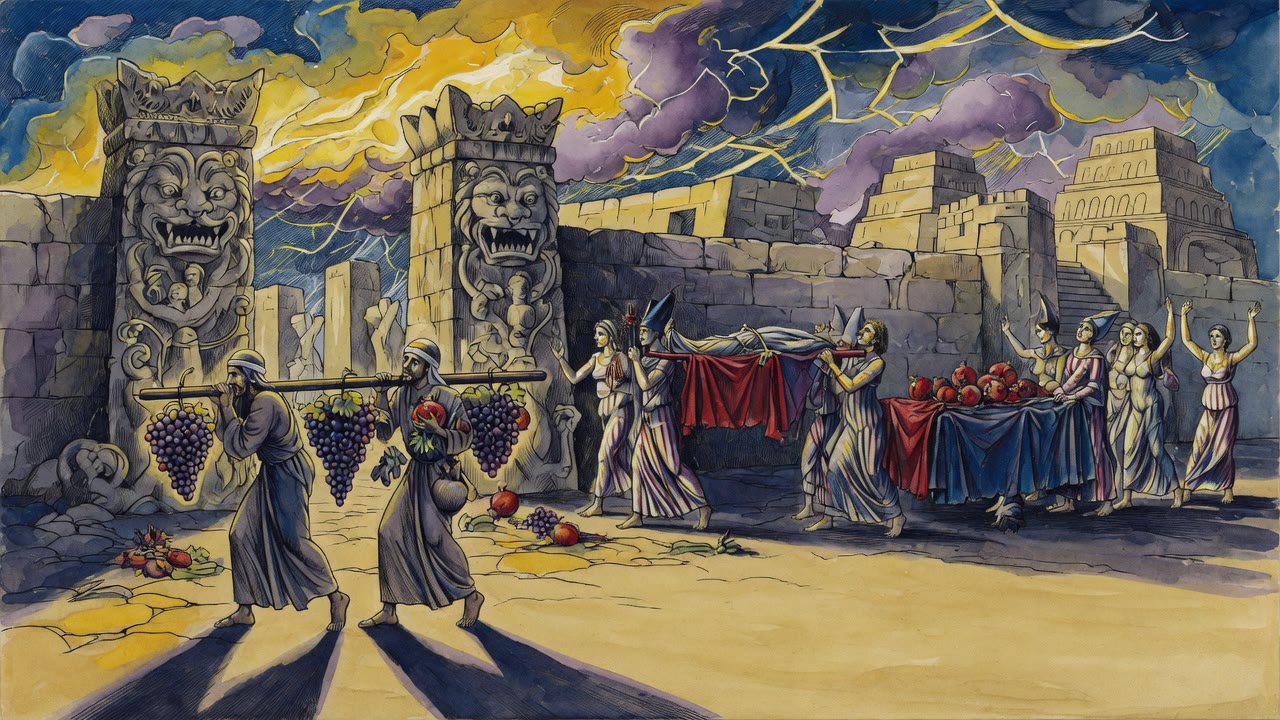
Twelve men went into Canaan. Twelve men saw the same hills, the same fortified cities, the same giants grinding grain in the shadows of walls that looked unclimbable. They traveled for forty days. They brought back pomegranates and figs and a cluster of grapes so heavy that two men had to carry it on a pole between them. They were standing at the edge of what had been promised.
Ten of them said: we will be crushed. We saw the sons of Anak, the giants, and beside them we were like grasshoppers, and that is how we appeared in their eyes. The land devours its inhabitants. The cities are fortified up to heaven. The people are too strong. We cannot go up against them.
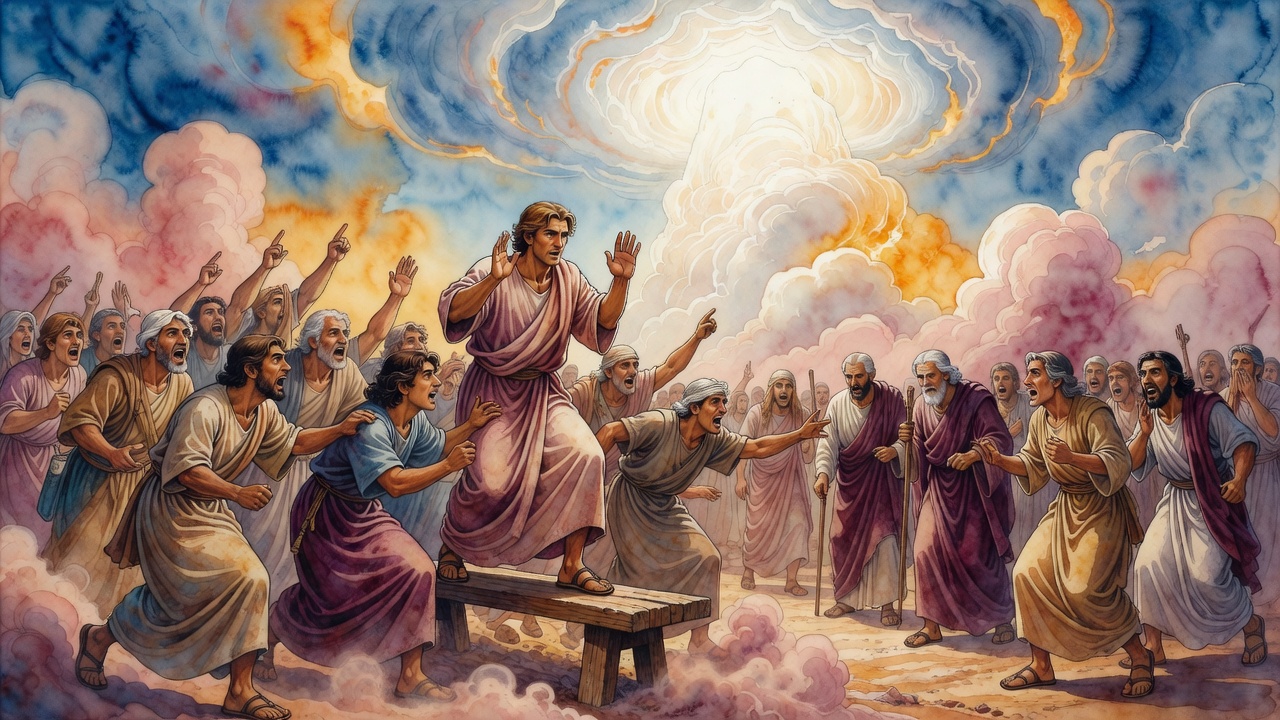
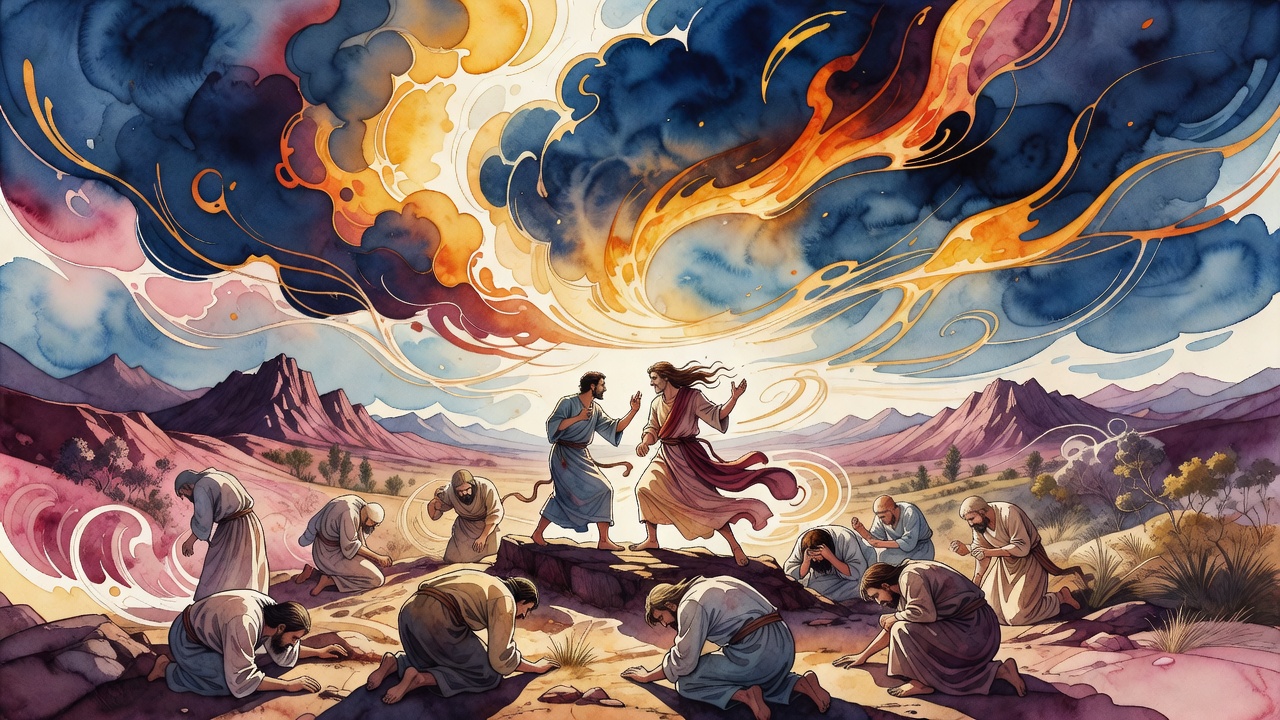
Two of them said something different. Caleb silenced the assembly and said: we should go up and possess the land, for we are well able to do it. Joshua tore his clothes and said: do not fear the people of the land, for they are our bread. God is with us. Do not rebel against the Lord and do not fear them. The congregation, six hundred thousand men, talked about stoning them both.
Caleb, the Man Who Was All Heart
Ben Sira, writing in Jerusalem around 180 BCE in his book of wisdom and praise for Israel's heroes, gives Caleb a description that the plain Torah text does not fully articulate. He and Joshua stood against the "wild assembly," an assembly of fear that had become something close to mob judgment. They kept the people from sinning, Ben Sira writes, and silenced the wicked uproar. This, Ben Sira argues, was an act of faithfulness comparable to any in the entire prior history of Israel. It was not the parting of the Red Sea. It was not the giving of the Torah. It was two men refusing to lie to six hundred thousand people who very much wanted them to.
The name Caleb itself carries the argument in condensed form. The name means "heart" or "whole-hearted," and the tradition read this as a description of what Caleb did with the spies' report. He spoke what he felt in his heart, the midrashic tradition says, and turned aside from the advice of the others. The ten who gave the false report had names that pointed toward their failure. The two who held fast had names that pointed toward what they would do. In Jewish tradition, names are not labels. They are compressed prophecies about character, and in the case of the spies, the names of the ten and the names of the two told the story before the story was over.
Joshua and the Name That Changed
Joshua's situation was different from Caleb's in one specific way. Moses had renamed him. His birth name was Hoshea, meaning "salvation," and Moses changed it to Yehoshua, adding God's name to the prayer: "the Lord is salvation." The tradition preserved in Ginzberg's Legends of the Jews, compiled from midrashic sources, reads this renaming as a deliberate preparation for the test at Canaan. Moses saw something in Joshua that required divine reinforcement before it could hold against the pressure of twelve spies and a frightened nation. Hoshea was capable of salvation. Yehoshua had God's name added to his as a kind of structural support.
The ten who returned with the false report had names that, when examined, traced the outlines of exactly what they had done. The midrashic tradition finds the names of the faithless spies to be, in retrospect, legible signs of their failure. They named what would happen through them before they went. This is the logic of names in the tradition: not that names cause events, but that names often reflect the truth about a person's character that will eventually express itself in action, and that a careful reading of names can tell you something about what a person will do when tested.
What the Two Saw That the Ten Did Not
Ben Sira's account does not stop at the moment of faithfulness. He traces it forward into the reward. Because they held fast, Joshua led the nation into Canaan and Caleb received his inheritance at Hebron in his old age. Ben Sira presents these outcomes not as consolation prizes for suffering but as the natural completion of what the names and actions had always pointed toward. The man who was all heart received the city associated with the patriarchs, with burial and promise. The man who carried God's name in his own was the one who led the crossing.
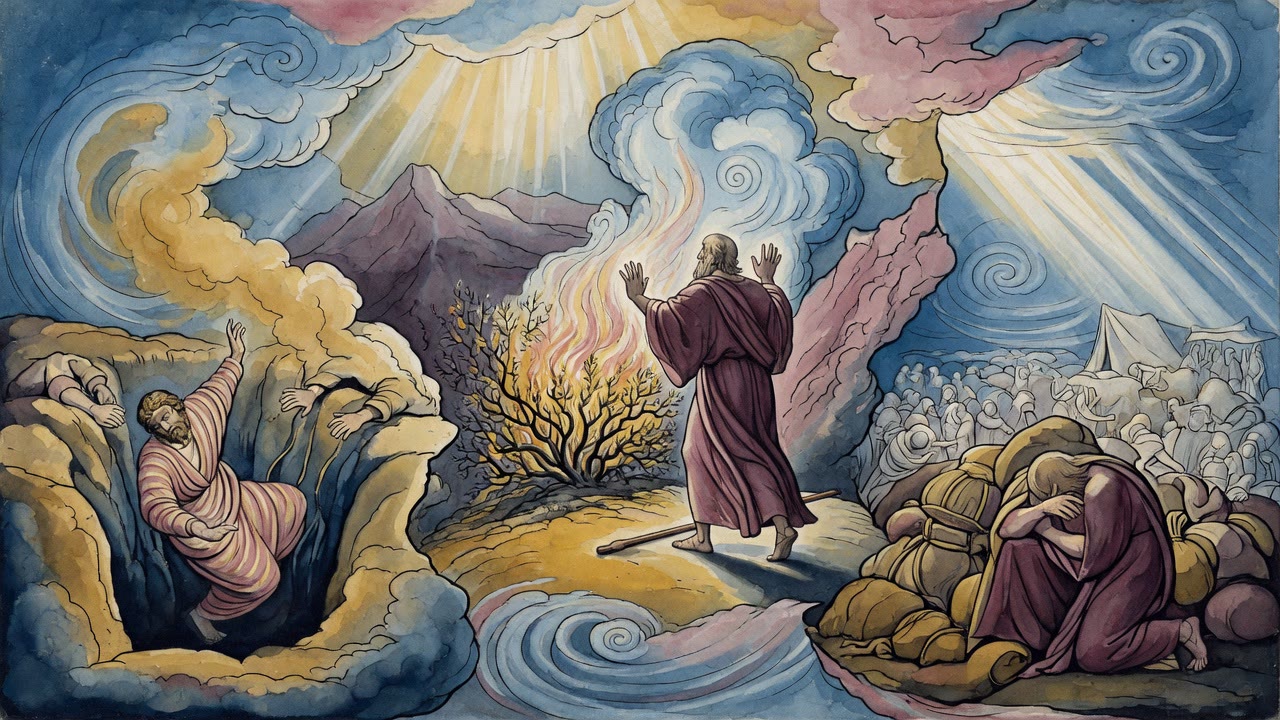
The tradition preserves one more detail about Caleb's strategy at the moment of greatest pressure. Before he spoke his dissent to the assembly, he went to Hebron and prostrated himself at the graves of the patriarchs, asking for divine protection before opening his mouth. He knew the crowd wanted to stone him. He prepared himself not with arguments but with prayer at the tomb of Abraham. Then he came back and said: we are well able.
← All myths