Israel Asked for Spies Because They Doubted God at the Border
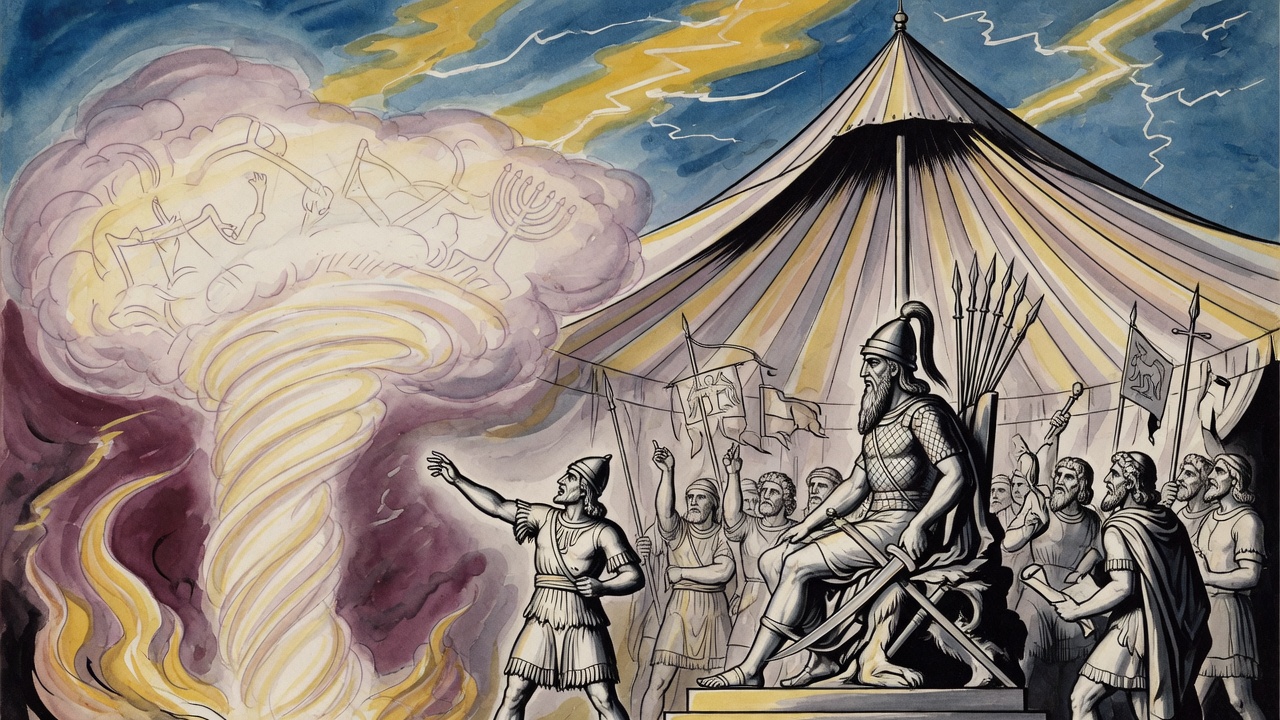
Israel asks for scouts after crossing the sea and eating manna. Rabbi Shimon calls it shameful: they trusted God in scarcity but doubted Him at the border.
Table of Contents
 Click for full size
The Request That Looked Reasonable
Israel reached the border of the land after the sea, the manna, the water from the rock, and the Torah at Sinai. They had seen things that had no natural explanation. They had eaten bread that fell from the sky and tasted like whatever they most wanted. They had drunk water from stone. They had stood at the foot of a mountain while fire spoke in a human language. Then they arrived at the edge of what God had promised Abraham, Isaac, and Jacob, and they asked for scouts.
On paper the request sounds like prudence. Learn the roads. Hear the language. Assess the defenses. Bring back a report. Rabbi Shimon, in Sifrei Devarim, called it a great shame. God had not asked for their reconnaissance. After everything that had happened since Egypt, a request for human intelligence-gathering about the land God was giving them was not planning. It was distrust dressed in the language of caution.
God's Answer Was the Indictment
Sifrei Devarim frames God's response as a single devastating observation. In a land of deserts and pits, in scorching heat and without water, I fed you and sustained you. How much more in a good and broad land, full of vineyards and cisterns and houses already prepared, could I bring you safely in. The request had exposed the precise shape of the failure: Israel trusted God to keep them alive in scarcity but doubted Him at the border of gift. Emergency provision was within the range of their faith. Abundance was not.
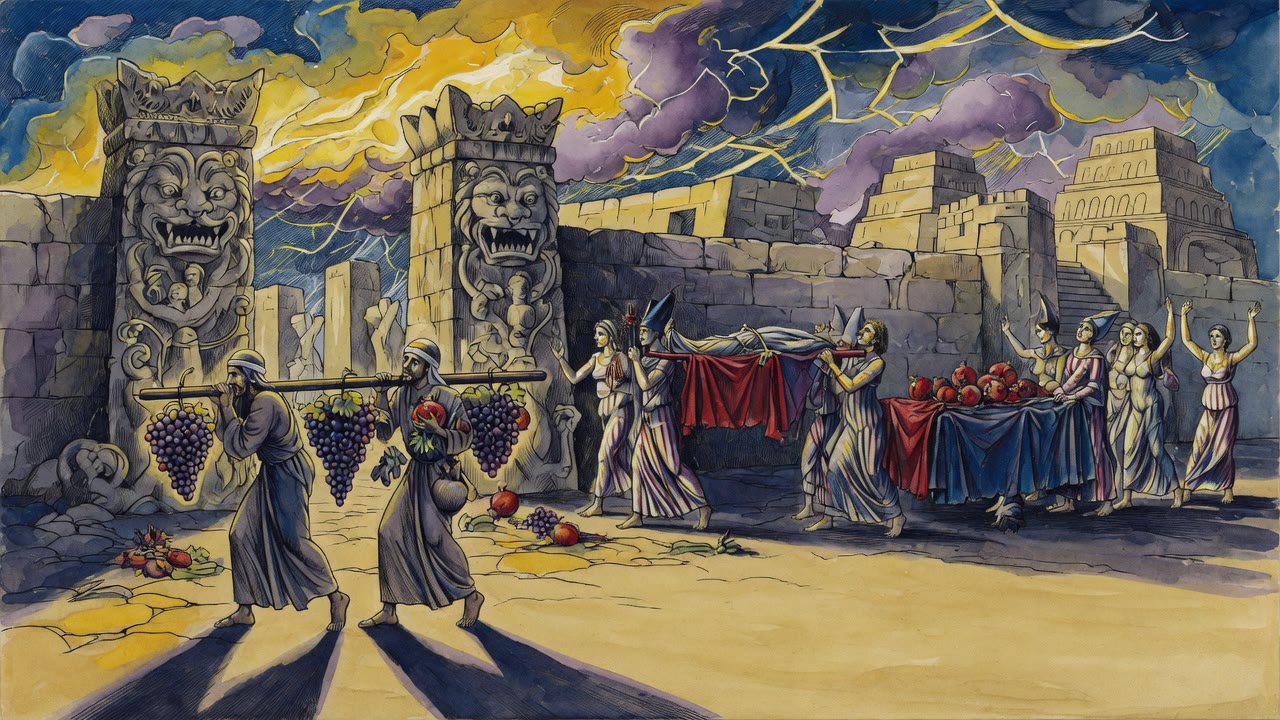
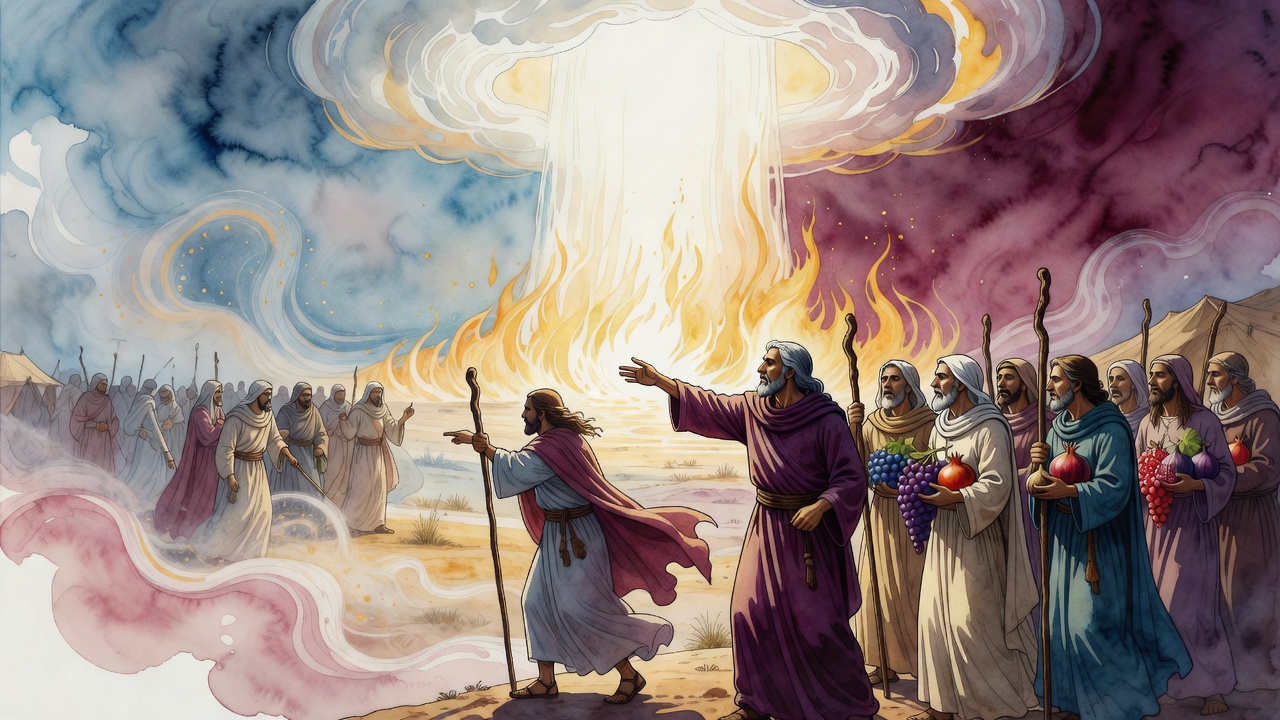
The scouts went in. Sifrei Devarim identifies the valley they found, the Wadi Eshcol, by the word eshkol, cluster, which the text itself attaches to the famous cluster of grapes the scouts carried back on a pole. The place was named for what happened there. When future generations heard the name, they would remember the grapes that were supposed to be evidence of the land's richness and became instead evidence against going in.
Caleb and the Sword at the Vine
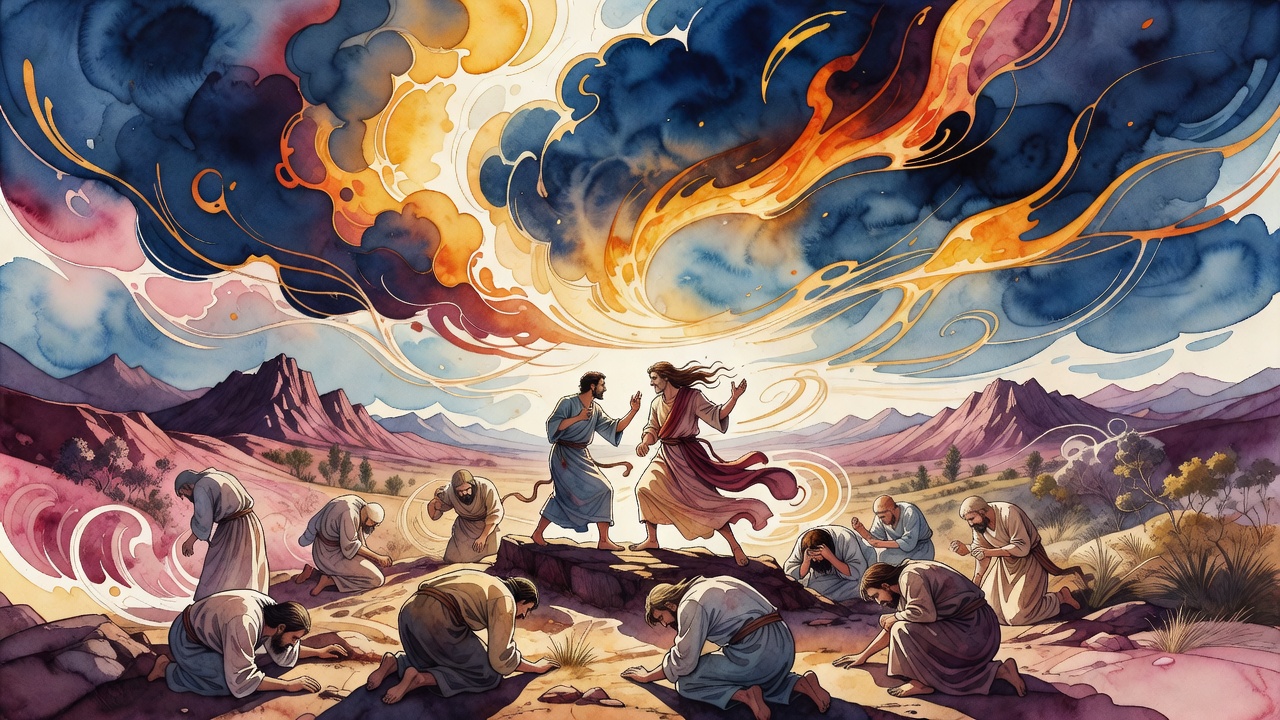
When the twelve scouts reached the valley, not one of them would reach out a hand for the fruit. Their hearts had already turned against the land they were standing in. Caleb, one of the two who would bring back an honest report, drew his weapon in the vineyard. He stood before them and said: if you will not take of this fruit, then one of two things happens here. Either you kill me or I kill you. Only under that threat did the other scouts put their hands to the vine.
The cluster they cut required eight men to carry on a pole, and this is not an image of abundance in the text. It is an image of intimidation. The scouts brought back fruit that made the opposition look impossible. They intended the weight of the cluster to be an argument: look how large everything in this land is. The people who live there are proportioned to these grapes. We cannot go in.
The Families in Their Tents
The night after the scouts gave their report, the camp broke. Sifrei Devarim gives a scene of families huddled inside their tents, the lamplight casting long shadows, parents clutching their children. They wept and told their sons and daughters what awaited them. Woe unto you, afflicted ones, woe unto you. You are about to be handed to the sword. You are about to be taken by enemies. The tradition reads this as the wound: not the scouts themselves but what their report did to the children who heard it from their parents' mouths at night in the desert.
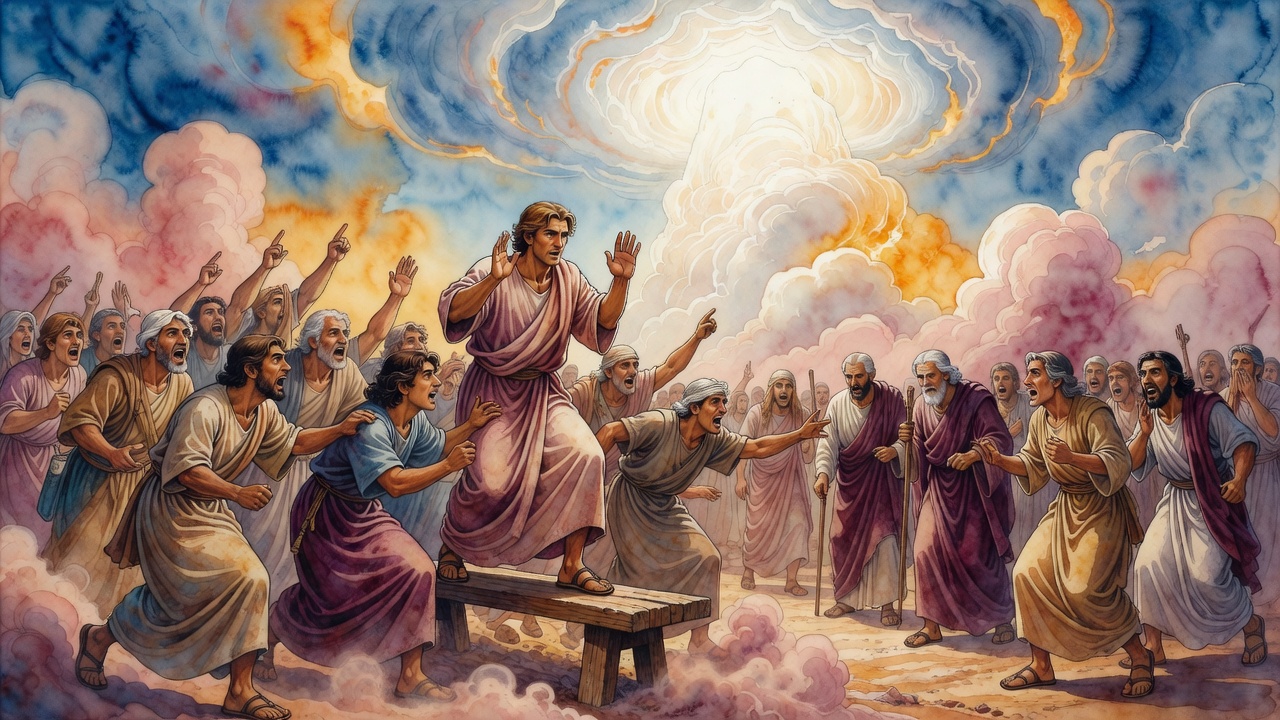
Caleb watched all of this. Midrash Tanchuma Buber on Shlach records that he had hidden his real assessment from the beginning, agreeing with the other scouts in small things, earning their trust, waiting. When the whole camp was crying out against Moses, Caleb climbed up onto a bench and hushed them into silence with a single gesture. The scouts assumed he was about to agree with them. He opened his mouth: we shall surely go up and possess it. The silence that had opened for agreement became the silence that heard the truth.
← All myths