1,351 related texts · 28 related myths · Page 1 of 29
There exists a soul in every generation through whom Torah insights are revealed to the world. Rabbi Nachman of Breslov describes this soul as one burdened with suffering: "Bread w...
These are the generations of Aaron and Moses. [Betai Midrashot (rabbinic interpretive commentary) Third Chamber] Our rabbis taught: Brothers who are partners and who increased asse...
Rabbi Nachman of Breslov taught that in the future, all suffering will be revealed as good. Not philosophically. Experientially. You will bless God for your pain the same way you b...
When harsh decrees threaten the Jewish people, Rabbi Nachman of Breslov prescribes an unexpected remedy: dancing and clapping hands. The logic runs through a teaching about what co...
What is written of Moses? (Numbers 20:14-16) "And Moses sent messengers from Kadesh to the king of Edom … And our fathers went down to Egypt … and He hearkened to our voice." He (t...
Thus we find that they went back (the distance of) three journeys (at Moses' behest), viz. (Numbers 33:8-10) "And they journeyed from Pi Hachiroth … And they journeyed from Marah a...
In ancient Israel, a person who killed someone by accident did not go free. Neither was he executed. He ran for his life to one of six cities of refuge, and the roads that led ther...
The full scope of Moses's argument against the angels is recorded in Shabbat 89a, and it is a masterclass in turning your opponent's own premises against them. Moses went through t...
The generation of the Flood earned their destruction through arrogance. According to Sanhedrin 108a, God gave them 120 years of warning. They spent those years mocking Noah. The Sa...
“Haman saw that Mordekhai was not bowing and prostrating himself to him and Haman was filled with wrath” (Esther 3:5).“Haman saw that Mordekhai was not bowing and prostrating himse...
When God sent quail to feed the Israelites in the wilderness, the Mekhilta raises a practical question that reveals something remarkable about divine generosity. One might assume t...
The opening verse of Deuteronomy lists a string of place names, "in the wilderness, in the Arabah, over against Suph, between Paran and Tophel, and Laban, and Hazeroth, and Di-zaha...
The rabbis asked a strange question: why did King Solomon compare Israel to a walnut? Not a cedar, not a vine, not wheat, a walnut. Rabbi Yehoshua of Sichnan, speaking in the name ...
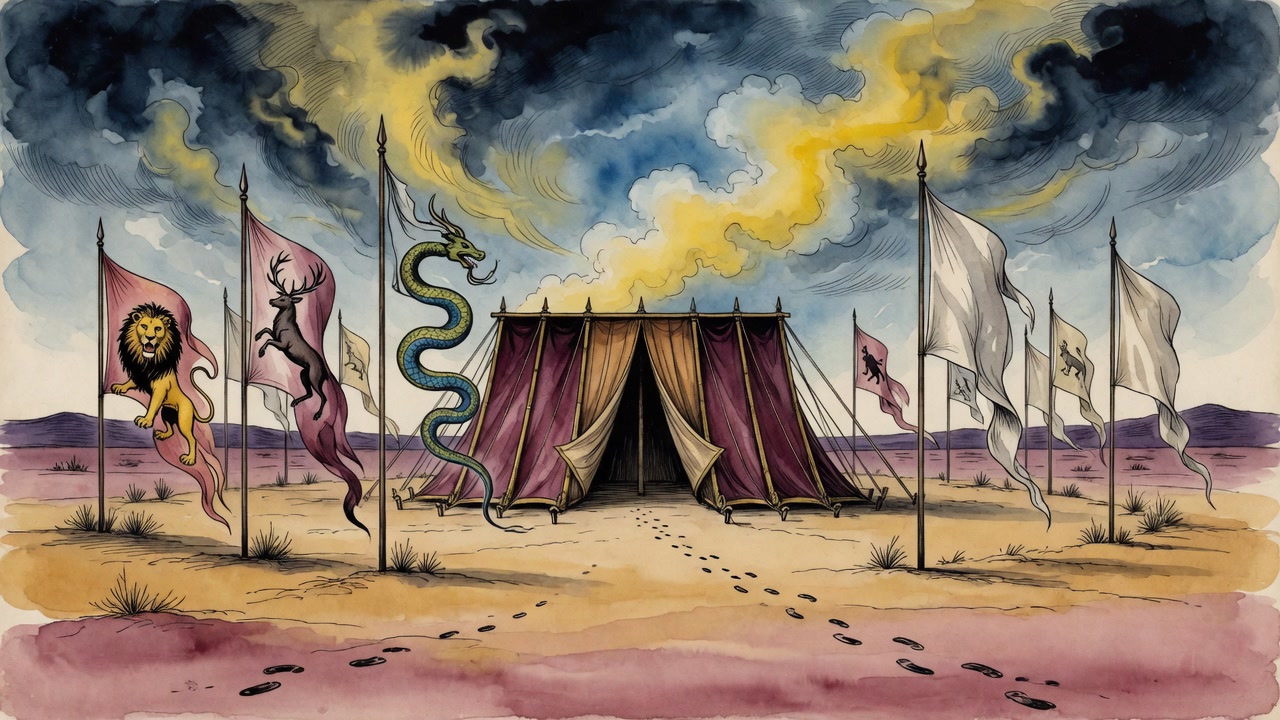
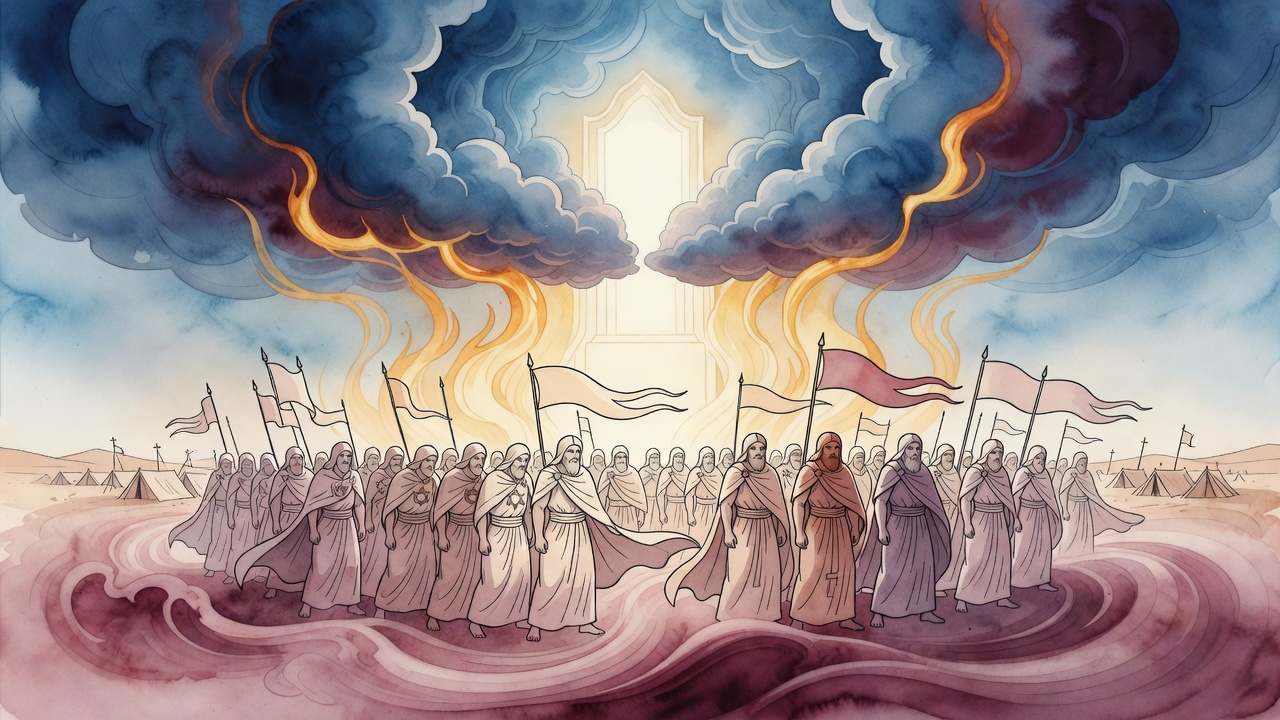
When the Torah commands that each tribe camp under its own standard, every man by his own banner, with the ensigns of their fathers' house (Numbers 2:2), the Rabbis were curious. W...
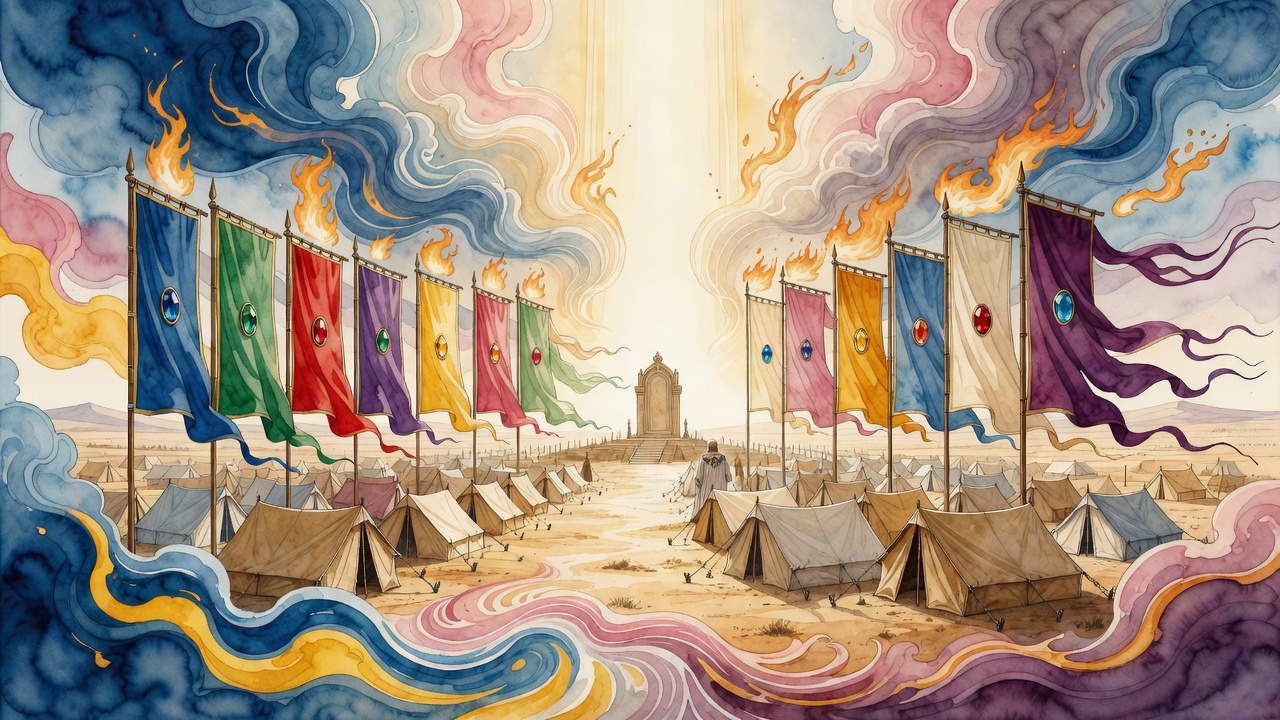
The Hebrew Bible says the Israelites camped by their tribal standards (Numbers 2:2). It never describes what was on them. The Targum Jonathan fills that silence with a riot of colo...
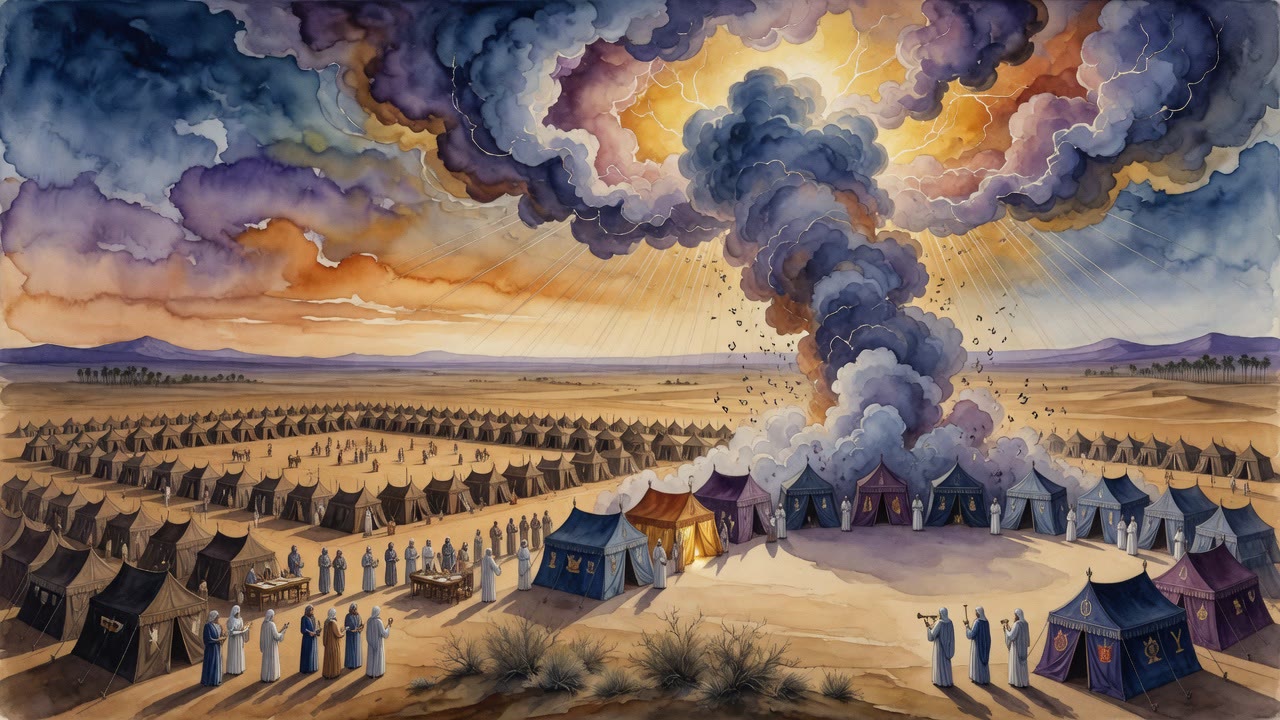
Picture the Israelite camp in the wilderness, not a dusty blur, but a blaze of color. Bamidbar Rabbah, a collection of rabbinic teachings on the Book of Numbers, gives us a vibrant...
Bamidbar Rabbah turns to The Overlooked Devotion of the Gershonite Levites. Our story comes from Bamidbar Rabbah, a fascinating collection of rabbinic interpretations on the Book o...
The Torah, in its infinite wisdom, touches upon this very feeling when describing the Levites. We find in (Numbers 3:46), "All the counted, whom Moses and Aaron and the princes of ...
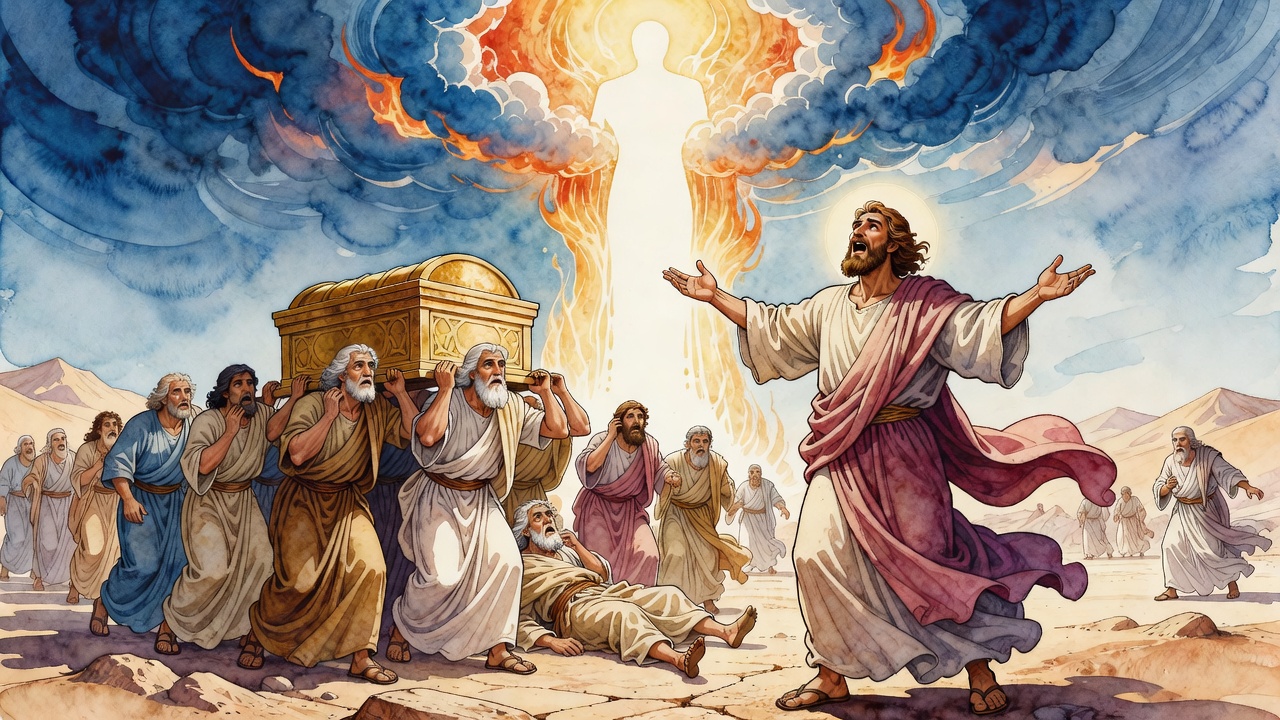
The death of Moses is the most devastating scene in the Torah. And the Talmud in Sotah 13b expands it into something almost unbearable. Moses pleaded with God not to let him die. H...
"Many peoples have afflicted me from my youth" (Psalm 129:1). The Assembly of Israel, the collective voice of the nation, says this as a Song of Ascents, sung while ascending to th...
The Torah says something strange when Balaam, the prophet hired by Balak of Moab to curse Israel, finally opened his mouth. And the Lord put a word in Balaam's mouth (Numbers 23:5)...
In the standard Hebrew text, God takes the Levites instead of Israel's firstborn sons. The Targum Jonathan adds details that transform this administrative swap into a high-stakes t...
Take the Book of Numbers itself, Bamidbar in Hebrew, where we get. well, a lot of numbers. But hidden within those numbers are stories, and insights into the way the ancient Israel...
The Torah mentions redeeming "the first-born of the unclean beast" in (Numbers 18:15), which could suggest that every unclean animal's firstborn must be redeemed. Camels, horses, d...
See [Hen], God is beyond reach in His power (Job 36:22): Rav Berakhiah said, "It is in the Greek language [as hen means one]. It is as you say, One is our God: Exalted in His power...
The Small Letters and their Purposes The ALEPH in ויקרא And He called (Leviticus 1:1) is small, to teach that the Holy Blessed One is only revealed to the nations of the earth thro...
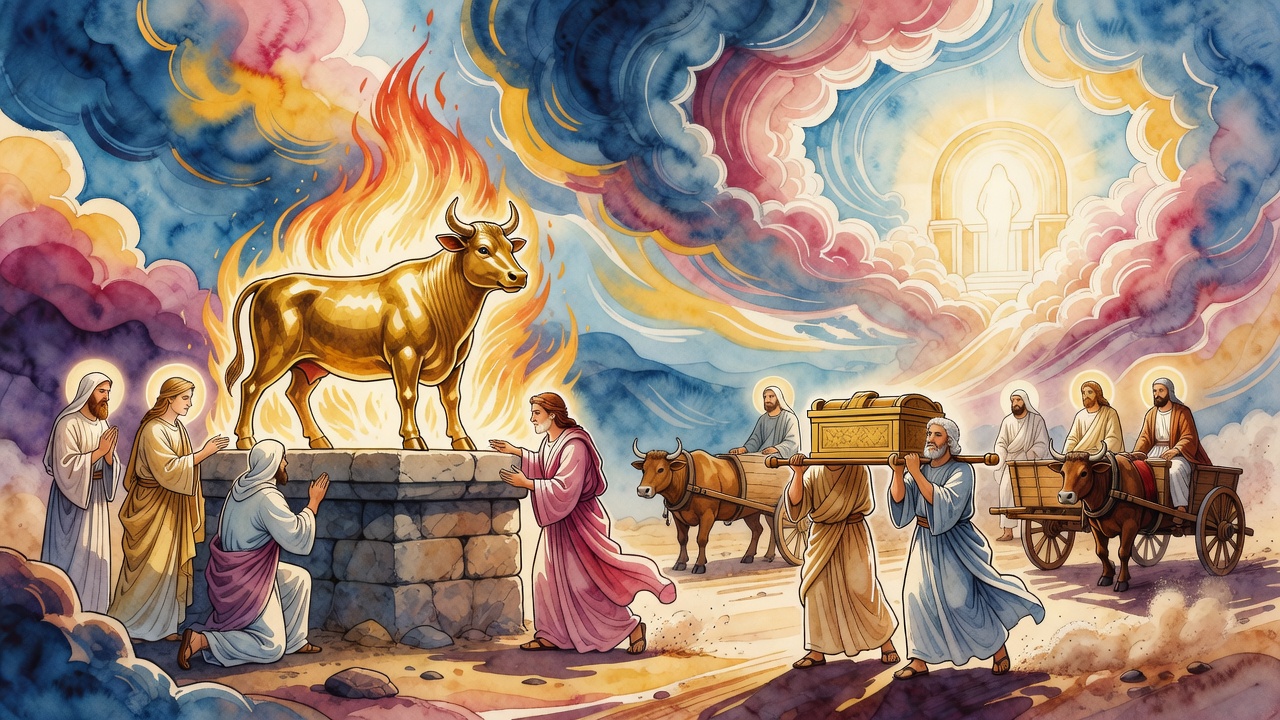
It all starts with the verse: “Moses took the carts and the bulls, and gave them to the Levites” (Numbers 7:6). Simple enough. But the Midrash (rabbinic interpretive commentary) ne...
We chase it, toil for it, sail across oceans for it... but is all that effort actually the thing that makes us rich? Bamidbar Rabbah, a collection of rabbinic teachings on the Book...
The book of Ecclesiastes, or Kohelet in Hebrew, wrestles with this too. "The wind goes to the south, and turns to the north; around and around the wind turns, and on its rounds the...
It's in those little quirks that readers often find hidden depths. Take the census of the Levites in the Book of Numbers, Bamidbar, for example. Specifically, Bamidbar Rabbah 6 shi...
It goes deeper than just a census. The tribe of Levi carried a weighty burden: atoning for the sin of the firstborn sons of Israel. Before the infamous Golden Calf incident, the fi...
The standard census in the Book of Numbers is a dry headcount. But the Targum Jonathan transforms it into something far more dramatic, adding a theological reason for every exempti...
Sometimes, a seemingly simple verse can unlock a whole world of understanding about God's relationship with us. to one such passage from Numbers, specifically 3:11-13. It starts pl...
The Book of Numbers (Bamidbar) is where we find this story. God tells Moses, "You shall take the Levites for Me, I am the Lord, in place of every firstborn among the children of Is...
Bamidbar Rabbah turns to The Demographic Puzzle of Levites Versus Firstborn. So, the children of Israel are wandering in the desert, and God instructs Moses to count two groups: th...
It wasn’t just about packing your bags; it was a meticulously organized operation, especially when it came to the most sacred objects. Think about the Levi'im, the Levites, the tri...
Before Aaron's household held the priesthood, someone else did. Targum Pseudo-Jonathan on Exodus (Exodus 24:5) preserves this little-known tradition: Mosheh sent the firstborn of t...
It was a sight to behold, a marvel of divine organization and shimmering glory. A perfect square, twelve thousand cubits on each side. That's the camp. And right in the very heart ...
"The entire world was created only for my sake" (Sanhedrin 37a). Rabbi Nachman of Breslov takes this teaching at face value: if the world exists for you, then you are responsible f...
Why travel to see a tzaddik (a righteous person) in person when you can read their teachings in a book? Rabbi Nachman of Breslov answered this question directly: there is an immeas...
Before Aaron was chosen for the priesthood, every member of Israel was eligible to serve as a priest. The entire nation stood on equal footing when it came to approaching God throu...
If only a donkey's firstborn is redeemed, what does the Torah mean when it says in (Numbers 18:15), "but redeem shall you redeem the first-born of the unclean beast"? The Mekhilta ...
(Ibid.) "for the L–rd said: Lest the people bethink themselves when they see war": This is the war of Amalek, viz. (Numbers 14:45). "Variantly: "for the L–rd said, etc.": This is t...
(Exodus, Ibid. 21) "And the L–rd went before them by day": We are hereby taught that as one metes it out to others, so is it meted out to him. Abraham accompanied the ministering a...
R. Yehudah says: It is not written "the pupil of the eye, but "the pupil of His eye", the "eye" of the Holy One, as it were. Similarly, (Malachi 1:13) "And you say (of an offering)...
The Mekhilta asks a question about Kazbi (also known as Cozbi), the Midianite woman who played a central role in the sin at Baal Peor. The verse calls her "the daughter of a prince...
The question of whether Moses wrote the last eight verses of the Torah, the ones describing his own death, provoked one of the most poignant debates in the Talmud. Bava Batra 15a p...
Pharaoh's daughter did not accidentally find Moses. According to Sotah 12b, she came to the river to immerse herself, not for bathing, but to wash away the spiritual impurity of he...