The Meat Was Still in Their Teeth When the Plague Struck
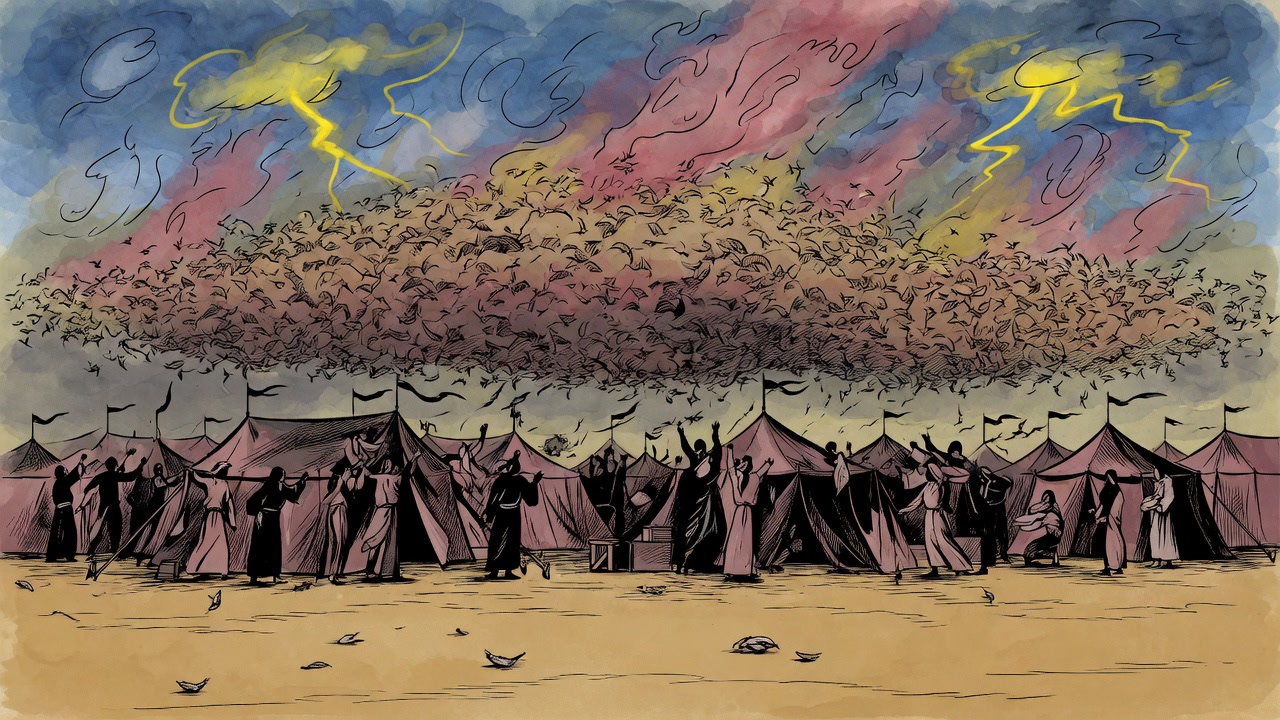
They wept until heaven sent meat, and it came down in layers. The laziest man in the camp gathered ten kor of it. Nobody finished the first mouthful.
Table of Contents
 Click for full size
Moses Asked Him to Stay and Be Their Eyes
The camp was breaking up to move, and Moses went looking for his father-in-law before the poles came down.
The old man had two names and both were true. His daughters had grown up calling their grandfather father, the way small children do, so Reuel stayed stuck in the story, but the man Moses came to find was Chovav, and he was called Chovav because he loved the Torah more than any outsider who ever came near it.
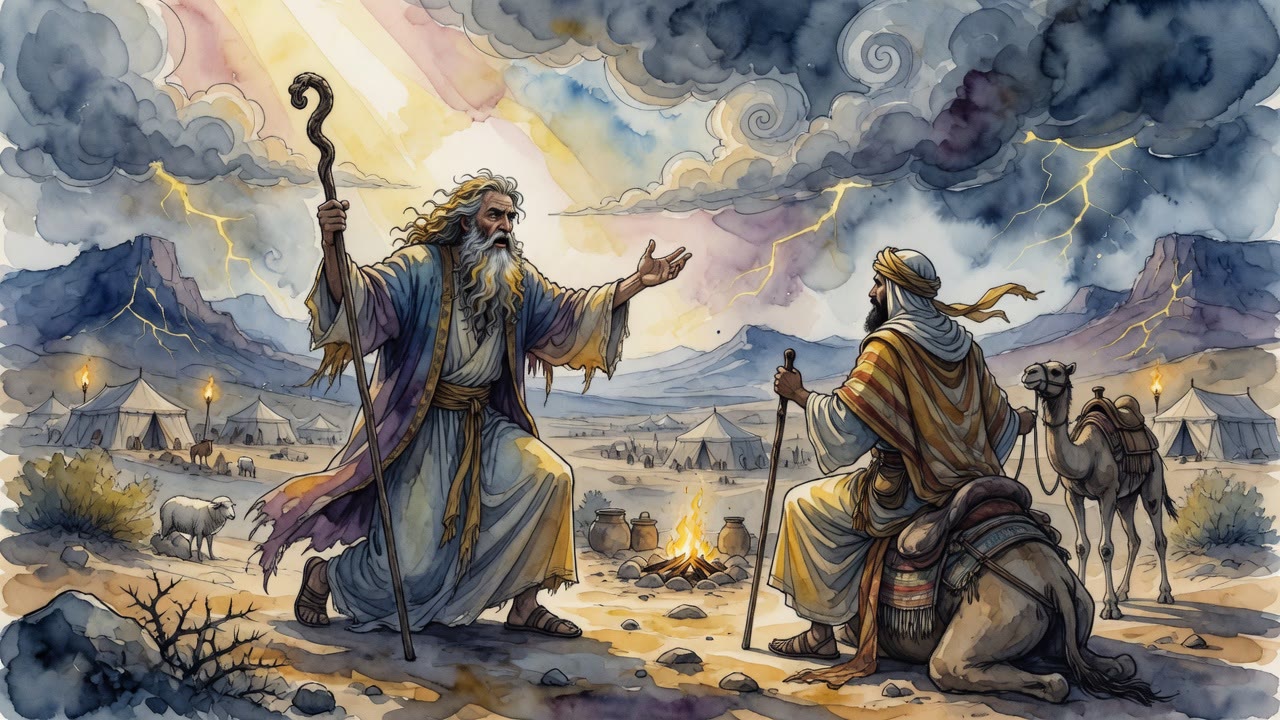
"Come with us," Moses said. "You know where we camp in the desert. You can be our eyes."
Chovav had watched the sea open. He had eaten bread in front of God with Aaron and the elders. He answered anyway. "I will not go. I will go back to my own land, to the place I came from."
Moses asked him twice. The Torah does not record what he said the second time.
They Said the Bread Would Burst Them
Three days out from the mountain the food talk started, and it did not start with hunger. There was food. It fell every morning and lay on the ground waiting.
"Our throats are dried up. There is nothing at all. We have nothing to look at but the manna."
Rabbi Shimon repeated the ugly part of the complaint out loud. They said it would burst their bowels, he said. They stood there in front of bread from heaven and argued that a man cannot swallow and never pass anything, and that whatever they were being fed was going to tear them open from the inside.
Somebody pushed back at him. Then why did God command a spade among their tools, and tell them to dig and cover it over?
Because of the Canaanite traders, he said. Merchants came out to the edge of the camp and sold them things, and what they bought is what they buried. The manna never came back out of anyone. It went into the arms and the legs and stayed there, bread eaten by strong men and taken up whole into their limbs.
God Turned Away From Them and Spoke to Nobody
What happened next in the text is a switch in speakers so quiet that it is easy to walk past.
Israel said their line about having nothing to look at. Then a second voice describes the thing they were refusing, and it is not theirs. It is God, talking over their heads to every generation that had not been born yet, the way a man calls witnesses into a room.
Come and see what they are complaining to Me about.
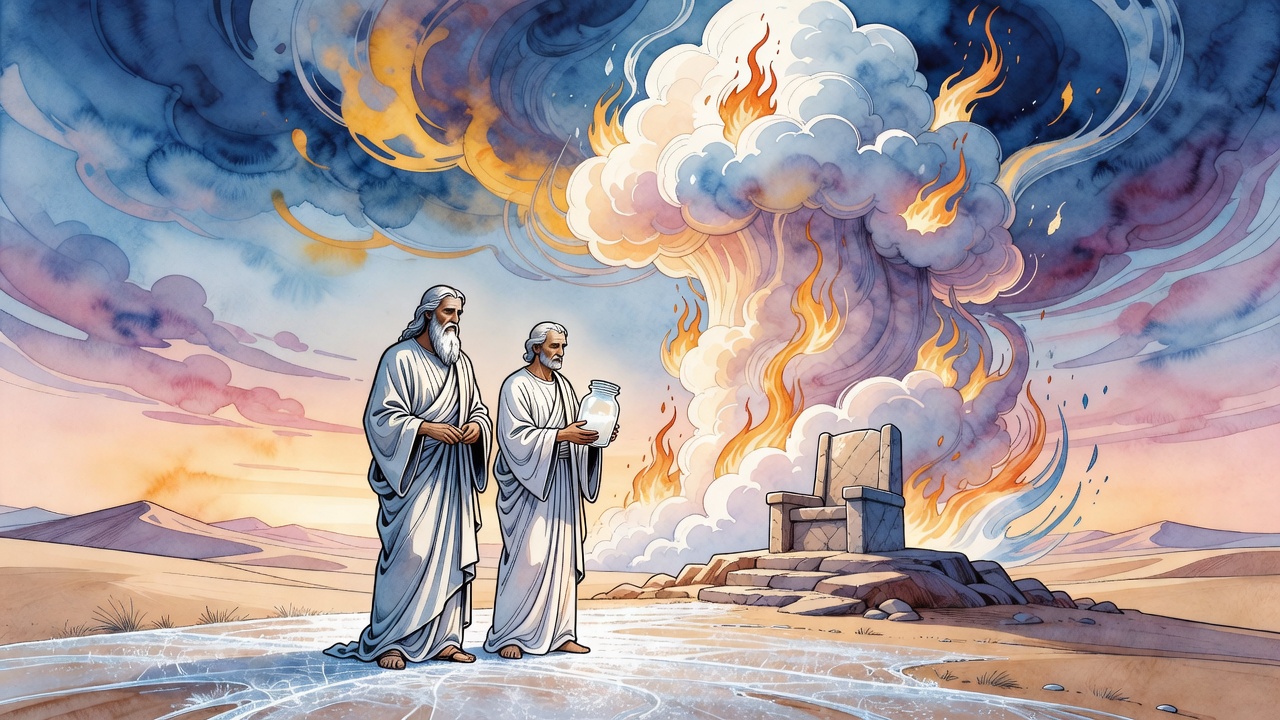
It was shaped like coriander seed. It had the look of bdellium, the stone out of the country where the gold is good, the one named in the same breath as onyx at the head of the four rivers. That is what was lying on the sand outside their tents every morning, and they called it nothing.
The Quail Fell in Layers
So they wept for meat, and they got meat.
It came down out of the sea wind and it did not come down thinly. Rebbi said the word means it fell in layers, one spread over another over another. Rabbi Yehudah heard a different word inside the same letters and said the birds came down alive, so that every man in the camp had to hold a bird and cut its throat before he could eat it, and the whole camp stood there slaughtering in the dark.
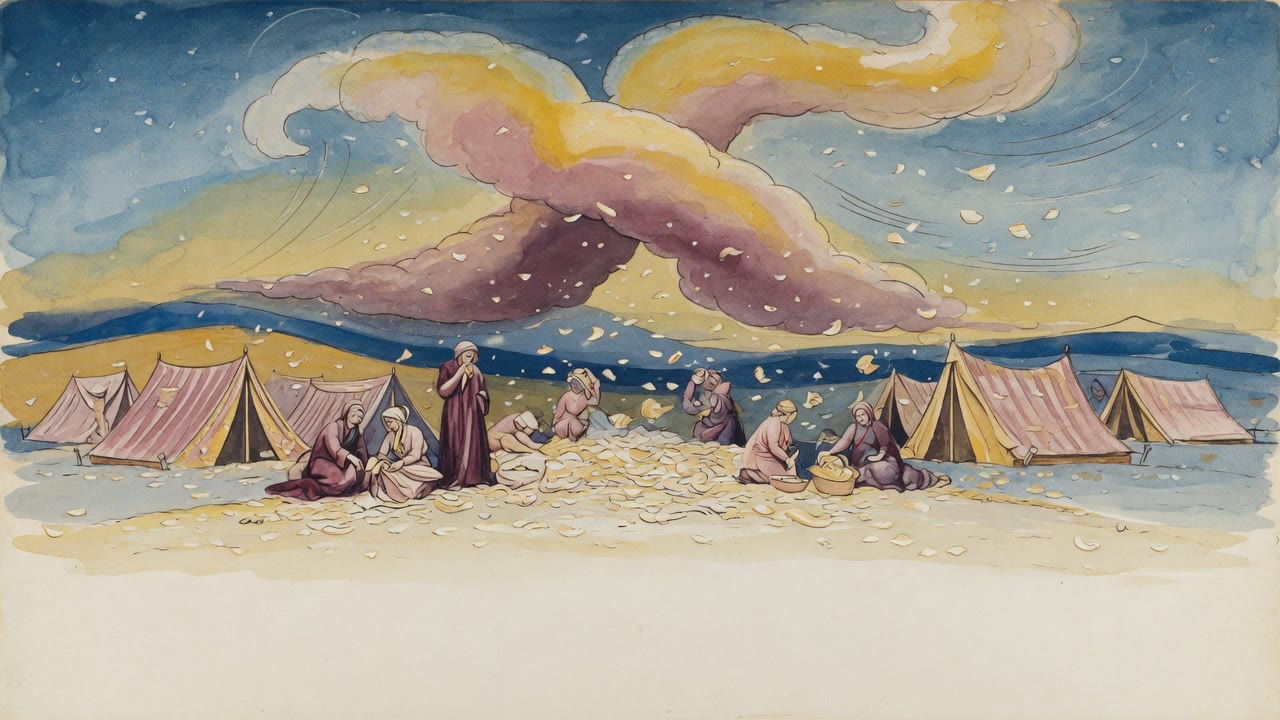
They gathered for a full day, and all that night, and the next day. The laziest man in the camp, the one who lagged and limped and never carried anything, took ten kor for himself, enough to fill a storeroom. Nobody in the camp went short.
The Graves of Craving
You would think that men who gathered like that ate like that.
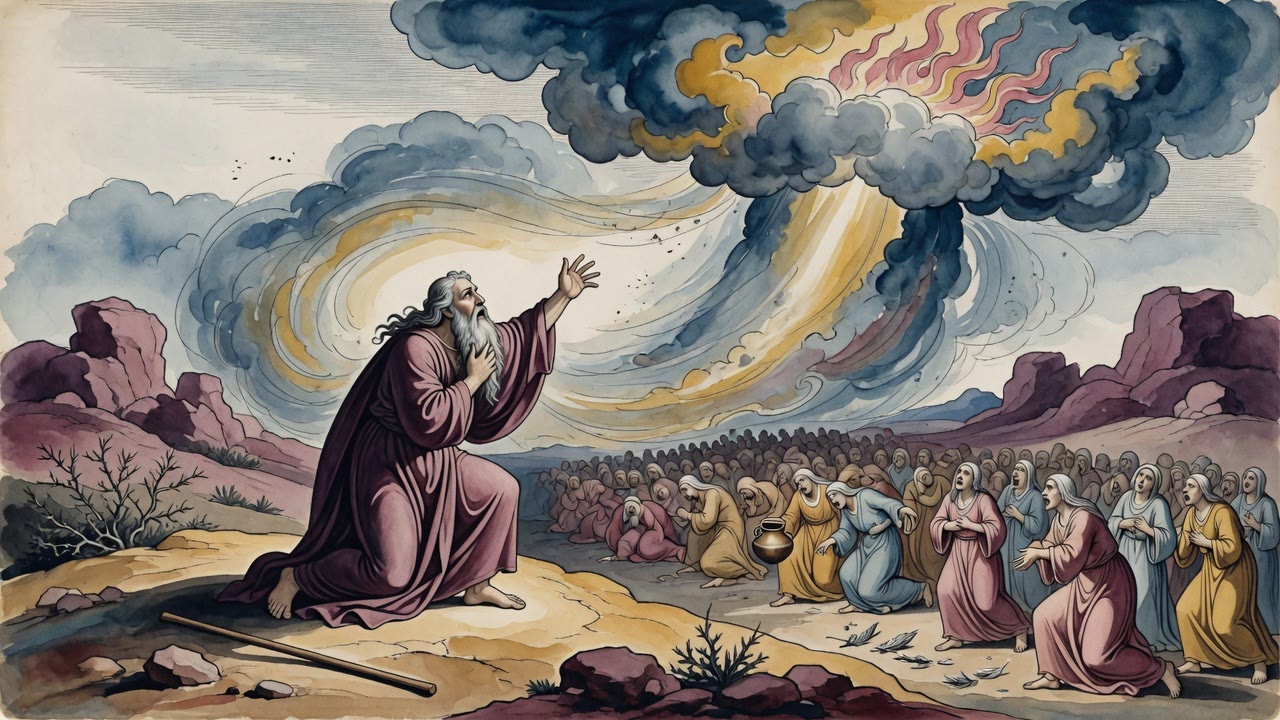
They did not. The flesh was still between their teeth. He had not finished the first bite, had not swallowed once, and his soul left him with the meat in his mouth. They had not even come loose from the thing they wanted before the anger rose and struck down the fattest of them, and the plague that went through the camp was worse than anything since the day they walked out of Egypt.
They buried them where they fell and named the place for what killed them. Kivroth Hataavah, the graves of craving. Then the camp packed up and walked away from it, and the manna came down the next morning the same as always, shaped like coriander seed, with nobody left in that spot to call it nothing.
← All myths