The Oleander Tree at Marah and the Bread Kept Since Creation
Moses writes God's Name on poisonous oleander and throws it into bitter water. Weeks later, heaven drops bread stored there since the first week of creation.
Table of Contents
 Click for full size
Three Days Without Water
The song at the sea had barely faded when the thirst began.
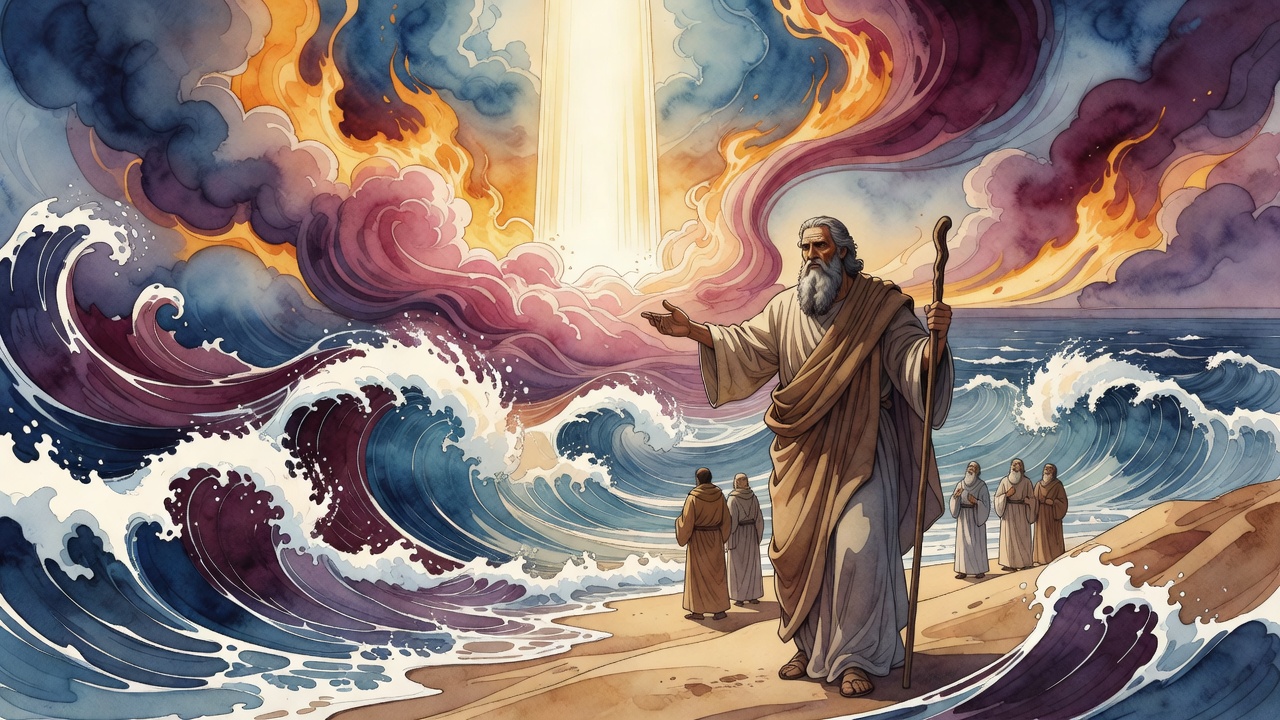
Three days into the wilderness of Shur and the water bottles were empty. The people who had watched the sea collapse behind them like walls of glass were now scanning the horizon for palm trees, for any smear of green that might mean water. Children were crying. Mouths were dry. The miracle of the sea was exactly three days old and already insufficient against the arithmetic of thirst.
Then they saw Marah. Water. Running water in the desert. People ran toward it.
They tasted it and stopped.
The Bitter Tree That Was Also Poison
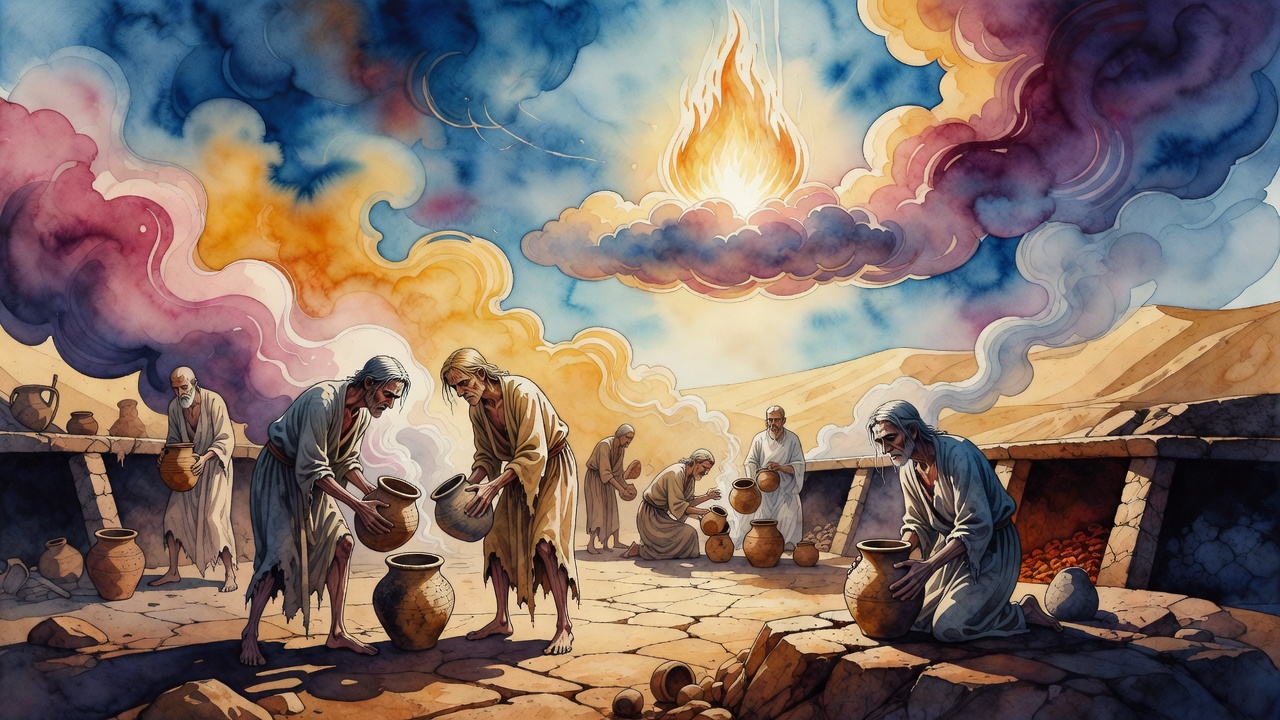
The water at Marah was undrinkable. The Torah says so without elaboration. The name Marah means bitter, as if the place had always known what it was.
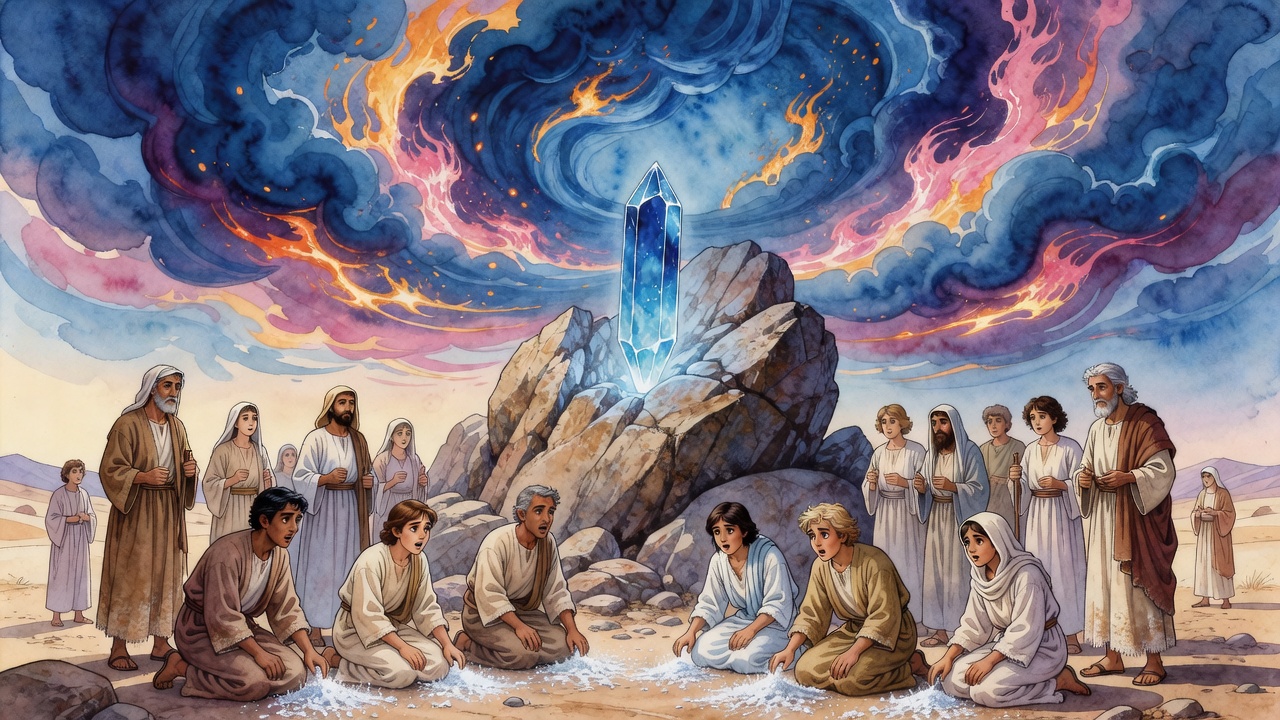
The people turned to Moses with the question that extreme disappointment produces: what are we going to drink? Moses turned to God and received an instruction. God showed him a tree. Moses cut it and threw it into the water and the water became sweet.
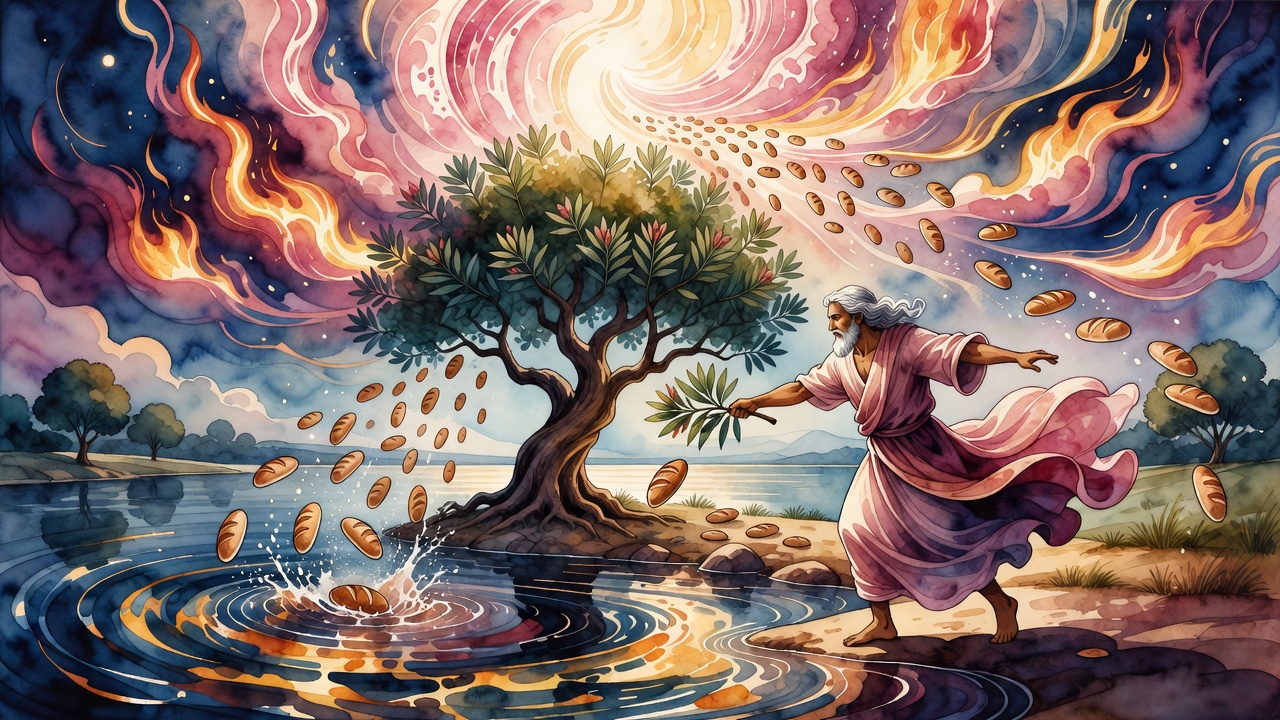
Targum Pseudo-Jonathan refuses to leave the tree unidentified. The tree was Ardiphne, oleander, one of the most poisonous plants in the region. It is not a plant that sweetens things. Its sap and leaves and bark and flowers are all toxic. An animal that eats a single branch can die from it. Moses was shown the most bitter, most dangerous tree in the area and was told to throw it into already undrinkable water.
But before he threw it in, he wrote on it. The Targum says Moses wrote the great and glorious Name, the Ineffable Name, on the oleander, and then cast it into the water. The Name did not cancel bitterness by adding sweetness. It transformed the whole structure of what bitterness could do.
Poison Into Healing
The logic the Targum proposes is severe. God did not show Moses a sweet herb to counteract the bitter water. He showed Moses the most bitter thing available, marked it with the Name, and made it the instrument of transformation. Bitterness canceling bitterness. Poison becoming the mechanism by which poison is overcome.
At Marah, the Targum also records that God gave the people statutes and ordinances, teaching that the bitterness of the water was not only a practical problem but a test. They had been freed from Egypt. They had crossed the sea. Now the wilderness would teach them whether they could trust God's provision even when the first available water tasted like failure.
The Bread That Had Been Waiting
Six weeks into the wilderness, the people were hungry again. The food they had carried from Egypt was finished. They looked back at the fleshpots of Egypt with a longing that freedom had not cured. They said to Moses and Aaron: at least in Egypt we had bread to eat. Here you have brought us out to kill this whole community with hunger.
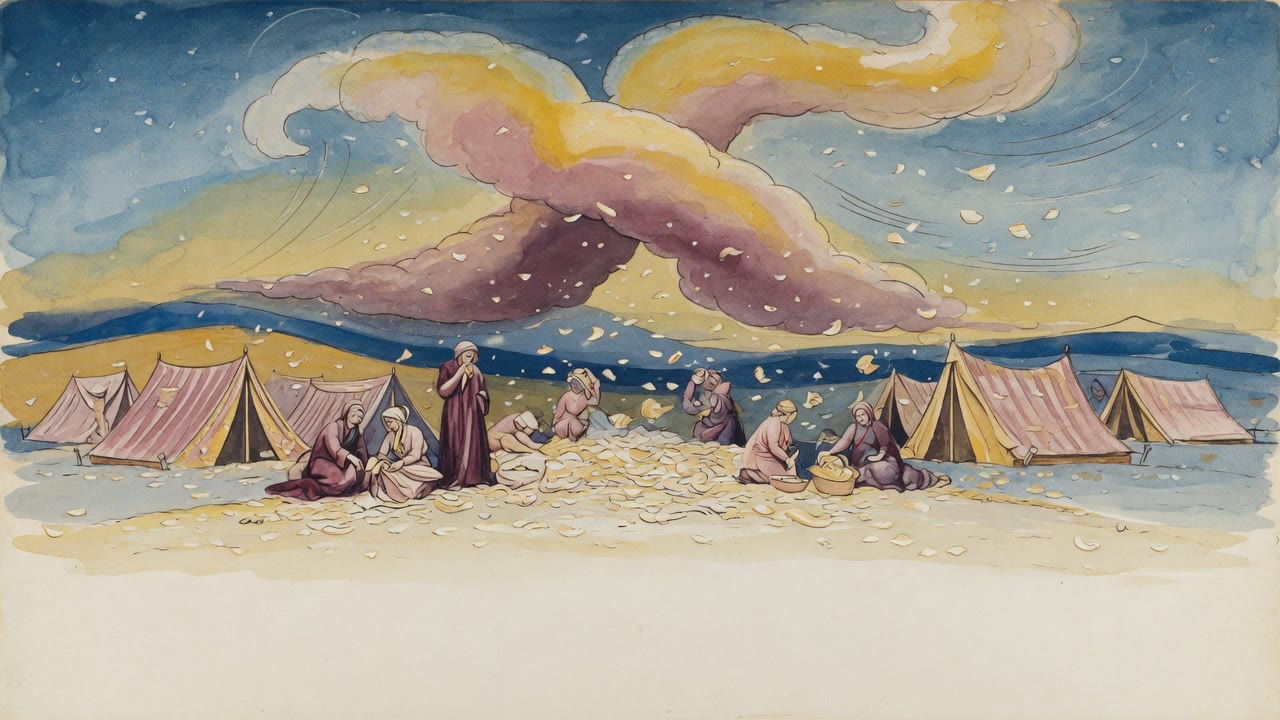
God heard the complaint and answered with something Targum Pseudo-Jonathan on Exodus calls the bread that was laid up for you from the beginning of the world.
Not new bread. Old bread. Bread that had existed since before the wilderness, since before Egypt, since before the people who needed it had been born. The manna that fell each morning in the desert of Sin had been prepared in the first week of creation and stored in the highest heavens, waiting for the morning when Israel would need it.
The Test Built Into the Bread
God told Moses that the manna would fall each day, and the people should gather only what they needed for that day. On the sixth day, a double portion would fall. On the seventh day, nothing would come, because it was Shabbat. The bread itself was structured to teach Israel how to count time the way God counted time.
The test in the manna was not whether Israel could gather bread. It was whether Israel could refrain from gathering extra, whether they could trust that tomorrow's portion would also fall, whether they could rest on the seventh day knowing that the bread had already been provided and did not require their labor to continue existing.
Most of them failed the test at least once. They gathered extra on a weekday and it rotted. They went out on Shabbat looking for manna and found nothing. The bread that had been waiting since the beginning of creation required Israel to become a people capable of receiving it, which took the whole forty years.
← All myths