6 min read

The Manna That Vanished Into the Limbs of Israel

Bread fell from heaven and Israel gorged like horses, but the manna left nothing behind. It vanished into their limbs and became them.

Curated by Arthur · Told by Maggid ·
Table of Contents
  1. The Night Heaven and Earth Traded Places
  2. They Ate Like Horses
  3. The Bread That Left Nothing Behind
  4. The Manna That Fell on Joshua
  5. Jeremiah Lifts the Jar

The Night Heaven and Earth Traded Places

For as long as anyone in the camp could remember, the world had worked one way. Bread rose from the earth. A farmer broke the ground, scattered seed, waited through rain and heat, and the earth pushed grain up toward the sky. Dew came down from above, settling cold on the tents before dawn (Deuteronomy 33:28). Earth gave bread. Heaven gave dew. That was the order of creation, fixed since the beginning.

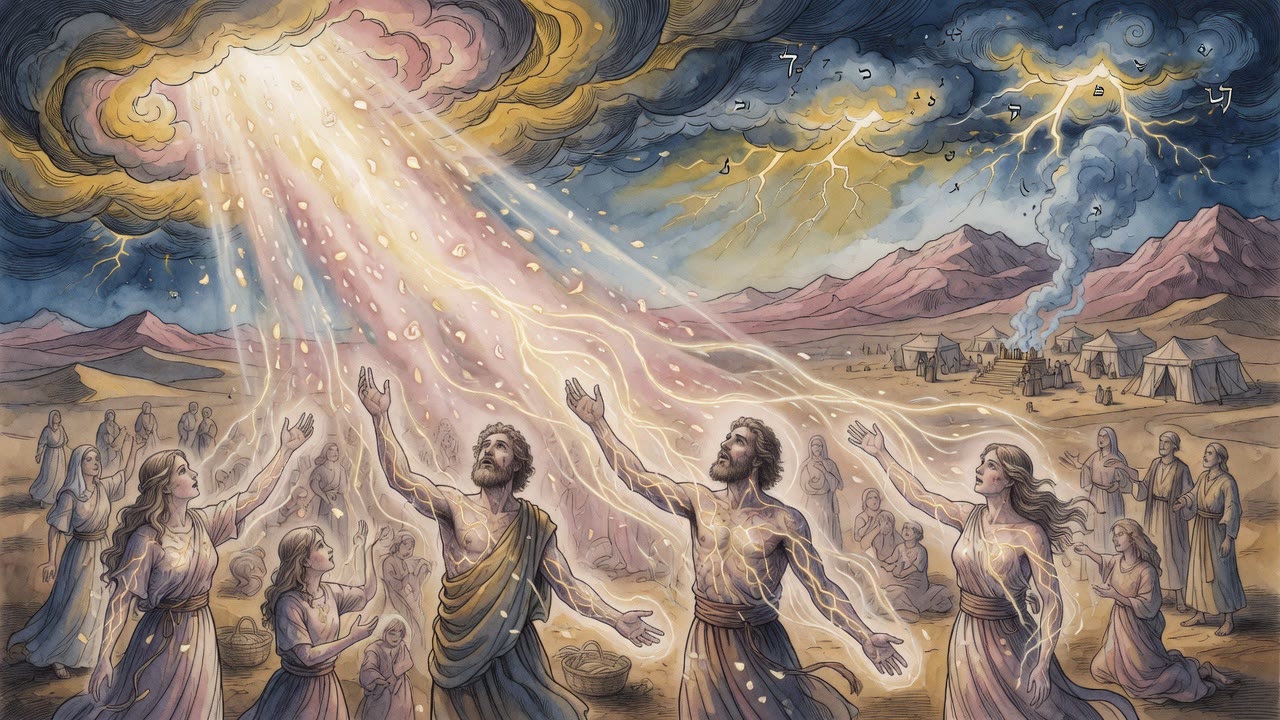
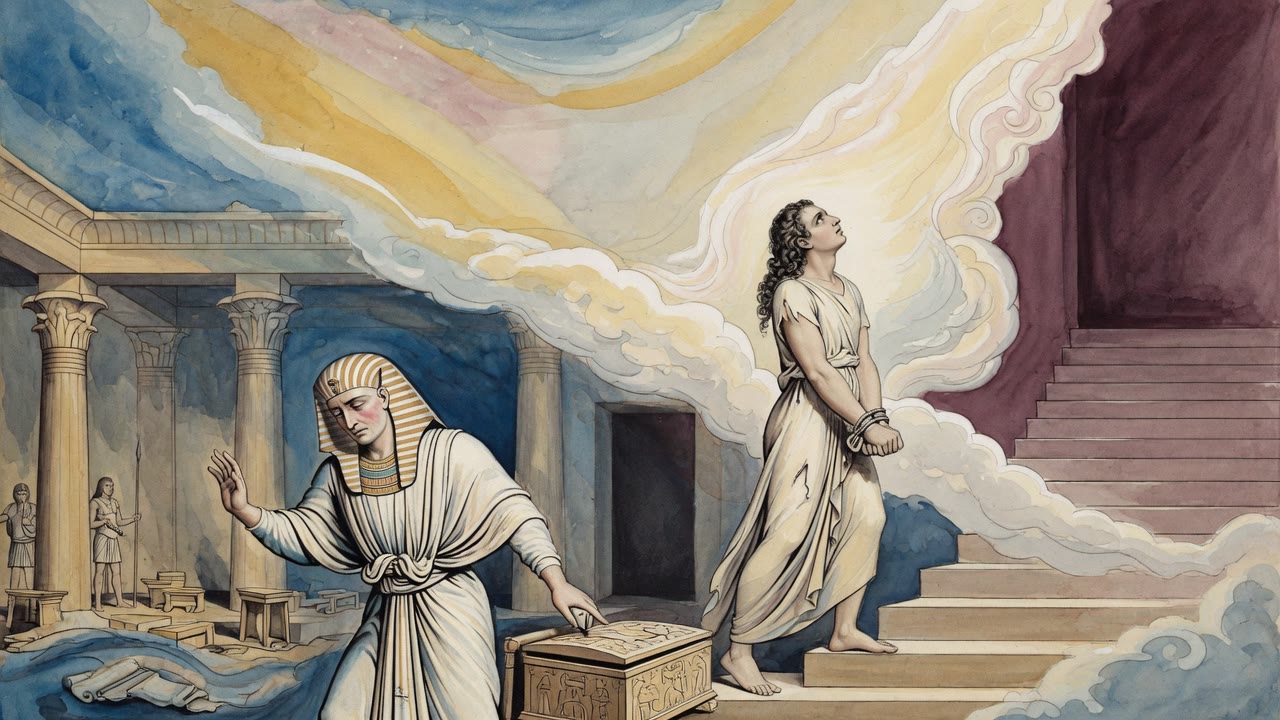
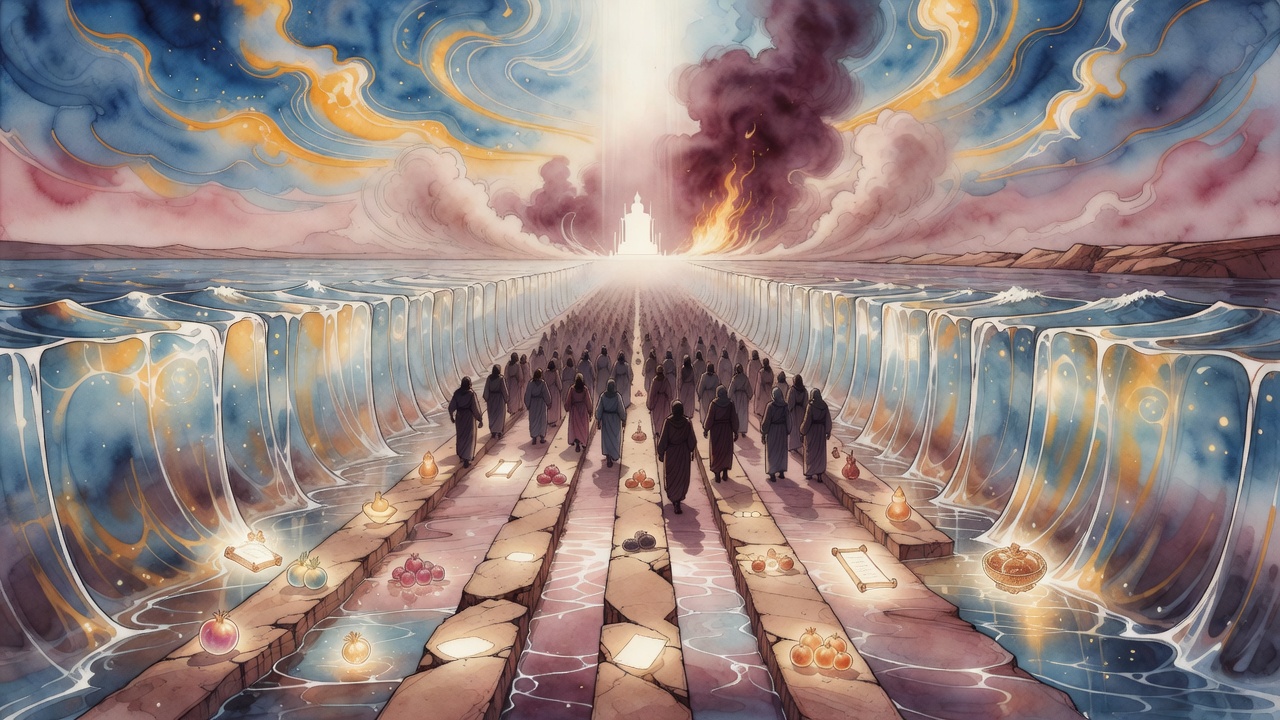
Then Israel walked into a wilderness where the order broke. So beloved were they before the Holy One that He reversed it for their sake. He turned the terrestrial celestial and the celestial terrestrial. He opened His goodly treasure trove, the heavens (Deuteronomy 28:12), and bread began to fall from the sky. "Behold, I shall rain down bread for you from the heavens" (Exodus 16:4). And the dew, which had always fallen, now rose. In the gray hour before sunrise the dew layer ascended from the ground (Exodus 16:14), lifting like a curtain, and underneath it lay the manna, fine and white on the open desert floor.

They did not gather it in their courtyards. They went out into the wilderness for it, out past the last tent ropes, into the empty land, and the bread was waiting there for them.

They Ate Like Horses

The first time, there was no dignity in it. A nation that had marched out of Egypt on hard rations, that had tasted dust and thirst and the dry crack of fear, came upon food lying free on the ground. They dropped to their knees. They stuffed their mouths. They ate the way horses eat after drought, heads down, jaws working, gorging without restraint, without pause, without thought.

Hands grabbed. Throats swallowed. The camp filled with the sound of a starving people eating their fill for the first time in living memory. Whatever the bread was, wherever it had come from, it went down by the fistful.

The Bread That Left Nothing Behind

But the manna was not what they thought it was, and the eating was only the beginning of the strangeness.

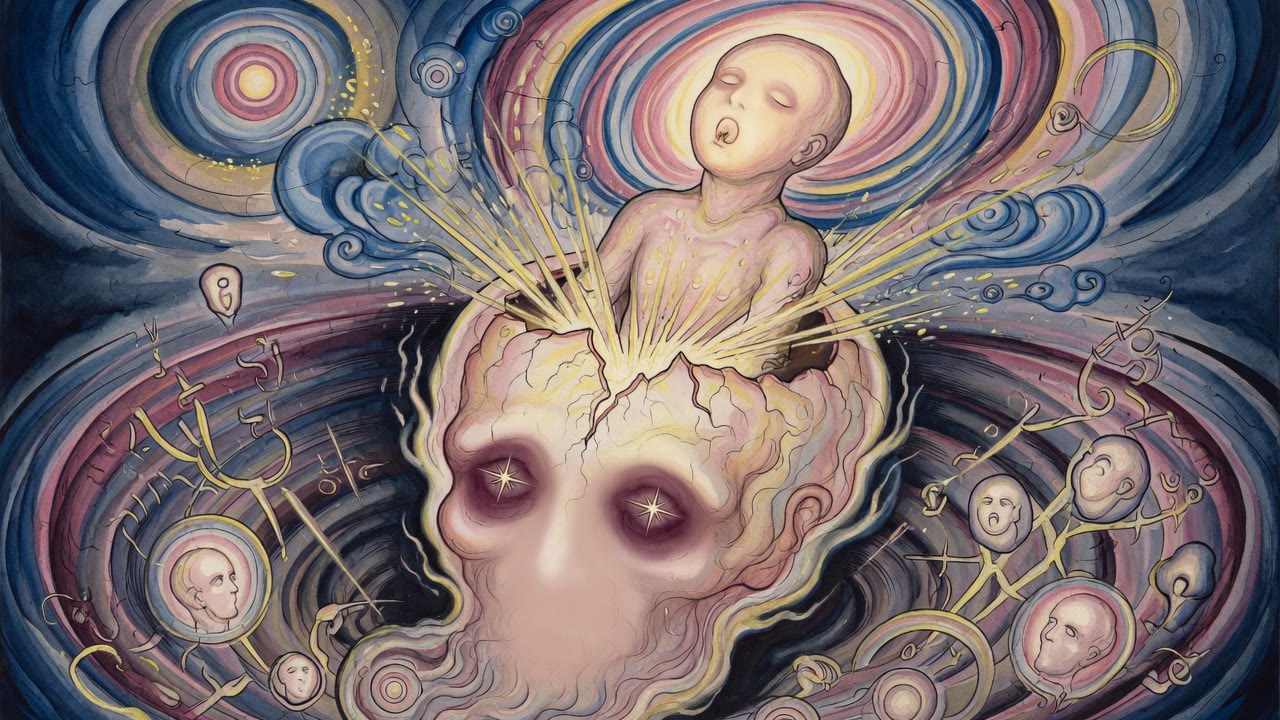
Ordinary bread makes demands. The body takes what it can use and casts out the rest. That is the tax every meal pays, the residue, the waste, the part of food that was never really food. The manna paid no tax. It went into the mouth, down the throat, and then it simply ceased to be separate from the one who ate it. Nothing was expelled. Nothing was left over. Every particle of it was drawn into the body and became the body, as if the bread had always belonged to their flesh and was only returning home.

The song of Israel remembers it in a single charged word. "Each man ate the bread of abirim" (Psalms 78:25). Abirim, the mighty ones, the bread of angels, food from the tables of heaven. But the letters of that word hold a second reading. Sound them differently and abirim becomes eivarim, limbs. Not only the bread of the mighty ones. The bread of limbs. Bread so pure, so perfectly fitted to the human frame, that it was absorbed straight into the limbs of those who ate it and vanished there. The people who had gorged like animals were carrying angels' food in their arms and legs, dissolved into muscle and bone, and they walked the wilderness with heaven worked into their bodies.

The Manna That Fell on Joshua

For one man the bread came closer still. "He sent them sustenance to satiety" (Psalms 78:25), and that word "them" points past the crowd to a single figure, Joshua son of Nun, the servant of Moses, the young man who never left the Tent of Meeting (Exodus 33:11). While the rest of the nation slept, Joshua kept his post at the tent. While the rest went out at dawn to stoop and gather, the manna descended for Joshua over and against all of Israel, a portion set apart.

And some told it more boldly than that. For Joshua, they said, the bread did not fall to the ground at all. It came down onto his own limbs. He woke to find his portion resting on his body, on the very arms and legs the manna was destined to enter, and from his own limbs he took it and ate. The bread of eivarim, delivered to the eivarim themselves. The man who would one day carry Israel across the Jordan was fed skin to skin by heaven.

Jeremiah Lifts the Jar

Generations passed. The wilderness closed behind Israel, the land opened before them, and the manna stopped falling. But one jar of it had been laid up by Aaron and kept, and it did not spoil, and it waited.

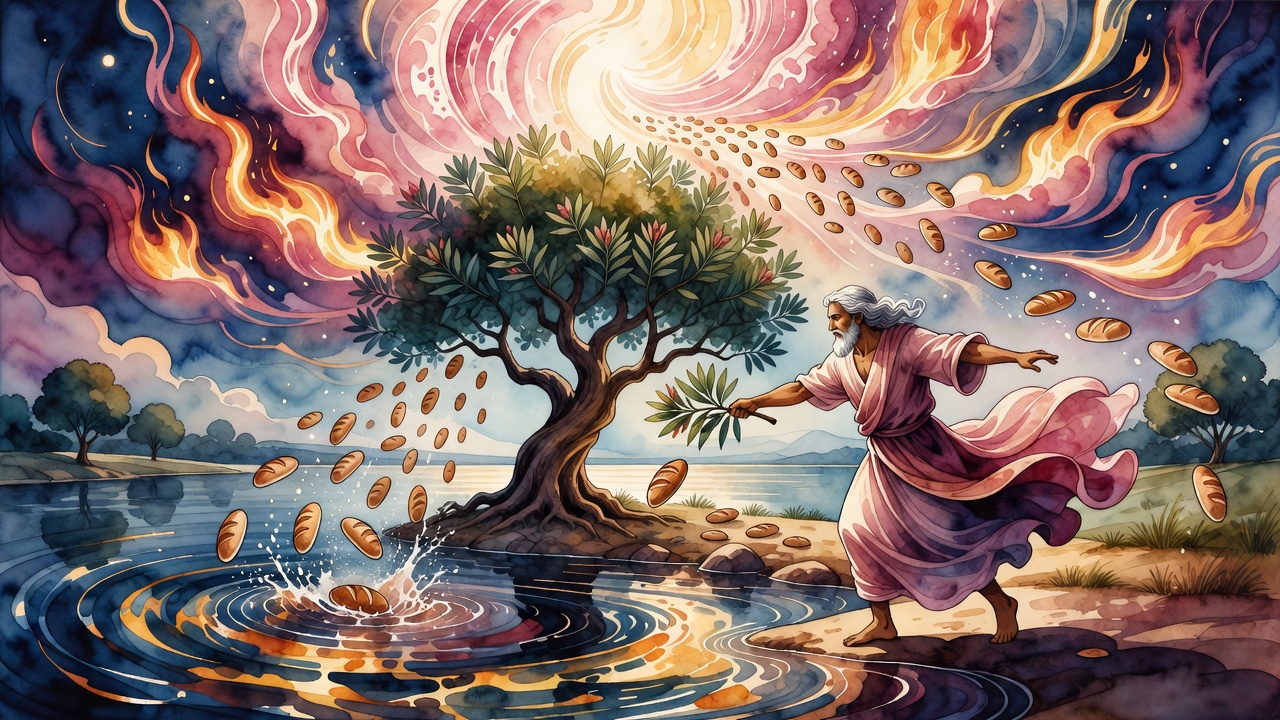
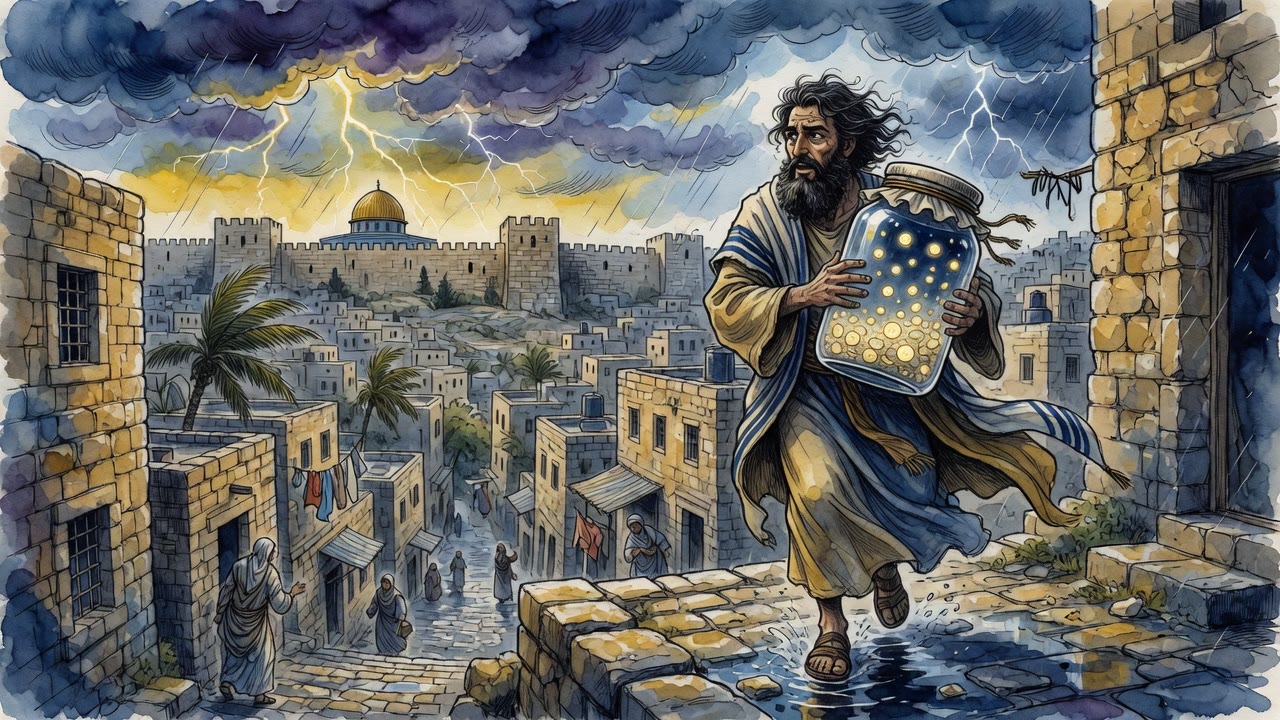
Centuries later the prophet Jeremiah stood before a people who had let the Torah fall from their hands. Their excuse was practical. How shall we leave our work and study? How will we feed ourselves? Jeremiah did not argue. He brought out the flask of manna, the same jar from the desert, and he raised it before their eyes. "O generation, see the word of the Lord" (Jeremiah 2:31). See it. Your fathers stood in a wasteland with no field, no vineyard, no market, nothing but sand, and they gave themselves to Torah, and every morning the sky fed them. The One who rained bread on a desert can feed you in a land of grain and wine.

The jar in the prophet's hands held more than old bread. It held the memory of a people whose food had become their flesh, proof you could lift up and look at, that when Israel turned toward heaven, heaven turned the whole order of the world toward Israel.


← All myths
From the tradition

Sources

4 sources

The texts this telling draws on, in full. Open a card to read inline, or expand it for a wider, quieter read.

Mekhilta Tractate Vayassa 4:21Mekhilta DeRabbi Yishmael

Rabbi Yossi and Rabbi Shimon used a vivid and startling metaphor to describe how the Israelites ate in the wilderness. They said Israel "stuffed themselves like horses" when the manna first arrived. The comparison is deliberately undignified, painting a picture of ravenous, unrestrained eating after the deprivation of the desert march.

The rabbis did not stop at the image of horses gorging. They turned to (Psalms 78:25), which says "each man ate the bread of abirim." The word abirim conventionally means "mighty ones" or "angels," suggesting the Israelites ate angelic bread. Rabbi Yossi and Rabbi Shimon, however, reread the word through a different voweling. Read it not "abirim" but "eivarim," meaning "limbs."

This changes everything. The manna was not just angelic food. It was bread that was absorbed directly into the limbs of the body. Unlike ordinary food, which must be digested and produces waste, the manna was so pure and so perfectly designed for human consumption that the body absorbed every particle of it. Nothing was left over. Nothing was expelled. The bread entered the body and became part of it entirely.

Moses himself confirmed this to the people. "This 'man' that you are eating is being absorbed by your limbs," he told them, using the Hebrew word for manna. The teaching reveals that the manna was not merely sustenance. It was a kind of perfect food, engineered by God to nourish without any residue, merging completely with the human body as though it had always been part of it.

Full source
Mekhilta Tractate Vayassa 3:3Mekhilta DeRabbi Yishmael

"from the heavens": from the goodly treasure trove of the heavens, viz. (Devarim 28:12) "The L–rd will open for you His goodly treasure trove, the heavens, etc." R. Shimon b. Gamliel says: Come and see how beloved are Israel before the L–rd. And because they are thus beloved before Him, He changed for them the order of creation. He converted for them the terrestrial to the celestial, and the celestial to the terrestrial. In the past (before the giving of the manna), bread would rise from the earth and dew would fall from the heavens, viz. (Devarim 33:28) "… a land of corn and wine. His heavens, too, shall drip dew," and now (with the manna) the order has been reversed. Bread has begun to fall from heaven, and dew to rise from the earth, viz. "Behold, I shall rain down bread for you from the heavens," and (Ibid. 14) "And, behold, the dew layer ascended, etc." (Ibid. 4) "and the people shall go out and gather": They did not gather it in the courtyards, but they went out to the wilderness and gathered it there.

Full source
Mekhilta Tractate Vayassa 6:16Mekhilta DeRabbi Yishmael

Centuries after the Exodus, the prophet Jeremiah faced a stubborn problem. The people of Israel had stopped studying Torah, and their excuse was entirely practical: "How will we feed ourselves?" They could not afford the luxury of learning when survival demanded all their energy.

Jeremiah did not argue with words. He pulled out the flask of manna, the same jar that Aaron had preserved in the wilderness. And held it up before them. "O generation, see the word of the Lord" (Jeremiah 2:31). Look at this. Your ancestors devoted themselves to Torah in a barren desert with no farms, no markets, no economy whatsoever. And God fed them every single morning with bread from the sky.

The message was devastating in its simplicity. If the Holy One Blessed be He could sustain an entire nation on miraculous food while they studied His Torah in the wilderness, He could certainly provide for people living in a settled land with fields and vinting. The manna was not just a historical relic. It was living proof that faith and study do not lead to starvation.

Rabbi Eliezer preserves this tradition in the Mekhilta to make a timeless point. Every generation finds reasons to abandon Torah, too busy, too poor, too distracted. And every generation has the same answer waiting for them in a glass jar: God provides for those who make room for His word.

Full source
Mekhilta Tractate Vayassa 4:22Mekhilta DeRabbi Yishmael

The Mekhilta DeRabbi Yishmael offered a remarkable tradition about Joshua the son of Nun and his unique relationship with the manna. (Psalms 78:25) says "He sent them sustenance to satiety," and the rabbis interpreted "them" not as a reference to all of Israel but specifically to Joshua, Moses' servant and eventual successor.

In this reading, the manna descended for Joshua "over and against all of Israel," meaning his portion was distinct from and perhaps greater than what the rest of the nation received. Joshua occupied a special status in the wilderness. He never left the Tent of Meeting (Exodus 33:11). He was Moses' closest disciple and the future conqueror of the Promised Land. The manna honored that status by singling him out.

An alternative opinion pushed the idea even further. "Others say" that the manna descended directly onto Joshua's limbs. It did not fall to the ground for him to collect like everyone else. Instead, it landed on his body, and from his own limbs he took it to eat. The bread of heaven attached itself to Joshua personally, as though his body was the designated landing surface for God's provision.

The rabbis connected this to (Numbers 27:18), where God calls Joshua an "ish," a man of distinction. The verse in Psalms says "the bread of abirim was eaten by ish," by the man, singular. This is Joshua. While all of Israel ate the manna collectively, Joshua ate it in a way that marked him as unique among the people, his body itself serving as the table on which God laid the bread from heaven.

Full source