5 min read

The Last Manna Fell and the Silver Trumpets Vanished on Moses's Death

When Moses died, heaven's bread fed Israel thirty-nine more days. His silver trumpets disappeared before Joshua could touch them.

Curated by Arthur · Told by Maggid ·
Table of Contents
  1. The Wilderness Did Not Die All at Once
  2. The Last Portion Fell on the Seventh of Adar
  3. The Trumpets That Could Not Cross Over
  4. The Shepherd Who Went Out Before the People

The Wilderness Did Not Die All at Once

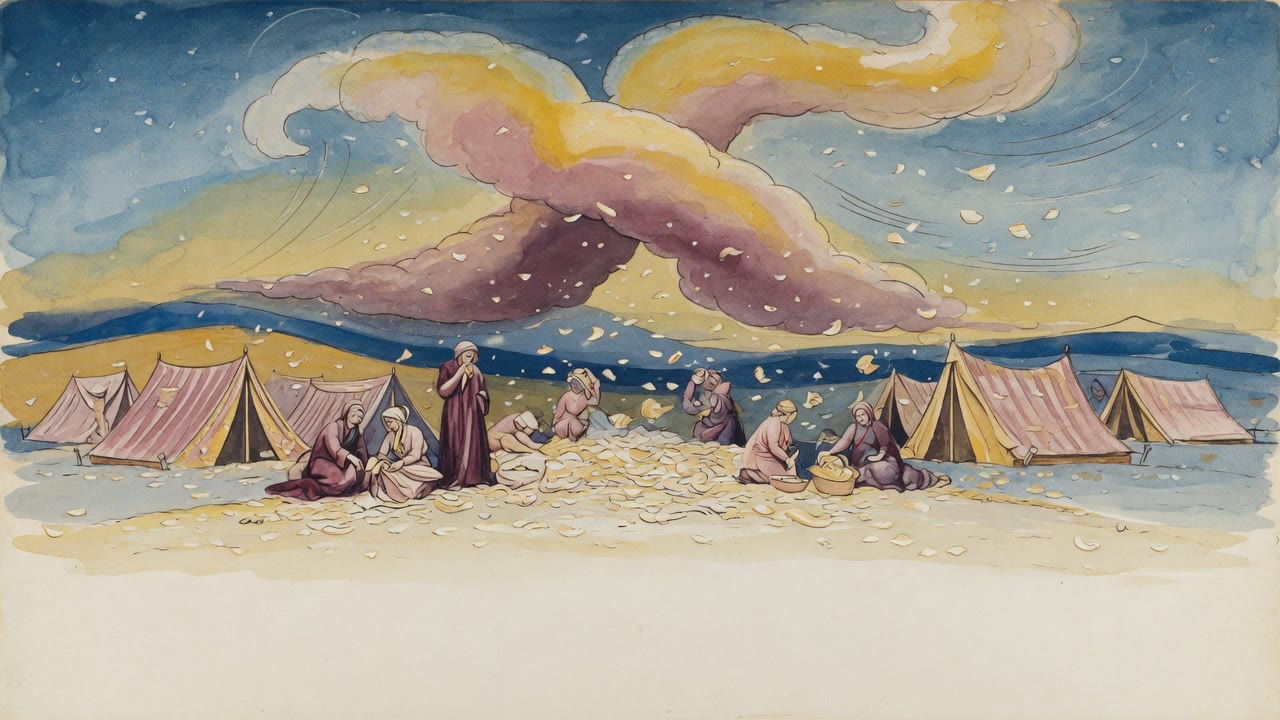
Moses died, but the wilderness did not end on that day. Heaven's bread was still in Israel's mouth. It would keep falling for thirty-nine more days after the man who had been its human vessel went into the mountain and did not come back down.

But the silver trumpets were already gone.

That is the sharp and deliberate asymmetry that the tradition recorded. One gift lingered because Israel still had to eat. One instrument vanished because authority is not a vessel you can simply pass from one hand to another. The things that belonged to Moses as Moses could not be inherited by Joshua as Joshua. They could only end.

The Last Portion Fell on the Seventh of Adar

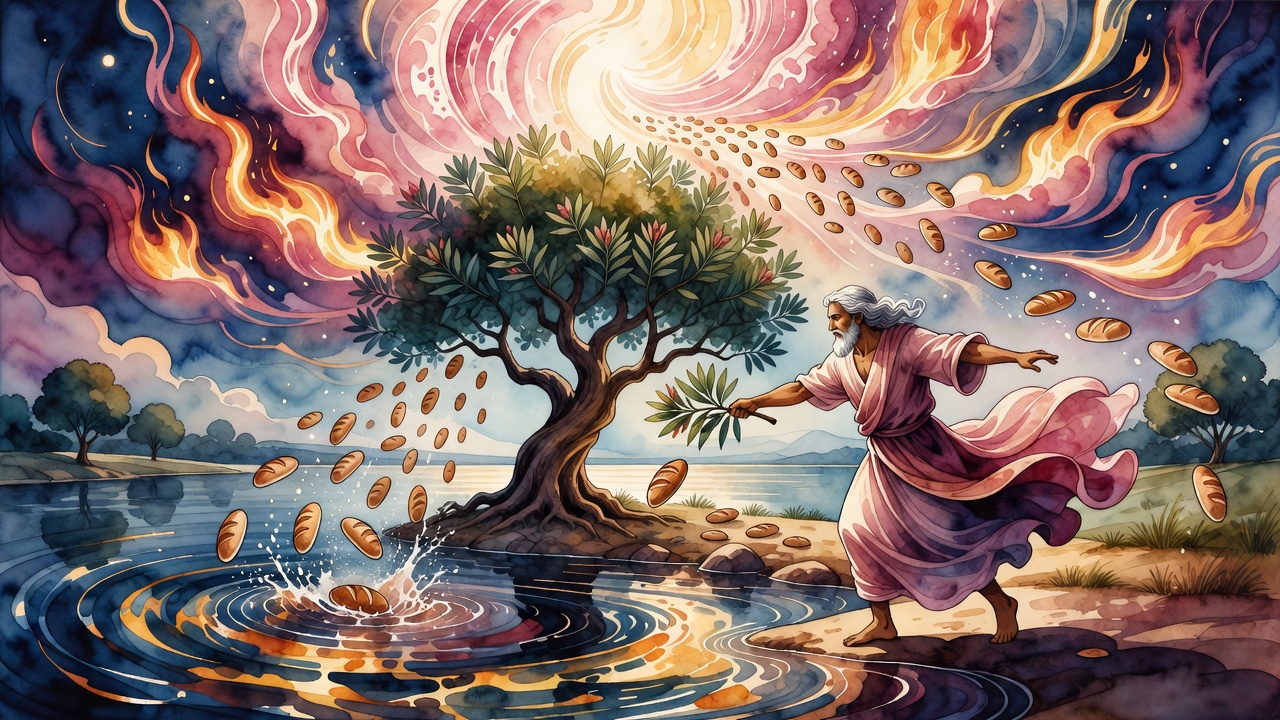
Moses died on the seventh of Adar. On the eighth of Adar, the manna stopped. But Israel had gathered the day before, as they always did, and so the food was already in their packs, already enough to carry them for thirty-nine days across the last stretch of wilderness.

The arithmetic is precise in the tradition's memory. Forty years and one month of heaven's bread, calibrated to a man's lifespan in the desert, and then thirty-nine days of remainder, enough to bridge the crossing but not to substitute for it. When the manna was gone, they ate from the land. They were already in Canaan by then. The bread that had fallen in the wilderness had no place in the land of grain and vine and olive.

This was always how it was going to end. The manna was wilderness food. It was the provision for the road, not the harvest. When the road was over, the provision stopped. But Moses died before the road ended, and so the bread outlasted him just long enough to carry the people to where they could feed themselves.

The Trumpets That Could Not Cross Over

When God told Moses to make two silver trumpets at the beginning of the book of Numbers, the instructions were specific: they were for Moses, and for Moses alone, to blow. Not Aaron. Not the Levites. Not Joshua. For Moses.

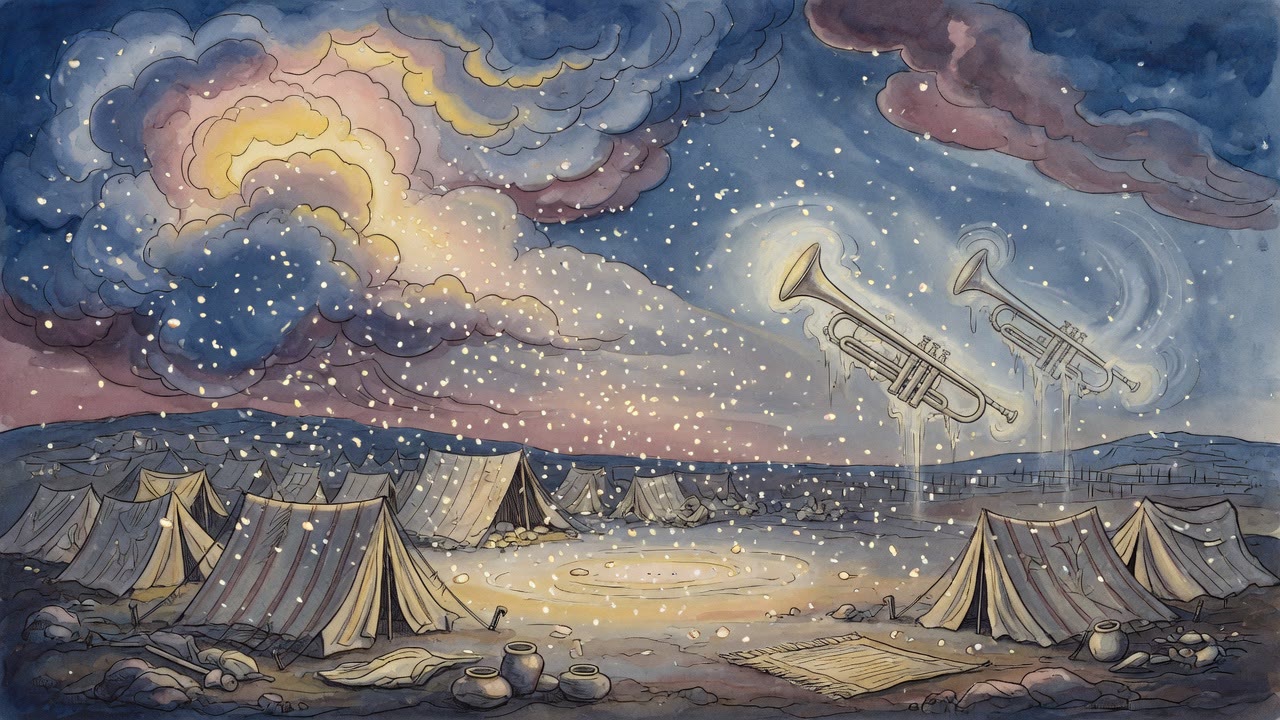
God said: make trumpets for yourself. The tradition heard that phrase as a wall. For yourself means not for another. When Moses died, the trumpets died with him. Not physically destroyed, but removed from human access. Hidden away into one of those categories of sacred things that leave the world when the person who was their vessel leaves.

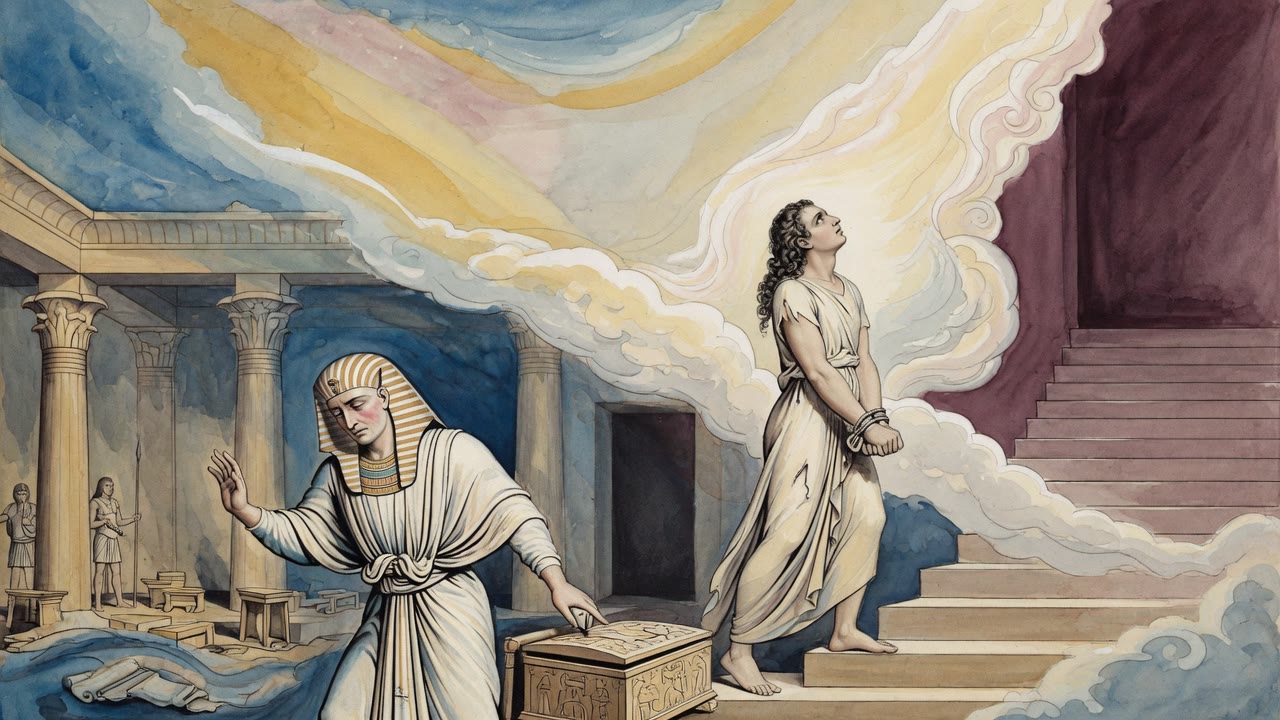
Joshua received the people. He received the mission and the land and the authority to lead. He received the weight of following the man who had spoken face to face with God. He did not receive the silver trumpets. His authority would have to find its own instruments, its own voice, its own form of summoning. He could not summon Israel the way Moses had summoned Israel.

The Shepherd Who Went Out Before the People

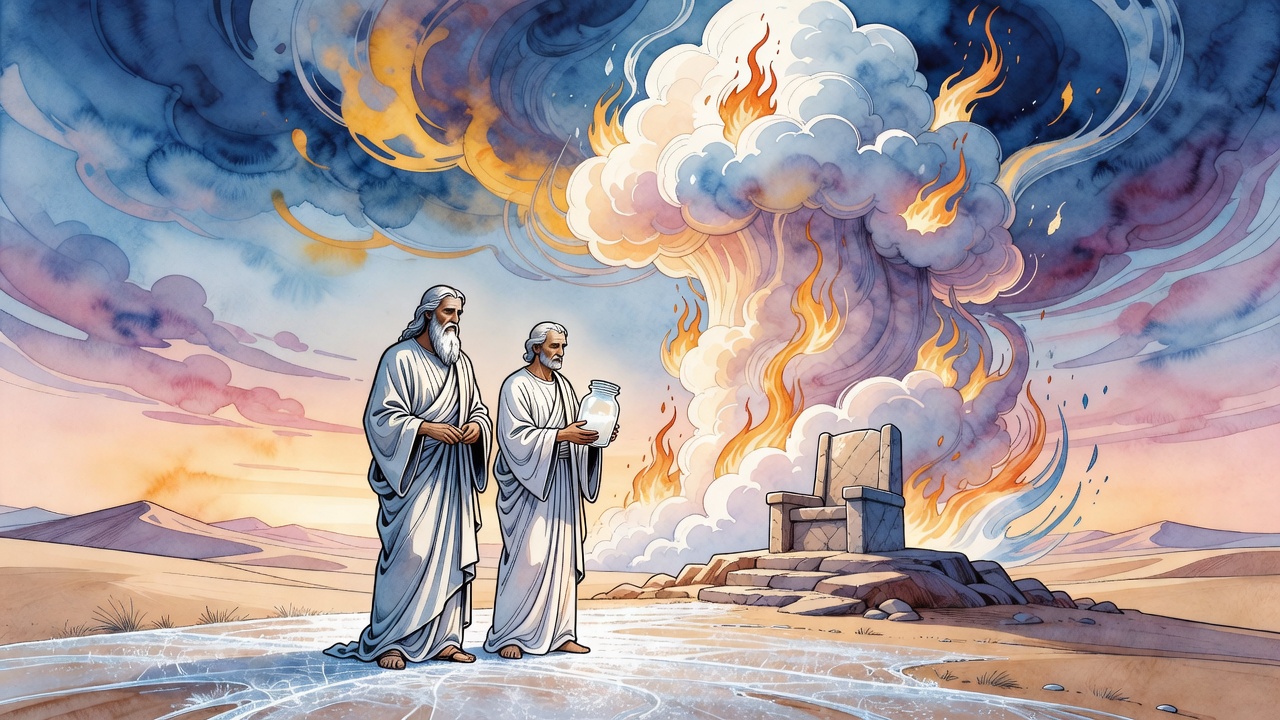
Near the end, Moses asked for what he could not keep. He went to God and said: let God appoint a man over the congregation who will go out before them and come in before them, who will lead them out and bring them in, so that the congregation of God will not be like sheep that have no shepherd.

The concern was not for himself. He was asking what every good leader eventually has to ask, not how do I hold power, but how does the people survive when I am gone. A shepherd sees the flock, not his own place at its head. Moses named the need exactly: sheep without a shepherd scatter. The question was not succession. The question was whether Israel would be covered when the covering was lifted.

God answered with Joshua, and Moses put his hand on Joshua before all the congregation and commissioned him in public, so that no one could miss the transfer. The manna kept falling. The trumpets disappeared. Joshua led the people down to the river, and the river parted, and they crossed over on dry ground, and the land was there waiting on the other side, and they had bread to eat from the first harvest, and they never needed heaven's bread again.


← All myths
From the tradition

Sources

3 sources

The texts this telling draws on, in full. Open a card to read inline, or expand it for a wider, quieter read.

Yalkut Shimoni on Nach 15:9Yalkut Shimoni on Nach

"And the manna ceased on the day after" (Joshua 5:12). As long as Moses was alive, the manna came down for them. When he died, what does it say? "And the manna ceased on the day after." Yet it was not that the manna depended on his life alone, but even in his death, for from the manna they had gathered on the seventh of Adar they ate thirty-nine days, until the sixteenth of Nisan, and they offered the omer at Gilgal, as it is said, "And the children of Israel ate the manna forty years" (Exodus 16:35). Since there is no need for the verse to say "until they came to an inhabited land," what does it teach by saying "until they came"? It teaches that had the manna not ceased, they would not have wished to eat from the produce of the land. Rabbi Elazar ben Azaryah offered a parable. To what is the matter like? To a king of flesh and blood who said to his servant, "Mix me hot water." The servant said, "I have no hot water." He said to him, "Then mix me cold water."

Full source
Yalkut Shimoni on Nach 15:20Yalkut Shimoni on Nach

"And the people shouted, and they blew with the shofars" (Joshua 6:20). This teaches that they did not have the trumpets that Moses made, for those were hidden away, as it is said, "Make for yourself two silver trumpets" (Numbers 10:2): for you do you make them, and they are entrusted to your hand, and not to Joshua your disciple. And they were hidden away even during the lifetime of Moses, as it is said, "Assemble to me all the heads of your tribes and your officers" (Deuteronomy 31:28), and the trumpets, where were they? They were hidden away, to fulfill what is said, "There is no authority over the day of death" (Ecclesiastes 8:8).

Full source
Sifrei Bamidbar 142:1Sifrei Bamidbar

It turns out, even the Holy One, Blessed be He, experiences something similar with us, the children of Israel.

The book of Bamidbar, Numbers, opens with a fascinating exchange. In (Numbers 28:1-2), we read: "And the L-rd spoke to Moses, saying: Command the children of Israel… My offering, My bread, etc." But what's the real intent here? Why this specific phrasing?

Well, it all goes back to a request Moses makes earlier, in (Numbers 27:16-17). He asks G-d to appoint a leader to guide the Israelites, "someone who will go out before them…” This request, understandably, comes from a place of deep concern for his people's future.

Sifrei Bamidbar, a collection of rabbinic legal interpretations on the Book of Numbers, uses a powerful analogy to examine the situation. Imagine a king whose wife is nearing her end. Before she passes, she implores him: "Take care of my sons." A natural request. But the king responds with a twist. He says, "Before you charge me over my sons, charge them over me. Make sure they don't rebel against me, that they don't cheapen me."

It’s a striking image, isn't it?

This, Sifrei Bamidbar explains, is analogous to G-d's instruction to Moses. Before G-d is charged with caring for the Israelites, they too must be charged with honoring Him. "Before you charge Me over My sons," G-d says to Moses, "charge them over Me, that they not cheapen Me and that they not exchange My honor for foreign gods." The implication is clear: the relationship is reciprocal. Care and responsibility go both ways. It's not enough for G-d to provide and protect. The Israelites, too, have a role. They must actively choose to remain loyal, to avoid exchanging G-d's teachings for the allure of other beliefs.

This idea is echoed in (Deuteronomy 31:19-20): "And now, write for yourselves this song… When I bring them to the land… and they turn to other gods and spurn Me, etc." This "song," of course, refers to the Torah. G-d foresees the temptation the Israelites will face, the potential for them to stray. So, He instructs them to internalize the Torah, to make it a constant reminder of their commitment.

The core message? Faith isn't passive. It's an active, ongoing choice. It's about remembering the source of our blessings and honoring that connection. It’s about understanding that a relationship with the Divine, like any meaningful relationship, requires effort and dedication from all parties involved.

So, the next time you read about offerings and commandments, remember the king, his wife, and their sons. Remember that the relationship between G-d and Israel, between the Divine and humanity, is a two-way street, built on mutual respect and enduring commitment.

Full source