5 min read

Joshua Fell at Moses' Feet for All Israel

Joshua falls at Moses' feet and names the terror beneath succession, a nation losing the one man who could pray it back from disaster.

Curated by Arthur · Told by Maggid ·
Table of Contents
  1. The Word Fell on Joshua
  2. The Feet of the Teacher
  3. The Nation Without a Shield
  4. The Amorites Smelled an Opening
  5. The Land Waited Behind a Covenant

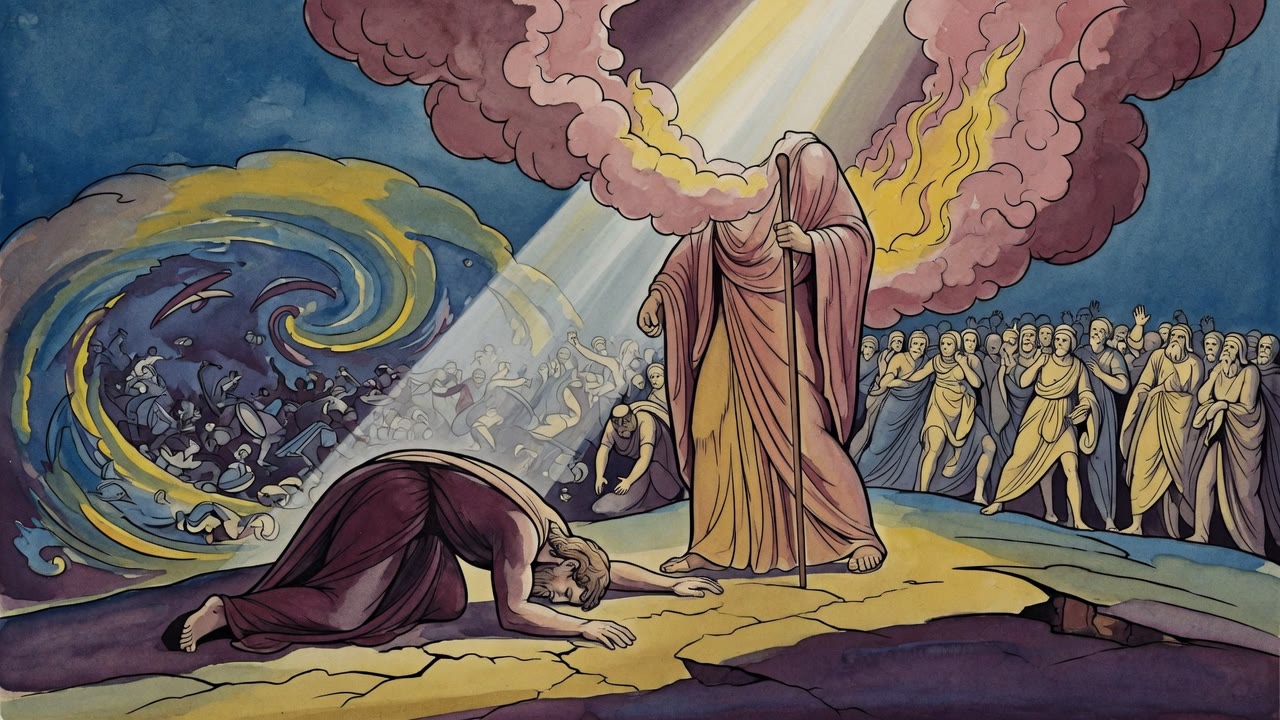
Joshua heard the sentence and tore his garments before the dust had settled. Moses was leaving them.

The camp had survived hunger. It had survived thirst. It had survived mutiny, plague, defeat, and the long gray arithmetic of graves in the wilderness. But it had never survived a morning without Moses standing somewhere between Israel and disaster.

The Word Fell on Joshua

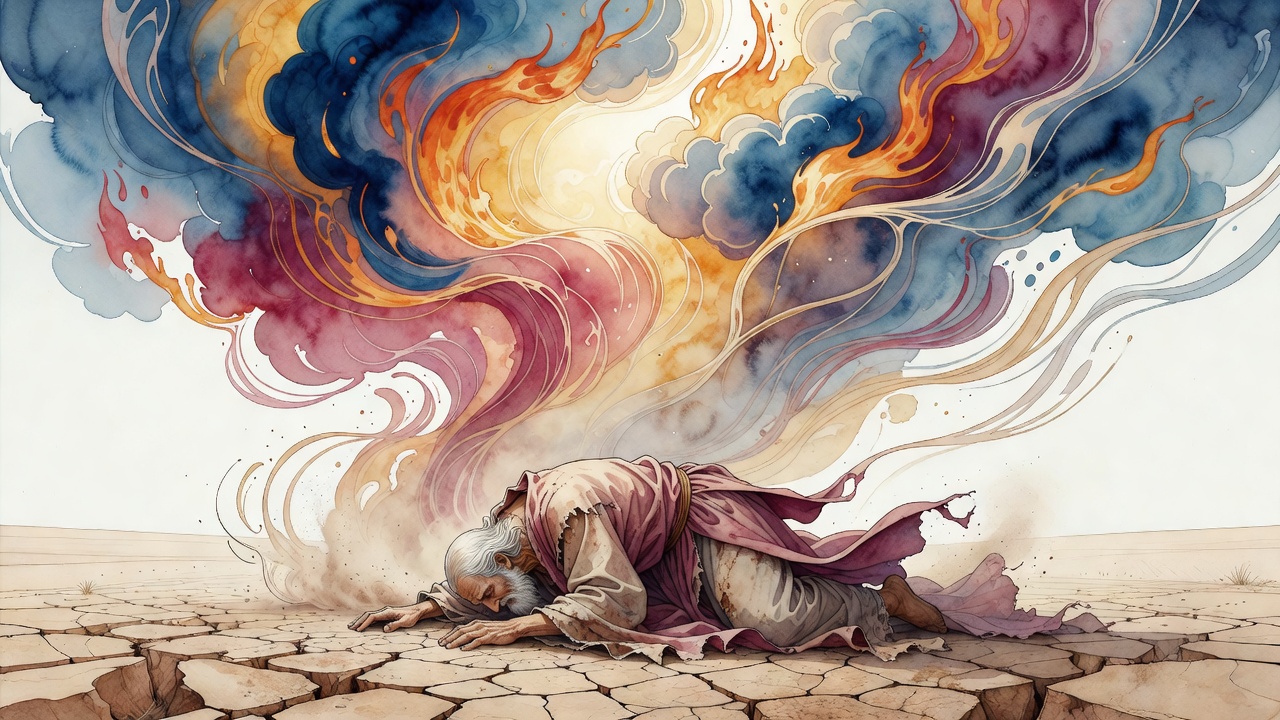
Moses tried to comfort him while his own eyes were wet. That made it worse. Comfort from Moses still meant Moses was there, still bending toward his servant, still speaking as the man who could turn panic into command. Joshua fell at his feet and answered with grief that came out as argument.

How could Moses comfort him about the bitter word Moses himself had spoken? What place could receive him? What stone could mark him? Ordinary men died and were given a grave according to their rank. A prince received one plot, a prophet another, a poor man another. Moses could not fit inside such measures. His grave stretched from sunrise to sunset, from south to north. The whole world was already too small and still somehow became his tomb.

The Feet of the Teacher

Joshua had followed those feet since youth. They had climbed Sinai when the mountain smoked. They had crossed sand that opened only after command. They had stood firm while Israel quarreled and trembled and begged to go backward. Joshua had watched Moses carry the nation the way a man carries fire in his bare hands, burned by it and still unwilling to let it fall.

Now the servant looked up at the master and saw the shape of the vacancy. Leadership was not a staff passed from one hand to another. It was the mouth that prayed when Israel had no words. It was the face that did not flinch before God. It was the memory of Abraham, Isaac, and Jacob placed before heaven again and again, until anger slowed and mercy had room to breathe.

The Nation Without a Shield

Joshua did not ask who would honor Moses. He asked who would keep Israel alive.

Who would care for this people? Who would take pity on them and guide the way? Six hundred thousand had come out at the beginning, and Moses' prayers had stood over them through multiplication, hunger, and rebellion. Who would feed them according to their wishes? Who would draw drink according to their desire? Who would judge the disputes that rose each morning like dust under the tents?

The questions were not weakness. They were inventory. Joshua was naming the work Moses had done invisibly. The people had seen manna on the ground, water from stone, judgment at the tent, the cloud moving over the camp. Joshua had seen the hidden labor behind those gifts: the knees bent in prayer, the eyes lifted toward the One who rules the world, the covenant remembered at every dangerous hour.

The Amorites Smelled an Opening

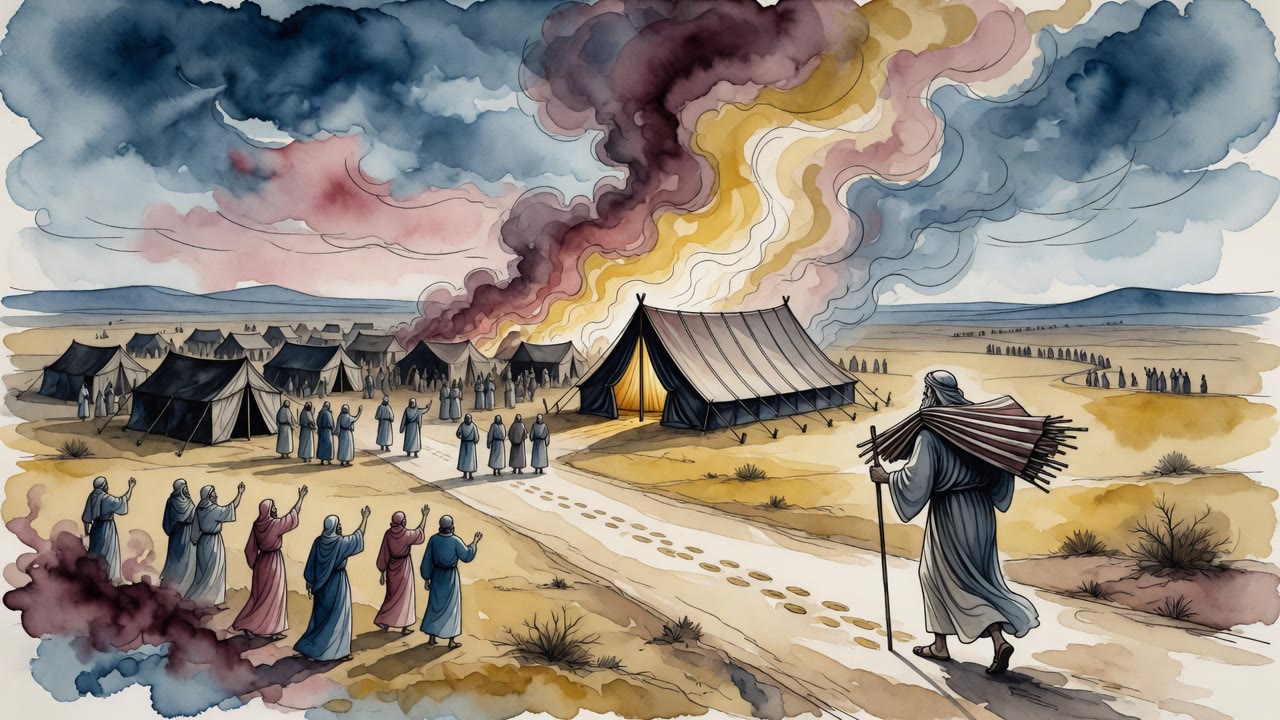
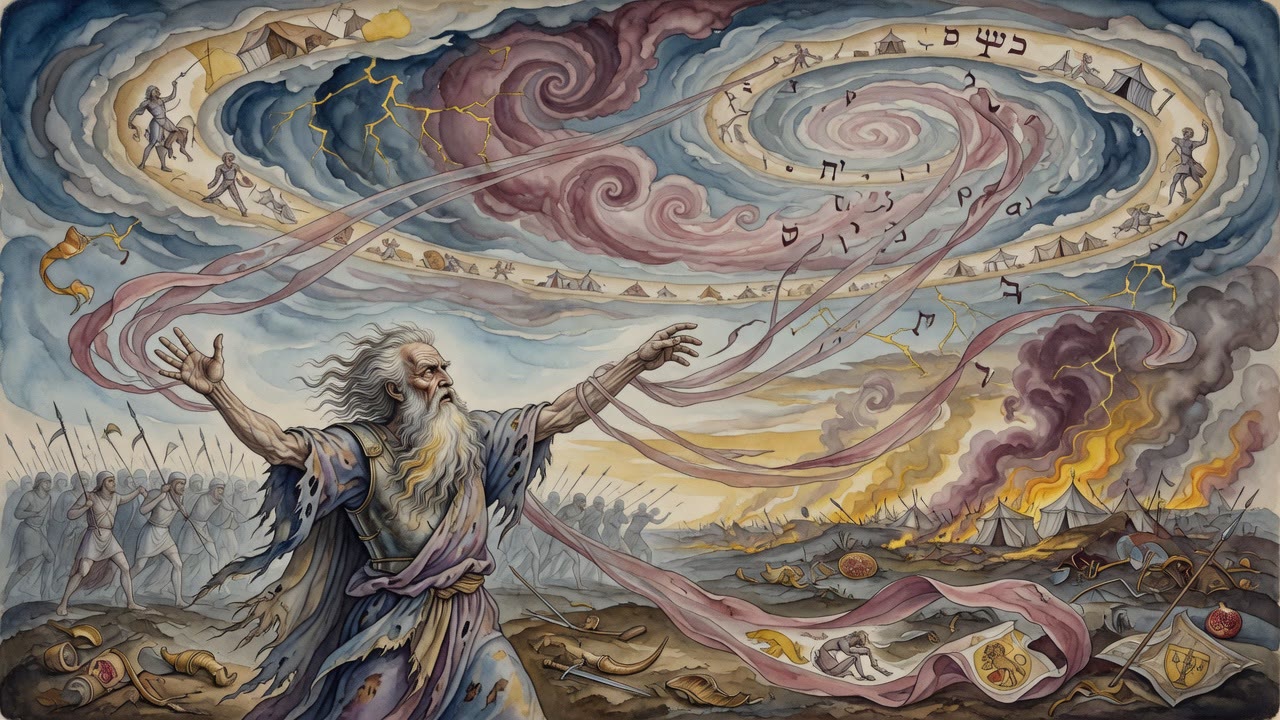
Beyond the camp, the kings of the Amorites waited behind their walls. Joshua could already hear their councils. The sacred spirit is gone. The master of the word is gone. The prophet who knelt at every hour is gone. No defender remains to plead for them when they stumble. Rise now. Wipe them from the earth.

The terror was not only military. Israel's enemies would hear Moses' death as a change in the heavens. They would imagine the camp uncovered, the people exposed, the old fire gone cold. Joshua would have to lead them with swords in front of him and memory behind him, while every hostile king tested whether the God of Moses still guarded the people of Moses.

The Land Waited Behind a Covenant

The promised land was not waiting like empty soil. It waited like a locked gate. Abraham had heard the promise of Canaan, but the promise came braided with covenant: Godliness accepted, the land entered, circumcision kept, Shabbat guarded. One bond leaned on another. Break one and the chain strained.

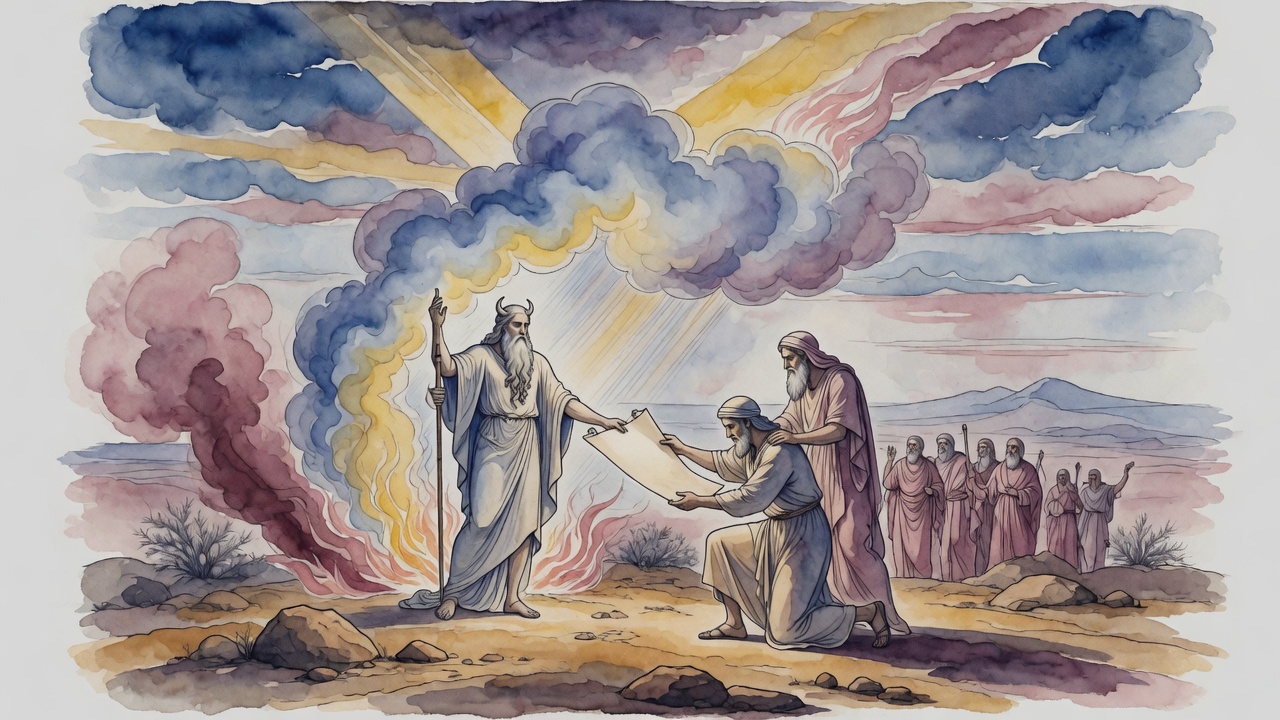
Joshua would have to bring a wilderness people to that gate and make them ready. He would stand before men born on the road and put covenant back into their flesh before they crossed fully into inheritance. Moses had carried them to the edge. Joshua would have to teach their bodies, their days, and their land to answer the same God.

At Moses' feet, all of that rushed toward him. The grief was not only love. It was the sound of a nation becoming his burden. Moses was still breathing, still near enough to touch, and already Joshua felt the world asking what would become of Israel when the one who prayed for it was gone.


← All myths
From the tradition

Sources

2 sources

The texts this telling draws on, in full. Open a card to read inline, or expand it for a wider, quieter read.

Legends of the Jews 6:93Legends of the Jews

The weight of that moment, the sheer magnitude of the loss. it's almost unbearable to contemplate.

In Legends of the Jews, when Joshua heard the words of Moses, words etched in the Holy Scriptures themselves, he was utterly devastated. He tore his clothes – a traditional sign of mourning – and fell at Moses' feet. Can you picture the scene? Moses, though surely heavy with his own sorrow, tries to comfort his protégé.

What comfort could there be? Joshua's grief pours out in a torrent of questions, a raw, visceral lament. "How canst thou comfort me," he cries, "concerning the bitter word that thou hast spoken. that thou are to depart from thy people?" It’s a powerful, heart-wrenching moment. from Joshua's perspective. He asks, "What place will receive thee? What monument will point to thy grave? Who will dare to remove thy corpse.?" He understood that Moses' greatness transcended earthly limitations. His grave wouldn't be a simple plot of land, but the entire world. "All dying men receive a grave upon earth according to their rank, but thy grave extends from sunrise to sunset, from South to North; all the world is thy tomb."

Beyond personal grief, Joshua grapples with the daunting responsibility that now falls upon him. He pleads, "Who not, O master, shall care for this people? Who shall take pity upon them and be a guide upon their way?" He knows the enormity of leading the Israelites, providing for them, guiding them with wisdom and understanding. He knows he will now have to lead them into the land of their fathers.

He worries about practical things – providing food and water for the massive Israelite population. "How shall I provide food for them according to their wish, or drink according to their desire?" But more than that, he fears the loss of Moses' spiritual guidance. He remembers that "from the beginning they numbered sixty myriads, and now, thanks to thy prayers, they have greatly multiplied."

Joshua fears the enemies that surround them. He imagines the Amorites, emboldened by Moses' absence, plotting their attack. "Let us not set out against them," he envisions them saying, "for there is now no longer among them the many-sided, incomprehensible and sacred spirit, worthy of the Lord. the Divine prophet of all the world." They would see Moses' departure as a sign of weakness, an opportunity to strike.

And what if the Israelites themselves falter? Who will intercede on their behalf now? "If now our enemies once more transgress before the Lord," Joshua despairs, "they will have no defender to offer up prayers for them before God, as Moses had done." Moses, the great messenger, the one who constantly reminded God of His covenant with the Patriarchs.

Joshua's plea boils down to a single, desperate question: "But what then, O my lord Moses, will become of this people?" It's a question that echoes through the ages, a evidence of Moses' irreplaceable role and the immense burden of leadership that Joshua now inherits. It’s a reminder that even the greatest leaders leave a void, and those left behind must find the strength to carry on.

Full source
Bereshit Rabbah 46:9Bereshit Rabbah

Bereshit Rabbah turns to Joshua and Creation of Land.

In (Genesis 17:8), God says, "I will give to you, and to your descendants after you, the land of your sojourning, the entire land of Canaan for an eternal holding, and I will be their God." A seemingly straightforward promise, but like so many things in Jewish tradition, layers of meaning lie beneath the surface.

Rabbi Yudan, in Bereshit Rabbah, sees five covenants embedded within this single verse, each contingent upon the other. Imagine them as links in a chain, each essential for the whole to hold. The first: God's presence, His very being as our God, is dependent on whether we, His descendants, accept His Godliness. A relationship, not a one-way street. If we don't acknowledge Him, He won't be our patron. Strong stuff.

Secondly, our ability to truly accept God's Godliness hinges on being in the Land of Israel. There's a deep connection here. As Rabbi Yudan implies, and as we find echoed in Ketubot 110b, to live outside the Land is to diminish one's realization of God's mastery.

But how do we even get to the Land? That brings us to the next covenant: circumcision. If we embrace the brit milah, the covenant of circumcision, we earn the right to enter the Land. Fail to do so, and the path is blocked.

And what else stands in the way? The Shabbat (the Sabbath). Just like circumcision, Shabbat is referred to as "an eternal covenant for your generations" (Genesis 17:7, (Exodus 31:1)6). Rabbi Yudan suggests that observing Shabbat is another key to unlocking the Land. If we honor this sacred day of rest, we can enter; if not, we remain outside.

These aren't just historical stipulations, are they? They speak to a deeper truth about our relationship with God and the Land.

Now, let’s delve deeper into the covenant of circumcision. (Genesis 17:9) says, "And you, you shall observe My covenant, you, and your descendants after you, throughout their generations." Rabbi Berekhya and Rabbi Ḥelbo, citing Rabbi Avun ben Rabbi Yosei, point to a fascinating story in (Joshua 5:4), where Joshua circumcises the Israelites before entering the Promised Land. They suggest that Joshua made a davar, a statement, emphasizing the necessity of circumcision for claiming their inheritance. "Do you think you can enter uncircumcised?" he seems to ask. God made it clear to Abraham: the Land is conditional upon observing the covenant.

But who can perform this sacred act? Rabbi Huna and Rabbi Yoḥanan offer insights. Rabbi Huna says the verse "And you, you shall observe My covenant" implies that the circumciser himself must be circumcised. Rabbi Yoḥanan draws the same conclusion from the doubled expression himol yimol, "You shall surely circumcise" (Genesis 17:13). The halakha, the Jewish law, is clear: an uncircumcised Israelite cannot be a circumciser, and certainly not an uncircumcised idolater.

So, what does this all mean for us today? Are these covenants just ancient history, or do they still resonate? Perhaps they remind us that our connection to the Divine, to the Land, and to our heritage is not passive. It requires active participation, a willingness to embrace the covenants, to observe the mitzvot, the commandments, and to strive for a deeper relationship with God. The land, after all, isn't just real estate. It's a promise, a responsibility, and a evidence of an enduring bond.

Full source