Parshat Nitzavim7 min read

Moses Watched the Cloud Leave His Tent for Joshua's

For forty years the cloud stood over Moses. On his last day it rose from his tent and settled over Joshua's, and Moses watched it go.

Curated by Arthur · Told by Maggid ·
Table of Contents
  1. The Seven Clouds That Walked With Them
  2. The Cloud Rose, and It Did Not Come Back to Him
  3. God Spoke, and Not Through Him
  4. His Last Prayer Was Not for Himself
  5. He Walked Out to Die Under an Empty Sky

The morning of his last day, Moses stepped out of his tent and looked up, the way he had looked up for forty years. The pillar was there. It always was. A column of cloud by day, a column of fire by night, standing over the camp so that no man in Israel ever had to wonder where heaven was paying attention (Exodus 13:21).

He had read that cloud his whole life as a leader. When it lifted, the people broke camp. When it settled, they stopped and pitched. He would call out, the trumpets would sound, and the tribe of Judah would step off first into the wilderness with the cloud going ahead to clear the road. Children were loaded onto donkeys. Bundles were tied. Some of them, when they had nothing to carry their goods on, set their belongings on the cloud itself and let it bear the weight. That was the kind of thing the cloud did. It led, and it carried.

The Seven Clouds That Walked With Them

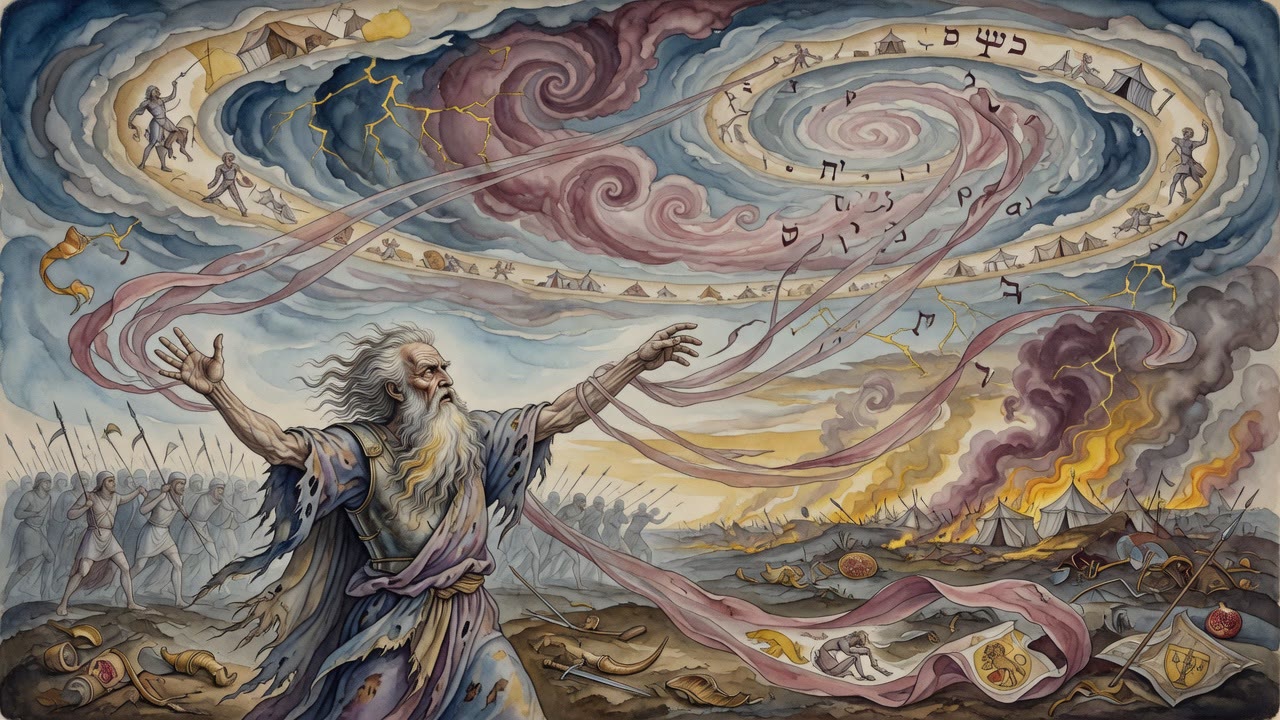
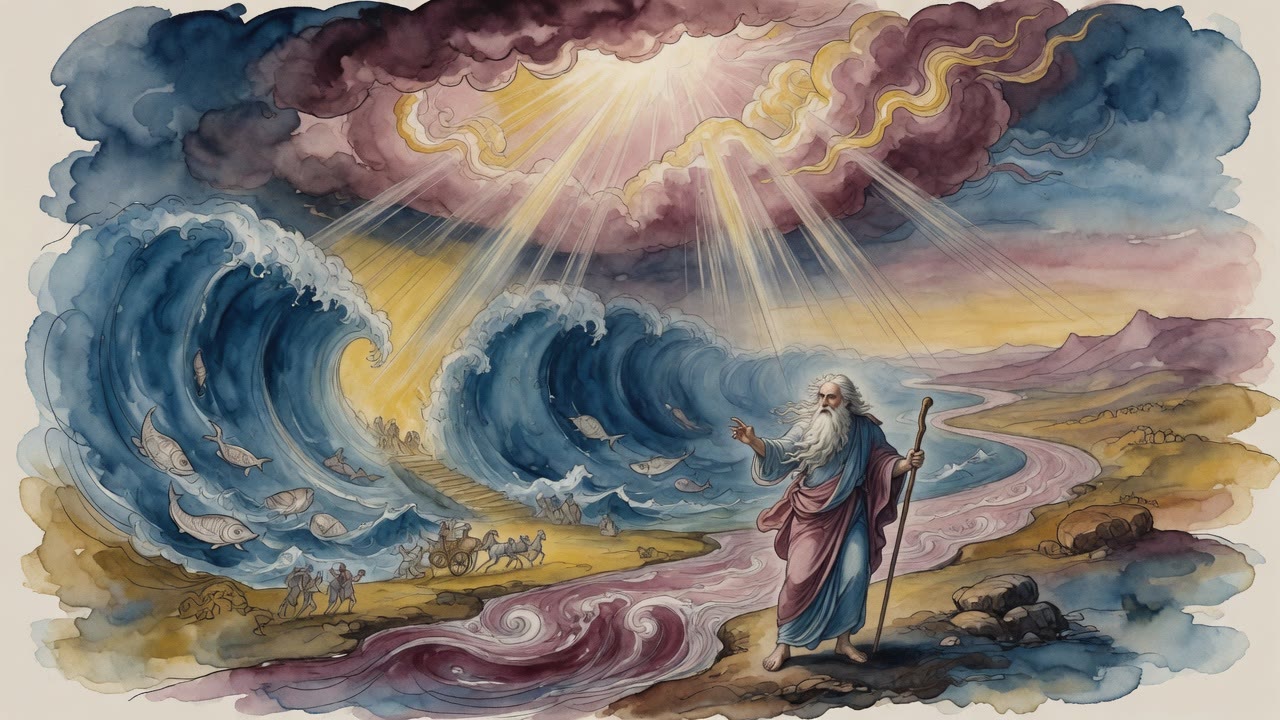
It was never only one cloud. Seven of them moved with the camp out of Egypt, from Raamses toward the open desert (Exodus 12:37). One rode above their heads like an awning, turning back the rain and the hail and the white desert sun, so that no man burned and no man was caught in a sudden storm. One ran beneath their feet, flattening the thorns, driving off the serpents and the scorpions that made the sand a place where a barefoot child could die. Four more stood at the four sides, a wall on every direction. And one went out in front, the scout, smoothing the ground before they ever set a foot on it.

Moses had grown old inside that ring of cloud. The people had feared him, leaned on him, shouted at him, buried their dead and blamed him, and through all of it the clouds kept answering the only question that mattered, which was whether God had walked off and left them. The clouds said no. The clouds said here, still here, and the man they surround is the man.

The Cloud Rose, and It Did Not Come Back to Him

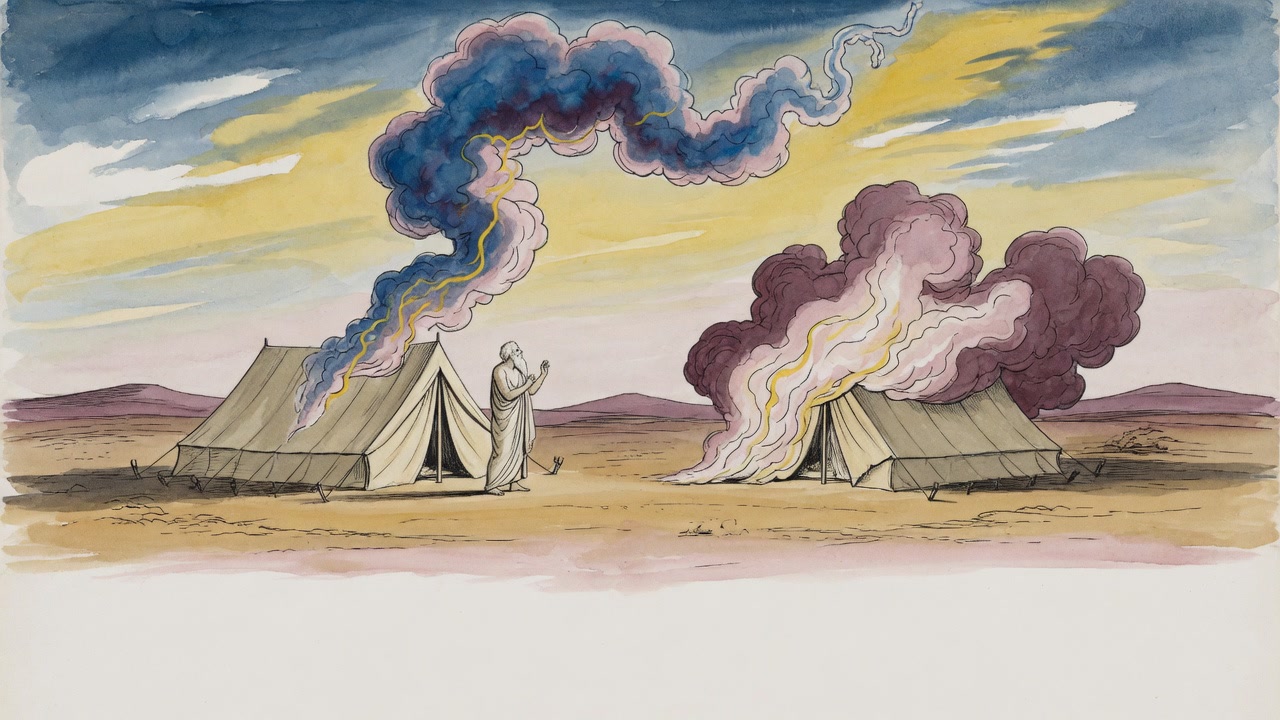
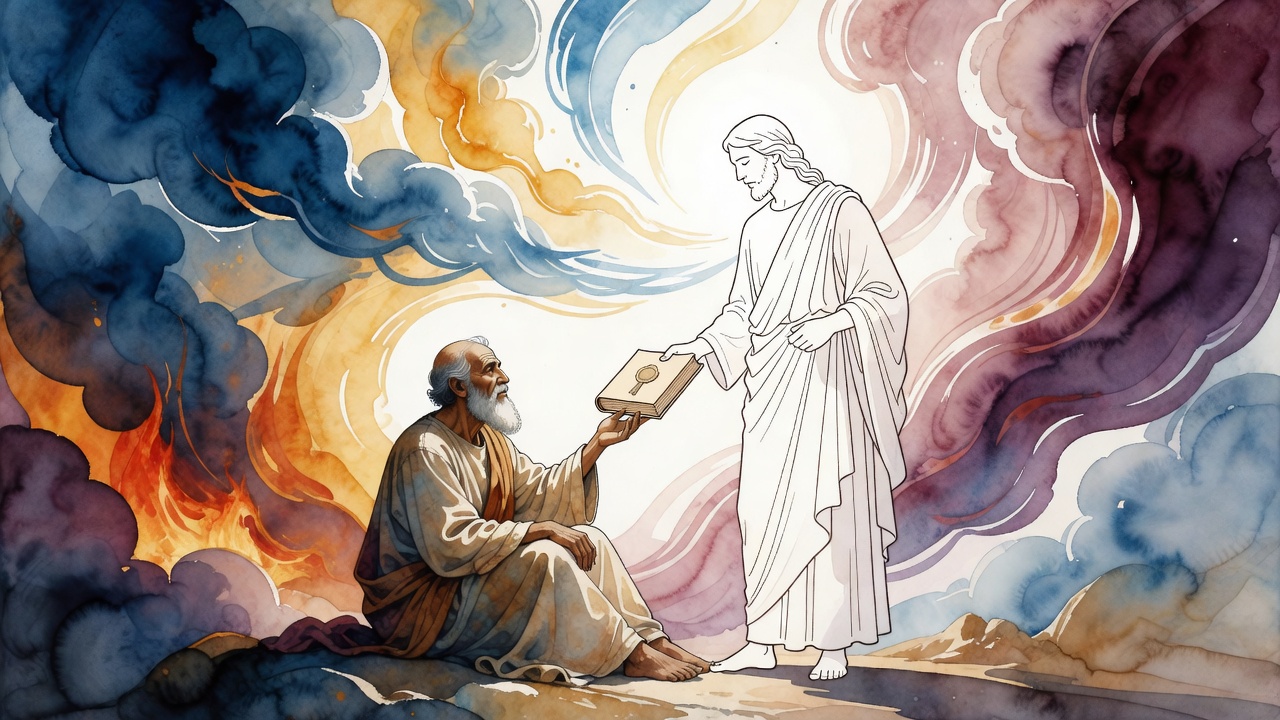
On that last morning the cloud lifted off his tent. Moses watched it rise, the old signal, the one that meant gather the people, sound the trumpets, move. His hand half went up to call out.

The cloud did not lead the camp. It drifted a short way and came down again, and it settled over another tent. Over Joshua's tent. It hung there the way it had hung over Moses for forty years, low and certain and bright, and it did not lift again to return to him.

He had seen the cloud move ten thousand times. He had never once seen it move away from him. He stood in the doorway of a tent that no longer had a column of glory standing watch above it, an old man under open sky, and he understood that the sign of who he was had just walked across the camp and chosen someone else while his heart was still beating.

God Spoke, and Not Through Him

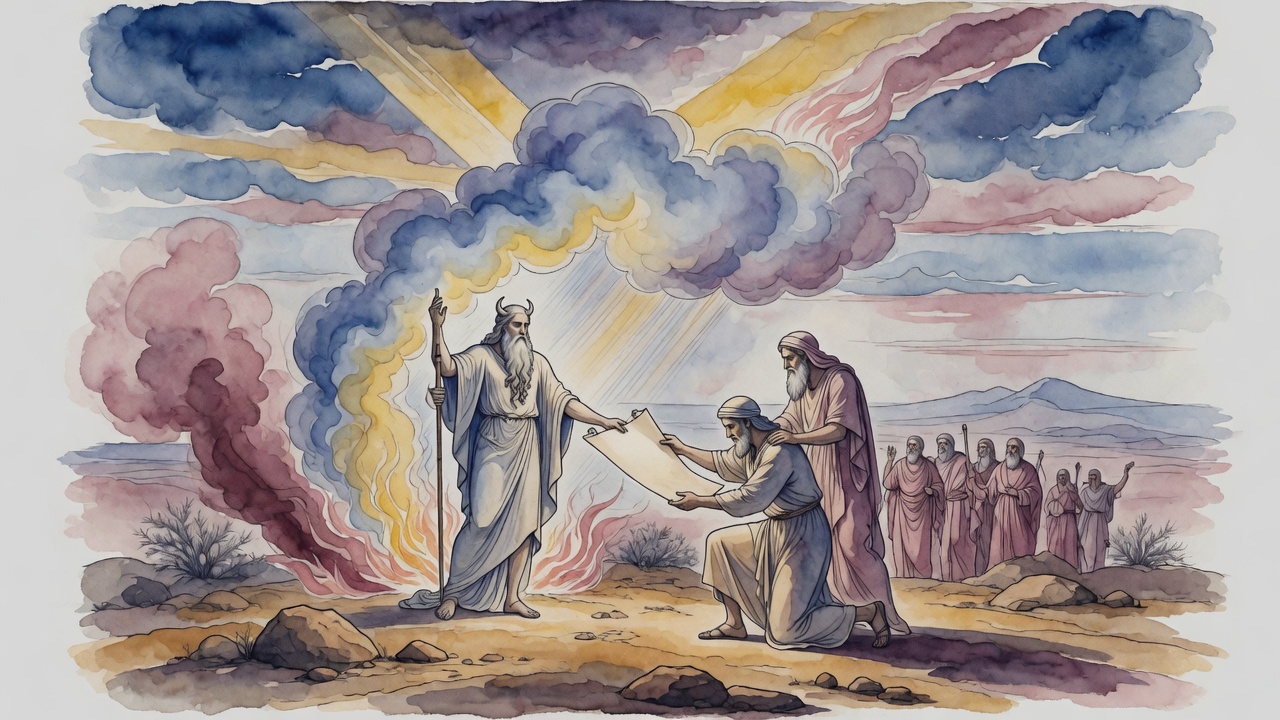
Then the call came to bring Joshua to the Tent of Meeting. Moses went and got him. This was the boy he had raised into a man, the one who fought Amalek down the long day with the sun on his neck, the attendant who never left the tent when Moses went up the mountain, the one who would cross the river that Moses had been told he could not cross. Moses walked him in himself, his own hand on the tent flap.

Inside, God spoke. Not to Moses, to be carried down to Joshua in Moses's voice the way every word had come for forty years. God spoke to Joshua. Directly. While Moses stood there in the same tent and listened to the conversation go past him to the younger man, the channel he had been all his life now flowing around him to someone else.

His Last Prayer Was Not for Himself

What he did next, a smaller man could not have done. He did not ask for more years. He did not ask to cross the river after all. He did not ask for the cloud to come back to his tent.

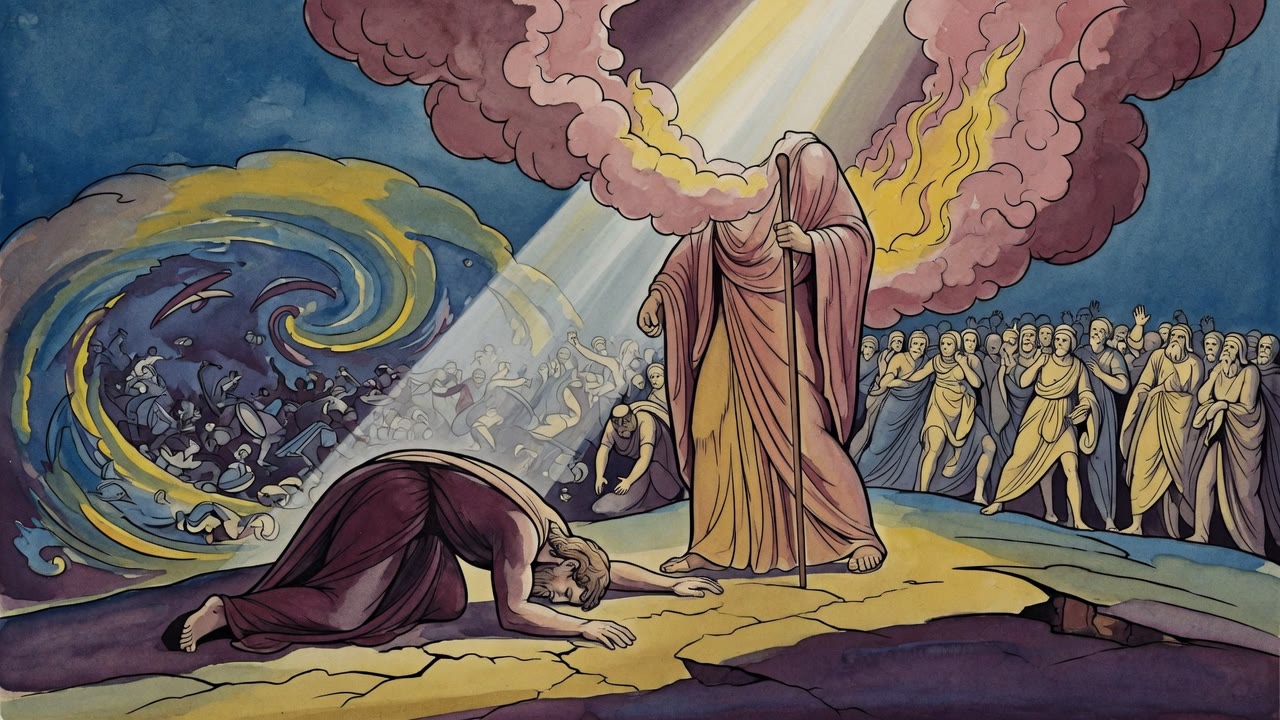
He asked for light. He prayed that the heavens be commanded to split open and pour brightness down into the darkness, so that the eyes of the children of Israel would be opened and they would see for themselves that there is none beside the Lord in the heavens above and on the earth below. After forty years of their doubting, their grumbling, their backsliding toward every idol they passed, the last thing the dying man wanted was for them to finally, truly see.

And it was granted. The seven heavens were split apart. The deeps were cleft open. A great light came down and stood in the darkness, and for one moment the whole of Israel could see straight through creation to the one who made it. Moses got the thing he asked for. The cloud over Joshua's tent did not move. Both were true at once, and he had lived long enough to know they would be.

He Walked Out to Die Under an Empty Sky

The word for how he left was a word of rebuke (Psalms 46:9). The man who had carried every word of instruction down to the people, words that go into a learning heart like a goad turning a plow ox into its furrow, like a nail driven into a beam to hold (Ecclesiastes 12:11), now had no more words to give. He had said all of them already, every one of them from the mouth of the Almighty, and there was nothing left to add.

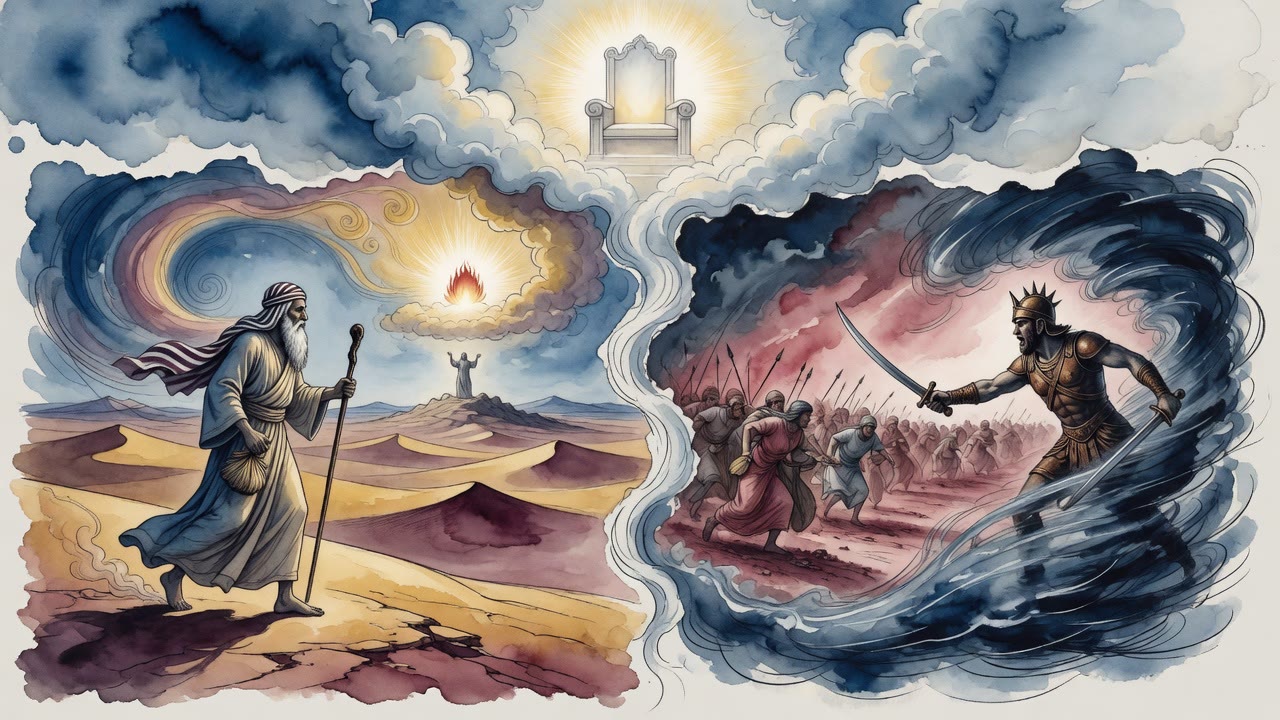
So he went. Out past the tents, toward the mountain, out from under the cloud that was no longer his. The brightness he had begged for was still falling on the camp behind him as he climbed away from it to die alone where no one would find the grave.


← All myths
From the tradition

Sources

4 sources

The texts this telling draws on, in full. Open a card to read inline, or expand it for a wider, quieter read.

Yalkut Shim'oniYalkut Shimoni

For forty long years, as they wandered, they had a constant companion: a pillar of cloud by day, and a pillar of fire by night. The Torah tells us, in (Exodus 13:21), "And Yahweh went before them by day in a pillar of cloud, to lead them along the way." Moses himself looked to this pillar of fire to guide them. When he saw the pillar of cloud rise above the Mishkan (Tabernacle), he knew it was time to move. He'd cry out to the people, and they, hearing his voice and seeing the sign, would prepare to journey onward.

In Yalkut Shimoni, they'd gather their belongings, load up their animals, and even place their precious items on the cloud itself if they had no other means of transport. Then, with the sound of trumpets, the tribe of Judah would lead the way, the pillar of cloud faithfully guiding them towards the Promised Land.

What does this pillar of cloud mean? It's more than just a weather phenomenon. It's a symbol of divine presence, of guidance, of a connection to something greater than themselves. And the idea of this pillar doesn't end with the biblical story. Centuries later, in the mystical city of Safed, we find the legend echoing again.

Rabbi Moshe Cordovero, known as the Ramak, lay on his deathbed. His disciples, anxious about the future, begged him to name his successor. But the Ramak remained silent on the matter. Instead, as recounted in Divrei Yosef by Rabbi Yosef Sambari, he gave them a sign to look for: whoever saw a pillar of cloud at his funeral would be the one they should follow.

Imagine the disciples' confusion! The Ramak passes away, and all of Safed is plunged into mourning. As the funeral procession makes its way to the graveyard, a young disciple named Rabbi Isaac Luria, the Ari, approaches Rabbi Joseph Karo (author of the Shulchan Aruch) with an incredible claim.

"Ever since we left the synagogue," he says, "there has been a pillar of cloud going before us." He points, but to everyone else, there's nothing to see. Rabbi Isaac then walks directly into the spot he indicated and vanishes from their sight!

For a long moment, everyone is stunned, speechless. Then, Rabbi Isaac Luria emerges from the cloud – a cloud only he could see – and his face is radiant, glowing like the face of Moses after descending from Mount Sinai! In Divrei Shaul, we learn that this was no ordinary cloud. This was the very same cloud that had enveloped Moses on Sinai, carrying him into heaven so he could receive the Torah from God.

The disciples finally understood. This was the sign the Ramak had promised. Rabbi Isaac, the Ari, was destined to be their teacher. After the funeral, many of the Ramak's disciples came to Rabbi Isaac and asked to study with him. At first, the Ari was hesitant. Until then, he had concealed his holy ways. But eventually, he agreed. For the two years he remained in this world, he became their master of Torah, and his teachings, particularly those of Kabbalah, still resonate powerfully today.

This story, as we find in Tree of Souls, is remarkable because it links the Ari both to his immediate predecessor, Moshe Cordovero, and to the biblical Moses. The fact that both are named Moses (Moshe in Hebrew) only emphasizes the connection. The story suggests that the Ari and his predecessors were figures of immense spiritual stature, like the biblical patriarchs, and that miracles of the kind that occurred in the time of Moses were still possible in their own time.

So, what can we take away from this story? Perhaps it's a reminder that even in the most uncertain of times, there is always guidance available to us, even if it's not always visible to everyone. Perhaps it's a call to look beyond the obvious, to trust our intuition, and to be open to the possibility of miracles. And maybe, just maybe, it's an invitation to find our own "pillar of cloud" – that inner compass that guides us on our own unique journey.

Full source
Targum Jonathan on Exodus 12:37Targum Jonathan

Targum Jonathan turns to The Seven Clouds Of Glory.

Well, our tradition offers a beautiful image: the Seven Clouds of Glory.

The Targum Pseudo-Yonathan, an ancient Aramaic translation and commentary on the Torah, vividly describes these clouds in its interpretation of (Exodus 12:37): "The Israelites journeyed from Raamses to Succoth…" But the Targum doesn’t just leave it there. It adds this image of divine protection.

It paints a picture of not one, but seven clouds enveloping the Israelites. Think of it: a cloud on each of their four sides, a comforting presence shielding them from every direction. One cloud floated above, a benevolent umbrella warding off rain, hail, and the scorching desert sun. No sunburns, no sudden downpours. Imagine the relief!

And then there was a cloud below them, protecting their feet from the dangers underfoot – thorns, serpents, scorpions… the things that made desert life so treacherous. It's a powerful image of God’s care. But there’s more. The seventh cloud, perhaps the most amazing of all, went before them. It wasn't just passive protection; it was active preparation. This cloud leveled valleys and lowered mountains, smoothing the path and preparing a dwelling place for them. Talk about divine concierge service!

Now, why these clouds? Why this imagery? Well, desert travel is notoriously brutal. It's a constant battle against the elements, against the terrain, against… well, everything. The Israelites spent forty years wandering, a period undoubtedly filled with hardship.

But the Exodus is also seen as the ultimate liberation, a moment of profound freedom and divine intervention. So, these myths, like the better-known story of Miriam's Well providing water, arose to portray the Exodus not as a desperate scramble for survival, but as a journey undertaken under God's complete and unwavering protection.

It's easy to imagine the forty years as a time of constant suffering. And, realistically, it probably was, at least in part. But the tradition reminds us that even in the midst of difficulty, there can be divine presence, a sense of being cared for, guided, and protected.

So, the next time you read about the Exodus, remember the Seven Clouds of Glory. Let them be a reminder that even in the most challenging journeys of our own lives, we are not entirely alone. There's something comforting in that thought, isn't there?

Full source
Devarim Rabbah 11Devarim Rabbah

What would you ask for?

The tradition says as his time drew near, Moses made one final, powerful request of God. It wasn't for more life, or for comfort, or even for himself at all. Instead, as Louis Ginzberg recounts in Legends of the Jews, Moses prayed: "Grant my wish, O Lord. Command the heavens to open and be split asunder, so that light shines in the darkness, so that the eyes of the children of Israel may be opened and they shall see there is none beside You, O Lord, in the heavens and the earth." After leading the Israelites through the desert for forty years, after witnessing their constant doubts and wavering faith, Moses' last act was to try, one final time, to solidify their belief in God.

What happened? The story goes that God granted his request. Deuteronomy Rabbah 11 and Petirat Moshe, as documented in IFA 15075, tell us that no sooner had Moses spoken than the seven heavens were opened. All the depths were cleft asunder, and a great light shone in the darkness.

Can you imagine witnessing that?

The eyes of the children of Israel were opened, and they saw that there was nothing in heaven or on earth to compare with the splendor of God. Overwhelmed, they cried out to each other, "Shema Yisrael, Adonai Eloheinu, Adonai Echad – Hear, O Israel! The Lord is our God, the Lord is One!" (Deut. 6:4).

It's a powerful image, isn't it? This moment of collective revelation. It reminds us that Moses' relationship with God was deeply personal, almost mystical. It echoes his very first encounter with the Divine, a personal mystical experience, but this time, it’s a shared experience, a collective awakening.

Throughout their long wandering, the Israelites often struggled with their faith, losing sight of the divine presence that guided them. Moses, in his final act, sought to rekindle that flame, to give them a glimpse of the ultimate truth. He wasn’t focused on his own fate, but on the spiritual well-being of his people.

What does this story tell us? Perhaps it's about the power of leadership, about putting the needs of others before your own. Or maybe it's a reminder that even in the face of death, it's never too late to inspire faith and wonder. As we reflect on Moses' last request, we can ask ourselves, what legacy do we hope to leave behind? What light do we hope to shine in the darkness?

Full source
Midrash Tanchuma, Vayeilech 1Midrash Tanchuma

And Moshe went and spoke these words to all of Israel: The expression "went" is nothing but [an indication of] rebuke, as it is stated (Psalms 46:9), "Go and see the wonders of God." At the end of Ecclesiastes, it is written (Ecclesiastes 12:11), "The sayings of the wise are like goads" - just like this goad directs the cow to its furrows, so [too] do the words of Torah direct the heart of those that learn it to the good path. "And it is like nails (masmerot) that are planted" - just like this nail is planted, so [too] are words of Torah. And just like a planting (sapling) is fruitful and multiplies, so [too] do the words of Torah become fruitful and multiply to find an explanation about them. "They are given from one shepherd" - even though these are rendering impure and those are rendering pure, these are forbidding and those are permitting, Moshe said all of them from the mouth of the Almighty. But it is written, "And it is like shifts (mishmerot) that are planted," with a [letter], shin, to say that there are twenty-four books in the Torah (Bible) - like the number of shifts that David established. Therefore it is written with a shin. And so [too,] in Chronicles, David is spelled fully ( dalet-vav- yod-dalet), as its gematraia (numerical equivalent) is twenty-four - corresponding to the twenty-four shifts that David established.

Full source