Parshat Vezot Haberakhah5 min read

God Buried Moses in a Valley Grave That Shifts

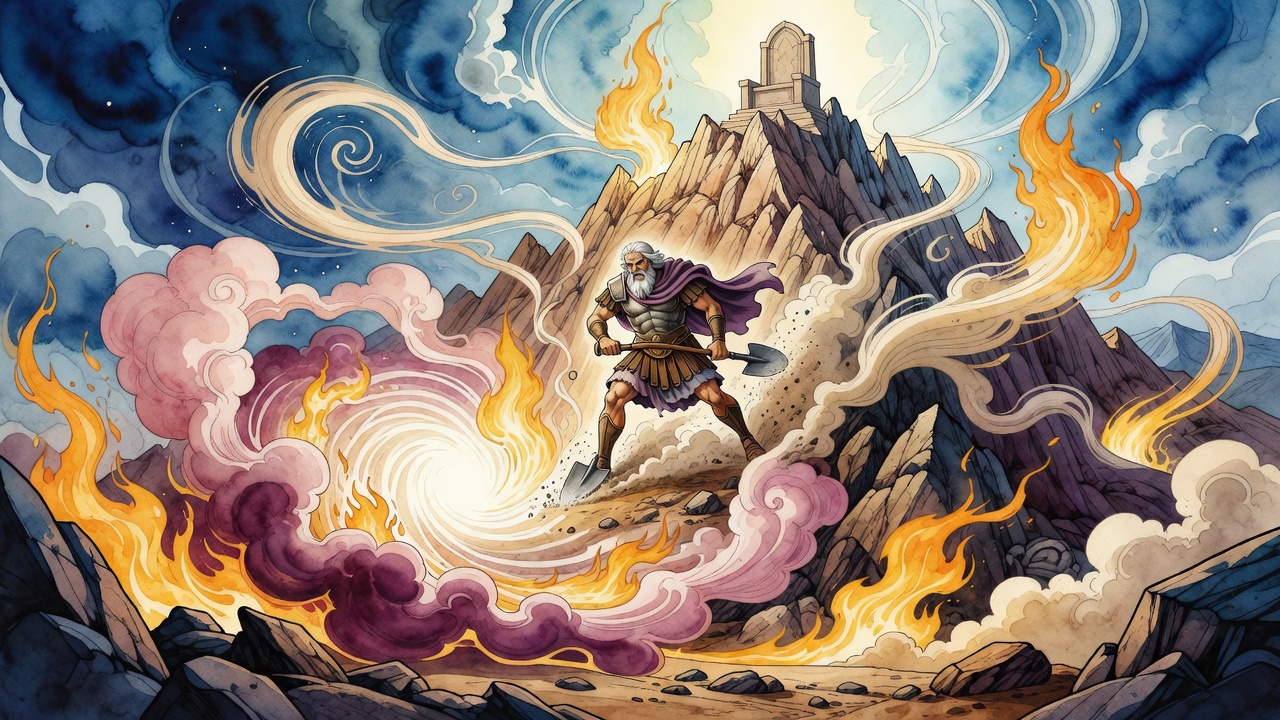
God dug Moses's grave with His own hands and buried him on Mount Nebo. He hid it so well it appears in different places to different observers.

Curated by Arthur · Told by Maggid ·
Table of Contents
  1. The Climb
  2. Why God Dug the Grave
  3. The Angel of Death's Approach
  4. The Hidden Grave
  5. The Weeping of the Angels

The Climb

Moses climbed Mount Nebo knowing he would not come back down. He had asked God to let him enter the land, argued for it, listed his service, tried every available position. God had said no. The decree had been given at Meribah, where Moses had struck the rock instead of speaking to it, and the decree stood. He could see the land. He could not enter it.

He climbed alone. The people waited below in the plains of Moab, not yet knowing what the climb meant. Moses stood on the summit and looked west. God showed him the whole land: north to Dan, west to the Mediterranean, south to the Negev, the valley of Jericho below him like a map. Every territory, every boundary, every place his people would inhabit for the next thousand years.

Then he died, according to Deuteronomy 34:5, al pi Adonai, by the mouth of God. The tradition understood this precisely: God kissed Moses, and Moses's soul departed into that kiss.

Why God Dug the Grave

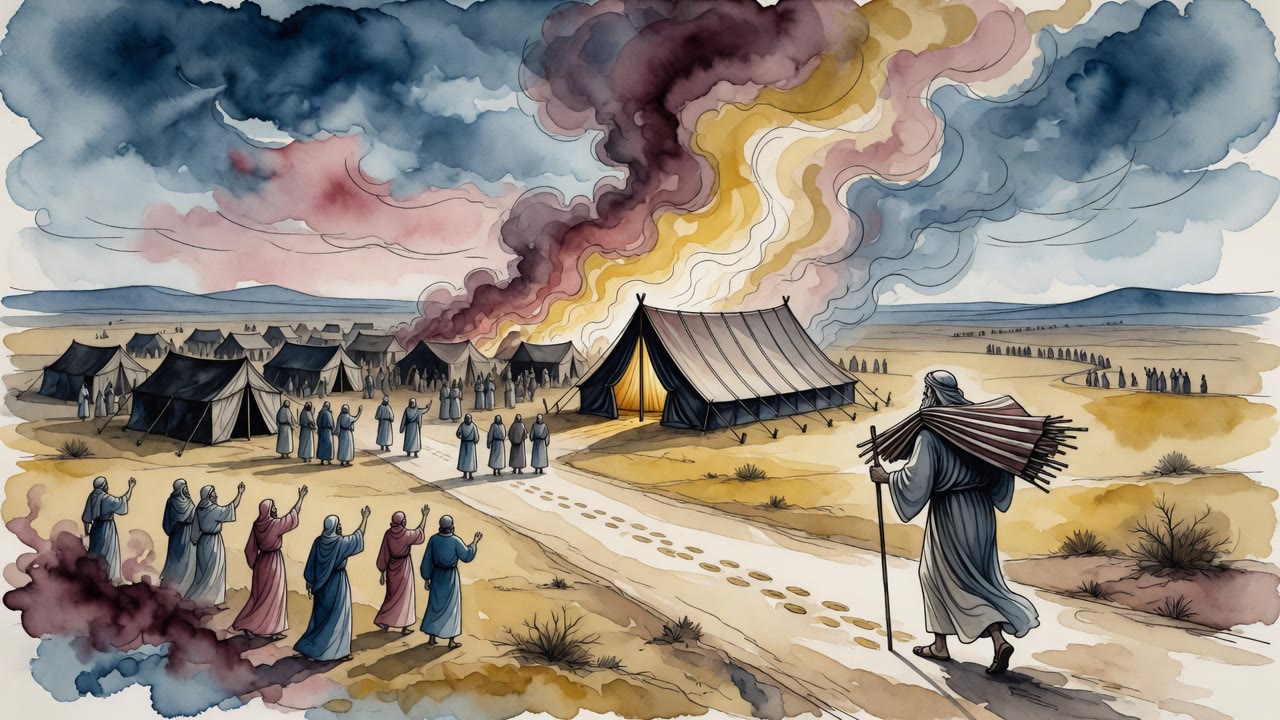
The Chronicles of Jerahmeel preserves the tradition about why God personally dug Moses's grave. When Israel left Egypt, everyone was collecting gold and silver, filling their arms with the wealth of a country that had enslaved them for two centuries. Moses was elsewhere. He had made a promise to Joseph, to bring Joseph's bones out of Egypt when the time came. While everyone else loaded up silver, Moses was in the old graveyard of Goshen looking for a grave.

He found it. He carried the bones himself. He kept the oath that Jacob had extracted from Joseph and Joseph had extracted from whoever would still be alive to fulfill it. For this act, the tradition says, God decided that Moses's own burial deserved the same personal attention. The man who buried Joseph would be buried by God.

The Angel of Death's Approach

Samael, who serves as the angel of death in this tradition, came for Moses in a mood that can only be described as anticipatory. The great figures of history who have resisted him make the eventual taking sweeter, not harder, and Moses was the greatest of them. Samael arrived with his sword drawn. He was certain about this assignment.

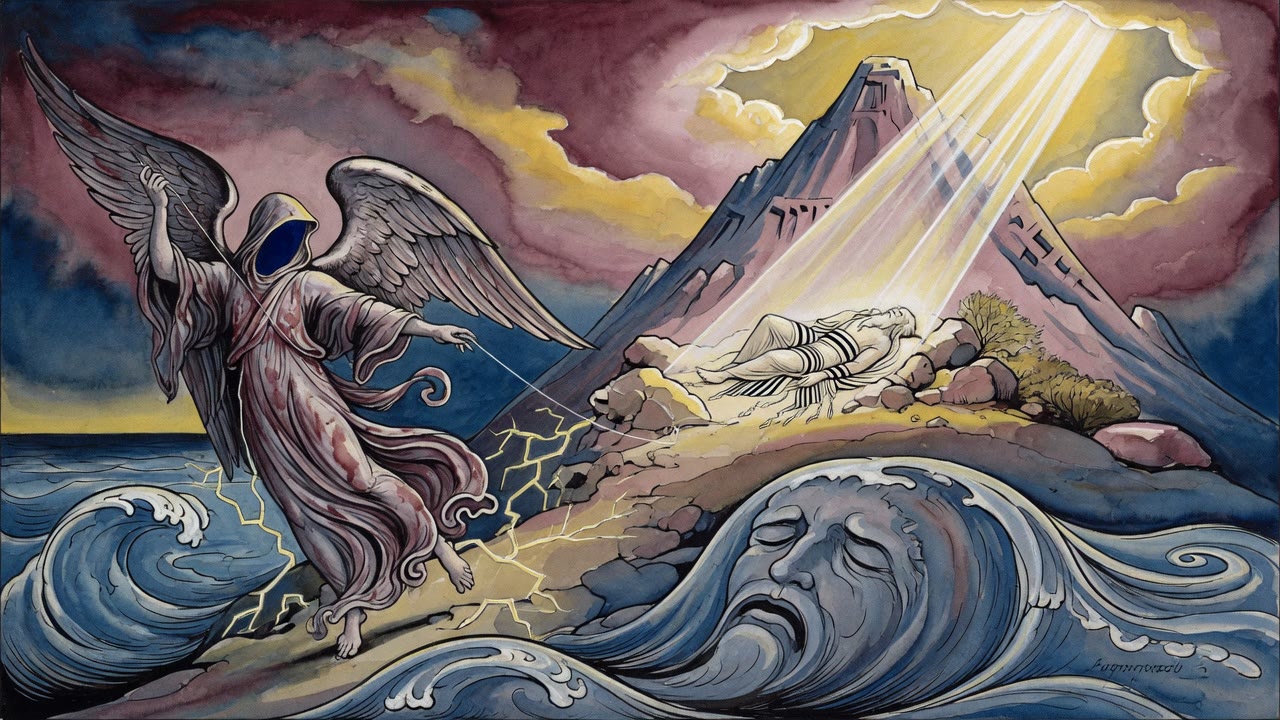
Moses looked at him. The tradition says this is all that happened: Moses turned and looked at Samael, and Samael collapsed. The angel of death fell before the face of a man. Moses told him: I die by God's mouth, not yours. Go away.

Samael went back and reported what had happened. He was sent back again. The second approach was the same. In the end, Moses's soul was taken not by any angel but by God directly, the kiss that is the most intimate possible departure, a soul drawn out in love rather than torn out by force.

The Hidden Grave

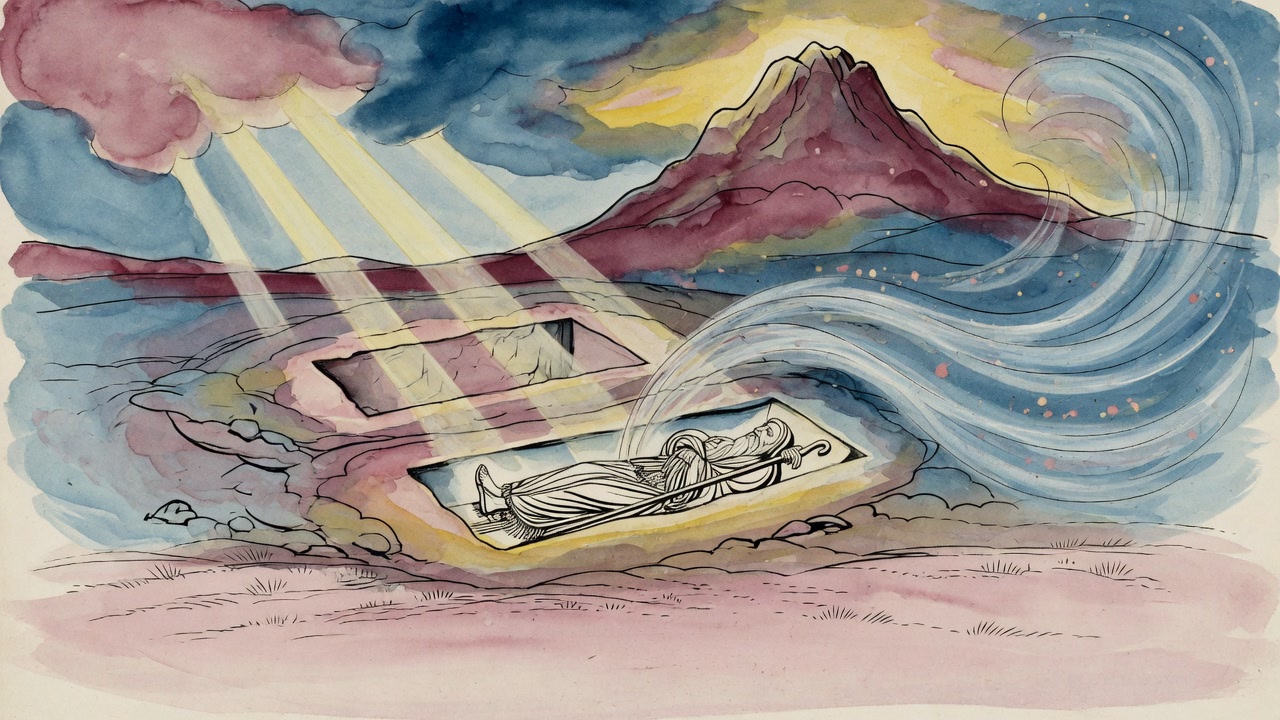
God buried Moses in a valley in the land of Moab, across from Beth-peor. Deuteronomy 34:6 adds: and no man knows his burial place to this day.

The Talmud in tractate Sotah elaborates. The grave was hidden with a specific quality of hiddenness: anyone who looks for it from below sees it above, and anyone who looks from above sees it below. The grave appears to be in different places from different vantage points. It is not just unfound. It is unfindable, by design, because any permanent tomb marking Moses's body would become something the tradition did not want to create: a fixed site of pilgrimage that concentrated authority in a location rather than in the Torah he left behind.

The wandering grave is the rabbis' answer to the human tendency to sanctify the body of the saint rather than the teaching of the saint.

The Weeping of the Angels

When Moses died, the ministering angels wept. God himself lamented. The tradition records a heavenly eulogy: who will rise up for me against the wicked? Who will stand up for me against evildoers? Moses had argued with God on Israel's behalf so many times, had stood in the breach so many times, had turned back divine anger through the force of his intercession, that his absence created a specific gap in the structure of the relationship between heaven and earth that nothing would fill in the same way.

The Torah ends not on the edge of the land but here, on the mountain, with the grave that moves. The greatest of the prophets, the one whom no other prophet equaled in signs and wonders, in the directness of his relationship with God, in the sheer weight of what he accomplished, died looking at what he had earned for others and could not have himself. The story does not explain this fully. It offers the grave that moves, and the kiss, and the angels weeping, and the people mourning in the plains below for thirty days.


← All myths

From the tradition

Sources

6 sources

The texts this telling draws on, in full. Open a card to read inline, or expand it for a wider, quieter read.

Chronicles of Jerahmeel LIChronicles of Jerahmeel (Gaster, 1899)

Why did God Himself attend to the burial of Moses? Because of what Moses had done decades earlier in Egypt, when everyone else was busy loading up silver and gold for the exodus. While the Israelites filled their arms with treasure, Moses spent three days and three nights walking silently through the city, searching for one thing, the coffin of Joseph.

Exhausted and faint, he was found by Serah bat Asher, a woman who had lived since the time of Jacob. She led him to a brook where Pharaoh's magicians had sunk Joseph's coffin, a lead casket weighing five hundred talents. So the Israelites could never leave without it. Moses stood at the water's edge and called out: "Joseph, Joseph, you made Israel swear to carry your bones. Do not prevent their redemption." The coffin rose from the depths, floating as lightly as a reed. Moses lifted it onto his shoulders and carried it the entire way out of Egypt, while everyone else carried their gold.

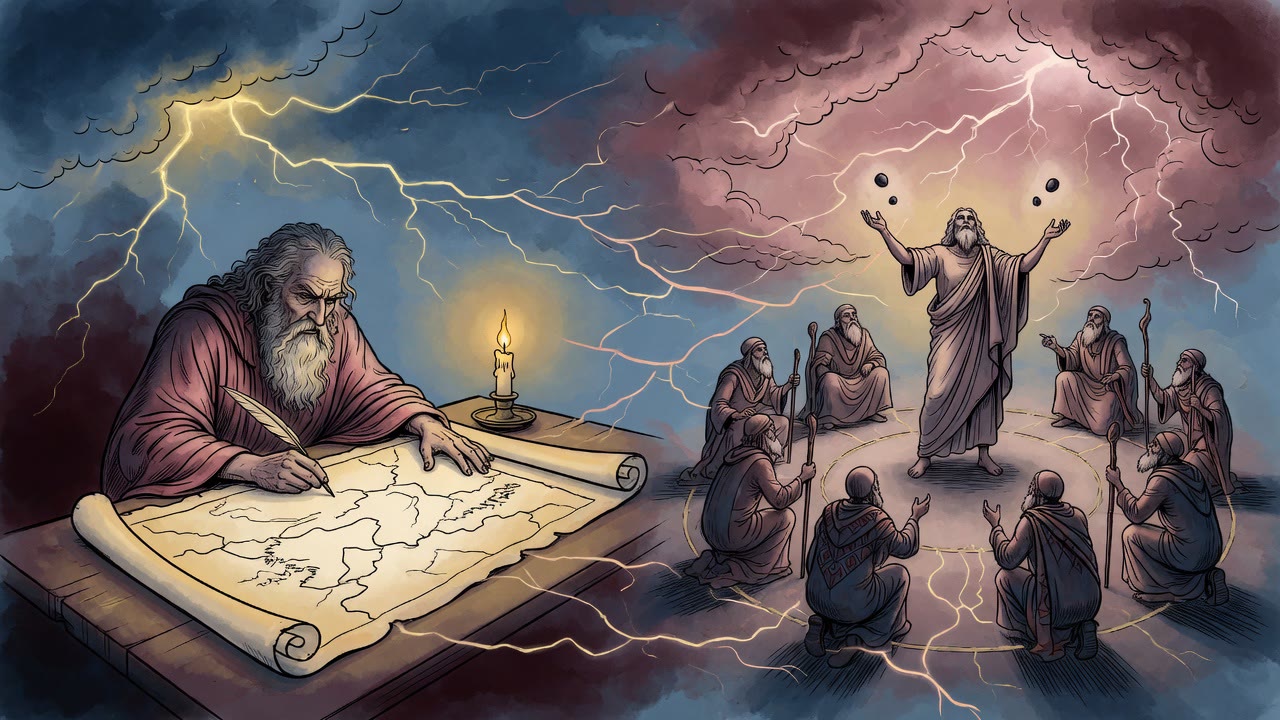
God told him: "You think this was a small thing. By your life, the mercy you have shown is great." So when Moses' own death came, God repaid him in kind. Moses tried everything to avoid dying, he wrote thirteen Torah scrolls on his last day, one for each tribe and one for the Ark. He tried to outrun the sunset, hoping that if the day never ended, the decree could not take effect. God stopped the sun for him, but the decree held.

In his final moments, according to the Chronicles of Jerahmeel, a 12th-century Hebrew chronicle translated by Moses Gaster in 1899, Moses seized the angel of death and forced him to walk ahead as Moses blessed each of the twelve tribes. The angel came for him three times. Twice, Moses drove him off by speaking the Shem HaMeforash (שם המפורש), the Ineffable Name. The third time, Moses accepted the judgment. His soul argued with God, protesting that no body had been purer. God agreed. And carried the soul Himself to rest beneath the divine throne.

Full source
Legends of the Jews 7:19Legends of the Jews

The story of Moses’ death in Jewish tradition is so much more than just an ending; it's a evidence of his unparalleled relationship with the Divine.

After receiving the decree of his impending death, Moses, Knowing your time is limited, yet facing it with gladness because of the life lived. The Angel of Death, naturally, followed him, eager to claim his soul. But Moses wasn't having it. He refused to surrender his soul to anyone but God Himself. What a powerful image of devotion and control!

As Moses gazed upon the Promised Land, the future unfolding before him, he was reminded that each moment brought him closer to the inevitable. A voice from Heaven urged him to accept his fate: "Make no fruitless endeavors to live."

Moses, ever the advocate, ever the leader, wouldn't give up. He pleaded with God, "Lord of the world! Let me stay on this side of the Jordan with the sons of Reuben and the sons of Gad, that I may be as one of them, while Joshua as king at the head of Israel shall enter into the land beyond the Jordan." He wanted to remain, not for personal glory, but to continue serving his people, even in a diminished role.

God's response, however, was firm, rooted in the very laws Moses himself had received. God essentially said, "Dost thou wish Me to make as naught the words in the Torah (the first five books of the Hebrew Bible) that read, 'Three times in the year all thy males shall appear before the Lord God?'" The pilgrimage festivals – Pesach (Passover), Shavuot (Weeks), and Sukkot (Tabernacles) – were central to Jewish life. If Moses, the lawgiver himself, didn't participate, it would set a dangerous precedent.

And it wasn’t just about the pilgrimage. God continued, "I have, furthermore, written in the Torah through thee, 'At the end of every seven years, in the set time of the year of release, when all Israel is come to appear before the Lord thy God, in the place which He shall choose, thou shalt read this law before all Israel in their hearing.'" Every seven years, during the Shmita (Sabbatical year), the entire Torah was to be read publicly. Moses' continued presence would undermine Joshua's authority, creating confusion and potentially leading to rebellion against the very laws he had worked so hard to instill.

It’s a fascinating dilemma, isn’t it? Moses, driven by his deep love for his people, sought to bend the rules, to find a way to stay and continue his service. But God, while understanding Moses' intentions, recognized the greater implications, the potential for chaos and the importance of upholding the integrity of the Torah and the leadership transition.

What does this teach us? Perhaps that even the most righteous individuals must ultimately submit to the divine plan. Or maybe it shows us that true leadership means knowing when to step aside for the good of the community, even when it's the hardest thing to do.

Full source
Legends of the Jews 7:55Legends of the Jews

Legends of the Jews turns to Samael Gleefully Draws His Sword to Claim Moses.

Samael, often identified with the angel of death, though some traditions paint a more complex picture, was no ordinary adversary. According to Legends of the Jews, he left God's presence "in great glee," armed not just with a sword, but with cruelty itself. He was wrapped in wrath, driven by a rage that must have been terrifying to behold.

Can you picture it? Samael, the embodiment of divine anger, setting out to confront Moses. When Samael finally found Moses, he wasn't met with weakness or fear. Instead, Moses was immersed in writing the Ineffable Name, the most sacred name of God, a name so powerful it's rarely spoken aloud.

The description of Moses at that moment? Absolutely stunning. A dart of fire shot from his mouth, and his face shone with an otherworldly radiance, like the sun itself. He appeared as an angel of the Lord's hosts.

No wonder Samael was taken aback. As Ginzberg retells it in Legends of the Jews, Samael, seeing Moses in such a state of divine grace and power, actually trembled with fear. He thought to himself, "It was true when the other angels declared that they could not seize Moses' soul!"

What a moment! It’s a powerful reminder that even in the face of death, faith, devotion, and connection to the Divine can be an incredible source of strength. It makes you wonder, doesn't it? What Names are we writing in our lives? What light are we radiating into the world? And how might that transform even the most formidable challenges we face?

Full source
Legends of the Jews 7:56Legends of the Jews

The Legends of the Jews, that incredible compilation of rabbinic lore gathered by Louis Ginzberg, paints a vivid picture. It tells us that Moses, knowing Samael (the angel of death) was coming for him, looked upon the angel. And just by gazing at Moses, Samael's eyes dimmed, and he fell to his face in agony, "seized with the woes of a woman giving birth," Ginzberg writes. He was so terrified he couldn't even speak.

Can you

Moses, never one to mince words, demands, "Samael, Samael! 'There is no peace, saith my God, to the wicked!' Why dost thou stand before me? Get thee hence at once, or I shall cut off thy head."

In fear, Samael finally manages to croak out, "Why art thou angry with me, my master, give me thy soul, for thy time to depart from the world is at hand."

Moses, unflinching, asks who sent him. Samael replies, "He that created the world and the souls."

And Moses? He simply states, "I will not give thee my soul."

Samael tries to assert his authority, "All souls since the creation of the world were delivered into my hands."

But Moses isn't having it. He retorts, "I am greater than all others that came into the world, I have had a greater communion with the spirit of God than thee and thou together."

Samael, clearly intrigued (or maybe just desperate), asks, "Wherein lies thy preeminence?"

And then Moses unleashes a litany of his accomplishments. It's a breathtaking, almost boastful, recitation – but perhaps justified, given the circumstances.

He reminds Samael: he was born circumcised; he walked and talked at three days old; he refused his mother's milk until she was paid by Pharaoh's daughter. As Ginzberg continues, he recalls that at three months, he prophesied receiving the Torah from God. At six months, he entered Pharaoh's palace and took his crown. At eighty, he brought the ten plagues, slew Egypt's guardian angel, and led six hundred thousand Israelites out of slavery.

He didn't stop there. Moses reminded Samael how he cleaved the sea, drowned the Egyptians (and not Samael who took their souls, but Moses), turned bitter water sweet, ascended to heaven, and spoke face to face with God. He hewed the tablets, received the Torah, spent 120 days and nights in heaven without food or water, conquered the heavenly inhabitants, revealed their secrets to mankind, wrote the 613 mitzvot (commandments) at God's command, and taught them to Israel.

And as if that weren't enough, Moses adds that he waged war against the giants Sihon and Og, those antediluvian heroes so tall the floodwaters barely reached their ankles. He commanded the sun and moon to stand still, and with his staff, he slew them both.

Then comes the mic drop: "Where, perchance, is there in the world a mortal who could do all this? How darest thou, wicked one, presume to wish to seize my pure soul that was given me in holiness and purity by the Lord of holiness and purity? Thou hast no power to sit where I sit, or to stand where I stand. Get thee hence, I will not give thee my soul."

Wow.

What are we to make of this incredible scene? Is it a literal account? A metaphor for the struggle against death? A evidence of the unique relationship between Moses and God? Perhaps it's all of these things. The aggadah (Jewish storytelling tradition) often uses hyperbole and vivid imagery to convey deeper truths.

Maybe the takeaway is this: even in the face of death, even when confronted by the ultimate power, our deeds, our connection to the divine, and our unwavering commitment to what is right can give us the strength to stand our ground. And sometimes, just sometimes, that's enough.

Full source
Sotah 13bTalmud Bavli, Sotah

This one, i.e., the deceased Joseph, fulfilled all that is written in this. Therefore, it is fitting that the two arks should lie side by side. The Gemara asks: And if Moses had not dealt with the burial of Joseph, would the Jewish people not have dealt with it? But isn’t it written that after Moses died: “And the bones of Joseph, which the children of Israel brought up out of Egypt, they buried in Shechem” (Joshua 24:32), which indicates that the Jewish people completed the burial of Joseph?

And furthermore, if the Jewish people had not dealt with Joseph’s burial, would his children not have dealt with it? But isn’t it written in that same verse: “And they became the inheritance of the children of Joseph,” as Joseph was buried in Shechem, which was then given to his descendants? Therefore, the question arises: Why did Joseph’s descendants initially leave the task of his burial to the Jewish people and Moses?

The Gemara answers: They said: Leave Joseph for others. It is more of an honor for Joseph to be buried by the many than by the few, and therefore it is better that the Jewish people be involved in the burial. And furthermore, they said: Leave Joseph for others. It is more of an honor for Joseph to be buried by one of the great men like Moses than by lesser ones like us.

In the aforementioned verse it states: “And the bones of Joseph, which the children of Israel brought up out of Egypt, they buried in Shechem, in the parcel of ground that Jacob bought from the sons of Hamor the father of Shechem for a hundred pieces of money” (Joshua 24:32). The Gemara asks: What is different about Shechem that they specifically chose to bury Joseph there? Rabbi Ḥama, son of Rabbi Ḥanina, says that the Jewish people said: His brothers kidnapped him from Shechem (see Genesis 37:12–28), and to Shechem we should return his lost body.

The Gemara comments: The verses contradict each other, as it is written: “And Moses took the bones of Joseph with him” (Exodus 13:19), and it is written elsewhere: “And the bones of Joseph, which the children of Israel brought up out of Egypt” (Joshua 24:32). Who in fact took Joseph’s bones? Rabbi Ḥama, son of Rabbi Ḥanina, says: Anyone who performs a matter but does not complete it, and then another comes and completes it, the verse ascribes credit to the one who completed it as if he had actually performed the entire act.

Due to the fact that the children of Israel completed Joseph’s burial, the Torah ascribes them credit as if they had performed the entire act. Rabbi Elazar says with regard to one who initiates performance of a mitzva but does not complete it when capable of doing so: He is also demoted [moridin] from his position of greatness, as it is written: “And it came to pass at that time, that Judah went down [vayyered] from his brethren, and turned in to a certain Adullamite, whose name was Hirah” (Genesis 38:1).

Usage of the term “went down” indicates that the rest of Judah’s brothers had demoted him from his position of greatness because he began the process of saving Joseph, but he did not complete it. Rabbi Shmuel bar Naḥmani says: The episode with regard to Judah also indicates that one who initiates performance of a mitzva but does not complete it will also bury his wife and children as Judah did, as it is written: “And in process of time Shua’s daughter, the wife of Judah, died” (Genesis 38:12), and it is written further: “And the sons of Judah: Er, and Onan, and Shelah, and Perez, and Zerah; but Er and Onan died in the land of Canaan” (Genesis 46:12).

Rav Yehuda says that Rav says: For what reason was Joseph called: Bones, even during his lifetime, as he had his brothers take an oath that “God will surely remember you, and you shall carry up my bones from here” (Genesis 50:25)? Because he did not protest for the honor of his father, as the brothers said to Joseph while unaware of his true identity: “Your servant our father” (Genesis 43:28, 44:31), and Joseph said nothing to them in protest that they referred to his father Jacob as Joseph’s servant.

And Rav Yehuda says that Rav says, and some say that this was said by Rabbi Ḥama, son of Rabbi Ḥanina: For what reason did Joseph predecease his brothers, as is indicated from his requesting of them to take care of his burial needs? Because Joseph acted authoritatively, and such behavior can reduce one’s life span. After describing that Judah “went down” from his greatness, the Gemara discusses a similar term employed with regard to Joseph, as the verse states: “And Joseph was brought down [hurad] to Egypt” (Genesis 39:1).

Rabbi Elazar says: Do not read the word as “hurad,” meaning that he was passively brought down, but rather read it as horid, meaning: He, Joseph, brought down others, as Joseph brought down the astrologers [itztagninei] of Pharaoh from their position of eminence because he knew the interpretation of Pharaoh’s dreams when they did not. The continuation of that verse states: “And Potiphar, an officer [seris] of Pharaoh’s, the captain of the guard, an Egyptian, bought him from the hand of the Ishmaelites, who had brought him down there” (Genesis 39:1).

Rav says: He purchased the handsome Joseph for himself, for the intended purpose of homosexual intercourse, but was unable to fulfill his desires, as the angel Gabriel came and castrated Potiphar [seireso]. Then Gabriel came again and further mutilated him [fero] in the same part of his body. This is alluded to in the verses that write Potiphar’s name differently: Initially, it is written “Potiphar” (Genesis 39:1) and in the end it is written “Potiphera” (Genesis 41:45).

The change in his name indicates that a part of himself was mutilated. § The mishna teaches: Who, to us, had a greater burial than Moses, as no one involved himself in his burial other than the Omnipresent Himself. The Gemara teaches: When Moses relates how God responded to him when denying his request to enter Eretz Yisrael, he states: “And the Lord said to me: Let it suffice for you [rav lakh]; speak no more to Me of this matter” (Deuteronomy 3:26).

Rabbi Levi says: Moses proclaimed to the Jewish people when rebuking them with the term “rav,” and therefore it was proclaimed to him with the term “rav” that he would not enter Eretz Yisrael. The Gemara explains: He proclaimed with the term “rav” when speaking with the congregation of Korah: “You take too much upon you [rav lakhem], you sons of Levi” (Numbers 16:7), and it was proclaimed to him with the term “rav,” as God denied his request and said: “Let it suffice for you [rav lakh].”

Alternatively: God’s telling Moses “rav lakh” was intended to mean: You now have a rav, a master, and who is it? It is Joshua, who has been chosen to lead the Jewish people. Alternatively: God’s telling Moses “rav lakh” was intended to mean: You have a rav, i.e., God, Who says that you may not enter Eretz Yisrael. You must not importune Me anymore, so that people should not say: How difficult is the Master and how obstinate is the student.

The Gemara asks: And why was Moses punished so much in that he was not allowed to enter Eretz Yisrael, despite being so righteous? The school of Rabbi Yishmael taught that the reason is based on the common aphorism: Based on the camel is the burden. In other words, a person is judged in accordance with his stature, and therefore a righteous individual will be punished greatly due to any sins he committed.

The verse relates what Moses said to the Jewish people at the end of his life: “And he said to them: I am a hundred and twenty years old this day; I can no longer go out and come in; and the Lord has said to me: You shall not go over this Jordan” (Deuteronomy 31:2). The wording is problematic, as there is no need for the verse to state the term “this day.” Moses said it in order to indicate: On this day, my days and years have been completed to be precisely one hundred and twenty, in order to teach you that the Holy One, Blessed be He, completes the years of the righteous from day to day and from month to month, as it is written: “The number of your days I will fill” (Exodus 23:26), indicating that the righteous will live out their years fully.

The verse continues: “I can no longer go out and come in” (Deuteronomy 31:2). The Gemara asks: What is the meaning of “go out and come in”? If we say it means literally that Moses was actually physically restricted from going out and coming in, but isn’t it written: “And Moses was a hundred and twenty years old when he died, his eye was not dim, nor his natural force abated” (Deuteronomy 34:7), indicating that he was at full physical strength?

And it is written further: “And Moses went up from the plains of Moab to Mount Nebo” (Deuteronomy 34:1). And it is taught in a baraita: There were twelve steps there to ascend the mountain, and Moses stepped over them all in one step, also indicating that he was at full physical strength. Rabbi Shmuel bar Naḥmani says that Rabbi Yonatan says: The verse means that he could no longer go out and come in with words of Torah.

This teaches that the gates of wisdom were closed off to him. The verse discussing when Joshua was appointed to be the successor of Moses states: “And Moses and Joshua went, and presented themselves in the Tent of Meeting” (Deuteronomy 31:14). A Sage taught: That Sabbath when Moses died was a day of two pairs [deyo zugei], i.e., two wise men, Moses and Joshua, serving together in one place. Authority was taken from one and given to the other.

And it is taught in a baraita that Rabbi Yehuda said: If not for an explicitly written verse, one could not say what is written with regard to the death and burial of Moses. Where did Moses die? In the portion of Reuben, as it is written: “And Moses went up from the plains of Moab to Mount Nebo” (Deuteronomy 34:1), and it is known from elsewhere that Nebo is situated in the portion of Reuben, as it is written: “And the children of Reuben built Heshbon, and Elealeh, and Kiriathaim, and Nebo” (Numbers 32:37–38).

The name is also expounded: It is called “Nebo [Nevo],” for three prophets [nevi’im] died there: Moses, and Aaron, and Miriam. Rabbi Yehuda continues: And where is Moses buried? In the portion of Gad, as it is written in the blessing of Moses to the tribe of Gad: “And he chose a first part for himself, for there a portion of a ruler was reserved” (Deuteronomy 33:21), indicating that Moses, the ruler, is buried in the portion of Gad.

And how much is the distance from the portion of Reuben to the portion of Gad? Four mil. Rabbi Yehuda asks: For those four mil from Mount Nebo in the portion of Reuben to the burial place of Moses in the portion of Gad, who transported him? He answers: The contradiction between the two verses teaches that Moses was lying in the wings of the Divine Presence, as Moses was carried out by God Himself, and the ministering angels were saying: “He executed the righteousness of the Lord, and His ordinances with Israel” (Deuteronomy 33:21).

And the Holy One, Blessed be He, was saying: “Who will rise up for Me against the evildoers? Who will stand up for Me against the workers of iniquity?” (Psalms 94:16). In other words, God asked: Who will now defend the Jewish people against its accusers? The idea that God Himself transported Moses to his burial could not have been said if not for the proof from the resolution between the contradictory verses.

And Shmuel says that God was saying the verse: “Who is as the wise man and who knows the interpretation [pesher] of a matter?” (Ecclesiastes 8:1), referring to the greatness of Moses, who was able to forge compromises, pesharim, between God and the Jewish people. And Rabbi Yoḥanan says that God was saying the verse: “Wisdom, where can it be found?” (Job 28:12). And Rav Naḥman says that God was saying the verse: “And Moses, the servant of God, died there” (Deuteronomy 34:5).

Semalyon says that God was saying: And Moses, the great scribe of Israel, died there. It is taught in a baraita that Rabbi Eliezer the Great says: Over an area of twelve mil by twelve mil, equivalent to the size of the camp of Israel, a Divine Voice proclaimed and said: And Moses, the great scribe of Israel, died. And some say: Moses did not actually die, as it is written here: “And Moses, the servant of the Lord, died there” (Deuteronomy 34:5), and it is written there: “And he was there with the Lord forty days and forty nights” (Exodus 34:28).

Just as there, where it says: “And he was there with the Lord,” it means that he was standing and serving before God; so too, here, when it says: “And Moses, the servant of the Lord, died there,” it means that he was standing and serving before God. The verse describing the burial of Moses states: “And He buried him in the valley in the land of Moab over against Beth Peor; and no man knows of his grave to this day” (Deuteronomy 34:6).

Rabbi Berekhya says: This verse provides a sign within a sign, i.e., a very precise description of the location of his burial, and even with this the verse concludes: “And no man knows of his grave to this day” (Deuteronomy 34:6). The Gemara relates: And the evil monarchy of the Roman Empire already sent messengers to

Full source
Legends of the Jews 7:40Legends of the Jews

The Torah tells us he died on Mount Nebo, overlooking the Promised Land he would never enter. But is that the whole story?

The Book of Deuteronomy (34:6) states rather cryptically that God buried him "in the valley in the land of Moab, opposite Beth-peor, but no one knows the place of his burial to this day."

There's a legend that offers a little more detail?

The tribe of Gad, held a special place. They lived on the border of the Land of Israel. And they received a rather interesting blessing. According to Legends of the Jews, that blessing foretold that in "the future time" (a phrase that hints at messianic times), they would be just as strong in battle as they were during the initial conquest of Palestine. They would lead Israel when they returned to the Holy Land, just as they had when they first entered it.

Why this honor? Well, Moses praised the tribe for choosing their territory on the eastern side of the Jordan River. Why? Because, according to this legend, that specific area was chosen to be the location of Moses’ tomb.

Wait a minute… but didn’t he die on Mount Nebo, which was actually in the territory of Reuben?

Here’s where the story gets truly fascinating. According to this tradition, while Moses did indeed die on Mount Nebo, his body wasn’t left there. Instead, the Shekhinah (the Divine Presence) – that’s the divine presence, the visible manifestation of God’s glory – swooped down and carried his body, on pinions of light, no less!

The destination? Gad's territory.

Imagine that scene for a moment. The angels themselves lamenting, chanting, "He shall enter into peace and rest in his bed." And the distance covered? A modest four miles, according to the legend. Not a huge journey, but a hugely symbolic one.

So, what does it all mean? This isn't just a simple geographical relocation. It's about honor, about divine intervention, and about the special role assigned to the tribe of Gad. It emphasizes the idea that even in death, Moses was under God’s direct care.

It also highlights the mysterious nature of death and burial in Jewish tradition. The fact that the precise location of Moses's grave remains unknown only adds to the sense of awe and reverence surrounding his life and legacy. It suggests that some things are meant to remain hidden, known only to God.

So, the next time you read about Moses’ death in Deuteronomy, remember this legend. Remember the tribe of Gad, the angelic escort, and the secret journey of a prophet's body. It's a powerful reminder that even in the face of death, the stories of our tradition offer glimpses of hope, mystery, and the enduring presence of the Divine.

Full source