6 min read

Moses Stood Face to Face With the Angel of Death

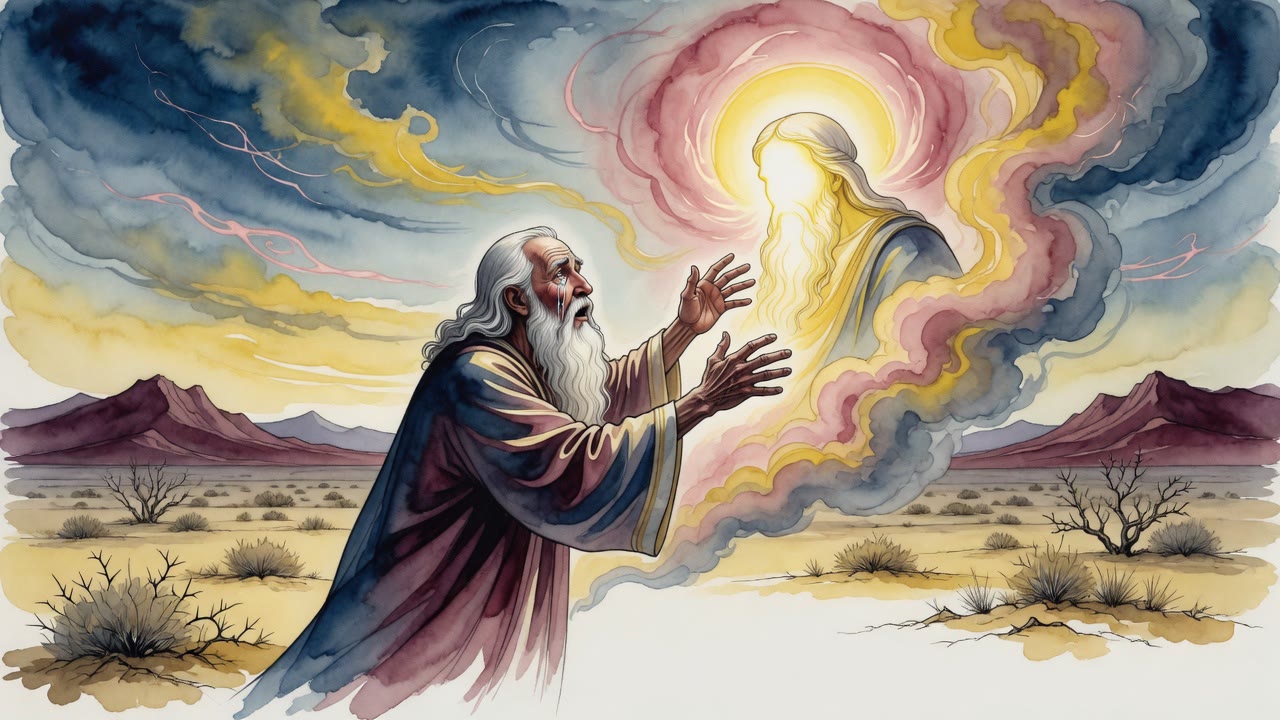
Samael came to take Moses and found him writing the Name of God. The angel's eyes went dark, he fell to his face, and still Moses refused.

Curated by Arthur · Told by Maggid ·
Table of Contents
  1. Samael Draws His Sword
  2. The Demand and the Refusal
  3. The Name Written in Light
  4. After the Gates of Paradise

Samael Draws His Sword

Most people do not see it coming. The angel arrives, the soul is taken, the ledger is closed, and no one gets a negotiation. Death has rules, and one of the rules is that the soul does not argue. But Moses was not most people, and Samael, who had collected souls since before the flood, had never met anyone quite like him.

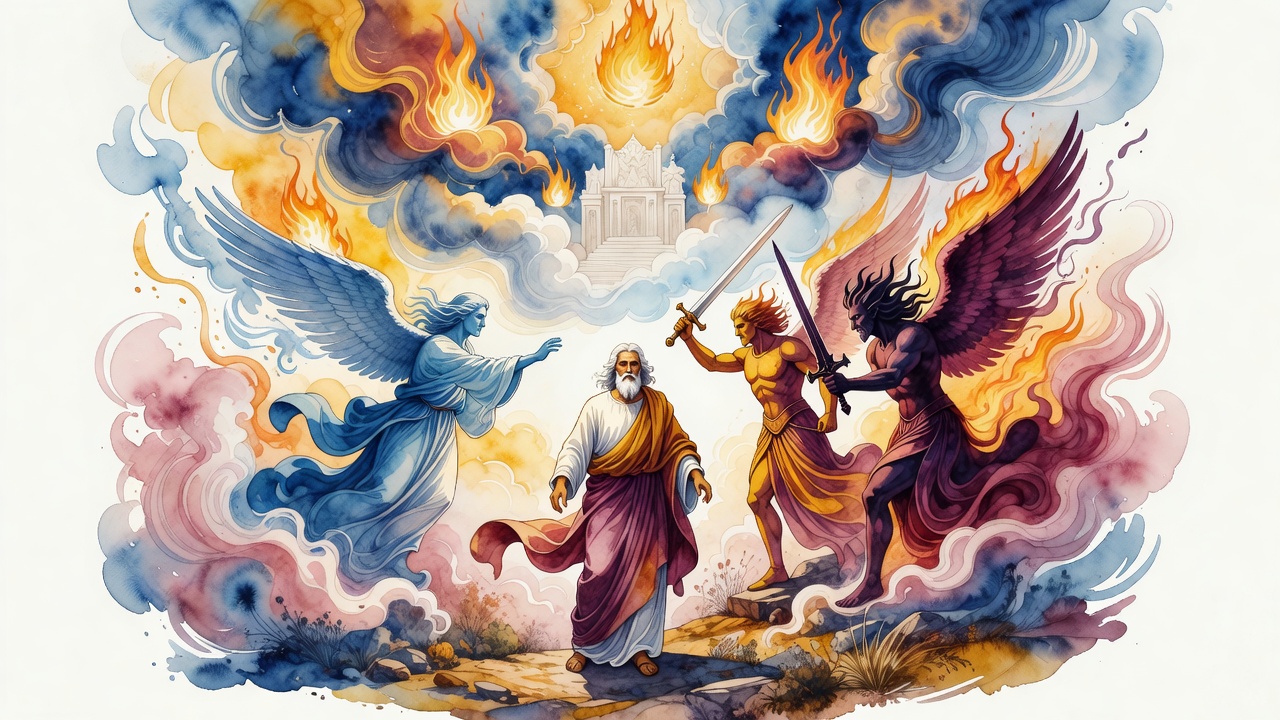
He came with his sword drawn. The tradition describes him arriving in a fury, filling the air with his rage, the sword vibrating with a force that had terrified every soul he had ever approached. He had taken kings and prophets. He had taken men who fought and men who prayed and men who did both. None of them had stopped him. Moses was one hundred and twenty years old, his time clearly finished, God's own decree standing behind Samael's assignment. This should have been simple.

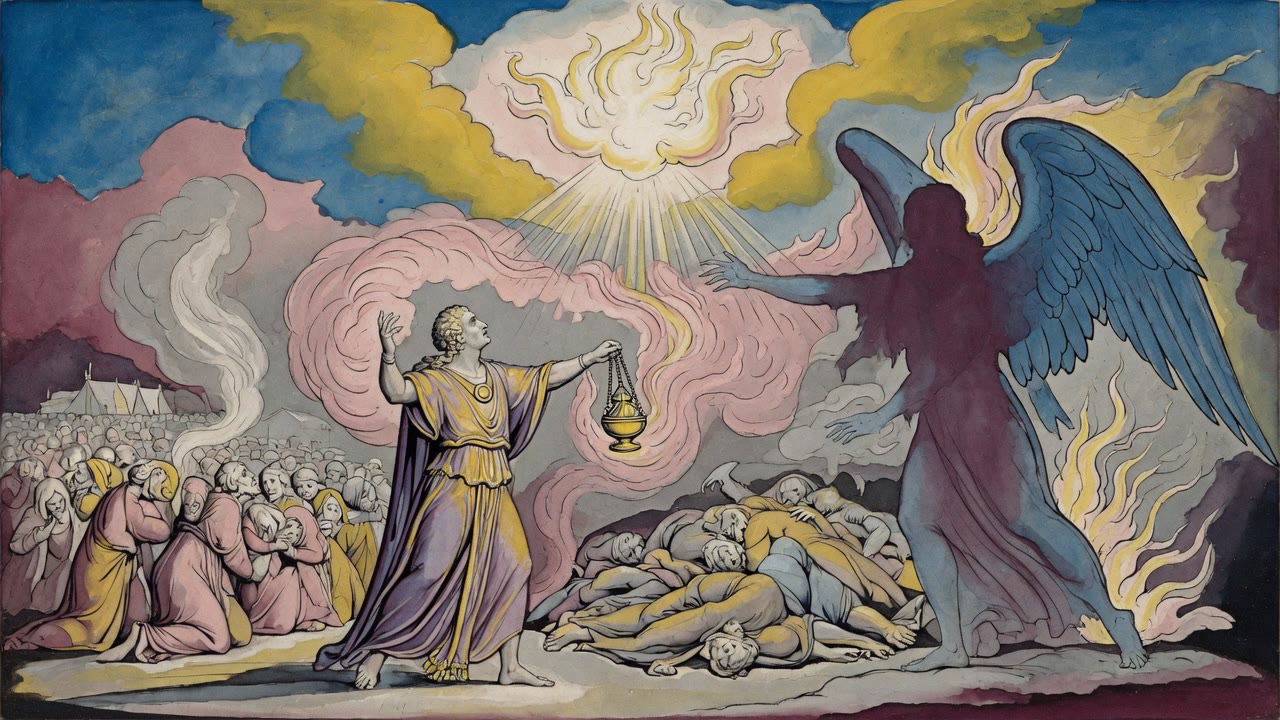
Moses looked at him. Just looked. And Samael's eyes went dark. He fell to his face, gripped by agonies the tradition compares to the pangs of a woman in labor. The most powerful angel in the hierarchy of death, the one who had never hesitated before any soul, lay on the ground unable to speak.

The Demand and the Refusal

When Samael finally found his voice, he made the simple request he had been sent to make: Give me your soul. Your time in the world is finished.

Moses refused.

The exchange that followed has the quality of a negotiation between two figures who both understand the outcome is predetermined but neither is willing to yield the form. Moses held his staff with the Name of God engraved on it. He had been writing that Name when Samael arrived, occupied with the sacred task as if death had not come to the door. When Samael pressed him, Moses rose up in his own anger, gripped the staff, and drove it into the angel.

Moses struck the angel of death. Not as a last desperate act but as a deliberate assertion. He had spent his life carrying the divine Name from place to place, inscribing it on staffs and mezuzot and the inner surface of his own memory, and he was not going to stop for Samael. He struck him and drove him back and screamed at him: There is no peace for the wicked. Get out of my sight, or I will cut off your head.

Samael retreated.

The Name Written in Light

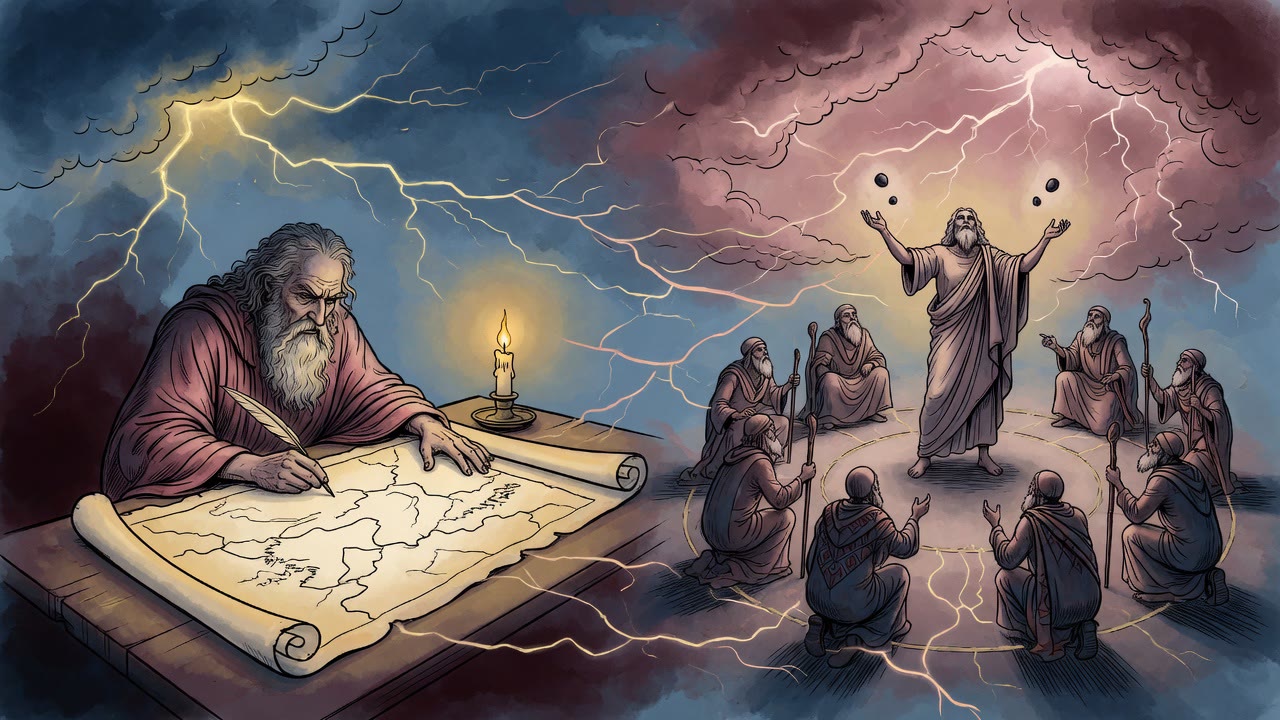
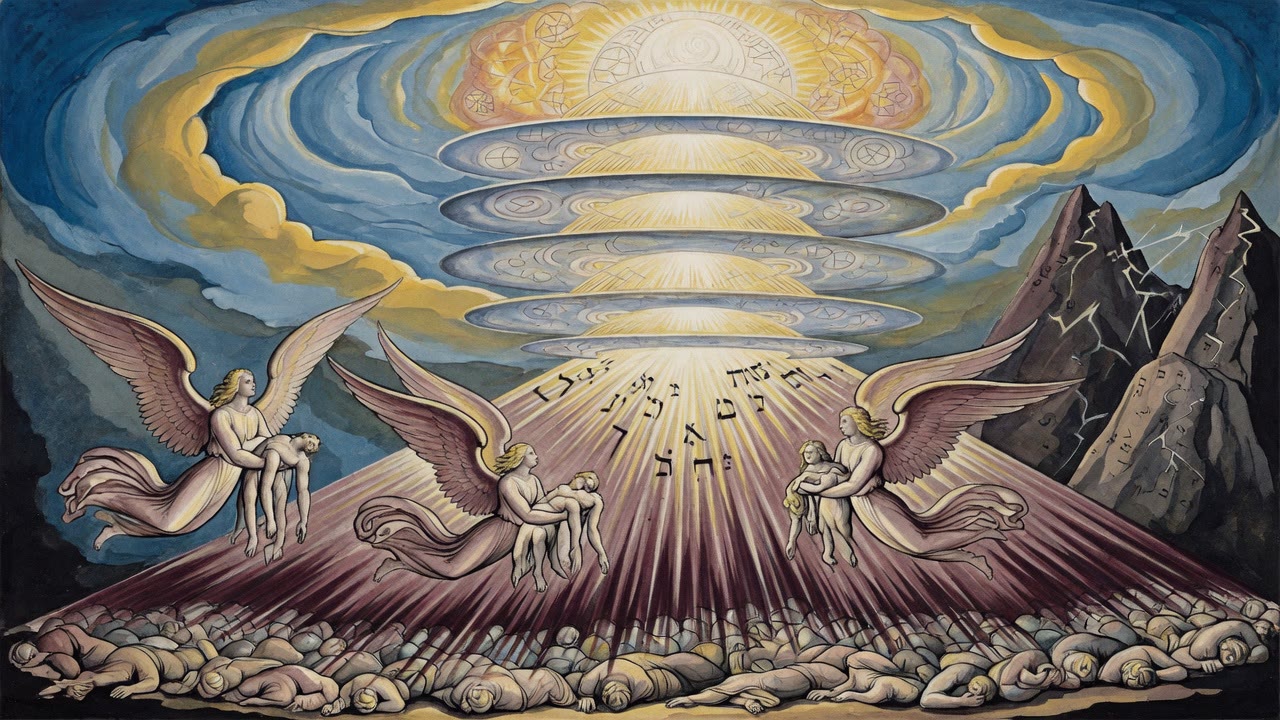
But there was a moment before the confrontation, and the tradition preserves it separately. Moses, knowing the angel was coming, had not prepared to fight. He had prepared to write. He sat with the Name of the Blessed Holy One spread before him and copied it carefully, the same letters he had carried down from Sinai, the same letters engraved in the stone tablets. Samael arrived and found Moses not defending himself but occupied with something holier than his own life.

This detail is not incidental. The rabbis understood it as the explanation for why Moses's face shone, why he remained at full strength until the last moment, why the angel's eyes failed when they fell on him. Moses had spent so long in the presence of the divine Name that the Name had gotten into his face. You cannot look directly at someone whose face carries that kind of light and remain composed. Samael, whose business was death and whose nature was corruption, could not bear what Moses's face had become.

After the Gates of Paradise

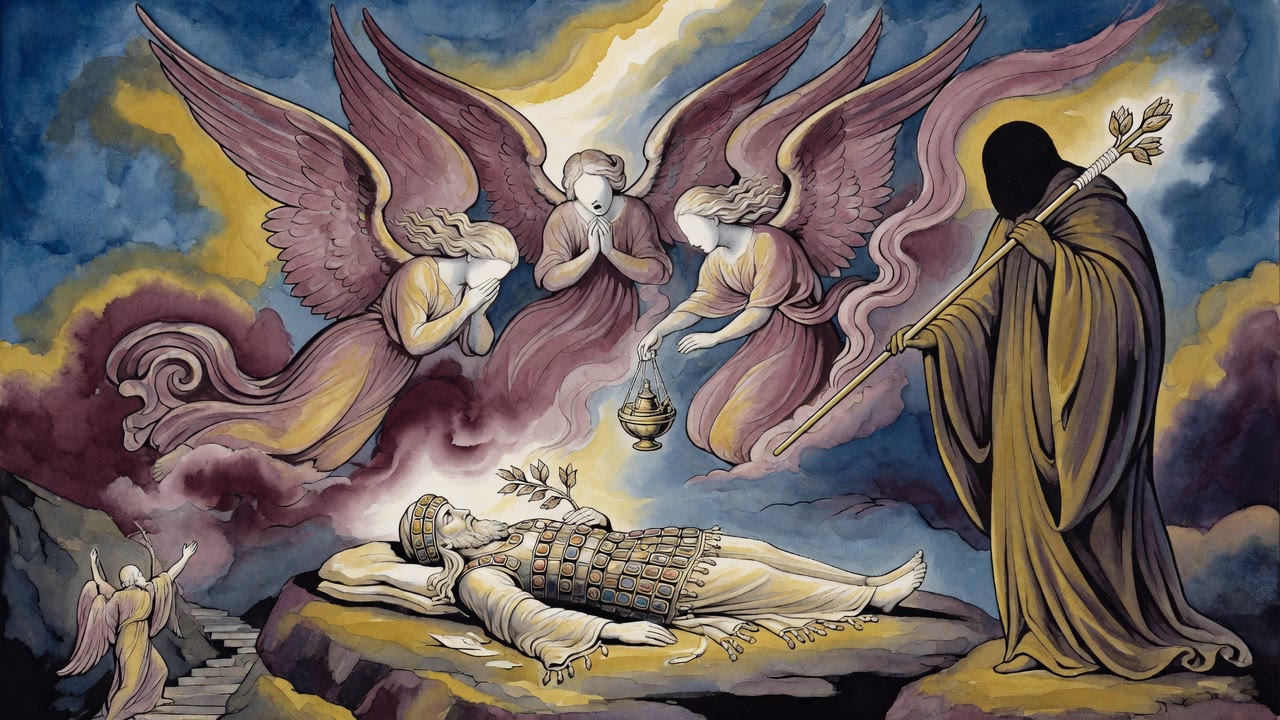
The tradition follows Samael even after Moses's death. He hastened to Paradise, determined to find Moses there, unwilling to accept that the soul he had been sent to collect had escaped him entirely. He arrived at the gates and was turned away. The angels at the gate quoted Psalm 118 at him: This is the gate of the Lord. The righteous shall enter through it. You shall not.

Moses was inside. Samael was outside. The angel who had never failed at his assignment, who had come with full authority and a drawn sword, was standing at the gates of Gan Eden unable to enter, while the soul he had come for was already past any reach he possessed.

The tradition notes this without triumph and without consolation. Death does not stop being real because Moses outwitted its minister once. Samael would go on collecting souls for as long as time lasted. But Moses had demonstrated something: that the divine Name, engraved deep enough into a human life, produces a face that death cannot meet directly. The confrontation at the end of Moses's life was not an exception to the rules of death. It was the completion of everything Moses had done with the Name since the burning bush.


← All myths
From the tradition

Sources

3 sources

The texts this telling draws on, in full. Open a card to read inline, or expand it for a wider, quieter read.

Legends of the Jews 7:56Legends of the Jews

The Legends of the Jews, that incredible compilation of rabbinic lore gathered by Louis Ginzberg, paints a vivid picture. It tells us that Moses, knowing Samael (the angel of death) was coming for him, looked upon the angel. And just by gazing at Moses, Samael's eyes dimmed, and he fell to his face in agony, "seized with the woes of a woman giving birth," Ginzberg writes. He was so terrified he couldn't even speak.

Can you

Moses, never one to mince words, demands, "Samael, Samael! 'There is no peace, saith my God, to the wicked!' Why dost thou stand before me? Get thee hence at once, or I shall cut off thy head."

In fear, Samael finally manages to croak out, "Why art thou angry with me, my master, give me thy soul, for thy time to depart from the world is at hand."

Moses, unflinching, asks who sent him. Samael replies, "He that created the world and the souls."

And Moses? He simply states, "I will not give thee my soul."

Samael tries to assert his authority, "All souls since the creation of the world were delivered into my hands."

But Moses isn't having it. He retorts, "I am greater than all others that came into the world, I have had a greater communion with the spirit of God than thee and thou together."

Samael, clearly intrigued (or maybe just desperate), asks, "Wherein lies thy preeminence?"

And then Moses unleashes a litany of his accomplishments. It's a breathtaking, almost boastful, recitation – but perhaps justified, given the circumstances.

He reminds Samael: he was born circumcised; he walked and talked at three days old; he refused his mother's milk until she was paid by Pharaoh's daughter. As Ginzberg continues, he recalls that at three months, he prophesied receiving the Torah from God. At six months, he entered Pharaoh's palace and took his crown. At eighty, he brought the ten plagues, slew Egypt's guardian angel, and led six hundred thousand Israelites out of slavery.

He didn't stop there. Moses reminded Samael how he cleaved the sea, drowned the Egyptians (and not Samael who took their souls, but Moses), turned bitter water sweet, ascended to heaven, and spoke face to face with God. He hewed the tablets, received the Torah, spent 120 days and nights in heaven without food or water, conquered the heavenly inhabitants, revealed their secrets to mankind, wrote the 613 mitzvot (commandments) at God's command, and taught them to Israel.

And as if that weren't enough, Moses adds that he waged war against the giants Sihon and Og, those antediluvian heroes so tall the floodwaters barely reached their ankles. He commanded the sun and moon to stand still, and with his staff, he slew them both.

Then comes the mic drop: "Where, perchance, is there in the world a mortal who could do all this? How darest thou, wicked one, presume to wish to seize my pure soul that was given me in holiness and purity by the Lord of holiness and purity? Thou hast no power to sit where I sit, or to stand where I stand. Get thee hence, I will not give thee my soul."

Wow.

What are we to make of this incredible scene? Is it a literal account? A metaphor for the struggle against death? A evidence of the unique relationship between Moses and God? Perhaps it's all of these things. The aggadah (Jewish storytelling tradition) often uses hyperbole and vivid imagery to convey deeper truths.

Maybe the takeaway is this: even in the face of death, even when confronted by the ultimate power, our deeds, our connection to the divine, and our unwavering commitment to what is right can give us the strength to stand our ground. And sometimes, just sometimes, that's enough.

Full source
Legends of the Jews 7:58Legends of the Jews

Let me tell you a story… a story about Moses, facing down none other than Samael (the angel of death) himself.

Samael isn't your run-of-the-mill angel. He's often depicted as the Angel of Death, a powerful and fearsome figure. Imagine him, drawing his sword, filled with a rage so intense it practically vibrates the air around him. According to Ginzberg's retelling in Legends of the Jews, Samael, in a towering fury, went straight for Moses, declaring it would be a fight to the death.

Can you picture that scene? Moses, suddenly confronted with this terrifying being, a whirlwind of anger and steel. But Moses wasn’t one to back down from a challenge, especially not when the fate of, well, everything, was at stake.

As soon as Moses saw him coming, he rose up in anger, too. He gripped his staff, the very same staff upon which the Ineffable Name – the unspeakable, holy name of God – was engraved. This wasn't just any stick; it was a conduit of divine power. He raised it, ready to defend himself, ready to drive Samael away.

Samael, mighty as he was, actually fled! Imagine that, the Angel of Death running! But Moses, fueled by righteous anger and divine purpose, didn’t let up. He pursued him relentlessly.

And when he finally caught up? Moses struck Samael with the staff. Not just a tap, mind you. The blow, combined with the blinding radiance emanating from Moses's own face – a face that had been illuminated by God on Mount Sinai – left Samael completely blinded. The Angel of Death, covered in shame and confusion, was left to stumble away.

You might think that was the end of it. Moses had won. He was this close to finishing Samael off, to ending the threat once and for all.

But then, a voice boomed from heaven. A divine intervention. "Let him live, Moses," it thundered. "For the world is in need of him." Even Samael, even the Angel of Death, has a purpose. As terrifying and destructive as he might be, his existence serves a necessary function in the grand scheme of things.

So, Moses, despite his burning desire to protect his people and vanquish evil, had to restrain himself. He had to content himself with merely chastising Samael, leaving him alive, wounded, but ultimately necessary.

What does this tell us? Perhaps that even the darkest forces have a role to play. Perhaps that even in the face of overwhelming evil, there is a balance that must be maintained. And perhaps, most importantly, that even the most righteous among us must sometimes heed a higher calling, even when it defies our own sense of justice. It's a chilling thought, isn't it? To realize that even the things we fear the most might have a place in the divine plan.

Full source
Legends of the Jews 7:77Legends of the Jews

Legends of the Jews turns to Death of Samael of Moses.

Not according to some stories.

The tale goes that Samael (the angel of death) – often identified as the angel of death, a complex figure who is sometimes seen as an adversary – was determined to find Moses after his passing. According to Legends of the Jews, Samael, in his pursuit, "hastened to Paradise," eager to confront Moses or perhaps claim his soul.

The scene: Samael, powerful and imposing, arrives at the very gates of Gan Eden (the Garden of Eden, paradise), Paradise itself. But the angelic gatekeepers were having none of it. "Wicked one! Wicked one!" they cried, quoting (Psalm 118:20), "’This is the gate of the Lord; the righteous shall enter into it.’" He was barred from entry, deemed unworthy to pass through those sacred portals.

Undeterred, Samael tries a different tactic. He flies over the gates – talk about trying to find a loophole! – and asks Paradise itself, "Hast thou perchance seen Moses?" Now, Paradise isn't just a place, but almost a sentient entity in these stories. Paradise responds, "Since in Gabriel's company he visited me to look upon the reward of the pious, I have not seen him." Moses had been there, but he was gone now.

So, where does Samael go next? He heads for the Etz Chaim, the Tree of Life. But even from a distance of three hundred parasangs (an ancient unit of distance), the Tree cries out, "Approach me not." It's a clear rejection. Again, Samael tries to weasel information: "Hast thou seen the son of Amram?" The Tree replies, "Since the day on which he came to me to cut him a staff, I have not seen him." This refers back to Moses' staff, a symbol of his authority and divine connection, a staff that performed miracles during the Exodus.

What does this all tell us? Maybe it speaks to the unique status of Moses. Even in death, the forces of darkness couldn't touch him. He was protected, elevated, beyond their reach. Or perhaps it's a reminder that even the most powerful beings are bound by certain rules and limitations. Samael couldn't simply barge into Paradise or approach the Tree of Life without permission.

These stories, found in works like Ginzberg's Legends of the Jews, aren't just historical accounts. They're imaginative explorations of faith, morality, and the eternal struggle between good and evil. They invite us to ponder the mysteries of life, death, and the ultimate destiny of the righteous.

Full source