110 related texts · Page 1 of 3
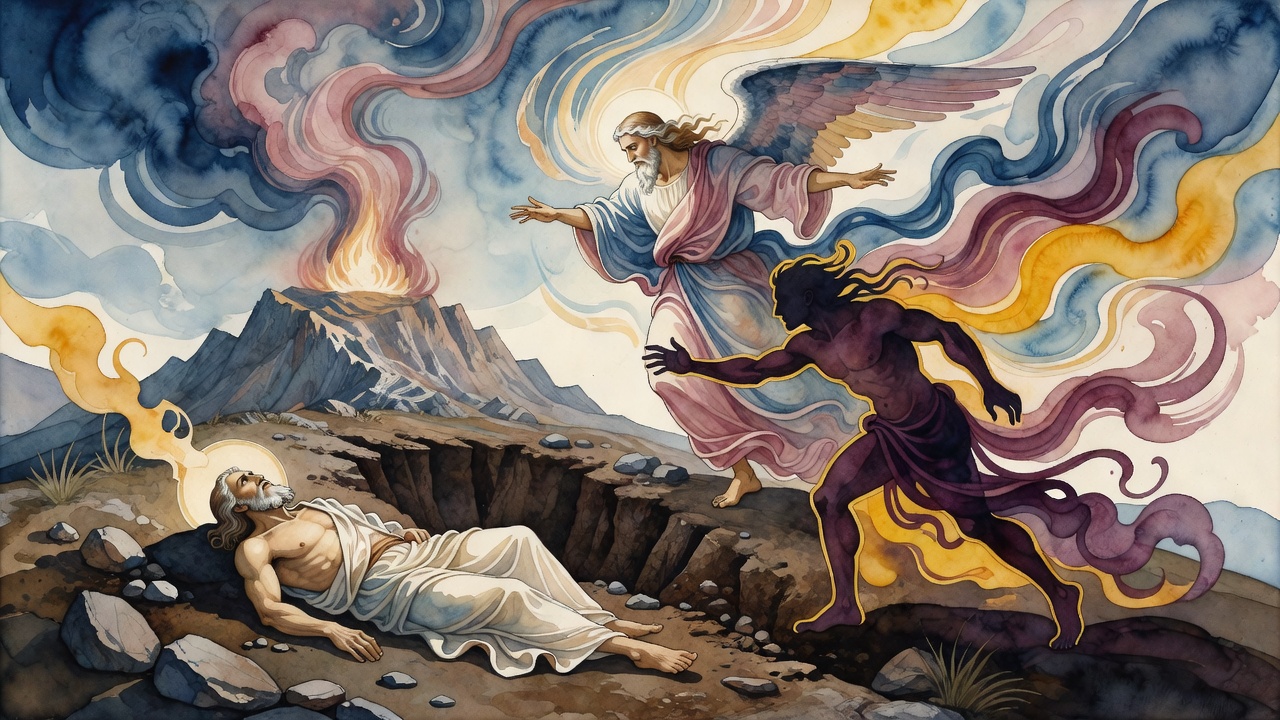
The death of Moses is the most devastating scene in the Torah—and the Talmud in Sotah 13b expands it into something almost unbearable. Moses pleaded with God not to let him die. He...
"I will assemble Jacob, all of you; I will bring together the remnant of Israel" (Micah 2:12). The end of Aggadat Bereshit's prophetic arc arrives here: not the death of Jacob, not...
Rabbi Nachman of Breslov taught that in the future, all suffering will be revealed as good. Not philosophically. Experientially. You will bless God for your pain the same way you b...
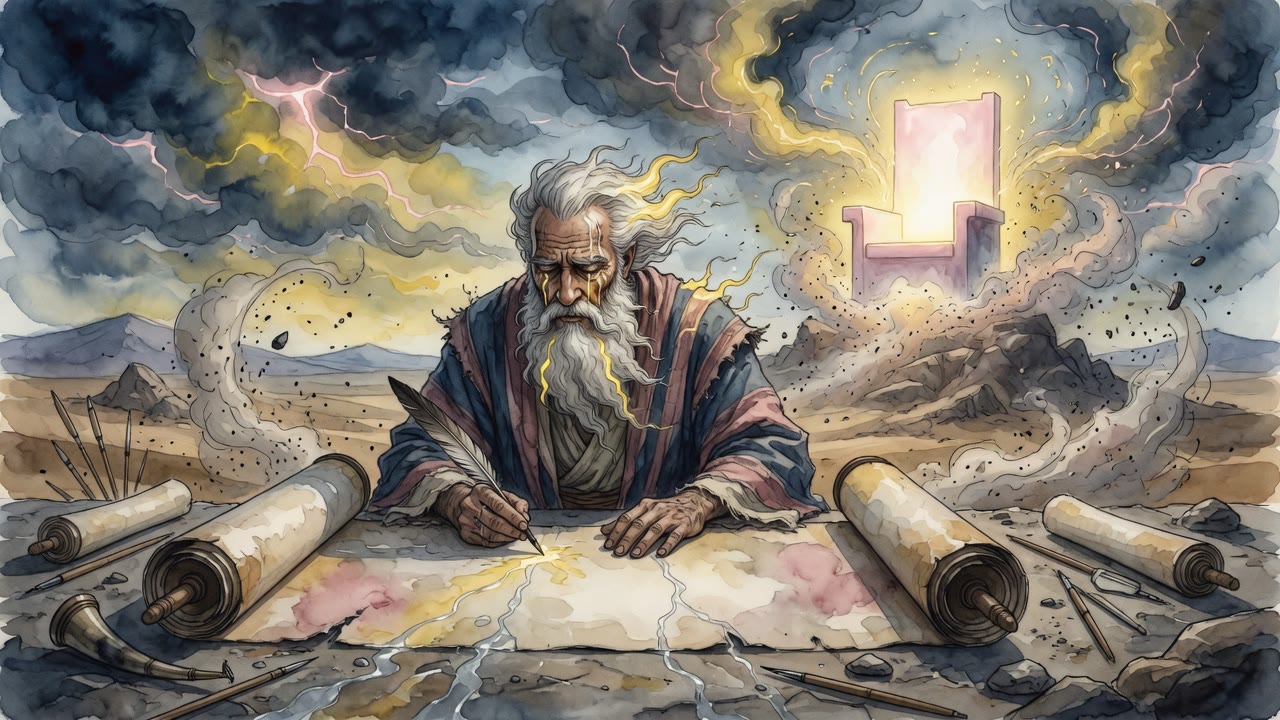
The question of whether Moses wrote the last eight verses of the Torah—the ones describing his own death—provoked one of the most poignant debates in the Talmud. Bava Batra 15a pre...
The Messiah, say the rabbis, will be greater than all the patriarchs — greater than Abraham, greater than Isaac, greater than Moses. This is the reading Aggadat Bereshit makes of I...
Rachel had watched her sister enter the wedding canopy and had not envied her — not then. But when the children came, one after another from Leah's womb, Rachel's patience broke. "...
Jacob saw the leaders of Esau listed in the Torah — king after king after king (Genesis 36:31-43) — and was afraid. "How can I stand against all of them? I am one man." The Holy On...
Rabbi Nachman of Breslov taught that prayer is the essential weapon of the Messiah. Not a sword. Not an army. Prayer. The teaching begins with a striking image from the Zohar: the ...
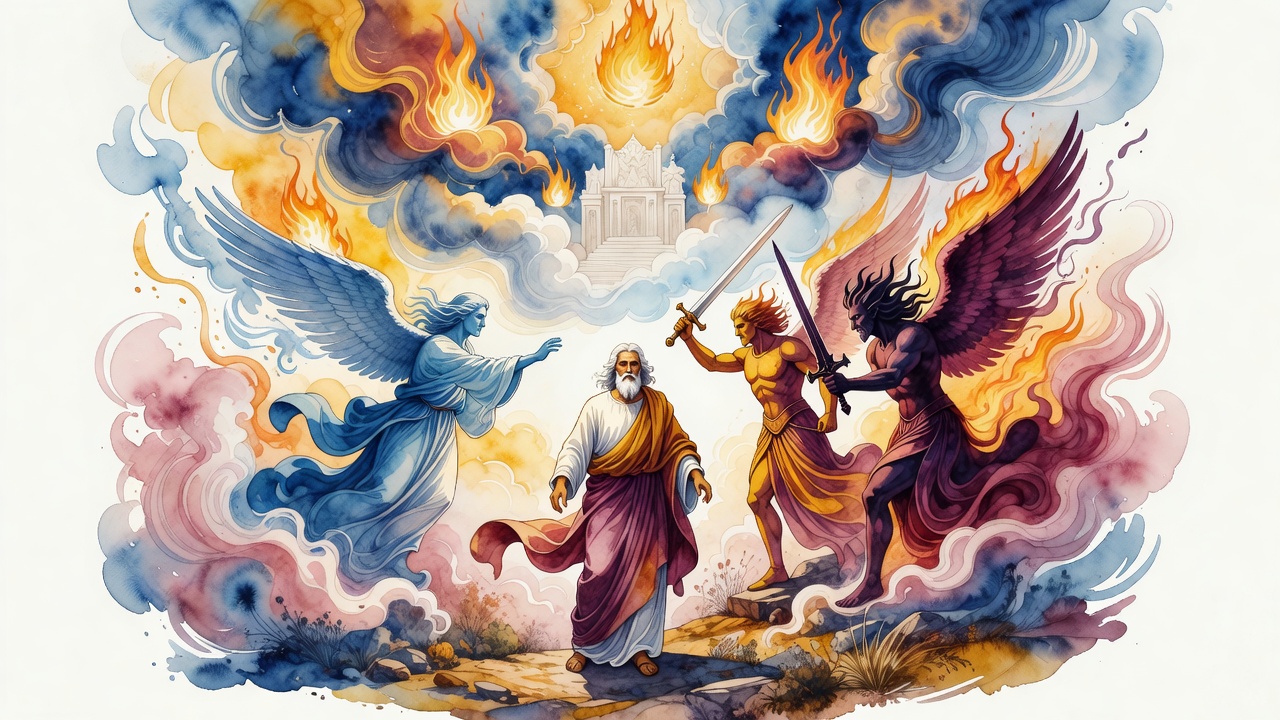
The Talmud claims you are never alone. According to Berakhot 6a, the sage Abba Binyamin taught that if the human eye were granted permission to see demons, no living creature could...
The Talmud in Chagigah 12b asks a foundational question: what holds up the world? The answer, according to Rabbi Yosei, is a chain of impossible supports—each one resting on someth...
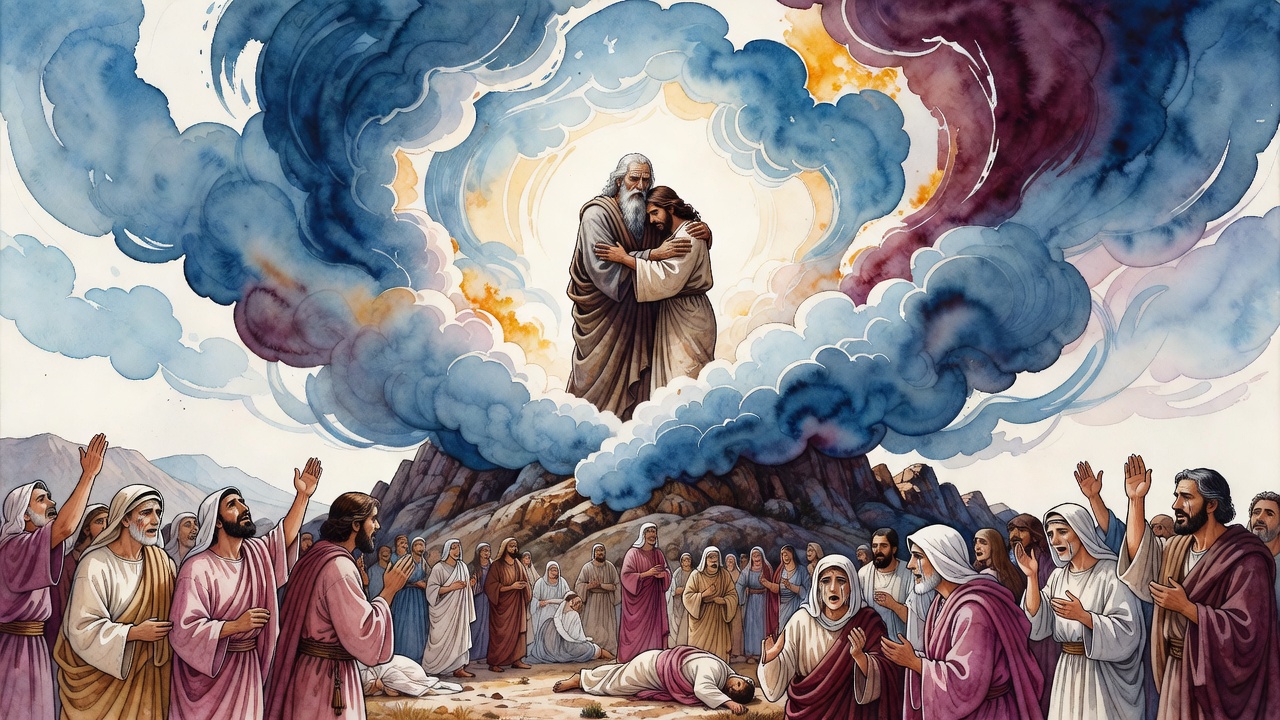
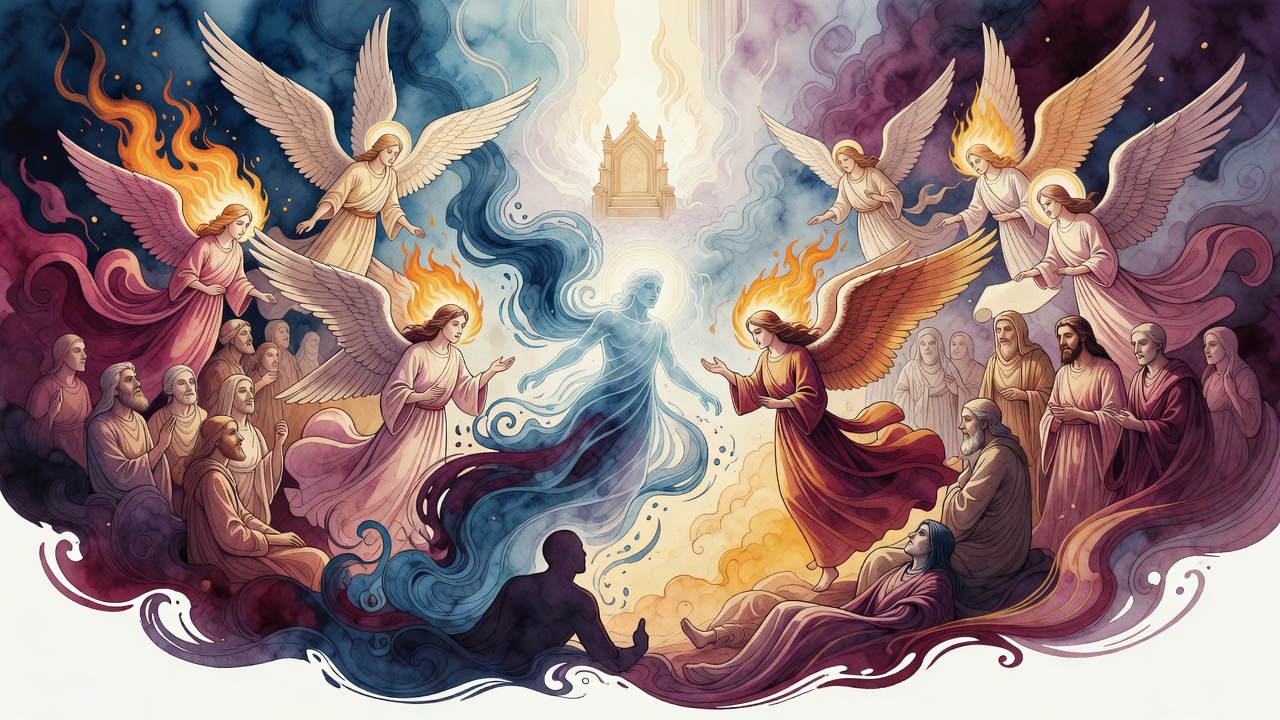
The Hebrew Bible says Moses died "by the mouth of God" (Deuteronomy 34:5). Ancient tradition interprets this as death by a divine kiss—the gentlest possible departure from life. Ta...
The Hebrew Bible calls Moses "the man of God" (Deuteronomy 33:1). Targum Onkelos adds one word: "the prophet of God." Moses is not merely a man who belongs to God. He is a prophet—...
On the last day of his life, Moses did something no prophet had ever done — he dressed his successor in public, with his own hands. He commanded that a golden throne be brought, al...
“He severed in his enflamed wrath all the horn of Israel; He retracted His right hand from before the enemy. He burned in Jacob like flaming fire, consuming all around” (Lamentatio...
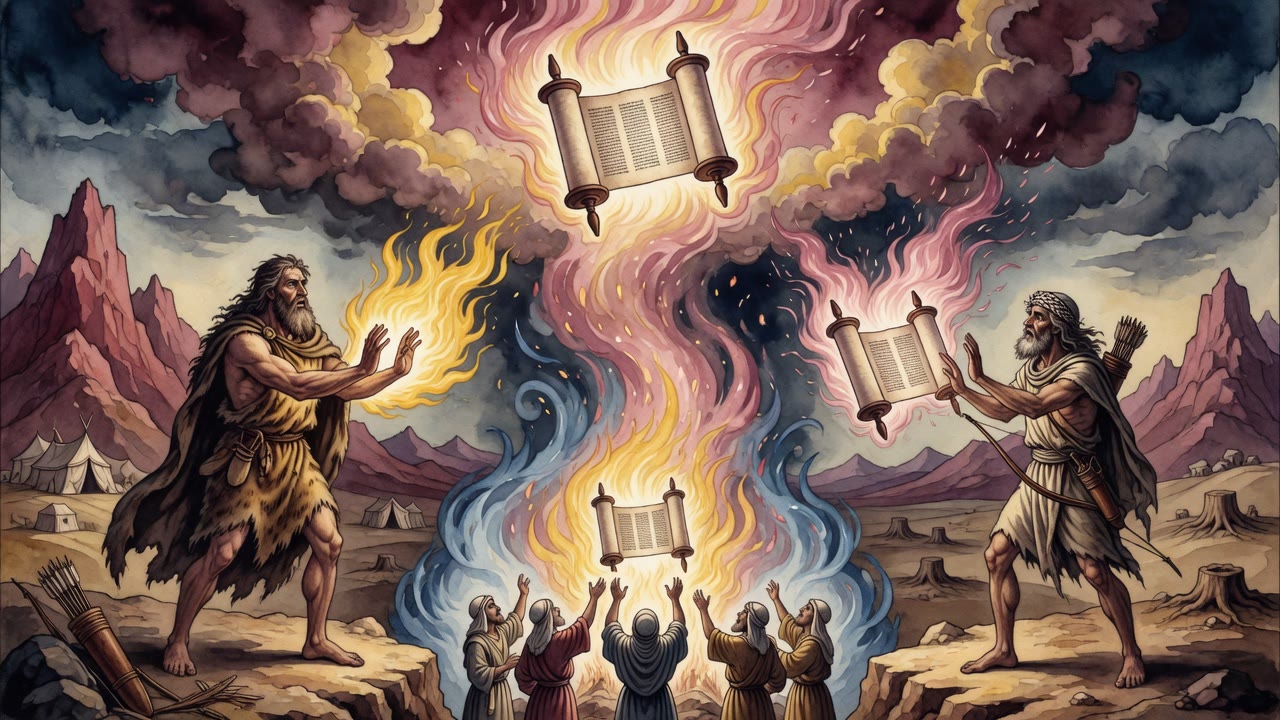
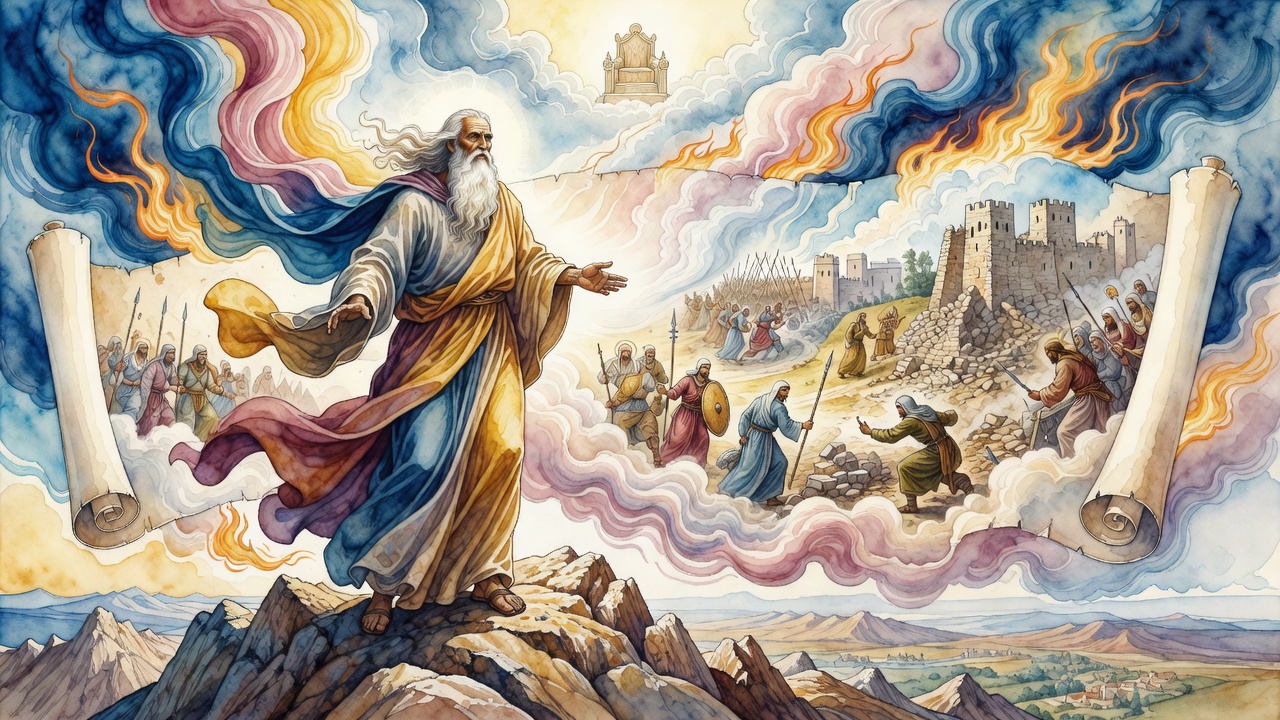
“I am the man who has seen affliction by the rod of His fury” (Lamentations 3:1).“I am the man” – Rabbi Ḥama bar Ḥanina began: “Jeremiah took another scroll and gave it to Barukh s...
“Pay them retribution, Lord, according to their handiwork” (Lamentations 3:64).“Pay them retribution” – Jeremiah said: “Pay them retribution.” Asaf said: “Pay our neighbors retribu...
“If it pleases the king, let it be written to eliminate them and I will weigh out ten thousand talents of silver by the hands of the king's craftsmen, to bring to the king's treasu...
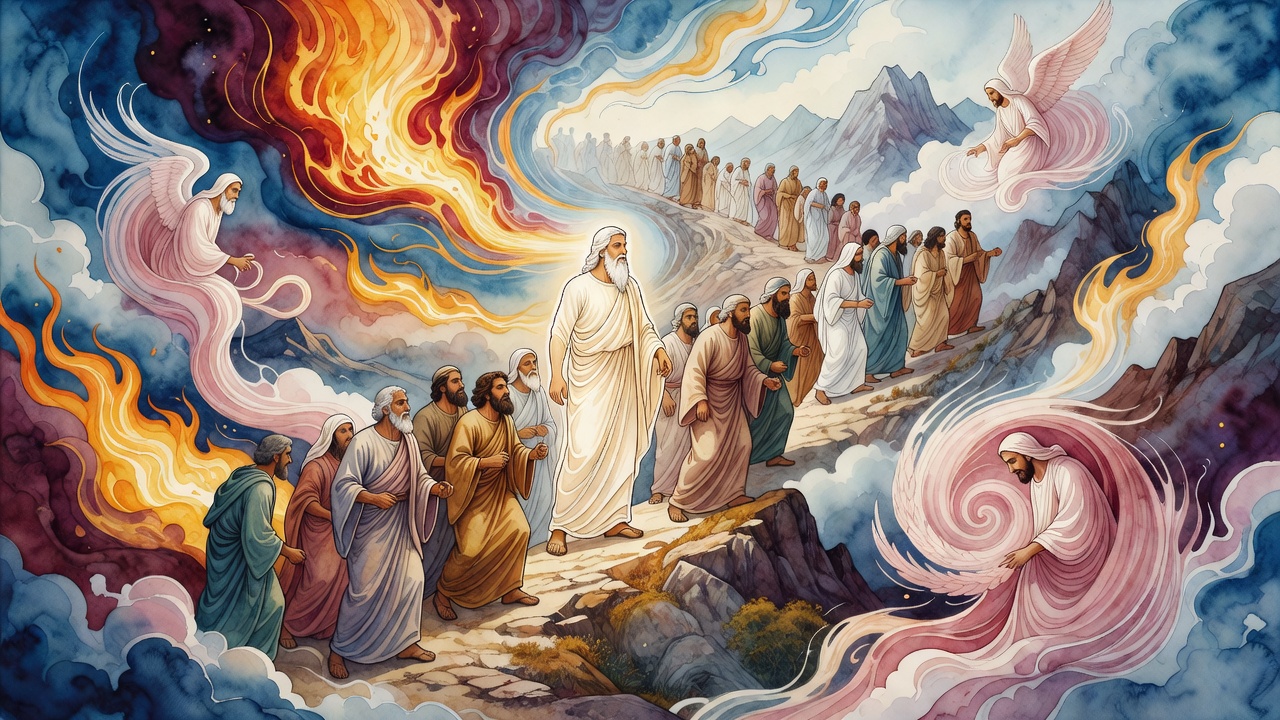
Jewish tradition paints a vivid picture of his ascent to Mount Nebo, a place shrouded in significance. But here's a curious detail: this single mountain, according to some accounts...
As Joseph lay on his deathbed, he made his brethren swear a solemn oath. He didn't just ask it of them, but instructed them to have their sons swear it too: when God would finally ...
And to understand this, we need to dive into a fascinating concept discussed in Kalach Pitchei Chokhmah, a Kabbalistic text concerned with the "138 Openings of Wisdom." Think about...
Moses had the worst errand of his life. God told him to bring his brother up the mountain to die. He could not bring himself to say the words. Aaron said them for him. "My brother,...
Bar Haddaya, the dream interpreter who gave favorable readings to paying clients and devastating ones to non-payers, eventually paid for his corruption with his life. Berakhot 56b ...
The Talmud in Berakhot 57a catalogues an entire symbolic vocabulary of dreams—a dictionary of the unconscious, organized by category, where every image carries a fixed meaning. Ani...
The Jewish people were redeemed from Egypt because of the righteous women. According to Sotah 11b, Rav Avira taught that while the men had given up hope under Pharaoh's slavery, th...
Rabbi Simlai made one of the most ambitious claims in the entire Talmud. He said: 613 commandments were given to Moses at Sinai—365 prohibitions corresponding to the days of the so...
And these are the generations of Aaron and Moses. [Betai Midrash (rabbinic interpretive commentary)ot Third Chamber] Our rabbis taught: Brothers who are partners and who increased ...
"The Lord says to my Lord: 'Sit at my right hand'" (Psalm 110:1). This verse launches one of the most complex readings in Aggadat Bereshit — about how the Holy One loves and exalts...
After Sodom's destruction, Abraham journeyed on. He left the ruined plain behind and moved — not fleeing, not grieving, just continuing. Job had the language for this: "The mountai...
"Blessed is the man who fears the Lord" (Psalm 112:1). The rabbis asked: what ultimately happens to him? And they landed on Ecclesiastes: "In the end, everything will be heard — fe...
When God looks down at a wicked generation, the rabbis said, He searches for one righteous person to carry the weight of atonement for all the rest. This is the reading Aggadat Ber...
David lifts his eyes to the mountains and prays — "A song of ascents" — and God answers him through a text he might not have expected: Moses's blessing of Judah. "And this is the b...
Jacob sent messengers ahead to his brother Esau (Genesis 32:4). The Hebrew word is malachim — messengers, angels. The midrash says this literally: Jacob sent actual angels. He had ...
(Job 5:19) promises: "From six woes He shall save you, and in the seventh, evil shall not reach you." The midrash asks which six woes — and Solomon in Proverbs provides the list: "...
“In the first month, that is, the month Nisan, in the twelfth year of King Aḥashverosh, he had cast a pur, that is, the lot, before Haman for each day and for each month, to the tw...
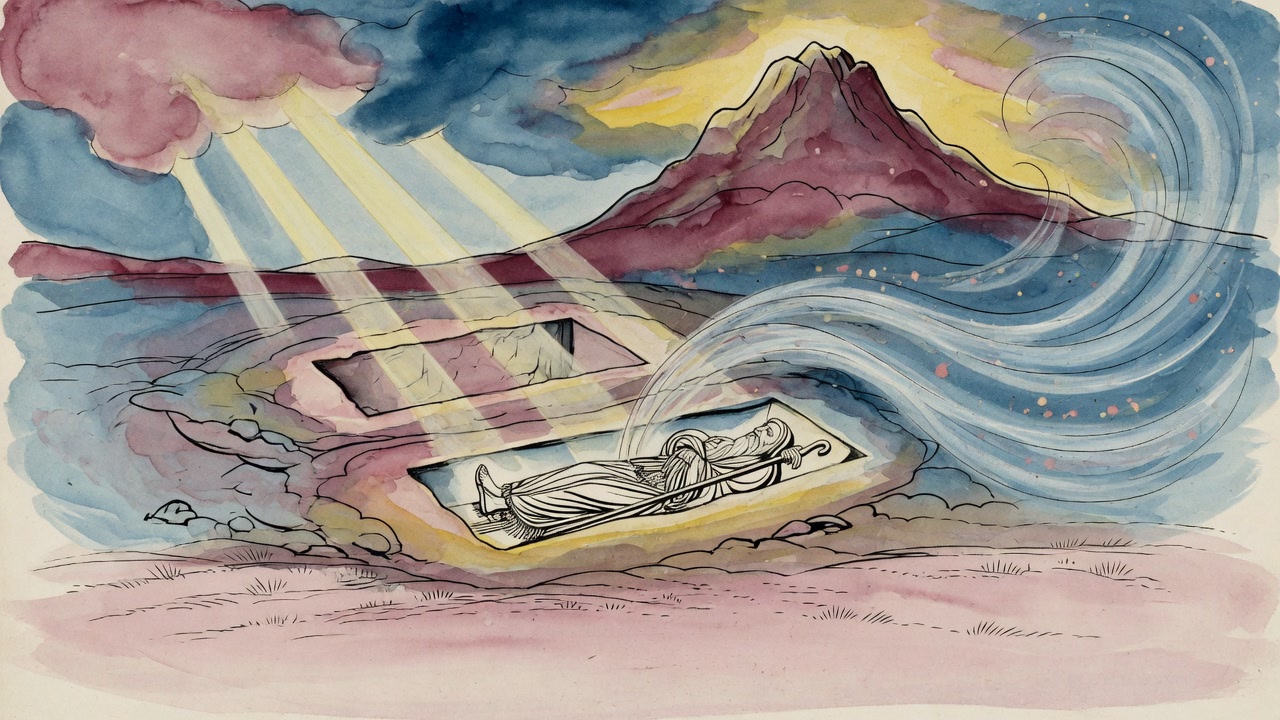
Why did God Himself attend to the burial of Moses? Because of what Moses had done decades earlier in Egypt, when everyone else was busy loading up silver and gold for the exodus. W...
The Egyptians drowned at the Red Sea — but they also received burial. The Mekhilta asks the obvious question: in what merit were the Egyptians granted burial? They had enslaved Isr...
We often think of grand, cosmic forces, but sometimes the most profound answers are hidden in the details, in the specific places we call home. Take the Land of Israel, for example...
We all know the story: the great leader, having guided his people for forty years through the wilderness, gazes upon the Promised Land from Mount Nebo, and then…the Torah simply te...
Rabbi Nachman of Breslov taught that the Torah is not just a text to study. It is a key that unlocks every prayer and opens every closed door. When a person engages deeply with Tor...
When harsh decrees threaten the Jewish people, Rabbi Nachman of Breslov prescribes an unexpected remedy: dancing and clapping hands. The logic runs through a teaching about what co...
A person trapped on a low spiritual level might assume that deep Torah understanding is beyond their reach. Rabbi Nachman of Breslov says the opposite is true: the pathway from the...
You cannot receive complete divine providence until you shatter your desire for money. Rabbi Nachman of Breslov taught this as a direct spiritual mechanism, not a moral platitude. ...
Everything has a purpose. And that purpose has a purpose of its own, each one higher than the last. Rabbi Nachman of Breslov uses this insight to explain why you must judge every p...
In his commentary on Parashat Bereshit, Rebbe Elimelech of Lizhensk (the Noam Elimelech) asks a deceptively simple question: why does the Torah begin with the word "beginning"? Ras...
One of my favorite images is this: God carries everything beneath His arms. Not just a gentle embrace, but a sustaining act of holding. According to some mystical traditions, God's...
The parable of the blind man and the lame man in the orchard, told by Antoninus to Rabbi Yehuda HaNasi in Sanhedrin 91b, establishes one of the Talmud's most important doctrines: b...
Before the universe existed, not even parchment existed — no animals had yet been created to provide skins for scrolls. So the Torah was written on the arm of God Himself, in black...
Rabbi Yochanan made a promise that sounds almost too good to be true: "Whoever blesses over a full cup is granted an inheritance without boundaries." The teaching, preserved in Ein...