Jochebed Searched Every River for Her Son
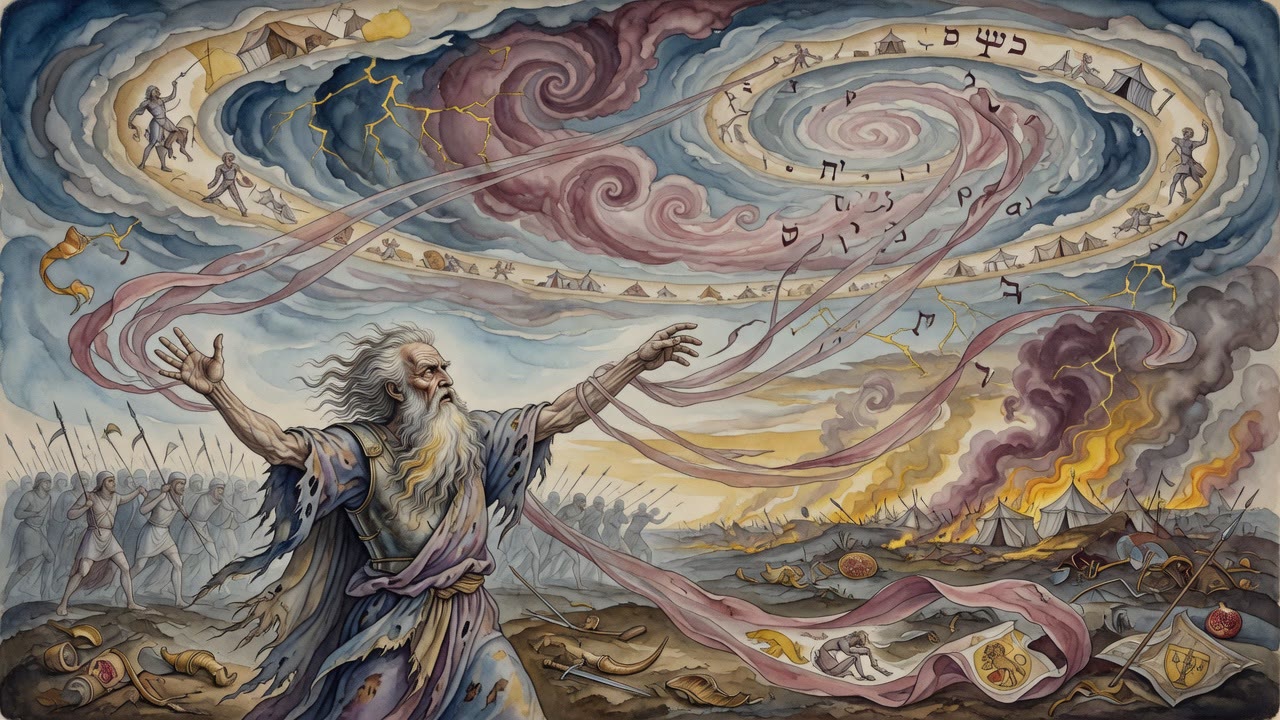
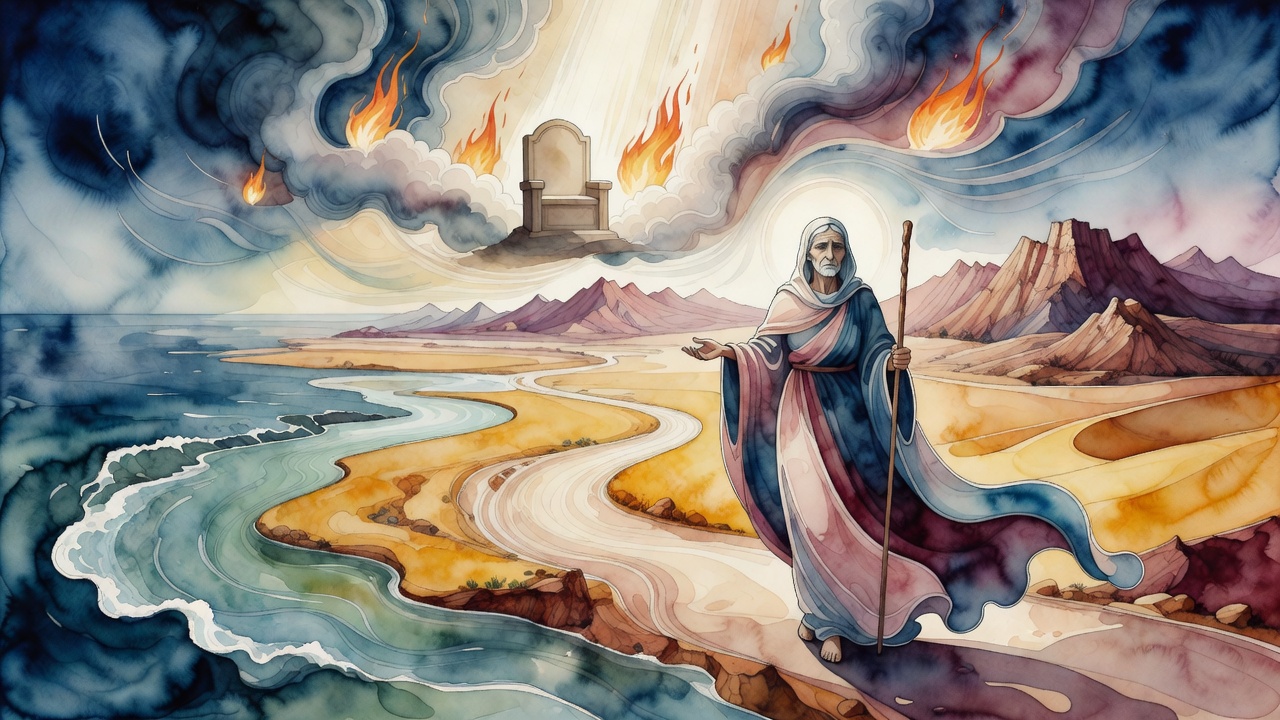
Jochebed walked to Egypt, the Nile, the sea, the desert, and Sinai, asking each landmark where Moses had gone after he died on Nebo.
Table of Contents
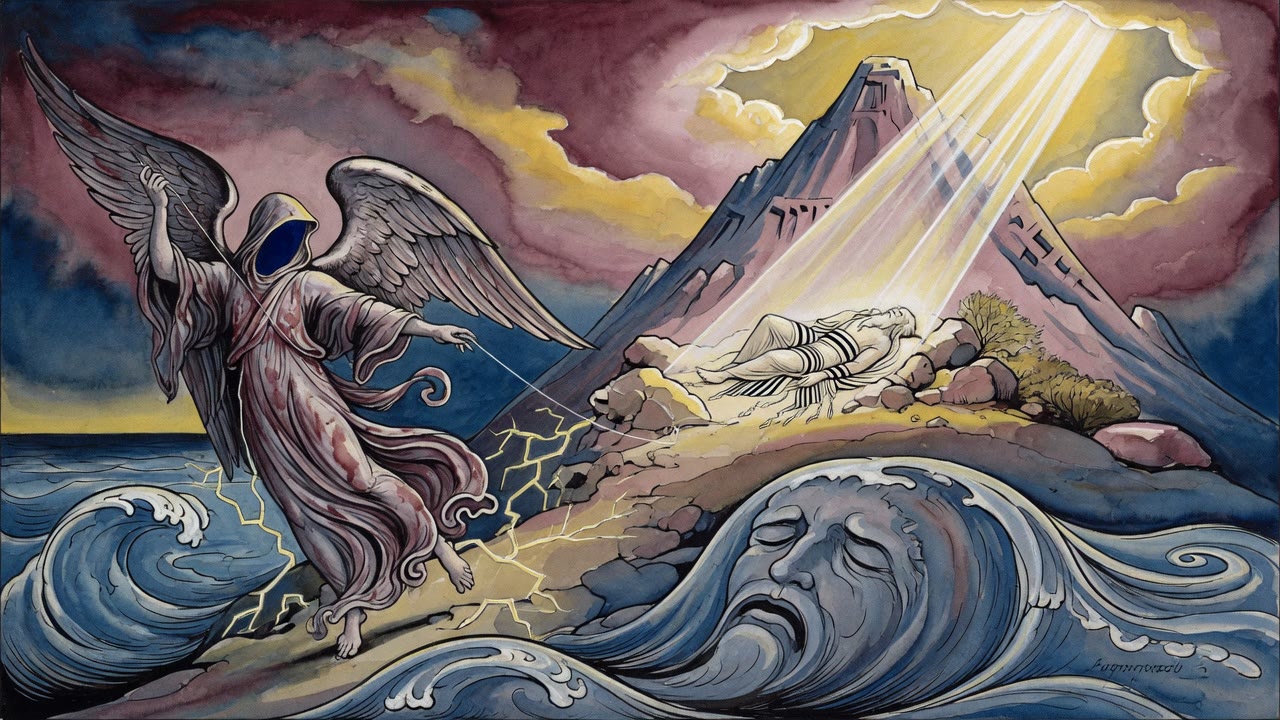
The thirty days of mourning had not yet finished when Jochebed was already moving. The tents were still in their place at the foot of Nebo's eastern shadow, the Israelites still tearing at their clothing and pressing dust into their hair, and Israel's new commander Joshua was already receiving orders for the crossing. The machinery of succession ran forward without asking anyone's permission. But Jochebed did not follow it. She and Joshua had not been sure, not completely sure, that Moses was dead. Hope had pressed itself against despair and refused to let go. So they searched.
 Click for full size
What Egypt Remembered
Jochebed went first to the land of Mizraim. Egypt had known her son longer than any living person had known her. Moses had been born in its brick-dust, hidden in its reeds, raised in its palace, and had finally faced its king in the name of God. She stood at its border and called out: "Mizraim, Mizraim, have you seen Moses?"
Egypt answered. Its answer came back clear and flat: "As truly as you live, Jochebed, I have not seen him since the day he slew all the firstborn here."
The last time Egypt had seen Moses, that country had been breaking. She turned away from it.
The River Speaks of Blood
She went to the Nile next. The Nile that had carried him. An infant in a basket sealed with pitch and placed among the bulrushes (Exodus 2:3), a baby floating on water that did not know it was carrying the man who would later turn it red. She had set him on that current herself, watching from the bank with her daughter Miriam, her breath held, her hands still trembling from the placing.
"Nile, Nile, have you seen Moses?"
The river answered: "As truly as you live, Jochebed, I have not seen him since the day he turned my water to blood."
The Nile's memory was the first plague, not the basket. The last thing it knew of Moses was his staff raised over its surface and the dark spread of blood through the water downstream (Exodus 7:20). Between the basket and the blood, the river held nothing, no middle years, no boyhood, no return.
The Sea and the Desert
She went to the sea. "Sea, sea, have you seen Moses?"
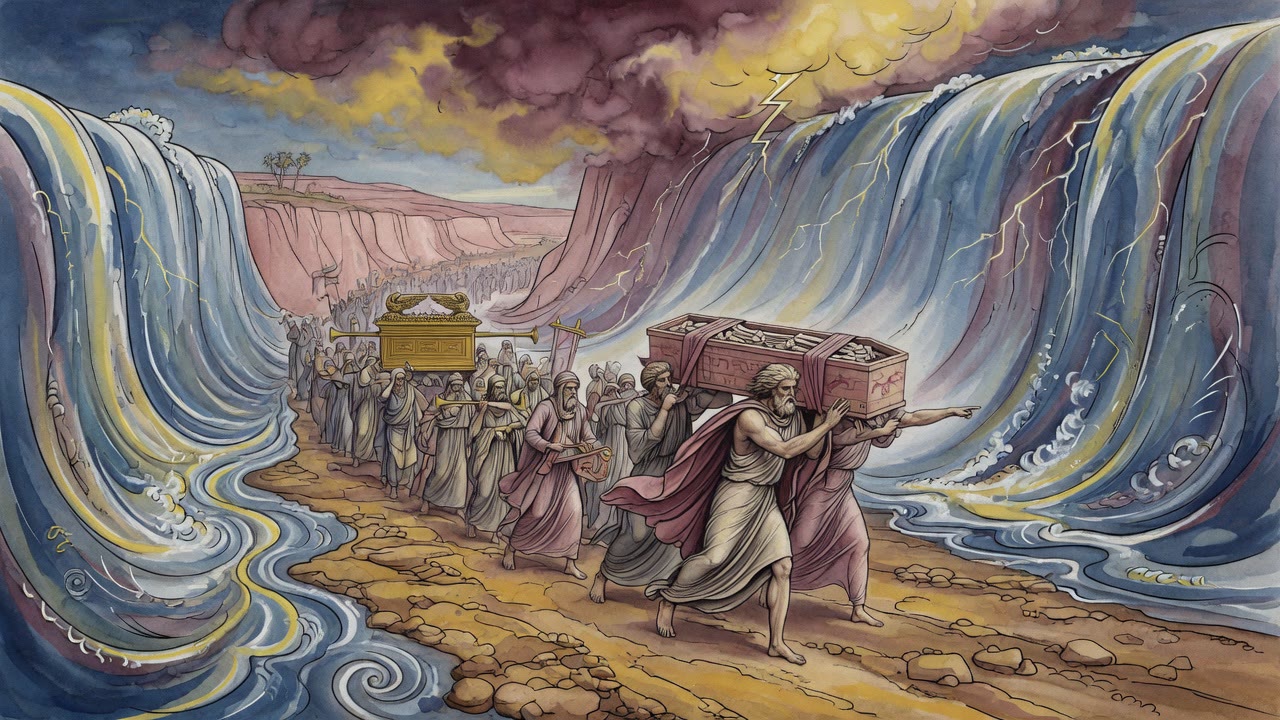
The sea replied: "As truly as you live, I have not seen him since the day he led the twelve tribes through me."
It had swallowed the Egyptian cavalry behind them (Exodus 14:27). It had stood as two walls of water while Israel walked dry ground between them. The last the sea knew of Moses, he was leading a nation through its opened bed, and then the waters had closed and he was gone from its sight.
She went to the desert. It had held the nation for forty years, the manna falling each morning onto its floor, the quail arriving at evening, the people counting the days and refusing to stop counting. "Desert, desert, have you seen Moses?"
The desert answered: "As truly as you live, I have not seen him since the day he caused manna to rain down upon me."
The desert's last memory of Moses was not a departure or a goodbye. It was a morning, ordinary in the way every manna morning had been ordinary, bread settling onto sand, and then nothing after that.
Sinai and the Rock
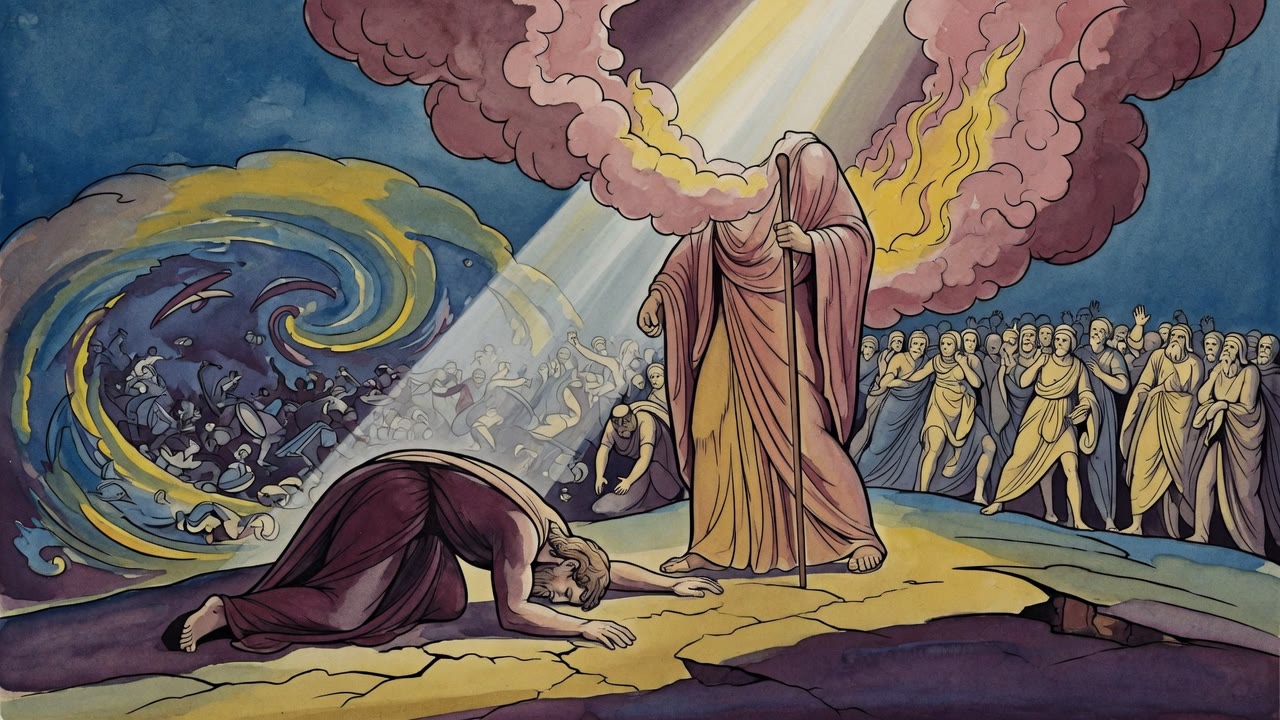
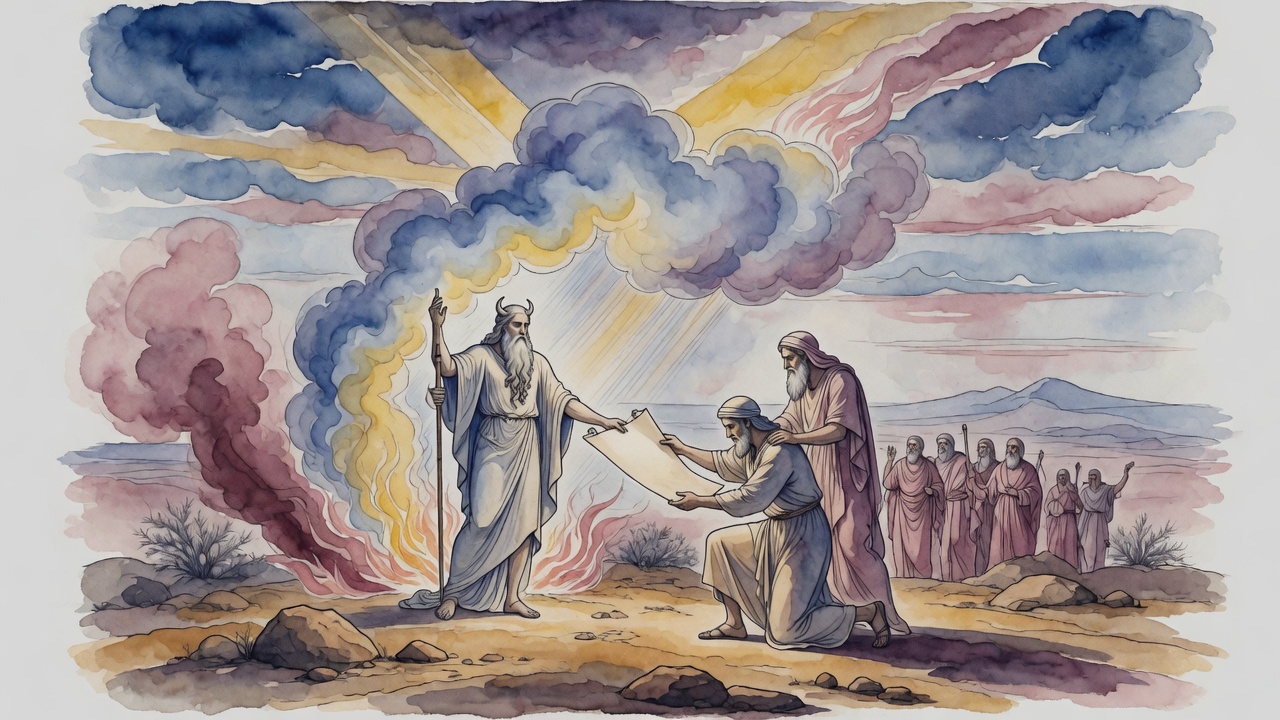
She climbed toward the mountain. Sinai, where the Shechinah (שכינה), God's immediate presence, had rested in fire and cloud, where Moses had descended twice with the stone tablets, where the covenant between God and Israel had been sealed in thunder. "Sinai, Sinai, have you seen Moses?"
Sinai replied: "As truly as you live, I have not seen him since the day he descended from me with the two tablets of the law."
She went finally to the rock. The rock at Meribah that Moses had struck twice with his staff when God had told him to speak to it (Numbers 20:11). That moment of disobedience had cost Moses the land. The rock remembered the blow. "Rock, rock, have you seen Moses?" The rock replied: "As truly as you live, I have not seen him since the day he twice smote me with his staff."
Six landmarks. Six refusals. Every answer was a chronicle of what Moses had done there, and every answer ended the same way: since that day, nothing. The world that Moses had transformed did not know where he had gone when the transforming was finished.
What Joshua Carried Forward
Joshua had his own grief. He had served Moses since youth, ground grain for him, stood outside the tent of meeting when Moses went in, held the armies of Amalek steady by keeping his hands raised on the hill (Exodus 17:12). He had watched Moses argue with God, argue with Israel, argue with heaven itself, and never abandon the argument. Joshua had been there in the wilderness when Israel had refused to trust God's promise and Moses had torn his robe in despair.
God had made Moses a promise before his death: the one who led God's children in this world would lead them in the world to come. Moses would not be finished when the mountain swallowed him from sight. But that promise gave Joshua no body to mourn over, no grave to mark, no last sight of his teacher's face.
The wilderness gave nothing back. The Jordan waited in its banks ahead of them. Israel was a nation standing at the edge of what Moses had promised them and could not deliver them into himself, and the search found no answers, only a geography of absence. Every place that had known Moses could only say what it last remembered. None of them knew what came after.
← All myths