The Shekhinah Rested Among Israel Even in Their Impurity
Moses asked for a man who would walk in front of the camp. After the Temple fell, the Presence did not stay in the ruin. She went with them.
Table of Contents
 Click for full size
Moses Asked for a Man Who Walked in Front
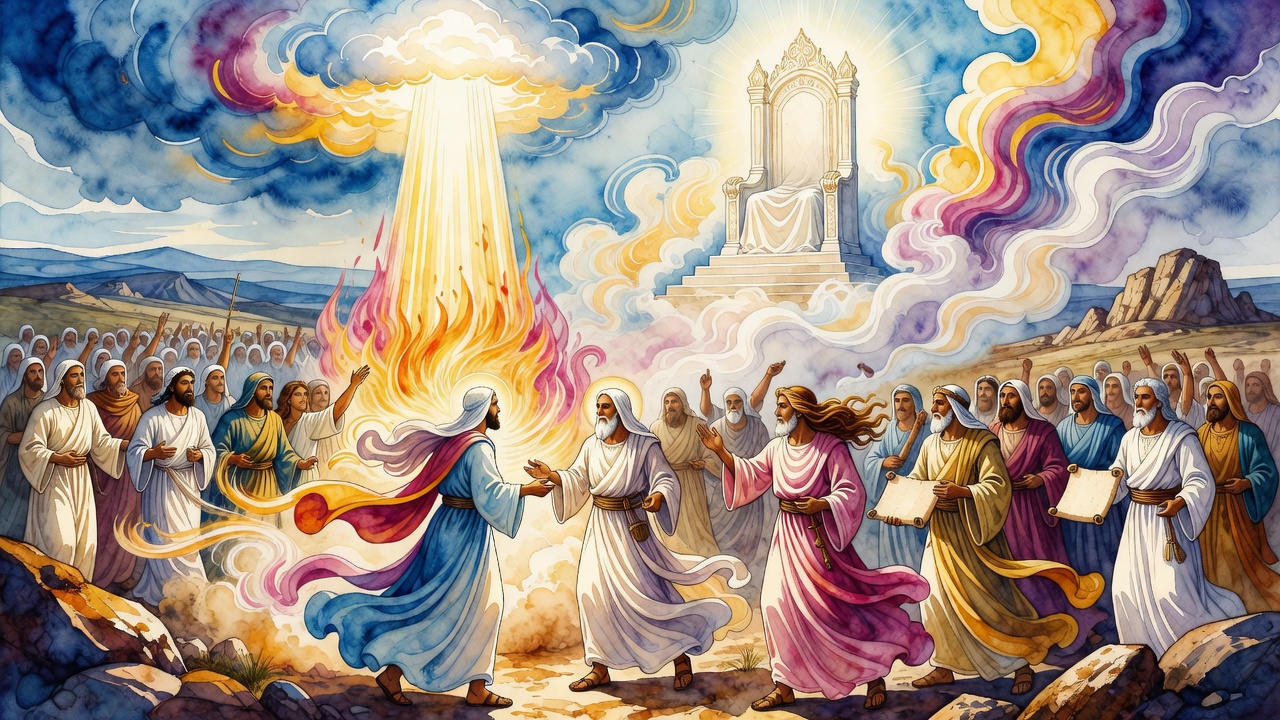
Moses stood before God and asked for a successor. He wanted a man who would go out before the people and come in before them. Not a general who sent others first and kept himself at the rear. Moses wanted a body in front of the camp, the way his own body had been.
When Og rose against Israel, God said, "Do not fear him, for I have delivered him into your hand." Moses did not dispatch a vanguard and wait. He went out at the head. The people watched his back. They did not watch a signal from behind the line.
"Let the congregation of the Lord not be as sheep without a shepherd." He was asking for a shepherd who would take the first step into the danger, and the last step home, and the count that brought every man back.
Joshua Climbed Toward the Drawn Sword
Joshua learned the request with his feet. He went up toward a man standing with a drawn sword and asked, "Are you for us or for our foes?" He did not wait for scouts to bring him a report. He climbed.
That is the shape Moses had asked for. A leader who walks first on the road, first in the troop, first toward the thing that might kill him. Joshua did not inherit a chair. He inherited a front.
The camp that had followed Moses' back now had a man willing to put his own chest toward a stranger's blade. The request had been answered in a body.
They Counted Years From the Ruin
After Egypt they numbered years from the going out. "In the second year after their going out from the land of Egypt." When they came to the land they began the sabbatical count from the day of entry. When Solomon finished the two houses, the years were numbered from the building.
Then the Temple fell.
A scribe took up a new year-one. Ezekiel dated a vision to the fourteenth year of the city's being smitten. When the captivity grew heavier they counted from the captivity itself, the second year of Nebuchadnezzar, the second year of Darius. The clock in their documents followed the people. It did not stay nailed to a hill in Jerusalem after the people had been driven off it.
The Presence Stayed When They Were Unclean
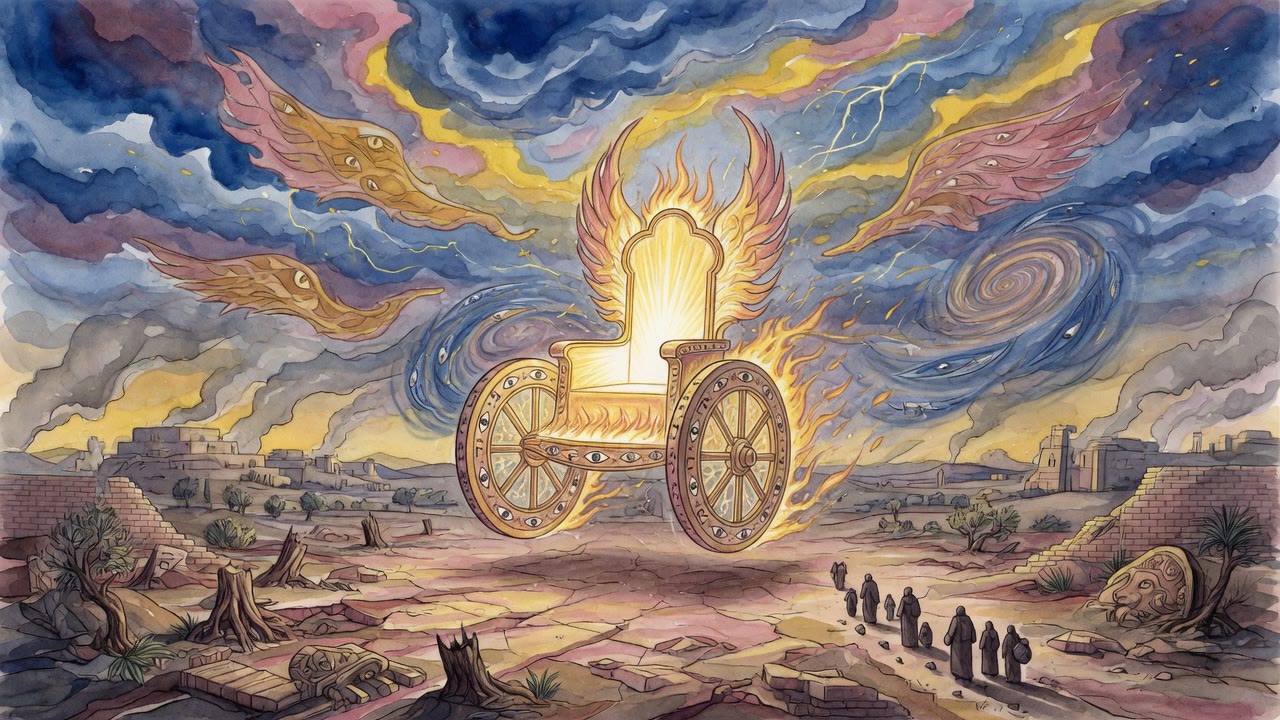
After the fire, some of them looked back at the empty inner room and waited for the Shekhinah (שכינה), the Divine Presence, to rise and go home to heaven. A clean house had held her. An unclean camp, they thought, could not.
She rested among them anyway.
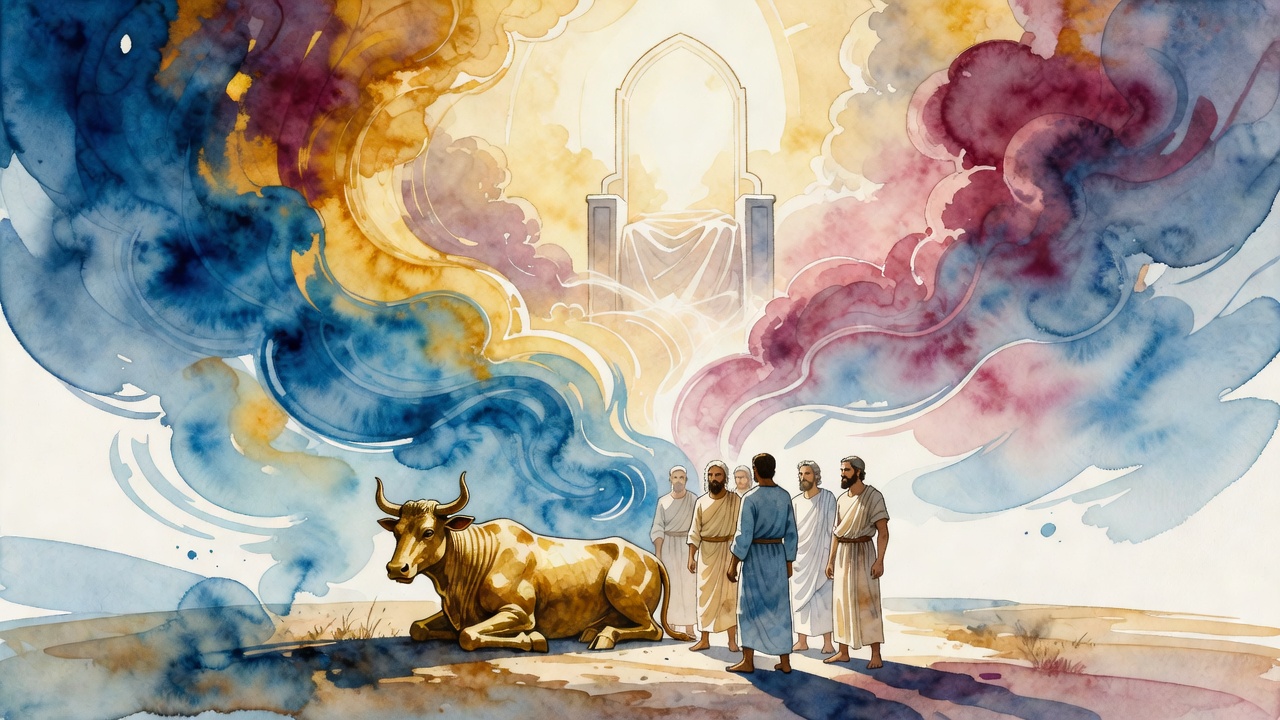
"In whose midst I dwell," God had said (Numbers 35:34). Israel is beloved even when they are tamei, ritually impure, because the Shekhinah reposes among them. "Who dwells with them in the midst of their uncleanliness" (Leviticus 16:16). "When they defile My sanctuary which is in their midst" (Leviticus 15:31). In their midst. Inside the defilement. "They shall not make unclean their camps in whose midst I dwell."
She sat down in a camp that could not always keep itself clean. Impurity arrived. She did not stand up and leave. Wherever Israel goes, she goes.
She Went With Them Into Every Exile
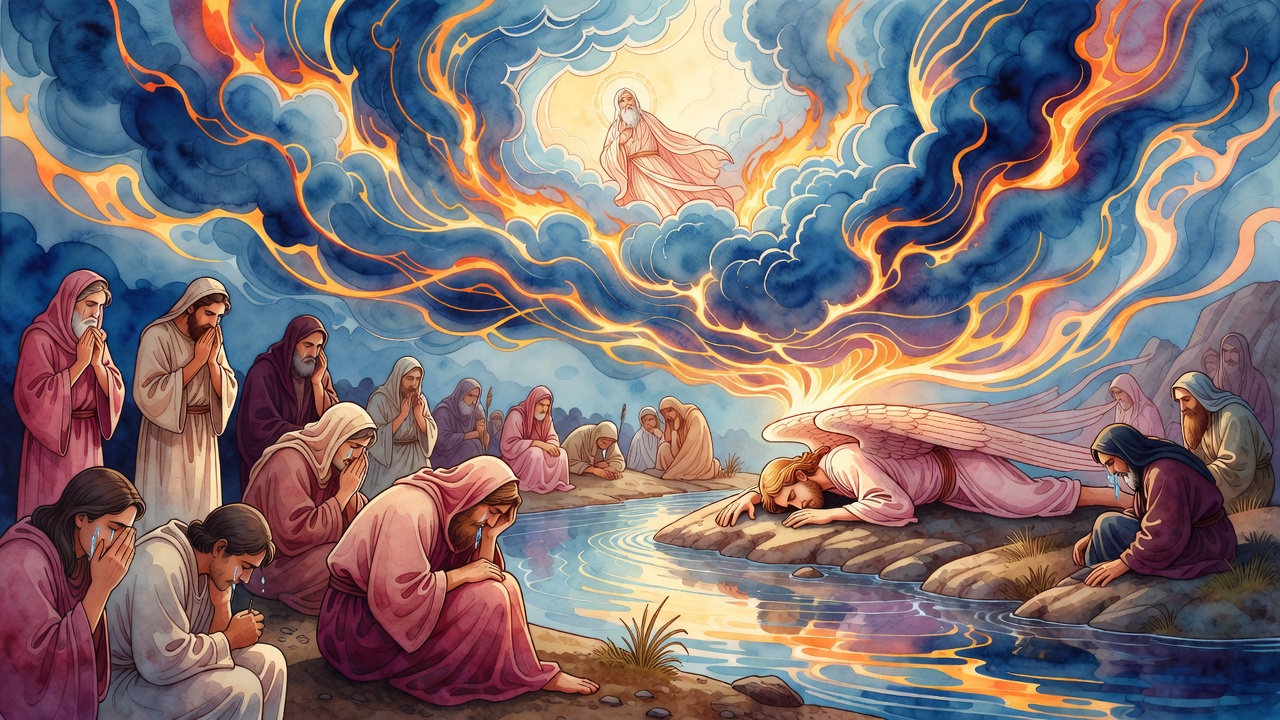
Rabbi Nathan said it without softening. Beloved are Israel, for wherever they are exiled the Shekhinah is with them. They were exiled to Egypt. The Shekhinah went with them. "Did I not reveal Myself to the house of your father when they were in Egypt, enslaved to the house of Pharaoh?" They were exiled to Babylon. "Because of you I was sent to Babylon." They were sent to Eilam. "I placed My throne in Eilam." They were exiled to Edom. "Who is this who comes from Edom, with sullied vestments, from Bozrah?"
The vestments were sullied because she had walked the same road.
When they return, she will not meet them at the gate like a host who stayed home. "Then the Lord your God will return with your captivity." It is not written that He will return to them. It is written that He will return with them.
A king said to his servant, "Why do you search for me? I am with my son. Whenever you need me, I am with my son."
The servant had been looking in palaces. The king was already in the son's house, in the son's exile, in the son's unclean camp. Moses had asked for a leader who would walk in front. The Presence that went into Egypt and Babylon was that leader. She did not send Israel ahead. She went first, and she stayed.
← All myths