Translation of the source text.Midrash Rabbah -- TE · CC0
. . . Another Interpretation: (Isaiah 22:12)
"My Lord GOD of Hosts summoned on that day to weeping and lamenting etc." When The Holy One blessed is He sought to destroy the temple, he said, 'As long as I am inside [the temple] the nations of the world cannot touch it, so I will hide my eyes from it, and I will swear that I will not connect to it until the end time, and the enemies will come and destroy it.' Immediately The Holy One blessed is He swore with his right hand and withdrew it behind his back, as it is written (Lamentations 2:3)
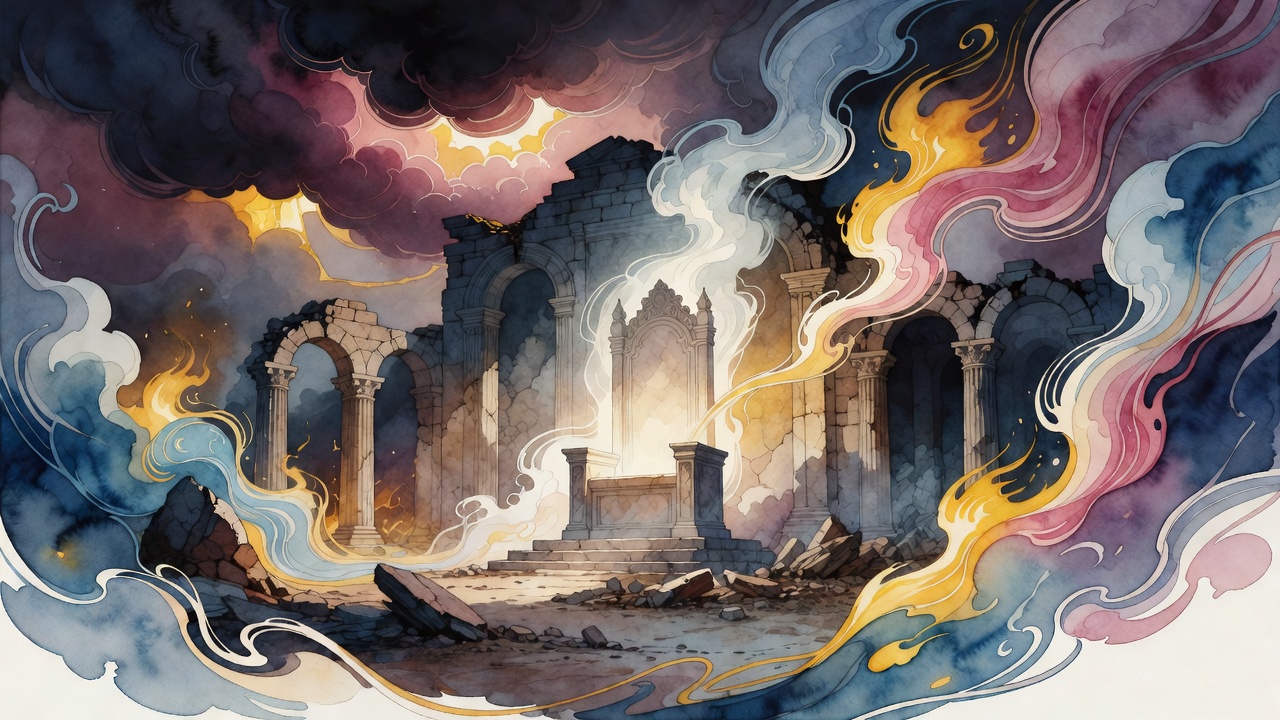
"He has withdrawn his right hand in the presence of the foe." In that moment the enemies entered the [Temple] hall and burned it. When it had burned, The Holy One blessed is He said, 'I no longer have a dwelling on the Earth. I will lift my presence from it and I will return to my original home. As it is written (Hosea 5:15)
"And I will return to My abode - Till they realize their guilt and beg my favor" In that moment The Holy One blessed is He was crying and saying, 'Woe is to me what have I done. My presence served below for Israel's sake, and now that they have sinned I have returned to my original place, I never intended to be a laughing stock to the nations and a joke to the people.' In that moment Metatron came and fell on his face and said, 'Master of the world I should cry instead of you.' [G-d] said to him, 'If you do not allow me to cry now, I will retreat to a place that you cannot enter, and I will cry [there].' As it says, (Jeremiah 13:17)
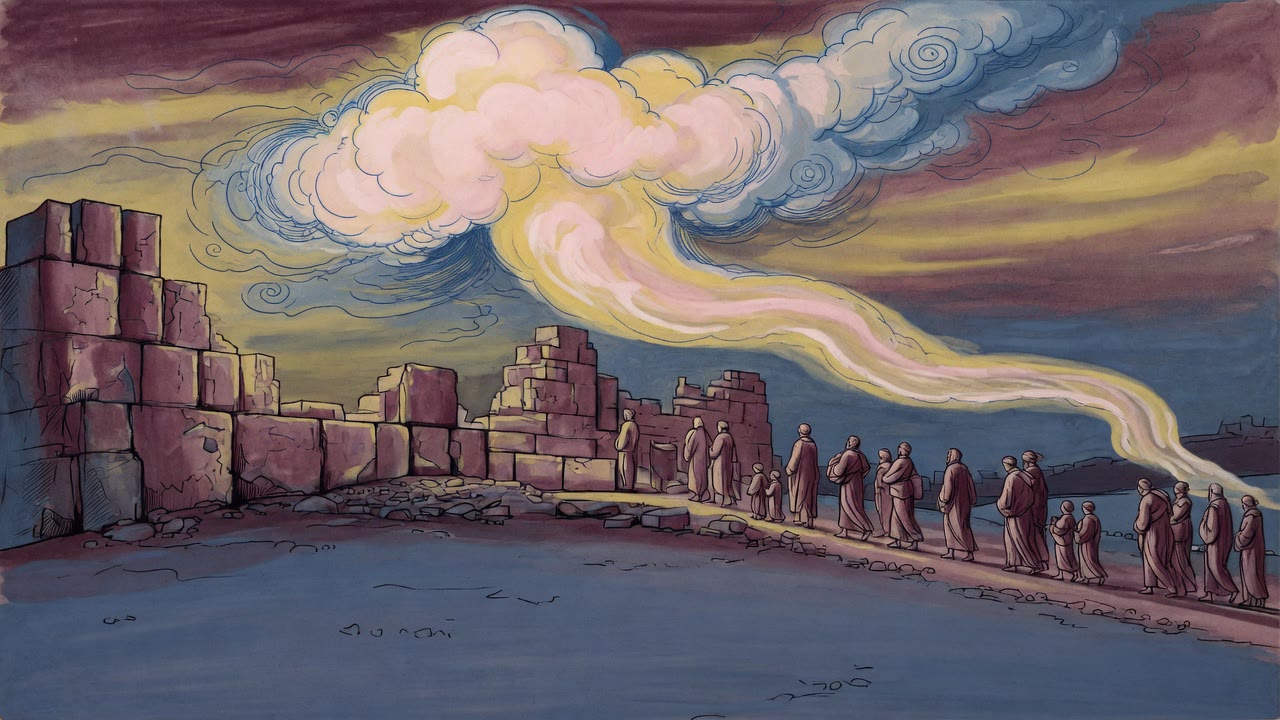
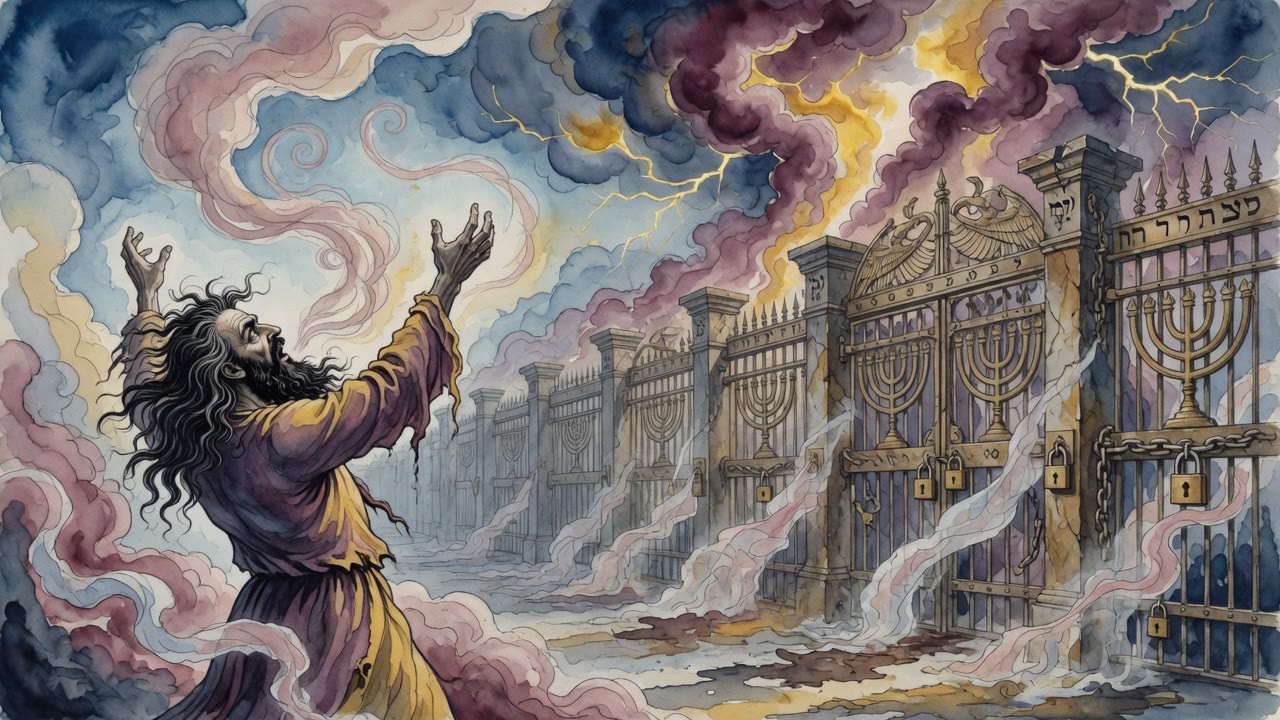
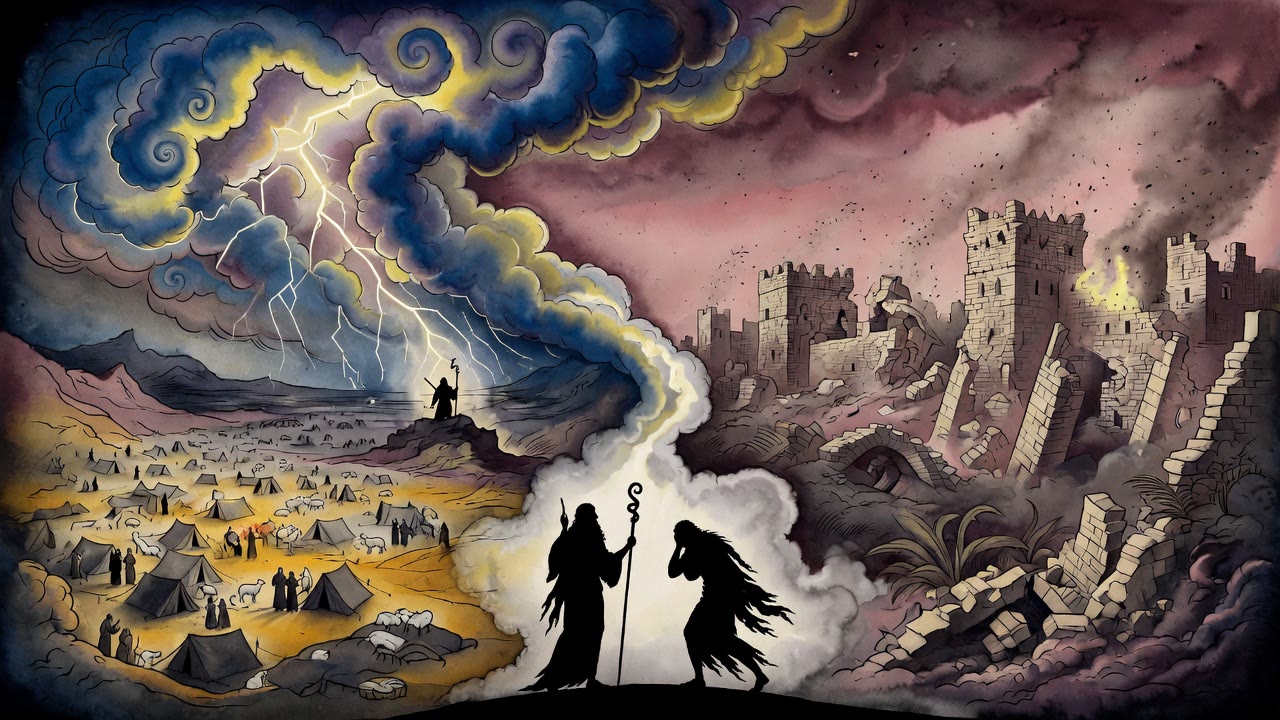
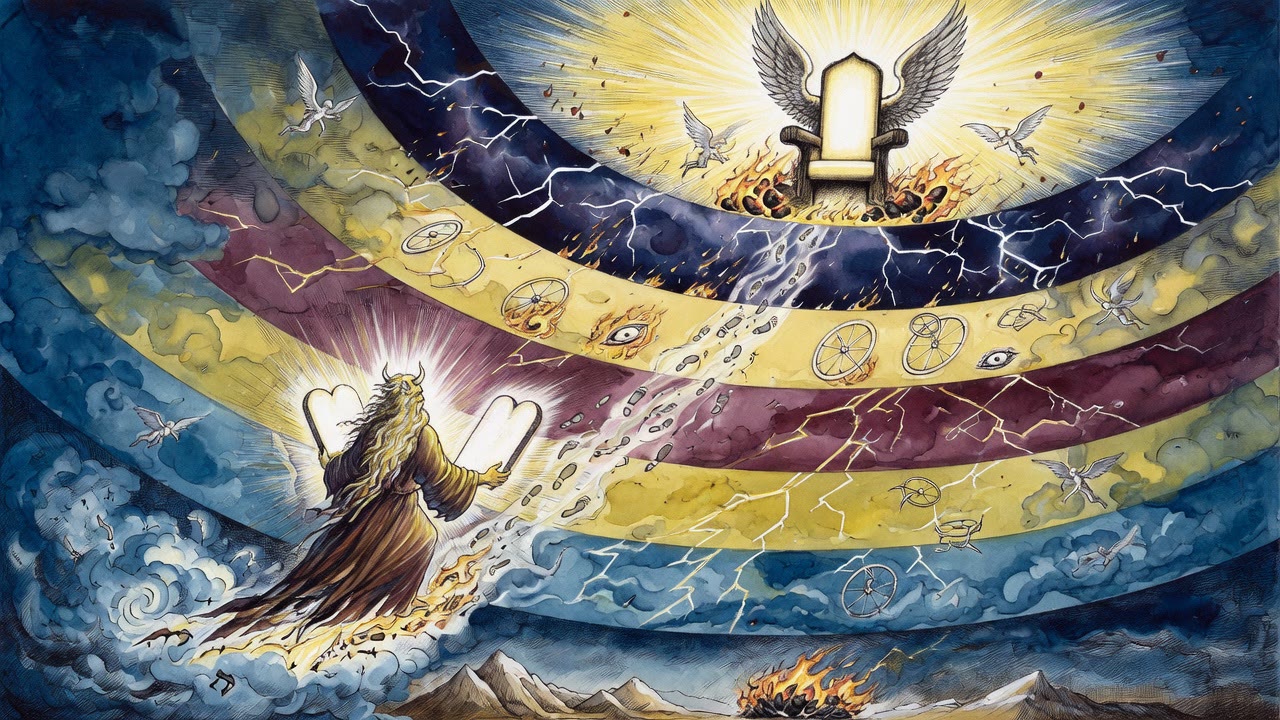
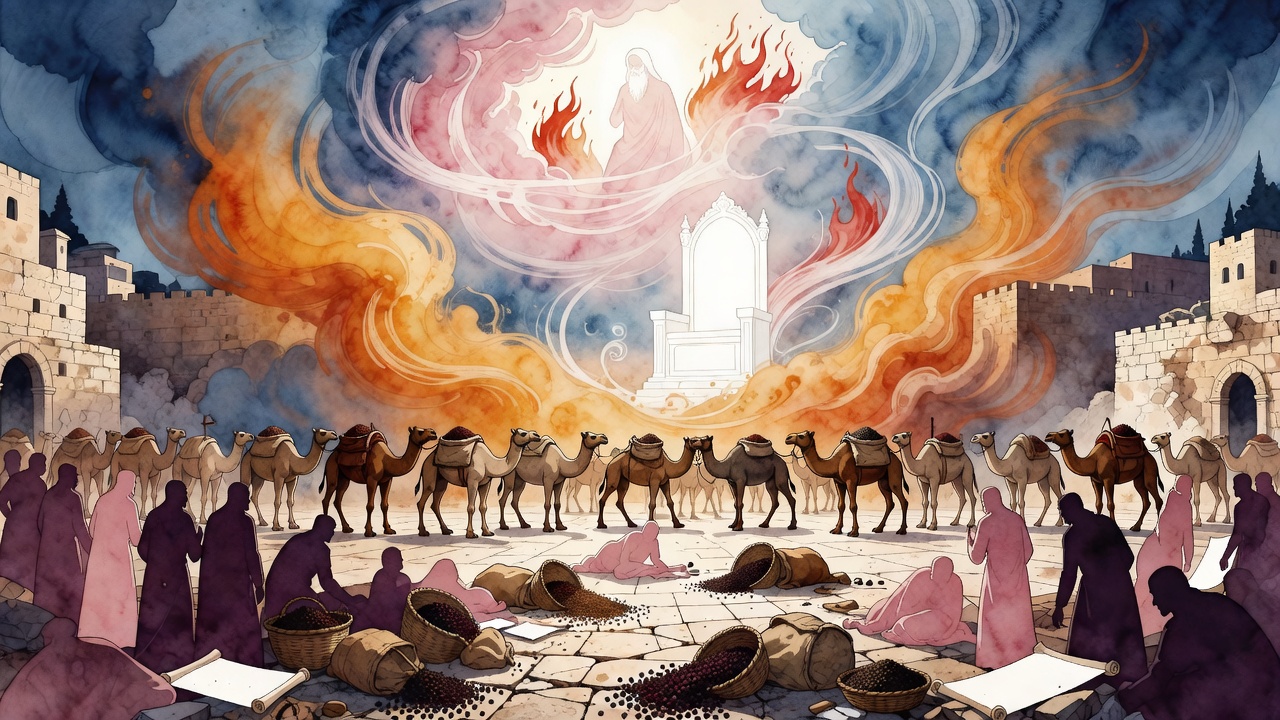
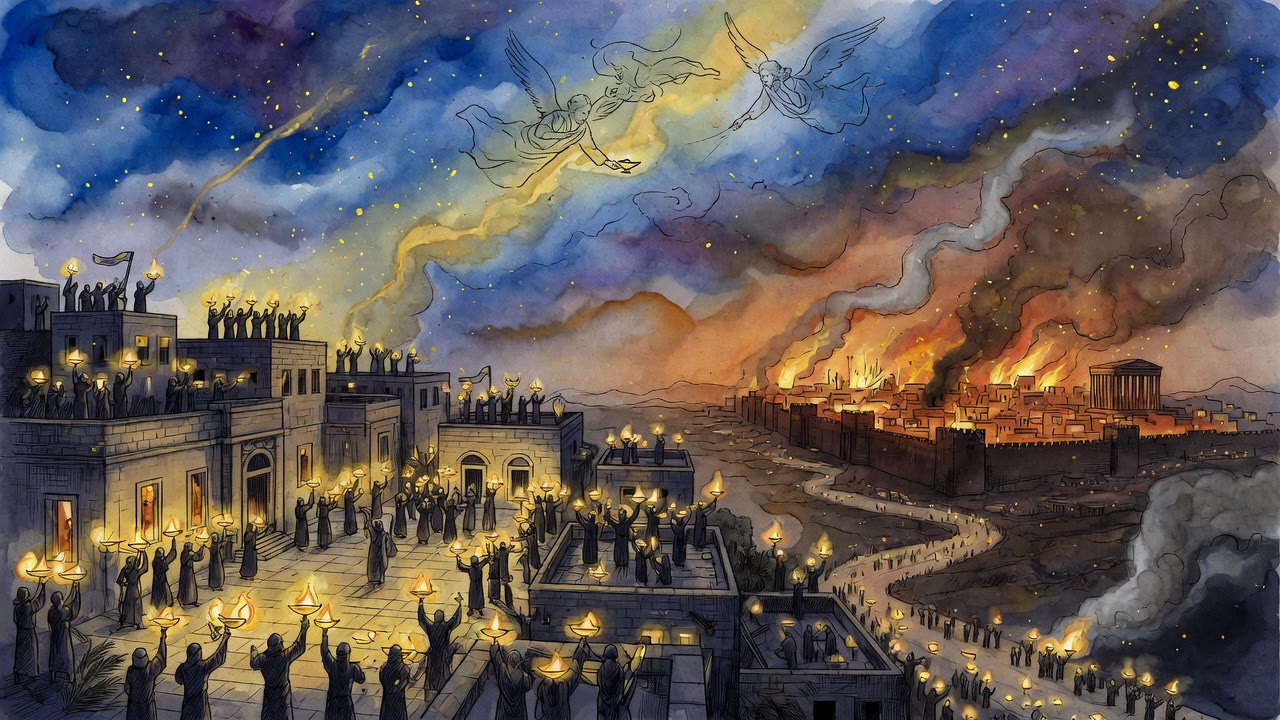
"For if you do not give heed, My inmost self must weep because of your arrogance." The Holy One blessed is He said to the ministering angels , 'Let us go, you and I, and we will see what the enemies did to my house.' Immediately The Holy One blessed is went with the ministering angles and Jeremiah ahead. When The Holy One blessed is He saw the Temple, he said with confidence, 'This is My house and this is My resting place, into which enemies came and did as they wished.' In that moment The Holy One blessed is He was crying and saying, 'Woe is to me for my house. My children, where are you? My priests, where are you? My beloved, where are you? What can I do for you!? I warned you, but you did not repent.' The Holy One blessed is He said to Jeremiah, 'Today I am like a man who had one son. He made a [wedding?] canopy [for the son], and [the son] died under his canopy. There is no pain for me nor for my son. (G-d is numbed by the tragedy) [Jeremiah] go and call Abraham, Isaac, Jacob, and Moses out from their graves, since they know how to cry.' [Jeremiah] said, 'Master of the world I do not know where Moses is buried.' The Holy One blessed is He said to him, "Stand on the bank of the Jordan, and raise your voice and call out, 'Son of Amram Son of Amram, stand and gaze upon your sheep whom the enemies swallowed.'" Immediately Jeremiah went to the Machpelah cave and said to the Fathers of yore, 'Stand, for the time has arrived when you are summoned before The Holy One blessed is He.' They said to [Jeremiah], 'Why?' [Jeremiah] said to them, 'I do not know.' Since he feared they would say, 'In your days this happened to our children.' (i.e. it was Jeremiah's fault) Jeremiah set them down, and he stood on the bank of the Jordan and called out, 'Son of Amram Son of Amram, Stand up. The time has arrived that you are summoned before The Holy One blessed is He.' [Moses] said to him, 'What is special about today, that I am being summoned before The Holy One blessed is He.' Jeremiah said to him, 'I do not know.' Moses set him [Jeremiah?] down and went to the ministering angels, since he knew them from the giving of the Torah. [Moses] said to them, 'Ministers of the lofty ones, do you know anything about why I am summoned before The Holy One blessed is He.' They said to him, 'Son of Amram, don't you know that the Temple was destroyed and Israel was exiled.' [Moses] cried and wept until he reached the Fathers of yore. Immediately they too tore their garments and cried and wept until [they reached] the Temple gates. When The Holy One blessed is He saw them, immediately
The LORD God of hosts summoned on that day to weeping and lamenting, to tonsuring and girding with sackcloth. (Isaiah 22:12) If this was not written in scripture it would be impossible to say. They went weeping from gate to gate like a man whose deceased is placed before him. The Holy One blessed is He lamented and said, 'Woe is to the king who succeeded in his youth, but failed in his old age.' Rabbi Shmuel bar Nachman said, when the Temple was destroyed, Abraham came before The Holy One blessed is He weeping, tearing out his beard and his hair, slapping himself in the face, and tearing his clothes and ashes on his head. He was walking through the Temple lamenting and crying. He said before The Holy One blessed is He, 'Why did I make myself different from every nation and language to be brought to such shame and embarrassment as this.' When the ministering angels saw him, they too composed a lamentation line by line saying (Isaiah 33:8)
"Highways are desolate wayfarers have ceased etc." What does “Highways are desolate” mean? the ministering angels said before The Holy One blessed is He, ‘The highways that you made for Jerusalem so that the travelers would not be delayed. How are they desolate now?
'Wayfarers have ceased' The ministering angels said before The Holy One Blessed is He, 'The roads that Israel would travel on for the festivals, How have they ceased [travel]?'
'A covenant has been renounced' The ministering angels said before The Holy One Blessed is He, 'The covenant of Abraham their father has been renounced, through his hand the world was settled, and through his hand the world recognized that you are G-d most high creator of heaven and earth.'
'He rejected cities.' The ministering angels said before The Holy One Blessed is He, 'You have rejected Jerusalem and Zion after you chose them.’ As it is written (Jeremiah 14:19)
”Have You, then, rejected Judah? Have you spurned Zion? etc.” (Isaiah 33:8)
’He did not consider man.’ The ministering angels said before The Holy One blessed is He, ‘Even according to the generation of man that were the most prominent pagans, you have not evaluated Israel.’ In that moment The Holy One blessed is He connected to the ministering angels, he said to them, ‘Why are you composing a lamentation like this line by line?’ They said before him, ‘Master of the world, because of Abraham your beloved who came to your house and lamented and wept because you did not watch over it.’ [G-d] said to them, ‘From the day that my beloved passed before me into his world (i.e. when he died), he did not come to my house, and now (Jeremiah 11:15)
”Why should my beloved be in My house,”’ Abraham said before The Holy One blessed is He, ‘Master of the world why have you exiled my children and passed them into the hands of the nations who have killed them with all manner of strange deaths? And you destroyed the Temple; the place where I offered my son as a burnt offering before you.’ The Holy One blessed is He said to Abraham, ‘Your children have sinned and transgressed the entire Torah and the 22 letters within it.’ As it is written (Daniel 9:11),
”All Israel has violated your teaching.” Abraham said before The Holy One blessed is he, ‘Who among them has testified against Israel that they transgressed your Torah?’ [G-d] said to him, ‘The Torah will come and testify against Israel.’ Immediately the Torah came to testify against them. Abraham said to her (the Torah), ‘My daughter (term of endearment), you are coming to testify against Israel, who transgressed all your commandments, and you have no shame in front of me. Remember the day that The Holy One blessed is He passed you to every nation and language, and no one desired to accept you until my children came to Mount Sinai and accepted and honored you. And now you are coming to testify against them on their day of distress.’ When the Torah heard this, she stood to the side and did not testify against them. The Holy One blessed is He said to Abraham the 22 letters will come to testify against Israel. Immediately the 22 letters came. Alef came to testify against Israel that they transgressed the Torah. Abraham said to her, ‘Alef you are the head of all the letters, and you came to testify against Israel on the day of their distress. Remember the day that The Holy One blessed is He was revealed on Mount Sinai, and he began with you (Exodus 20:2)
”I The LORD am you G-d”. No nation or language accepted you except my children, and you are coming to testify against my children?’ Immediately Alef stood to the side, and did not testify against them. Bet came to testify against Israel. Abraham said to her, ‘My daughter, you are coming to testify against my children, who are quick to follow the five books of the Torah of which you are the head.’ As it is written (Genesis 1:1)
”When G-d began to create.” Immediately Bet stood to the side, and did not testify. Gimel came to testify against Israel. Abraham said to her, ‘Gimel you are coming to testify against my children, who have transgressed the Torah. There is no nation that fulfills the commandment of Tzitzit, of which you are placed at its head, except my children.’ As it is written (Deuteronomy 22:12)
”You shall make tassels.” Immediately Gimel stood to the side, and did not testify. When all the letters saw that Abraham had silenced them, they were ashamed and they stood amongst themselves and did not testify against Israel. Immediately Abraham opened up before The Holy One blessed is He and said, ‘Master of the world, at one hundred years [of age] you gave me a son, and when he became an adult and was a lad of thirty seven years, you said to me, “bring him as a burnt offering before me.” I acted upon him with cruelty and I did not pity him, rather I myself forced him. [Yet] you will not remember this for me, and you will not not have mercy upon my children!’ Isaac opened up and said, ‘Master of the world, when Dad told me (Genesis 22:8)
”G-d will see to the sheep for His burnt offering, my son.” I did not hesitate on his words, and I bound myself with the will of my heart upon the altar and I stretched my neck under the knife. [Yet] you will not remember this for me and you will not have mercy for my children.’ Jacob opened up and said, ‘Master of the world, did I not stand in Laban’s house for twenty years, and when I left his house Esau the wicked attacked me and sought to kill my children, so I gave myself up to die for them. And now they have been given to their enemies like sheep to the slaughter, after I raised them like the chicks of chickens. I was burdened with the pain of raising children, for most of my days I was in great pain because of them. And yet you will not remember this for me to have mercy for my children.’ Moses opened and said, ‘Master of the world was I not the faithful shepherd of Israel for forty years; I ran in front of them like a horse in the desert. But when the time came to enter the land, you decreed upon me that my bones would fall in the desert. And now that [Israel] was exiled, you sent for me to lament and cry for them. This is like the proverb that people say, “What’s good for my lord is not good for me, and what’s bad for him is bad for me.” In that moment Moses said to Jeremiah, ‘Go lead me that I should go and bring [Israel] and show who laid his hand upon them.’ Jeremiah said to him, ‘It is impossible to go on the road because of the corpses.’ [Moses] said to him, ‘Despite that, [go].’ Immediately Moses went and Jeremiah led him. When they reached the rivers of Babylon, they saw Moses and they said to each other, ‘The son of Amram has come from his grave to redeem us from our oppressors.’ A divine whisper was sent out and said, ‘It is a decree from my presence’. Immediately Moses said to them, ‘My children it is impossible to return you, since a decree has already been made, but The Place (refers to G-d) will return you soon and place you [back home]. In that moment they raised their voices with a great wail until their cry reached up high, as it is written (Psalms 137:1)
”By the rivers of Babylon, there we sat, sat and wept.” When Moses came to the fathers of yore, they said to him, ‘What have the enemies done with our children?’ [Moses] said to them, ‘Some they killed, some they forced their hands behind their backs, some are tied in iron chains, some are stripped naked, some died on the road and their corpses [were left] for the birds of the heavens and the beasts of the land, some were thrown out in the sun hungry and thirsty.’ Immediately they all opened up and wept and lamented with lamentations: Woe on what has reached our children. How have you become like orphans without a father? How can you sleep at noon and in the summer without clothing and without a covering? How do you walk on mountains and sharp rocks barefoot and without shoes? How do you bear mundane loads? How are your hands tied behind your backs? How have you not swallowed the spit in your mouths? Moses opened up and said: Curse the Sun! Why didn’t you darken when the enemy entered the Temple? The Sun responded, On your life Moses the faithful shepherd. How could I have become dark? They did not allow me and they were not lax with me. They held me with sixty poles of fire, and they told me, Go and shine your light! Moses opened up again and said: Woe for you glow O’ Temple! How did it darken? Woe for its time has come to be destroyed, and the Hall to be burned. And the school children are murdered. And their fathers go in captivity, to exile, or by the sword. Moses opened up again and said: Captors, if on your lives you are murderers. Do not kill in a cruel way. Do make a complete destruction. Do not kill a son on the face of his father. Do not kill a daughter on the face of her mother. The time is coming when The Lord in heaven calculates your tally. But the wicked Chaldeans do not act this way. Rather they sit the son in his mother’s lap, and they say to his father, Get up! Slaughter him! His mother weeps and leaves tears on [her son], and his father extends his [son’s] neck. [Moses] said further before him, ‘Master of the world you wrote in your Torah (Leviticus 22:28)
”However, no animal from the herd or from the flock shall be slaughtered on the same day with its young.” Have they not already killed so many sons with their mothers, and you are silent.’ In that moment Rachel our mother jumped before The Holy One blessed is He and said, ‘Master of the world it is revealed before you that Jacob your servant loved me the most. He worked for my father for me for seven years, and when those seven years were completed and the time of my marriage to my husband arrived, my father thought to switch me with my sister. It was very hard for me because I had a solution. I informed my husband and I gave him a signal so that he could recognize me over my sister so that my father could not switch me. After that I regretted it, so I controlled my desire and I had mercy on my sister that she should not be embarrassed. That evening they switched me for my sister, and I gave my sister all the signals that I gave my husband, so that he would think that she was Rachel. Not only that, I went underneath the bed, that he was sleeping on with my sister, and when he would speak to her, she remained quiet, I answered him for everything so that he would not recognize the voice of my sister. I performed a kindness for her, and I was not jealous and I did not embarrass her. What am I, flesh, blood, dirt, and ashes, [but] I was not jealous of my sister-wife nor did I embarrass or shame her. And you living existing King, merciful one, why were you jealous of idol worship that contains nothing real? And yet you exiled my children and they were killed at the sword and the enemies did with them as they pleased. Immediately the mercy of The Holy One blessed is He rolled forth and he said, ‘Because of you Rachel, I am returning Israel to their place.’ As it is written (Jeremiah 31:15)
”Thus said the LORD: A cry is heard on high - Wailing, bitter weeping- Rachel weeping for her children. She refuses to be comforted for her children, who are gone.” And it is written (Jeremiah 31:16)
”Thus said the LORD: Retrain your voice from weeping, your eyes from shedding tears; For there is a reward for your labor etc.” And it is written (Jeremiah 31:17)
”And there is hope for your future -declares the LORD: Your children shall return to their country.”
 Click for full size