Ezekiel Saw the Glory Leave the Temple and Come Back
Targum Jonathan counts sixty-four faces and 256 wings on the throne. Ezekiel watches the glory move out through the east gate and waits for it to return.
Table of Contents
 Click for full size
A Throne That Could Move
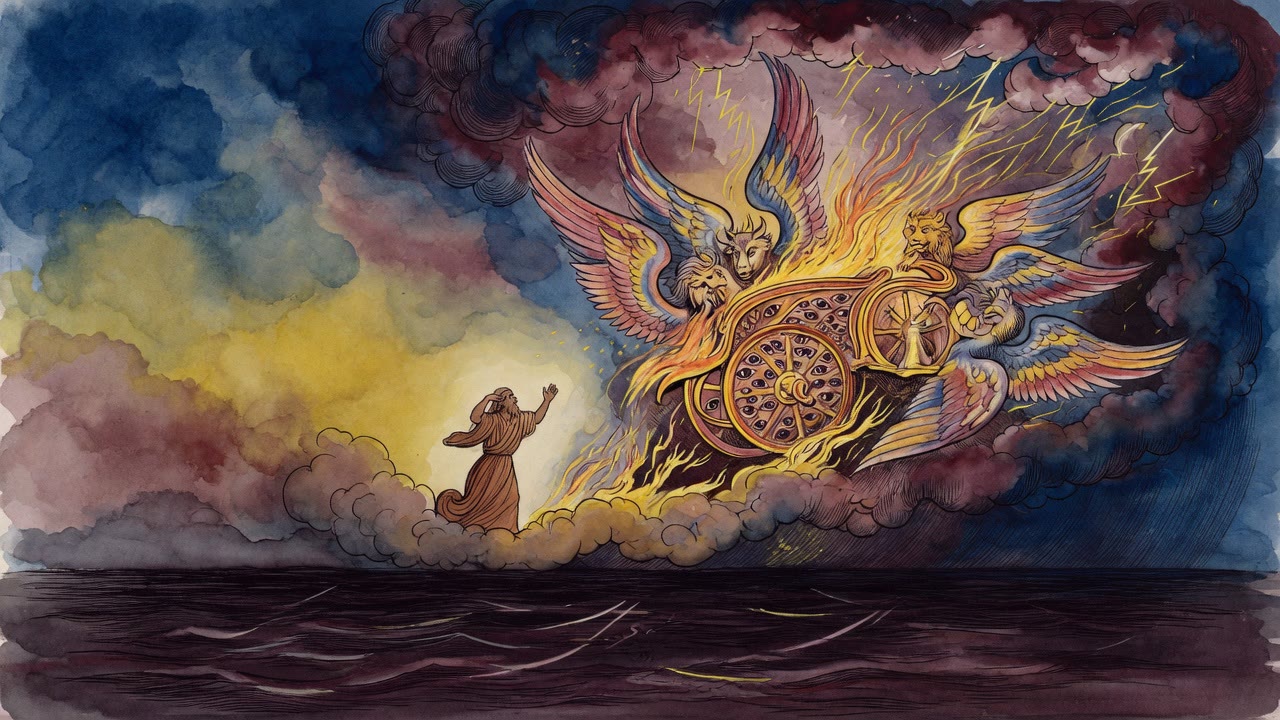
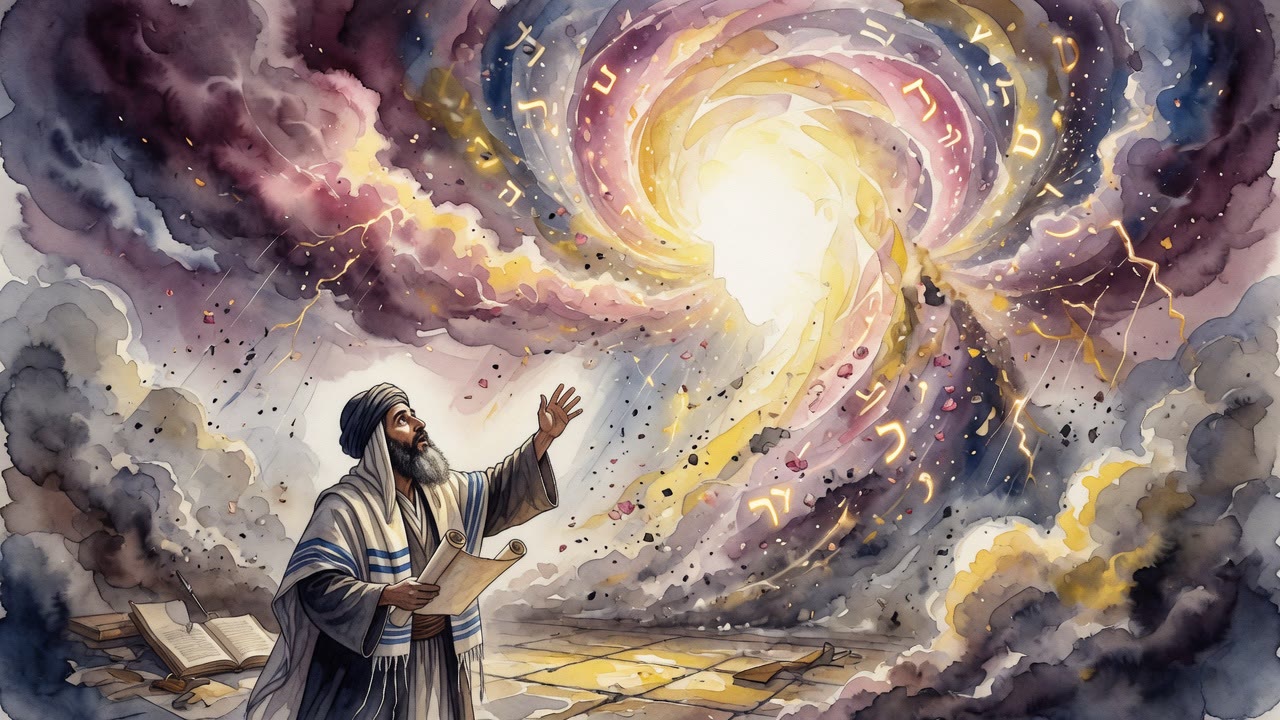
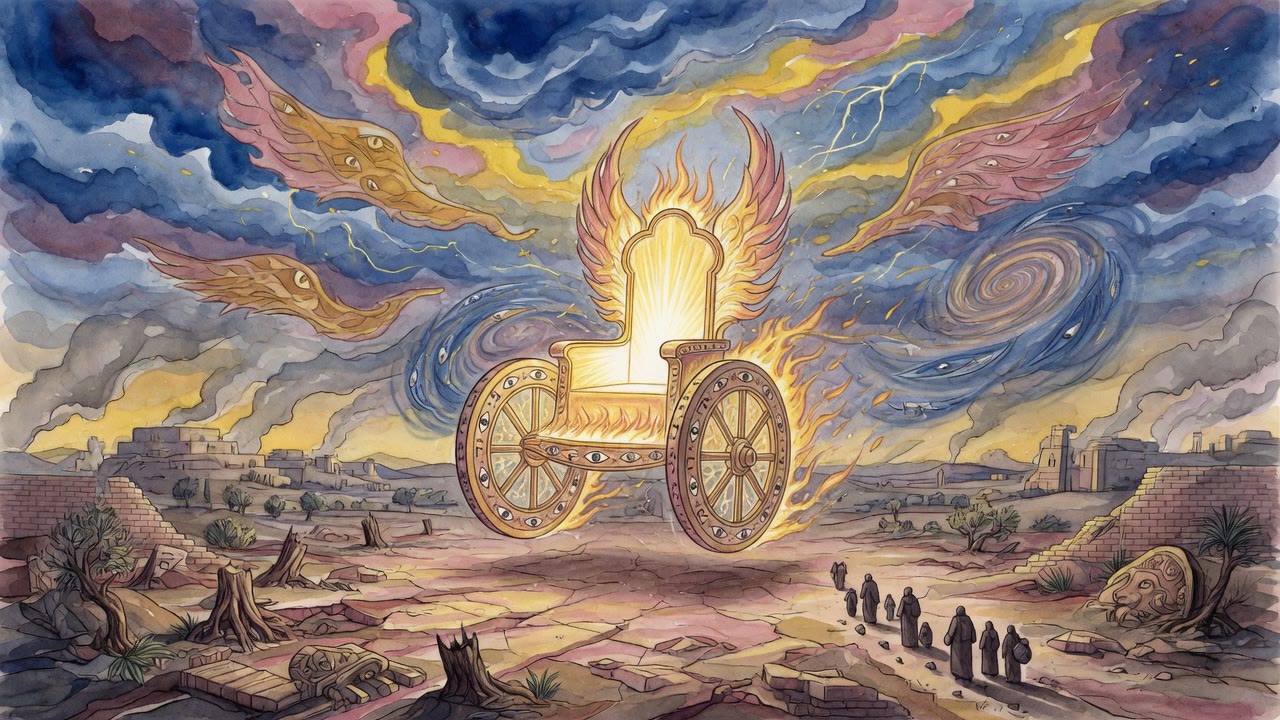
Ezekiel does not see a throne locked in place. He is standing among the exiles beside the river Chebar in Babylon, and what comes toward him out of the north is something that travels. The storm-wind, the great cloud, the brightness and the fire and the four living creatures at the center of it, these are not a vision of a static God sitting fixed in heaven. They are a vision of glory in motion, coming to meet a man who has been carried out of the land where the Temple stood.
That mobility is both the terror and the comfort of what Ezekiel sees. The terror: the presence that had been seated in the Temple, between the golden cherubim in the Holy of Holies, is no longer fixed there. The comfort: if the glory can move, it can move back.
What Isaiah Saw First
Before Ezekiel, Isaiah saw what the throne looked like when it was still. In the year that King Uzziah died, Isaiah saw the Lord seated on a throne high and lifted up, with the train of his robe filling the Temple. The seraphim stood above and covered their faces so they would not see, covered their bodies so they would not be seen. Holy, holy, holy, Lord of Hosts. The whole earth is full of His glory.
Targum Jonathan on Isaiah takes that vision and gives it the Aramaic's precise distance. Isaiah does not see God directly. He sees the glory of the Shekhinah of the King of worlds, the divine presence in its accessible form, not the unmediated source. The throne is lifted to the highest heavens, while the Temple below fills with the brightness of that glory. Proximity and transcendence at the same time: close enough to fill the house, high enough that no house contains Him.
When Isaiah said he was ruined, a man of unclean lips from a people of unclean lips who had seen the King, the angel came with a coal from the altar and touched his mouth. The guilt was removed. The man was sent. Isaiah's vision was the stable vision, the throne in its place, heaven touching the Temple at the fixed point.
Sixty-Four Faces and Two Hundred Fifty-Six Wings
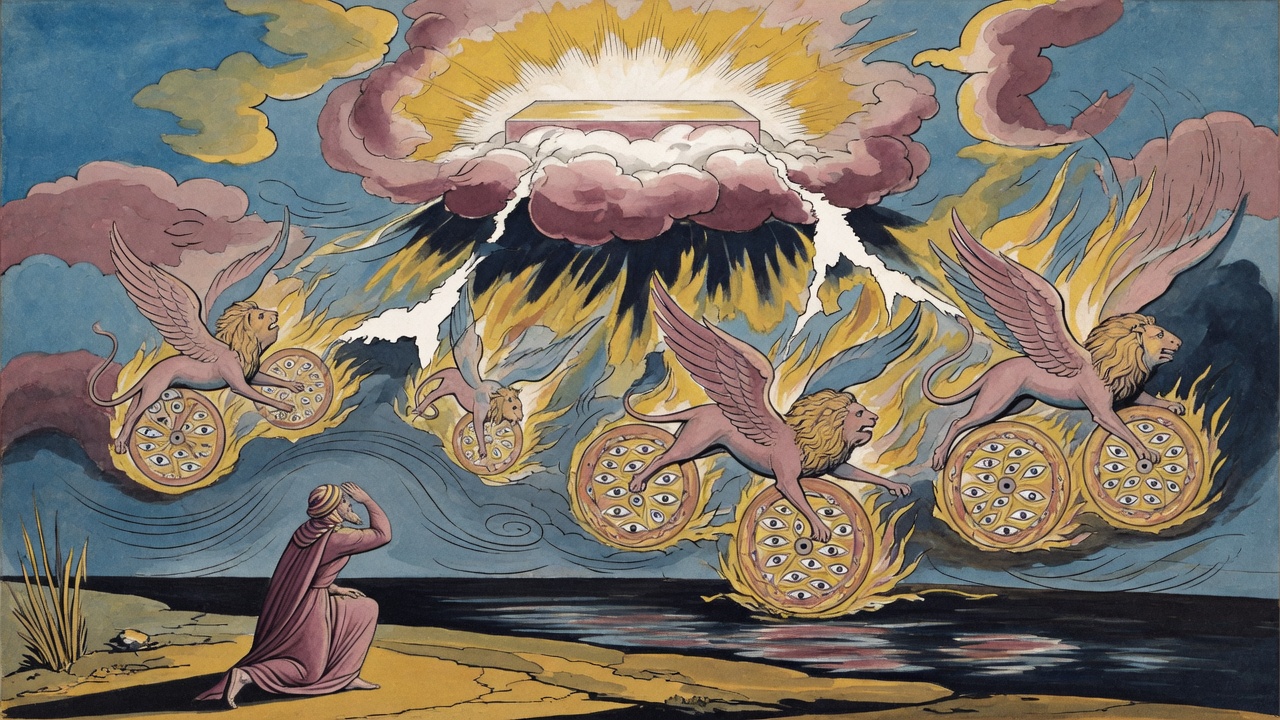
Ezekiel's vision was not stable. Targum Jonathan on Ezekiel counts what the prophet saw with a precision that later mystical tradition would build entire systems on. Sixty-four faces on the living creatures. Two hundred fifty-six wings. Eyes covering the wheels beneath the throne, eyes that missed nothing and turned in every direction without the wheels turning themselves. The chariot was not a simple structure. It was an organism, living and counting and watching.
The sound of the wings was like the sound of many waters, like the sound of Shaddai, like the sound of a camp. Four faces on each creature: human and lion and ox and eagle, the four forms the tradition would repeatedly use to describe the range of creation from its highest to its most animal expression, gathered into a single carrier for the divine presence.
All of this was what Ezekiel saw not in the Temple but in Babylon, beside a river in exile. The throne had come to where he was.
The Glory That Left Through the East Gate
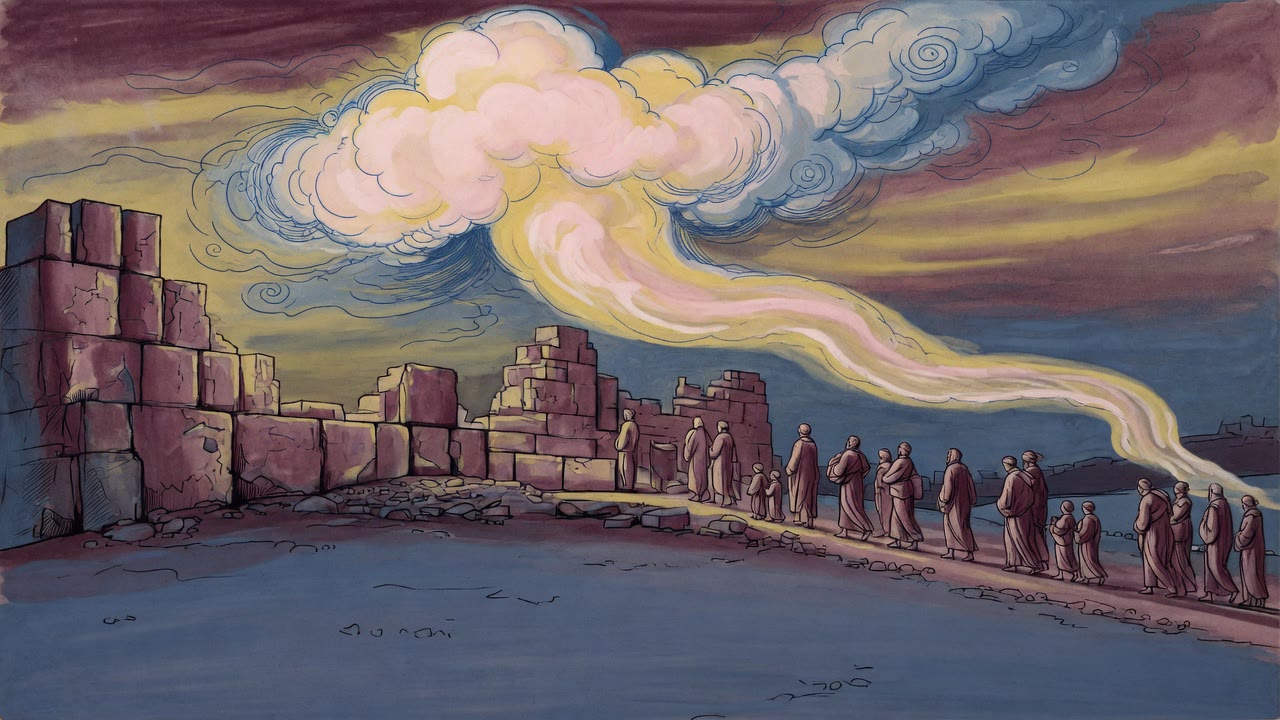
Then Ezekiel saw the hardest thing. In chapters 10 and 11 of his book, he watched the glory leave the Temple. Not an absence he inferred, not a silence he interpreted. He watched it happen in sequence: from the inner sanctuary to the threshold, from the threshold to the east gate, from the east gate to the mountain east of the city. Step by step, the presence withdrew, and Ezekiel stood in Babylon and watched it leave the house it had inhabited since Solomon built it.
The Targum does not hide from this. It renders the departure with the same precision it uses for everything else. The glory moves. The Shekhinah (the Divine Presence) lifts. The cherubim carry it out through the eastern door and the eastern gate and over the mountain and into the space between the Temple and the exile, where Ezekiel was already standing.
The Return Through the Eastern Gate
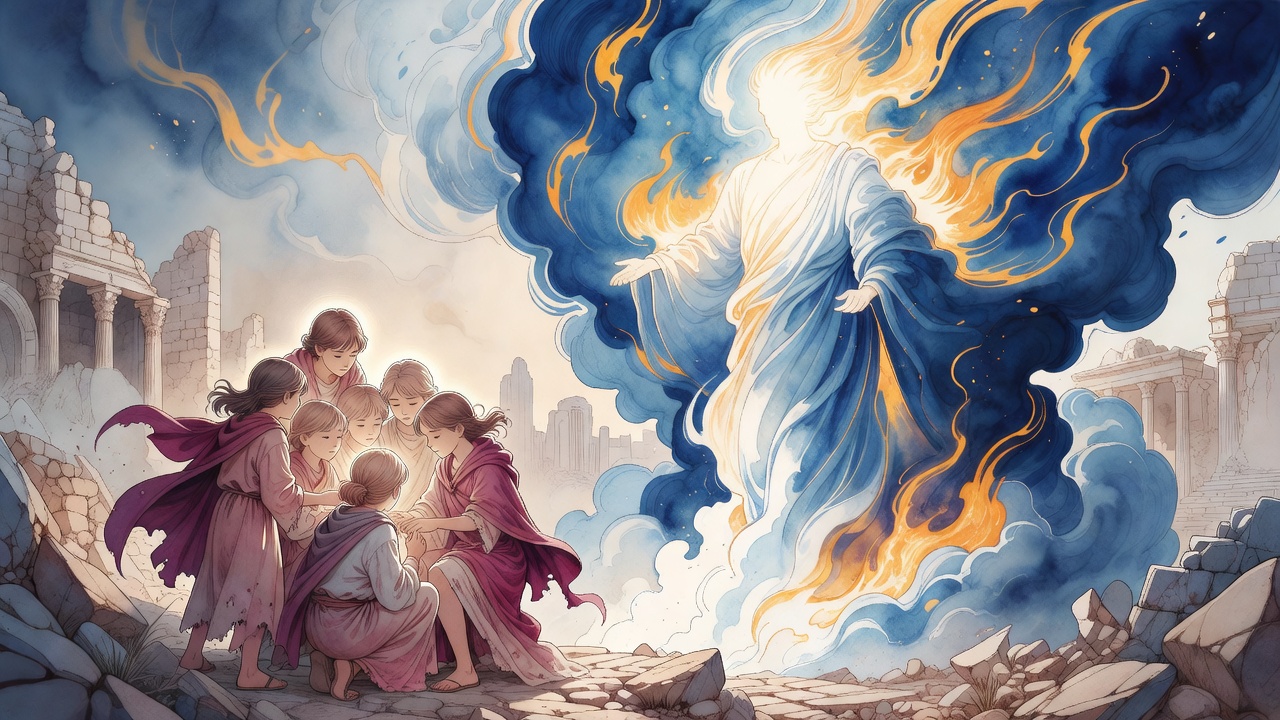
Then, years later in the same book, Ezekiel saw the return. In chapter 43, he saw the glory coming from the east. The earth shone with its brightness. It entered through the gate that faced east, the same gate it had left by, and filled the house, and the Lord spoke from inside the house and said: this is the place of my throne and the place of my feet, where I will dwell in the midst of Israel forever.
The Targum reads the dry bones of chapter 37 the same way: not merely a resurrection of individuals but a return of Israel from exile, bones assembling, breath returning, a nation standing on its feet. The exile had been a drying-out. The return was the breath coming back.
Ezekiel saw all of it from Babylon. The throne that moved came to him first. It left the Temple by the east gate and filled his vision beside the Chebar river and showed him what a God in exile looked like. Then it showed him the return, the same path taken in reverse, the glory coming back from the east to the house that was waiting to be filled again.
← All myths